Published: September 2025 | Last updated: May 2026 | Editorial review and quality control: Martina N.
There is no single clean answer to how long after sex you should test for HPV, and that's not a hedge. The clinical answer depends on what test exists for your anatomy, whether you mean HPV DNA, a Pap smear, or a visual exam for warts, and whether you're testing reactively after one specific exposure or sticking to routine screening on a regular schedule.
Below is what current CDC HPV guidance, ACIP vaccination recommendations, and standard cervical cancer screening protocols actually say, broken down by anatomy and exposure scenario. Most readers will land on one of three honest answers: schedule a routine cervical screening on the standard cadence, watch for visible warts and see a clinician promptly if any appear, or accept that no FDA-approved HPV test currently exists for your situation and use the waiting period to test for the other STIs that are testable.
Key Takeaways
- Most HPV infections clear on their own within about two years per CDC and WHO data; the point of testing is catching the minority of persistent infections that may cause cellular changes, not every transient exposure.
- There is no FDA-approved HPV test for men or for oral and throat exposure. Cervical HPV DNA testing (clinician swab or validated self-swab) is the only widely available screening pathway.
Why HPV testing doesn't work like other STI tests
Chlamydia, gonorrhea, syphilis, and HIV each have a defined window period: the span of days after exposure during which a test result becomes reliable. HPV doesn't fit that pattern. The virus infects skin and mucosal cells directly rather than producing a measurable antibody response, and most of the time it causes no symptoms at all. Many infections clear before they would ever be detectable on a routine test.
The clinical question, “when can I test for HPV?”, therefore breaks into two different questions. Question one is about routine screening: when should I get a Pap smear or HPV DNA test as part of regular preventive care? That has clear, well-evidenced guidance. Question two is about reactive testing: I just had an exposure I'm worried about, when can I test? That question has almost no good answer for most people, because the “test after exposure” model doesn't map cleanly onto how HPV behaves biologically.
If you're hoping for a “test on day 14” style answer, you're going to leave this page with a more complicated picture, and that's the picture this article walks through next.
Routine screening (Pap or HPV DNA test on a scheduled cadence) has clear guideline-backed timing and is built around cervical cancer prevention. Reactive testing after a specific exposure is where HPV gets murky: the virus has no defined window period like chlamydia or HIV, the most informative cervical retest sits roughly 3 months out, and for non-cervical anatomy no widely available test currently exists at all.
The realistic HPV timeline after exposure
If you've just had a sexual encounter that's worrying you, here is what actually happens biologically over the days and weeks that follow. Exact timing varies by HPV type, your immune response, and where on the body the infection settled. The Mayo Clinic HPV reference notes that visible genital warts caused by low-risk HPV types typically appear within 2 to 3 months after exposure, though the range extends from a few weeks up to several years.
High-risk HPV types (the ones associated with cervical and other cancers) usually cause no symptoms at all, which is why cellular-change detection on a Pap or HPV DNA test, not symptom-watching, is the way they get caught.
| Phase | Timeline after exposure | What's happening | What testing can catch |
|---|---|---|---|
| Initial contact | Hours to 14 days | Viral entry into skin or mucosal cells; no replication signal yet | Nothing detectable on any HPV test |
| Early infection | 2 to 8 weeks | Virus replicates in epithelial cells; usually no symptoms | HPV DNA may begin to be detectable on a cervical swab, but sensitivity is still low |
| Wart appearance window | 2 to 3 months typical (range: weeks to years) | Low-risk HPV types may produce visible genital warts | Visual clinical diagnosis; biopsy if uncertain |
| Reliable HPV DNA detection | From about 3 months onward | Virus reaches detectable levels in cervical cells | HPV DNA test (clinician or validated self-swab) reliably detects high-risk types |
| Persistent infection | 12+ months | Infection has not cleared spontaneously; risk of cellular changes rises | Pap may show cellular abnormalities; HPV typing identifies which strains persist |
How long after sex should I actually test for HPV?
If you have a cervix and are within the recommended screening age range (21+ for Pap-only, 25 or 30+ for HPV DNA depending on which guideline your clinician follows), the most informative reactive testing window is approximately 3 months after exposure, which is when HPV DNA has typically had time to reach detectable levels in cervical cells. Testing earlier may give a false-negative result. For other anatomic sites (penis, anus outside specialized clinic care, oral or throat), no widely available HPV test currently exists. Watch for visible warts (typically 2 to 3 months post-exposure), see a clinician if any appear, and use the waiting time to test for other STIs that have shorter, defined windows.
Who can actually get an HPV test
This is the part that frustrates readers most, and there's no way to soften it. Routine HPV testing is built around cervical cancer screening, which means access is currently shaped by anatomy more than by individual risk.
Two slightly different guidelines coexist in the U.S. The CDC cervical cancer screening guidance recommends Pap-only testing for people with a cervix aged 21 to 29, then HPV DNA testing (alone or co-tested with a Pap) every 5 years from age 30 to 65, which aligns with USPSTF. The American Cancer Society's 2020 guideline goes further, recommending primary HPV DNA testing every 5 years starting at age 25, on evidence that earlier high-quality HPV testing identifies persistent infections more accurately than cytology alone. Your clinician will follow one of these two pathways; both are evidence-backed.
For people without a cervix, the screening picture is essentially blank. No test for that population has been shown in trials to improve outcomes, which is why routine HPV screening is built around cervical anatomy rather than overall HPV exposure.
| Anatomic site | Test available? | Who it's for | What it detects |
|---|---|---|---|
| Cervix | Yes: HPV DNA via clinician swab, validated self-collection in some settings, or co-test with Pap | People with a cervix; CDC: HPV DNA from age 30; ACS: HPV DNA from age 25 | High-risk HPV types linked to cervical cancer |
| Anus | Sometimes: HPV DNA swab, mostly in specialized clinics | Higher-risk populations: people living with HIV, MSM with risk factors | High-risk HPV types linked to anal cancer |
| External genitals | Visual inspection only; no DNA screening test | Anyone with a visible wart or suspicious lesion | Low-risk HPV types causing visible warts |
| Throat or oropharynx | No FDA-approved test | Research and specialized clinics only | Some labs offer oral HPV DNA swabs for research purposes |
| Penis | No FDA-approved screening test | Visual inspection if warts are present | Low-risk HPV types causing visible warts |
What genital warts can (and can't) tell you about your timing
Genital warts are the visible, low-risk-strain consequence of HPV infection. They show up as small, flesh-colored or pink bumps or clusters, usually on the genital or anal skin, sometimes with a slightly rough or cauliflower-shaped surface. Per the CDC HPV STI page, warts typically appear weeks to months after the exposure that caused them, with 2 to 3 months being the most common window.
The presence of warts confirms an HPV infection, but it doesn't tell you which exposure caused it, because HPV can lie dormant for months or years before producing visible signs. The absence of warts doesn't mean you're HPV-free either, since the high-risk strains associated with cancer rarely cause warts. They're caught through cellular changes on a Pap smear or by HPV DNA testing, not by anything you can see in a mirror.
If you do notice a new bump, lump, or cluster on or near your genitals, see a clinician. Visual diagnosis is generally enough for typical genital warts; biopsy is reserved for lesions that look atypical or aren't responding to treatment.
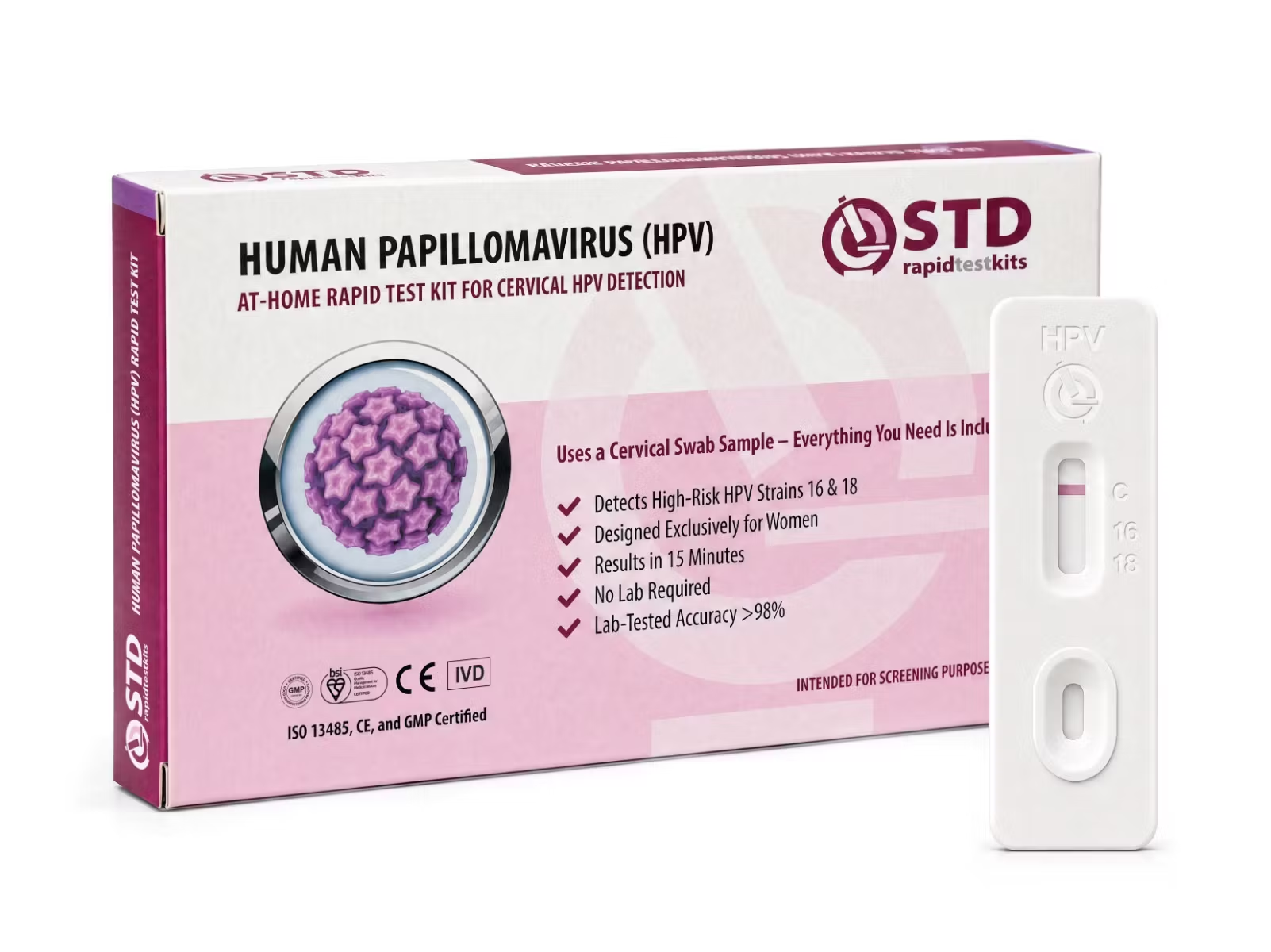
Our HPV at-home rapid test is a vaginal self-swab and is validated for female anatomy only. If you need a male-anatomy HPV evaluation, see a clinician (a urologist or sexual-health clinic can examine for visible warts; anal HPV DNA swabs are available in specialized clinics for higher-risk populations). For everyone with a cervix or vagina, the kit below is the at-home option.
If you've been vaccinated, do you still need to test?
Yes, and the reason is straightforward. The current HPV vaccine, Gardasil 9, protects against nine HPV types: 6 and 11 (responsible for most genital warts, per the FDA Gardasil 9 prescribing information) and 16, 18, 31, 33, 45, 52, and 58 (the high-risk types responsible for most HPV-attributable cancers). Per the CDC HPV vaccine page, that's strong coverage. But more than 200 HPV types have been identified, and roughly a dozen high-risk strains fall outside the nine in Gardasil 9.
ACIP, the federal vaccine advisory committee, recommends routine HPV vaccination for everyone through age 26, and shared clinical decision-making for vaccination from age 27 through 45 for adults who weren't fully vaccinated earlier. Many adults received the older 4-valent or 2-valent versions, which covered fewer strains; if you fall into that group, the gap is wider.
Either way, vaccination doesn't replace screening. Anyone with a cervix should still follow the standard cervical screening schedule (CDC: HPV DNA every 5 years from age 30, or Pap-only from 21 to 29; ACS: primary HPV DNA every 5 years from age 25). Vaccination reduces the probability of acquiring the covered strains; the strains it doesn't cover are still detected only through screening.
Gardasil 9 reduces the risk of acquiring its nine covered HPV types, including the high-risk strains responsible for the majority of cervical cancers. Cervical screening still applies regardless of vaccination status, because the high-risk strains outside those nine are detected only through Pap or HPV DNA testing on the standard schedule. If you were vaccinated with the older 4-valent or 2-valent product, more strains fall outside your vaccine coverage; the screening cadence stays the same.
Pregnancy, immunocompromise, and abnormal Pap history
The standard 5-year HPV DNA screening interval assumes you're at average risk. Several situations shift that calculation toward earlier or more frequent testing.
Pregnancy. A Pap smear is part of routine first-trimester prenatal care if you're due for cervical screening, and it can be done safely. HPV DNA testing during pregnancy follows the same indications as at any other time. Treatment of cervical lesions, however, is usually deferred until after delivery unless there's a strong concern about progression. The CDC and ACOG agree on this conservative approach.
Immunocompromise. If you live with HIV, take immunosuppressive medication after an organ transplant, or have an autoimmune disease treated with biologics, your immune system is less able to clear HPV. The CDC recommends earlier and more frequent cervical screening for people living with HIV (annual Pap or HPV DNA test rather than every 3 to 5 years).
Abnormal Pap history. An abnormal Pap or positive HPV DNA result shortens the next interval, often to 6 to 12 months, and may include colposcopy with directed biopsy to check for cellular changes. This is follow-up of a known finding, not a new screening cycle, and your provider directs the schedule.

Schedule earlier-than-routine HPV testing if any of these apply: a partner has just disclosed an HPV diagnosis or a high-risk strain, you've noticed a new bump, change in discharge, or unexplained bleeding, your last Pap was abnormal, you're newly diagnosed with HIV, or you're starting immunosuppressive therapy. Even in these situations, testing within the first 2 to 8 weeks after exposure may be too early to give a meaningful answer; plan for a follow-up test about 3 months out.
What to do during the waiting window
The genuinely frustrating part of HPV testing is the gap between an exposure that's worrying you and a test result that's actually informative. For most people, that gap is roughly 2 to 3 months. Sitting with that uncertainty can feel disproportionate to the actual statistical risk, and online searching tends to make it worse, not better.
A few things that help, in order of how much they tend to move the needle for readers:
Test now for everything that is testable on a short window. Per the CDC STI treatment guidelines, chlamydia and gonorrhea are detectable within about 1 to 2 weeks of exposure on a swab-based test. HIV (fourth-generation antigen and antibody) is reliably detectable from about 18 to 45 days after exposure per CDC HIV testing guidance. Syphilis appears on a rapid blood test from roughly 3 weeks onward. Ruling these out shrinks the universe of things you have to worry about while you wait for the HPV window to open.
Talk with your partner if you can. HPV transmission is so common that partner notification rarely changes outcomes; the CDC estimates that nearly all sexually active people contract some HPV strain at some point. But the conversation often reduces the rumination loop, which is what most people are actually struggling with during the wait.
Set the actual calendar reminder. Pick a date 3 months out, write it down, and stop thinking about it until then. Setting a concrete calendar date matters more than it sounds, because the brain treats an unanswered question as a continuous low-level threat; closing the loop with a fixed date gives you something to plan around instead of something to ruminate on.

Don't sit on other STI testing while you wait
HPV is rarely the only thing worth checking after a worrying exposure. The CDC's STI treatment guidelines recommend testing for chlamydia, gonorrhea, syphilis, HIV, and (depending on risk factors) hepatitis B, hepatitis C, and herpes after any exposure of concern. Each of these has a defined window period, and most can give you a meaningful answer well before HPV testing can.
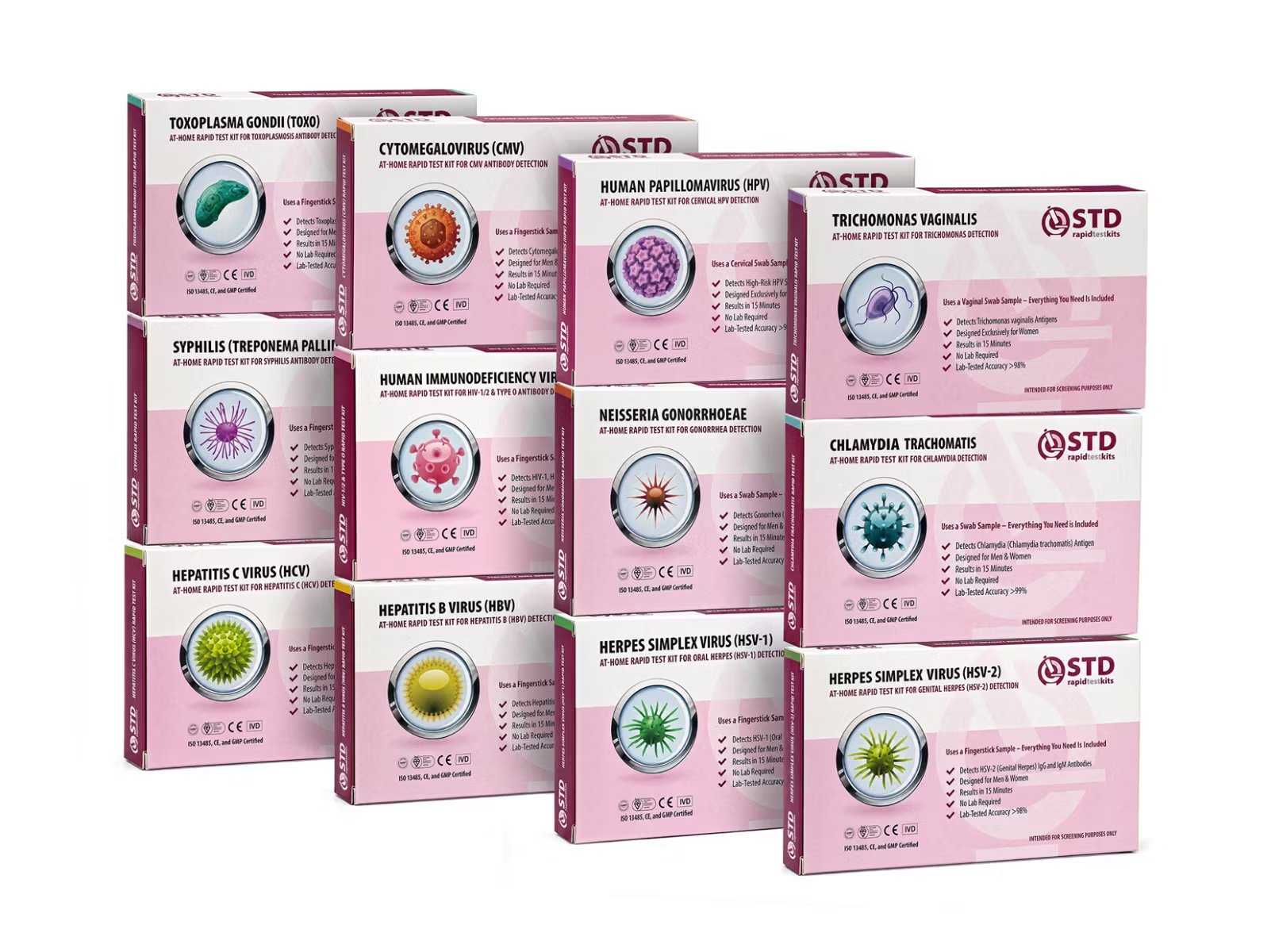
For people with a cervix specifically, a combination kit that covers the most common STIs lets you cross items off your list during the 3-month HPV window. The kit below pairs an HPV self-swab with the broader STI panel that the CDC recommends for screening, and it is validated for female anatomy. If you don't have a cervix, choose from our gender-neutral single-infection blood and swab kits instead.
HPV is the most common sexually transmitted infection in the United States. Most sexually active men and women will get HPV at some point in their lives.
The honest takeaway
If you've made it this far hoping for a clean answer like “test 14 days after exposure,” the harder truth is that HPV doesn't work that way. The clinical picture breaks down by anatomy and by what you're actually trying to learn.
For people with a cervix: follow routine HPV DNA or Pap testing on the schedule your clinician uses (CDC: Pap from age 21, HPV DNA from age 30; ACS: primary HPV DNA from age 25), with earlier follow-up if you have a known exposure, an abnormal Pap history, or you're immunocompromised. The most informative reactive testing window after a specific exposure is roughly 3 months out.
For people without a cervix or with oral or throat concerns: no widely available HPV test currently exists for your situation. Watch for genital warts and see a clinician promptly if any appear. Use the waiting time to test for the other STIs that are testable, and accept that HPV management for now is largely about prevention (vaccination if you're still eligible) and visual surveillance.
You don't need a perfect answer to take a sensible next step. A combination at-home STI test rules out the highest-anxiety adjacent infections in about 15 minutes, on your own timeline. The HPV question gets its real answer at 3 months; everything else doesn't have to wait that long.
Next steps by anatomy
- If you have a cervix: book an HPV DNA or Pap test around 3 months out if you had a specific worrying exposure; otherwise follow your clinician's 5-year cadence (CDC: HPV DNA from 30; ACS: from 25). Test for chlamydia, gonorrhea, syphilis, and HIV now while you wait.
- If you don't have a cervix: watch for visible genital warts (typical 2-3 month window), see a clinician promptly if any appear, and test now for chlamydia, gonorrhea, syphilis, HIV, and hepatitis B and C per your CDC-indicated risk profile.
FAQs
- How soon after sex can I test for HPV?
- For people with a cervix, HPV DNA testing becomes meaningful approximately 3 months after exposure, which is when the virus has typically had time to reach detectable levels in cervical cells. Testing earlier may give a false-negative result. For other anatomic sites, no widely available test exists, so the more useful question is when to watch for warts (about 2 to 3 months) rather than when to test.
- Is there an HPV test for men?
- No, there is no FDA-approved HPV test for men. The CDC has not endorsed routine HPV screening for people without a cervix because no test for that population has been shown to improve outcomes. Anal HPV DNA testing is available in specialized clinics for higher-risk groups (people living with HIV, men who have sex with men with additional risk factors). For visible genital warts, a clinical visual exam is the diagnostic standard.
- I'm vaccinated. Do I still need to be tested?
- Yes, if you have a cervix. Gardasil 9 covers nine HPV types, but more than a dozen additional high-risk types exist beyond those nine. Current cervical screening guidance applies regardless of vaccination status: CDC recommends Pap-only testing from age 21 to 29 and HPV DNA testing every 5 years from age 30 to 65; ACS recommends primary HPV DNA testing every 5 years starting at age 25. Adjustments apply for abnormal results or higher-risk situations like immunocompromise.
- Can HPV stay dormant and show up years later?
- Yes. HPV can remain at undetectable levels for months or years before either becoming active or producing visible signs. This is why a new positive HPV test or a new wart doesn't necessarily indicate recent exposure or recent transmission. The biology of HPV makes it functionally impossible to pinpoint the specific exposure that caused a given infection, which is also why partner-blaming on the basis of timing rarely produces useful answers.
- What does HPV actually feel like?
- Usually nothing. Most HPV infections, including the high-risk types associated with cancer, cause no symptoms whatsoever. When symptoms do occur, they typically take the form of genital warts (low-risk types) or, much less commonly, persistent oral or throat changes. Pain and irritation are not typical features of HPV itself; if you have those, get evaluated for other causes such as a different infection or a non-STI dermatologic condition.
- Are at-home HPV tests reliable?
- At-home HPV self-swab samples sent to a CLIA-certified lab have been shown in published studies to be comparably accurate to clinician-collected swabs when collection instructions are followed. Rapid lateral-flow at-home cassettes (like ours) are screening tools: a positive result should be confirmed with a clinician, and a negative result during the early post-exposure window should be retested at the 3-month mark for a more reliable answer.
- If my HPV test is negative, am I in the clear?
- A negative HPV DNA test means no high-risk HPV type was detected in the sample at the time of testing. It does not rule out low-risk types that cause warts (which aren't part of standard HPV DNA panels), and it doesn't rule out an infection that's still in the early, undetectable phase. If you tested within 2 months of a worrying exposure, plan to retest at the 3-month mark.
- How do I bring HPV testing up with a partner?
- Direct usually works better than oblique. Something like, “I've been reading about HPV and how common it actually is, and I'm planning to get screened. Want to figure out what makes sense for you too?” is enough. HPV is so prevalent that the conversation doesn't carry the weight of a diagnostic disclosure; it's closer to talking about routine cancer screening, which is exactly what HPV testing is.
Our article was constructed based on current advice from the most prominent public health and medical organizations, and then molded into simple language based on the situations that people actually experience. We pulled from CDC, WHO, Mayo Clinic, and current peer-reviewed clinical guidance, with particular attention to the ACS 2020 cervical cancer screening update and current ACIP HPV vaccination recommendations. About a dozen sources informed this article; the most directly relevant ones are linked below for further reading.
- U.S. Centers for Disease Control and Prevention. About Genital HPV Infection STI fact sheet. Supports claims about HPV prevalence, transmission, typical wart timing, and the absence of an FDA-approved HPV test for men or oropharyngeal exposure.
- U.S. Centers for Disease Control and Prevention. Cervical cancer screening guidance. Supports the Pap-only-from-21 / HPV-DNA-every-5-years-from-30 CDC and USPSTF screening cadence.
- U.S. Centers for Disease Control and Prevention. HPV vaccine information page. Supports Gardasil 9's nine-type coverage and the ACIP routine-through-26 and shared-decision-through-45 vaccination recommendations.
- Mayo Clinic. HPV infection symptoms and causes overview. Supports incubation timing for visible genital warts (typically 2 to 3 months post-exposure, range weeks to years).
- World Health Organization. Human papillomavirus and cancer fact sheet. Supports the typical clearance pattern (most infections resolve spontaneously, with WHO noting roughly 90% control the infection within about two years) and the persistent-infection-to-cancer biological pathway.
- U.S. Centers for Disease Control and Prevention. STI Treatment Guidelines. Supports the chlamydia, gonorrhea, and syphilis post-exposure testing windows referenced in the waiting-window section.
- U.S. Centers for Disease Control and Prevention. HIV testing overview. Supports the 18-to-45-day detection window for fourth-generation antigen-antibody HIV testing.
