
Published: September 2025 | Last updated: May 2026 | Editorial review and quality control: Martina N.
A small bump appears at the edge of where you shave. It does not itch. It does not hurt. A few days pass and you forget about it. That single moment is how most genital HPV infections begin and end on someone's mental radar. The bump fades from attention long before it fades from the skin, and the virus quietly does whatever it is going to do.
Genital HPV is the most common sexually transmitted infection in the United States, and most carriers never know they have it (CDC Clinical Overview of HPV). Symptoms can be invisible, microscopic, or so subtle they read as razor burn or a clogged pore. This guide walks through what HPV actually looks like on shaved skin, why it hides especially well in men, and what to do when something quietly persists.
Key Takeaways
- Genital HPV often shows up as flesh-colored bumps that look like razor burn or ingrown hairs, especially on shaved skin where micro-tears give the virus an entry point. Many infections show no visible signs at all.
- There is no routine HPV test for men, and our at-home HPV kit is a vaginal self-swab validated for women only. Male readers who want screening should ask a clinician about visual exam, anal cytology when relevant, or vaccination if not already vaccinated.
Why HPV Hides Behind Razor Bumps
Razor burn shows up after friction. It is red, sometimes bumpy, and usually settles within a day or two. You know when you shaved aggressively or dry, and the sting feels familiar. The trouble starts when the bump does not fade, when the red patch does not itch, does not flake, and quietly lingers past the point where shaving irritation should have resolved.
Genital warts, the visible form of low-risk HPV, can mimic shaving irritation almost perfectly. They are often flesh-colored or slightly pink, flat or raised, painless, and clustered in the same warm friction zones where razors travel: the vulva, scrotum, base of the penis, mons pubis, and inner thighs. They can be mistaken for clogged pores, folliculitis, or healing nicks. Unlike herpes, they do not blister or scab, which removes one of the easier visual cues people rely on to self-triage (CDC STI Treatment Guidelines, HPV).
Take a typical pattern: a 27-year-old who shaves notices a skin-colored bump where his boxer elastic rubs against the pubic line. He assumes it is irritation from synthetic gym shorts, waits, watches it not change for several weeks, and never tests. A partner later mentions an HPV diagnosis, and the bump turns out to be a low-risk wart he had been carrying for months. The mental category was "shaving thing," and the virus stayed inside that category long enough to spread.
| Appearance | Common Misinterpretation | What It Might Actually Be |
|---|---|---|
| Flesh-colored bump | Ingrown hair | Genital wart (low-risk HPV) |
| Flat pink patch | Razor irritation | Subclinical HPV lesion |
| Cluster of tiny bumps | Friction rash or allergic reaction | HPV-related skin change |
| Nothing visible at all | Assumed "clean" status | Asymptomatic high-risk HPV |
How HPV Looks on Smooth, Shaved Skin
HPV thrives in friction zones. The virus enters through micro-tears in the skin, which is exactly what shaving creates, even when the technique is careful. Smooth, freshly shaved skin can be more vulnerable to a new infection, not less, because the protective top layer of keratinocytes has been disrupted (CDC Pink Book, HPV chapter).
The bigger problem is psychological. Most of us associate sexually transmitted infections with pain, discharge, or drastic visible changes. HPV often offers none of those. In men, it frequently produces zero visible symptoms. In women, it can sit on the cervix undetected unless caught during a Pap test or HPV DNA screening. Even when symptoms appear, they are subtle: a small papule, a barely raised cluster, a single flat patch that catches the eye for a second and then fades into the background of skin you stop looking at.
Shaving does not cause HPV. What it does is create the micro-abrasions the virus uses as an entry point. The keratinocyte barrier on intact skin is one layer of passive protection, and shaving briefly thins it. Pair that with the same warm, moist friction zones where the virus prefers to live, and a freshly shaved area is biologically a softer target than the unshaved version.
Why Men Miss It Most
HPV does not discriminate by gender, but it hides better in some bodies. There is no routine screening test for HPV in men equivalent to the cervical Pap smear. Most men who have HPV will never see warts because only certain low-risk strains cause them, and the high-risk cancer-associated strains are typically silent in male anatomy until they trigger downstream changes years later.
There is also a cultural blind spot. The mental shortcut runs: no lesion, no pain, no problem. That shortcut leads to skipped condoms in long-term relationships and false reassurance after a negative STI panel, which almost never includes HPV unless someone specifically requests anal cytology or has a history of receptive anal sex. The CDC notes that nearly all sexually active men and women will get HPV at some point in their lives (CDC, Clinical Overview of HPV).
Another typical pattern: a 33-year-old leaves a three-year monogamous relationship, dates casually with mostly-consistent condom use, and feels healthy. A new partner discloses a high-risk HPV diagnosis. He had no symptoms and no idea men could even be tested. The point is not that condoms failed. The point is that no symptoms is not the same as no risk.

Cervical Risk vs Visible Warts: Same Virus Family, Different Stakes
HPV is not one virus. It is a family of more than 200 related types, and roughly 40 of those infect the genital area. They behave very differently from each other (CDC Pink Book, HPV chapter).
Some types, notably HPV 6 and 11, cause visible genital warts. They are considered low-risk because they rarely progress to cancer, but the social and emotional weight of warts is real. They can be distressing, recurring, and stigmatizing even when medically benign.
The high-risk types behave the opposite way. HPV 16 and 18 cause no visible symptoms in most carriers, yet the CDC's STI Treatment Guidelines state that these two types account for 66% of all cervical cancers, with five additional 9-valent-vaccine types responsible for another 15% (CDC STI Treatment Guidelines, HPV). High-risk strains can sit silently on the cervix for years before triggering precancerous changes, which is why people with a cervix need regular screening regardless of recent partners or how healthy they feel.
| HPV Type | Symptoms | Associated Risk |
|---|---|---|
| HPV 6, 11 | Visible genital warts | Low risk of cancer |
| HPV 16, 18 | Usually asymptomatic | About 66% of cervical cancers (per CDC) |
| Other high-risk types (31, 33, 45, 52, 58) | Usually asymptomatic | Another ~15% of cervical cancers; covered by 9-valent vaccine |
| Many low-risk types beyond 6 and 11 | Often asymptomatic, sometimes warts | Very low cancer risk, may clear naturally |
Picking the Right HPV Test for Your Body
Not every body has a clear in-home HPV testing path. Cervical cancer screening pulls together cytology and HPV DNA, and both samples are typically collected by a clinician or via a self-collected vaginal swab specifically validated for that anatomy. There is no FDA-approved at-home or in-clinic HPV screening test designed for the male anatomy. That gap is real, and we are not going to paper over it with the wrong product.
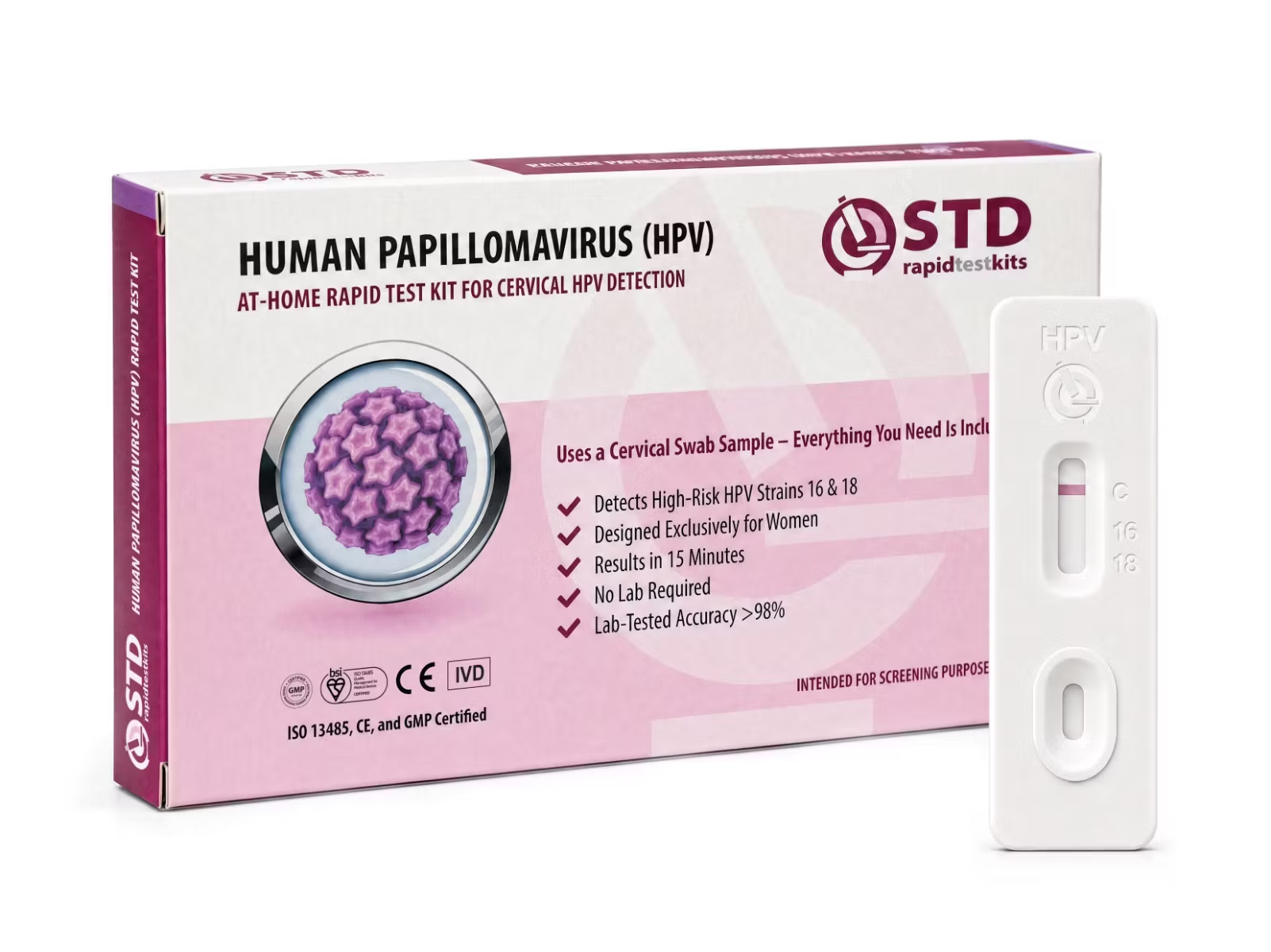
Our HPV rapid test is a self-collected vaginal swab validated for female anatomy only. Male readers who want HPV-related screening should ask a clinician about visual exam, anal cytology when their history makes it relevant, or oropharyngeal evaluation if there are concerning symptoms. Vaccination is the single most effective preventive tool across all genders.
The False Reassurance of Clean-Shaven Skin
There is something psychological about looking at smooth, bump-free skin and concluding everything is fine. HPV does not always leave a mark. If you have been vaccinated against the most common high-risk strains, or if your immune system has cleared an older infection, you can still acquire or transmit a different type without realizing it.
The illusion is louder for people who shave regularly. When a bump does appear, the most available explanation is the razor. Lotions, sex toys, tight athletic wear, and friction from sex add layers of reasonable-sounding alternatives. Most people will not call a clinician about one silent bump. They wait until something hurts, grows, or a partner notices it. That waiting period is exactly when an asymptomatic infection moves to a new partner.
One practical rule of thumb: if a bump has not changed in two weeks, or it keeps reappearing in the same spot after shaving or sex, the answer is no longer "probably the razor." That is your signal to test or to see a clinician.
In most cases (9 out of 10), HPV goes away on its own within two years without health problems.
Testing for HPV: What Most Clinics Do Not Mention
Unlike chlamydia or HIV, there is no single universal HPV test that works for everyone. If you have a cervix, you are likely familiar with the Pap smear and the HPV co-test that often comes with it. If you do not have a cervix, the testing menu shrinks dramatically.
Most clinics do not routinely test men for HPV unless something visible has appeared, and even then, the standard approach is often watch and wait or topical treatment of warts. That leaves a lot of people, especially those with penises and those engaging in receptive anal sex, without a clear screening pathway. If you have not had a regular OB-GYN, or if your sexual history includes partners across genders, signs slip past easily.
At-home HPV testing has grown for exactly this reason. The validated home option is a self-collected vaginal swab designed to detect high-risk HPV in people with a cervix. It is useful for clarity, privacy, and as a low-friction step between routine screenings. It does not replace clinical follow-up, and it does not replace the Pap smear, which screens for cellular changes the swab cannot see.
Window Periods and Dormancy: Why HPV Timing Is Different
HPV does not behave like chlamydia or gonorrhea. It does not flare up days after exposure or produce a clear acute phase. The virus replicates inside basal skin cells, sometimes for weeks before any visible change, often for months, and occasionally for years before symptoms or detectable lesions appear.
Three implications fall out of that biology. First, you can test "too early" and get a negative result that turns positive later. Second, a negative test today does not retroactively clear a partner from suspicion. Third, dormancy is real: someone exposed in their late teens may not see a wart or get a positive cervical co-test until their thirties.
| Stage | Typical Timeline | What Is Happening |
|---|---|---|
| Exposure | Skin-to-skin contact | HPV enters through micro-tears or friction zones |
| Incubation | Weeks to many months | Virus replicates silently in basal keratinocytes |
| Symptom onset (if at all) | 1 month to 1 year or longer | Warts may appear, or cervical cell changes may begin |
| DNA test detection | Weeks to months after exposure | Depends on viral load, sample site, and test sensitivity |
If It Is Not HPV, What Else Could It Be?
Genital bumps and red patches have dozens of causes, most of them benign. The hard question is not "what is this exactly" because that almost always needs a clinician. The hard question is "is this benign enough to ignore." The table below shows the conditions most often confused with HPV and the patterns that distinguish them.
| Condition | Common Signs | Key Differences from HPV |
|---|---|---|
| Razor burn | Red bumps after shaving, mild itch or sting | Resolves within 2 to 3 days, follows shaving timing |
| Ingrown hair | Single raised bump, sometimes with pus or visible hair | Painful, central hair often visible, ruptures or resolves |
| Folliculitis | Cluster of small red or pus-filled bumps around hair follicles | Often itchy or tender, responds to gentle care or antibiotics |
| Genital herpes (HSV) | Painful blisters, tingling, recurring outbreaks | Blistering and scabbing pattern, distinctly painful |
| Friction rash | Red patch where skin rubs | Worse with movement, fades with rest |
| Molluscum contagiosum | Pearly dome-shaped bumps with central dimple | Distinct umbilicated appearance, often a few millimeters across |
Vaccinated and Still at Risk? Why That Happens
The HPV vaccine is one of the strongest preventive tools modern medicine has produced, and it does not cover everything. The current 9-valent vaccine (Gardasil-9) protects against nine HPV types: 6, 11, 16, 18, 31, 33, 45, 52, and 58. The CDC notes that this vaccine has the potential to prevent more than 90% of cancers caused by HPV, but there are still other genital HPV strains it does not address (CDC, HPV vaccination).
People vaccinated after becoming sexually active may have already encountered one or more HPV strains before the shots took effect. The vaccine still protects against strains they have not yet acquired, which is the practical point, but it cannot retroactively clear an existing infection. It also cannot block lower-risk or uncommon strains that fall outside its nine-target range.
The Advisory Committee on Immunization Practices, summarized on the same CDC vaccination page, recommends routine HPV vaccination at ages 11 to 12 (vaccination can begin at age 9), with catch-up vaccination through age 26. For adults aged 27 to 45, vaccination is recommended through shared clinical decision-making, meaning the conversation about whether it is worth doing happens between you and your clinician based on your specific exposure history. Think of vaccination as a high-quality seatbelt rather than an invincibility cloak. Pair it with screening, barrier protection, and honest conversations.
Vaccine reality check
- Gardasil-9 covers nine HPV types and prevents the strains responsible for the large majority of HPV-attributable cancers, but does not cover every genital HPV strain.
- The vaccine protects against types you have not yet acquired. It does not clear an existing infection, which is why screening still matters even after a full vaccination series.
How to Talk to a Partner Without Spiraling
Telling a partner you tested positive for HPV is rarely as catastrophic as the anticipation suggests. The reality is that HPV is so common that nearly every sexually active adult will encounter it at some point, and a positive does not mean you did anything wrong or that your partner did either. The clearer the disclosure, the easier the next conversation.
A simple opening works: "I tested for HPV recently and got a positive result. I do not have visible symptoms, and I want to tell you because we are close." From there, most people respond with practical questions, like what this means for sex going forward, whether they need their own test, and what the clinician recommended as next steps. Walking through those questions together is usually all the conversation needs.
If you are the one being told, the most useful response is usually a question rather than a reaction. Ask what the test showed, when the exposure window might be, and what the clinician recommended. Avoid the urge to assign blame; HPV often predates either of you in the relationship.

When to Retest, and When to Just Watch
HPV testing is not a one-and-done answer for most people. The right cadence depends on your test type, the result you got, and what your clinician sees. Routine cervical screening guidelines from the CDC and major professional bodies have shifted over the years, so the most reliable source is a clinician who knows your history (CDC STI Treatment Guidelines).
That said, a few patterns drive almost every retest decision: an early test taken before the typical detection window has matured, an abnormal Pap that needs HPV reflex testing to clarify risk, treated visible warts that may recur, and a positive HPV DNA test where the question is whether the body has cleared the virus. If you used an at-home test, got a negative, and symptoms persist or worsen, repeat in a few weeks rather than assuming nothing is there.
| Reason for Retest | Suggested Timing | Why It Matters |
|---|---|---|
| Early test after a recent exposure | Repeat in 6 to 12 weeks | Catches infections that had not yet reached detectable levels |
| Abnormal Pap without HPV co-test confirmation | Per clinician guidance, often within a year | Identifies whether high-risk strains are driving the cell changes |
| Visible warts after treatment | 3 to 6 months later | Recurrence is common; monitoring catches it early |
| Positive HPV DNA test, no symptoms | About 12 months later | Most infections clear on their own; persistence is the risk signal |
FAQs
- Can genital HPV really look like razor burn?
- Two weeks is the practical threshold. Razor burn typically clears in two to three days; a wart does not change character or location. If a flat or flesh-colored bump is still in the same spot two weeks after shaving, treat it as something more than shaving and schedule a clinical exam rather than waiting longer.
- I have a bump down there. How do I know if it is a wart, ingrown hair, or something else?
- Pain and a visible central hair point toward an ingrown hair. Painless, flesh-colored, and quietly persisting for weeks points more toward a wart. Painful clusters of blisters that scab over are the classic herpes pattern. Pearly bumps with a central dimple are usually molluscum. None of this is a substitute for a clinician's exam, but the pattern can guide whether to test from home, see a clinician, or simply give it a few days.
- I am male and have no symptoms. Am I in the clear?
- Probably not in the clear, just probably not at risk for the wart-causing strains specifically. Most men with HPV never see warts, and there is no routine HPV test for men. Vaccination, condom use, and honest partner communication are the main protective tools. If you have visible bumps, see a clinician for an exam.
- Do condoms protect against HPV?
- Condoms reduce HPV transmission meaningfully but do not eliminate it. HPV spreads through skin-to-skin contact, not just fluids, so areas not covered by a condom can still carry and transmit the virus. Treat condoms as an important layer of protection alongside vaccination and screening.
- I am vaccinated. Why could I still test positive?
- The vaccine covers the highest-risk and most common types but not every genital HPV strain. If you became sexually active before vaccination, you may have been exposed to types the vaccine cannot retroactively clear. The vaccine still works on the types you have not yet encountered, which is the point.
- How long can HPV stay dormant?
- Months to many years, depending on the strain and your immune response. Someone exposed at 18 may not see a wart or detect the virus until their thirties. This is why a long stretch without new partners does not guarantee a clean result, and why "I have not had sex in a while" is not a reliable safeguard.
- Can I treat HPV at home with creams or natural remedies?
- Some over-the-counter wart treatments help with visible low-risk lesions on non-genital skin, but genital warts should be evaluated and treated by a clinician. There is no over-the-counter treatment that clears the underlying virus. Home remedies do not address high-risk strains at all, which is why testing and clinical follow-up still matter even when a wart looks small.
- If I have no symptoms, can HPV still be dangerous?
- Yes. The most cancer-associated strains are typically silent for years. The reason routine cervical screening exists is precisely to catch cell changes before they progress; high-risk HPV can be years ahead of any symptom by the time it is detected, and screening is what closes that gap.
How we sourced this article: We synthesized current guidance from the U.S. Centers for Disease Control and Prevention, including the CDC clinical overview of HPV, the STI Treatment Guidelines, the Pink Book chapter on HPV, the CDC HPV vaccination page (which summarizes the Advisory Committee on Immunization Practices age recommendations), and the CDC Genital HPV fact sheet. Where the article makes a specific clinical or numerical claim, the supporting CDC source is linked inline. The piece was reviewed by our medical reviewer for clinical accuracy before publication.
- U.S. Centers for Disease Control and Prevention. Clinical overview of HPV, including transmission and natural history; supports the claim that HPV is the most common STI in the United States.
- U.S. Centers for Disease Control and Prevention. About Genital HPV Infection (basic fact sheet); supports the quote that 9 out of 10 HPV infections clear within two years.
- U.S. Centers for Disease Control and Prevention. STI Treatment Guidelines, Human Papillomavirus section; explicitly states that HPV types 16 and 18 account for 66% of cervical cancers and that five additional 9-valent types cover another 15%.
- U.S. Centers for Disease Control and Prevention. Pink Book, Chapter 11 on Human Papillomavirus; supports the more-than-200 HPV types figure and the keratinocyte-entry biology.
- U.S. Centers for Disease Control and Prevention. HPV vaccination page; details the 9-valent Gardasil-9 type coverage (6, 11, 16, 18, 31, 33, 45, 52, 58), the >90%-of-HPV-cancers prevention claim, and the ACIP age-stratified recommendations (routine 11-12, catch-up through 26, shared clinical decision-making 27-45).
- U.S. Centers for Disease Control and Prevention. HPV and Cancer overview hub; supports the broad claim that HPV is associated with several anogenital and oropharyngeal cancers.
