
Published: October 2025 | Last updated: May 2026 | Editorial review and quality control: Martina N.
Searching for how fast AIDS can take a life without treatment usually comes with a heavy feeling. You want a number, a timeline, something to anchor the worry. The honest evidence-based answer is that untreated AIDS carries a survival window of about three years once it reaches the late stage, according to the U.S. Centers for Disease Control and Prevention. The actual path varies more than most people expect.
This guide walks through what that timeline looks like in practice, what causes death at the late stage of HIV, why some people decline faster than others, and what changes the moment treatment enters the picture. The short version up front: treatment exists, it works, and knowing your HIV status is the single variable that shifts everything that follows.
Key Takeaways
- Untreated AIDS carries a typical survival window of about three years once the immune system has collapsed, and opportunistic infections are the usual cause of death rather than the virus itself.
- Antiretroviral therapy can stop the decline even when it starts late, which is why an HIV test is the single most important step before anything else in this conversation.
What the Untreated AIDS Timeline Actually Looks Like
People want a clean number, a countdown, something predictable. Untreated HIV progressing into AIDS does not work like a stopwatch. It moves more like slow erosion that stays invisible for years, then becomes undeniable once the immune system can no longer keep up.
Most people with untreated HIV live for about a decade or longer before the virus damages the immune system enough to be classified as AIDS, per the CDC's about-HIV reference. That stretch is often invisible: no daily reminders, no clear symptoms, no obvious warning that the CD4 count is dropping.
Once the CD4 count falls below 200 cells per cubic millimeter or an AIDS-defining illness appears, the clock speeds up. The roughly three-year survival window applies to this stage. Some people decline within months. Others hold on longer if they avoid major infections.
CD4 cells are a type of white blood cell that helps coordinate the immune response. HIV attacks and depletes them over time. A healthy adult typically has 500 to 1,500 CD4 cells per cubic millimeter of blood. AIDS is clinically defined when the CD4 count drops below 200, or when certain AIDS-defining illnesses appear, regardless of the count.
What Death From Untreated AIDS Actually Means
One of the biggest misconceptions about HIV is that the virus itself is what eventually causes death. The reality is more indirect. The immune system becomes so weakened that everyday infections and certain cancers become life-threatening. Doctors call these opportunistic infections, a clinical way of saying infections that take advantage of a body that can no longer defend itself.
The CDC lists Stage 3 HIV (AIDS) as the point at which a person becomes vulnerable to an increasing number of serious illnesses, including those that healthy immune systems would normally control. Some of these illnesses are rare in the general population and are considered AIDS-defining when they appear.
Here is what the most common pattern looks like in practice.
| Condition | What It Does | Why It Becomes Fatal |
|---|---|---|
| Pneumocystis pneumonia (PCP) | Severe lung infection caused by a fungus | Prevents adequate oxygen exchange in the lungs |
| Tuberculosis (TB) | Bacterial infection of the lungs and other organs | Spreads rapidly in weakened immune systems |
| Kaposi sarcoma | Cancer affecting skin, lymph nodes, and internal organs | Indicates severe immune failure and can spread aggressively |
| Esophageal candidiasis | Fungal infection of the mouth, throat, and esophagus | Can spread systemically and impair eating and swallowing |
| Wasting syndrome | Severe involuntary weight loss with fatigue and weakness | Body can no longer sustain basic metabolic functions |
How Long Can You Live With AIDS Without Treatment: A Closer Breakdown
The general estimate of about three years is a population average. The way that window actually plays out depends on what is happening in the body and which complications appear first. Some people stabilize for a stretch before a major infection takes hold. Others progress quickly the moment their CD4 count crosses the threshold for AIDS.
| Stage | What Is Happening | Typical Time Range |
|---|---|---|
| Early AIDS | CD4 drops below 200 cells/mm³, mild opportunistic infections begin to appear | Months to about one year |
| Advanced AIDS | Multiple infections, significant weight loss, persistent weakness | Six months to two years |
| Critical stage | Severe opportunistic infections or AIDS-defining cancers take over | Weeks to a few months |
Why Some People Decline Faster Than Others
Two people can reach AIDS at the same time and have very different outcomes. One might live a couple of years. Another might deteriorate in months. The difference often comes down to what the body is dealing with on top of HIV.
Once the immune system is compromised, every infection becomes a variable. Some are manageable for a while. Others overwhelm the body quickly. Survival also depends on access to even basic care: treating an opportunistic infection like tuberculosis can extend life substantially, even without antiretroviral therapy. WHO data tracking case concentration in sub-Saharan Africa reflects how much regional access to care shapes outcomes.
The main factors that influence how quickly things progress are summarized below.
| Factor | Impact on Survival |
|---|---|
| Type of opportunistic infection | Aggressive infections like TB or PCP can shorten survival dramatically |
| Access to basic care | Even minimal treatment for opportunistic infections can extend life by months or years |
| Nutritional status | Malnutrition accelerates immune decline and wasting |
| Age at AIDS onset | Older individuals tend to decline faster |
| Co-existing conditions | Hepatitis B, hepatitis C, and other chronic illnesses make recovery harder |

The Window Most People Miss: Years Before AIDS
By the time someone is searching for information about full-blown AIDS, the most important window has usually already passed. The situation is rarely hopeless. The problem is that HIV does not announce itself clearly in the beginning.
Early HIV symptoms can feel like the flu: fever, sore throat, fatigue, swollen lymph nodes for a couple of weeks. Then nothing. For years. The CDC describes this middle stretch as chronic HIV infection, sometimes called clinical latency, when the virus continues to replicate at low levels but rarely produces noticeable symptoms.
The virus can slowly weaken the immune system without anyone noticing during that silence. When symptoms return, they tend to be worse, stranger, and harder to ignore. By then, damage has already accumulated.
During the clinical latency period an HIV antibody test can detect the infection long before symptoms return. A rapid antibody test taken at least six weeks after a possible exposure can give a meaningful result, and a fourth-generation antigen-antibody lab test shortens that window further. Acting in the silent years is when treatment changes the outcome the most.
What Late-Stage HIV Feels Like Day to Day
People often search for what AIDS feels like, hoping for a clear checklist. The experience is less about one symptom and more about accumulation: things that do not go away, things that keep coming back, things that slowly take over your energy.
At this stage everyday life starts to feel heavier. Getting out of bed takes more effort. Minor illnesses linger longer than they should. Recovery stops being predictable. Clinical references on advanced HIV describe late-stage features that can include weight loss, chronic diarrhea, night sweats, persistent skin problems, and recurrent infections that no longer clear the way they used to, per the NIH HIVinfo stages-of-HIV fact sheet.
Common experiences in untreated AIDS include the following.
- Persistent fatigue, the kind that sleep does not fix
- Recurring infections such as thrush, pneumonia, or skin issues that keep coming back
- Unintentional weight loss that is difficult to reverse
- Night sweats severe enough to disrupt sleep regularly
- Cognitive changes including memory issues, confusion, or slower thinking
- Swollen lymph nodes that remain enlarged for months
Without HIV treatment, people with AIDS typically survive about three years.
Why Treatment Changes the Story
The timeline above only applies if someone is completely untreated. In high-income countries that is increasingly rare, because treatment for HIV is highly effective and widely available. The shift in outcomes over the last three decades is one of the largest in modern medicine.
Antiretroviral therapy (ART) stops HIV from replicating, which allows the immune system to recover. People who start ART early can live a near-normal life expectancy, according to CDC guidance on HIV treatment. People who start late, even after an AIDS diagnosis, can still recover significant immune function. The earlier treatment begins, the more durable the recovery tends to be.
There is one more piece of news that often surprises people. When ART suppresses HIV to undetectable levels in the blood, the virus cannot be sexually transmitted. This is the basis of the public-health message known as Undetectable Equals Untransmittable, or U=U. The CDC has confirmed this finding across multiple large studies.

From Untreated to Controlled: What Happens If You Start Late
Even after an AIDS diagnosis, the trajectory can change. Treatment can still help rebuild the immune system and stabilize the body. Outcomes depend on how much damage has already been done, and recovery is often more substantial than people expect.
Some people regain enough immune function to push their CD4 count back into a safer range. Others stabilize but remain vulnerable to certain infections that have already taken hold. The first few months after starting ART can be complicated by something called immune reconstitution inflammatory syndrome, where the recovering immune system suddenly recognizes existing infections and reacts strongly. This is managed clinically and is not a reason to delay treatment. Recovery is not instant, and how much function returns depends on the depth of immune damage before therapy began.
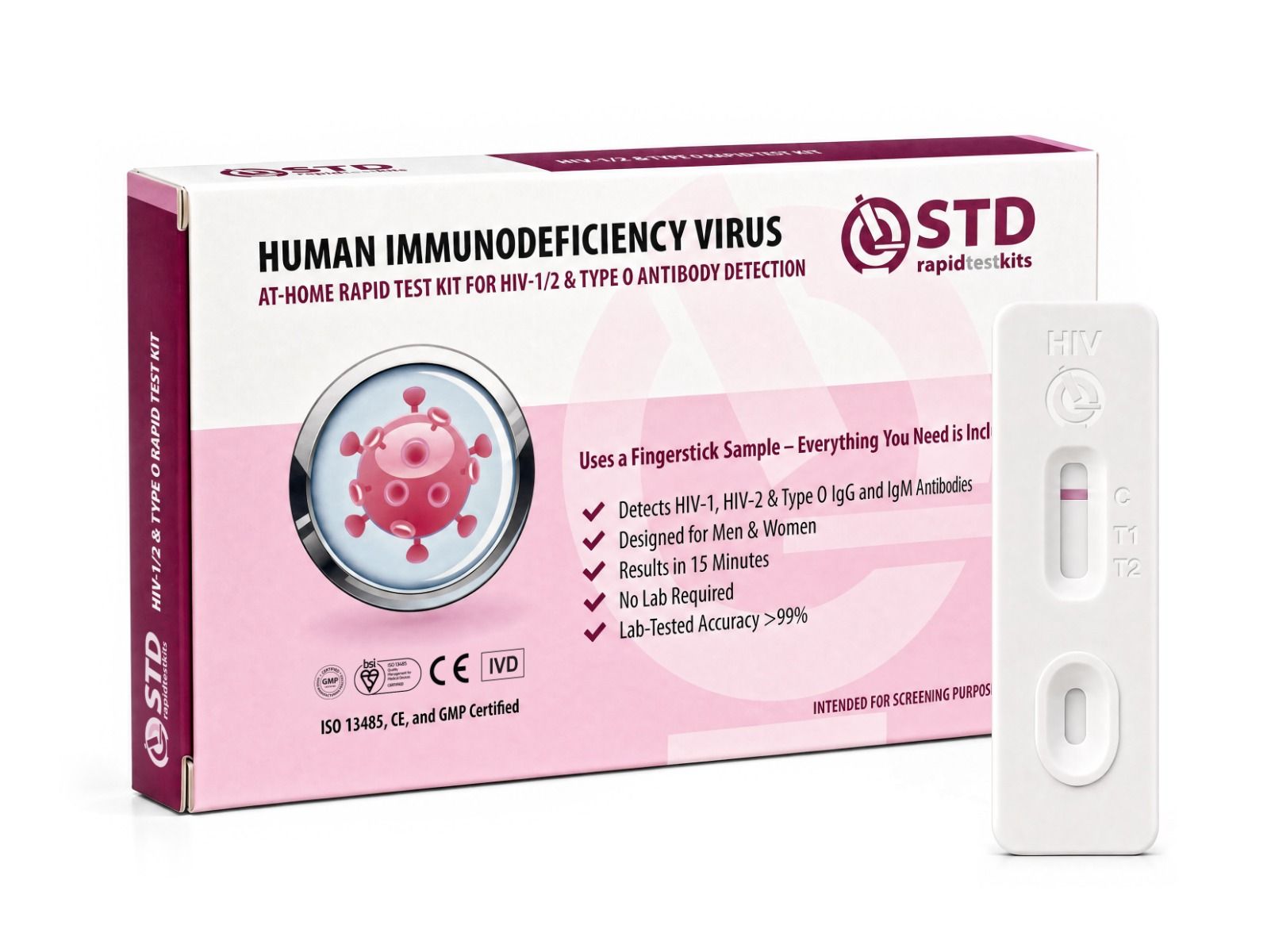
This article is published by stdrapidtestkits.com, which sells at-home STI testing kits. We recommend products based on fit-for-purpose for the reader's concern, not commercial benefit. The HIV rapid test below screens for HIV antibodies in a fingerstick blood sample; it is a screening tool, not a diagnostic substitute for clinical confirmation if a result comes back reactive.
What Early Testing Changes (And Why It Matters Most)
One line separates two completely different outcomes: knowing your status early versus finding out late. When HIV is caught early, before it progresses to AIDS, ART can keep the immune system strong. People live full lives, maintain their health, and in many cases reach a normal life expectancy.
When the infection is caught late, after the immune system has already collapsed, the situation becomes more complex. Treatment still helps, sometimes dramatically. Recovery is harder, slower, and less predictable than it would have been a decade earlier. The real timeline difference here is whether AIDS ever gets the chance to develop at all.
The barrier for most people is not access to testing anymore. It is the assumption that the body will signal when something is seriously wrong. HIV does not work that way. The most decisive step you can take when there is uncertainty is to test, get a result, and act on it rather than wait for symptoms that may not arrive in time.

You Deserve Clarity, Not Guesswork
Reading about how fast AIDS can progress without treatment can feel heavy. It is. This is not about scaring yourself into worst-case thinking. It is about understanding what is real so you can act on it. The untreated timeline of about three years is true. So is the fact that ART can change that trajectory completely, even when it starts late.
If there is even a small question in your mind about a past exposure, a symptom that does not sit right, or something you have been putting off, the next useful step is testing. Testing is the line between uncertainty and a clear path forward. Once you know your status, the rest of the conversation, including treatment if needed, becomes something you can actually work with rather than worry about.
Untreated AIDS carries a survival window of about three years on average; modern antiretroviral therapy changes that outcome, and testing is the step that opens the door to treatment.
FAQs
- How fast does AIDS actually kill someone if there is no treatment?
- Most people do not collapse overnight. According to the CDC, people with untreated AIDS typically survive about three years. Aggressive opportunistic infections like pneumocystis pneumonia or tuberculosis can shorten that timeline significantly.
- Is AIDS always fatal if you do not treat it?
- Without treatment, yes. The immune system continues to weaken until it can no longer fight off infections. It is rarely one dramatic event; it is a series of complications the body can no longer recover from. With antiretroviral therapy, that trajectory is very different.
- What actually causes death in late-stage HIV?
- Usually not HIV itself. The most common causes are opportunistic infections like pneumonia, tuberculosis, or cancers like Kaposi sarcoma that take advantage of a weakened immune system. The body loses its defense system rather than being attacked directly by the virus.
- Can someone live a long time with AIDS without treatment?
- Generally no. People can live for about a decade or longer with untreated HIV before it becomes AIDS. Once it reaches the AIDS stage, the timeline shortens to about three years on average, and managing it without medication is not a realistic option.
- How would I know if HIV had progressed to AIDS?
- There is often no clear switch you can feel. Some people just notice they are getting sick more often, that things are not healing the way they used to, or that they have lost weight without trying. Many people only find out after a serious infection sends them to a clinic or hospital. A blood test that measures CD4 count is the clinical way to confirm progression.
- If someone starts treatment late, is there still hope?
- Yes, often more than people expect. Even at the AIDS stage, antiretroviral therapy can help rebuild the immune system and stabilize the body. Recovery is not instant and outcomes depend on how far things have progressed, but treatment can absolutely change the trajectory.
- Does AIDS progress faster in some people than others?
- Yes. Two people with the same diagnosis can have very different timelines. The type of opportunistic infections, nutritional status, age, access to even basic medical care, and co-existing conditions like hepatitis B or C all affect how quickly things move.
- What is the smartest next step if I am worried about HIV?
- Testing. Guessing will not give you peace of mind, and symptoms alone are not reliable. A rapid at-home HIV test takes about 15 minutes and gives you something concrete to work with. If you test positive, link to clinical care quickly; antiretroviral therapy started early is the single biggest factor in long-term outcomes.
How We Sourced This Article: This guide combines current clinical guidance on HIV progression from the U.S. Centers for Disease Control and Prevention, the World Health Organization, the NHS, and the U.S. National Institutes of Health with the documented natural history of untreated AIDS. We verified specific survival figures against the most current pages of these organizations rather than reproducing older numbers from secondary sources. The goal is to show medically accurate timelines while keeping the framing honest about how variable the late stage can be in real life.
- U.S. Centers for Disease Control and Prevention. About HIV reference, including the stages of HIV infection and the typical three-year survival figure for untreated Stage 3 (AIDS).
- World Health Organization. HIV and AIDS fact sheet, including global epidemiology and case concentration in sub-Saharan Africa.
- U.S. National Institutes of Health (HIVinfo). Stages of HIV infection fact sheet, including AIDS-stage manifestations such as recurrent infections, weight loss, night sweats, and persistent skin or systemic problems.
- U.S. Centers for Disease Control and Prevention. HIV treatment overview, including the role of antiretroviral therapy in viral suppression and the U=U evidence base.
- NHS. HIV and AIDS overview page, including the description of antiretroviral therapy and the chronic-disease framing of treated HIV.
- NHS. HIV and AIDS symptoms reference, including the description of serious illnesses such as tuberculosis, pneumonia, and cancer that can develop when HIV is left untreated.
