

Quick Answer: Chlamydia can harm fertility by inflaming fallopian tubes, degrading egg quality, and increasing miscarriage or IVF failure risk, especially when left untreated or undetected.
Why This Article Matters for Anyone Trying to Conceive
If you’ve had chlamydia, or even suspect it, you deserve clear, compassionate answers. Whether you’re planning your first pregnancy or navigating your third IVF cycle, understanding how this STD interacts with your reproductive system is more than academic. It’s personal, emotional, and potentially life-altering.
Maybe you tested positive years ago and thought it was handled. Maybe no one ever told you that chlamydia could silently harm your chances of pregnancy, even without pain or discharge. This article breaks down the science behind that fear. You’ll learn what research actually says about:
• The link between untreated chlamydia and pregnancy loss
• How it can affect egg quality and ovarian function
• What happens to IVF success rates after an infection
• How to test, treat, and protect your fertility now
We’re not here to scare you. We’re here to arm you with facts, real talk, and next steps, because no one should lose sleep over something they can test for from home.

First, How Chlamydia Works, And Why It's So Sneaky
Chlamydia trachomatis is a bacterial infection transmitted through vaginal, anal, or oral sex. Most people with chlamydia never show symptoms. When it does appear, it might look like mild discharge, spotting after sex, or pelvic cramping, but it’s just as often invisible.
That’s the danger. Left untreated, chlamydia can travel from the cervix to the uterus, fallopian tubes, and ovaries. Once there, it triggers chronic inflammation and scarring. This condition is known as pelvic inflammatory disease (PID), and it’s the main way chlamydia harms fertility.
In women and people with ovaries, PID can block fallopian tubes, disrupt ovulation, interfere with egg quality, or increase the risk of ectopic pregnancy. In short: it changes the entire environment where conception is supposed to happen.
Even a single untreated infection can leave microscopic damage, and it may not show up until years later when someone starts trying to get pregnant.
What the Research Says About Chlamydia and Miscarriage
Can chlamydia make you lose a baby? The science says it's complicated, but the risk is real, especially if the infection is new or active.
A study published in the journal Sexually Transmitted Diseases in 2021 found that people who had chlamydia in the past were more likely to have a miscarriage in the first trimester. The researchers found that this risk was mostly caused by chlamydia damaging the fallopian tubes and messing up the immune system.
Other research, such as a 2022 review in Reproductive Biology and Endocrinology, shows that even mild or treated infections can change the immune balance needed to keep a pregnancy going.
The main point is that if you've had chlamydia that wasn't treated, especially more than once, your risk of miscarriage may be higher. But that doesn't mean you can't get pregnant. It means you should have a care plan that takes into account your whole history, including any STDs you've had in the past.
| Factor | Impact on Pregnancy | Supporting Study |
|---|---|---|
| Untreated Chlamydia | Increases miscarriage and ectopic risk | Sexually Transmitted Diseases (2021) |
| History of PID | Reduces implantation success and causes tubal blockage | Fertility and Sterility (2018) |
| Chronic Inflammation | Alters immune response needed for early pregnancy | Reproductive Biology and Endocrinology (2022) |
Table 1. Documented pathways between chlamydia infection and pregnancy loss
What About Egg Quality? Chlamydia’s Cellular Damage
People often think that STDs only affect the tubes, but researchers are now looking into the ovaries themselves. Can chlamydia hurt your real eggs? The short answer is yes, especially if the inflammation doesn't go away.
Studies have shown that long-term pelvic infections can cause oxidative stress, which is a chemical imbalance that affects cell membranes, even those in ovarian follicles. A study published in Frontiers in Reproductive Health in 2020 found that oxidative damage can make oocytes (eggs) less viable, change hormone signaling, and make fertilization harder.
Chlamydia doesn't directly "infect" eggs. But by making the environment they grow up in more acidic, it could throw off the delicate hormonal balance that controls how eggs grow. You can't always see the damage when you grow a garden in bad soil, but the results are different.
This is very important for people who are trying to get pregnant. If your eggs are already of poor quality because of age or other factors, any extra inflammation, whether it happened in the past or is happening now, can make it harder for fertilization or embryo quality to happen.
Even if you get rid of the infection, your eggs will remember what your body went through. That's why it's so important to get tested and treated early.
Chlamydia and IVF: What Studies Show About Success Rates
Now let's talk about what happened. What does it mean for your chances of getting pregnant through IVF if you've had chlamydia in the past, especially if it wasn't treated or came back?
A big study in Human Reproduction (2019) found that women who had PID in the past (which is often caused by chlamydia) had much lower rates of implantation and pregnancy during IVF cycles. The researchers said that this was because of scarring in the tubes, changes in the lining of the uterus, and the possibility of the embryo being rejected because of inflammation.
In a smaller cohort study from 2022, patients who tested positive for chlamydia antibodies (which means they had been infected in the past) had lower rates of blastocyst formation and higher rates of early pregnancy loss after embryo transfer.
But not all of the information is bad. A study in the journal Reproductive Immunology said that most patients can get their full fertility back with the right treatment, especially if they catch infections early.
What does that mean? Yes, chlamydia can make IVF less likely to work. But it's not always a deal-breaker. Fertility specialists can better tailor your treatment plan to your specific risk factors if you know your history and test regularly.
Real Talk: A Case of Delayed Diagnosis and Delayed Motherhood
Alina, 33, had no idea she’d ever had chlamydia. “I never got a call. No symptoms. Nothing.” It wasn’t until her third failed IVF cycle that a nurse suggested a full STI antibody panel. “I thought it was a waste of time,” she said.
Her results showed high chlamydia IgG antibodies, evidence of a past, untreated infection. “I was devastated. No one ever told me this could impact fertility later. I felt like my body had betrayed me without me even knowing.”
Her doctor adjusted her protocol, added a course of anti-inflammatory treatment, and recommended a different transfer window. Two months later, her fourth cycle stuck. “I still grieve those lost years,” Alina said, “but at least now I understand what was happening.”
“If I could go back, I would’ve tested in my twenties, even without symptoms. I thought I was being safe. But safe and symptom-free aren’t the same.”
Alina’s story is echoed in hundreds of fertility forums and private clinics. It’s not about blame, it’s about knowledge. And knowledge is what turns grief into a plan.
Testing Is Easier (and More Private) Than You Think
Maybe you’re reading this with a pit in your stomach. Maybe your last partner swore they were clean. Maybe your OB never mentioned STI testing in your fertility workup. Whatever brought you here, here’s the good news: You can test for chlamydia at home, quietly, quickly, and without judgment.
At-home tests use a simple urine sample or vaginal swab. Most detect active infections using NAAT (nucleic acid amplification) technology, the same method used in clinics. Results come in minutes or via secure email, depending on the type you choose.
If you’re actively trying to conceive, it’s smart to screen before embryo transfer, IUI, or even TTC. One untreated infection can shift the whole outcome. But when caught early, chlamydia is 100% treatable, often with a single dose of antibiotics.
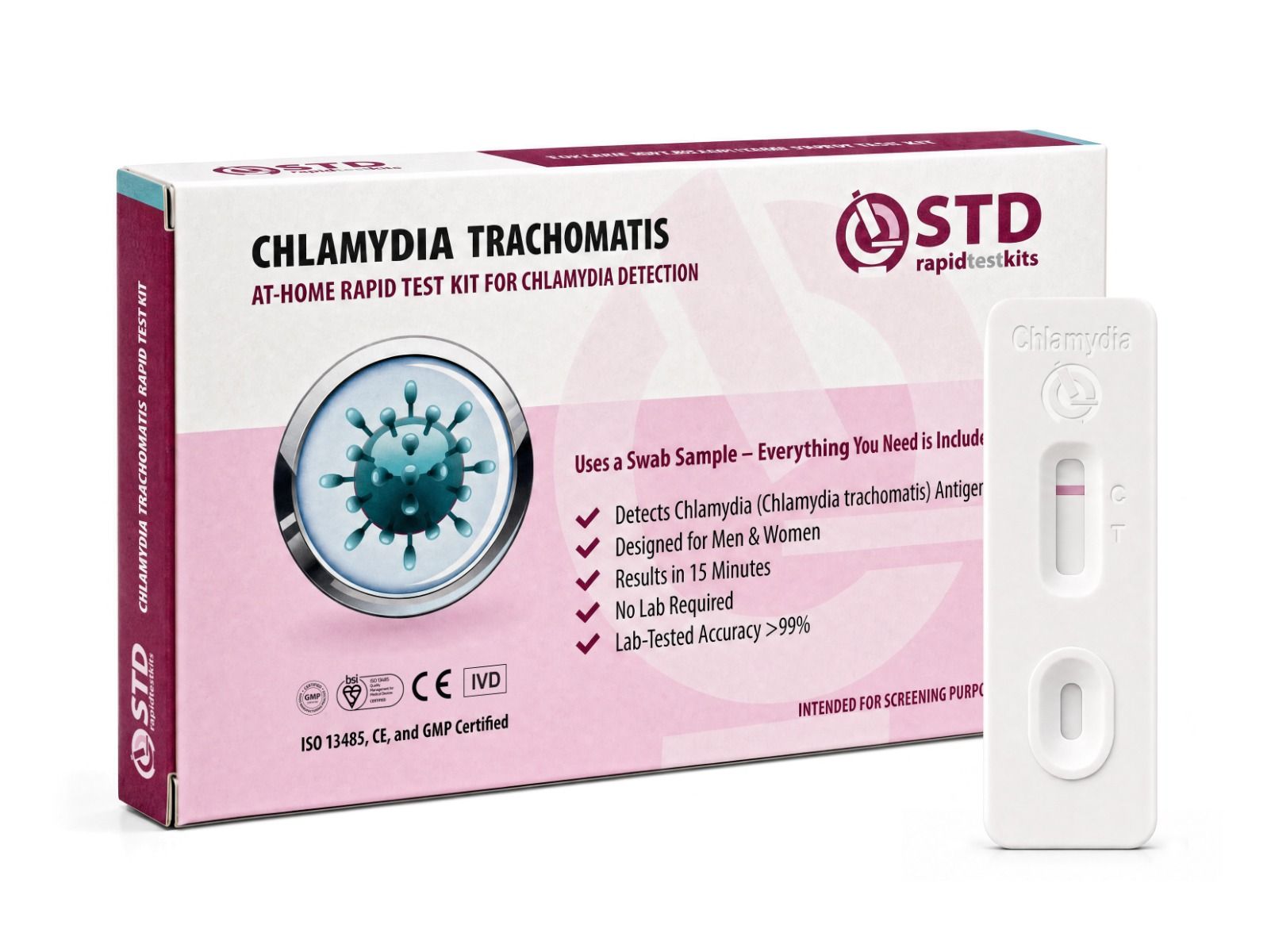
If you’re unsure where to start, STD Rapid Test Kits offers discreet delivery and FDA-approved options for chlamydia home testing.

People were also reading: Ignoring Chlamydia or Gonorrhea? Here’s What Can Go Wrong
Why You Might Not Have Known You Had It
One of the hardest parts about chlamydia is that most people don’t even know they’ve had it. No burning, no discharge, no reason to get checked, until they’re sitting in a fertility consult being told their tubes are blocked or their egg count is lower than expected.
Chlamydia is called the “silent STD” for a reason. According to the CDC, up to 70% of women and 50% of men with chlamydia have no symptoms. That’s a huge window where damage can occur without a single red flag. By the time the infection travels from the cervix to the uterus and fallopian tubes, it’s often too late to feel anything, but not too late to leave a scar.
And here’s where the system fails us: STI testing isn’t always part of a fertility workup. Unless you ask, some clinics don’t run a full screen. It’s assumed that if you’re “healthy” now, past infections aren’t relevant. But the body keeps the score, even if the chart doesn’t show it.
So if you’ve ever had an untested partner, a condom break, or even a few years between checkups, testing now is worth it. Not because you did something wrong, but because no one should be blindsided by a fertility diagnosis that could’ve been prevented.
STD or Something Else? What Fertility Tests Can, and Can’t, Tell You
Even if you’re in a fertility clinic right now, there’s a chance you’ve never had a conversation about past chlamydia exposure. Why? Because standard tests don’t always catch the effects of STDs, unless you ask for the right ones.
Here’s a breakdown of what common fertility diagnostics can and can’t detect. This can help you decide what to ask for, when to retest, and how to push for answers that go beyond the usual “everything looks fine” shrug.
| Test Type | What It Detects | Misses or Limitations | When to Ask For It |
|---|---|---|---|
| NAAT (urine or swab) | Current chlamydia infection | Won’t show past exposure or damage | Before or during fertility workup |
| Chlamydia IgG Antibody Test | Evidence of past infection | Doesn’t show if damage occurred | History of untested partners or miscarriage |
| Hysterosalpingogram (HSG) | Blocked or damaged fallopian tubes | Doesn’t show cause of blockage | If trying to conceive or doing IVF |
| AMH / Follicle Count | Ovarian reserve and egg supply | Doesn’t assess egg quality or past infection | Before IUI or IVF |
| Pelvic Ultrasound | Cysts, fibroids, hydrosalpinx | Doesn’t detect microscopic scarring | If you’ve had PID or pelvic pain |
Table 2. What fertility testing can (and can’t) reveal about chlamydia-related damage
If any of these tests are missing from your workup, or if your doctor brushes off past STDs as irrelevant, it’s okay to speak up. Your fertility story deserves the full picture, not just the highlight reel.
FAQs
- 1. Can chlamydia actually cause a miscarriage?
- It can, especially if it goes untreated. Chlamydia triggers inflammation in the uterus and tubes, which can mess with implantation or destabilize early pregnancy. Some studies link it to higher miscarriage rates, though it’s often one factor among many. If you've had a loss and suspect past infections, it's worth talking to a fertility doc about it. You’re not overthinking it.
- 2. What if I had chlamydia years ago and didn’t even know it?
- That’s more common than you’d think. Chlamydia is called a “silent infection” for a reason, it rarely shows symptoms. If you were never tested, it’s possible your body cleared it... or not. If you’re trying to get pregnant, a chlamydia antibody test can help check if it’s part of your story.
- 3. Does chlamydia mess with egg quality?
- Not directly, but yes, it can. The infection causes inflammation in the pelvis, which can throw off hormone signaling and damage the environment your eggs grow in. Think of it like smoke in a kitchen: it doesn’t ruin the recipe, but it can ruin the process. The sooner it’s caught, the better the odds.
- 4. How do I know if my fallopian tubes were affected?
- You won’t feel it, but testing can show it. A test called an HSG (hysterosalpingogram) uses dye and X-ray to check if your tubes are open or blocked. It’s quick, it’s outpatient, and for many people, it’s the only way they find out PID left behind scars.
- 5. If I had chlamydia and got treated, am I in the clear?
- You’re on the right track, but you still might want follow-up testing, especially if you’re trying to conceive. One treatment clears the infection, but if there was damage already (like tubal scarring), that doesn’t go away. A fertility workup can help map that out for you.
- 6. Does chlamydia affect IVF outcomes?
- It can, especially if there’s been tubal damage or lingering inflammation. Some studies show lower implantation rates and more early losses in people with chlamydia antibody markers. That said, with the right protocol, many people go on to have healthy pregnancies. This is where personalized care really matters.
- 7. Can my partner’s past chlamydia affect our chances?
- Yes, this isn’t just a uterus issue. In people with sperm, chlamydia can lower motility and increase DNA fragmentation, which affects fertilization and embryo development. If you're doing IVF, ask if a semen DNA test makes sense for your situation.
- 8. How soon after treatment can I try to conceive?
- Doctors usually recommend waiting until symptoms are gone and at least one full cycle has passed. That gives your body time to heal, and ensures inflammation won’t sabotage your efforts. If you’re doing IVF, your clinic may adjust your timing for transfer.
- 9. I tested negative, does that mean I’m totally fine?
- It means there’s no current infection, which is great. But if you’ve had untreated chlamydia in the past, damage may still be there. A negative test now is peace of mind, but not a complete fertility checkup. Combine it with imaging if you’re struggling to conceive.
- 10. Should I test again if I’ve had multiple partners since?
- Absolutely. Each new partner means a new potential exposure, even if everything feels “fine.” And with chlamydia, symptoms (or lack thereof) are a terrible indicator. Test often. It’s just part of taking care of your future family.
Take Back Control: Testing Is Prevention
Whether you’re planning a baby, already in the IVF trenches, or just trying to understand your body, chlamydia shouldn’t be a mystery. It should be a testable, treatable checkpoint, not a silent roadblock.
Many readers find reassurance in testing even if their last exposure was years ago. A negative test now gives you clarity. A positive result gives you action. Either way, you win something essential: control over your next steps.
This combo STD test kit checks for the most common infections from the privacy of home. No waiting rooms. No awkward conversations. Just answers.
If your head keeps spinning, peace of mind is one test away.
How We Sourced This Article: We combined current guidance from leading medical organizations with peer-reviewed research and lived-experience reporting to make this guide practical, compassionate, and accurate. In total, around fifteen references informed the writing; below, we’ve highlighted some of the most relevant and reader-friendly sources.
- Effect of previous Chlamydia trachomatis infection on the reproductive outcomes after IVF | PMC
- Impact of Chlamydia trachomatis in the reproductive setting | PMC
- Impact of genital Chlamydia trachomatis infection on reproductive outcomes among infertile women undergoing tubal flushing | Fertility Research and Practice
- Impact of a positive Chlamydia trachomatis serology on cumulative IVF live birth rate | PubMed
- Associations of Chlamydia trachomatis serology with fertility-related and pregnancy adverse outcomes | EBioMedicine
- Chlamydia trachomatis infection of human endometrial stromal cells induces defective decidualisation and chemokine release | Scientific Reports
- Positive Chlamydia trachomatis serology has no impact on IVF pregnancy outcomes (abstract) | Reproductive Biomedicine Online
