
Published: November 2025 | Last updated: April 2026 | Editorial review and quality control: Martina N.
HIV care has changed faster in the past two years than in any decade since combination therapy arrived in the mid-1990s. Twice-monthly and twice-yearly injections are replacing daily pills for a growing share of patients. Same-day treatment starts after diagnosis are now standard at most large clinics. After years of cautious headlines, cure research has produced its first scalable approaches in human trials. This guide walks through what is genuinely new in 2025, what is still aspirational, and what it means for someone deciding whether to test.
Is HIV curable in 2025?
Not yet. No scalable cure exists for the general public. But effective treatment is so reliable that a person diagnosed today and started on therapy quickly can expect a normal life span and an undetectable viral load that cannot be transmitted through sex. Long-acting injectables (Cabenuva every 1 or 2 months, Sunlenca every 6 months) are now widely approved options alongside daily oral regimens like Biktarvy. Cure research is in human trials but still investigational.
Key Takeaways
- Modern HIV treatment can suppress the virus to undetectable levels within 8 to 12 weeks, eliminating sexual transmission risk (the U=U principle confirmed by the CDC).
- Long-acting injectable therapy is FDA-approved and now reaches twice-yearly dosing with lenacapavir, used for both treatment and PrEP.
What's new in HIV treatment in 2025
The biggest practical change is the shift from daily pills to long-acting injections. Daily oral combinations such as Biktarvy, Dovato, and Triumeq remain the gold standard for newly diagnosed adults: they are reliable, well tolerated, and start working within days. For people who would prefer not to think about HIV every morning, two injectable options have moved firmly into mainstream care.
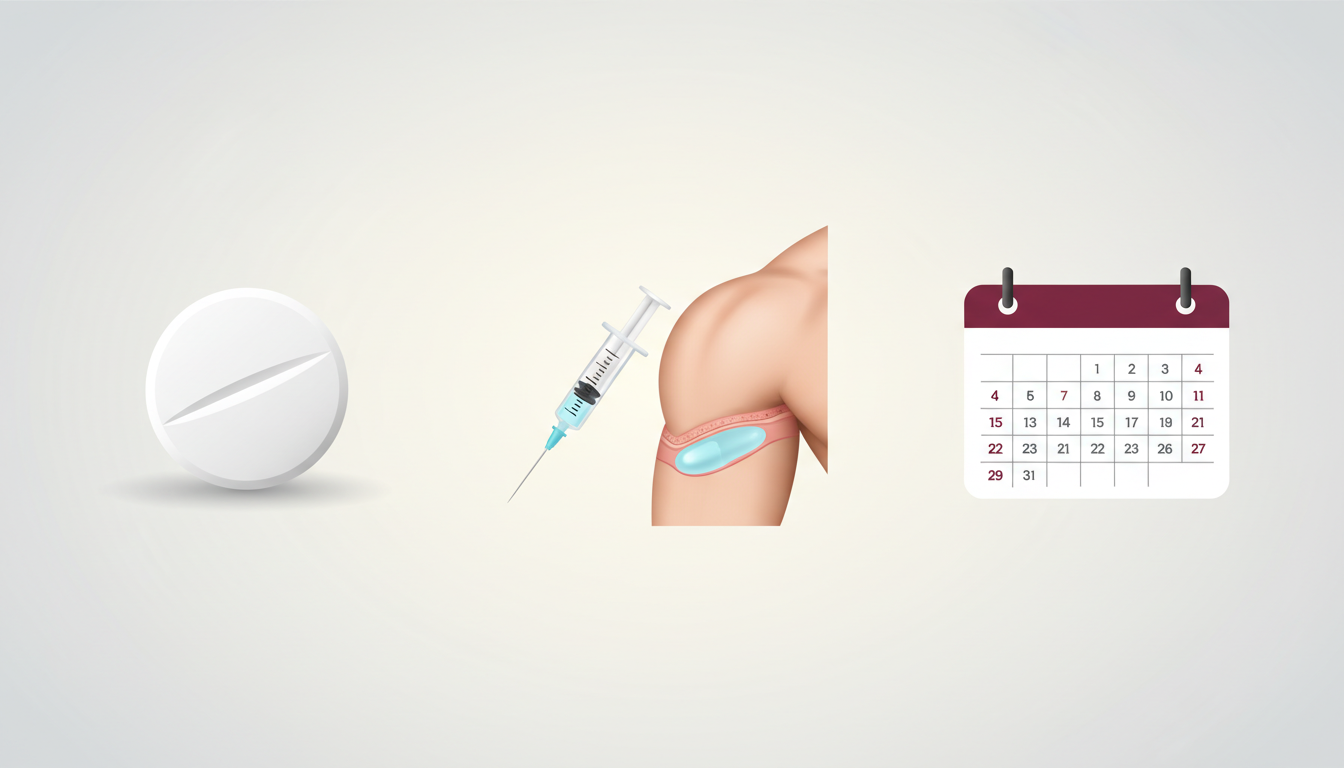
Cabenuva is a co-administered injection of cabotegravir and rilpivirine. After a brief oral lead-in to confirm tolerance, patients receive intramuscular injections every 1 or 2 months. The FDA has approved it for virologically suppressed adults switching from oral therapy. Trial data show patients on long-acting therapy report higher treatment satisfaction and a measurable drop in the daily emotional burden of pill-taking compared with patients on oral regimens.
Sunlenca (lenacapavir) is a first-in-class capsid inhibitor dosed every 6 months by subcutaneous injection. The FDA originally approved it for treatment-experienced adults with multidrug-resistant HIV, used in combination with other antiretrovirals. The same molecule has now been endorsed for PrEP at twice-yearly dosing, covered further below. The NIH HIVinfo list of FDA-approved HIV medicines reflects the rapid pace of approvals in 2024 and 2025.
Beyond the injectables, three smaller-but-meaningful changes shape 2025 care. Same-day ART start (often called immediate-start ART or iART) is now standard at most large clinics: a person who tests positive on Monday morning can leave with their first dose that afternoon. Two-drug oral regimens such as dolutegravir plus lamivudine have been validated for many patients as a less-toxic alternative to traditional three-drug therapy. The WHO updated its 2025 guidance to formally include lenacapavir for both prevention and treatment-experienced cases.
Across these formats, starting therapy early and reaching an undetectable viral load remain the foundation of treatment outcomes. Most patients suppress the virus within 8 to 12 weeks of starting any of the regimens listed above, with the choice of route now driven mostly by access, insurance coverage, and the patient's preference for daily versus periodic dosing.
| Treatment | Form | Dosing | Best fit |
|---|---|---|---|
| Biktarvy | Daily oral pill | Once daily | Most newly diagnosed adults |
| Dovato | Daily oral pill | Once daily | Two-drug regimen, lower long-term toxicity |
| Cabenuva (cabotegravir + rilpivirine) | Intramuscular injection | Every 1 or 2 months | Suppressed adults wanting to be pill-free |
| Sunlenca (lenacapavir) | Subcutaneous injection | Every 6 months | Multidrug-resistant cases (and PrEP) |
U=U: undetectable equals untransmittable
U=U is now one of the most important facts in HIV medicine, and one of the most widely misunderstood outside of clinical settings. It means a person with HIV who takes effective treatment and reaches an undetectable viral load cannot transmit the virus to a sexual partner. This is not a probability statement or a hopeful approximation. It is a finding reproduced across multiple large studies, including HPTN 052, PARTNER, and PARTNER2, which followed thousands of mixed-status couples for years and recorded zero linked transmissions when the partner with HIV was virally suppressed.
The CDC's HIV portal states the position plainly: people on suppressive therapy who maintain an undetectable viral load have effectively no risk of sexually transmitting HIV. The clinical threshold is fewer than 200 copies of HIV RNA per milliliter, and most modern regimens drive viral loads below detectable limits within 8 to 12 weeks of starting treatment.
What this means in practice. A person diagnosed early, started on ART promptly, and maintaining an undetectable viral load can have unprotected sex with an HIV-negative partner without transmitting the virus. They can have biological children with HIV-negative partners through standard conception. Their life expectancy approximates that of an HIV-negative peer of the same age. The catch is consistency: missed doses or treatment interruption can let the viral load rebound, which is why adherence is the single biggest predictor of long-term outcomes.
U=U is also a stigma intervention. The framing of someone with HIV as untransmittable, rather than infectious, has done more for the emotional reality of HIV care than any single drug.
A clinical undetectable result means fewer than 200 HIV RNA copies per milliliter on a quantitative viral load test. Most modern assays measure to a limit of 20 to 50 copies, so undetectable often means even lower in practice. Routine viral load monitoring continues every 3 to 6 months once treatment is stable.
PrEP and PEP: prevention has caught up with treatment
Pre-exposure prophylaxis (PrEP) is medication taken before potential HIV exposure to prevent infection. As of 2025, three formats are routinely prescribed: daily oral pills, on-demand dosing for cisgender men who have sex with men, and long-acting injectables. Each has trade-offs.
Daily oral PrEP. Truvada (tenofovir disoproxil with emtricitabine) and Descovy (tenofovir alafenamide with emtricitabine) remain the most accessible and best-studied options. Taken daily, they reduce the risk of sexually transmitted HIV by roughly 99 percent in adherent users. Generic Truvada has driven costs sharply down, and most US insurance plans cover PrEP without copay under ACA preventive-services rules.
On-demand (2-1-1) PrEP. For cisgender men who have sex with men whose exposure events are predictable rather than continuous, the 2-1-1 schedule (two pills 2 to 24 hours before sex, one pill 24 hours later, and one pill 24 hours after that) is endorsed by the WHO and several European guidelines. It is not validated for cisgender women or for receptive vaginal sex.
Injectable PrEP. Apretude (cabotegravir extended-release) is given as an intramuscular injection every 2 months after a brief oral lead-in. Lenacapavir, the same molecule used for treatment of multidrug-resistant HIV, has now been endorsed by the WHO for PrEP at twice-yearly dosing. Phase III trials of lenacapavir for prevention reported essentially complete protection in cisgender women in sub-Saharan Africa, the highest efficacy ever recorded for an HIV prevention agent.
PEP. Post-exposure prophylaxis is a 28-day course of antiretrovirals started within 72 hours of a possible exposure (faster is better). It is available through emergency departments, urgent care, sexual-health clinics, and a growing number of telehealth services. PEP is not a substitute for PrEP if exposures are repeated, but it remains the right tool after a one-off event such as a broken condom or sexual assault.
Cure research: where things actually stand
Headlines about an HIV cure have arrived in waves for nearly two decades, and most have not delivered. No scalable cure is available outside research settings in 2025, but several mechanistic approaches are now in human trials with credible early data. Researchers distinguish two endpoints: a sterilizing cure, which removes every copy of HIV from the body, and a functional cure, in which the virus persists at very low levels but the immune system or a periodic intervention keeps it suppressed without daily medication.
A handful of patients have achieved what looks like a sterilizing cure through bone marrow transplants given for cancer. Most of these donors carried a CCR5-delta32 mutation that confers HIV resistance. The procedure carries substantial treatment-related mortality, so it is not appropriate outside oncology indications. These cases prove the principle but cannot scale.
The most active research lines target a functional cure. CRISPR-based gene-editing approaches, including Excision BioTherapeutics's EBT-101 program, aim to cut HIV proviral DNA out of infected cells. Phase I/II trials are underway with early data showing the approach is safe; durable virologic effect across all infected cells remains the hard part. Broadly neutralizing antibodies (bNAbs) are being tested as both treatment-extenders and as potential drivers of immune control after stopping ART. Therapeutic vaccines, including mRNA candidates from groups such as Moderna and IAVI, aim to train the immune system to suppress HIV the way a healthy immune system suppresses many endemic viruses; multiple Phase I and Phase II trials are open.
None of these approaches will replace antiretroviral therapy in the next several years. Phase III trials, regulatory approval, and the build-out of clinical infrastructure to deliver gene therapies all take time. The most-watched candidate to reach efficacy data first is the EBT-101 CRISPR program, currently enrolling its Phase I/II cohort, with bNAb combinations from groups including Rockefeller and Caltech advancing in parallel.
| Approach | Stage in 2025 | Main constraint |
|---|---|---|
| Stem cell transplant (CCR5-delta32 donor) | Used in oncology only | High treatment-related mortality, not scalable |
| CRISPR gene editing (EBT-101 and similar) | Phase I/II human trials | Reaching every reservoir cell |
| Broadly neutralizing antibodies (bNAbs) | Phase II treatment-extender trials | Cost, viral escape mutations |
| Therapeutic mRNA vaccines | Phase I/II | Durability of induced immune response |
How HIV testing fits into all of this
Treatment can only happen if a person knows their status. The CDC estimates roughly 13 percent of people living with HIV in the United States are unaware of their infection, which means they cannot start treatment, cannot benefit from U=U, and may unknowingly transmit. Testing is the upstream lever for everything else in this article.
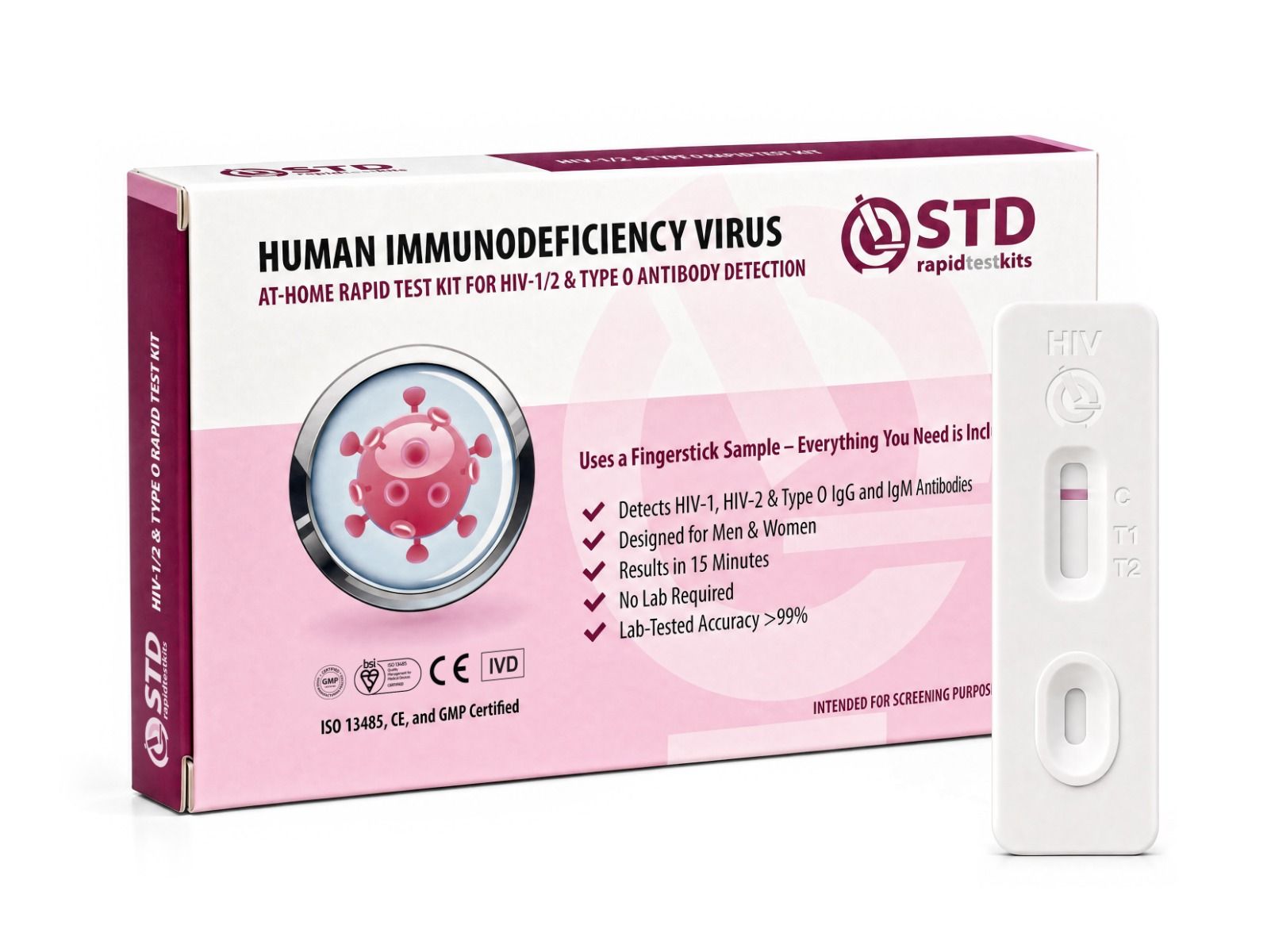
Three test technologies cover most situations. Rapid antibody tests use a fingerstick blood drop or oral fluid swab and produce a result in 15 to 30 minutes. They are the format used in most at-home kits and most community testing programs. They detect IgG antibodies to HIV, which usually appear 23 to 90 days after exposure. A negative result inside that window is not yet conclusive, which is why test instructions advise repeat testing if exposure was recent.
Antigen/antibody combination tests (often called fourth-generation or Ag/Ab combo tests) are the standard at clinical labs. They detect both p24 antigen and HIV antibodies, shrinking the window period to roughly 18 to 45 days. Many sexual-health clinics and confirmatory mail-in services use this format.
Nucleic acid tests (NAT or HIV RNA tests) detect viral RNA directly and can identify infection as early as 10 to 33 days after exposure. They are not available as at-home kits; they require a clinic visit. NAT is recommended after high-risk exposures when an early answer matters or when symptoms suggest acute HIV infection.
The right test depends on timing and context. For routine peace-of-mind testing more than 90 days after the last exposure, an at-home rapid test is accurate, private, and quick. For exposures within the last few weeks where the answer changes a decision (such as starting PEP within 72 hours), clinic-based testing with a fourth-generation or NAT panel is the right choice. A reactive result on any rapid test always needs lab confirmation.
This article is published by stdrapidtestkits.com, which sells at-home STI testing kits including a rapid HIV antibody test. We recommend products based on fit-for-purpose for the reader's concern, not commercial benefit.
| Test type | Window period | At-home option? |
|---|---|---|
| Rapid antibody (fingerstick or oral swab) | 23 to 90 days | Yes |
| Antigen/antibody combo (4th gen, lab) | 18 to 45 days | Mail-in only |
| HIV RNA (NAT) | 10 to 33 days | No, clinic only |
If your test comes back positive
A reactive result on any rapid HIV test, including an at-home kit, is not the final word. The next step is a confirmatory lab test, almost always an HIV-1/2 antibody differentiation assay paired with a viral load measurement. False positives on rapid tests are uncommon but they do happen, particularly in people with recent vaccinations or some autoimmune conditions, which is why guidelines require lab confirmation before an HIV diagnosis becomes definitive.
Once the result is confirmed, modern care has changed the timeline dramatically. Same-day ART (immediate-start ART, or iART) is now the default at most US sexual-health clinics and HIV specialty practices. The protocol typically begins with a single-tablet integrase-inhibitor-based regimen, often Biktarvy, which can be started before all baseline lab results are back. Earlier ART start is associated with faster viral suppression, better preservation of immune function, and earlier transition to U=U status.
Practical things that happen in the first week of care: baseline lab work (CD4 count, viral load, hepatitis B and C screening, kidney and liver function), screening for other STIs, and a tuberculosis check. The first 6 to 12 weeks usually involve a viral load check around week 4 and another around week 12 to confirm the regimen is driving the virus down. Most patients reach undetectable status within 8 to 12 weeks; a smaller share take up to 24 weeks.
Insurance coverage and assistance programs are now strong in the US. The Ryan White HIV/AIDS Program funds care for uninsured and underinsured patients. Manufacturer assistance programs cover most or all of the medication cost for patients who fall outside other coverage. Linkage-to-care navigators are increasingly standard at the point of diagnosis to reduce the gap between testing positive and starting treatment, a gap that used to last weeks and now routinely closes within days.
If you test positive at a clinic that offers immediate-start ART, you can typically leave with your first dose of an integrase-inhibitor regimen the same day. Ask any HIV care provider about iART explicitly: most large clinics offer it but many smaller practices do not advertise it.
Stigma is the last barrier
The medical story of HIV in 2025 is, by historical standards, optimistic. The cultural story is more uneven. Treatment works, transmission is preventable on both sides of the equation, and life expectancy with HIV approaches that of HIV-negative peers when care is consistent. The remaining barriers are not pharmacology; they are stigma, access, and the lingering social weight of a 1980s framing that has not been fully replaced.
Several patterns persist. Disclosure to sexual partners remains stressful even though U=U fundamentally changes the math: an undetectable partner cannot transmit. People at higher risk who would benefit from PrEP still report difficulty asking providers for it. Black, Latino, and queer communities in the southern US continue to bear a disproportionate share of new diagnoses despite progress at the national level. While iART and same-day starts are widely available in cities, rural access lags badly.
What changes the cultural story is plain language and visibility. The U=U slogan has done more to shift public understanding than any individual policy intervention because it gives people a single accurate fact: undetectable equals untransmittable. Mental health support is increasingly built into HIV care, including peer-led groups and trauma-informed therapy, because anxiety and depression are among the strongest predictors of treatment adherence.
For a reader weighing whether to test today: at-home rapid antibody kits are FDA-cleared and reliable when used 90 days or more after the most recent possible exposure, any reactive result needs a confirmatory lab assay, and most US sexual-health clinics will start ART the same day a positive is confirmed.
People with HIV who take HIV medicine as prescribed and get and keep an undetectable viral load have effectively no risk of sexually transmitting HIV to their HIV-negative partners.
Frequently asked questions
- Is there a cure for HIV in 2026?
- No scalable cure is available outside research settings. A handful of people have been functionally cured through bone marrow transplants given for cancer, but the procedure is too risky for routine use. CRISPR gene editing, broadly neutralizing antibodies, and therapeutic mRNA vaccines are in human trials with credible early data, but none are close to general availability. The Excision BioTherapeutics EBT-101 CRISPR program is the nearest Phase I/II candidate worth watching for the first efficacy readouts.
- What is the difference between Cabenuva and Sunlenca?
- Cabenuva is cabotegravir plus rilpivirine, given as two intramuscular injections every 1 or 2 months for treatment of suppressed adults switching from oral therapy. Sunlenca (lenacapavir) is a single subcutaneous injection every 6 months, originally approved for multidrug-resistant HIV and now also endorsed for PrEP. Cabenuva is the more common starting injectable; Sunlenca is the every-6-month option.
- How accurate are at-home HIV tests?
- FDA-cleared rapid antibody tests report sensitivity in the high 90s when used after the appropriate window period (23 to 90 days for fingerstick or oral antibody tests). They are accurate as a screen, but a reactive result must be confirmed by a lab antibody differentiation assay. False negatives are most common when testing too soon after exposure, which is why repeat testing is recommended for recent exposures.
- How soon after exposure can HIV be detected?
- The answer depends on which test you are using and whether the result will change a decision, such as whether to start PEP within 72 hours. NAT (HIV RNA) can detect HIV as early as 10 to 33 days after exposure but requires a clinic visit. Fourth-generation antigen/antibody lab tests detect HIV in 18 to 45 days. Rapid antibody tests, including most at-home kits, are reliable from 23 days through 90 days post-exposure. If you test before the window closes and your result is negative, repeat testing once the window has passed.
- What does undetectable mean for sex?
- An undetectable viral load means there is so little HIV in the blood that it cannot be transmitted to a sexual partner. The clinical threshold is fewer than 200 copies per milliliter, sustained for at least 6 months on stable treatment. Studies of mixed-status couples have recorded zero linked transmissions when the partner with HIV was virally suppressed. U=U applies only to sexual transmission; safer-injection precautions still apply for people who inject drugs.
- Can HIV treatment start the same day as a positive test?
- Yes, at most large US sexual-health clinics and HIV specialty practices. Same-day ART (also called iART) starts a single-tablet integrase-inhibitor regimen, usually Biktarvy, before all baseline lab results are back. Earlier start means faster viral suppression and earlier U=U status. Some smaller clinics still wait for full baseline labs; ask explicitly whether iART is available.
- Is PrEP available as an injection now?
- Yes. Apretude (cabotegravir) is given every 2 months. Lenacapavir, given every 6 months, was endorsed by the WHO for PrEP based on Phase III data showing essentially complete protection in cisgender women in sub-Saharan Africa. Both require an HIV test before each injection. Daily oral PrEP (Truvada or Descovy) remains the most widely available option.
- If I am on PrEP, do I still need to test?
- Yes, every 3 months for HIV and other STIs. PrEP is highly effective but not 100 percent, and missed doses or delayed injections can leave a window of vulnerability. Routine testing also catches asymptomatic STIs that PrEP does not prevent. Most providers package PrEP refills with the quarterly testing visit.
- U.S. Centers for Disease Control and Prevention. HIV portal, including current testing window-period guidance, surveillance data, and the U=U treatment-as-prevention position.
- World Health Organization. HIV/AIDS fact sheet covering current global epidemiology, testing recommendations, and treatment guidance.
- U.S. National Institutes of Health, HIVinfo. FDA-Approved HIV Medicines fact sheet, listing current oral and injectable antiretroviral regimens and their indications.
- UNAIDS. Global AIDS Update, providing the global epidemiological context for the 2025 cure-research and prevention discussions in this article.
- U.S. Department of Health and Human Services. HIV.gov federal portal hosting links to the Adult and Adolescent ARV Guidelines, Ryan White program coverage, and patient-assistance programs referenced in the post-diagnosis section.
