
Published: November 2025 | Last updated: April 2026 | Editorial review and quality control: Martina N.
When something feels off down there and antifungal cream is already in the medicine cabinet, most women reach for it first, and sometimes that instinct is right. But yeast infections and genital herpes share enough early symptoms that one condition routinely masquerades as the other for weeks while the wrong treatment fails to do anything useful. This guide walks through what each condition actually looks like, how the symptoms diverge as the days go by, which tests work and when, and how to know whether to wait it out at home or get clinical answers.
How do you tell herpes from a yeast infection in women?
Yeast infections produce thick white cottage-cheese discharge, intense symmetric itching, and an inflamed vulva without sores or blisters. Genital herpes typically begins with tingling or burning in one specific spot, followed by a cluster of small fluid-filled blisters that break open into painful shallow ulcers, often with flu-like symptoms during the first outbreak. The strongest single tell: yeast doesn't blister, herpes does. If you have visible sores, see a clinician within 48 to 72 hours for a swab. If yeast treatment hasn't worked twice in a row, ask for an HSV blood test.
Key Takeaways
- Yeast infections cause thick discharge and full-area itching without sores. Herpes causes localized tingling that becomes a cluster of fluid-filled blisters that break into painful ulcers.
- If you've been treated for yeast more than twice in a short period and symptoms keep returning, that pattern itself is the signal to test for herpes and consider a broader STI panel.
Why women confuse herpes with yeast infections
Yeast infections sit in the cultural drugstore aisle. Most women have had one, recognize the pattern, and reach for clotrimazole the moment the itch starts. Herpes lives in a different part of the public imagination: stigmatized, scary, and easy to assume isn't possible for someone in a long-term relationship or with few partners. So when symptoms appear, the brain runs the yeast script first.
The overlap is real, not imagined. Both conditions cause itching, redness, and vulvar discomfort. Both can produce burning during urination if the skin is irritated enough. Both flare in response to triggers like hormonal changes, stress, illness, or a course of antibiotics. Early-stage herpes can mimic a mild yeast flare so closely that even experienced clinicians sometimes treat empirically for yeast first and only consider herpes after antifungals fail.
That diagnostic delay is part of why HSV-2 spreads so quietly. According to the CDC, most people with genital herpes don't know they have it because they have no symptoms, very mild symptoms, or symptoms attributed to something else (CDC Genital Herpes Basic Information). Women in particular get under-tested because routine STI panels don't include herpes unless specifically requested, and the symptoms blend in with vaginal conditions clinicians see every day.
On day one, both conditions can produce the same surface signals: vulvar itching, redness, mild burning, and discomfort with urination if the skin is irritated. Both can flare after antibiotics, hormonal changes, stress, or a recent illness. The shared trigger pattern and the shared early symptoms are exactly what trains the brain to think 'yeast' first. The divergence between day three and day five is what tells the two apart.
How the two conditions actually differ
Underneath the symptom overlap, herpes and yeast infections are biologically unrelated. A yeast infection (clinical name: vulvovaginal candidiasis) is a fungal overgrowth, almost always Candida albicans, a yeast species that normally lives in low numbers in the vagina. When something disrupts the vaginal microbiome, like antibiotics, hormonal shifts, uncontrolled blood sugar, or immunosuppression, Candida overgrows and triggers inflammation. Yeast is not sexually transmitted, though sex during a flare can worsen symptoms.
Genital herpes is a viral infection caused by herpes simplex virus type 1 (HSV-1) or type 2 (HSV-2). It transmits through skin-to-skin contact, including during asymptomatic viral shedding when no sores are visible. Once inside the body, the virus travels to the sacral ganglia (nerve roots near the base of the spine) and stays there permanently. Outbreaks are reactivations of the same infection, not reinfections. According to the CDC, after exposure the first outbreak can take days, weeks, or even years to appear, which is part of why so many people don't realize they carry the virus (CDC Genital Herpes Basic Information).
The practical implication: yeast infections clear with antifungals and don't return unless the trigger does. Herpes doesn't clear; it can only be suppressed. The table below shows where the two conditions diverge symptom by symptom.
| Symptom | Yeast Infection | Genital Herpes (HSV-1 or HSV-2) |
|---|---|---|
| Onset | Gradual, building over a day or two | Sudden, often starts with tingling or sensitivity |
| Itching | Intense, symmetric, full-area surface itch | Tingling or burning localized to one spot |
| Discharge | Thick, white, clumpy, cottage-cheese-like, no strong odor | Usually no significant discharge unless from internal lesions |
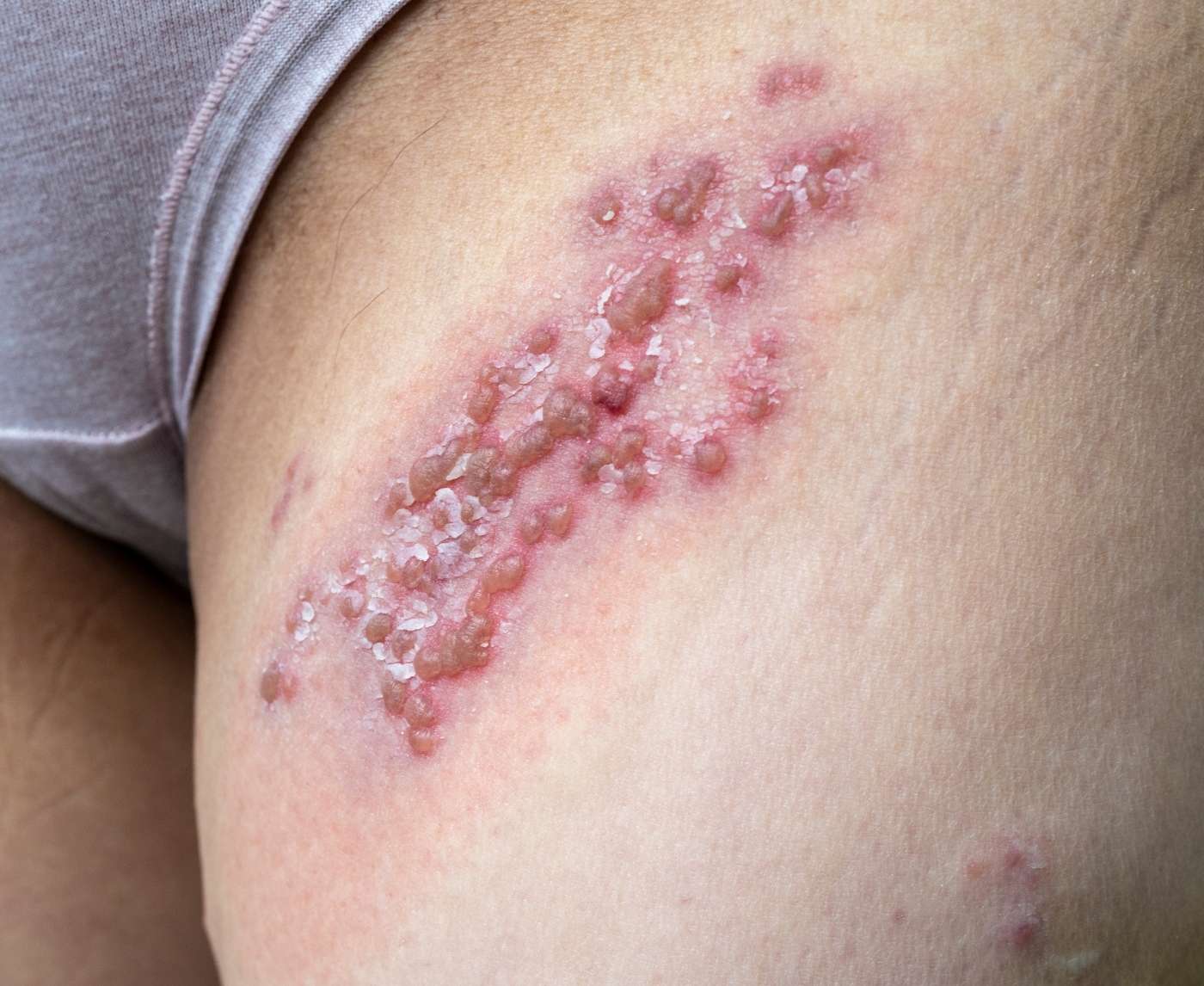
| Visible signs | Redness, swelling, glossy inflamed vulva, no sores | Cluster of small fluid-filled blisters that rupture into shallow ulcers |
| Pain pattern | Burning when urine touches irritated skin | Sharp pain at lesion sites, often severe with urination |
| Systemic symptoms | Rare | Fever, swollen groin lymph nodes, body aches in first outbreak |
| Transmission | Not sexually transmitted | Sexually transmitted through skin-to-skin contact, including asymptomatic shedding |
| Resolution | Clears in 3 to 7 days with antifungal treatment | First outbreak heals in 1 to 3 weeks; virus stays in nerves for life |
What genital herpes looks like in women
Herpes rarely follows a textbook progression in women, partly because lesions can develop on hidden anatomy (the cervix, vaginal walls, urethral opening) where they're never visible. The first outbreak is usually the most severe and the most diagnostic. Recurrences are typically milder, shorter, and confined to a smaller area.
The progression most women describe goes like this. Sometime after exposure (which can be days, weeks, or longer based on CDC guidance), a localized tingling, itching, or burning appears in one specific spot on the vulva, labia, perineum, anus, or inner thigh. This is the prodrome, and it can last hours to a day before any visible change. Small red bumps then develop in the affected area, usually clustered rather than scattered. Within a day or two the bumps become fluid-filled vesicles, often described as looking like tiny clear blisters or pimples. The vesicles rupture, leaving shallow open ulcers that are typically painful, especially when urine touches them. The ulcers crust over and heal in 1 to 3 weeks for a first outbreak, faster for recurrences.
What complicates recognition: many women experience only some of these stages, or experience them so mildly that the lesions look like razor burn, ingrown hairs, or a single small cut that takes longer than usual to heal. Internal lesions on the cervix or vaginal walls produce watery discharge that can be mistaken for a different infection entirely.
The first outbreak often arrives with systemic symptoms: low-grade fever, swollen lymph nodes in the groin, body aches, fatigue, and sometimes nerve pain radiating down the legs or into the buttocks. The World Health Organization estimates that more than 500 million people aged 15 to 49 are living with HSV-2 globally, and most acquired the virus from a partner who didn't know they were infected (WHO Herpes Simplex Virus Fact Sheet).
What a yeast infection looks like
A yeast infection presents as full-area inflammation, not localized irritation. The whole vulva tends to be involved at once, symmetric, with redness and swelling that match on both sides. The hallmark sign is the discharge: thick, white, clumpy, often described as cottage-cheese-like. It's typically odorless or only mildly yeasty, distinct from the fishy odor of bacterial vaginosis.
Itching with a yeast infection is intense and constant, more like a relentless surface itch than a deep nerve sensation. Burning happens when irritated skin meets urine or friction, but it's reactive, not the sharp internal burning that comes with herpes ulcers. The vulva may look glossy or shiny from inflammation, and the surrounding skin can develop satellite red patches, especially in skin folds near the inner thighs.
What yeast infections do not produce: fluid-filled blisters, clustered ulcers, fever, swollen groin lymph nodes, or nerve pain in the legs. If those symptoms are present, the diagnosis is something else, herpes or otherwise.
Vulvovaginal candidiasis is one of the most common vaginal infections in women, and recurrence is more frequent in women with diabetes, women on long-term antibiotics, and women with weakened immune systems (CDC Candidiasis Overview).
What says yeast, not herpes
- Thick, white, clumpy, cottage-cheese-like discharge with no strong odor.
- Symmetric, full-area itching across the entire vulva, not localized to one spot.
- No fluid-filled blisters, clustered ulcers, fever, or swollen groin lymph nodes.
- Symptoms typically respond to antifungal cream or a single oral fluconazole dose within 48 hours.
A 10-day symptom timeline
How symptoms evolve over hours and days is often the clearest signal of which infection you're dealing with. A yeast infection follows a predictable peak-and-resolve pattern: symptoms build over a day or two, peak around days three to five, and then begin retreating once antifungal treatment takes effect. By day seven, most yeast flares are gone or fading.
Genital herpes follows a different arc. The prodromal tingling on day one becomes visible bumps by day two or three, fluid-filled vesicles by day four or five, ruptured ulcers by day six or seven, and crusted healing lesions by day ten. Systemic symptoms (fever, swollen lymph nodes, fatigue) typically peak in the middle of this timeline rather than at the start.
The most diagnostic divergence usually shows up between day three and day five. By day three, a yeast infection treated with antifungal cream or fluconazole is starting to ease. By day five, vesicles are forming if it's herpes, and they don't respond to antifungal treatment at all. Tracking what happens between those days, rather than what's happening on day one, is often what makes the difference between a confident self-diagnosis and a missed call.
| Day | Typical Yeast Infection | Typical Genital Herpes (First Outbreak) |
|---|---|---|
| Day 1 | Mild vulvar itching, possible redness | Localized tingling, burning, or sensitivity in one spot |
| Days 2 to 3 | Discharge thickens, itching intensifies | Small red bumps appear; first treatment with antiviral most effective here |
| Days 4 to 5 | Peak inflammation; antifungal treatment usually starting to ease symptoms | Bumps become fluid-filled vesicles; pain with urination begins |
| Days 6 to 7 | Symptoms resolving with antifungal treatment | Vesicles rupture into shallow ulcers; lymph nodes may swell |
| Days 8 to 10 | Discharge normalizes; itching gone | Ulcers begin crusting; fatigue may linger |
Testing and when timing matters
The right test depends on whether you currently have visible symptoms and how recent the possible exposure was. Different tests answer different questions, and using the wrong one at the wrong time produces false negatives that can feel like reassurance but aren't.
For active herpes outbreaks with visible blisters or ulcers, the gold standard is a swab of the lesion sent for PCR (polymerase chain reaction). PCR detects the actual virus and can distinguish HSV-1 from HSV-2. The catch: it has to be done while the lesion is fresh, ideally during the vesicle stage. Once the sores crust over, viral shedding drops below the detection threshold and the test can come back negative even though herpes is the cause. CDC's STI treatment guidelines recommend nucleic acid amplification (PCR) over older culture methods for symptomatic herpes (CDC STI Treatment Guidelines: Genital Herpes).
Disclosure: stdrapidtestkits.com publishes this article and sells the at-home rapid STI tests linked further down the page. All of our home tests are lateral-flow assays for self-use, not lab-processed panels, and we recommend products based on fit for the reader's situation rather than commercial benefit.
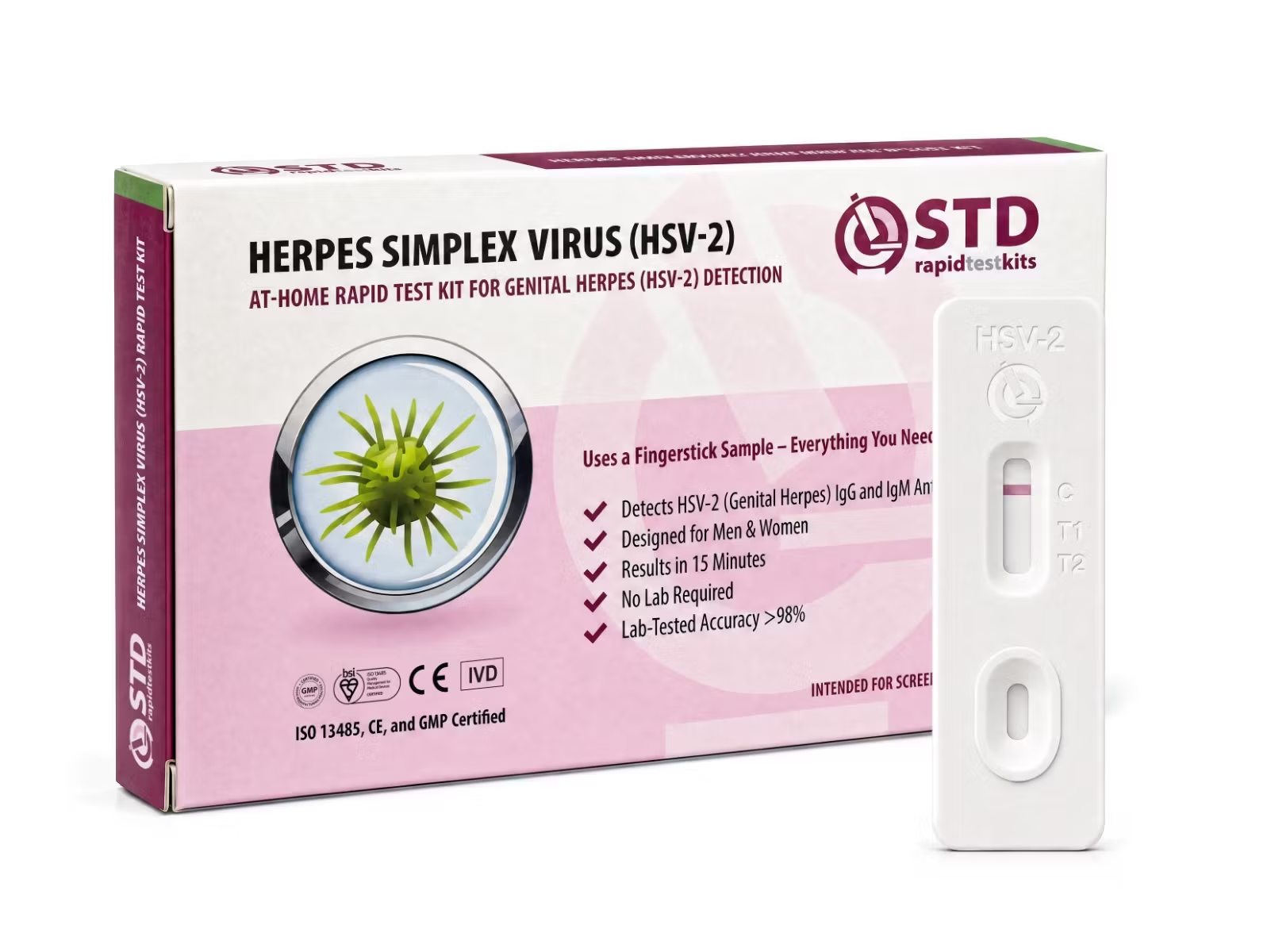
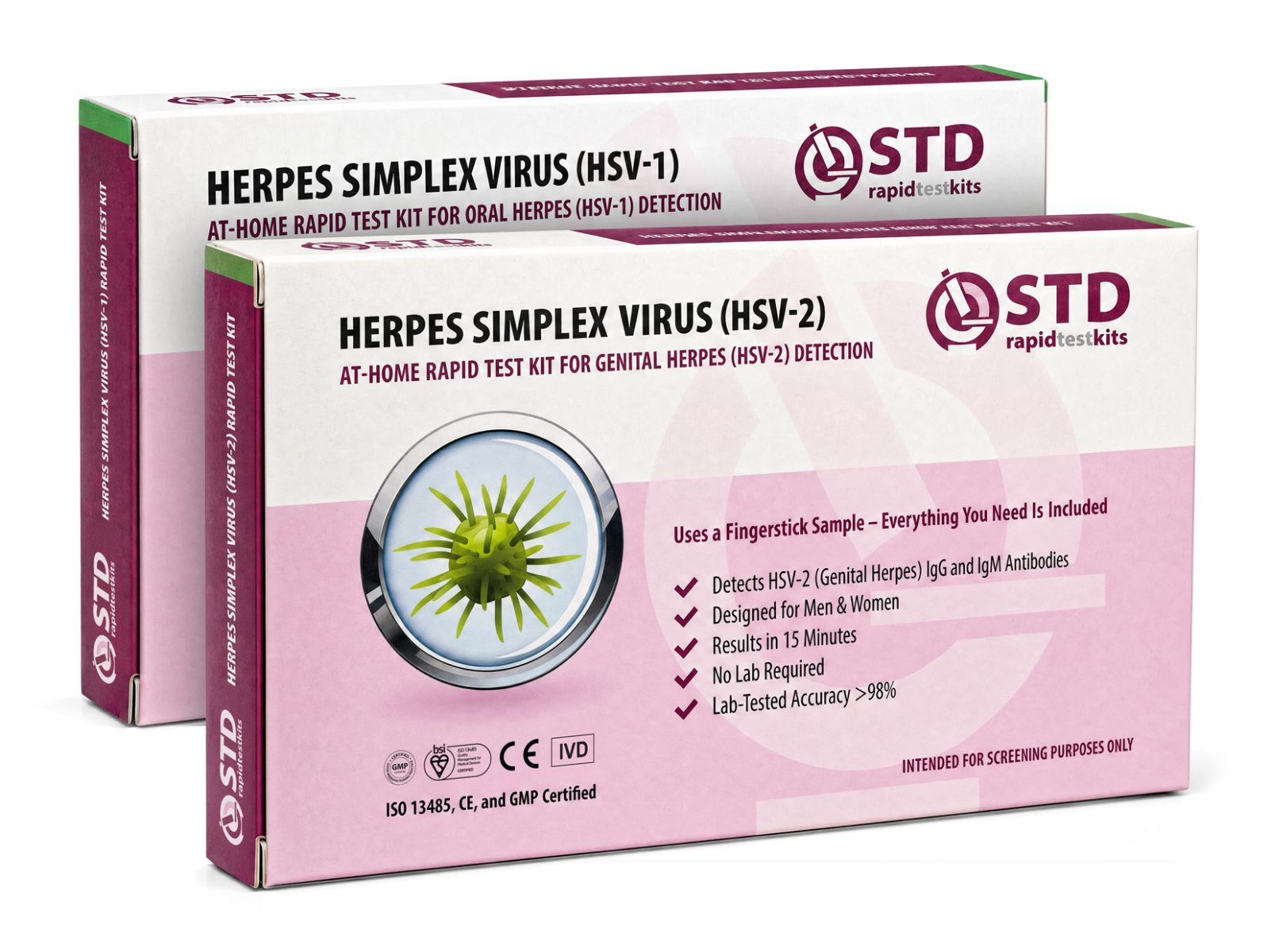
For someone who suspects past exposure but isn't currently in an outbreak, a blood test for HSV-specific antibodies (IgG) is the right tool. The window period matters: HSV antibodies typically take 6 to 12 weeks to develop after exposure, and some assays recommend waiting up to 16 weeks for the most reliable result. The 12-week mark is the practical threshold most home-screening kits use, while the full 6-to-12-week window describes the broader range across laboratory assays. A blood test taken too early can show negative even though the infection is present. Our at-home rapid herpes blood tests use lateral-flow chemistry on a fingerstick sample; they're a screening tool best used after the antibody window has passed, with positive results worth confirming through a clinical lab.
Yeast infections are usually diagnosed clinically, based on symptoms and a quick visual exam. When the diagnosis is uncertain, a vaginal swab examined under a microscope or sent for fungal culture confirms Candida. Note: stdrapidtestkits.com does not sell yeast or BV home tests, since these are not sexually transmitted infections. The home tests in our catalog cover STIs only.
If you've been treated for yeast more than twice in a short period and symptoms keep returning, that pattern itself is the signal: it's time to test for herpes and consider a broader STI panel. The table below summarizes which test answers which question.
| Test Type | What It Detects | Best Time to Use | Limitations |
|---|---|---|---|
| Herpes lesion swab (PCR) | Active HSV-1 or HSV-2 virus from fresh sore | Within 48 to 72 hours of vesicle appearance | Needs visible lesion; falsely negative once sores crust |
| Herpes blood test (IgG) | Antibodies to HSV-1 and HSV-2 | 6 to 12 weeks after exposure (up to 16 weeks for some assays) | Cannot identify infection site; can't distinguish recent from old exposure |
| Yeast microscopy or culture | Candida overgrowth | During active symptoms, before antifungal use | Often skipped; diagnosis usually clinical |
| At-home multi-STI rapid panel | HIV, syphilis, hepatitis, herpes, etc. depending on kit | After window period for each infection | Lateral-flow screening, not lab-grade NAAT; positive results worth lab confirmation |
Treatment that actually works
Treatment is where the two conditions diverge most sharply, because antifungal medication does nothing to a virus and antiviral medication does nothing to a fungus. Using the wrong one wastes days while the actual infection progresses.
For yeast infections, over-the-counter antifungal creams (clotrimazole, miconazole, terconazole) clear most cases in 3 to 7 days. A single oral dose of fluconazole is an alternative for women who prefer pills over creams. Symptoms typically begin improving within 24 to 48 hours of starting treatment. CDC's vaginal discharge guidelines list these as first-line options (CDC Vulvovaginal Discharge Guidelines).
For genital herpes, oral antiviral medications (acyclovir, valacyclovir, famciclovir) shorten the duration of an outbreak and reduce viral shedding. They work best when started within the first 24 to 72 hours of symptom onset, which is why recognizing the prodromal tingling matters. Two treatment approaches exist: episodic therapy, taken at the first sign of an outbreak; and suppressive therapy, taken daily to prevent outbreaks and reduce transmission risk to partners.
What to skip: applying antifungal cream to a herpes lesion. It won't help, and the alcohol or preservatives in some creams can sting on broken skin. On the herpes side, over-the-counter creams marketed as topical herpes treatments have no meaningful evidence base. Prescription oral antivirals are the standard of care.
If symptoms haven't responded to the first round of treatment within 5 to 7 days, that's the cue to revisit the diagnosis. Persistent symptoms despite proper treatment usually mean the original diagnosis was wrong, or there's a co-infection that needs separate treatment.
When symptoms don't fit either pattern
Not every vulvar symptom is yeast or herpes. A few other conditions overlap with both and deserve consideration when treatment isn't working or symptoms don't quite match either textbook description.
Bacterial vaginosis (BV) produces thin grayish discharge with a fishy odor that's especially noticeable after sex. The discharge volume tends to be higher than yeast and the odor is the giveaway. BV is treated with antibiotics, not antifungals.
Trichomoniasis is a sexually transmitted parasitic infection that causes frothy yellow-green discharge with an unpleasant odor and significant vulvar irritation. It can mimic both yeast and herpes early on but doesn't produce blisters.
Contact dermatitis from soaps, laundry detergents, condoms, or hygiene products causes localized redness and itching confined to where the irritant touched skin. Switching products usually resolves it within a week.
Vulvodynia is chronic vulvar pain without an identifiable infection or skin change. It can produce burning and rawness without discharge or sores, and it requires a different treatment approach altogether.
If symptoms persist for more than two weeks despite treatment, or recur in cycles that don't match either yeast or herpes patterns, ask a clinician for a full vulvar exam and a targeted panel of tests covering the conditions above.
See a clinician within 48 to 72 hours if any of the following are present: visible blisters or ulcers; fever above 100.4°F with vulvar symptoms; swollen and tender lymph nodes in the groin; severe pain with urination; symptoms that are worsening rather than improving on day three of treatment; or symptoms that recurred within two weeks of completing yeast treatment. A swab during an active outbreak gives the most diagnostic information, and timing matters more than convenience.
Living with herpes without stigma
A herpes diagnosis is medically manageable and socially loaded, and the second part is often what hits hardest in the days after testing positive. The numbers help put it in perspective: the CDC estimates there were about 572,000 new genital herpes infections in the United States in 2018 alone among people aged 14 to 49 (CDC Genital Herpes Basic Information), and HSV-1 (which causes most oral cold sores and an increasing share of genital infections through oral-genital contact) is even more widespread. Most carriers don't know they have it.
From a clinical standpoint, herpes is one of the most treatable chronic STIs. According to the CDC's STI treatment guidelines, daily suppressive antiviral therapy reduces the frequency of genital herpes recurrences by 70 to 80 percent in patients with frequent recurrences (CDC STI Treatment Guidelines: Genital Herpes), and combined with consistent condom use also lowers the risk of transmission to a partner. Many people on suppressive therapy go years between outbreaks. Pregnancy and childbirth are managed with antiviral prophylaxis in the third trimester to prevent neonatal transmission.
The hardest part for most newly diagnosed women is the conversation with current or future partners. The framing that helps: herpes carries social baggage built up over decades of pharmaceutical advertising and sitcom punchlines, but the biology of the infection doesn't warrant the moral weight people attach to it. Most carriers live full sexual and romantic lives on suppressive therapy. Organizations such as the American Sexual Health Association publish disclosure guides and peer support resources for women navigating this conversation for the first time.
Most people who have genital herpes don't know it because they don't have any signs or symptoms or because their symptoms are very mild.
Frequently asked questions
- Can herpes really feel like a yeast infection?
- Yes, especially in the first 24 to 48 hours of an outbreak. Early herpes often starts as itching or burning that feels almost identical to a mild yeast flare. The divergence shows up by day three: yeast responds to antifungal treatment within 48 hours, while herpes either keeps progressing or starts producing a localized tingling that becomes visible blisters by day four or five. If antifungal cream isn't easing symptoms by day three, the diagnosis probably isn't yeast.
- I only had one partner. How could I have herpes?
- Herpes transmits from people who don't know they're infected, including partners who have never had a visible outbreak. According to the CDC, most people with HSV-2 don't know they carry it. Condoms reduce transmission risk but don't eliminate it because herpes lives on skin not covered by a condom. Oral sex from a partner with HSV-1 (the same virus that causes most cold sores) can transmit the virus to the genitals. None of these scenarios involve any wrongdoing on either side.
- Do herpes sores always show up where I can see them?
- No. Lesions can develop on the cervix, vaginal walls, urethra, or perineum, where they're not visible without a clinical exam. Some women only experience nerve symptoms (tingling, deep itching, leg pain) without external sores at all. If you've had unexplained vulvar burning or recurring small cuts in the same spot that don't match yeast patterns, ask a clinician about herpes specifically, since routine STI panels don't include it by default.
- Will yeast infection treatment help if it's actually herpes?
- No. Antifungal creams and oral fluconazole have no effect on herpes simplex virus. Some women feel slightly better for a day or two on antifungal cream simply because it's a soothing barrier on irritated skin, but the virus continues to replicate and the outbreak progresses. If symptoms haven't started improving within 48 hours of antifungal treatment, that's a strong signal to revisit the diagnosis and test for something else.
- When is the best time to test for herpes?
- During an active outbreak, get a clinical swab of a fresh blister or ulcer within 48 to 72 hours of symptom onset, ideally before the lesion starts crusting. For past exposure with no current symptoms, a blood test for HSV-1 and HSV-2 antibodies needs at least 6 to 12 weeks after the suspected exposure to be reliable, and some assays recommend waiting up to 16 weeks. Testing too early gives false negatives that can read as reassurance but aren't.
- Can I have both herpes and a yeast infection at the same time?
- Yes, and it happens more often than people realize. The immune stress of a herpes outbreak can disrupt the vaginal microbiome enough to trigger Candida overgrowth simultaneously. If you treat the yeast and feel partially better but the deeper symptoms persist, the herpes piece is still active. A clinician can swab and test for both at the same visit, and treating both at once is straightforward.
- If I test positive for herpes, will I always be contagious?
- You'll always carry the virus, but contagiousness varies. The highest transmission risk is during active outbreaks. Asymptomatic shedding (when the virus sheds from skin without visible symptoms) accounts for many transmissions, but daily antiviral therapy cuts shedding and transmission risk substantially. Many couples manage herpes for years without transmission using daily antivirals plus consistent barrier protection during outbreaks.
- What if my symptoms come and go, but I never see sores?
- Sub-clinical herpes is a real pattern. Some women only experience nerve symptoms (burning, tingling, deep ache) that recur in the same area without ever producing a visible blister. If you've had repeating vulvar discomfort that doesn't fit yeast or BV patterns, an HSV blood test can confirm or rule out past exposure. A negative blood test combined with persistent symptoms warrants a workup for vulvodynia, lichen sclerosus, or other non-infectious causes.
Stop guessing, start testing
Symptoms that don't fit your usual yeast pattern, that don't respond to treatment, or that come back in cycles deserve a real answer. Self-diagnosis works for the obvious cases. It doesn't work for the ones that look like one thing and turn out to be another. The longest delays in herpes diagnosis happen exactly because women keep treating for yeast when yeast isn't the cause.
Testing closes the loop. An at-home herpes blood test takes about 15 minutes and answers the past-exposure question privately. A clinical swab during an active outbreak answers the current-infection question with the highest accuracy. Either way, the next move is the same: stop the guesswork, get an answer, treat the actual condition, and move on with clarity instead of cycling through creams and worry. If you're concerned about more than herpes (most women in this situation are), a multi-STI panel covers the broader picture in one test.
- U.S. Centers for Disease Control and Prevention. Genital Herpes Basic Information, including symptom prevalence, asymptomatic transmission, U.S. incidence (572,000 new infections in 2018 among people aged 14 to 49), and the proportion of carriers who don't know they're infected.
- U.S. Centers for Disease Control and Prevention. STI Treatment Guidelines: Genital Herpes, including PCR vs. culture vs. type-specific serology testing modalities, antiviral treatment recommendations, and the 70 to 80 percent recurrence reduction with daily suppressive therapy.
- U.S. Centers for Disease Control and Prevention. STI Treatment Guidelines: Vulvovaginal Discharge Conditions, including yeast infection, bacterial vaginosis, and trichomoniasis differential and first-line treatments.
- World Health Organization. Herpes Simplex Virus Fact Sheet, including the global estimate of 520 million people aged 15 to 49 living with HSV-2 and overall transmission dynamics.
- U.S. Centers for Disease Control and Prevention. Candidiasis Overview, including risk factors for vulvovaginal candidiasis recurrence (diabetes, antibiotic use, immunosuppression).
- NHS. Genital Herpes overview, including symptom presentation, recurrence patterns, and patient-facing treatment guidance for the UK population.
