Published: October 2025 | Last updated: April 2026 | Editorial review and quality control: Martina N.
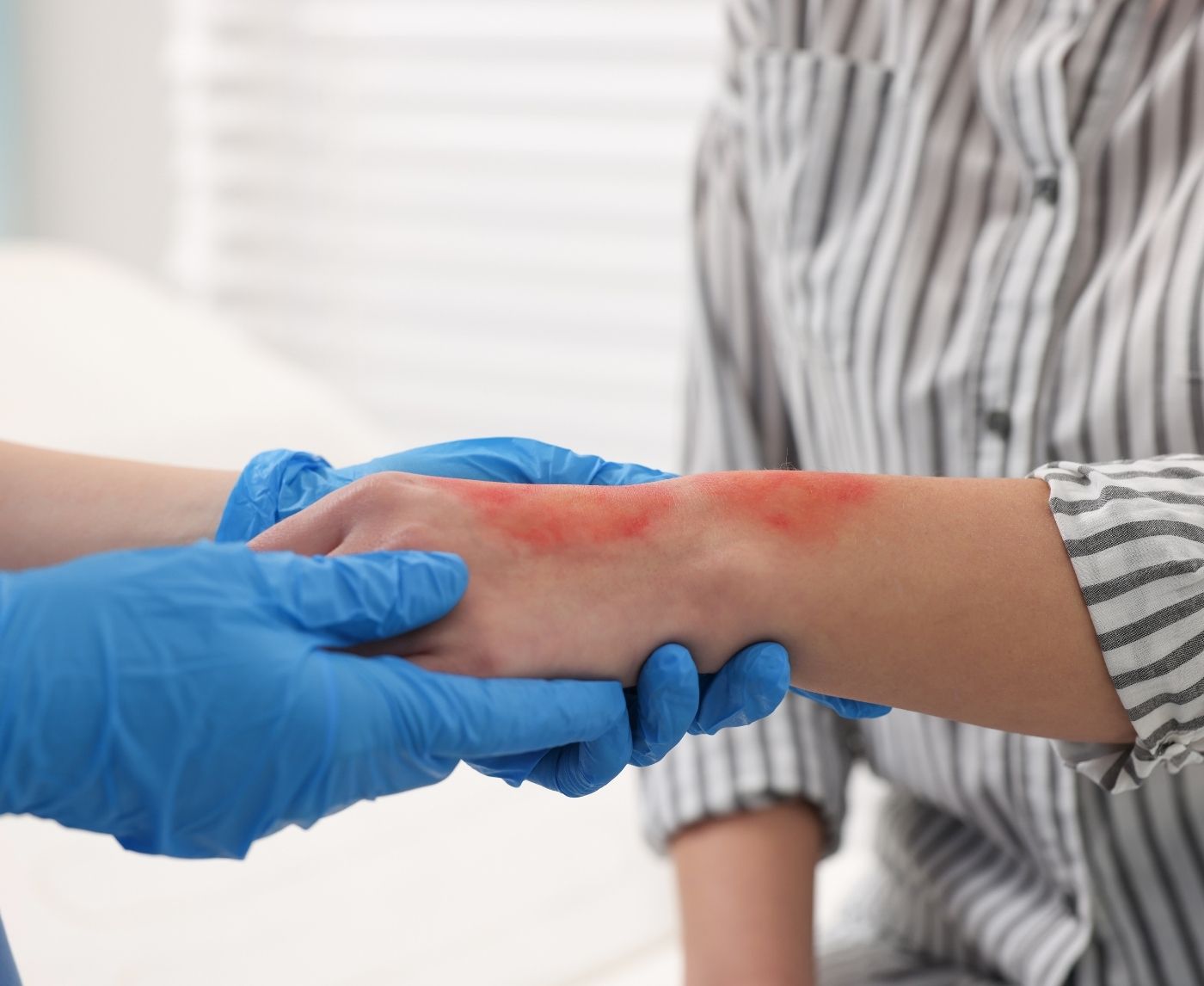
You notice a bump after shaving. Or after a date. Maybe both. Skin around the genitals reacts to almost everything: heat, friction, a new soap, hair growing back through irritated follicles. A single red spot is rarely enough to diagnose anything on sight, even for clinicians.
Most pubic-area bumps fade on their own within a few days. Some do not. The pattern of how a bump appears, behaves, and resolves is what separates ordinary irritation from a genital herpes outbreak, an ingrown hair from folliculitis, a chafe from a chancre. This guide walks through those patterns side by side so you can stop refreshing search results at 2 a.m. and decide what to do next.
Is this razor burn or herpes?
Razor burn shows up within hours of shaving as red, irritated, sometimes tender skin that fades in 2 to 5 days without forming fluid-filled blisters. Herpes typically appears 2 to 12 days after exposure as grouped tiny blisters or sores that crust over within 7 to 14 days, and may recur in the same area weeks or months later. If a bump blisters, recurs in the same spot, or comes with flu-like symptoms, testing is the only reliable way to confirm or rule it out.
Key takeaways
- Razor burn fades in 2 to 5 days. Herpes blisters, crusts over, and tends to come back in the same spot.
- Most HSV infections globally are asymptomatic or unrecognized. Visual self-diagnosis is unreliable, even for clinicians.
Why this mix-up happens so often
The pubic area is unforgiving terrain. Skin is thin, hair is coarse, the blood supply is rich, and the area sweats and friction-rubs against everything you wear. Almost any irritation produces the same first reaction: a red, slightly raised, slightly itchy bump.
That reaction is non-specific. The same bump can come from a dull razor blade, too-tight underwear, a perfumed soap your skin suddenly hates, a hair growing back at the wrong angle, or the first sign of a herpes simplex outbreak. Visual diagnosis is one option, but it is not definitive. The CDC notes that providers may diagnose genital herpes by looking at any sores present and also take a sample for laboratory confirmation (CDC, About Genital Herpes). Lab testing is what turns a clinician's best guess into an answer.
The other reason for the mix-up is denial. Saying “razor burn” is socially comfortable. Saying “I might have an STI” is not. Many readers walk through several rounds of “probably nothing” before getting tested, even when the bump has stopped behaving like ordinary irritation.
Herpes lesions get misread as folliculitis, ingrown hairs, or simple irritation in a substantial share of clinical encounters. The CDC notes that providers may identify likely lesions by sight, and that a swab or type-specific antibody test provides laboratory confirmation. Treat any visual identification, including your own, as a guess until a lab test confirms it.
What razor burn and ingrown hairs actually look like
Razor burn is a friction injury. The blade scrapes the top layer of skin and the body responds with localized inflammation. You see redness, sometimes tiny pustules clustered around hair follicles, and a stinging or burning sensation that intensifies in the first 6 to 12 hours after shaving. By day 2 or 3, the redness fades. By day 5, the skin is usually back to baseline.
Ingrown hairs are a related problem. When a shaved or waxed hair curls back into the skin, it triggers a small inflammatory bump. You can often see the trapped hair under a thin film of skin, sometimes with a small whitehead at the center. Ingrowns can be tender to press on, but they do not cluster, do not blister, and resolve once the hair grows out or is gently lifted.
Folliculitis is the next step on the same spectrum. A hair follicle becomes infected, usually with bacteria like Staphylococcus aureus, and the bump fills with pus. Folliculitis is more painful than plain razor burn and gets confused with herpes because of the white-yellow cap on a red base. The give-aways: folliculitis bumps tend to be centered on a single hair, do not progress through the blister-to-ulcer-to-crust sequence of herpes, and respond to warm compresses or topical antibiotics.
Razor burn (surface scrape) leads to ingrown hair (trapped follicle) leads to folliculitis (infected follicle). All three sit on a friction-and-bacteria spectrum, all three resolve on their own or with basic skincare, and none of them progress through the blister-to-crust cycle that signals a herpes outbreak.
What herpes actually looks like, and what it sometimes does not
The classic herpes simplex outbreak follows a predictable arc. A tingling, itching, or burning sensation comes first, often a day or two before anything is visible. Then small, fluid-filled blisters appear on a red base, usually grouped in clusters of three to ten. Within a few days the blisters break open into shallow ulcers, then crust over and heal. Untreated, a recurrent outbreak typically resolves within a couple of weeks; a first outbreak can run longer (NHS, Genital Herpes).
That is the textbook version. Real outbreaks are messier. Some people get one tiny sore, no cluster. Some get a cracked-skin appearance that looks like a paper cut. Some get prodromal tingling but no visible lesion. The WHO estimates that most HSV infections globally are asymptomatic or unrecognized (WHO, Herpes Simplex Virus).
Blistering-and-crusting is the clearest marker, since razor burn never blisters. A clear, fluid-filled top forming over a red bump and later scabbing is a herpes-pattern lesion until proven otherwise. Recurrence in the same spot is the other signal. Razor burn comes back wherever you next shave, but it does not pick the same square centimeter of skin month after month. Herpes does, because the virus lives in the local nerve ganglion and reactivates along the same nerve.
| Feature | Razor burn / ingrown | Folliculitis | Herpes outbreak |
|---|---|---|---|
| Onset after trigger | Hours after shaving | 1 to 3 days, may follow shaving | 2 to 12 days after sexual exposure |
| Sensation | Stinging, mild itch | Tender, sometimes itchy | Tingling or burning before bumps appear |
| Appearance | Flat or slightly raised red bumps; sometimes a trapped hair | Red bumps with white-yellow pus cap, centered on a hair | Cluster of fluid-filled blisters that break and crust |
| Pain level | Low to moderate; settles by day 2 | Moderate; tender to touch | Often painful, especially in a first outbreak |
| Duration | 2 to 5 days | 5 to 10 days, longer if untreated | Typically 1 to 2 weeks; first outbreaks can run longer |
| Recurrence pattern | Whenever you shave again | Whenever the same follicle clogs | Same nerve area, weeks or months apart |
When Reddit and image searches steer you wrong
The 2 a.m. spiral usually starts the same way. Open Reddit. Search “is this herpes.” Scroll through grainy photos and confident strangers. The community part of those threads is real. Hundreds of people have stood where you are and survived it. The diagnostic part is not. Crowd-sourced opinions on a blurry photo are worse than a coin flip; even dermatologists and primary-care physicians misread herpes lesions as folliculitis or simple irritation in a substantial share of clinical encounters.
The most common misleading patterns from those threads come down to two false rules. The first is “it is only one bump, so it cannot be herpes.” First outbreaks can be a single lesion. Recurrent outbreaks often are. Cluster size is a hint, not a rule. The second is “if it does not hurt, it is not an STI.” Many sexually transmitted infections start painlessly. The classic syphilis chancre is famous for being painless, which is why people miss it (CDC, About Syphilis). Early herpes can be more itchy than painful.
Reading enough threads will eventually surface someone whose situation sounds exactly like yours, with whatever ending you are bracing for. Selection bias drives those threads, not evidence. The single move that changes the situation is testing.
If a bump has lasted more than 5 to 7 days, blistered, recurred in the same spot, or come with fever, swollen lymph nodes, or pain when you urinate, do not keep guessing. A swab of an active sore (within 48 hours) or a blood test for HSV antibodies (after the appropriate window) is the only way to confirm or rule out herpes. The cost of testing is fifteen minutes. The cost of guessing is weeks of dread.
Other lookalikes worth knowing about
Herpes and razor burn drive most search traffic on this question, but the genital area produces several other bumps that share the same surface presentation. Knowing the rough categories helps you triage what to do next.
- Yeast infection irritation. An overgrowth of Candida can cause redness, fissures (small cracks in the skin), and itching, especially in skin folds. Discharge and odor changes usually accompany it (Mayo Clinic, Yeast Infection).
- Contact dermatitis. A new soap, body wash, lubricant, latex condom, or laundry detergent can trigger an itchy, inflamed rash. Symmetric pattern (both sides of the labia or scrotum at once) and clear timing relative to the new product point this way.
- Molluscum contagiosum. Small, dome-shaped bumps with a tiny central dimple. They do not blister or crust like herpes. Caused by a poxvirus, sometimes sexually transmitted, usually resolve on their own over weeks to months.
- HPV (genital warts). Soft, flesh-colored bumps that often look cauliflower-shaped at full size. Typically painless and very small early on.
- Lichen sclerosus. A chronic skin condition causing pale, thinned, itchy patches, usually on the vulva. Not infectious. Diagnosed by a dermatologist or gynecologist.
Our at-home HPV and trichomoniasis swabs are validated for vaginal self-collection only. We do not sell a male-compatible HPV or trich kit. Men noticing wart-like bumps or unexplained genital irritation should see a clinician for visual diagnosis and lab testing.
When to test, when to wait
Most pubic-area bumps deserve a few days of patience. The body resolves friction injuries, ingrown hairs, and minor irritation on its own faster than testing windows allow you to confirm anything anyway. The triage that matters is whether you have crossed the threshold where waiting stops serving you.
Move from “wait and see” to “test now” if any of these are true:
- The bump has lasted longer than 5 to 7 days without clear improvement.
- It blistered, broke open, and crusted over (the herpes pattern), even mildly.
- It came with low-grade fever, body aches, or visibly swollen lymph nodes in the groin.
- It is in the same spot a previous bump appeared weeks or months ago.
- You had a new sexual partner in the last 2 to 12 days, especially without a condom or with a partner of unknown status.
- You are pregnant, planning a pregnancy, or immunocompromised. Herpes status changes pregnancy management; do not wait on this.
If none of those apply and the bump is improving day over day, watchful waiting is reasonable. Most situations are ambiguous, though, and getting an answer in the form of a swab or blood test ends the spiral.
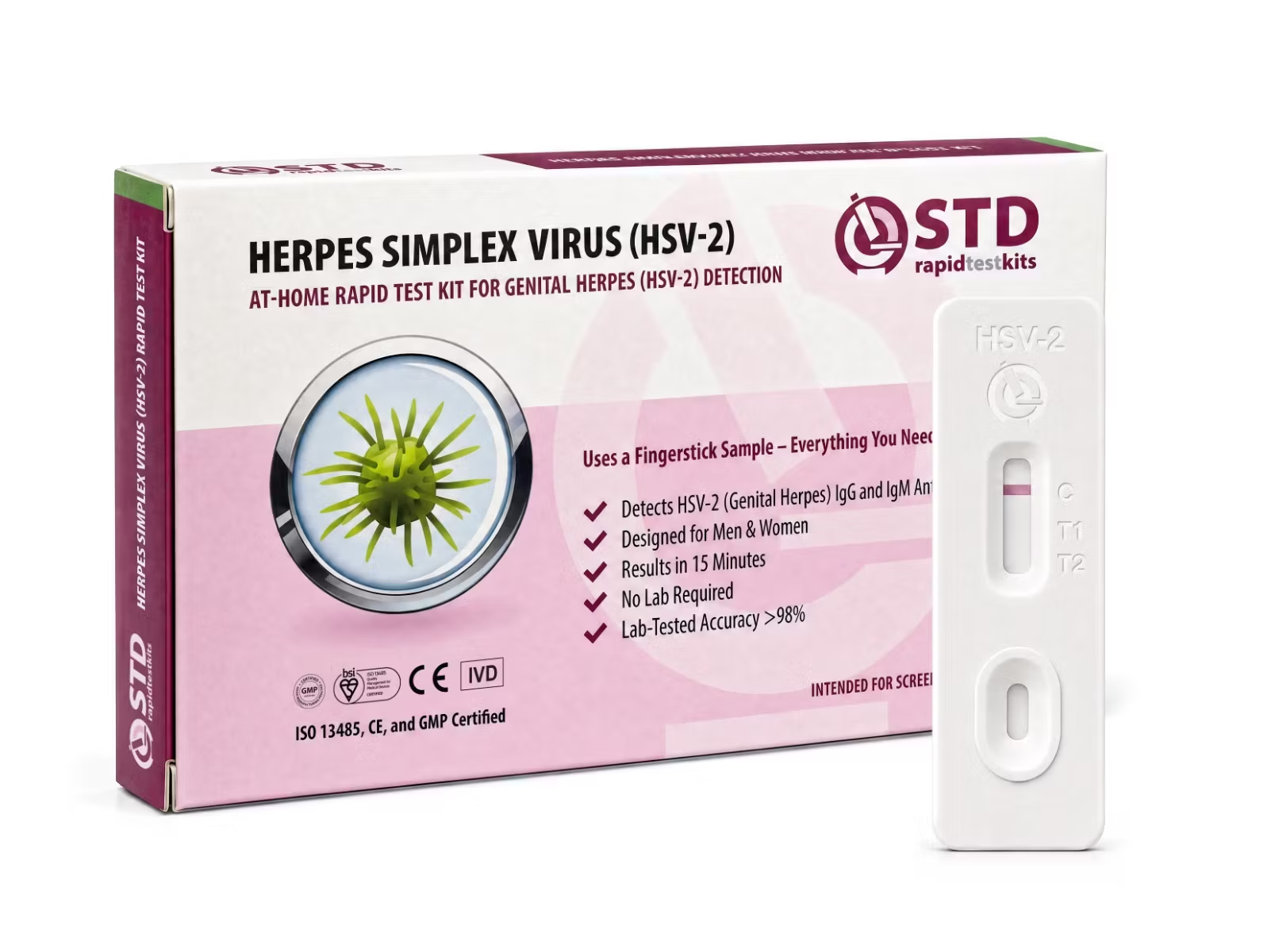
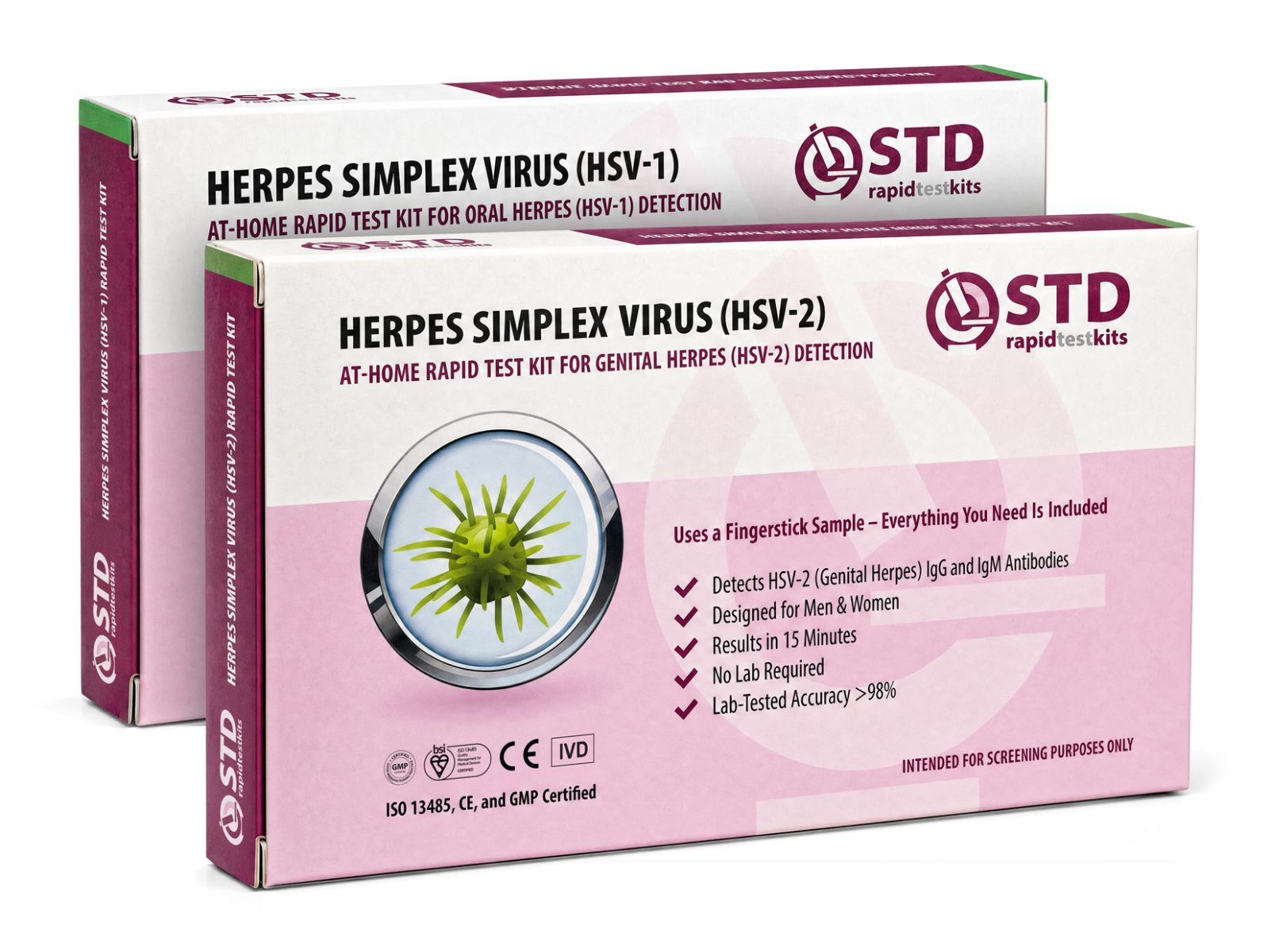
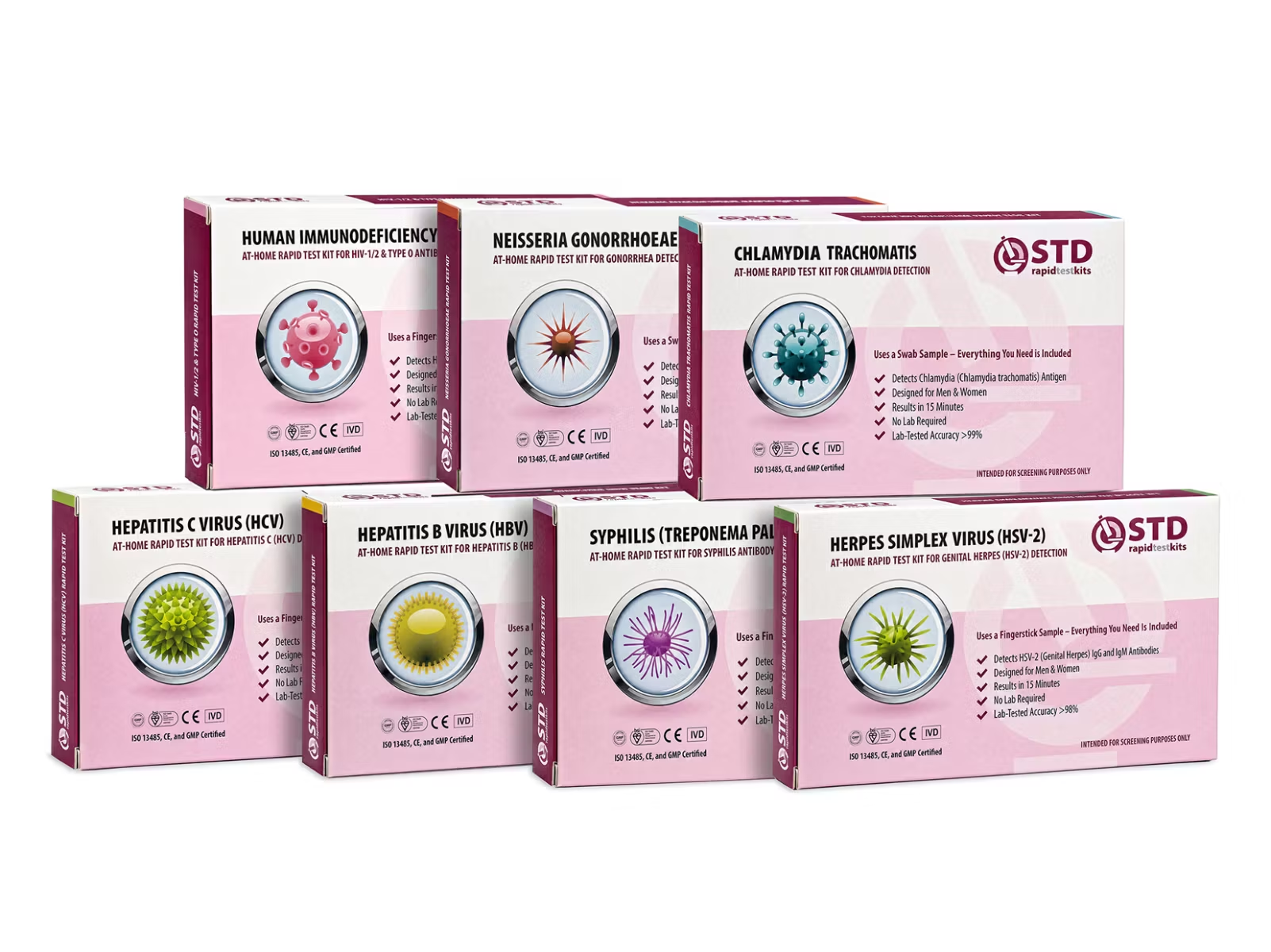
We sell the rapid at-home tests referenced in this article. Our kits are lateral-flow screening tests, not lab NAATs; a reactive at-home result is worth confirming with a clinician-ordered laboratory test. We recommend kits based on fit for the reader's concern, not commercial benefit.
Testing windows: why timing affects accuracy
Different STIs become detectable at different points after exposure, and the test method matters as much as the timing. For herpes specifically, two test paths exist:
- Swab of an active lesion. Most accurate when sampled within the first 48 hours after a blister or sore appears, before it heals. The swab detects viral DNA (laboratory PCR) or viral antigen (lateral-flow rapid tests, including the at-home kits we sell). Once the lesion has fully crusted and dried, swab sensitivity drops sharply.
- Blood test for antibodies. Type-specific HSV-1 and HSV-2 antibody tests detect your immune response to past or current infection. Antibodies take time to develop after a new infection, and false-negative results are more common in the early stages. The CDC recommends repeat testing 12 weeks after the suspected exposure if an early result is negative (CDC STI Treatment Guidelines, Herpes).
For the other STIs that can present as bumps, sores, or rashes, the windows differ. The table below lines them up.
| STI | Earliest detection | Best test | Sample type |
|---|---|---|---|
| Herpes (active sore) | Day 0 to 2 of lesion | Lab PCR or rapid antigen swab | Swab of active sore |
| Herpes (antibodies) | Up to 12 weeks post-exposure (CDC retest standard) | Type-specific HSV-1 / HSV-2 IgG | Blood (fingerstick or venous) |
| Syphilis | 3 to 6 weeks post-exposure | Treponemal antibody (rapid) or RPR | Blood |
| Chlamydia / gonorrhea | 1 to 2 weeks post-exposure | Lab NAAT (gold standard) or rapid antigen swab | Genital swab |
| HPV (warts) | Weeks to months | Visual exam; biopsy if unclear | Clinician exam (women: rapid swab option) |
| HIV (4th-gen) | 2 to 6 weeks post-exposure | 4th-gen Ag/Ab lab; rapid antibody after 12 weeks | Blood |
Choosing a test: swab vs blood, at-home vs clinic
The right test depends on whether you currently have visible symptoms.
If you have an active sore or blister: a swab of the lesion is the highest-yield test. Lab PCR is the most sensitive method and is used in clinics. Rapid lateral-flow swab tests, including our at-home kit, screen the same sample type at home with a result in around 15 minutes. A positive rapid result is worth confirming with a lab PCR when possible; lab PCR has higher analytical sensitivity, especially as a sore starts to heal.
If the sore has already healed, or you never had visible symptoms: blood testing for HSV-1 and HSV-2 antibodies is the path forward. Antibodies take time to develop after a new infection. The CDC recommends repeat testing at 12 weeks if an early result is negative, since false negatives are more common in the first few weeks of infection.
At-home vs clinic: at-home rapid kits trade some analytical sensitivity for privacy, speed, and cost. They are well suited to screening, peace-of-mind testing, and confirming a likely diagnosis. A clinic visit adds a visual exam, the option of culture or PCR confirmation, and same-visit prescription for antivirals if needed. Many readers use both, screening at home first, then following up with a clinician for a positive or borderline result.
| Your situation | Best first test |
|---|---|
| Active blister or sore right now | Swab test (lab PCR, or rapid antigen at home) within 48 hours |
| Sore has already healed, or no visible symptoms | Blood test for HSV-1 / HSV-2 IgG antibodies |
| Possible exposure in the last 1 to 2 weeks, no symptoms | Test now if anxious; retest at 12 weeks per CDC backstop |
| Pregnant, planning pregnancy, or immunocompromised | Speak to a clinician; do not rely on self-testing alone |
What if the test is positive?
A positive herpes test is not the life sentence early panic makes it feel like. Globally, an estimated 13% of people aged 15 to 49 live with HSV-2, and a much larger share carry HSV-1 (WHO, Herpes Simplex Virus). Most people manage outbreaks with a short course of antiviral medication, and many find their outbreak frequency drops sharply after the first year or two.
Practical steps after a positive result:
- Confirm if needed. Rapid lateral-flow tests are screening tools. A reactive at-home result should be confirmed with a clinician-ordered laboratory PCR (for active lesions) or type-specific HSV IgG (for antibody status).
- Talk to a clinician about antivirals. Acyclovir, valacyclovir, and famciclovir are the three FDA-approved antivirals for genital herpes. Daily suppressive therapy with valacyclovir has been shown to decrease HSV-2 transmission to a susceptible partner (CDC STI Treatment Guidelines, Herpes).
- Tell current and recent partners. Anonymous partner-notification services exist if face-to-face is hard. Most readers find the conversation goes better than they expect.
- Plan for outbreak triggers. Stress, illness, sun exposure, and friction can all reactivate the virus. Knowing your triggers shortens the next episode.
An estimated 3.8 billion people under age 50 (64%) globally have herpes simplex virus type 1 (HSV-1) infection. An estimated 520 million people aged 15 to 49 have HSV-2 infection. Most infections are asymptomatic or unrecognized.
If you are spiraling, here is a calmer way to decide
Anxiety has a way of compressing time. Two days of worry feels like two weeks. The same bump gets checked in the bathroom mirror twelve times. The brain reads catastrophic meaning into anything ambiguous.
A small structure helps. Pick a window: 5 days from when the bump appeared, or 14 days from a possible exposure event, whichever is sooner. Set a single reminder to recheck on that date. Until then, do not catastrophize, and do not pretend the question went away.
If the date arrives and the bump is gone with no recurrence and no new symptoms, you can step out of the loop. If it is still there, has changed character, or has been joined by other symptoms (fever, swollen lymph nodes, painful urination, new discharge), that is your signal to test rather than wait. The information you actually need (current symptom pattern, time since exposure, presence or absence of systemic symptoms) is small enough to fit on an index card.
- 5 days from the bump appearing: if it is gone and has not recurred, you can step out of the spiral.
- 14 days from a possible exposure: if a new bump has appeared, swab it within 48 hours.
- 12 weeks from a possible exposure: if you tested early and were negative, retest now per the CDC backstop.
- Any time: if symptoms include fever, swollen lymph nodes, or pain when you urinate, do not wait, see a clinician.
FAQs
- Can razor burn really look like herpes?
- Yes, especially in the first 24 to 48 hours. Both can show up as red, irritated bumps in pubic-area skin. The differentiator is what happens next: razor burn fades in 2 to 5 days and never blisters; herpes progresses to fluid-filled blisters, breaks open, then crusts over. If a bump goes through that blister-crust cycle or recurs in the same spot weeks later, treat it as a herpes-pattern lesion until a swab or antibody test says otherwise.
- How soon after exposure can herpes show up on the skin?
- Skin symptoms typically appear within 2 to 12 days. Blood-test antibodies take longer; the CDC recommends repeat antibody testing at 12 weeks after a suspected exposure if an early result is negative. An early negative blood test cannot rule out a very recent infection.
- If there is only one bump and it does not hurt, can I rule out herpes?
- No. First outbreaks can be a single lesion, and recurrent outbreaks often are. Pain is also unreliable: early herpes is sometimes more itchy or tingling than painful, and the classic syphilis chancre is famous for being painless. Cluster size and pain level are hints, not rules. If a bump blisters or recurs, test.
- Will shaving make a herpes outbreak worse if I already have HSV?
- Shaving does not cause herpes, and it does not change your HSV status. It can act as a trigger for a recurrence, because the friction and micro-trauma of shaving over a previously affected nerve area can reactivate the virus. If you know you have HSV, swap to a fresh blade, shave with the grain, and avoid shaving directly over an active lesion.
- Can I test at home if I am not sure what the bump is?
- Yes, and for most readers this is the lowest-friction first step. A rapid lateral-flow swab works best if you currently have an active sore (within 48 hours of appearance). A rapid blood test for HSV antibodies works once the sore has healed, or if you never had visible symptoms but want to know your status. Both are private, take about 15 minutes at home, and a positive result can be followed up with a clinician for confirmatory lab testing.
- What is the difference between a swab test and a blood test for herpes?
- A swab test samples viral material directly from an active sore. It tells you what is on your skin right now, and it is the most accurate test when a lesion is fresh. A blood test looks for antibodies, your immune system's record of a past or current infection. It tells you whether you have ever been exposed, but it cannot confirm a current outbreak and is unreliable in the first few weeks after a new exposure.
- Can yeast infections or contact dermatitis cause bumps that look like this?
- Yes. Yeast overgrowth can cause redness, small skin fissures, and itching, often with discharge and odor changes. Contact dermatitis from new soap, lubricant, latex condoms, or laundry detergent can produce an itchy, symmetric rash with bumps that mimic ingrown hairs. Both resolve once the trigger is removed and the skin is treated; both can usually be told apart from herpes because they do not blister, crust, or recur in a single spot along a nerve.
- If my test comes back negative, am I in the clear?
- It depends on timing. If you swabbed an active lesion within 48 hours of it appearing, a negative rapid result is reasonably reassuring (lab PCR is the more sensitive backstop). If you ran a blood test in the first few weeks after a possible exposure, a negative result cannot fully rule out recent infection; the CDC recommends retesting at 12 weeks. If symptoms persist despite a negative test, see a clinician for a thorough exam and to consider other causes.
- U.S. Centers for Disease Control and Prevention. About Genital Herpes: signs, symptoms, transmission, and the role of visual examination plus laboratory sampling for diagnosis.
- U.S. Centers for Disease Control and Prevention. Sexually Transmitted Infections Treatment Guidelines, Genital Herpes section: FDA-approved antivirals (acyclovir, valacyclovir, famciclovir), suppressive therapy and HSV-2 transmission reduction, and the 12-week retest backstop for negative early antibody results.
- World Health Organization. Herpes simplex virus fact sheet: global prevalence figures for HSV-1 (under age 50) and HSV-2 (aged 15 to 49), and the high share of unrecognized infections.
- U.K. National Health Service. Genital herpes: symptom patterns, antiviral medicine for shortening outbreaks, and self-care during recurrences.
- U.S. Centers for Disease Control and Prevention. About Syphilis: classic painless chancre presentation cited as the reason early syphilis is often missed.
- Mayo Clinic. Vaginal yeast infection: symptom overlap with genital irritation, including redness, fissures, and itching.
