Published: October 2025 | Last updated: May 2026 | Editorial review and quality control: Martina N.
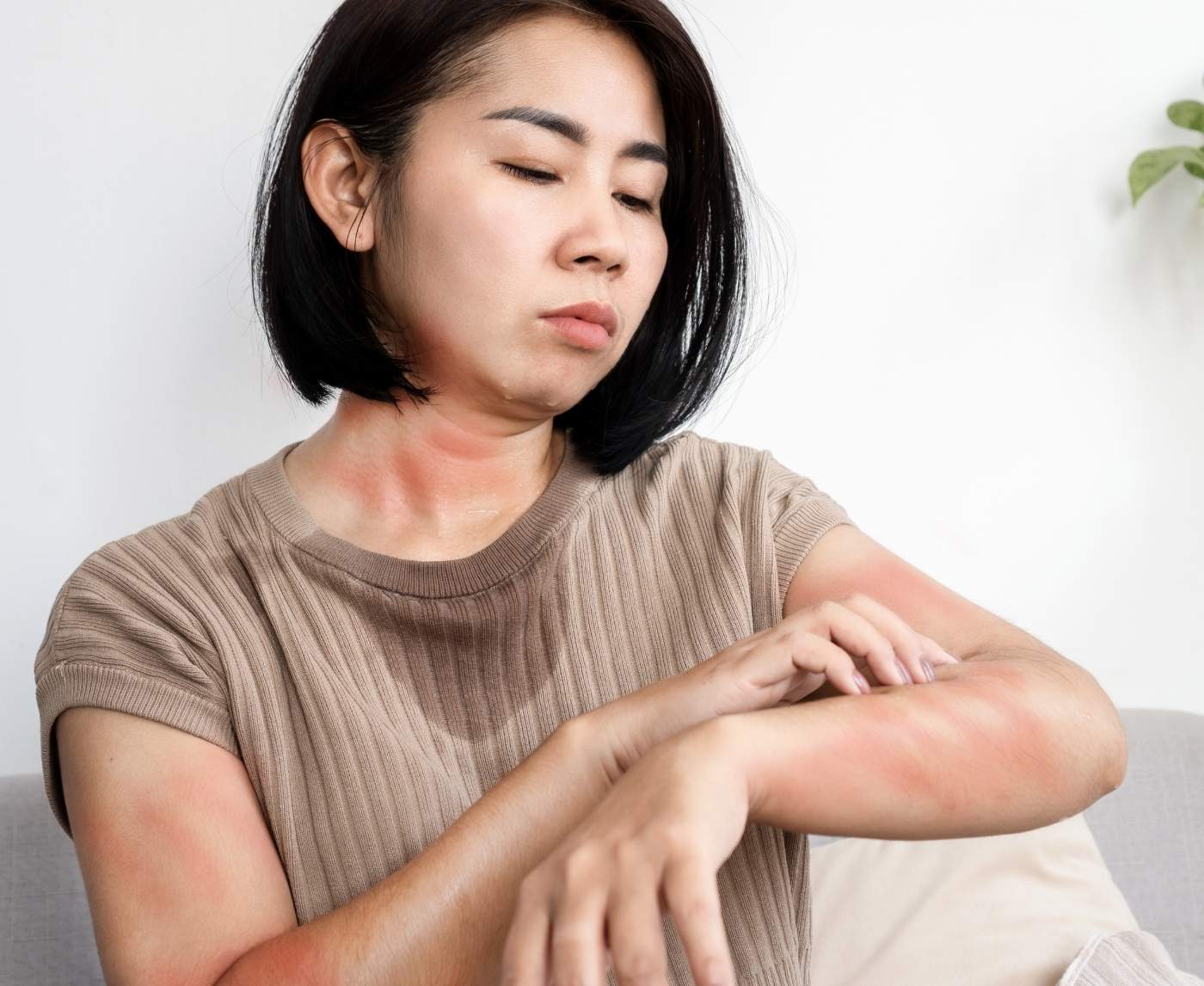
The first sign of a herpes outbreak often isn't something you can see. It shows up as a feeling, usually a subtle itch in one specific spot, sometimes a tingle that wasn't there yesterday, sometimes a faint burning sensation that doesn't match the kind of irritation you'd expect from friction or a new soap. That early signal is real, and for many people it's the body's first cue that the herpes simplex virus is on the move.
Reading the signal correctly matters, because most everyday itching has nothing to do with herpes. What sets herpes-related itching apart is when it happens, where it sits, and what follows in the next 24 to 72 hours. This guide walks through which stage of herpes typically involves itching, why nerve biology causes the sensation before anything shows up on the skin, and how to tell a meaningful symptom from a passing irritation.
Key Takeaways
- Herpes itching most often appears during the prodrome stage, the 24 to 72 hours before visible sores form, and it stays in the same nerve-supplied patch of skin each time.
- A clinic swab of a fresh lesion is the most accurate test once sores appear; for blood-based antibody tests, accuracy is reliable around 12 to 16 weeks after exposure.
What Stage of Herpes Causes Itching?
The prodrome stage is when most herpes-related itching shows up. It's the window between viral reactivation and visible skin changes, usually lasting somewhere between a few hours and three days. During this time, the herpes simplex virus is traveling along nerve pathways from its dormant location in nerve ganglia back toward the skin's surface, but the surface itself hasn't reacted yet.
That nerve activity is what creates the early sensation. People describe it as itching, tingling, burning, or a slight ache, depending on which nerves are involved and how strongly the virus is reactivating. It often feels different from a typical surface itch because it's coming from beneath the skin, not from anything sitting on top of it.
Itching can also continue once visible sores form, though the quality of the sensation usually shifts. The area becomes inflamed and sensitive, and pure itch gets mixed with soreness, tenderness, or sharp discomfort when the skin is touched. Later, during the healing phase, a lighter surface itch can return as the skin closes up and repairs itself.
Each stage has its own version of the sensation. Of the three, the prodrome itch is the most informative for figuring out what's going on, because the feeling isn't yet competing with visible lesions for attention.
- Prodrome (early stage): deep, localized, nerve-driven itch or tingling, no visible skin changes yet.
- Active outbreak: itching mixed with tenderness, pain, or stinging as vesicles and ulcers form.
- Healing stage: a milder surface itch as crusts fall off and the skin repairs itself.
Why Herpes Causes Itching Before Anything Is Visible
After a first infection, the herpes simplex virus doesn't leave the body. It moves into nerve cells and stays dormant, sometimes for months or years between flare-ups. When the virus reactivates, the process starts in those nerves, not on the skin.
Viral particles travel back down the same nerve fibers they used to reach the ganglia in the first place. That movement disrupts normal nerve signaling along the route. The brain interprets the disruption as a localized sensation, even though there's no visible damage at the destination yet. It's the reason the feeling is so specific and so tied to one particular patch of skin: the nerve always supplies the same area.
The World Health Organization describes prodromal sensations such as tingling, itching, or burning near the area where the sores will appear as common early signs that often precede visible lesions, especially in recurrent outbreaks. The CDC STI Treatment Guidelines describe similar prodromal symptoms in the recurrent-genital-herpes section.
The takeaway is that the itching isn't random. It follows a specific viral pathway, which is why the same patch of skin tends to be affected each time the virus reactivates.
If symptoms occur, they often begin with tingling, itching or burning near where the sores will appear.
What Herpes Itching Feels Like at Each Stage
People often describe the prodrome itch as different from an ordinary itch. It doesn't feel like an insect bite or a dry patch of skin. It feels deeper, sometimes accompanied by a buzzing or pins-and-needles quality. Some people notice a faint burning along with the itch. Others describe it as a vague soreness that they can pinpoint to one specific area but can't quite explain visually.
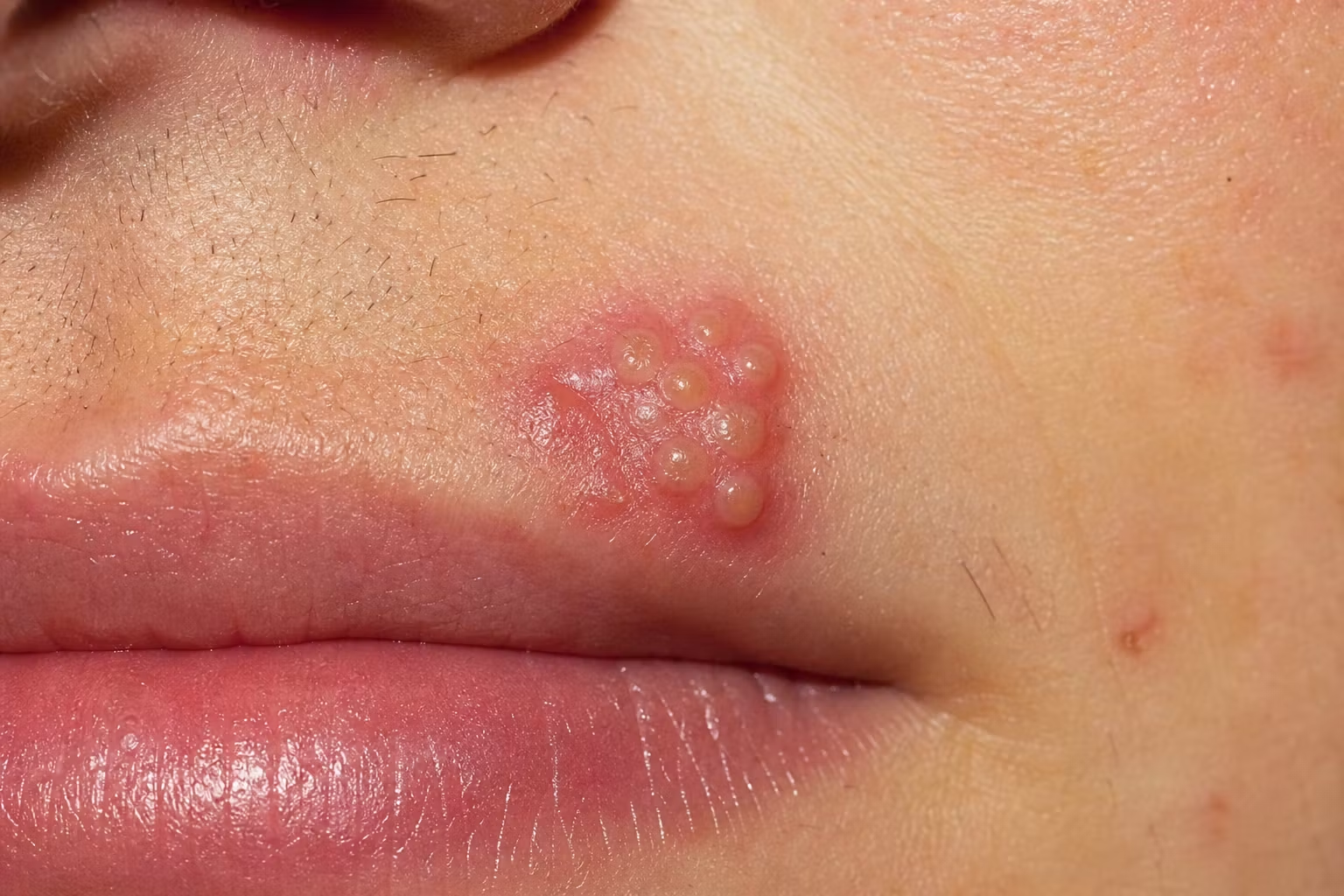
As the virus moves closer to the surface, the sensation typically intensifies. The patch of skin may start to feel warmer or more sensitive to touch. Within roughly 24 to 72 hours, small fluid-filled bumps or red patches appear in the same exact area where the early sensation was. That's the moment the prodrome shifts into an active outbreak.
During the outbreak itself, itching usually takes a back seat to pain, tenderness, or stinging. The blisters break open, form shallow ulcers, and then begin to crust over. This part of the cycle is the most uncomfortable and the most visibly recognizable.
In the healing stage, a mild surface itch often returns. The crusts dry, fall off, and the underlying skin gradually repairs itself. Some people interpret this returning itch as a new outbreak starting, but in most cases it signals that the skin is finishing the healing process instead.
Herpes Itching Timeline: From Exposure to First Outbreak
For a first-time infection, the timing of itching depends on when exposure happened. The herpes simplex virus has an incubation period, typically between 2 and 12 days, before any symptoms appear at all. During that window, the immune system is responding internally, but the skin hasn't reacted yet.
When symptoms do show up, the prodrome usually comes first. Itching, tingling, or a slight burning sensation appears in a specific area, often for several hours or up to a couple of days, before visible sores form. For many people, the first outbreak is more severe than later ones. Lesions tend to be more widespread, and prodromal symptoms can be more pronounced, sometimes paired with flu-like feelings such as a low-grade fever or swollen lymph nodes.
Recurrent outbreaks follow a tighter, more predictable timeline. The prodrome stage tends to be shorter, often only 24 to 48 hours. Some people start to recognize the same set of early sensations every time the virus reactivates, which can make it possible to act sooner with antiviral medication.
Testing timing matters here. A clinic swab from a fresh lesion is the most direct way to confirm herpes when sores are present. For blood-based antibody testing, accuracy improves substantially around 12 weeks after exposure, when the immune system has had time to develop detectable IgG antibodies (proteins the immune system makes in response to a viral infection). Per the CDC STI Treatment Guidelines, IgG seroconversion (the point at which those antibodies become detectable in a blood test) typically happens by 12 weeks after the presumed time of acquisition, though some assays can take up to 16 weeks. Testing in the first few weeks after exposure may miss a real infection.
Herpes timeline at a glance
- Incubation period: roughly 2 to 12 days from exposure before any symptoms appear.
- Prodrome: itching, tingling, or burning for 24 to 72 hours (often shorter, 12 to 48 hours, in recurrent outbreaks) before sores form.
- Outbreak: vesicles, then shallow ulcers, then crusting over 7 to 14 days for a first episode and several days for recurrent ones.
- Antibody test window: most assays detect HSV antibodies by 12 weeks after exposure, with some taking up to 16 weeks.
Herpes Itching vs Other Common Causes
Itching alone doesn't point to herpes. Plenty of common conditions cause itching in the same general areas where herpes can appear, and most of them aren't viral. What separates herpes-related itching from everyday irritation is the pattern around it.
Herpes itching tends to be localized to the same specific patch each time, builds over a clear window of hours to a couple of days, and is followed by visible skin changes. Everyday itching from friction, sweat, or new products is usually broader, can move around, and doesn't follow a structured timeline. It often lingers without escalating.
Yeast infections and bacterial vaginosis produce itching alongside discharge and odor changes. Contact dermatitis from soap, latex, or laundry detergent creates redness and itching across a wider area, often along the exact line where the irritant touched the skin. Folliculitis from shaving or waxing causes itching around hair follicles, with small pustules instead of clustered vesicles. Friction or chafing produces a rougher, surface-level itch that fades when the rubbing stops.
The clearest signal that itching is herpes-related is the sequence it follows. If the same spot itches, then within a few days shows a small cluster of fluid-filled bumps or shallow ulcers, that's a meaningful pattern. If the itch lingers for a week without anything else changing, herpes becomes much less likely.
| Feature | Herpes Itching | Other Common Causes |
|---|---|---|
| Location | Same specific patch each time | Can shift, spread, or appear in different spots |
| Onset | Builds over 24 to 72 hours | Often immediate or constant |
| Progression | Followed by visible vesicles or ulcers within days | Usually no visible lesion progression |
| Sensation | Nerve-driven tingling, buzzing, or deep itch | Surface itch, scratchy, or burning from contact |
| Pattern | Recurring cycles in the same nerve area | Persistent, situational, or one-off |
When to Test If You're Experiencing Itching
The right test depends on what you're seeing. If sores have formed, a clinic-administered swab is the most accurate method available. The swab collects fluid from inside an active blister or the edge of an ulcer, and a lab runs a PCR or culture test to detect the virus directly. The window for accurate swabbing is narrow: fresh lesions give the best results, and the test becomes less sensitive once sores have crusted over.
If only itching is present and no lesions have appeared, blood testing is the alternative. Blood tests for herpes look for IgG antibodies against HSV-1 and HSV-2. Antibody production takes time, which is why the timing of the blood test matters more than people often realize. Most people develop detectable antibodies by 12 weeks after exposure, with some assays taking up to 16 weeks depending on the specific test. Testing in the first few weeks after exposure can miss a real infection.
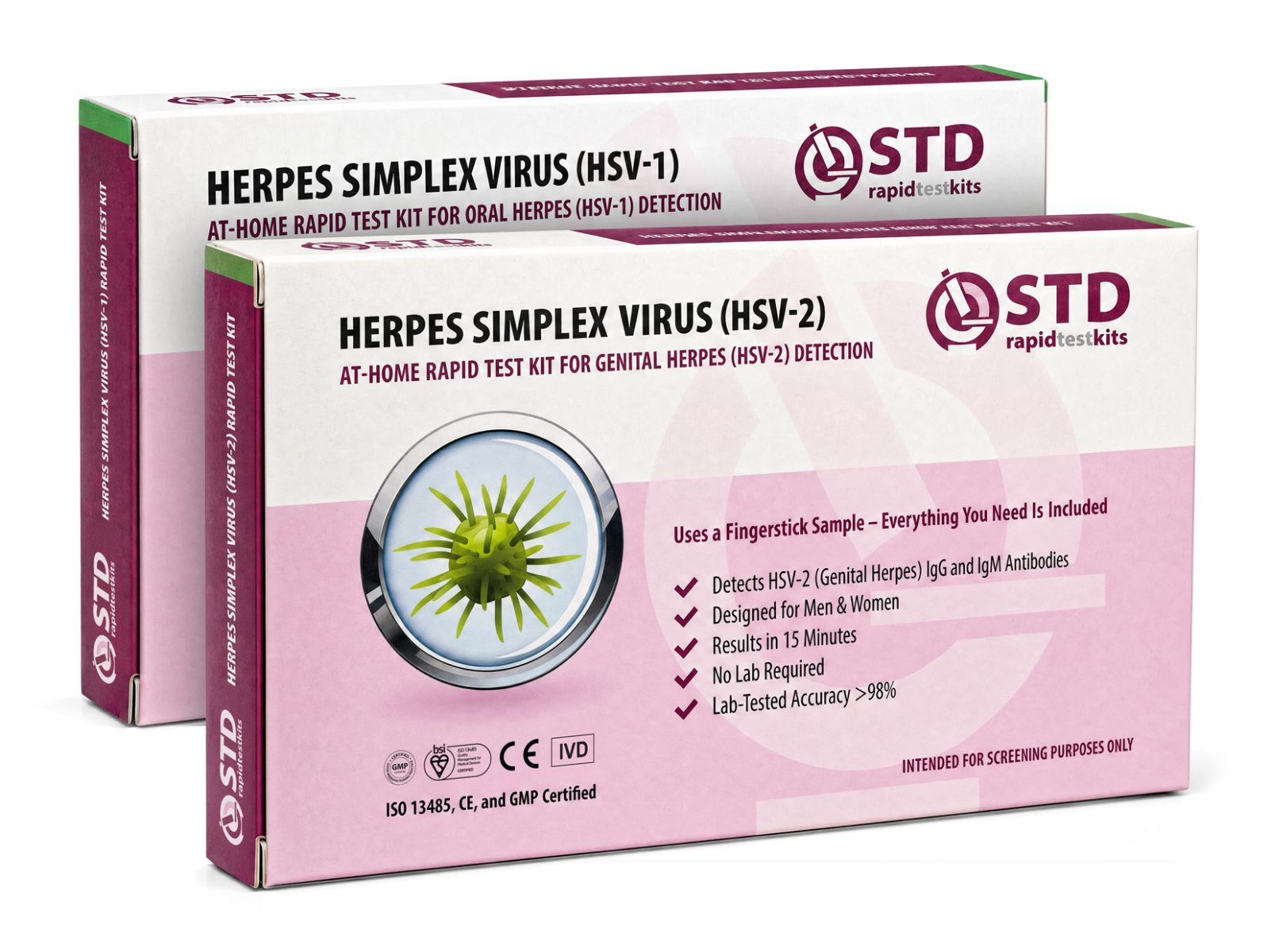
At-home rapid kits for herpes use lateral-flow immunoassay technology and are designed for the same antibody window as lab-based blood tests. They're useful as a private screening tool when symptoms have raised your concern but no visible sores are present. A positive at-home result is worth following up with a clinic confirmatory test, and a negative early result should be repeated at the 12-week mark.
If a recent exposure event is the concern, an STI panel that covers more than herpes alone can be helpful, since a single high-risk encounter often raises questions about more than one infection at once. Disclosure: stdrapidtestkits.com, which publishes this article, sells the at-home rapid kits referenced below.
What Triggers a Herpes Outbreak in the First Place?
Outbreaks don't happen at random, even though they sometimes feel that way. Reactivation is usually tied to something that stresses the immune system or irritates the nerve pathway the virus uses. The NHS guidance on genital herpes lists a similar set of common trigger categories.
Hormonal shifts also play a role for some people. Outbreaks may cluster around premenstrual days, around significant life-stress events, or during periods of poor sleep. Other people experience flares that don't seem connected to any obvious trigger, which can be frustrating, though it doesn't mean nothing is happening biologically. Subclinical immune fluctuations can be enough to allow reactivation.
The reason itching tends to appear in the same spot each time comes back to nerve anatomy. The herpes simplex virus parks itself in one specific nerve ganglion, and each reactivation sends viral particles back down the same nerve route. Genital outbreaks usually involve the sacral ganglia, while oral outbreaks involve the trigeminal ganglion. It's the biological reason the same patch of skin reacts each time the virus wakes up.
Frequency varies. Some people have one outbreak per year, others have one every couple of months, and some have only the prodromal sensations without ever developing visible sores. Over time, outbreaks tend to become less frequent and milder as the immune system adapts to the virus.
- Emotional or physical stress, including major life events
- Acute illness or fever
- Poor sleep, exhaustion, or being run down
- Intense sun exposure on the lip area (for oral HSV)
- Menstrual cycle hormonal shifts
- Dental work or trauma near the lip
- Friction or skin irritation in the affected area
Why Timing Matters More Than the Sensation Itself
When people try to figure out whether an itch is herpes, they usually focus on how it feels. Is it sharp? Is it deep? Is it different from a normal itch? Those descriptions are useful, but they're harder to interpret than people expect, because most itching feels strange when you're actively paying attention to it.
The more reliable signal is timing. A herpes prodrome usually follows a sequence: the itch begins, intensifies over roughly 24 to 72 hours, then visible skin changes appear in the same exact spot. After that, the lesions go through a few days of activity, crust over, and heal. The whole cycle from first sensation to full healing typically runs one to two weeks for a first outbreak and several days to a week for recurrent ones.
Non-herpes itching tends to behave differently. It's either constant (chronic skin conditions, persistent irritation from a product, dry skin), situational (kicks up during sweat or friction), or short-lived (a one-off insect bite that's gone within a day). It rarely follows the clean three-stage progression that herpes does.
Practically, a few days of watchful observation is often more informative than a single moment of comparing sensations. If something visible develops in the same spot within a week, the case for herpes strengthens. If the itch fades without anything appearing, herpes becomes much less likely and other causes move up the list.
Herpes pattern: itch begins in one specific spot, intensifies over 1 to 3 days, visible vesicles or ulcers appear in the same spot, then crust and heal over the following week.
Non-herpes pattern: itch is constant, situational (sweat, friction, new product), wanders across the skin, or fades within a day without anything visible following.
Can You Have Herpes Itching Without an Outbreak?
Yes, this happens, and it's one of the most confusing patterns to interpret. Some people experience repeated prodromal sensations, itching or tingling in the same spot, without ever developing visible sores. The phenomenon is sometimes called an abortive outbreak or simply prodrome without lesions.
A few different things can cause it. The immune system may be controlling viral reactivation well enough that the virus doesn't make it to the skin in numbers high enough to produce a visible lesion. Antiviral medication taken at the prodrome stage can also prevent lesions from forming, which is one reason early recognition matters for people with frequent recurrences. And sometimes the lesions are so small or so quickly healed that they're missed entirely.
This pattern is more common in long-standing infections than in new ones. After years of carrying the virus, many people's immune systems get better at containing reactivation, so prodromes happen more often than full outbreaks. The MedlinePlus overview of genital herpes notes that recurrent episodes tend to become milder and shorter over time.
What it does not mean is that the itching is harmless or unrelated. Repeated, localized, same-spot prodromal sensations in someone with a known herpes diagnosis usually still represent viral activity, and viral shedding can still occur. That's why people with diagnosed herpes are encouraged to avoid sexual contact during prodromal periods, not only during visible outbreaks. For someone without a confirmed diagnosis, recurring localized itching that follows the same pattern is worth testing for, even if visible sores never appear.

Frequently Asked Questions
- Does herpes always itch before sores appear?
- Itching before sores is common, though not universal. Most people with recurrent outbreaks notice some prodromal sensation, itching, tingling, or a deep burning feeling, in the same spot before anything becomes visible. First outbreaks can sometimes skip a clear prodrome and present with sores directly.
- How long after the itching do sores usually appear?
- Usually within 24 to 72 hours. For recurrent outbreaks the window can be as short as 12 to 24 hours. If something visible appears in the same exact spot where you felt the early itch, that timing pattern is one of the strongest signals it's herpes-related.
- Can herpes itching happen without ever turning into sores?
- Yes. This is called an abortive outbreak or prodrome without lesions, and it tends to happen more often in long-standing infections than in new ones. The immune system can sometimes contain reactivation before visible lesions form. Viral shedding may still occur during these episodes.
- What does herpes itching actually feel like?
- People most often describe it as a deep, localized sensation rather than a surface itch. Tingling, buzzing, mild burning, or pins-and-needles in one specific patch of skin are common descriptors. It usually feels different from ordinary skin itching, which is why people often notice it as something off even before they understand what it is.
- Is itching during healing a sign that the outbreak is getting worse?
- Usually not. A mild surface itch during the healing phase is the skin closing up and repairing itself, similar to how a healing scab can itch. It's a sign the outbreak is winding down, and the irritation usually fades over a few days.
- If I only feel itching, should I get tested?
- If there's a plausible recent exposure or you've had unexplained itching that keeps coming back in the same spot, yes. Timing matters: for blood antibody tests, results become reliable around 12 weeks after exposure, with some assays taking up to 16 weeks. Testing earlier can miss a recent infection. If visible sores ever form, a clinic swab at that point is the most accurate option.
- What's the biggest clue that an itch is herpes rather than ordinary irritation?
- Consistency in location and progression. Herpes itching tends to occur in the same exact patch of skin every time and is followed within a few days by visible changes such as clustered vesicles, shallow ulcers, or scabbing. Wandering, generalized, or non-progressing itches are much less likely to be herpes.
- Can the itching come back even when I'm on antiviral medication?
- Yes. Daily suppressive antiviral therapy reduces but doesn't always eliminate reactivation. Some people on suppressive treatment still experience occasional prodromal sensations that may or may not progress into full outbreaks. If prodromes are happening frequently while on suppression, that's worth raising with a clinician to discuss dosing or alternative regimens.
- U.S. Centers for Disease Control and Prevention. Genital Herpes overview, including transmission, symptoms summary, and asymptomatic presentation.
- U.S. Centers for Disease Control and Prevention. STI Treatment Guidelines, Genital Herpes section, covering prodromal symptoms, type-specific serology, and the 12-week test window for repeat antibody testing.
- World Health Organization. Herpes simplex virus fact sheet, including the prodromal tingling, itching, and burning that often precede visible sores.
- National Health Service (UK). Genital herpes condition overview, including symptoms, recurrence patterns, and common trigger categories.
- MedlinePlus, U.S. National Library of Medicine. Genital herpes overview, including the pattern of milder, shorter recurrent episodes over time.
- American Academy of Dermatology. Herpes Simplex overview, introducing HSV-1 and HSV-2 and noting that recurrent outbreaks tend to be milder than the first episode.
