





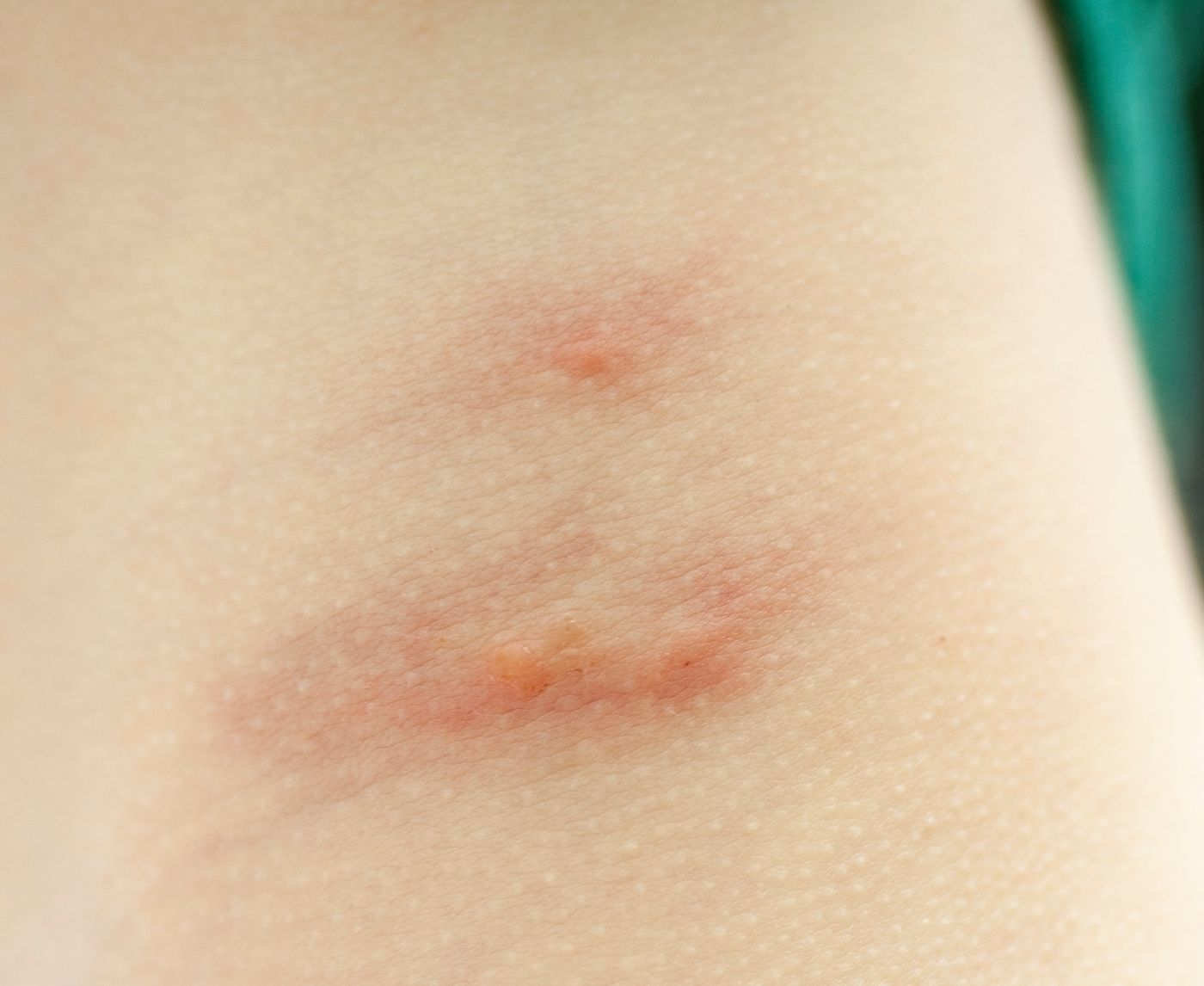

Quick Answer: Irritation, an allergic reaction, or an STD like herpes or HPV can all cause a rash after sex. It's time to get tested if your symptoms last longer than 48 hours or get worse, especially if you have blisters, pain, or discharge.
A Quick Truth Check: A Rash Isn’t Proof of an STD
When someone feels a rash after sex, their mind often jumps to herpes or HPV first, and that’s understandable. But in real life, skin reactions, allergic responses, friction, condom ingredients, or hygiene products are often the real culprits. Many “post-sex” rashes fade in a day or two with gentle care. Some, however, stick around or worsen, and that’s when you need to pay attention.
Think of a rash as a signal flag: sometimes it’s just irritation, sometimes it signals something deeper. Your job is to gather context: timing, symptoms, location, and persistence. Let’s walk that path together.
Carmen’s 2 A.M. Freakout
Carmen lay awake, heart pounding, flashlight in hand. The sheet felt coarse. She winced as she glanced at the mirror and saw tiny red bumps spreading where her thighs meet her core. She remembered using a new scented lubricant at dinner. Was it herpes? A yeast infection? Or did she just react to that lavender-smelling gel she hadn’t thought twice about?
She sent a quiet message to a trusted friend: “Is it weird to get a rash after sex? Should I freak out?” Her friend texted back: “See a clinic. But wait a day for things that calm down.” That waiting period, if nothing else gets worse, is often the difference between alarm and overreaction.
Key Clues: How to Read Your Rash
No single sign guarantees an STD. But a cluster of signs, rash plus burning, discharge, pain, fluid, or fever, raises the stakes. Use this framework to decode what you’re seeing.
| Feature / Symptom | More Likely Irritation | More Likely STD |
|---|---|---|
| Onset Time | Minutes to a few hours | 24–72 hours after exposure |
| Appearance | Redness, light swelling, some bumps | Blisters, ulcers, painful sores |
| Distribution | Outer skin: thighs, groin, labia, scrotum | Inner genitals, anus, mouth |
| Other Symptoms | Itching, mild burning | Pain, discharge, fever, swollen nodes |
| Duration | Clears in 1–2 days | Persists or worsens beyond 72 hours |
If your rash aligns more with the “suspicious” column, consider getting tested. If it leans toward benign causes, give it 24–48 hours, but keep an eye on any changes.
People are also reading: Why It’s So Common to Catch Chlamydia and Gonorrhea Together
Common Non-STD Causes of a Post-Sex Rash
Before jumping to worst-case scenarios, let’s cover the much more common reasons a rash might appear after sex. These are the low-hanging fruit, but ignoring them can lead you to unnecessary worry.
Friction, Sweat, or Overheating
Sex often leads to heat, moisture, and pressure. As skin rubs against skin or fabric, friction can break the skin’s barrier, causing red bumps, chafing, or heat rash. If you had vigorous or longer-than-usual activity, this is often the simplest explanation. It can appear quickly and usually fades with rest, cool compresses, and breathable clothing.
Allergic Reactions: Latex, Lubricants, and Semen
Latex condoms, flavored or scented lubricants, gels, spermicides, or even ingredients in personal care products can trigger contact dermatitis. The reaction can appear within minutes or hours as itching, redness, burning, or hives. Some people even react to proteins in semen, a rare but real condition known as seminal plasma hypersensitivity.
Yeast or Bacterial Overgrowth
If intercourse disturbs the vaginal microbiome or introduces bacteria, a yeast infection (Candida) or bacterial vaginosis can flare. Both can cause redness, itching, and irritation. These symptoms can be mistaken for an STD but usually respond well to antifungal or antibiotic treatment, respectively.
Underlying Skin Conditions
Conditions like eczema, psoriasis, or lichen sclerosus may stay quiet until triggered by moisture, pressure, or friction. If you’ve had sensitive skin or unexplained itch in the past, sex might have just brought it out, not caused an infection.
When an STD Is a Likely Cause
Now to the tougher side: some rashes are directly linked to STIs. The tricky part is that they often mimic less-serious conditions early on. Below are some infections to consider when a rash persists or evolves.
Herpes often starts with tingling or burning before any rash appears. Small fluid-filled blisters follow, which may burst and leave painful ulcers. First outbreaks are usually more severe and may be accompanied by fever or flu-like symptoms. Recurrences are typically shorter and milder. You can still transmit herpes when no sores are present.
Syphilis may begin with a painless sore (chancre) that goes unnoticed. Weeks later, a widespread rash may develop, even on the palms or soles. This rash isn’t usually itchy but can vary in appearance. Syphilis can mimic other conditions and requires a blood test for diagnosis.
HPV doesn’t usually cause a classic “rash” but may result in visible growths: small, flesh-colored bumps or cauliflower-like clusters. These can appear weeks or even months after exposure. They're usually painless but may itch or cause mild irritation. Testing is visual or via swab in some cases.
While not classically rash-producing, in rare cases, gonorrhea may spread through the bloodstream (DGI), causing pustular rashes on the body. Trichomoniasis may cause itching and irritation that presents similarly to yeast infections, sometimes mistaken for a rash.
Check Your STD Status in Minutes
Test at Home with Remedium10-in-1 STD Test Kit
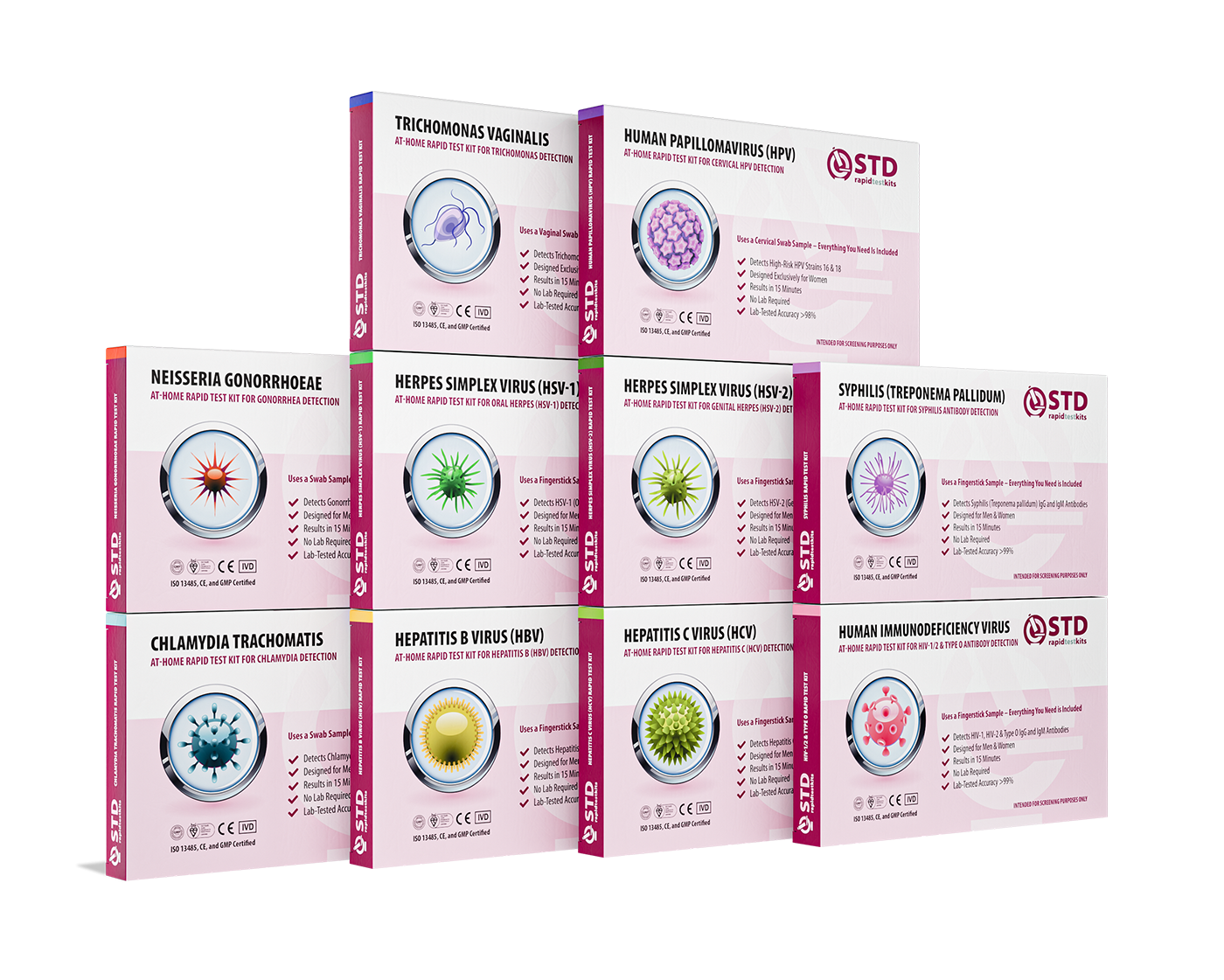
 For Women
 Results in Minutes
 No Lab Needed
 Private & Discreet
Order Now $189.00 $490.00
For all 10 tests
STD Testing Windows and Rash Links
| STD | Rash Pattern | When It Appears | When to Test |
|---|---|---|---|
| Herpes (HSV‑1/2) | Painful blisters or ulcers | 2–12 days post-exposure | Immediately if lesion present (swab) |
| Syphilis | Painless sore, then body rash | 3–6 weeks or longer | 3+ weeks post-exposure (blood) |
| HPV | Warts, not rash | Weeks to months later | Visual or swab test when visible |
| Chlamydia/Gonorrhea | No classic rash; irritation | 1–3 weeks after sex | 7–14 days post-exposure (urine/swab) |
| Trichomoniasis | Itching, redness, irritation | 5–28 days | Symptom-triggered testing |
When to Test: Timing, Accuracy, and Retesting
Testing too early can give you false peace. Testing too late might let something spread. The sweet spot depends on the STD, the method, and whether you're symptomatic. Here's how to frame it: what did your rash look like, how long after sex did it appear, and has it evolved?
If you're staring at your calendar or wondering if you're “too early,” you’re not alone. Most people delay testing out of fear or confusion. But if you track the appearance of your symptoms and match them to test windows, you’ll be in a better place emotionally and medically.
In general, if your rash looks like herpes (painful blisters), get a swab test ASAP, don’t wait. For blood-based testing like syphilis or HIV, wait 3+ weeks, then test. For chlamydia and gonorrhea, most labs recommend testing 7–14 days after exposure.
And remember: if symptoms worsen or change before that, test right away. It’s okay to test more than once.
Micro‑Scene: Miguel’s Wait-and-Watch
Miguel had casual sex with a new partner over a long weekend. They used a condom, but it slipped at the base. Two days later, he noticed a red patch with faint tingling. He chalked it up to friction. On day four, the patch was still there, and now it stung.
He booked an at-home test kit. While waiting, a small blister appeared. His stomach dropped. The timing lined up with herpes. The swab he sent came back HSV-2 positive. His partner didn’t know they had it.
Miguel’s takeaway: don’t ignore rashes that linger, even if they start mild. Time gives symptoms space to evolve, and testing tells the truth.
People are also reading: Tested Positive, Still a Virgin? You’re Not Alone
When to Wait and When to Act
If you notice irritation right after sex and suspect friction, an allergy, or a hygiene issue, it’s okay to monitor it for 24–48 hours. But the moment you see blisters, ulcers, or anything that oozes, act fast. Here's how that decision breaks down.
| Symptom | Wait 24–48 Hours | Test Immediately |
|---|---|---|
| Redness or itching only | ✓ | |
| Rash fades with care | ✓ | |
| Painful blisters or sores | ✓ | |
| Fever or swollen lymph nodes | ✓ | |
| Discharge or burning when peeing | ✓ | |
| Rash on palms, soles, or body | ✓ |
If your symptoms fall in the “wait” column and resolve with gentle care, you may not need testing. But if anything worsens, changes form, or sticks around, don’t delay. It’s better to catch infections early, especially ones like syphilis or herpes that can be stealthy at first.
Self-Care During the “Wait and Watch” Period
Assuming no red flags, here’s how to care for your skin while observing:
Clean the area gently with warm water, no soaps or scented washes. Skip tight clothes, skip sex, skip second-guessing. Let your skin breathe. Cotton underwear, loose pants, and cool compresses help. You can apply a light, fragrance-free moisturizer or hydrocortisone if itching is bad, just not near open skin.
If your rash is gone in a day or two, that’s great. If it’s not, or if it morphs, your next step is clear: test and treat. Your skin gave you the heads-up. Now you get to respond with confidence, not fear.
FAQs
1. Can I really get herpes or HPV even if everything looks... totally fine?
Yep, unfortunately. Both herpes and HPV can spread when no symptoms are visible. That means your partner could be shedding virus without a single sore, and you wouldn’t know unless you both tested. Skin-to-skin contact is sneaky like that, which is why barrier protection lowers risk but doesn’t eliminate it.
2. Does every rash after sex mean I have an STD?
Not even close. Sometimes it's friction. Sometimes it's your skin yelling at you because of that scented lube or a new brand of latex. But if the rash doesn’t fade in a day or two, or gets angrier instead of calmer, it’s time to stop guessing and test. Your body doesn’t lie, but it does get misunderstood a lot.
3. How soon can I test for herpes after a rash appears?
If you see an actual blister or open sore, get it swabbed right away. The sooner the better, ideally within 48 hours. Waiting too long means the virus might not show up even if you have it. Blood tests can work too, but they take a few weeks to detect new infections. So yeah, timing matters a lot with herpes.
4. What if the rash disappears before I can test?
It happens. A lot. But just because it’s gone doesn’t mean the issue is over. You can still tell your provider what happened and get tested based on the timeline. They’ll know what to look for, especially if you took pictures (yes, that helps).
5. Are all STD rashes painful?
Not always. Herpes is often painful, sure. But syphilis can start with a totally painless sore. HPV warts might not hurt at all. And some STDs don’t show any skin symptoms. Don’t wait for pain to take things seriously, look at what your skin is doing, not just how it feels.
6. My partner doesn’t have symptoms, am I still at risk?
Yep. A lot of STDs are what we call “asymptomatic”, they just chill in the body without causing obvious issues. That’s part of what makes them so common. Think of testing as doing maintenance, not reacting to a breakdown. You don’t wait for your engine to smoke before getting an oil change, right?
7. Can shaving cause bumps that look like herpes?
Absolutely. Razor burn and ingrown hairs are drama queens, they can get red, angry, even swollen. But they usually stay on the surface, don’t blister, and calm down within a few days. Herpes lesions are more intense and tend to show up with other symptoms like tingling, flu feelings, or clusters of sores. If you’re not sure? You guessed it, test.
8. Do condoms stop all rash-related STDs?
They help a lot, but they’re not magic. Herpes and HPV can still spread via skin around the condom. That said, using them reduces risk significantly, and for some infections (like chlamydia or gonorrhea), they’re super effective. Just don’t treat them like a force field, pair them with regular testing.
9. Is it possible that a rash after sex means HIV?
Technically? Yes, but it’s rare. An early HIV infection (called acute HIV) can sometimes cause a body-wide rash, but it usually comes with fever, sore throat, and major fatigue. If you’re at risk or unsure, a 4th-gen HIV test is a good move 2–4 weeks after the encounter. No shame in checking, it’s information, not a sentence.
10. If I had a rash but tested negative, do I still need to tell my partner?
Totally depends. If it was clearly razor burn or a lube reaction, maybe not. But if it felt off, lasted a while, or really scared you enough to test, bringing your partner into the loop can build trust. Try: “Hey, I had a weird rash after we hooked up. It turned out fine, but I got tested just to be safe.” That’s honesty without drama.
You Deserve Answers, Not Assumptions
If you’re reading this, chances are you’ve spent time spiraling in search results, wondering if your skin is betraying you. Breathe. You’re not alone. Whether your rash was irritation, infection, or something in between, you took the first step by getting informed.
Don’t wait and wonder, get the clarity you deserve. This at-home combo test kit checks for the most common STDs discreetly and quickly.
How We Sourced This Article: We combined current guidance from leading medical organizations with peer-reviewed research and lived-experience reporting to make this guide practical, compassionate, and accurate. In total, around fifteen references informed the writing; below, we’ve highlighted some of the most relevant and reader-friendly sources.
Sources
1. CDC – Genital Herpes – Fact Sheet
2. CDC – Syphilis – Fact Sheet
4. Herpes vs. Herpes-Like Conditions
About the Author
Dr. F. David, MD is a board-certified infectious disease specialist focused on STI prevention, diagnosis, and treatment. He blends clinical precision with a no-nonsense, sex-positive approach and is committed to expanding access for readers in both urban and off-grid settings.
Reviewed by: Dr. Naomi Shah, DO | Last medically reviewed: October 2025
This article is for informational purposes and does not replace medical advice.


