
Published: August 2025 | Last updated: May 2026 | Editorial review and quality control: Martina N.
A noticeable change in genital discharge is one of the most common reasons people start searching for sexual-health information. Most of the time the change is harmless variation tied to your cycle, hydration, or arousal level. Sometimes it is the first sign of an infection that needs attention. The skill worth building is telling these apart and knowing when a test, at home or at a clinic, is the right next step.
This guide breaks down what color, texture, and smell can signal, which infections produce which patterns, and what your options are when something looks off.
What does the color of my discharge actually mean?
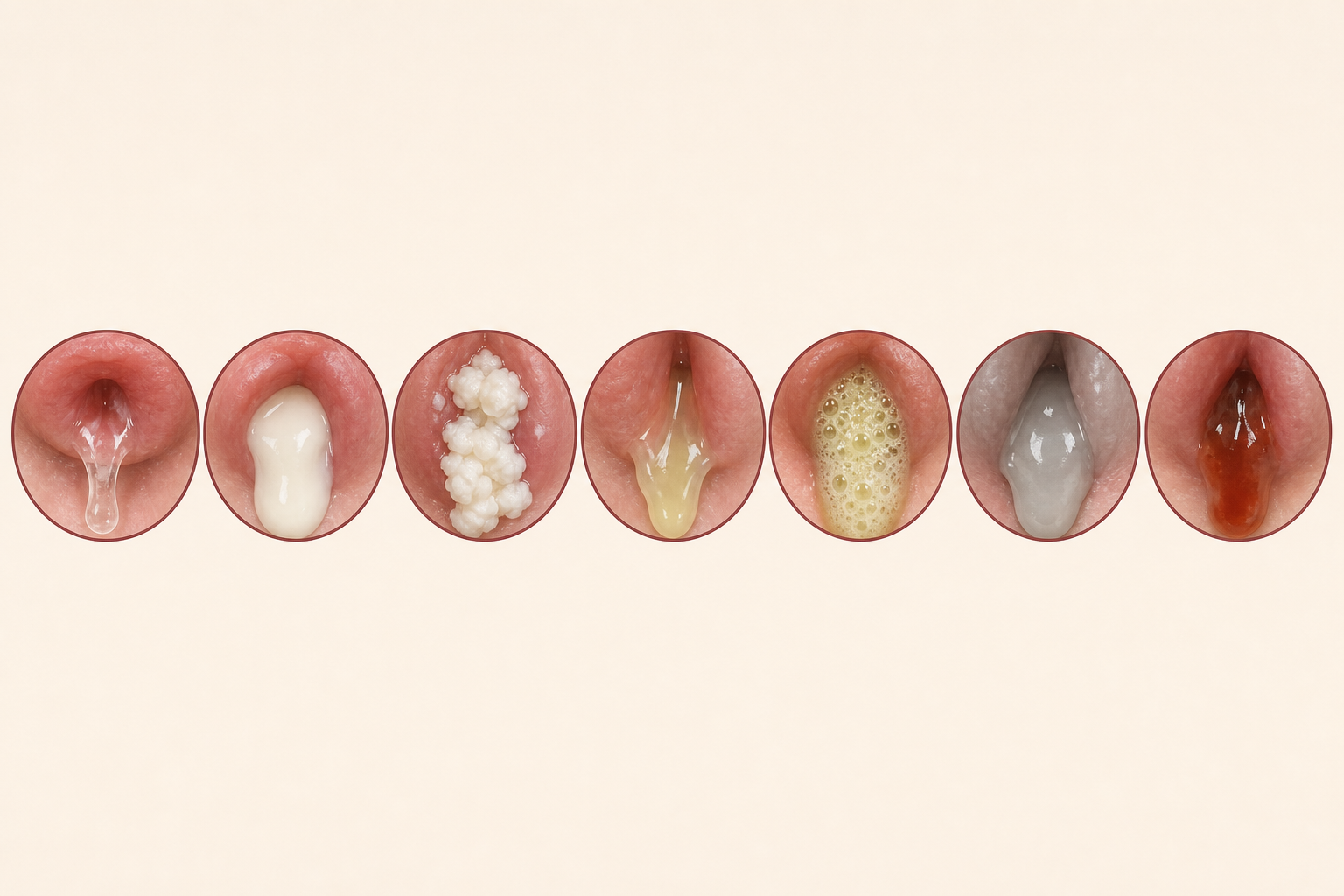
Clear, stretchy, or milky-white discharge is usually normal and tracks your menstrual cycle or arousal level. Thick, clumpy white often signals a yeast infection. Yellow, green, or gray discharge, especially with odor, burning, or itching, frequently points to chlamydia, gonorrhea, trichomoniasis, or bacterial vaginosis. Brown discharge is typically old blood. Color alone cannot diagnose, so any sudden, persistent change is worth testing.
Key Takeaways
- Color alone cannot diagnose. Yellow or green discharge combined with burning, itching, or strong odor is the clearest signal that testing should come next.
- Untreated chlamydia, gonorrhea, and trichomoniasis can progress to pelvic inflammatory disease, epididymitis, and fertility problems. Most are simple to treat when caught early.
What "normal" discharge looks like
Vaginal anatomy produces fluid every day. Cervical mucus, lubrication, and shed cells move through the vagina in a continuous self-cleaning process. Volume, texture, and color shift across the menstrual cycle as estrogen and progesterone rise and fall.
Around ovulation, estrogen peaks and discharge often turns clear and stretchy, similar to raw egg white. After ovulation, progesterone takes over and discharge tends to thicken and become creamy or off-white. Just before a period, fluid volume usually drops. Pregnancy, hormonal contraception, breastfeeding, and perimenopause all change baseline patterns. Sexual arousal also produces clear, slippery fluid that is distinct from cycle-related discharge (NHS overview of vaginal discharge).
Healthy vaginal discharge is typically clear, white, or off-white; thin to slightly creamy; mildly musky or odorless; and not associated with itching, burning, or pain. The vagina also maintains its own bacterial ecosystem dominated by lactobacilli, which keep pH acidic enough to suppress harmful bacteria and fungi. Disruptions to that ecosystem from douching, scented washes, antibiotic courses, or new sexual partners often show up in discharge before any other symptom appears.
Penile anatomy does not produce ongoing discharge under normal conditions. Pre-ejaculate during sexual arousal and semen during ejaculation are separate physiological events from the persistent leakage that signals infection. Outside of those situations, fluid emerging from the urethra, with or without odor, is unusual and worth investigating; non-gonococcal urethritis is one of the most common bacterial causes (NHS guidance on non-gonococcal urethritis).
Two patterns are worth flagging in advance. The first is a sudden, persistent change. A baseline that has held steady for years and shifts noticeably in volume, color, smell, or texture is a useful signal that something has changed inside the body. The second is symptoms paired with discharge. Burning during urination, itching, pelvic pain, lower abdominal ache, painful sex, or bleeding outside your period each push the probability toward infection rather than normal variation.
If only one factor changes (slightly thicker discharge a few days before your period, for example) and nothing else is going on, watching it for a cycle is reasonable. If color shifts to yellow or green, smell turns sharp or fishy, or any pain joins the picture, testing should not wait.
Normal: clear, white, or off-white; thin to mildly creamy; either odorless or faintly musky; no itching, burning, or pain.
Worth testing: yellow, green, or gray color; sharp or fishy odor; clumpy or frothy texture; itching, burning, pelvic pain; bleeding outside your period; any persistent penile discharge outside of arousal.
The discharge color decoder
Color and texture together narrow the most likely cause faster than either alone. The combinations below are the patterns clinicians use to decide which test to order first.
Thick, clumpy white: likely a yeast infection
Vulvovaginal candidiasis (a vaginal yeast infection) typically produces thick, white, clumpy discharge with the texture of cottage cheese. The discharge usually has little or no odor. The strongest accompanying symptom is intense itching, often paired with redness, swelling, and pain during sex or urination.
Yeast overgrowth happens when normally suppressed Candida species (most often Candida albicans) expand. Common triggers include recent antibiotic courses, hormonal shifts, uncontrolled diabetes, immunosuppression, and prolonged moisture or tight synthetic clothing. Penile yeast infections (candidal balanitis) also exist and present with white discharge under the foreskin, redness, itching, and a faint rash. Yeast is treatable with over-the-counter antifungals or a single-dose prescription. Recurrence four or more times a year warrants medical follow-up to rule out underlying causes.
Yellow or yellow-green: often gonorrhea or chlamydia
Yellow or yellow-tinged discharge is the strongest color flag for a bacterial sexually transmitted infection. In people with penises, gonorrhea typically produces a thick, yellow discharge along with painful urination (CDC gonorrhea page). Chlamydia produces a similar but often lighter and less obvious discharge (CDC chlamydia page). In people with vaginas, both infections can cause increased cloudy or yellowish discharge, though the change is often subtle and missed.
Other symptoms that strengthen the case for testing include pelvic pain, bleeding between periods or after sex, painful sex, and (in penile anatomy) testicular swelling or pain. Both chlamydia and gonorrhea are simple to treat with antibiotics when caught early. Left untreated, both can travel up the reproductive tract and cause pelvic inflammatory disease in women or epididymitis in men, with potential long-term effects on fertility.
Thin, gray, fishy odor: almost always bacterial vaginosis
Bacterial vaginosis (BV) is technically not classified as a sexually transmitted infection, although it is strongly linked to sexual activity, douching, and shifts in the vaginal microbiome. The classic presentation is thin, gray or off-white discharge with a strong fishy odor that often becomes more noticeable after sex.
Many people with BV have no symptoms at all. When symptoms occur, they typically include the characteristic odor, light itching or burning, and sometimes mild irritation. BV does not cause severe pain or fever; if those are present, a different diagnosis is more likely. BV is treated with prescription antibiotics. Recurrence is common, and untreated BV raises the risk of acquiring or transmitting other sexually transmitted infections.
Frothy, green, foul odor: trichomoniasis is the leading suspect
Trichomoniasis is a parasitic infection caused by Trichomonas vaginalis. The textbook discharge is greenish or yellow-green, often frothy or bubbly, with a strong unpleasant odor. Itching, burning, and pain during urination or sex are common (CDC About Trichomoniasis page).
Many women with trich have no symptoms or very mild ones, which is why the infection is often diagnosed only after a partner reports symptoms. In men, trich frequently causes no symptoms at all, even while transmission continues. Trich is treatable with a short course of metronidazole or tinidazole; partners must be treated simultaneously to prevent re-infection.
Brown or bloody: old blood with several possible sources
Brown discharge usually means old blood that has had time to oxidize before reaching the vaginal opening. Light brown spotting at the start or end of a period is normal. Brown spotting at other times can be caused by hormonal contraception, ovulation, implantation in early pregnancy, polyps, or pelvic infections.
Bleeding after sex outside your period, persistent intermenstrual bleeding, or bleeding paired with pelvic pain warrants evaluation. Cervical and uterine causes range from minor (a polyp) to serious (cervical infection or, rarely, cervical cancer), and they cannot be sorted out by appearance alone. For penile anatomy, blood in discharge is rare and always significant; possible causes include urethritis, urinary tract infection, urethral injury, or prostate inflammation.
Clear and slippery: usually exactly what it should be
Clear, stretchy, slippery discharge is the body's normal signal of fertile-window mucus or sexual arousal. Volume can also rise during exercise, in hot weather, with hormonal shifts, and during pregnancy. As long as it has no odor, no associated itch, and no pain, clear discharge is a sign of a working system rather than a problem.
When discharge points to a sexually transmitted infection
The five conditions covered above (yeast, BV, chlamydia, gonorrhea, trichomoniasis) account for the majority of discharge-related diagnoses. Several other infections can also produce discharge or discharge-like fluid, including herpes outbreaks (with clear fluid from lesions rather than urethral or vaginal flow) and Mycoplasma genitalium (a less-discussed bacterial cause of urethritis).
Window periods matter. Chlamydia and gonorrhea typically become detectable within one to two weeks of exposure, which is also when symptoms tend to appear if they appear at all. Trichomoniasis may take a few weeks to show up reliably on a test. The most efficient strategy is to test as soon as a clear symptom appears or, if you have had a higher-risk exposure with no symptoms, after the appropriate window has elapsed (WHO STI fact sheet).
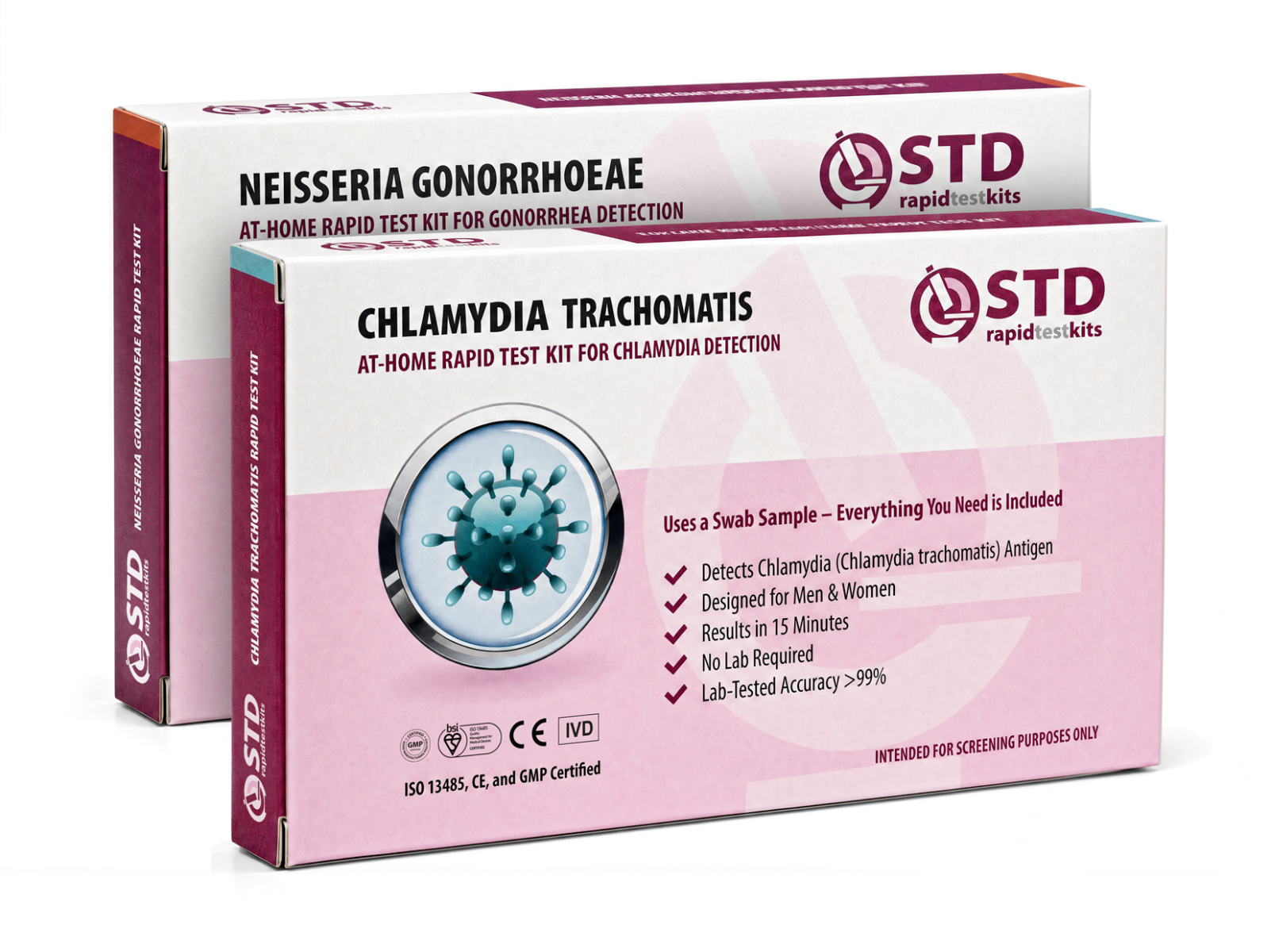
A note on home-testing scope. The at-home rapid tests sold on this site cover chlamydia, gonorrhea, and (for vaginal anatomy) trichomoniasis using lateral-flow swab cassettes. These are screening tools that use the same swab sample type clinics collect; clinical labs run NAAT testing on similar samples and report higher analytical sensitivity. For asymptomatic infections, lab NAAT remains the gold standard. For symptom-prompted testing where a clear pattern is already suggesting a specific infection, a home rapid test is a reasonable first step.
Our trichomoniasis at-home rapid kit is validated for vaginal self-swab only and is therefore a women-only product. Male readers concerned about trich should plan a clinic visit for sample collection. Combined-panel kits cover both chlamydia and gonorrhea via swab regardless of anatomy.

Chlamydia often has no symptoms, but it can cause serious health problems, even without symptoms.
What untreated infection does
The single biggest reason to act on abnormal discharge is that several of the most common causes get worse, sometimes silently, without treatment.
Pelvic inflammatory disease
Untreated chlamydia, gonorrhea, and (less commonly) other infections can ascend from the cervix into the uterus, fallopian tubes, and ovaries. The resulting pelvic inflammatory disease causes lower abdominal pain, fever, painful sex, bleeding between periods, and unusual discharge. Even mild or asymptomatic PID can scar the fallopian tubes (CDC PID page). Tubal scarring is the most common cause of preventable infertility and ectopic pregnancy in women in many countries. Treatment requires prompt antibiotic therapy and, in some cases, hospitalization. The damage that PID causes is often only partially reversible, which is why early treatment of chlamydia and gonorrhea matters so much.
Epididymitis and chronic testicular pain
In men, untreated chlamydia or gonorrhea can spread to the epididymis, the coiled tube behind each testicle that stores and carries sperm. Epididymitis causes testicular swelling and pain, fever, and tender groin lymph nodes. Chronic or recurrent epididymitis can scar the duct system and contribute to fertility problems.
Continued transmission
A largely silent infection can still pass to partners, and the longer it sits untreated, the wider the network of people exposed. Asymptomatic chlamydia is the canonical example: many infected people feel fine while transmission continues through unprotected sex. Routine testing, especially after a new partner or partner change, breaks this chain.
Systemic complications
Disseminated gonococcal infection happens when gonorrhea reaches the bloodstream, producing painful joint inflammation, skin rash, and (rarely) endocarditis. Untreated syphilis, which does not typically cause vaginal discharge but does cause genital sores and a later body rash, progresses through stages and can damage the heart, brain, and other organs in late stages. While these systemic outcomes are uncommon with timely care, they remain real consequences of leaving infections untreated.
Pregnancy and birth implications
Several discharge-causing infections affect pregnancy. Chlamydia and gonorrhea can be passed to a baby during birth and cause neonatal eye infections and pneumonia. BV during pregnancy is associated with higher rates of preterm birth and low birth weight. Trichomoniasis is also linked to preterm delivery. Anyone planning a pregnancy or already pregnant who notices new or persistent discharge symptoms should bring them up at a prenatal visit.
How to handle abnormal discharge
The order of operations is short and worth memorizing.
Step 1. Test before you treat
Discharge patterns overlap. Yeast and trich can both cause itching. BV and trich can both cause odor. Chlamydia and gonorrhea can both cause yellow discharge. The visual fingerprint narrows possibilities, and a test confirms the cause and makes targeted treatment possible. Buying over-the-counter yeast cream and using it on what is in fact trichomoniasis wastes time and lets the infection progress.
For an at-home approach, swab-based rapid tests for chlamydia, gonorrhea, and trichomoniasis (vaginal anatomy) provide a screening result at home in about 15 minutes. For broader coverage that includes blood-borne infections like HIV and syphilis, multi-panel home kits combine swab and fingerstick collection in one box. For specific concerns we do not cover at home (urine NAAT, throat swab, rectal swab, pap smear), a clinic visit is the right step.
Step 2. Stop disrupting the genital ecosystem
Douches, scented washes, perfumed wipes, vaginal deodorants, and harsh body washes used internally all disrupt the bacterial balance that keeps yeast and BV-causing organisms suppressed. The vagina cleans itself; warm water externally is enough. Penile hygiene follows the same principle: warm water and mild unscented soap externally, no internal washing of the urethra, no deodorants or sprays in the genital area.
Step 3. Inform recent partners
For any infection that is sexually transmitted, partners need a heads-up so they can also test and treat. The conversation is awkward and worth having anyway. A neutral, factual message works fine: "I am getting tested for X because of Y symptoms; you should consider getting tested too." Many clinics also provide partner notification services that contact partners anonymously on your behalf.
Step 4. Complete the antibiotic course
Antibiotics for chlamydia, gonorrhea, BV, and trich must be taken to completion even after symptoms disappear. Stopping early can leave residual organisms that develop resistance, particularly relevant for gonorrhea, which has shown growing antimicrobial resistance globally (CDC STI overview). Partners must also be treated; otherwise re-infection from the same partnership is the most common outcome.
Step 5. Retest when indicated
Test-of-cure (a follow-up test after treatment) is recommended for trichomoniasis, certain gonorrhea cases, and pregnancy-related infections. For most chlamydia infections, retesting three months after treatment is recommended to catch re-infection rather than treatment failure. If symptoms persist or recur, retesting is essential.

Discharge questions readers ask most
- Can a sexually transmitted infection cause discharge?
- Yes. Chlamydia, gonorrhea, and trichomoniasis are the most common discharge-causing STIs. Discharge is often the only noticeable symptom, especially for chlamydia, which is asymptomatic in most infected people.
- What does normal vaginal discharge look like?
- Healthy discharge is clear, white, or off-white; thin to mildly creamy; and either odorless or faintly musky. Volume and texture change with the menstrual cycle, hormonal contraception, pregnancy, and arousal.
- Is any penile discharge ever normal?
- Outside of pre-ejaculate during arousal and semen during ejaculation, no. Persistent leakage from the urethra, especially with burning, itching, or odor, points to inflammation or infection and warrants testing.
- Can stress alone change discharge?
- Indirectly, yes. Stress can shift hormone levels and immune function, which in turn can trigger yeast overgrowth or BV in people who are already prone to either. Stress does not cause STIs.
- Why does discharge sometimes smell stronger after sex?
- Semen is alkaline and temporarily raises vaginal pH, which can amplify odor in the hours after sex without indicating any infection. A persistently strong fishy odor points more clearly to bacterial vaginosis.
- Can I treat abnormal discharge at home without testing?
- Sometimes, for confirmed yeast infections that respond to over-the-counter antifungals. For first-time symptoms, recurring symptoms, or symptoms paired with pain, fever, or unusual color, testing first is the more reliable route. STIs need prescription treatment.
- Should I avoid sex while I have abnormal discharge?
- Yes, until you have a diagnosis and (if needed) have completed treatment. Continuing sexual activity can transmit an underlying infection and slow healing.
- How often should I test for STIs if I am sexually active?
- Annual testing is a reasonable baseline. Test at least every three to six months if you have new or multiple partners, and test promptly any time discharge or other symptoms appear. The CDC publishes screening guidance broken out by anatomy, age, and risk factors.
- U.S. Centers for Disease Control and Prevention. Sexually Transmitted Infections home page. Provides screening guidance, transmission information, and treatment overviews for the most common STIs.
- U.S. Centers for Disease Control and Prevention. About Chlamydia. Symptoms including possible discharge, transmission, and consequences of untreated chlamydia, including PID risk.
- U.S. Centers for Disease Control and Prevention. About Gonorrhea. Symptoms including discharge patterns, transmission, and antimicrobial-resistance background.
- U.S. Centers for Disease Control and Prevention. About Trichomoniasis. Symptom patterns including frothy discharge, partner notification guidance, and treatment regimens.
- U.S. Centers for Disease Control and Prevention. Pelvic Inflammatory Disease. Causes, complications including infertility and ectopic pregnancy risk, and treatment.
- U.K. National Health Service. Vaginal discharge. Patterns of normal discharge through the menstrual cycle and signs that warrant medical attention.
- U.K. National Health Service. Non-gonococcal urethritis. Common cause of penile discharge, urethral inflammation, and when to seek care.
- World Health Organization. Sexually transmitted infections fact sheet. Global epidemiology, complications, and screening recommendations.
