






Quick Answer: Full STD panel vs single test decisions depend on your exposure, symptoms, and timing. If you’re unsure or had multiple risk factors, a full panel is usually the safest choice because many STDs share symptoms, or have none at all.
This Is Where Most People Guess, And Why That Matters
Jordan, 26, thought he was being responsible. He noticed a slight burning sensation when he peed, nothing dramatic, just enough to feel off. So he went to a clinic and asked for a test for Chlamydia. It came back negative.
“I felt relieved. I told myself it was probably irritation or dehydration.”
Three weeks later, the symptoms didn’t go away. He finally went back and got a full STD panel. This time, the result was Gonorrhea.
“I didn’t even know they were different tests. I thought they checked for everything the first time.”
This is one of the most common misconceptions in STD testing. Many people assume that getting “tested” automatically means everything is covered. It doesn’t. And that gap, between what people think they’re testing for and what they’re actually testing for, is where infections get missed.
The truth is simple but uncomfortable: you can test negative for one STD and still have another. And unless you specifically ask, or use a full panel, some infections won’t be checked at all.
Why One Test Feels Logical (But Often Isn’t Enough)
There’s a reason people lean toward testing for just one STD. It feels targeted, efficient, and less overwhelming. If you have a symptom, it’s natural to assume there’s a single cause behind it.
But sexual health doesn’t work like a simple cause-and-effect equation. Many STDs overlap in symptoms, or stay completely silent. That burning sensation? It could be Chlamydia, Gonorrhea, or even something non-STD like a UTI. Or it could be nothing at all.
And here’s where things get tricky: a lot of infections don’t show symptoms in the early stages. So choosing a single test based only on what you feel can leave blind spots.
“I didn’t have any symptoms, so I just skipped testing altogether,” one patient shared. “Then my partner tested positive for something I had no idea I was carrying.”
That’s why healthcare providers often recommend broader testing when there’s any uncertainty. Not because they’re being excessive, but because STDs don’t always announce themselves clearly.
People are also reading: What to Do Right After a Positive Hepatitis B Test (No Panic Needed)
Full Panel vs Single Test, What’s Actually Being Checked?
This is where clarity matters. An STD test only looks for one kind of infection, as the name suggests. A full STD panel, on the other hand, looks for more than one infection at a time, usually the most common ones.
| Type | What It Tests | Best For | Risk Level |
|---|---|---|---|
| Single STD Test | One infection (e.g., Chlamydia) | Known exposure or confirmed partner diagnosis | Higher chance of missing other infections |
| Full STD Panel | Multiple infections (e.g., HIV, Syphilis, Chlamydia, Gonorrhea) | Uncertain exposure, multiple partners, routine screening | Lower risk of missed infections |
The key difference isn’t just convenience, it’s coverage. A full panel doesn’t assume. It checks broadly, which is often what people actually need when they’re unsure.
If you’re asking yourself, “What STD test do I need after a hookup?”, that uncertainty alone is usually a sign that a broader approach makes more sense.
When a Single STD Test Actually Makes Sense
There are situations where testing for just one STD is completely reasonable, and even recommended. This isn’t about pushing everyone toward a full panel. It’s about matching the test to the situation.
If a partner tells you they tested positive for a specific infection, like Chlamydia, it’s often appropriate to test specifically for that. In those cases, the risk is targeted and known.
Similarly, follow-up testing after treatment may focus on a single infection. If you’ve already been diagnosed and treated, you’re not starting from scratch, you’re confirming whether the infection is gone.
But outside of those clear, defined scenarios, things get murkier. Casual encounters, unclear timelines, or multiple partners introduce variables that a single test simply can’t cover.
“I thought I was being efficient by choosing one test,” another patient explained. “Looking back, I was just guessing.”
And guessing isn’t a strategy, it’s a gamble.
The Overlap Problem: Why Symptoms Don’t Point to Just One STD
This is where a lot of confusion comes from. People expect symptoms to act like clues, clear, specific, and easy to interpret. But in reality, STD symptoms overlap heavily, and sometimes they don’t show up at all.
A single symptom can belong to multiple infections. And sometimes, multiple infections can exist at the same time.
| Symptom | Possible STDs | Can Be Asymptomatic? |
|---|---|---|
| Burning urination | Chlamydia, Gonorrhea | Yes |
| Genital sores | Herpes, Syphilis | Sometimes |
| No symptoms | HIV, HPV, Chlamydia | Very common |
This is exactly why relying on symptoms alone can lead you in the wrong direction. It’s not that your body is misleading you, it’s that multiple infections can look the same from the outside.
And in some cases, there’s nothing to see or feel at all.
When in Doubt, Coverage Beats Precision
If there's one thing that runs through all of this, it's this: when you're not sure, it's better to test more. The safest thing to do when you don't know exactly what you're dealing with is to check more, not less.
You don't have to freak out or think the worst, though. It just means picking clarity over guesswork. A full STD panel gives you a better view, especially when things aren't clear.
If you’re looking for a discreet option, you can explore at-home STD testing kits that include multi-infection panels. These are designed for exactly this kind of uncertainty, when you want answers without navigating clinic limitations or incomplete testing.
Because at the end of the day, the goal isn’t just to test, it’s to know.
Check Your STD Status in Minutes
Test at Home with Remedium7-in-1 STD Test Kit
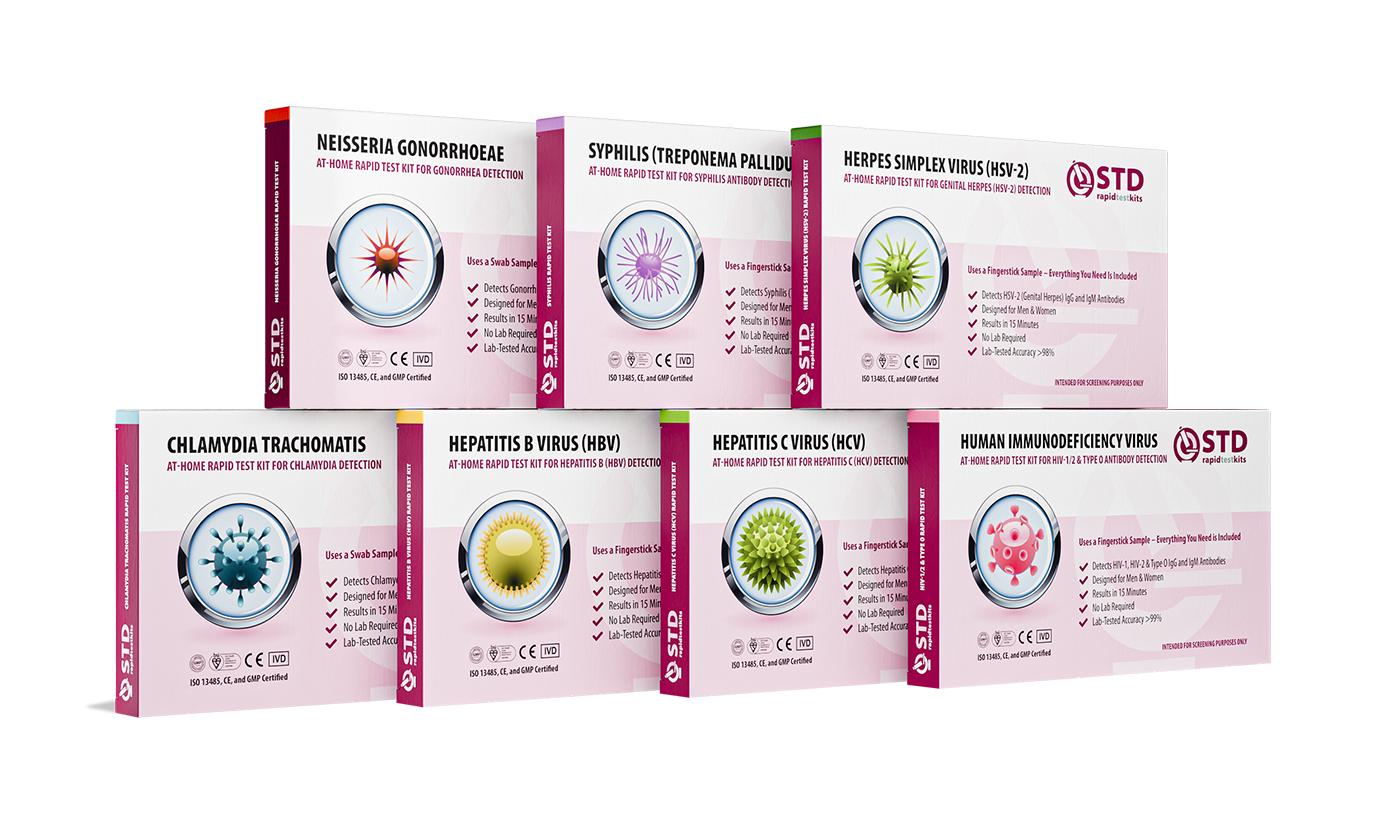
 For Men & Women
 Results in Minutes
 No Lab Needed
 Private & Discreet
Order Now $129.00 $343.00
For all 7 tests
The Part No One Explains: Clinics Don’t Always Test for Everything
Here’s something that surprises a lot of people: when you go to a clinic and ask for “an STD test,” you are not automatically getting tested for everything.
Testing is often based on what you ask for, what symptoms you report, or what the provider decides is relevant. That means if you don’t mention certain exposures, or don’t know what to ask for, some infections may not be included at all.
“I literally said, ‘test me for everything,’” one patient shared. “Later I found out HIV wasn’t even included.”
This isn’t negligence, it’s how testing protocols work. Different infections require different sample types, timing, and consent. But from a patient perspective, it creates a dangerous assumption: that “testing” equals “fully covered.”
It doesn’t.
This is one of the strongest arguments for either explicitly requesting a full panel or choosing a comprehensive at-home option where the coverage is clearly listed upfront.
Timing Changes Everything (And Can Make Any Test Look “Wrong”)
Even the best test won’t give accurate results if it’s taken too early. This is where the concept of the “window period” comes in, the time between exposure and when a test can reliably detect an infection.
This is also where people get tripped up. They test once, get a negative result, and assume they’re in the clear, without realizing they may have tested too soon.
And this applies whether you choose a single test or a full panel.
| STD | Earliest Detection | Best Testing Window |
|---|---|---|
| Chlamydia | 1–5 days | 7–14 days |
| Gonorrhea | 2–6 days | 7–14 days |
| HIV | 10–14 days | 18–45 days |
| Syphilis | 10–21 days | 3–6 weeks |
If you’re testing after a recent hookup, the question isn’t just “what test do I need?”, it’s also “when will that test actually be accurate?”
This is why many providers recommend initial testing plus a follow-up, especially if the first test happens early. It’s not overkill, it’s how you avoid false reassurance.
When each approach makes sense in real life
Let's move this from theory to real life. The right choice, whether to get a full STD panel or just one test, depends a lot on the situation.
Scenario 1: Known Exposure
Your partner tells you they tested positive for Chlamydia. In this case, targeted testing makes sense. You’re not guessing, you’re responding to a specific risk.
Scenario 2: Casual Hookup, No Symptoms
You had sex with someone new, and you’re not sure about their status. No symptoms, but some anxiety. This is where a full panel becomes the smarter move. The uncertainty itself is the signal.
Scenario 3: Symptoms Without Clarity
You’re experiencing itching, burning, or unusual discharge, but nothing clearly points to one infection. This is one of the strongest cases for broader testing, because symptoms overlap heavily.
Scenario 4: Routine Check (No Known Risk)
If you’re sexually active and it’s been a while since your last test, a full panel provides a clean baseline. Many infections are asymptomatic, so waiting for symptoms isn’t reliable.
In other words, the more variables involved, the more valuable a full panel becomes.
At-Home Testing vs Clinic Testing, Where Panels Really Matter
This is where the decision gets practical. In a clinic setting, testing can be fragmented. You might get one swab, one blood test, or one urine test depending on what’s requested or covered.
At-home testing flips that dynamic. Many kits are designed as full panels by default, combining multiple tests into one process.
If you’re comparing options, this is where a combo STD home test kit can simplify things. Instead of trying to decide which infections to test for individually, you get broad coverage in one step.
That doesn’t make clinics worse, it just highlights a difference in approach. Clinics are often reactive and symptom-driven. At-home panels are proactive and coverage-driven.
And depending on your situation, one approach may reduce more uncertainty than the other.

People are also reading: STD in the Throat? These Are the Symptoms You Shouldn’t Ignore
The Risk No One Talks About: Multiple Infections at Once
Here’s another layer that doesn’t get enough attention: it’s possible to have more than one STD at the same time.
This isn’t rare. In fact, certain infections increase the likelihood of others. For example, having one bacterial STD can make it easier for another to take hold, especially if exposure conditions overlap.
“I went in thinking I had one issue,” a patient explained. “I left realizing there were two, and I wouldn’t have known if I hadn’t done the full panel.”
This is where single testing can fall short. It answers one question, but it doesn’t necessarily give you the full picture.
And when it comes to sexual health, partial answers can feel like clarity, but still leave you exposed to what hasn’t been checked.
So… Do You Need a Full Panel or Not?
By now, the pattern is probably clear. This isn’t about one option being “better” than the other, it’s about how much certainty you need based on your situation.
If everything about your exposure is clear and specific, a single test can be enough. But if there’s any ambiguity, about your partner, your symptoms, or your timing, a full panel is usually the safer, smarter move.
Because the real question isn’t just “what’s the minimum I can test for?”
It’s: “What would I regret not testing for?”
And most people already know the answer to that.
What People Regret Most After Choosing the “Wrong” Test
Regret doesn’t usually come from getting tested. It comes from thinking you covered everything, and finding out later you didn’t.
That’s the emotional side of this decision that doesn’t show up in comparison charts. It’s not just about cost or convenience. It’s about what happens after the result.
“I remember staring at the negative result and feeling relieved for about five minutes,” one person shared. “Then I started wondering… what if they didn’t test for everything?”
That second wave of anxiety is incredibly common. And it often leads to retesting, extra appointments, and more waiting.
Choosing just one test to make things easier can sometimes make the process take longer and be more stressful, especially if you start to doubt yourself again.
On the flip side, people who opt for broader testing often describe a different experience.
“I just wanted to know everything at once,” another person explained. “Even if something came back positive, at least I wasn’t guessing anymore.”
That’s the real trade-off: precision vs peace of mind.
Cost, Convenience, and the “I’ll Just Do One” Trap
Let’s talk about the practical side. Cost is one of the main reasons people choose to get just one STD test. It looks like a better deal at first, especially if you have to pay for it yourself.
But this is where the math can get misleading.
If you end up needing multiple tests over time, or if you retest because you’re unsure, you may end up spending more than you would have on a full panel from the start.
| Factor | Single Test | Full Panel |
|---|---|---|
| Upfront Cost | Lower | Higher |
| Total Cost (if retesting) | Can increase quickly | Often more efficient |
| Convenience | May require multiple visits | One process, broader answers |
| Peace of Mind | Limited to one infection | More complete clarity |
This doesn’t mean everyone should always choose a full panel. But it does mean the “cheaper” option isn’t always the most efficient in the long run.
Especially when the real cost includes time, stress, and uncertainty, not just money.
If You’re Still Unsure, Use This Simple Decision Filter
If your situation feels confusing, you’re not alone. Most people don’t walk into testing with perfect clarity. That’s why it helps to simplify the decision into a few grounded questions.
If you answer “yes” to any of these, a full panel is usually the safer move:
- Unclear exposure: You don’t fully know your partner’s status or history
- Multiple partners: Recent or overlapping sexual encounters
- Mixed symptoms: Symptoms that don’t clearly point to one infection
- No symptoms but concern: You just want to be sure
- Time gap since last test: It’s been a while and you’re sexually active
On the other hand, a single test may be enough if the situation is highly specific and confirmed, like a known exposure to one infection.
The goal isn’t to over-test. It’s to test in a way that actually answers your question.
Check Your STD Status in Minutes
Test at Home with Remedium6-in-1 STD Test Kit
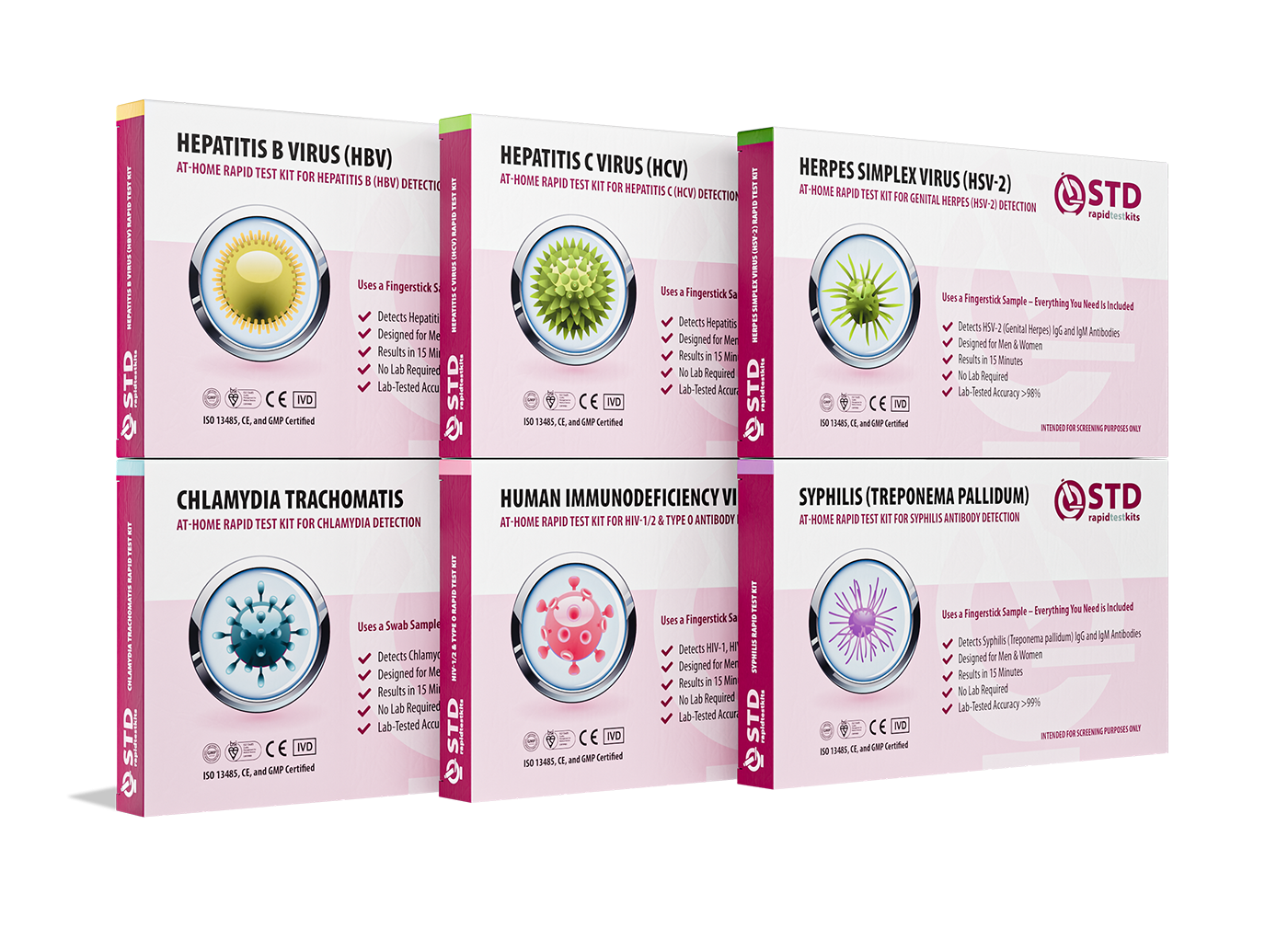 For Men & WomenResults in MinutesNo Lab NeededPrivate & Discreet
Order Now $119.00 $294.00
For all 6 tests
The Quiet Reality: No Symptoms Doesn’t Mean No Risk
This is the part people struggle with the most. It feels intuitive to wait for symptoms before taking action. But with STDs, that approach doesn’t always work.
A lot of infections, like Chlamydia, HIV, and even HPV, can go on for a long time without any signs.
That means you can feel completely fine and still carry something that needs attention.
“I kept waiting for something obvious to happen,” someone shared. “But nothing did. That’s what made me delay testing.”
This is why routine screening and full panels often come up in conversations around preventive care. They’re not just about reacting to symptoms, they’re about catching what you can’t see.
And that shift, from reactive to proactive, is what changes outcomes.
Taking Control Without Overthinking It
At some point, the decision has to move from “what’s the perfect test?” to “what’s the next step I can take right now?”
If you’re stuck between options, it’s usually because there’s some level of uncertainty. And in those cases, choosing broader testing is less about fear, and more about clarity.
You don’t need to analyze every possible scenario. You just need to avoid leaving questions unanswered.
If convenience and privacy matter to you, options like discreet at-home STD testing can remove a lot of the friction. No waiting rooms, no awkward conversations, just clear results you can act on.
Because the goal isn’t to make testing complicated. It’s to make it complete.
FAQs
1. Do I really need a full STD panel if it was just a one-time thing?
Honestly… sometimes those “just once” situations are exactly when people end up wishing they tested more broadly. One encounter can still expose you to multiple infections, especially if you don’t know your partner’s status. If you’re even slightly unsure, a full panel is less about overreacting and more about not leaving questions hanging in the back of your mind.
2. If I have symptoms, shouldn’t I just test for whatever matches them?
That would be nice if bodies followed a clean script, but they don’t. Burning, itching, discharge… those can belong to more than one STD, and sometimes more than one at the same time. So yeah, you can test based on symptoms, but if they’re vague or overlapping, narrowing it down too fast is where people get tripped up.
3. Why doesn’t a doctor just test for everything automatically?
I wish it worked that way, but testing isn’t one-size-fits-all behind the scenes. Different STDs require different tests, samples, and sometimes separate consent. So unless you ask, or they have a reason to include it, it might not be on the list. It's not your fault; that's just how the system works.
4. Can I actually have more than one STD at the same time?
Yep. Not rare, not dramatic, just real life. If exposure overlaps, infections can too. That’s why people sometimes get one result, feel relieved, and then find out later there was something else sitting quietly in the background.
5. If my test came back negative, can I relax?
You can take a breath, but don’t assume it tells the whole story. A negative result only covers what you tested for and when you tested. Wrong timing or limited testing can still leave gaps, which is why some people end up going back for a second round.
6. Is a full STD panel overkill if I feel completely fine?
It can feel that way, but a lot of STDs don’t make noise early on. No symptoms doesn’t mean no infection, it just means nothing obvious has shown up yet. Think of testing less like reacting to a problem and more like checking what’s happening under the surface.
7. What’s the smarter move after a hookup I’m unsure about?
If you’re asking that question at all, that’s already your answer. When the details are fuzzy, new partner, unclear history, mixed protection, a full panel usually gives you the kind of clarity a single test can’t. It’s the difference between guessing and actually knowing.
8. Isn’t it cheaper to just test for one thing first?
Up front, yeah. But if that one test doesn’t answer everything, and you end up going back, retesting, or second-guessing, it can cost more in the long run. Not just money, but time and stress too.
9. Can I just pick and choose tests myself?
You can, and a lot of people do. The tricky part is knowing what to choose when you don’t have the full picture. That’s why broader testing is often the fallback, it covers what you might not even realize you should be looking for.
10. Are at-home STD panels actually legit, or is that risky?
They’re legit when used correctly and at the right time. In fact, a lot of people prefer them because they lay out exactly what’s being tested, no guessing, no assumptions. The key is following the instructions and understanding timing, just like you would with any test.
You Deserve Clarity, Not Guesswork
STD testing shouldn’t feel like a guessing game, but for a lot of people, it does. One test, one result, and then that quiet question creeps in: “Did I actually check everything?” That’s the part no one prepares you for. Not the test itself, but the uncertainty that lingers after it.
If your situation is clear, test specifically. If it’s not, and honestly, most situations aren’t, go broader. A full panel doesn’t mean something is wrong. It means you’re choosing clarity over assumption. And that shift matters more than people realize.
Don’t wait and wonder. If there’s even a small chance you’re missing something, start with a complete screen like the Combo STD Home Test Kit. It’s private, straightforward, and built for exactly this moment, when you’d rather know than guess.
How We Sourced This Article: This guide blends clinical STD testing guidelines with peer-reviewed infectious disease research and real-world patient scenarios. We looked at CDC guidelines, global public health data, and diagnostic studies on screening for multiple infections to make sure everything was correct. The goal was to turn complicated decisions about testing into clear, useful advice that shows how people really feel about sexual health uncertainty.
Sources
1. Centers for Disease Control and Prevention – STD Testing Overview
2. Fact Sheet from the World Health Organization on Sexually Transmitted Infections
3. Planned Parenthood – STD Testing Guide
4. PubMed – STI Research Database
5. NHS – Sexually Transmitted Infections Overview
6. MedlinePlus – Sexually Transmitted Diseases
7. Harvard Health – Sexually Transmitted Diseases Overview
About the Author
Dr. F. David, MD is a board-certified infectious disease specialist focused on STI prevention, diagnosis, and testing strategy. He combines clinical precision with a direct, stigma-free approach that helps people make informed, confident decisions about their sexual health.
Reviewed by: Dr. Michael R. Levin, MD, Infectious Disease Specialist | Last medically reviewed: March 2026
This article is for informational purposes and does not replace medical advice.


