
Published: August 2025 | Last updated: May 2026 | Editorial review and quality control: Martina N.
In April 2020, sexual-health clinics across the United States either closed their doors or shifted most of their staff to COVID-19 response. By the time those clinics reopened in patches over the next two years, the country had missed millions of routine STI screenings. The infections themselves did not pause. They simply went undetected.
The cost showed up later, in surveillance reports. Syphilis cases climbed sharply against pre-pandemic baselines. Reported gonorrhea cases climbed. Chlamydia case counts dipped during the worst clinic disruption (because nobody was testing) and then rebounded, almost certainly understating what had been circulating the whole time. This piece walks through what the data now shows in 2026, why the disruption mattered for individual readers, and what to do if you are one of the millions of adults who skipped years of routine screening.
Key Takeaways
- Reported syphilis and gonorrhea climbed to record levels by 2021 even though testing volume had dropped, which means the true rise was probably larger than surveillance numbers showed.
- If you switched partners between 2020 and 2022 and never got fully screened, testing now still produces actionable information: most pandemic-era STIs are still detectable and most are still fully treatable.
How COVID Disrupted the STI Care Pipeline
The collapse of routine STI care during the pandemic was not one event. It was a stack of failures that compounded across 2020 and 2021, and the effects rolled forward into 2022 and beyond.
Clinic capacity dropped first. Many publicly funded sexual-health clinics either closed temporarily or limited services to urgent cases only. Planned Parenthood, which provides a substantial share of low-cost STI care in the United States, reported temporary closures and reduced services at hundreds of locations during the early lockdown period. Federally Qualified Health Centers redirected staff to COVID-19 testing, vaccination, and triage. Urgent care clinics, which had served as a quiet backup channel for routine STI screening, told patients to stay home unless they had respiratory symptoms.
Lab capacity dropped second. The reagents, swabs, and testing platforms that would normally process chlamydia and gonorrhea NAATs were rerouted to COVID-19 PCR. Several public-health labs publicly reported that STI testing turnaround times stretched from a few days to a couple of weeks because of supply rationing. The CDC's STI surveillance summaries from that period noted that testing volume declined steeply during the worst months of the pandemic, with the sharpest drops in jurisdictions that had the most COVID-19 caseload.
Patient behavior changed third. Even where clinics stayed open, many people avoided medical settings out of fear of COVID-19 exposure. Others lost employer-sponsored insurance when they lost their jobs and stopped scheduling preventive visits because the out-of-pocket cost was suddenly real. By the time vaccination programs allowed normal care to resume in late 2021, two cohorts of new infections had accumulated with no one watching, in bodies that had no reliable signal anything was wrong.
The pipeline broke in a specific order: clinic capacity collapsed first, lab capacity collapsed second, and patient avoidance closed the door on what little remained. Each layer would have been recoverable on its own. The combination is what produced the multi-year backlog.
What the Surveillance Data Now Shows
The early-pandemic numbers looked deceptively low. Reported gonorrhea and chlamydia cases dipped in the first half of 2020, which initially seemed like good news for public health. Epidemiologists understood almost immediately that the dip reflected missed diagnoses, not fewer infections. The drop in case reports tracked exactly with the drop in tests being run, which is the opposite of what a real decline in transmission would look like.
The truth caught up by 2021. The CDC's STD Surveillance reports for 2021 and 2022 documented record highs in syphilis cases, including a substantial rise in congenital syphilis (cases passed from a pregnant person to a baby during pregnancy or birth). Reported gonorrhea also rose against pre-pandemic baselines. Chlamydia case counts came back up but remained below where epidemiologists had projected without disruption, almost certainly because routine asymptomatic screening had not recovered fully even by late 2022.
The pattern is consistent with what happens when screening infrastructure breaks. Cases that produce visible, hard-to-ignore symptoms (a syphilis chancre, an unmistakable urethral discharge) eventually force a diagnosis. Asymptomatic infections (most chlamydia in people with vaginas, much pharyngeal gonorrhea, latent syphilis) keep circulating below the radar. By 2023 and into 2024, surveillance reports continued to show stubborn elevation in syphilis and gonorrhea, with case-finding programs in several states explicitly working through a backlog of long-undiagnosed infections.
Reported STDs in the United States reached all-time highs in 2021, even as the COVID-19 pandemic disrupted health care delivery and some STD prevention services.
The Infections That Went Silent
Most STIs are good at hiding. That is the inconvenient biology that makes regular screening so important when partners change.
Chlamydia is the loudest example. The CDC estimates that the majority of chlamydia infections in people with vaginas produce no noticeable symptoms early on, and a significant share never produce noticeable symptoms at all. The first sign for many is a complication: pelvic inflammatory disease, tubal scarring, ectopic pregnancy risk, or trouble conceiving years later. Asymptomatic chlamydia in people with penises is also common, and untreated infection can progress to epididymitis (testicular pain and swelling) or, less often, reactive arthritis (joint pain triggered by an immune response to the bacterium).
Gonorrhea behaves similarly across genital and pharyngeal sites. Throat gonorrhea is almost always asymptomatic and serves as a quiet reservoir for transmission during oral sex. Untreated genital gonorrhea can cause pelvic inflammatory disease in people with vaginas and epididymitis in people with penises, with rare progression to disseminated gonococcal infection that affects skin, joints, and occasionally heart valves. The bacterium is also accumulating antibiotic resistance worldwide, which makes catching it early (when first-line treatment still works reliably) more important.
Syphilis can also stay quiet after the initial chancre fades. The chancre itself is often painless and located in places that are not routinely inspected (cervix, anus, oropharynx), so plenty of primary syphilis goes unnoticed. The infection then progresses through secondary (rash and flu-like symptoms that fade), latent (no symptoms but still detectable in blood tests), and eventually tertiary stages over years. Tertiary syphilis can damage the cardiovascular system and central nervous system, which is the cost of letting an early-stage curable infection run for years.
When Supplies Vanished Too
The infrastructure failure was not only about clinics. Manufacturing and supply chains for prevention products buckled in their own ways.
Karex, the world's largest condom manufacturer, reported in 2020 that pandemic factory closures meant it would ship roughly 200 million fewer condoms than projected for that year. Free-condom programs at health departments, college campuses, and community organizations either paused or cut their distribution sharply. People who relied on those programs scrambled for replacements. Drugstore stocks ran thin in some markets during the same months.
Lubricant, dental dams, and HIV-prevention medication (PrEP) faced their own disruptions. PrEP refills were complicated by the requirement for periodic HIV and kidney-function lab work, which became harder to access during the worst clinic-closure months. Some PrEP users dropped off the medication during the most disrupted period and re-started later, sometimes after a gap that extended their HIV-vulnerability window. Other users continued PrEP through telehealth providers that emerged during the pandemic, which was a real upgrade in access for people who had been geographically far from a knowledgeable provider, but coverage gaps remained.
The supply problem mostly resolved by 2022. Prevention habits did not always snap back at the same speed. Some people simply got out of the routine of using condoms during a partner change. Others stayed off PrEP because re-starting required navigating an appointment they had been avoiding.
Karex's projected 2020 shortfall was equivalent to a quarter of its normal annual output. The shortage hit free-distribution programs hardest, since those channels run on the slimmest margins and depend on bulk supply. People who had been getting condoms at no cost from a clinic or campus were suddenly the first to lose access.
Why Hookups Kept Happening
The assumption that lockdowns would dramatically cut new sexual partnerships did not hold across the board. Sexual-behavior research from 2020 and 2021 found that overall partner counts dropped for some demographic groups (especially adults living alone in dense urban areas during strict-lockdown phases) but rose or stayed steady for others. Dating-app use spiked during periods of relaxed restrictions and during the brief windows between lockdown phases.
What changed was the safeguards. People who had been getting screened every six months stopped. Conversations about recent test results dropped off because there were no recent test results to share. The implicit risk-management system that operates in casual dating, where most partners assume the others have been tested somewhat recently, quietly broke for two years. People filled the information gap with whatever proxy they had, often nothing more than visible health and a vague sense that the other person had been pretty isolated.
The combination of stable hookup rates, dropped screening, and reduced condom availability was the actual mechanism of the post-2020 STI rise. Public-health epidemiologists have been clear about this in retrospect: the surge was not caused by some pandemic-induced behavior change. It was caused by a structural failure of the maintenance layer of sexual-health care.
Behavioral surveys from 2020 and 2021 found that most adults did not change how many partners they had during the pandemic. They changed which partners, and the safeguards around those partners. Dating-app sign-ups rose in several markets during reopening windows, often paired with shorter dating timelines and fewer pre-meeting health conversations.
The Shame and Shutdown Spiral
Beyond logistics, a softer factor delayed care: shame about having had sex during a public-health emergency. The CDC and several behavioral-health researchers noted that during 2020 and 2021, some people reported being reluctant to seek STI care because they did not want to admit they had broken pandemic distancing rules to a clinician they had never met before.
That shame compounded the existing barrier of stigma around sexual-health care, which already keeps many adults from getting tested as often as guidelines recommend. The result was a longer-than-usual gap between symptom onset and clinic visit, especially for milder symptoms that were easy to attribute to something else (irritation, a yeast infection, a UTI, a new soap).
The clinical pattern is well documented. Clinicians who specialize in STI care reported seeing later-stage presentations than usual through 2021 and into 2022. More secondary syphilis (the rash phase, weeks to months after exposure) was caught compared to primary syphilis (the chancre phase, days to weeks after exposure). More pelvic inflammatory disease was diagnosed than straightforward early chlamydia. More epididymitis was treated than uncomplicated urethritis. Each of those substitutions represents weeks or months of missed care, and a higher likelihood of long-term complications.
The good news in 2026 is that the shame layer has thinned considerably. Open discussion of catching up on STI testing has become more common in healthcare conversations, partly because so many adults realized they were behind on screenings and were not alone in that. Public-health communication has been clear: testing now, even years after a possible exposure, still produces actionable information for almost every infection on the standard panels.
This article is published by stdrapidtestkits.com, which sells at-home STI testing kits. We recommend tests based on what fits the reader's concern, not commercial benefit.
Where Telehealth Filled In, and Where It Did Not
Telehealth was the visible silver lining during the worst of the disruption. Patients who had a stable provider relationship could often still get advice, prescriptions, and even orders for at-home test kits remotely. Some clinics shipped collection kits and reviewed results over video calls.
Telehealth was not equally accessible. People without private space at home, especially LGBTQ+ adults living with unsupportive family during lockdown, could not realistically discuss sexual-health concerns over a video call where someone might overhear. People in rural areas frequently lacked broadband bandwidth for stable telehealth visits. People without insurance often found that telehealth platforms required private-pay rates higher than a sliding-scale clinic visit would have been before the pandemic.
There were also things telehealth could not replicate. Genital exams for visible lesions, expedited partner therapy (where a clinician hands a patient prescriptions for both themselves and their recent partners), and same-day intramuscular injections (used for syphilis treatment and some gonorrhea cases) all required in-person care.
Where telehealth and at-home testing did combine, the early data was encouraging. Patients tested more often than they had before the pandemic, partly because the sample-collection step (mail-in swab, fingerstick blood) was less effortful than booking a clinic visit. Some of that gain stuck after the worst pandemic months passed. Many people who first encountered at-home testing during 2020 to 2022 kept using it as a convenient screening layer even after clinics reopened fully.
I switched partners during 2020 to 2022 and never got tested. Should I test now?
Yes. Most STIs that went undetected during the pandemic are still detectable now, and most are fully treatable when caught even years after exposure. Start with a 4-panel rapid screen (chlamydia, gonorrhea, syphilis, HIV) and add hepatitis B, hepatitis C, herpes antibody, trichomoniasis, or HPV testing based on your specific situation. If you are still inside the window of a recent exposure, time the test to the appropriate window for each infection.
What At-Home Testing Actually Does
One legacy of the disrupted period is that many adults discovered at-home rapid testing for the first time and never went back to a clinic-only model.
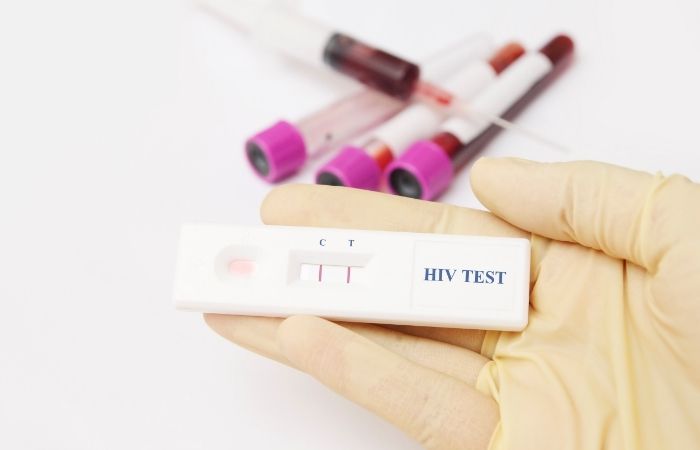
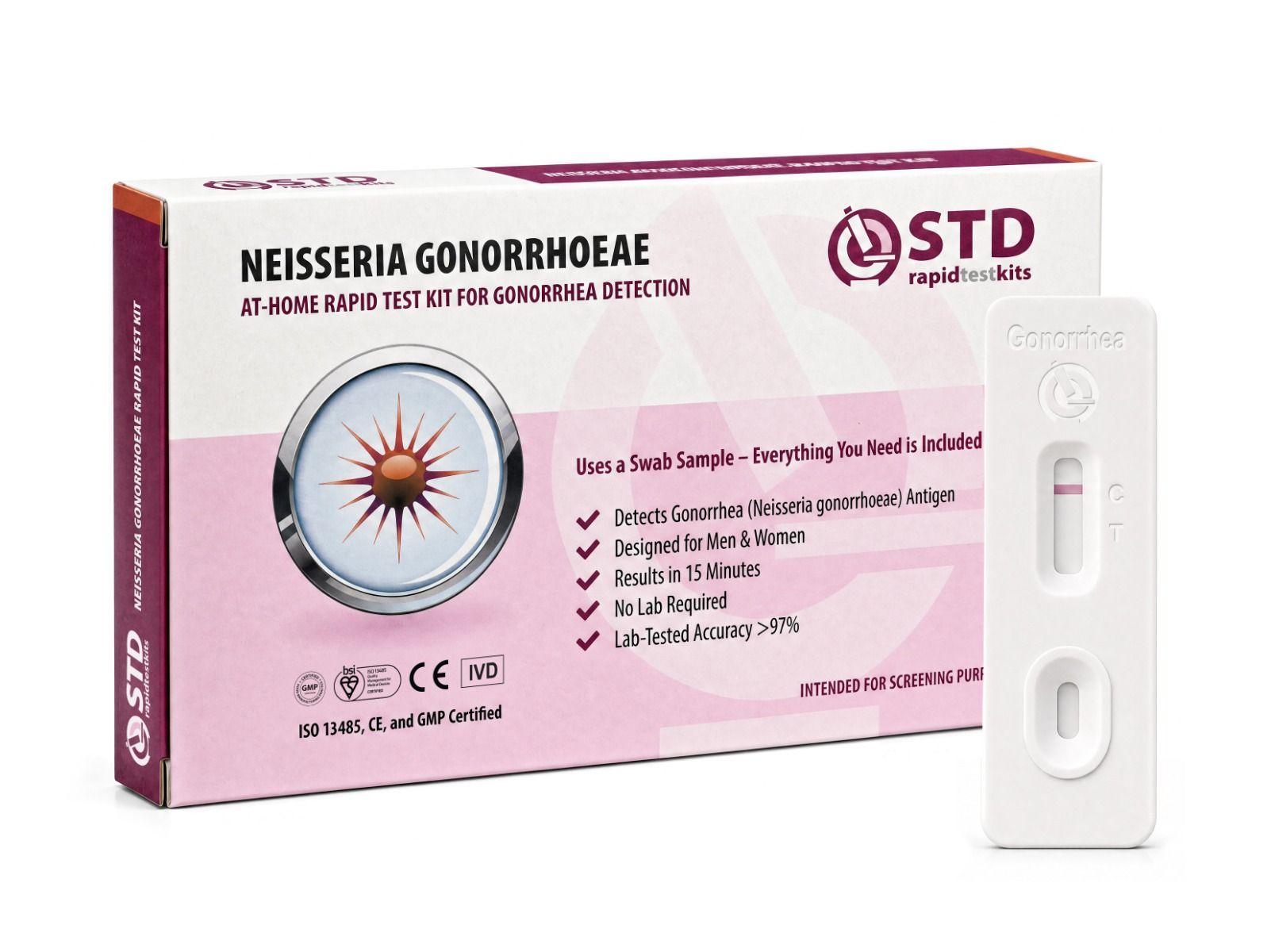
At-home rapid kits use lateral-flow chemistry, the same platform used in pregnancy tests and rapid COVID-19 antigen tests. A swab or fingerstick sample reacts on a strip; a colored line within 15 to 20 minutes indicates a positive result. The technology is not a NAAT (nucleic-acid amplification test), which is the laboratory standard for chlamydia and gonorrhea. Lateral-flow assays detect a slightly different signal (antigens or antibodies) and have somewhat lower analytical sensitivity than NAAT in head-to-head testing on validation samples. They are a faster screening layer that is useful for the privacy and convenience reasons most people care about, with the understanding that any positive result should be confirmed with a clinic-administered NAAT or blood test before treatment decisions get made.
Lateral-flow test sensitivity varies by infection. The kits sold on stdrapidtestkits.com generally report sensitivity in the 95% to 99% range against laboratory standards on validation samples, with specificity above 99%. Match those numbers to the specific product page rather than relying on a single quoted figure across infections; chlamydia, gonorrhea, syphilis, HIV, and the herpes panels each have their own sensitivity profile, and the validation populations differ.
The right way to use rapid tests is for the screening layer of routine sexual-health care. They answer the question, should I take the next step? Confirmation, treatment, and partner notification still flow through a clinical provider once a result comes back positive. They are also useful when access to a clinic is genuinely hard (cost, distance, schedule, or the privacy issues that delayed pandemic-era care for many adults). What they do not do is replace the clinical pieces (provider exam for visible lesions, prescription antibiotics, follow-up testing of cure) that close out a positive case.
If You Skipped Years of Screening, Here Is the Practical Plan
For adults who realize they are well behind on routine STI screening, the catch-up plan is straightforward.
Start with a baseline 4-panel: chlamydia, gonorrhea, syphilis, HIV. The CDC recommends annual screening for chlamydia and gonorrhea for sexually active people with vaginas under 25, and for any sexually active person with risk factors regardless of age or anatomy. Syphilis and HIV screening at least once is recommended for all adults; more often for people with multiple partners, men who have sex with men, or anyone whose partners might have higher risk profiles. A 4-panel rapid screen at home covers all four of these in one collection.
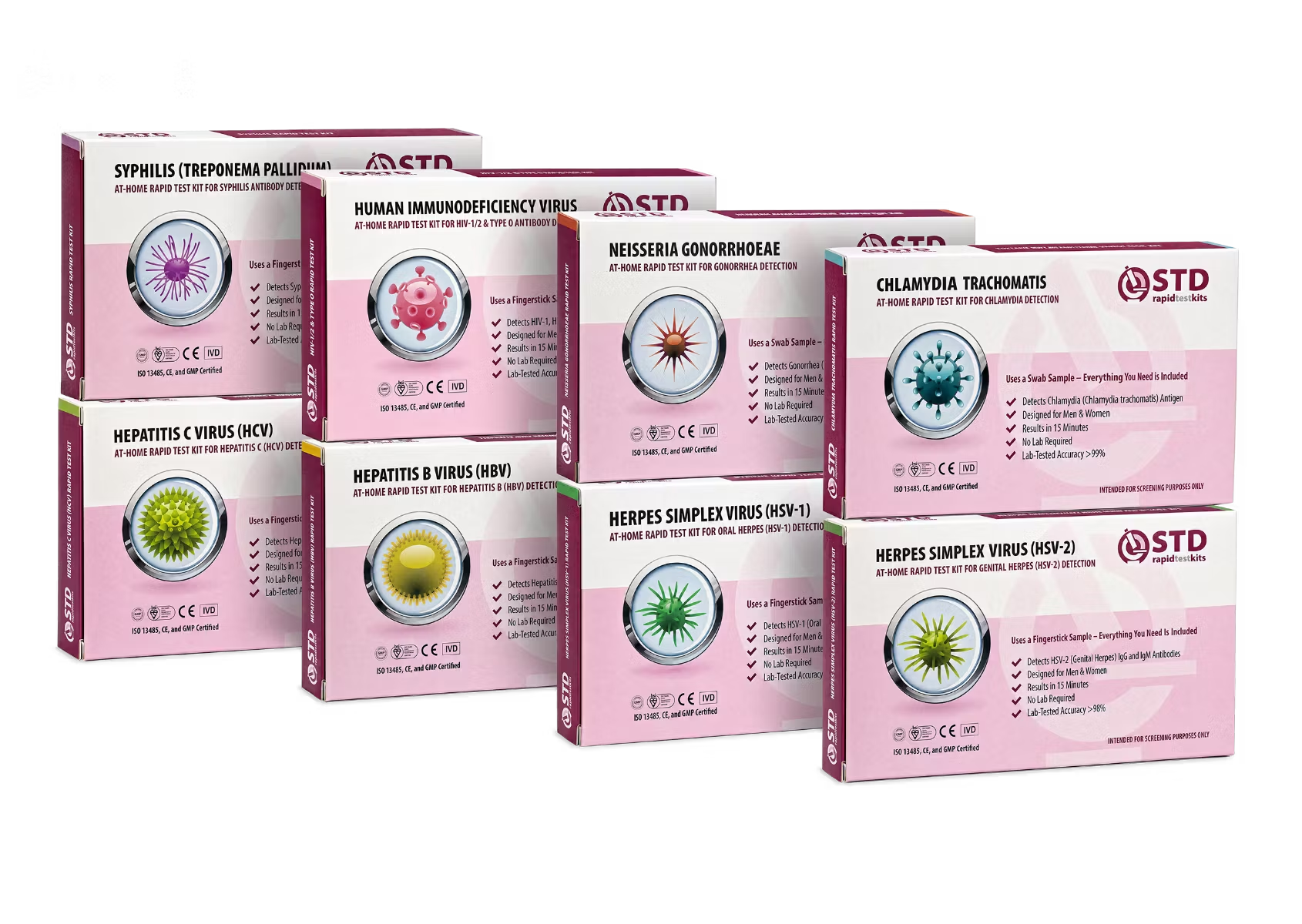
Add the panel pieces that match your situation. People with vaginas may want trichomoniasis and HPV screening; the at-home swab kits sold on this site are validated for vaginal self-swab only, so men who want trichomoniasis or HPV testing need a clinic visit for those two. People who shared injection equipment, got tattoos in non-licensed settings, or have a known hepatitis exposure should add hepatitis B and hepatitis C panels. Anyone with a history of cold sores or genital lesions of unknown cause may want HSV-1 and HSV-2 antibody testing, with the caveat that timing matters for accurate results (antibodies can take 12 to 16 weeks to become reliably detectable).
Time your testing windows to the actual exposure date. Most lateral-flow rapid tests are reliably positive within 4 to 6 weeks of the most recent exposure for chlamydia and gonorrhea, 6 to 12 weeks for syphilis, and around 12 weeks for HIV antibody-only tests. (Fourth-generation lab tests for HIV detect earlier, around 18 to 45 days, but those are clinic-administered.) Test now if your last potential exposure is older than these windows; test again at the appropriate window after any newer exposure.
Plan for what happens if a result comes back positive. Most STIs on the standard panels are fully treatable. Chlamydia and gonorrhea get knocked out with a short course of antibiotics. Syphilis is treated with prescription antibiotics, typically penicillin given by injection (the regimen depends on stage). HIV is now managed as a chronic condition with daily antiretroviral therapy that brings viral load to undetectable levels (which is also why the U=U message, undetectable equals untransmittable, has held up across two decades of follow-up). Partner notification is part of the standard care path; many state health departments offer anonymous notification services that protect the index patient's identity.
Prevention as Ongoing Practice
The post-2020 lesson on prevention is that infrastructure matters as much as individual behavior. Conversations about partner status, condom use, regular screening, PrEP for people at higher HIV risk, and HPV vaccination all work better when they are routine. The pandemic showed how quickly that routine can collapse, and how long the collapse takes to repair.
HPV vaccination is worth a specific note. The CDC's Advisory Committee on Immunization Practices currently recommends routine HPV vaccination through age 26, with shared clinical decision-making about catch-up vaccination through age 45 for adults who were not fully vaccinated earlier. If you missed the routine schedule, ask your provider whether catch-up is appropriate for your situation; the conversation is worth having.
The practical version of ongoing prevention is to pick a screening cadence that fits your dating pattern, write it on a calendar, and not let it slip more than a quarter past schedule. The cadence guidance below maps the most common situations to the interval most clinicians recommend. The hard part is staying consistent across years, even when it is tempting to skip a quarter, because the period from 2020 to 2022 quietly proved that most adults cannot keep that consistency on their own without working clinic infrastructure backing them up. Build the routine back, even if it has to start with one at-home test today and a calendar reminder for six months from now.
Screening cadence by situation
- Active casual dating with multiple partners: a full STI panel every six months, plus a single-infection screen after any partner change.
- Stable monogamous arrangement with periodic check-ins: a full panel once a year, with HIV and syphilis confirmed at the start of the relationship.
- Any new partner outside the existing arrangement: an immediate screen at the relevant exposure window (4 to 6 weeks for chlamydia and gonorrhea, 12 weeks for HIV antibody, 6 to 12 weeks for syphilis).
- Returning to testing after a multi-year gap: a 4-panel baseline now, then move to whichever ongoing cadence above matches your situation.
FAQs
- Did STIs really go up during the pandemic?
- Yes, and the clearest signal is congenital syphilis, which climbed sharply between 2019 and 2022 in CDC surveillance. Reported case totals for many infections briefly dipped in early 2020, but the dip tracked the drop in tests being run, not a real decline in transmission. By the time clinics reopened broadly in 2021, reported cases were already back at or above pre-pandemic baselines.
- I switched partners during 2020 to 2022 and never got tested. Is it too late?
- No. Antibody-based tests (HIV, syphilis, hepatitis) detect seroconversion that, once it has happened, stays detectable for life, so a delay of two or three years does not affect whether the test works. Chlamydia and gonorrhea require active infection to detect, so an old exposure that has cleared on its own would not show up, but an untreated infection that is still circulating in your body absolutely will. Testing now produces useful information either way.
- How accurate are at-home rapid STI tests compared to lab tests?
- The gap matters most for asymptomatic infections. Lateral-flow rapid tests miss more asymptomatic chlamydia and gonorrhea than a lab NAAT does, because NAAT amplifies tiny amounts of bacterial DNA that lateral-flow chemistry cannot pick up at the same threshold. For symptomatic presentations the sensitivity gap narrows considerably. Per-infection figures are listed on each product page; check those rather than relying on a single quoted range.
- Can I test for everything in one kit?
- Yes, combination kits are designed for that. The 6-in-1, 7-in-1, and 8-in-1 kits sold on this site cover the most common infections in a single sample collection. The 10-in-1 women's kit adds trichomoniasis and HPV. If you have skipped multiple years of screening, a combination kit is usually the most efficient catch-up choice.
- Did pandemic stress trigger herpes outbreaks?
- Stress is a documented trigger for HSV reactivation in people who already carry the virus. The pandemic introduced sustained stress for many adults, and clinicians reported more frequent herpes outbreaks during that period. New first outbreaks during the pandemic were also reported, often tied to a partner change. Antivirals (acyclovir, valacyclovir, famciclovir) suppress outbreaks effectively when used as prescribed.
- How long can chlamydia or gonorrhea sit before causing damage?
- Both can stay asymptomatic for months to years. Untreated chlamydia in people with vaginas can progress to pelvic inflammatory disease over months, with risk of scarring and infertility over years. Untreated gonorrhea can cause similar pelvic complications and rare disseminated infection. Routine screening catches asymptomatic cases before they progress.
- What testing do I need if I am worried about a recent exposure?
- Time the test to the appropriate window. Chlamydia and gonorrhea: 4 to 6 weeks after exposure. Syphilis: 6 to 12 weeks. HIV (lateral-flow antibody): around 12 weeks. Fourth-generation lab HIV tests detect earlier (18 to 45 days). If symptoms appear sooner, test now and again at the window. If a known partner tests positive, ask a provider about expedited treatment.
- I cannot easily get to a clinic. What are my options?
- At-home rapid testing is the main alternative; collect the sample yourself and read the result in 15 to 20 minutes. Telehealth providers can prescribe treatment for some STIs once a positive result is confirmed. Local health departments often run free or low-cost in-person clinics on a sliding-scale basis. Planned Parenthood and Federally Qualified Health Centers also serve patients regardless of insurance status.
- U.S. Centers for Disease Control and Prevention. STI surveillance data, including the 2021 and 2022 STD Surveillance Reports documenting record-high syphilis cases and rising gonorrhea against pre-pandemic baselines.
- U.S. Centers for Disease Control and Prevention. Chlamydia topic page covering symptom patterns, asymptomatic-screening rationale, and complication risks including pelvic inflammatory disease.
- U.S. Centers for Disease Control and Prevention. Syphilis topic page covering primary, secondary, latent, and tertiary stage progression and antibiotic treatment.
- World Health Organization. Sexually transmitted infections fact sheet covering global surveillance trends and prevention recommendations.
- BMJ. News reporting on the global condom-supply shortage during early 2020 lockdowns and the Karex manufacturer's projected 200 million unit shortfall.
