Published: September 2025 | Last updated: May 2026 | Editorial review and quality control: Martina N.
Florida has a testing problem, and it isn't about access. Free clinics exist. Mobile testing units travel to neighborhoods. Discreet at-home kits ship in plain packaging. Yet across the state, thousands of people who have reason to consider an HIV test are walking past every one of those options. Public-health teams describe a second epidemic running alongside the first: the wall of fear, shame, and silence that keeps people from finding out where they stand.
This article is published by stdrapidtestkits.com, which sells at-home STI testing kits. We try to recommend products based on what fits a reader's concern, not commercial benefit. Below, we look at why HIV testing rates lag in Florida, what the law actually protects you from, what the silence costs, and how to test privately if a clinic visit isn't realistic for you right now.
Key Takeaways
- Florida ranks in the top tier of U.S. states for new HIV diagnoses, and roughly 1 in 8 people living with HIV in the U.S. (about 13%) have not yet been diagnosed (CDC HIV facts and statistics).
- Florida law makes HIV testing confidential, allows teens 13 and older to consent without a parent, and does not report results to immigration, employers, or insurers without your written permission.
Why stigma runs deeper than misinformation
HIV education has come a long way since the 1980s, but Florida's social landscape hasn't always kept pace. In cities like Orlando, Miami, and Tampa, you'll find public health billboards and free testing vans. Drive an hour inland and the resources, and the conversations, dry up.
In small towns from the Panhandle to the Glades, getting tested for HIV can feel like stepping into a spotlight. People worry about being seen walking into the clinic. They worry a neighbor or cousin works the front desk. In some families, saying the word HIV out loud still feels taboo, let alone admitting you think you might be at risk.
Even in cities, many Floridians have absorbed the idea that needing an HIV test means something is wrong with them as a person. For some, it's the discomfort of a one-night stand. For others, it's the fear that past drug use, sex work, or a same-sex relationship might be "found out" by the act of testing itself. In many immigrant and faith-based communities, the silence around sexual health runs deep. People on anonymous online forums describe it the same way: a parent still thinks HIV is a punishment, and even imagining a positive result feels impossible to say out loud.
For many readers, the wall isn't the test result. It's the fear that walking into a clinic, ordering a kit, or even Googling the question feels like admitting something shameful. Until testing is treated as ordinary medical care, that fear keeps doing the work that the virus can't.
Florida's numbers don't tell the full story
According to CDC HIV facts and statistics, Florida is consistently in the top tier of U.S. states for new HIV diagnoses. Miami-Dade and Broward counties report some of the highest rates nationwide. The Florida Department of Health reported 4,606 new HIV diagnoses statewide in 2022, with concentration in the southeast metro counties and lower testing uptake in the rural interior.
The barrier isn't lack of options. From rapid tests at community events to at-home kits mailed in discreet envelopes, Florida residents have access to low-cost or free testing methods. The issue is uptake. CDC surveillance shows that for every diagnosed case, a meaningful share of people are living with HIV and don't yet know it. About 87 of every 100 people with HIV in the U.S. knew their status in 2022, which means roughly 13% were undiagnosed, and not testing is the common thread.
The reasons are not always obvious. Many people with HIV go months or years without symptoms. Some assume that if they're not visibly sick, they're safe. Others genuinely don't know how HIV transmits, or still believe outdated myths that frame it as a "gay disease."
"But I feel fine": why symptom silence delays testing
Part of what makes HIV so dangerous in its early stages is how invisible it can be. The virus often shows no symptoms for months or years. When acute symptoms do appear, fatigue, fever, swollen glands, night sweats, weight loss, they're often mistaken for the flu or a stressful month. The CDC's overview of HIV describes a clinical latency stage in which many people feel well for years while the virus quietly damages the immune system.
Take a common scenario clinicians see on the front lines: a man in his thirties catches what feels like a bad flu, achy, feverish, exhausted, and shrugs it off after about ten days. A year later, a partner pushes him to test after their own diagnosis. He's been living with undiagnosed HIV the entire time. Stories like that aren't rare. Research summarized by the CDC testing program shows that many people don't test until they're already symptomatic, or until a partner forces the conversation. By that point, viral loads can be high, transmission risk is at its peak, and treatment becomes more urgent than it would have been months earlier.
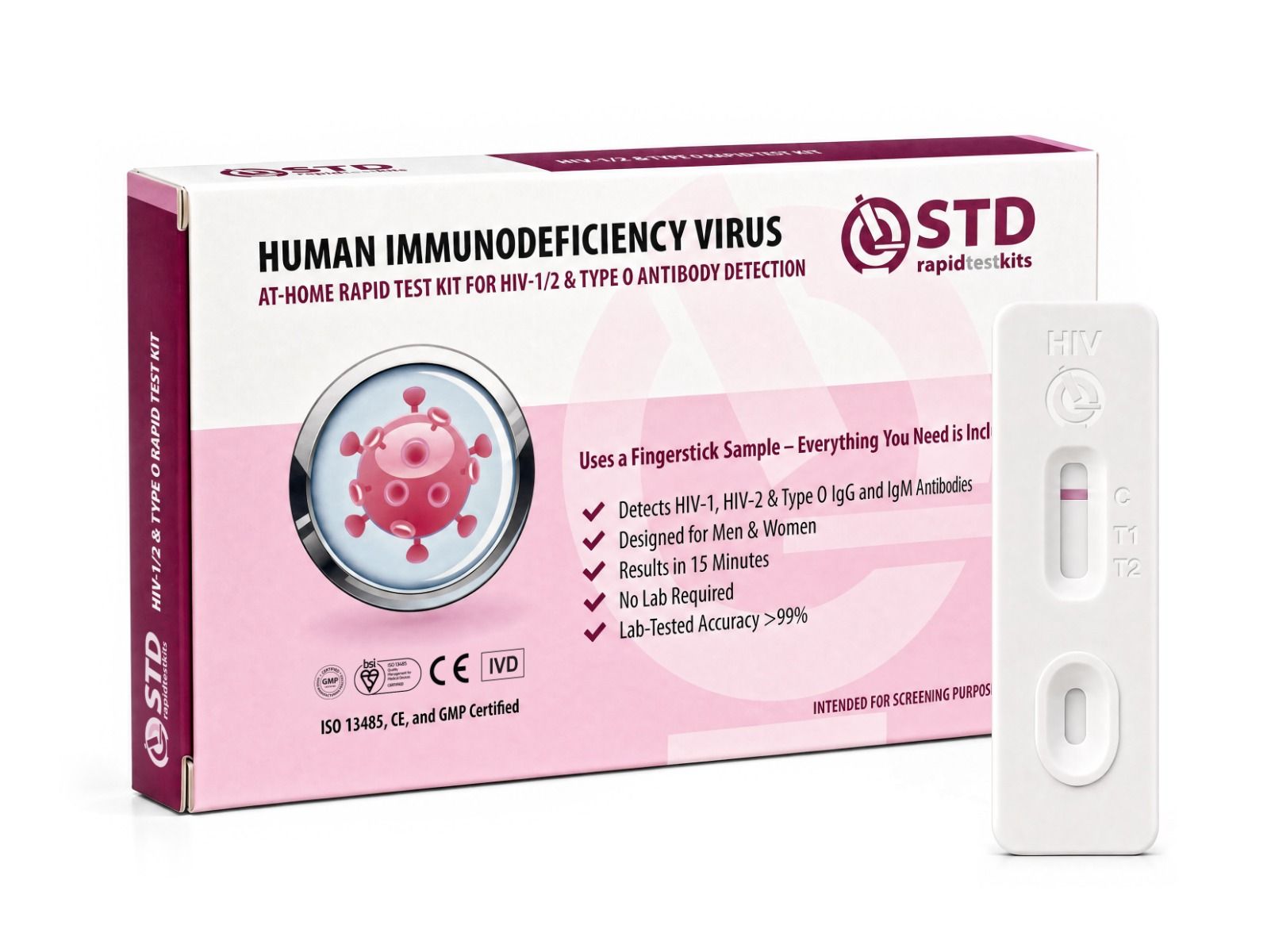
Getting tested before symptoms appear is the only way to break the cycle. Shame, misinformation, and fear keep people waiting until they feel forced. By then, damage is often already underway. Discreet at-home testing exists for exactly this reason. You can order a rapid HIV test, run a fingerstick at home, and read your result in about fifteen minutes. No appointment, no waiting room, no lab.
Fear of judgment, culture of silence
In parts of Florida, especially in religious and immigrant communities, HIV isn't only a health concern. It's a reputation concern. A positive test can mean alienation, whispers at church, or accusations of immorality. For some readers, the perceived risk of being labeled feels heavier than the risk of being sick.
A common pattern emerges in cultural and faith-rooted households. A Latina mother of three in central Florida might hesitate because she doesn't want the clinic to call her landline, doesn't want a neighbor to spot her walking in, and lives with a partner who says testing is unnecessary if God is protecting them. Eventually a friend mails her a discreet kit. The result is negative, but the anxiety she carries while waiting to read it is almost as heavy as the result she feared.
That kind of hesitation reflects a wider truth: cultural norms can block testing as effectively as a lack of clinics or insurance. For queer youth in conservative households, for undocumented residents unsure of how their data flows, or for women taught to defer to their partners on sexual matters, testing carries a perceived social risk on top of the health question. When testing is whispered about instead of normalized, the cycle deepens, and people who suspect something is off often wait.
Queer youth in conservative households worry about being outed at home. Undocumented residents worry about how their data flows. Women in traditional dynamics often defer to a partner on sexual decisions. The specific fear changes, but the result is the same: a test never gets taken, and an answer never comes.
Legal confusion: what people in Florida get wrong about HIV testing
One reason many Floridians avoid HIV testing is that they aren't sure what happens after the test. Some believe results are automatically shared with insurance, employers, or law enforcement. Others fear mandatory disclosure to partners, family, or immigration authorities. For teens still on a parent's insurance, the idea of "accidental outing" feels terrifying.
Most of those fears are rooted in myth or outdated law. HIV testing in Florida is confidential, and results are protected under state law and HIPAA. Clinics cannot release results to family, partners, or employers without your written consent. At-home test kits are delivered in discreet packaging with no medical markings, and no data is shared unless you choose to follow up with a provider.
| Myth about HIV testing in Florida | What the law and medical privacy rules actually say |
|---|---|
| If I test positive, the clinic will tell my family or employer. | No. HIV results are confidential under Florida law and HIPAA. Disclosure to outside parties requires your written consent. |
| People with HIV get reported to immigration. | No. HIV status is not grounds for deportation, and testing does not trigger immigration reporting. |
| Minors can't get HIV testing without parental permission. | False. In Florida, teens 13 and older can consent to STI and HIV testing on their own. |
| I'll have to notify everyone I've ever had sex with. | Partner notification is encouraged, and anonymous notification services exist that don't require sharing your name. |
| Once I test, it stays on a permanent record forever. | Only you and the provider involved have access. At-home kits don't generate a medical record unless you choose to report the result to a provider. |
When silence feels safer than knowing
Not knowing can feel like a kind of safety. For many people, the gap between possible exposure and testing becomes a liminal stretch where hope, denial, and anxiety exist all at once. That in-between can last weeks, months, even years. Public-health researchers call this pattern health-avoidant behavior: postponing medical information gives a person a temporary feeling of control. It usually backfires, because the underlying worry doesn't go away. Every sore throat, every odd bruise, every fatigued morning becomes a trigger.
The cost of waiting is also clinical. Untreated HIV continues to damage the immune system. People who start treatment early generally do very well. People who start late often face more complications, including opportunistic infections that the immune system would otherwise have caught. Modern antiretroviral therapy can suppress the virus so completely that it cannot be transmitted sexually, a finding the CDC summarizes as Undetectable = Untransmittable. None of that becomes available to a person who never tests.
The fear isn't only about the result itself. It's about what the result might mean for identity, history, relationships, and self-image. A positive test can require confronting past trauma, past partners, or decisions a person regrets. It can mean explaining things to people who may not respond with care. Testing often becomes a confrontation with a story a person has been carrying for years, which is why the emotional weight deserves to be named honestly rather than dismissed.
When your partner won't test, and you're scared to ask again
Some readers will recognize this scene: you find an unopened at-home HIV test in your partner's bag. They ordered it. They never used it. You ask, and they say they just forgot. You suspect they were scared.
You want to push, but you worry about what pushing might say. If you press too hard, it sounds like you think they're dirty. If you don't say anything, you're just waiting in the dark. This kind of silence is more common than couples like to admit, especially in relationships that feel secure. Introducing HIV testing into a settled dynamic can feel like a betrayal, a suspicion, or a reminder of past partners. It doesn't have to.
Framing testing as mutual care, in the same category as a dental cleaning or a yearly physical, shifts the conversation. Some couples test every six months together even though they're monogamous, not because they suspect each other but because they want to make sexual health an ordinary thing they do together. When one partner refuses, it's okay to draw a boundary for yourself. Protecting your own health doesn't make you paranoid. You don't need anyone's permission to test privately at home.
Florida's quiet progress, and what still needs to change
Despite the stigma, despite the silence, Florida is changing. More clinics now offer free walk-in testing without requiring identification. Mobile units visit college campuses, Pride events, and parking lots of major retailers. Some faith-based programs are shifting tone from condemnation toward compassion. The Florida Department of Health has expanded online ordering and anonymous result services. Community organizations like Latinos Salud in South Florida and the Tampa Bay AIDS Network offer counseling, home-delivery kits, and peer support for people newly diagnosed or too anxious to test alone.
Disparities remain. Black and Latino men who have sex with men remain disproportionately affected. Several rural counties still lack walk-in testing within a reasonable drive. Fear continues to drive silence in communities where sexual health is taboo. The CDC's work on HIV health equity identifies stigma as a major reason people delay or avoid testing, sharing their status, and accessing services. The more we talk about testing as ordinary medical care, the more power we take back from that silence.
HIV stigma can also discourage people from getting tested, sharing their status, and accessing HIV services.
Frequently asked questions
- Will anyone find out if I get tested for HIV in Florida?
- No. Both clinic-based and at-home HIV tests are protected by HIPAA and Florida confidentiality law. Only you and any provider you choose to inform have access. At-home kits generate no medical record at all.
- Can teenagers in Florida get tested without their parents knowing?
- Yes. Florida law allows anyone 13 or older to consent to STI and HIV testing on their own. Clinic staff cannot notify a parent or guardian. Teens who want extra privacy sometimes choose an at-home kit and run the test in their own room.
- I feel completely fine. Why test?
- HIV often causes no symptoms for months or years. You can feel well and still be living with the virus. Testing isn't about how you feel today; it's about catching infection early enough that treatment can keep your immune system intact and prevent transmission.
- How soon after a possible exposure can I take an HIV test?
- It depends on the test. Lab-based fourth-generation tests can detect HIV as early as around 18 to 45 days after exposure. Antibody-only rapid tests, including most at-home rapid kits, are generally most accurate after about 23 to 90 days. A negative result at 12 weeks after exposure is considered conclusive for most rapid tests.
- Are at-home HIV tests reliable?
- FDA-approved at-home tests perform well when used inside the right window after exposure and according to the instructions. Sensitivity and specificity figures vary by manufacturer; see each product's data sheet for the exact numbers. A positive at-home result should always be confirmed at a clinic or lab to rule out a false positive.
- If I test positive, do I have to tell anyone?
- You are not required to tell employers, family, or friends. Florida does have partner-notification considerations for sexual partners. Anonymous notification services can do the outreach for you without naming you. The most important next step is starting treatment, which protects your health and prevents onward transmission.
- What does "undetectable" actually mean?
- It means antiretroviral therapy has suppressed the virus to a level a standard test cannot detect. Per the CDC, people with a durably undetectable viral load do not transmit HIV sexually. The Undetectable = Untransmittable framework rests on this finding.
- Where can I get tested without anyone knowing in Florida?
- Local health departments often offer anonymous in-person testing with no ID required. Several community organizations mail discreet kits to your home. You can also order a rapid HIV test online and run it privately at home. No appointment, no waiting room, no record outside what you choose to share.
You deserve answers, not assumptions
If there's one truth behind Florida's hidden HIV crisis, it's that fear delays care, shame stops action, and silence is the multiplier. The virus is not only biological; it thrives in the quiet. If something has been nagging at you, an exposure, a partner's status, a question you've tried to push away, don't keep pretending. You deserve answers, privacy, and the information to make decisions about your own body.
Whether that means walking into a clinic, calling a community organization, or ordering a kit you read in your own bathroom, the next step is yours. It can be small, it's allowed to feel hard, and it may still be the most useful thing you do this month.
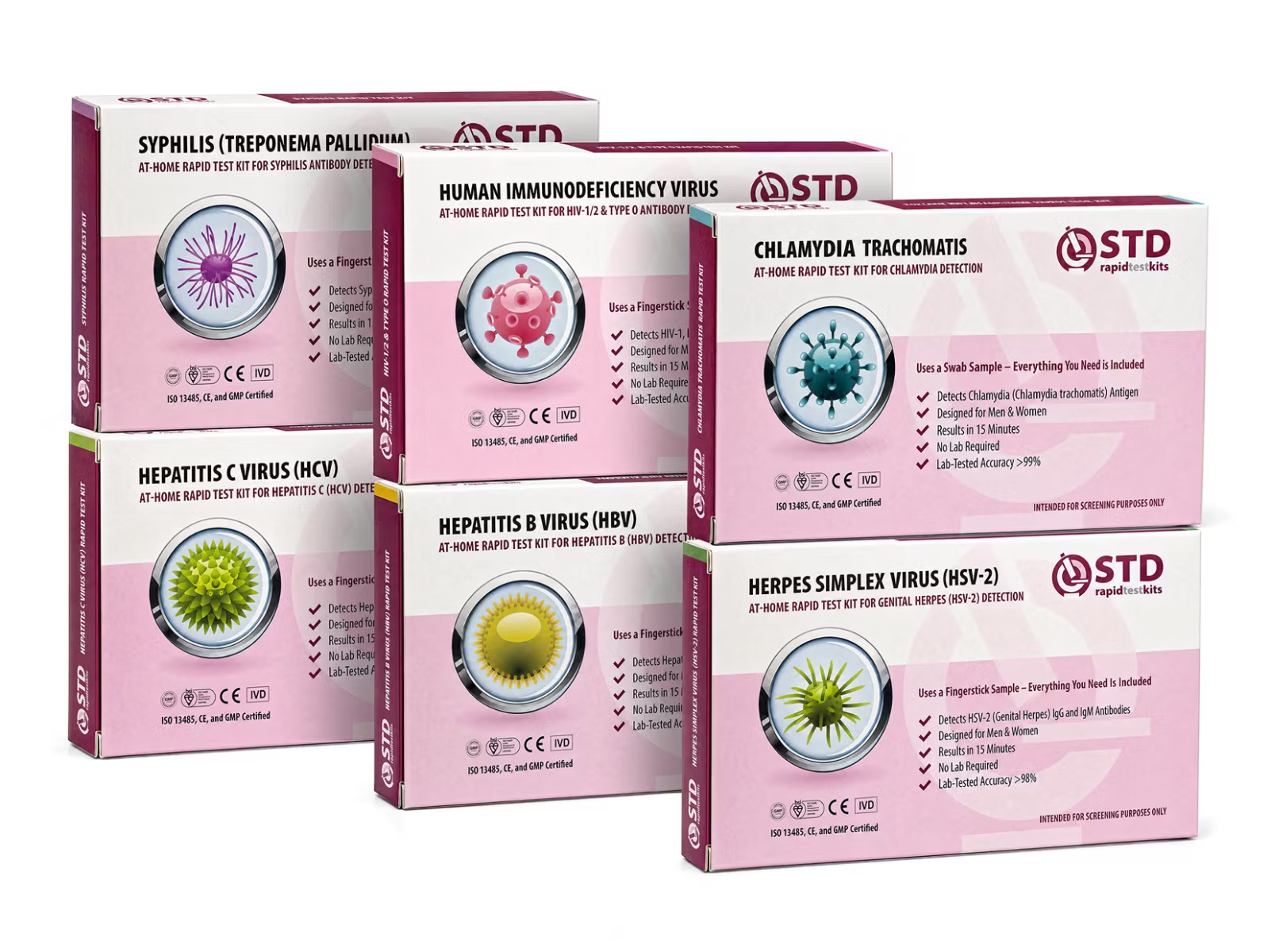
1. Use the <a href="https://www.floridahealth.gov/diseases-and-conditions/aids/index.html" target="_blank" rel="noopener">Florida Department of Health HIV program</a> to find a county-level free or low-cost testing site. 2. Contact a community organization like <a href="https://www.latinossalud.org/" target="_blank" rel="noopener">Latinos Salud</a> for confidential counseling and mail-out kits. 3. If a clinic visit isn't realistic, order a discreet at-home rapid HIV test and run it privately in about 15 minutes.
- U.S. Centers for Disease Control and Prevention. HIV facts and statistics, including the share of people with HIV who know their status.
- Florida Department of Health. HIV/AIDS program overview, statewide surveillance, and confidentiality protections under Florida law.
- U.S. Centers for Disease Control and Prevention. HIV testing recommendations, window periods, and self-test guidance.
- U.S. Centers for Disease Control and Prevention. HIV treatment overview and the Undetectable = Untransmittable evidence base.
- U.S. Centers for Disease Control and Prevention. HIV health equity, including stigma as a driver of testing avoidance and late diagnosis.
- U.S. Centers for Disease Control and Prevention. About HIV: stages of infection, acute symptoms, and natural history without treatment.
