

Published: September 2025 | Last updated: April 2026 | Editorial review and quality control: Martina N.
A possible STI exposure is one of the most stressful things to learn about your own body. The instinct is to spiral or to push it out of mind. Neither helps. The honest middle path is straightforward: pause, plan, test by the right window, and talk to the people who need to know. This article walks through that plan with concrete numbers and verifiable sources.
The reason exposure with no symptoms is its own category of worry: most sexually transmitted infections do not announce themselves. They sit quietly while the body either clears them, holds them in check, or, in some cases, lets them progress. Symptom absence is what most STIs look like in practice, regardless of whether infection actually occurred.
You think you've been exposed to an STI but feel fine. What now?
Stop sexual contact, then plan tests by each infection's window period: chlamydia and gonorrhea become reliably detectable about 1 to 2 weeks after exposure, HIV by 18 to 45 days on a lab fourth-generation antigen-antibody test (up to 90 days on an at-home rapid fingerstick), syphilis at 3 to 6 weeks, and HSV-2 antibodies at 12 weeks or longer. Most chlamydia infections cause no symptoms at all, so feeling fine is not a reliable all-clear. If the exposure was high-risk for HIV, contact a clinic about post-exposure prophylaxis (PEP) within 72 hours. Tell recent partners as soon as you can.
Key Takeaways
- Most STIs can stay symptom-free for weeks while remaining transmissible. The CDC notes that chlamydia 'often has no symptoms,' and most people with HSV-2 do not know they carry it.
- Test by the right window period for each infection. A negative test taken too early returns false negatives even when you are infected, which is why timing matters more than urgency.
The first 24 to 72 hours after a possible exposure
The first window matters less for testing than it does for damage control. Tests are not yet reliable in the first 24 to 72 hours for almost any STI, but two interventions are time-sensitive and worth knowing about now.
HIV post-exposure prophylaxis (PEP). If the exposure carries a meaningful HIV risk, PEP is a 28-day course of antiretroviral medication that can prevent infection. The catch is timing: PEP must start within 72 hours of exposure, ideally within the first few hours, and effectiveness drops sharply after that window. The CDC's PEP guidance walks through how to access it through an emergency department, urgent care clinic, or sexual-health service.
Emergency contraception, if pregnancy is also a possibility. This is a separate conversation from STI prevention but shares the same time pressure. Levonorgestrel works up to 72 hours after exposure; ulipristal acetate up to 120 hours. Worth handling in parallel rather than serially.
Beyond those two, the first three days are about pausing sex and gathering information: who you were with, when, what kind of contact, whether barriers were used, and whether the partner has any known status or recent test results. Write it down. Memory blurs, and you will want this when scheduling tests.
Effectiveness is highest in the first few hours after exposure and drops sharply after the 72-hour window closes. An emergency department, urgent-care clinic, or sexual-health service can prescribe it same-day, and most EDs do not require an appointment. The CDC's PEPline (1-888-448-4911) is also available 24/7 for clinician guidance on access.
Why so many STIs stay silent
The numbers are striking. According to CDC chlamydia surveillance, chlamydia 'often has no symptoms' in women, and a substantial share in men go unnoticed too. Gonorrhea is similar. The majority of people with HSV-2 do not know they carry it. HPV, the most common STI globally, almost always clears without ever producing a symptom; the dangerous strains do their damage years later, silently.
Three biological factors drive this:
- The infection site is internal. Cervical chlamydia, urethral gonorrhea, and rectal infections often produce no symptoms a person can see or feel. The mucosa inflames quietly and resolves or worsens out of view.
- The immune response is mild. Some pathogens, especially viral ones like HPV and HSV, are evolved to keep a low immunological profile. The body tolerates them rather than fighting them visibly.
- Latency is the default. Syphilis has a latent stage that can last for years between the disappearing initial sore and the dangerous late-stage manifestations. HIV produces a brief flu-like acute phase in some people, then settles into clinical latency for a decade or more without treatment.
This silent pattern is the source of the long-term complication fears that bring most readers to this article. Untreated chlamydia and gonorrhea can progress to pelvic inflammatory disease (PID) in women, which the CDC identifies as a leading preventable cause of tubal infertility, ectopic pregnancy, and chronic pelvic pain. In men, untreated gonorrhea can cause epididymitis and, more rarely, fertility complications. Most cases are caught and treated well before this point, which is exactly why on-time testing matters more than waiting for symptoms.
The takeaway is not panic. It is calibration: feeling fine is the expected experience after most STI exposures, regardless of whether you have contracted something.
More than 1 million curable sexually transmitted infections (STIs) are acquired every day worldwide in people 15–49 years old, the majority of which are asymptomatic.
Window periods: when each test becomes reliable
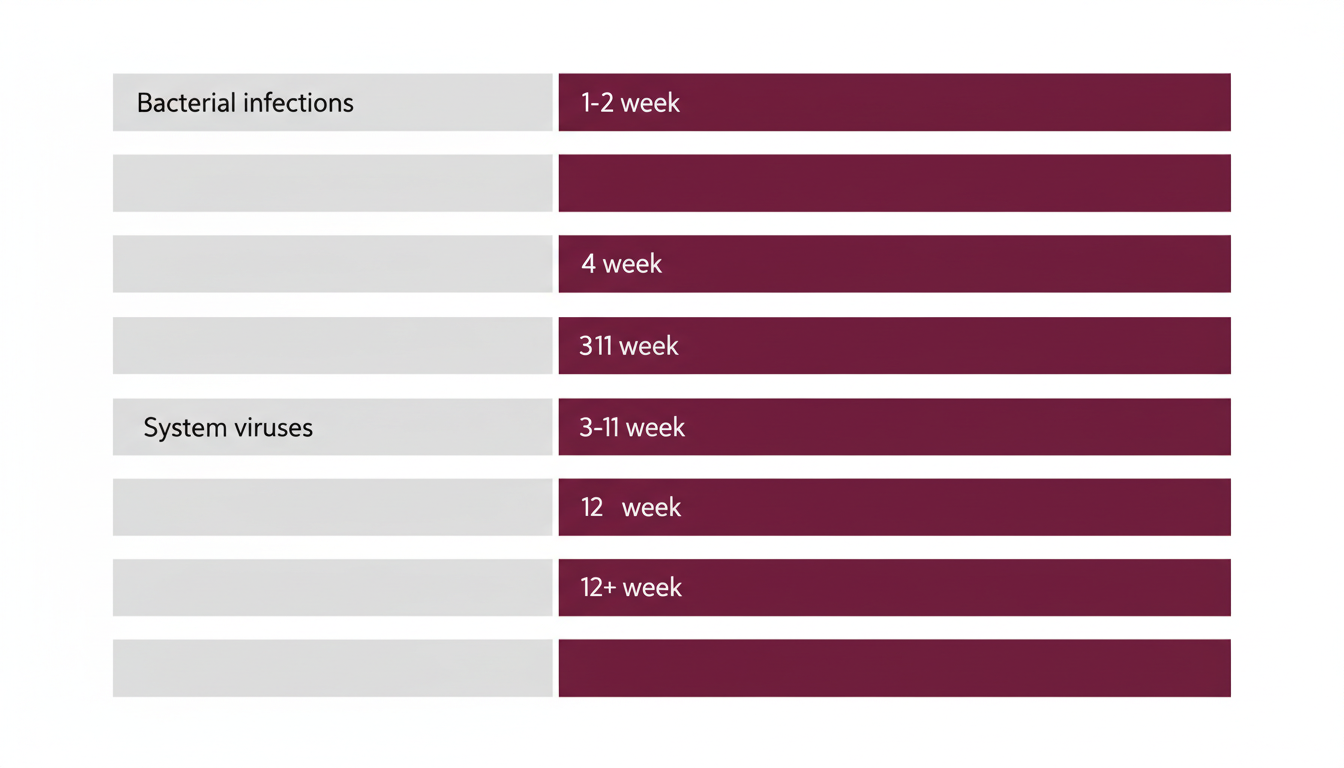
A window period is the gap between when you were exposed and when a test can detect an infection that is actually present. Test before the window closes and you may get a false negative. Test on time and the result is meaningful. The table below shows the typical reliable-from dates per the CDC's STI treatment guidelines and CDC HIV testing recommendations.
| Infection | Test type | Earliest reliable window | Confirmation retest |
|---|---|---|---|
| Chlamydia | NAAT (urine or swab); rapid swab antigen | 1 to 2 weeks | 3 months if exposure repeats |
| Gonorrhea | NAAT (urine or swab); rapid swab antigen | 1 to 2 weeks | 3 months if exposure repeats |
| HIV (lab) | 4th-gen antigen-antibody blood test | 18 to 45 days | 3 months after high-risk exposure |
| HIV (at-home rapid) | Fingerstick antibody (lateral-flow) | 3 to 12 weeks; up to 90 days for full ruleout | 3 months after high-risk exposure |
| Syphilis | Treponemal + nontreponemal blood test | 3 to 6 weeks | 3 months if symptoms develop |
| Hepatitis B | HBsAg blood test | 3 to 6 weeks | 6 months for full ruleout |
| Hepatitis C | Anti-HCV antibody, then RNA PCR if reactive | 8 to 11 weeks | 6 months |
| HSV-2 (genital herpes) | Type-specific IgG antibody (blood) | 12 weeks minimum; some cases 6 months | Retest if outbreak appears |
| Trichomoniasis (women) | NAAT or rapid swab | 1 to 2 weeks | 3 months |
At-home rapid tests vs. clinic NAAT: which to pick when
The honest comparison: at-home rapid lateral-flow tests and clinic NAAT or PCR tests use different chemistries and have different strengths. Neither replaces the other for every situation.
Lab NAAT (the clinic gold standard). A NAAT, or nucleic acid amplification test, multiplies the genetic material of an infection until it can be detected. This is what most sexual-health clinics use for chlamydia, gonorrhea, and trichomoniasis. NAATs are extremely sensitive, including in asymptomatic infections, and are the test the CDC's STI treatment guidelines reference. The trade-off is logistics: you need a clinic visit or a mail-in lab kit, and results take 1 to 5 days.
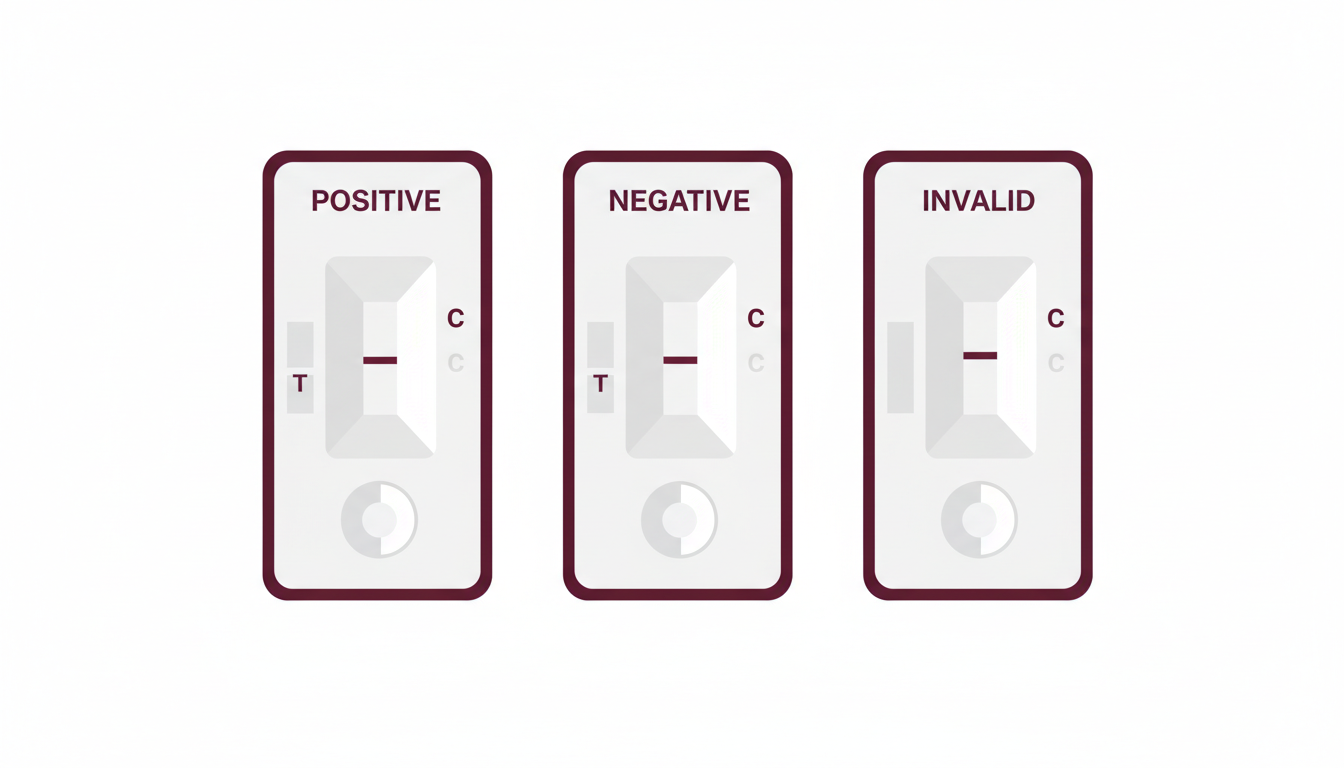
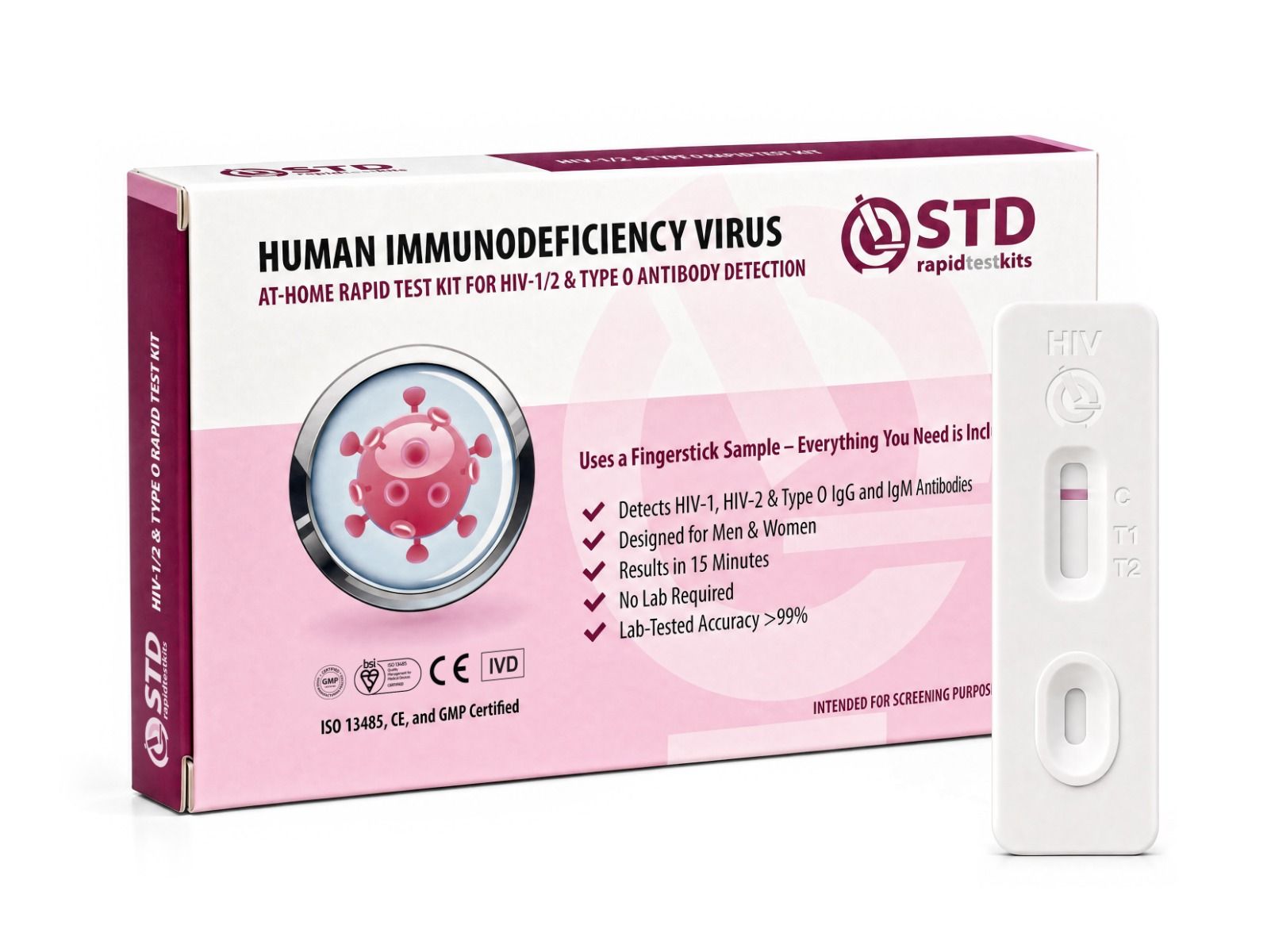
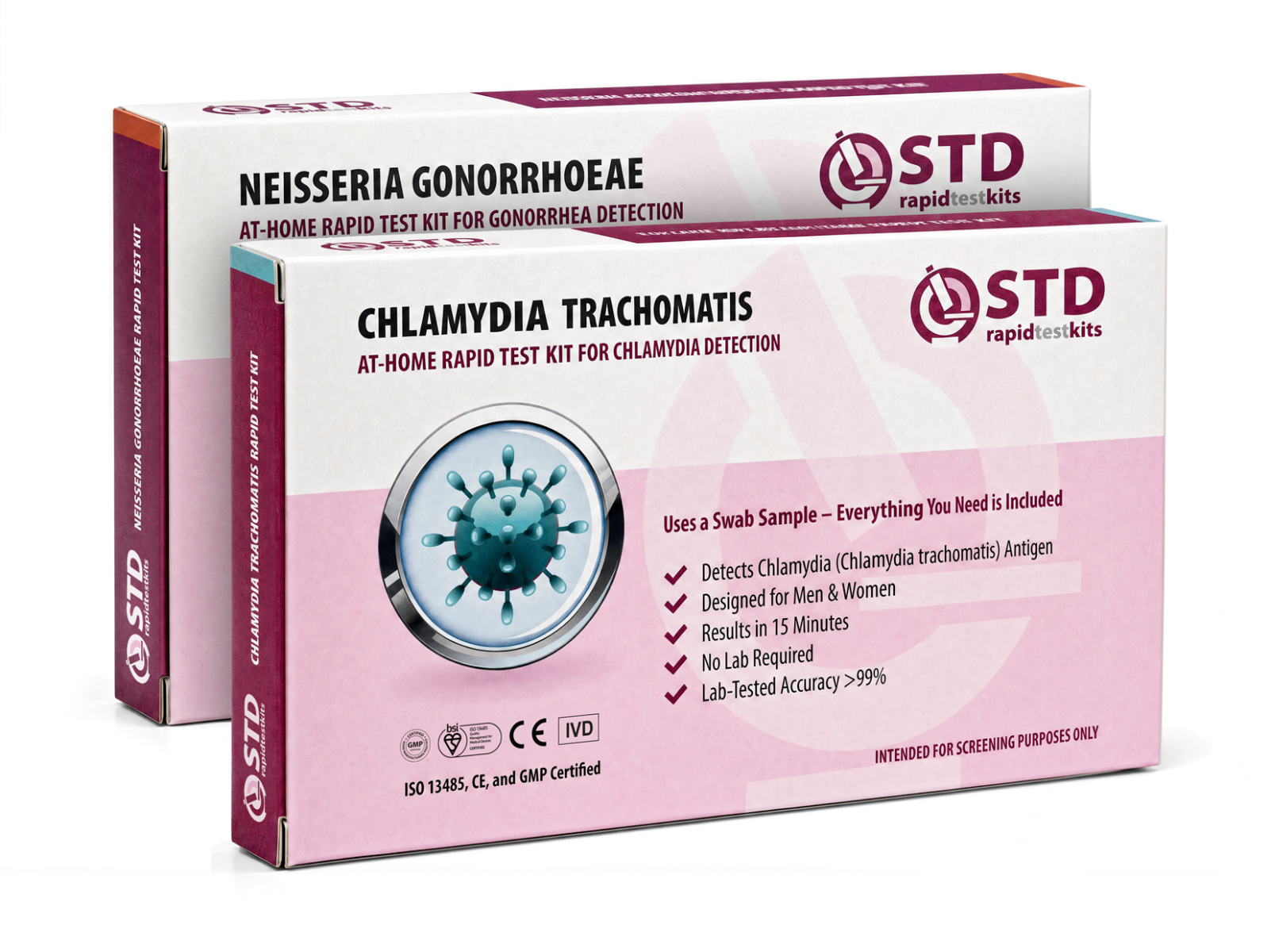
At-home rapid lateral-flow tests. The kits sold on this site use lateral-flow immunoassay chemistry, the same family as a home pregnancy test. You self-collect a sample (vaginal swab, penile swab, or fingerstick blood depending on the infection), and a result appears in about 15 minutes. These tests are validated to be highly accurate when used on time and according to the instructions, but they are screening tests rather than confirmatory NAAT or PCR. A positive result on a rapid test should be confirmed with a lab NAAT or repeat testing where available. A negative result on time, with a known low-risk exposure, can be reassuring on its own.
The right test depends on context. If you have access to a sexual-health clinic, can wait 1 to 5 days for a result, and want the most sensitive possible single test, the clinic NAAT is the higher-ceiling option. If you need privacy, a 15-minute answer, and the ability to test more frequently than clinic schedules allow, the at-home rapid kit is genuinely useful. We sell at-home rapid kits, so a quick disclosure: the comparison above describes both options as they actually work. For most post-exposure situations, a rapid kit at the early-window date plus a clinic NAAT to close the longer window is a practical combination, since each answers a different question at a different point in the timeline.

Telling partners is the highest-leverage thing you can do
Partner notification feels like the worst part. It is also the single intervention with the largest public-health impact, because it interrupts onward transmission while you and they get tested and treated. The CDC's partner-services guidance recognizes three approaches:
- Direct conversation. The most honest and usually the most effective. Stick to facts: you may have been exposed, you are testing, and they should consider testing too. Specific dates and the type of contact help them plan the right test on the right window.
- Anonymous notification. Services like Tell Your Partner let you send a notification without your name attached. Imperfect, but better than silence when a direct conversation is unsafe or impossible.
- Expedited partner therapy (EPT) for chlamydia and gonorrhea. In states that permit it, a clinician can prescribe treatment for your partner without a separate visit. Useful when getting them into a clinic is the bottleneck.
Useful look-back rules: contact partners from the past 60 days for chlamydia and gonorrhea, and from the past 90 days for syphilis. For HIV and HSV the conversation is broader because the windows are longer; the practical rule is to contact partners back to your last known negative test.
- Chlamydia and gonorrhea: notify partners from the past 60 days.
- Syphilis: notify partners from the past 90 days.
- HIV and HSV: notify back to your last confirmed-negative test.
What to do while you wait for the test window to open
The window between exposure and a reliable test is uncomfortable. Useful things to do during it:
- Pause sexual contact. Even barrier-protected contact carries some risk for infections like HSV and HPV that transmit through skin contact outside the area condoms cover. Pausing is the safer default until you have results.
- Watch for symptoms but do not over-interpret them. True STI symptoms include unusual genital or rectal discharge, a sore or ulcer that does not heal, painful urination, unexplained pelvic or testicular pain, or a flu-like illness 2 to 4 weeks after a high-risk exposure (which can indicate acute HIV). Vague tiredness, ordinary throat irritation, or a single mild headache are unlikely to be related.
- Hydrate, sleep, and limit alcohol. Anxiety in this window is significant, and the basics of self-care measurably improve how you feel while you wait for the test date. None of these affect infection status; they affect the experience of waiting.
- Schedule the test now. Booking the appointment for the right date removes the hardest moment, which is the day-of decision. If you are using a home kit, set a reminder for the testing date and have the kit on hand.
What each test result actually means
Test results fall into one of three situations, and each calls for a different response.
A negative result inside the window. Reassuring with one caveat: a within-window negative is not yet definitive. If you tested at day 5 for chlamydia, the result reflects the chemistry of that day, not a clean bill of health. Plan to retest at the right window before treating the question as closed.
A negative result on time. If you tested at the appropriate window for that infection, a single negative is meaningful. For HIV specifically, the conservative CDC recommendation is to retest at 3 months after a known high-risk exposure to fully close the window.
A positive result. A positive result is concerning but treatable. The bacterial STIs (chlamydia, gonorrhea, syphilis) are curable with antibiotics. The viral ones (HIV, HSV, HPV, hepatitis B, hepatitis C) are managed rather than cured for most, though treatment for HIV and hepatitis C in particular is now extraordinarily effective. A positive result on a home rapid test should be confirmed with a clinic test before treatment, both because the rapid test is a screening tool and because the clinician needs to confirm the diagnosis to prescribe.
A reactive (positive) result on an at-home HIV test is not a diagnosis on its own. The standard next step is confirmation through a clinic, which uses a different antibody-differentiation assay or a viral-load PCR. Modern HIV treatment, started early, leads to a normal life expectancy and an undetectable viral load (which is also untransmissible, the U=U principle). Treatment access is broadly subsidized; cost is rarely the barrier most people fear.
Reducing future exposure risk without becoming clinical about it
The most common-sense interventions, in roughly the order of return-on-effort:
- Vaccinate where vaccines exist. Hepatitis B vaccination is part of the routine childhood schedule in the US and most adults are already covered. HPV vaccination through age 26 is routine; shared clinical decision-making extends to age 45 per ACIP guidance. If you have never been vaccinated against either, ask a clinician.
- Use barrier methods consistently. Condoms substantially reduce the risk of fluid-borne transmission (HIV, chlamydia, gonorrhea, syphilis). They reduce but do not eliminate risk for skin-contact infections (HSV, HPV) because those can transmit from areas a condom does not cover.
- Test on a routine. The CDC recommends annual STI screening for sexually active people under 25 and those with new or multiple partners regardless of age. Quarterly testing is reasonable for higher-risk patterns. The point of routine testing is closing the silent-spread loop before complications develop.
- Consider PrEP if HIV is the central worry. Pre-exposure prophylaxis is a daily pill or every-2-month injection that substantially reduces HIV acquisition risk when taken consistently. Most insurance covers it; manufacturer assistance programs cover the rest. CDC PrEP guidance covers eligibility, timing to maximum protection, and access pathways.
When the home test is the wrong tool
There are situations where a clinic visit is the right call:
- Symptoms are present. Active genital ulcers, unexplained discharge, painful urination, or pelvic pain warrant a clinical exam, not a self-collected swab. A clinician can evaluate and prescribe in the same visit.
- Pharyngeal (throat) or rectal exposure was the route. Our at-home swab kits are validated for vaginal and penile self-swab. Throat and rectal infections require a clinic-administered swab; we do not sell those kits.
- You may need PEP, EPT, or PrEP. All three require a prescription. A sexual-health clinic, urgent care, or telehealth service is the right path.
- You are pregnant. STI screening in pregnancy follows a specific protocol set by your obstetric provider; a positive home result during pregnancy still routes through them.
This is a working principle on this site, not marketing copy: the right test is the one fit for the situation. A clinic NAAT, a home rapid kit, or both in sequence are all valid choices in the right context.
- Active symptoms (ulcer, discharge, painful urination, pelvic pain).
- Throat or rectal exposure as the suspected transmission route.
- You may need PEP, EPT, or PrEP, which all require a prescription.
- You are pregnant; positive home results route through your obstetric provider.
Frequently asked questions
- How soon after exposure can I test?
- The earliest you can usefully test depends on the infection. For chlamydia and gonorrhea, 1 to 2 weeks is sufficient. For HIV, the conservative approach is to run one test at 4 to 6 weeks and a confirmatory test at 3 months. HSV-2 antibodies often take 12 weeks or longer. The pattern: test early for bacterial infections, then retest later to fully rule out the viral ones.
- Can I have an STI without any symptoms at all?
- Yes, and it is more common than the reverse. The CDC's chlamydia page states the infection 'often has no symptoms' in women, and the majority of people with HSV-2 do not know they carry it. HPV is asymptomatic in nearly all cases. Symptom presence is not a reliable indicator of infection status; testing is the only way to know.
- Are at-home rapid STI tests accurate?
- Used on time and according to the instructions, the lateral-flow rapid kits sold on this site are validated to be highly accurate for screening. They are not the same chemistry as a lab NAAT or PCR, which is the more sensitive confirmatory test. A positive rapid result should be confirmed with a clinic test. A negative result on time, with a known low-risk exposure, is generally reassuring on its own.
- Should I tell my partner before I get a result?
- Yes, in most cases. Telling them early lets them schedule their own test on the right window and stop further transmission. If your relationship makes that conversation unsafe, anonymous notification services exist. The CDC's partner-services guidance recommends notification for partners from the past 60 days for chlamydia and gonorrhea, and 90 days for syphilis.
- What is PEP and when should I consider it?
- Post-exposure prophylaxis is a 28-day course of HIV antiretroviral medication that can prevent HIV infection if started within 72 hours of exposure. Effectiveness is highest in the first few hours and declines sharply after 72 hours. PEP is appropriate for known high-risk exposures: condom failure with an HIV-positive partner who is not virally suppressed, occupational needlestick injury, or sexual assault. An emergency department, urgent care, or sexual-health clinic can prescribe it.
- If I test negative early, do I still need to retest later?
- Often yes. A negative test before the window closes is not definitive. The standard pattern after a known exposure is one test at the early-window date for bacterial infections (1 to 2 weeks) and a second test at 12 weeks to close the window for HIV and HSV. If your symptoms or risk profile changes during the wait, you can move the test date earlier and add a confirmation later.
- Are STI tests confidential?
- Yes. Clinic STI testing is protected under HIPAA in the US and equivalent privacy frameworks elsewhere. Many states have specific minor-confidentiality protections for STI services. At-home test kits are mailed in unbranded packaging and the result stays with you. Insurance billing can sometimes route through a parent's or partner's account, so if billing privacy matters, ask the clinic about self-pay options or use a home test.
- Do I need to test for everything or just the infection I'm worried about?
- If a single specific exposure is the concern, such as a known partner with chlamydia, testing for that infection is sufficient. If the exposure profile is broader, a multi-infection panel covers the asymptomatic cases that matter most: chlamydia, gonorrhea, HIV, syphilis, and the hepatitis viruses. Comprehensive panels reduce the chance of missing a co-infection, which is common because many STIs share transmission routes.
- U.S. Centers for Disease Control and Prevention. STI treatment guidelines, screening recommendations, and partner-services guidance.
- U.S. Centers for Disease Control and Prevention. HIV testing windows, retesting protocol, and confirmation pathway.
- U.S. Centers for Disease Control and Prevention. Chlamydia overview, asymptomatic-presentation language, and screening guidance.
- U.S. Centers for Disease Control and Prevention. Post-exposure prophylaxis (PEP) for HIV: 72-hour window, access pathways, and PEPline contact (1-888-448-4911).
- U.S. Centers for Disease Control and Prevention. Pre-exposure prophylaxis (PrEP) for HIV: eligibility, time-to-protection, and access guidance.
- World Health Organization. Sexually transmitted infections (STIs) fact sheet covering global asymptomatic-prevalence data and consequences of untreated infection.
- U.K. National Health Service. Sexually transmitted infections overview, testing access, and clinical-symptom guidance.
