







Full STD Panel vs Single Test: What You Actually Need
What Is Chlamydia?
You’ve probably heard the word thrown around in dorm rooms, clinics, or whispered after parties, but most people can’t define chlamydia beyond “bad news.” Chlamydia is a bacterial infection caused by Chlamydia trachomatis, and it’s the most commonly reported STI in the United States, especially among people aged 15 to 24.
But here's the kicker: an estimated 70–90% of infected women and 50% of infected men show no symptoms. That’s right, you could be infected and completely unaware, silently passing it on to partners, or letting it fester inside your body.
Left untreated, it can lead to:
- Pelvic Inflammatory Disease (PID) in women
- Epididymitis and infertility in men
- Reactive arthritis (yes, it can affect your joints!)
- Pregnancy complications and newborn infections
What makes chlamydia especially insidious is how ordinary it can seem, until your body pays the price.

Why People Don’t Talk About It (Until It’s Too Late)
Chlamydia has been nicknamed “the silent STI” for a reason. And the silence isn’t just biological, it’s social. Shame, stigma, and ignorance all play roles in keeping people from seeking testing or treatment.
Many people don’t realize:
- You can get chlamydia from oral, vaginal, or anal sex
- It can be spread even if a condom is used improperly
- It’s not always prevented by birth control methods like pills or IUDs
- It doesn’t always show up immediately after exposure, there’s an incubation period of 1 to 3 weeks, and some cases stay dormant longer
And then there's the assumption: “If I had something, I’d know.”
Rosa, a 23-year-old student, thought exactly that. After a routine pap smear came back positive for chlamydia, she was shocked. “I had no symptoms,” she told Brook. “None. Not even a weird discharge. And I almost skipped that appointment.”
Too many stories start this way. And some end with heartbreak, like infertility, miscarriage, or chronic pelvic pain.
The Benefits of Early Testing (and Doing It at Home)
Here’s the thing, chlamydia is incredibly treatable. A round of antibiotics, often doxycycline or azithromycin, can clear it up in a week or two.
But you have to catch it early.
That’s where testing comes in, and at-home STD test kits are changing the game. With the rise of discreet, fast-acting kits, you don’t need to wait for a clinic appointment, face awkward questions, or even leave your house.
Getting tested means:
- Protecting your fertility and long-term health
- Preventing the spread to others
- Catching co-infections (like gonorrhea, which often tags along)
- Having peace of mind, even if your last partner wasn’t so trustworthy
Bottom line? Knowing is way less scary than not knowing.
Check Your STD Status in Minutes
Test at Home with RemediumChlamydia Test Kit
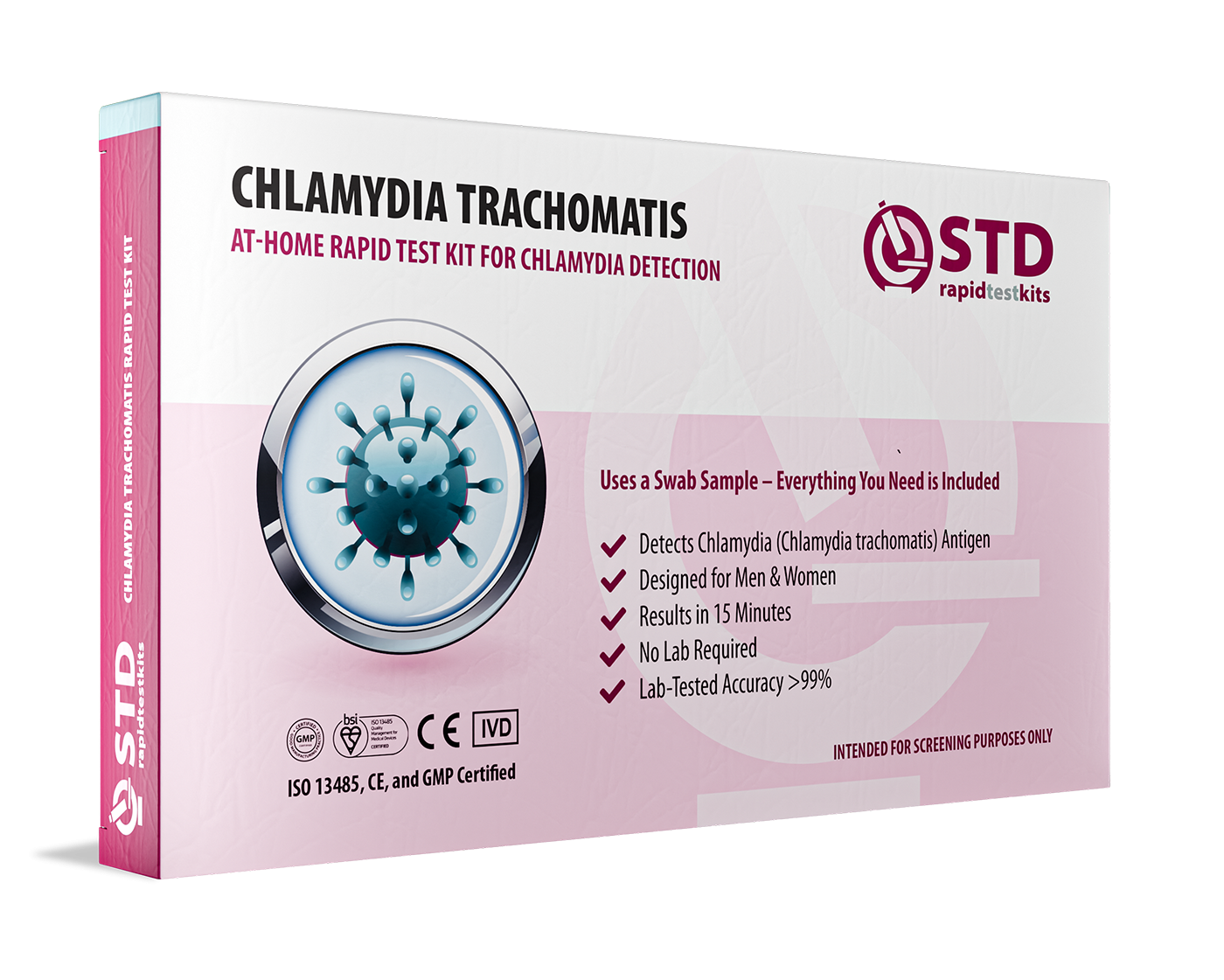
Claim Your Kit Today
Save 31%
 For Men & Women
 Results in Minutes
 No Lab Needed
 Private & Discreet
Order Now $33.99 $49.00
The Ugly Side Effects You Don’t See Coming
If left untreated, chlamydia doesn’t just go away, it digs in.
In women
- It can travel from the cervix to the uterus and fallopian tubes, triggering PID
- This can scar the reproductive tract, leading to ectopic pregnancies or infertility
- Newborns exposed during childbirth may suffer from pneumonia or conjunctivitis
In men
- Infection can spread to the testicles, causing epididymitis, pain, and swelling
- In severe cases, it may impact sperm quality and fertility
- Some men develop reactive arthritis, a form of inflammatory joint disease
And let’s not forget the emotional impact. Many people experience guilt, anxiety, or relationship breakdowns after diagnosis, even when they were unknowingly infected.
One Reddit user wrote: “My girlfriend and I were monogamous… or so I thought. She tested positive for chlamydia, and I didn’t believe her until my test came back the same.”
How It’s Tested (and Why Many Never Are)
Testing for chlamydia is quick and painless. It typically involves:
- A urine sample (most common for men)
- A vaginal swab (either self-collected or clinician-administered)
- Rectal or throat swabs for people engaging in anal/oral sex
The gold standard is a NAAT (nucleic acid amplification test), super sensitive and specific. But even with these tools, many people never get tested. Why?
- Stigma
- Cost concerns
- Lack of symptoms
- Assuming monogamy is protection
That’s why discreet testing kits like these are crucial, removing friction, cost barriers, and embarrassment from the equation.

What the Data Really Says
Here’s where things get sobering, because the numbers don’t lie.
Chlamydia holds the not-so-coveted title of the most reported bacterial STI in the United States, clocking in at over 1.6 million new cases every year according to the CDC. But experts believe the true number is far higher, due to how often it flies under the radar in people with no symptoms.
In fact, up to 90% of infected women and 50% of infected men show no outward signs at all. That means the majority of people spreading chlamydia have absolutely no idea they’re infected.
Untreated chlamydia has serious consequences. In women, around 30% of untreated cases lead to pelvic inflammatory disease (PID), which is a direct threat to fertility and can cause chronic pelvic pain and dangerous ectopic pregnancies. In men, about 15% develop complications like epididymitis, which can result in testicular pain, swelling, and reduced sperm quality.
And if you're wondering how this STI affects more than just your reproductive system, here’s a wild card: chlamydia can increase the risk of acquiring or transmitting HIV by up to five times. Yes, your body’s vulnerability to one infection can amplify your risk for another.
The data is clear: this isn’t a minor nuisance. It’s a quiet, widespread infection with the power to change lives, derail futures, and slip past even the most vigilant among us. That’s why testing isn’t optional, it’s essential.
What the Experts Are Saying
Dr. Kimberly Workowski, a lead author of the CDC STI guidelines, emphasizes:
“The lack of symptoms in most chlamydia cases is why routine screening is vital, especially for sexually active women under 25.”
Researchers from The Lancet confirm:
“Untreated chlamydia infections are strongly associated with tubal factor infertility, emphasizing the need for proactive surveillance.”
Meanwhile, Shannon Boodram, YouTube sexologist, advocates for normalizing the conversation:
“I was embarrassed at first, but now I realize: STIs are part of life. What matters is how you take care of yourself.”
Order Now $129.00 $343.00 Check Your STD Status in Minutes
Test at Home with Remedium
7-in-1 STD Test Kit Claim Your Kit TodaySave 62%For Men & WomenResults in MinutesNo Lab NeededPrivate & Discreet
For all 7 tests
A Brief History of Chlamydia
Chlamydia may seem like a modern menace, but the bacterium has likely existed since ancient times. Historical medical texts describe symptoms strikingly similar to chlamydia-induced urethritis and cervicitis.
However, it wasn’t until the 1970s that Chlamydia trachomatis was identified as the culprit, and even then, routine screening only became mainstream in the late 1990s. So yes, your grandmother may have had it. She just didn’t know.
The Future of Chlamydia Testing & Prevention
Exciting developments are on the horizon:
- Chlamydia vaccines are currently in clinical trials
- Doxycycline post-exposure prophylaxis (doxyPEP) is being explored for high-risk individuals as a “morning-after” STI pill
- AI-based testing kits are being developed to offer near-instant results from home
With the right tools and awareness, we may finally start catching infections before they cause damage.

How to Apply This in Real Life
Here’s what you should do today:
- If you’ve had unprotected sex with a new partner, get tested.
- If you’re under 25 and sexually active, get tested annually.
- If your partner tests positive, you need treatment, too.
- Don’t rely on symptoms, rely on results.
- Grab an at-home STD test kit from STD Rapid Test Kits, discreet, affordable, and fast.
Who’s Affected in the Industry?
- Healthcare: Doctors and clinics are seeing a surge in asymptomatic cases, fueling calls for routine screenings and affordable testing solutions.
- Education: Many schools still teach outdated, abstinence-heavy curricula, leaving students underinformed and overexposed.
- Tech: Telehealth services and online STD kit providers are booming, responding to a demand for privacy and accessibility.
Real People, Real Regret
No matter how many statistics we cite or how many medical facts we unpack, it’s the human stories that hit hardest. Because behind every positive test result is someone who thought it couldn’t happen to them.
Take Rosa, a 23-year-old student in the UK. She went in for a routine sexual health screening only because her university was offering free tests during Freshers’ Week.
“I felt totally fine. No discharge, no burning, no pain, nothing. When they called to say I tested positive for chlamydia, I was sure they had the wrong person.”
It turned out she’d been carrying the infection for months. Luckily, early antibiotics cleared it up before it reached her fallopian tubes.
Then there’s Jay, 27, who shared his story in an STI awareness video for Teen Vogue. He’d been dating someone new and started experiencing testicular pain but brushed it off as stress or a pulled muscle from the gym.
“I thought maybe I sat wrong or something. It wasn’t until it got worse and I had trouble peeing that I went in.”
The diagnosis: chlamydia-related epididymitis. The doctor told him he was at risk for long-term fertility problems.
“I just couldn’t believe it. I had no idea something like this could mess with my ability to have kids.”
Tasha, 31, found out the hard way that symptom-free doesn’t mean infection-free. She had gone years without a single test, thinking monogamy meant immunity. But after a miscarriage, her OB-GYN found scarring on her fallopian tubes.
“They said I probably had PID from an untreated STI, most likely chlamydia. I just sat there, stunned. I never even knew I had it. And now I might never have children.”
Her story has since been shared on reproductive health forums to warn others.
Even Shannon Boodram, the sexologist and influencer, opened up in a viral YouTube video about her own chlamydia diagnosis.
“I was humiliated, ashamed, but after I got through the treatment, I realized the real shame would’ve been not talking about it. STIs don’t make you dirty. They make you human.”
These aren’t isolated cases. According to WHO and CDC data, millions of people under 30 are walking around with undiagnosed chlamydia. Many don’t know until it’s too late, until their partner tests positive, until their fertility is impacted, until they’re staring at a diagnosis they never expected.
It’s not about how many partners you’ve had. It’s not about being “careless.” It’s about how chlamydia doesn’t play fair. It hides. It waits. And unless you actively test for it, you may never know you’re infected until the damage is already done. This is why at-home STD testing isn’t just convenient, it’s empowering. It puts the knowledge in your hands before you become someone else’s cautionary tale.
Check Your STD Status in Minutes
Test at Home with Remedium7-in-1 STD Test Kit
Claim Your Kit Today
Save 62%
For Men & WomenResults in MinutesNo Lab NeededPrivate & DiscreetOrder Now $129.00 $343.00
For all 7 tests
The Myths That Keep Us Sick
Let’s debunk a few:
- “Only promiscuous people get STDs.”
False. You can get chlamydia your first time if your partner is infected. - “If there’s no symptoms, there’s no infection.”
Wrong again. Most chlamydia cases are symptom-free. - “My birth control protects me.”
No it doesn’t. Pills and IUDs don’t prevent STIs. - “We used a condom once, so I’m safe.”
Unless it was used perfectly every time, you’re not.
FAQs
1. Can chlamydia go away on its own?
No. While symptoms may fade, the infection persists and can worsen.
2. Can I get chlamydia from oral sex?
Yes, especially if your partner is infected and untested.
3. Is chlamydia curable?
Yes, antibiotics work fast, but only if you get tested and treated.
4. Can I test positive even without symptoms?
Absolutely. That’s why testing matters.
5. Will I be infertile if I had chlamydia?
Not necessarily, but the longer it goes untreated, the higher the risk.
6. Should I tell my ex I have chlamydia?
Yes. It’s not just respectful, it’s a public health issue.
7. How soon after sex can I test?
Wait 7–21 days for accurate results post-exposure.
8. Can I retest after treatment?
Yes. Most doctors recommend a follow-up in 3 months.
9. Is at-home testing accurate?
Yes, especially if the test is FDA-cleared like STD Rapid Test Kits.
10. Can I get it again?
Yes. There’s no immunity after treatment.
When It Comes to Chlamydia, Ignorance Isn’t Bliss, It’s Risk
There’s no medal for pretending everything’s fine. No reward for “waiting it out.” If anything, silence lets chlamydia win. But knowledge? Action? Testing? That’s how you protect your health, your partners, and your future.
So if you’ve been putting off getting tested, stop waiting. Grab an at-home test kit from STD Rapid Test Kits.
Do it now. Before chlamydia becomes the thing they didn’t tell you about… until it was too late.
Sources


