
Published: July 2025 | Last updated: May 2026 | Editorial review and quality control: Martina N.
An STI diagnosis arrives like a small earthquake. The lab message, the call from a clinic, or a second line on a home test that you hoped would stay blank. In the first hours, the fear is rarely about the infection itself. It is about everything that suddenly seems to follow it: rejection, illness, isolation, a future that looks smaller than it did the day before. Most of those fears, when actually checked against current medical guidance, turn out to be far smaller than they feel.
This article walks through the five most common fears people report after a positive sexually transmitted infection result, and matches each one to what the CDC, NHS, and other public-health bodies actually say. Some of these conditions are cured with a short course of antibiotics. Others are lifelong but well managed with modern treatment. None of them, on their own, end the kind of life most people picture in those frightening first hours.
Key Takeaways
- Most STIs are either curable with antibiotics (chlamydia, gonorrhea, syphilis, trichomoniasis) or fully manageable for life (herpes, HIV, HPV) per current CDC guidance, not life-ending illnesses.
- The biggest health risk after a positive result is delayed care driven by shame, not the infection itself. Knowing the diagnosis and starting treatment is the protective step.
Fear #1: My Sex Life Is Over
The first thing many people picture after a positive result is a future of awkward disclosures, winces on faces, ghosting, group chats warning others away. The fear is vivid and emotionally accurate. The reality is usually quieter and far less catastrophic.
Sexually transmitted infections are extraordinarily common. The CDC's STI hub documents that roughly one in five people in the U.S. has an STI on any given day, and that nearly half of new infections each year occur in people aged 15 to 24. A diagnosis does not move you into a small or marginal group. It moves you into a very large one that includes a meaningful share of every dating pool you will ever encounter.
What that means for ongoing intimacy depends on which infection is involved:
- Chlamydia and gonorrhea are bacterial infections cured with a short course of antibiotics, often a single dose for gonorrhea and a one-week regimen for chlamydia. Once treated and confirmed clear, you carry no ongoing transmission risk from that episode.
- Syphilis is curable with penicillin at any stage; treatment outcomes are best when caught early in the primary or secondary stage.
- Herpes is a lifelong viral infection, but most transmission happens during outbreaks. Daily suppressive antiviral therapy, plus barrier protection and avoiding sex during outbreaks, substantially reduces transmission risk to partners.
- HIV with consistent antiretroviral therapy reaches and sustains an undetectable viral load. Per the CDC's Undetectable equals Untransmittable position, sustained suppression means no sexual transmission to partners.
- HPV: most infections clear on their own within one to two years. The HPV vaccine prevents most cancer-causing strains, and routine cervical screening catches precancerous changes years before cancer develops.
Fear #2: This Will Destroy My Health Forever
Search history after a positive result tends toward catastrophe: "can you die from chlamydia," "will herpes ruin my immune system," "STI infertility signs." The catastrophizing is understandable; sexual health is one of the topics adults are taught to fear without being taught the actual mechanics. The clinical answer is more nuanced than the search bar suggests. Most of the serious complications people fear arise from infections that go undiagnosed and untreated for months or years. Catching the infection and starting treatment is the protective step, not the cause of damage.
The real damage, for most people, is not the infection itself. It is the silence around it. The CDC and other public-health bodies repeatedly emphasize that stigma keeps people from getting tested and treated, which is when STIs do cause harm. By having the diagnosis in hand and starting care, you have already made the choice that prevents the worst long-term outcomes. The next step is straightforward: complete the treatment your provider recommends, schedule any follow-up testing, and inform recent partners so they can do the same.
The actual long-term outcomes by infection look like this:
- Chlamydia and gonorrhea, when treated promptly, leave no lasting damage. Untreated for months, they can cause pelvic inflammatory disease in women and epididymitis in men, both linked to fertility problems. Treatment within weeks of diagnosis prevents these outcomes.
- Syphilis treated in its primary or secondary stage is fully curable with no residual damage. Untreated for years, it can affect the heart and nervous system; routine STI testing catches it long before that point.
- Herpes does not damage internal organs or shorten life expectancy. Outbreaks tend to become less frequent over time, especially with daily suppressive antiviral therapy.
- HIV with modern antiretroviral therapy now offers near-normal life expectancy. People diagnosed and treated early live full, long lives, and sustained undetectable viral load means no sexual transmission to partners (per the CDC's U=U position).
- HPV most often clears spontaneously within a year or two. The high-risk strains linked to cervical, anal, and oropharyngeal cancers progress slowly enough that routine screening catches precancerous changes years before cancer develops.

Fear #3: I'm Unlovable Now
This fear cuts deeper than the medical questions. It is not really about the infection at all. It is about the fear of being seen as damaged or contaminated, of having a label that future partners will use to dismiss you. People often describe a sudden self-image shift in the days after diagnosis: the same person who felt desirable and ordinary the week before now feels marked.
The shift is psychological, not factual. People do not date or fall in love with lab results. They date personalities, presence, humor, kindness, and the ways another person makes them feel seen. The diagnosis does not enter that calculation for most people who hear about it from someone they already trust and want to be with.
What does enter is the way you carry the information. Honesty, calm, and basic factual literacy about your condition tends to land well. Apologetic shame and avoidance tends not to. People take their cues from the speaker. Frame the conversation as practical information being shared with a partner you respect, and most partners reciprocate that frame.
It is also worth saying clearly: anyone who responds to a calm, well-handled disclosure with cruelty or contempt has revealed something useful about themselves. The reaction reads as information about who they are, not as a verdict on you, and it surfaces before you have invested more in the relationship.
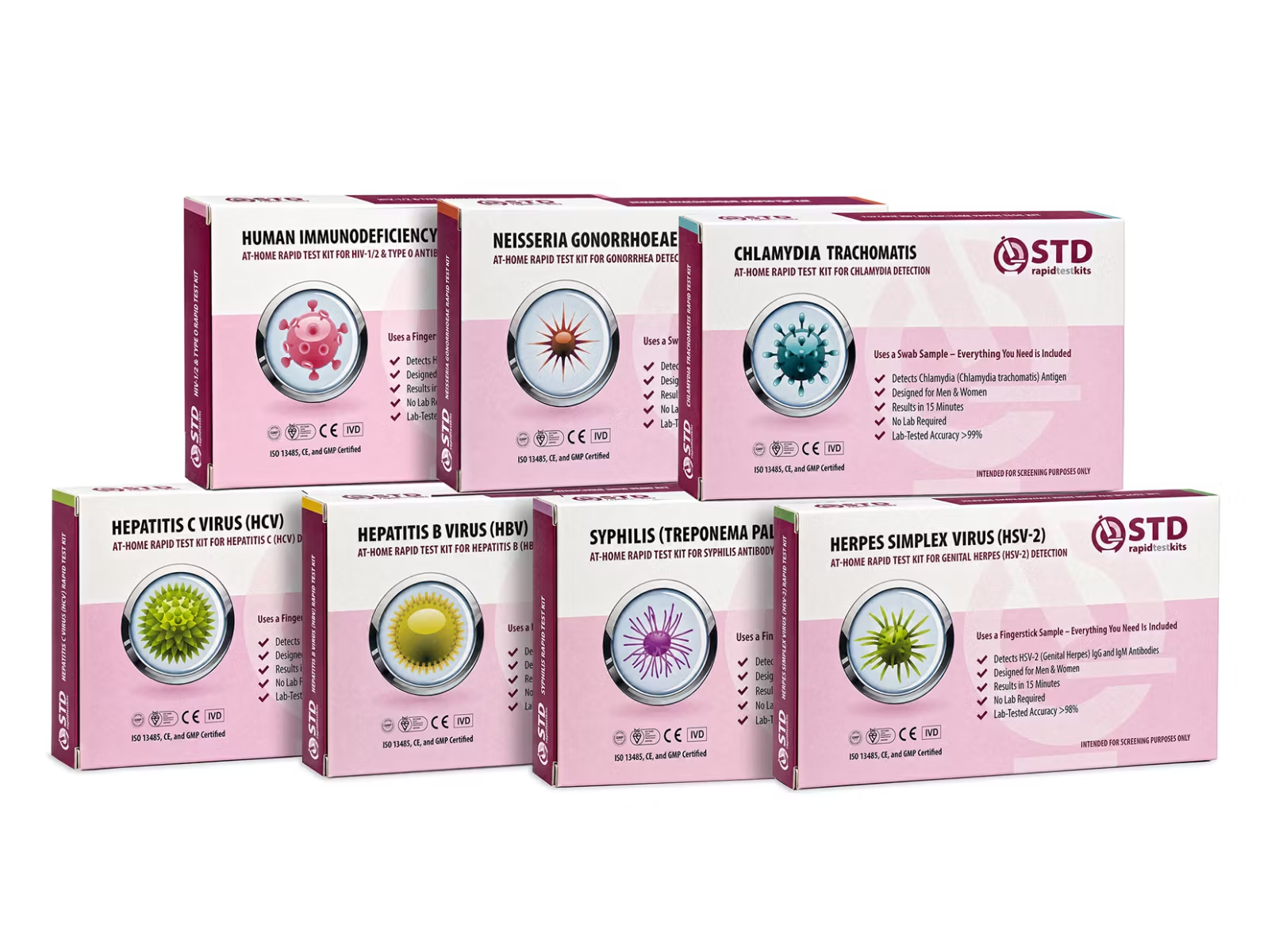
STD-related stigma can prevent people from getting tested, getting treated, or seeking medical advice, which can have major impacts on long-term health and the spread of infections.
Fear #4: Telling Someone Will Ruin Everything
Disclosure is often the part people dread most. The mental rehearsal goes badly every time. The partner freezes, the friend recoils, the words come out wrong. The brain runs that scene on a loop until it feels inevitable.
What people who have actually had these conversations tend to report is much more variable, and much more often quietly compassionate. A surprising number of partners and friends respond first with concern (about you), then with curiosity (about what it means in practice), and only after that with whatever feelings they have about themselves. The order tends to surprise people who expected revulsion to come first.
Not every conversation will go smoothly. The goal is not to control the listener's reaction; the goal is to have given them the information honestly and to have done so in a way that does not require you to apologize for being a person who has had sex. If a partner responds with cruelty, the reaction reveals something important about the partnership rather than rendering a verdict on you.
Public-health bodies in most countries also recommend partner notification for transmissible STIs. Many local health departments offer anonymous notification services, where they will inform recent partners without revealing your identity. If telling former partners directly feels impossible, ask your treating clinician about anonymous notification options in your area. The point is that the information reaches people who need it, not that you do every conversation alone.
The conversation itself is easier when it has a shape. A few principles that public-health educators commonly recommend:
- Lead with ownership. "I tested positive for X" or "I found out I have X" frames the information as something you have processed and are sharing, not something being done to the listener.
- Lead with facts about the condition. A short, calm summary of what it means in practice (curable, manageable, transmission-reducing strategies) gives the listener something to think about besides their own first reaction.
- Offer space. Let them ask questions, let them think, let them come back to it. A reaction in the first thirty seconds is rarely the final reaction.
- Choose timing. Sober, private, not mid-argument, not at a party. The conversation deserves a setting that lets both people focus.
Fear #5: I'm the Only One Going Through This
The 3 a.m. scroll through forums and threads is one of the most common post-diagnosis experiences. The brain insists you are uniquely affected, uniquely damaged, uniquely going to lose everything. Numerically, none of that is true. The infection you are reading about most likely has a community of people, often a large and active one, who have walked through what you are walking through.
Support exists in several different shapes. Online communities organized around specific conditions (herpes, HIV, HPV) on platforms like Reddit, Discord, and Instagram, where people share practical management tips, dating experiences, and the small victories that don't make it into clinical literature. Therapists who specialize in sexual health, including those who specifically work with patients adjusting to a new STI diagnosis. The diagnosis is its own form of grief, and a therapist who treats it as such can make a meaningful difference.
Peer-led organizations also exist for the major chronic infections: The Body for HIV, the American Sexual Health Association for general STI support, and condition-specific nonprofits that publish reader stories, FAQs, and resources written by people who have lived through the diagnosis themselves. None of these spaces require you to share more than you want to. Many people lurk for weeks before posting, which is a normal entry point.
And, more quietly than people expect, the friends and family already in your life have, statistically, had their own experiences with STIs more often than they have ever told you. The first time you talk about it openly is often the first time you find out someone close to you has a similar story they have never said out loud.

Recovery Isn't Linear, and That's Okay
Even with the facts in front of you, the emotional processing happens in waves. Some weeks you forget about the diagnosis entirely. Other weeks a conversation, a new match on a dating app, or a casual joke on TV pulls you back into the spiral. That pattern is normal and well documented in research on the psychological response to STI diagnosis.
Grief, in this context, is real even when the medical news is good. You are grieving the version of your sexual life you had before the diagnosis. You are grieving the easier conversations you used to have. You are adjusting your sense of yourself, which always takes longer than adjusting facts.
What helps, by most accounts: letting the feelings be feelings rather than evidence. A wave of shame is not proof that you are shameful. A wave of fear is not proof that something terrible is about to happen. Feelings pass; the medical reality stays the same.
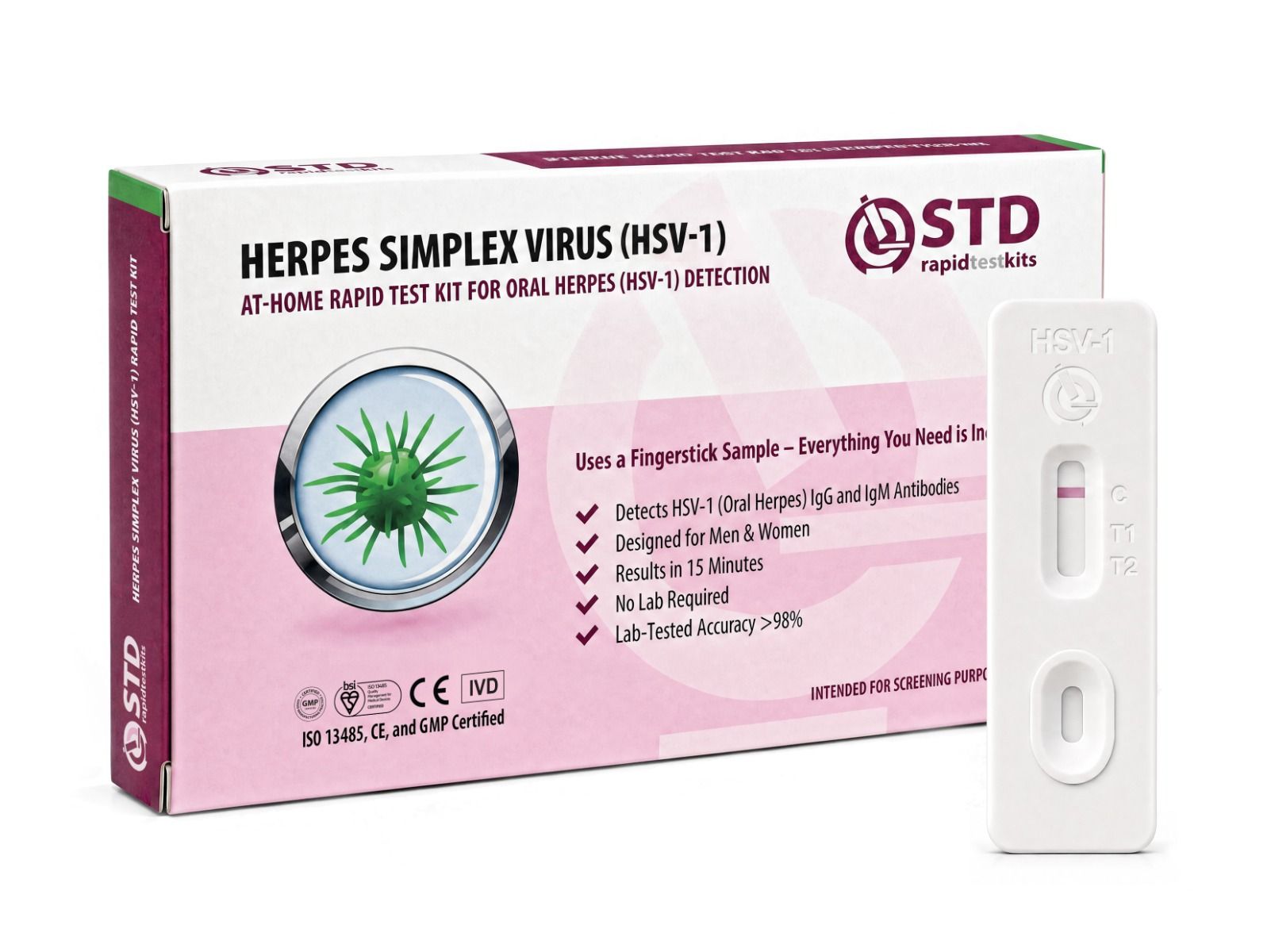
Re-testing for peace of mind, when appropriate, is another practical step. If checking your status again helps you feel grounded, doing so once is reasonable, especially with at-home rapid tests that make confirmation private and quick. Not obsessive; information-gathering. Most clinicians would rather you re-test once than spend a month in unverified worry. For HSV-specific peace of mind, an at-home HSV-1 antibody test from a fingerstick blood sample can answer the seroconversion question privately when used at least twelve weeks after the possible exposure.
Limiting the late-night search spirals also helps. Symptom searches in the middle of the night reliably make anxiety worse, not better. Bookmark a small number of authoritative sources (CDC, NHS, your treating clinician's after-hours line) and check those instead of open-ended Googling.
- Limit late-night symptom searches; they reliably worsen anxiety rather than resolving it.
- Re-test once for peace of mind if it helps you feel grounded, then stop. Repeated re-testing past confirmation is a sign to talk to someone, not to test again.
- Bookmark two or three authoritative sources (CDC, NHS, your clinician's after-hours line) and treat those as the answer set, instead of open-ended searches.
What an STI Diagnosis Actually Means for Your Life Going Forward
An STI diagnosis is a piece of medical information about your body. It tells you what infection you have and what care you need. It says nothing about your worth, your character, your future, or your capacity for being loved. It does not retroactively change anything about who you were before the test result arrived.
What does change, gradually, is the way you relate to your sexual health. Most people who walk through a diagnosis describe a quieter and more honest relationship with their body afterward. They communicate more clearly with partners. They test more regularly. They take care of their health proactively rather than only when something feels wrong. Many describe these shifts as net positives in retrospect, even though they would never have chosen the diagnosis itself.
You are still the same person you were before the test result. You are not your diagnosis. You are someone who has done the responsible thing by getting tested and treated, who is now in a position to take care of themselves and their partners with more information than they had a week ago. The story begins here, with one more piece of accurate information about the body you live in.
An STI diagnosis is medical information about your body. It is not a character verdict, a forecast of how the rest of your life will go, or the end of anything important about who you are.
Frequently Asked Questions
- Does an STI diagnosis mean I was reckless?
- No. STIs occur even when people use barrier methods consistently and have few partners. Most adults will be exposed to at least one STI in their lifetime. A diagnosis is a normal risk of being sexually active, not evidence of poor judgment.
- Can I live a normal life with herpes or HIV?
- Yes, with substantially different specifics for each. HIV life expectancy on modern antiretroviral therapy now approaches that of HIV-negative peers, a transformation from the 1990s mortality curve, and sustained viral suppression also eliminates sexual transmission to partners. Herpes does not affect life expectancy at all; daily suppressive antivirals reduce outbreak frequency and lower (without fully eliminating) transmission risk.
- Will anyone want to date me now?
- Yes. Many people in honest, satisfying relationships are living with manageable STIs. Disclosure done with calm and basic factual literacy tends to land far better than the brain rehearsal predicts. Honesty often deepens connection rather than ending it.
- Do I have to tell my partner?
- Most public-health and ethical frameworks say yes for transmissible infections, and many U.S. states have specific laws around HIV disclosure. The how and when is your call. Many partners respond with compassion when given honest, factual information.
- Can I have children if I have an STI?
- Most STIs do not affect fertility. The ones that can (untreated chlamydia, untreated gonorrhea) are preventable with timely treatment. People living with HIV can have HIV-negative children with appropriate antiretroviral care during pregnancy.
- Does this mean I'll get cancer?
- Most STIs do not cause cancer. Specific high-risk HPV strains are linked to cervical and some other cancers, but routine screening (Pap and HPV tests) catches precancerous changes early. The HPV vaccine prevents most cancer-causing strains.
- How do I cope with STI-related anxiety?
- Three things help most patients: one trusted person to talk to (friend, family member, or therapist), structured information from one or two authoritative sources rather than open-ended searches, and time. Therapists who work specifically with patients adjusting to a new diagnosis can compress the adjustment timeline meaningfully when self-management isn't enough.
- Will my STI status appear on background checks or insurance records?
- No. STI test results are protected health information under HIPAA in the U.S. and similar privacy laws elsewhere. Employers do not see your test results, and STI status does not appear on standard background checks.
- U.S. Centers for Disease Control and Prevention. Sexually Transmitted Infections (STIs) topic hub, used for prevalence statistics, clinical course summaries, and stigma research.
- U.S. Centers for Disease Control and Prevention. HIV basics page, used for the Undetectable equals Untransmittable principle and antiretroviral life-expectancy data.
- U.S. Centers for Disease Control and Prevention. HPV information hub, used for cancer-strain progression, vaccination guidance, and natural-clearance data.
- UK National Health Service. Sexually transmitted infections clinical guidance, used for treatment summaries and partner-notification recommendations.
- Planned Parenthood. STDs, HIV and safer-sex patient education materials, used for plain-language explanations of disclosure, transmission, and relationship navigation.
- The Body. Peer-led HIV and broader sexual-health support community, used for community resources and lived-experience perspectives.
