Published: July 2025 | Last updated: May 2026 | Editorial review and quality control: Martina N.
What is the key difference between hepatitis B and hepatitis C?
Hepatitis B spreads through blood and sexual fluids and has a near-100% effective vaccine, but no cure. Hepatitis C spreads mainly through blood, has no vaccine, and is curable in over 95% of cases (WHO), with most patients finishing 8 to 12 weeks of antiviral pills (NHS). Both silently damage the liver for years; a blood test is the only reliable way to know your status.
You can carry hepatitis B or hepatitis C for years and feel completely fine. Both viruses target the liver. Both can lead to cirrhosis or liver cancer if left untreated. Hepatitis B spreads through blood and sexual fluids; hepatitis C spreads almost exclusively through blood. Treating the two as interchangeable misses the most useful thing you can do as a reader: figure out which test you actually need.
Worldwide, about 254 million people live with chronic hepatitis B and another 50 million with chronic hepatitis C, according to the WHO hepatitis B and hepatitis C fact sheets. Most do not know they are infected, because the early stages of both viruses are usually silent. This guide compares them honestly: how each spreads, when symptoms show up (if at all), what testing involves, and what treatment looks like in 2026.
Key Takeaways
- Hepatitis B has a vaccine but no cure. Hepatitis C has no vaccine but is curable in over 95% of treated cases with modern antiviral pills, per the WHO.
- Both can stay silent for years. The only reliable way to know your status is a blood test, so screening is the first practical step.
What Are Hepatitis B and Hepatitis C?
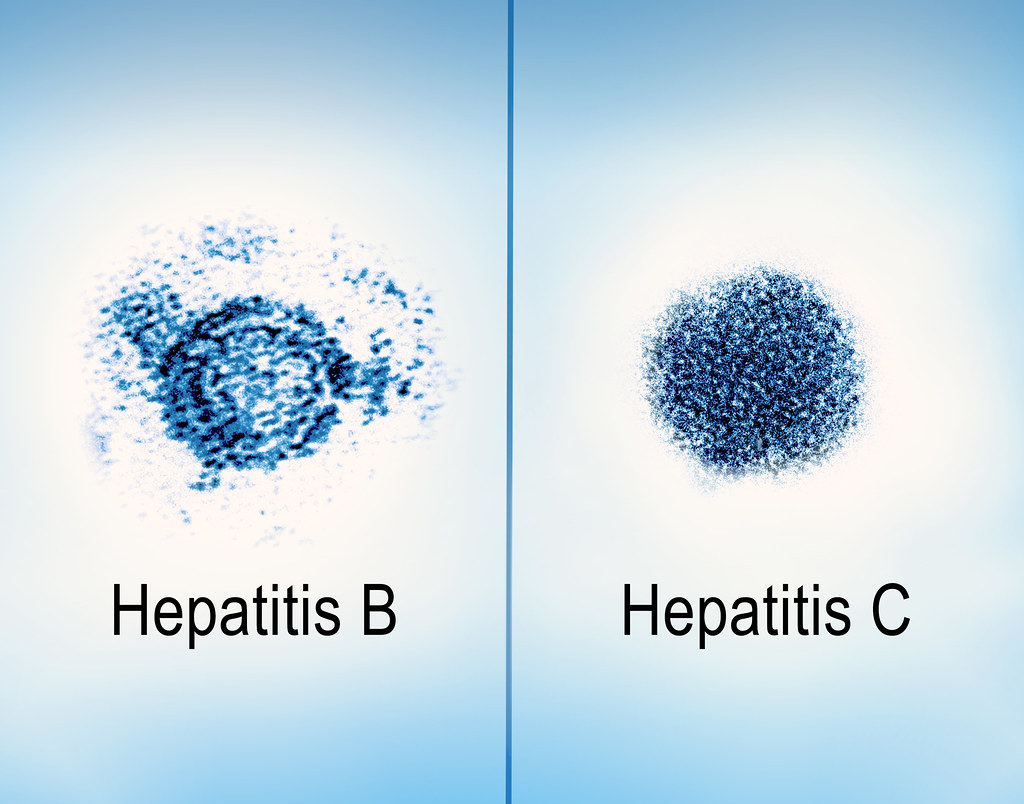
Hepatitis B (HBV) is a DNA virus that infects liver cells. It can resolve on its own (acute infection) or persist for the long term (chronic). About 95% of healthy adults who contract HBV clear the infection without developing chronic disease. The math flips for infants and young children infected before age 5: roughly 95% develop chronic infection, which is why the WHO and CDC both recommend the first hepatitis B vaccine dose within 24 hours of birth. Worldwide, about 254 million people are living with chronic hepatitis B, with roughly 1.2 million new infections each year (WHO hepatitis B fact sheet). The burden is concentrated in the Western Pacific and African regions, though every country has cases.
Hepatitis C (HCV) is an RNA virus that also targets the liver. About 50 million people worldwide currently live with chronic HCV, with around 1 million new infections per year (WHO hepatitis C fact sheet). Roughly 30% (range 15% to 45%) of people exposed to HCV clear the virus on their own within six months. The remaining 55% to 85% develop chronic infection, a rate much higher than for HBV in adults.
Both viruses inflame and scar the liver over time and can lead to cirrhosis, hepatocellular carcinoma (primary liver cancer), or liver failure if left untreated (NIDDK). Where they diverge is in how readily they spread, who is most at risk, and what medicine can do once the diagnosis is confirmed.
HCV is an RNA virus that mutates rapidly, which is why a durable vaccine target has been elusive after decades of research. HBV has a more stable DNA genome, which made vaccine development tractable in the 1980s. HBV also integrates into liver-cell DNA in ways that current antivirals can suppress without fully eradicating, leaving HBV manageable but not curable while HCV is now the opposite.
How They Spread
Hepatitis B spreads through blood, semen, and other body fluids. Per the CDC hepatitis B information hub, the main routes are:
- Unprotected vaginal, anal, or oral sex with an infected partner
- Sharing needles, syringes, or any drug-injection equipment
- From a parent to a baby during birth (the dominant route worldwide)
- Shared personal-care items such as razors or toothbrushes when blood is present
- Needlesticks and blood exposures in healthcare or in unsterile tattoo and piercing settings
HBV is highly infectious. The virus can survive on surfaces outside the body for at least seven days, per the CDC hepatitis B clinical overview. Shared razors, toothbrushes, and other blood-contaminated objects are real exposure routes.
Hepatitis C is overwhelmingly a blood-to-blood virus. Per the CDC hepatitis C information hub, common routes include:
- Sharing injection equipment (the leading current route in the U.S.)
- Unsterile or reused tattoo, piercing, or acupuncture equipment
- Blood transfusions or organ transplants before 1992, when widespread donor screening began
- Birth (less common than HBV, with roughly a 5% transmission risk from a chronically infected parent)
- Sex carries a low but real risk, mostly when blood exposure, ulcerative STIs, HIV co-infection, or genital trauma is involved
This is the most important practical difference. Sexual transmission is a major HBV route. For HCV, it is uncommon. The NHS and CDC both list sexual spread of HCV as a fringe route compared to blood-equipment sharing. That gap is why screening conversations look different for each virus, and why the right test panel depends on the route you might have been exposed to.
Hepatitis B vs Hepatitis C at a Glance
| Feature | Hepatitis B (HBV) | Hepatitis C (HCV) |
|---|---|---|
| Virus type | DNA virus | RNA virus |
| Main routes | Sex, blood, parent-to-baby | Blood (rarely sex) |
| Vaccine available | Yes (2 or 3 dose series, near 100% effective) | No |
| Curable | No (managed long-term with antivirals) | Yes (over 95% cure rate with DAAs) |
| Typical treatment length | Indefinite when treatment is needed | 8 to 12 weeks (up to 24 weeks with cirrhosis) |
| Chronic infection risk after acute | Under 5% in adults; about 95% in children under 5 | About 55% to 85% of adult infections |
| Surface survival outside body | At least 7 days (CDC) | Hours to days, less durable than HBV |
| Average incubation | 60 days to abnormal ALT (range 40 to 90); 90 days to symptoms (range 60 to 150) per CDC | 2 weeks to 6 months (WHO) |
| Standard test | HBsAg, anti-HBs, anti-HBc | HCV antibody, then HCV RNA confirmation |
HBV and HCV share a target organ but differ in transmission routes, vaccine availability, cure prospects, and chronic-infection rates.
Symptoms: Why You Probably Won't Notice
Most people with acute hepatitis B or C have no obvious symptoms. When symptoms do appear, the timing varies by virus. For hepatitis C, they can show up two weeks to six months after exposure, per the WHO. For hepatitis B, the CDC hepatitis B clinical overview gives two reference points: an average of about 60 days (range 40 to 90) from exposure to the onset of abnormal serum ALT levels (a liver enzyme), and about 90 days (range 60 to 150) to the onset of noticeable signs and symptoms. The classic warning signs, when they appear, include:
- Fatigue that does not respond to sleep
- Yellowing of the skin or whites of the eyes (jaundice)
- Dark urine and pale or clay-colored stools
- Right upper-abdominal tenderness or fullness
- Loss of appetite, nausea, low-grade fever, joint aches
Many people never develop noticeable symptoms even as chronic infection silently scars the liver. Both the CDC and WHO estimate that a large share of people living with chronic HBV or HCV simply do not know they are infected. By the time symptoms drive a visit to the doctor, liver damage may already be advanced.
Late-stage signs of untreated chronic infection include fluid build-up in the abdomen (ascites), confusion or trouble concentrating (hepatic encephalopathy), and easy bruising or bleeding. Any of those warrants immediate medical evaluation rather than at-home testing.
In both hepatitis B and hepatitis C, the years between infection and obvious symptoms are exactly when liver scarring accumulates the fastest. If you have any risk factor (a needlestick, sex with a partner of unknown status, an unlicensed tattoo, or a parent with hepatitis B), get a blood test. Damage is harder to reverse later, and screening is now cheap, fast, and discreet.
Testing: How to Actually Know
Hepatitis B testing typically involves a panel of three blood markers:
- HBsAg (hepatitis B surface antigen): a positive result means you have an active infection, either acute or chronic.
- Anti-HBs (antibody to surface antigen): a positive result means you are immune, either from vaccination or from a past resolved infection.
- Anti-HBc (antibody to core antigen): a positive result means you have been exposed to the virus at some point, currently or historically.
Hepatitis C testing is a two-step process:
- HCV antibody test: shows whether you have ever been exposed.
- If antibody-positive, an HCV RNA (PCR) test confirms whether the virus is currently active. Because around 30% of people clear HCV spontaneously within six months (WHO), an antibody-positive but RNA-negative result means the body cleared the infection on its own.
Window periods: when a test becomes reliable
The window period is the gap between exposure and when a test can reliably detect infection. Testing too early gives a false negative.
- HBV (HBsAg test): usually reliable from about 3 to 6 weeks after exposure, with most acute infections detectable well before the 90-day average symptom-onset point. If a first test is negative and the exposure was high-risk, the CDC hepatitis B testing guidance recommends repeat testing; a sensible interval is to repeat once the full incubation window (up to about 5 months) has passed.
- HCV (antibody test): antibodies typically develop within 8 to 11 weeks; some people take up to 6 months. A negative result before week 11 should be repeated.
Where at-home tests fit
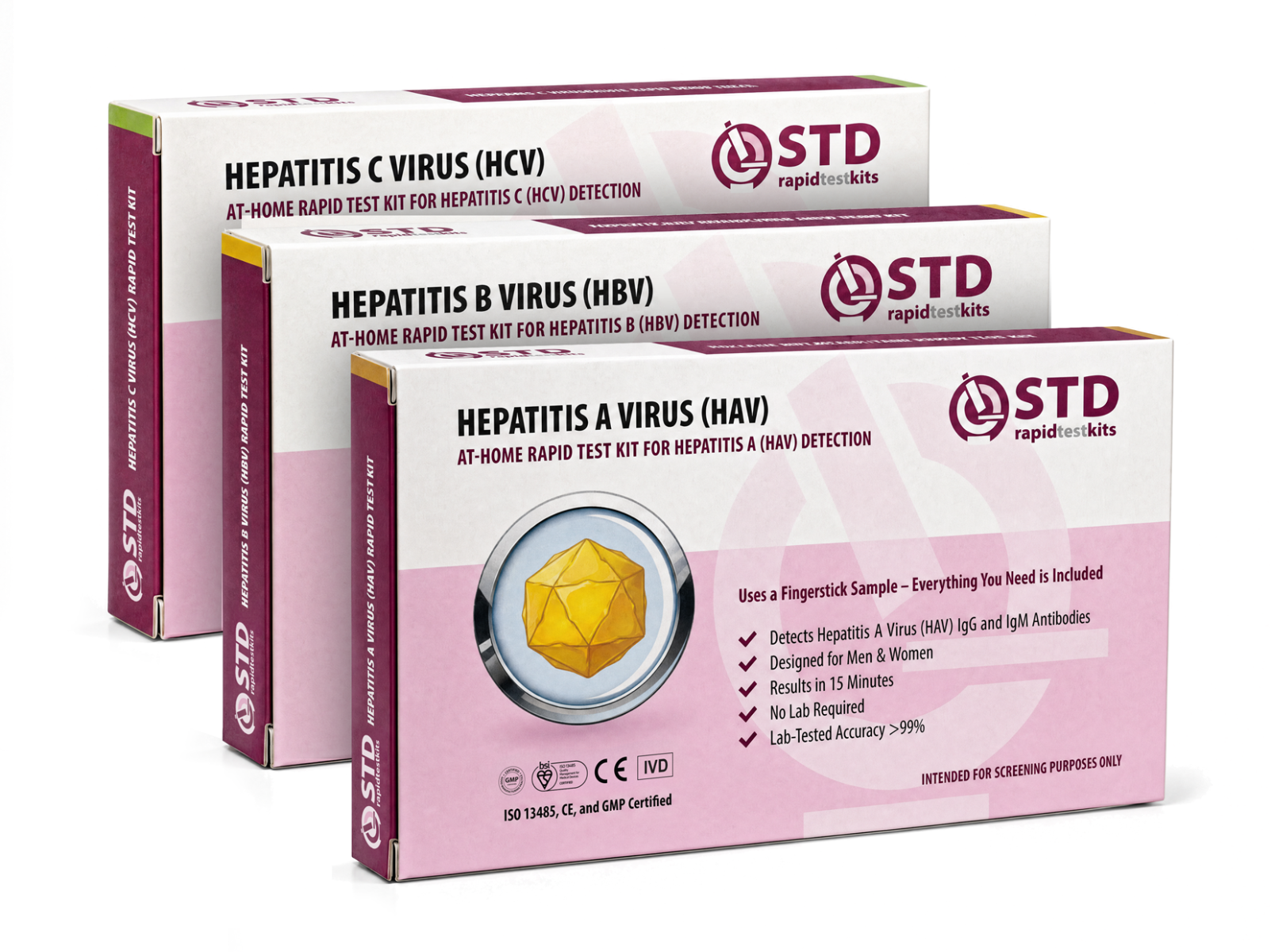
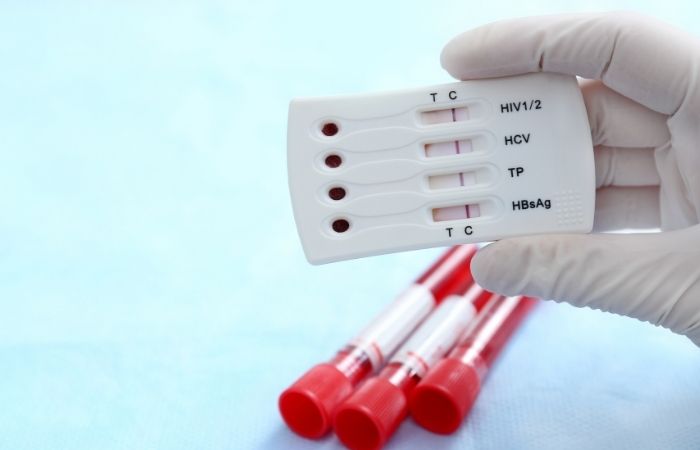
Both tests use a small blood sample. A clinic draws from a vein; an at-home rapid lateral-flow kit uses a fingerstick. Lab tests are the analytical gold standard for confirmation and viral-load measurement. Rapid lateral-flow tests are screening tools: private, fast (results in about 15 minutes), and easy to repeat after the appropriate window. They are not equivalent to lab NAAT or quantitative viral-load assays in analytical sensitivity. A positive home result should always be confirmed with a clinic-administered laboratory panel before any treatment decision.
This site sells at-home rapid lateral-flow tests for hepatitis B and C. We recommend products based on fit-for-purpose for the reader's concern, not commercial benefit.
Week 3 to 6: first HBV surface-antigen blood test. If negative and the exposure was high-risk, repeat once the full incubation window (up to about 5 months) has passed.
Week 8 to 11: first HCV antibody blood test. If negative and exposure was high-risk, retest at six months.
If any result is reactive: book a clinic visit for a full confirmatory panel before any treatment decision is made.
Treatment: Where the Stories Diverge
Hepatitis B has no cure today. It can be managed long-term with antiviral medications such as tenofovir or entecavir, which suppress the virus and reduce ongoing liver damage (CDC). Many people with chronic HBV and stable liver function do not need daily medication, only periodic monitoring (every 6 months for most) to catch any change in liver function or early signs of liver cancer. A hepatologist looks at viral load, ALT levels, and fibrosis markers to decide whether to start treatment. Acute HBV in healthy adults usually does not require antivirals because the immune system clears the virus on its own; doctors monitor liver enzymes and provide supportive care.
Hepatitis C is curable. Direct-acting antiviral (DAA) medications clear the virus in over 95% of treated cases, typically with 8 to 12 weeks of once-daily pills for people without cirrhosis (NHS). The WHO cites a treatment duration of 12 to 24 weeks depending on the absence or presence of cirrhosis. Once the virus is gone and follow-up testing confirms sustained virologic response, you are considered cured and can no longer transmit HCV.
The gap is in diagnosis and access: only about 36% of people living with HCV know their status, and only around 20% have received DAA treatment, per the WHO hepatitis C fact sheet. The cure exists. Reaching a test is what stands between most people and treatment.
One caveat: cure clears the virus, but it does not undo liver damage that already occurred. People who started treatment with cirrhosis still need ongoing liver-cancer surveillance with regular imaging.
Direct-acting antiviral medicines (DAAs) can cure more than 95% of persons with hepatitis C infection. Treatment duration is short (usually 12 to 24 weeks), depending on the absence or presence of cirrhosis.
Vaccination and Prevention
The hepatitis B vaccine is one of the most effective vaccines available. The WHO reports the standard series gives nearly 100% protection and lasts at least 20 years, probably for life. It is recommended at birth in the United States and most countries, with a 2 or 3 dose catch-up schedule for unvaccinated adolescents and adults (CDC hepatitis B vaccination guidance).
There is no hepatitis C vaccine. Research is active, but no licensed vaccine exists as of 2026. Prevention relies on avoiding shared injection equipment, ensuring tattoo and piercing equipment is sterile and single-use, and screening blood before transfusion (universal in the U.S. since 1992). For HCV, syringe-services programs and access to medication for opioid use disorder are the highest-leverage interventions for reducing new infections; the CDC and WHO both endorse these as core public-health tools.
Practices that lower both HBV and HCV risk: use condoms consistently with new or non-monogamous partners (this matters more for HBV than HCV); do not share needles, syringes, razors, toothbrushes, or nail clippers that can carry blood; choose tattoo and piercing studios that follow strict sterilization protocols. Healthcare workers should follow universal precautions and report any needlestick exposure immediately.
If you are unsure whether you have been vaccinated against HBV, an anti-HBs blood test will tell you. A positive anti-HBs without anti-HBc usually indicates vaccine-acquired immunity rather than a past infection.
The CDC recommends catch-up vaccination for all unvaccinated adults aged 19 to 59, and for adults 60 and older who have risk factors. Groups to prioritize: travelers to higher-prevalence regions, healthcare workers, household and sexual partners of HBV-positive people, people with diabetes, and people who inject drugs. Ask your provider about starting the 2 or 3 dose series; protection begins building after the first shot.
What About Sex and Relationships?
Hepatitis B is a true sexually transmitted infection. The virus is present in semen, vaginal fluids, and blood, and condoms reduce but do not fully eliminate transmission. The single most important step a sexually active partner of an HBV-positive person can take is getting vaccinated. Once protected, sexual transmission risk drops to near zero.
Hepatitis C is rarely transmitted through sex. The CDC notes that sexual transmission is uncommon between mostly monogamous heterosexual partners. The risk rises with multiple partners, anal intercourse, ulcerative STIs, HIV co-infection, and any sex involving blood (menstruation, trauma, chemsex contexts).
If you are dating, partnered with, or sleeping with someone who has either virus, the situation is workable. Vaccination handles HBV. Routine condom use plus an honest conversation handles most other risk. Get tested together, ideally on the same day, so you both have current information rather than guesses.
Partner of an HBV-positive person: vaccination is the single most protective step. Once the series is complete, sexual transmission risk drops to near zero.
Partner of an HCV-positive person: consistent condom use and a baseline HCV antibody test together address most uncertainty. Sexual transmission of HCV is uncommon but possible when blood exposure is involved.
When Both Show Up: Co-Infection
It is possible, though not common, to have hepatitis B and hepatitis C at the same time. The risk is highest among people with shared exposure routes: people who inject drugs, people born in regions where both viruses are endemic, and people living with HIV.
Co-infection complicates things in three concrete ways:
- Liver damage accelerates. Two viruses scarring the same tissue is harder for the body to outpace than one.
- Treatment ordering matters. Starting DAAs for HCV in someone with untreated HBV can trigger HBV reactivation as the immune environment shifts. The CDC recommends HBV screening before starting HCV treatment for this reason.
- Monitoring intensifies. Liver enzymes, viral loads, and imaging are checked more frequently during and after treatment.
If you test positive for one virus, ask your provider about screening for the other. A combo panel that covers both with a single sample is a sensible default rather than two separate tests.
The CDC and FDA recommend testing all patients for current or past HBV infection before initiating direct-acting antivirals for hepatitis C. Starting DAAs in someone with an unrecognized chronic HBV infection can trigger HBV reactivation, and reactivation has caused liver failure and death in documented cases. An HBsAg and anti-HBc panel before HCV treatment is now standard practice.
Who Should Get Tested, and How Often?
Both the CDC and the U.S. Preventive Services Task Force have moved toward broader, simpler screening recommendations for both viruses, in part because so many carriers do not know they are infected.
Hepatitis B: the CDC now recommends that all adults get tested for hepatitis B at least once. After that, repeat testing depends on ongoing risk. Pregnant people are tested at every pregnancy so that newborns of HBsAg-positive mothers can receive the vaccine and hepatitis B immune globulin within hours of birth.
Hepatitis C: the CDC recommends one-time HCV testing for all adults aged 18 and older, plus repeat testing for anyone with ongoing risk factors (injection drug use, dialysis, certain occupational exposures, HIV co-infection, multiple sex partners, history of incarceration). Pregnant people are tested at every pregnancy.
Outside the routine baseline, retest if you have a recent high-risk sexual or needle exposure, a partner who recently tested positive for either virus, a new sexual relationship that calls for a baseline, or persistent unexplained fatigue, jaundice, or abnormal liver enzymes on a routine blood panel.
Living With Hepatitis
Chronic hepatitis B can mean nothing more than periodic blood work and liver imaging if the virus is well-controlled. Many people live decades with HBV without ever needing daily medication. What helps:
- Limit alcohol or avoid it entirely; alcohol compounds liver injury.
- Ask your provider about hepatitis A vaccination to prevent stacked liver insults.
- Check with a doctor before taking any drug or supplement known to stress the liver.
- Keep the recommended monitoring schedule (your provider adjusts based on viral load and ALT).
- Tell sexual partners early and offer the vaccine conversation; it is the single most protective step they can take.
After hepatitis C cure, the virus is gone. You cannot transmit it. You can no longer infect a partner. If you started treatment with significant liver damage, ongoing liver-cancer surveillance with imaging is part of the long-term plan. If you started with healthy liver tissue, follow-up is much simpler. Cure does not produce lasting immunity, so avoiding re-exposure (no shared injection equipment, sterile tattoo practices) remains important.

Where to Go From Here
The single most useful thing you can take from this article: know your status. If you have never been tested for hepatitis B, the CDC now recommends one-time screening for all adults. If you have never been tested for hepatitis C, the CDC recommends one-time screening for everyone aged 18 and older. Both can be done with a clinic blood draw or, for screening, a private at-home STI test kit.
If a test comes back positive, the next step is lab confirmation and a primary care or hepatologist visit. Modern HCV treatment can begin almost immediately. Modern HBV monitoring is a low-burden, long-running plan you can fit around the rest of your life.
If a test comes back negative and you are not vaccinated for HBV, ask your provider about getting the series. Two or three shots (depending on brand) provide lifelong protection against one of the most contagious blood-borne viruses in existence.
Should You Test for Hepatitis B, Hepatitis C, or Both?
Have you never been tested for either hepatitis B or hepatitis C?
Yes: Start with a one-time baseline: HBsAg plus anti-HBs for hepatitis B, HCV antibody for hepatitis C. An at-home rapid combo kit covers both with a single fingerstick.
Did you have a high-risk exposure (needlestick, shared injection equipment, unprotected sex with a partner of unknown status) in the past 6 months?
Yes: Wait for the window period: 3 to 6 weeks post-exposure for HBV (HBsAg), 8 to 11 weeks for HCV antibody. If the first result is negative and the exposure was high-risk, retest at 5 months (HBV) or 6 months (HCV).
Did a rapid home test return a reactive (positive) result?
Yes: Book a clinic visit for lab confirmation (HBV viral-load panel or HCV RNA PCR) before any treatment decision is made.
Was your result negative and you are not vaccinated for hepatitis B?
Yes: Ask your provider about the 2- or 3-dose hepatitis B vaccine series. Protection begins building after the first dose.
No: If both tests are negative and you are vaccinated for HBV, you are in good shape. Retest only if a new exposure occurs or if you have ongoing risk factors.
Guidance only. A healthcare provider can advise based on your specific situation.
FAQs
- Is hepatitis B more serious than hepatitis C?
- Each carries its own risk profile. Hepatitis B is far more contagious, especially through sex and from parent to infant; without a vaccine you are at higher transmission risk. Hepatitis C is harder to catch but more likely to become chronic in adults (about 55% to 85% of acute infections, per the WHO). Both are serious if left untreated, and both need a blood test to diagnose.
- Can I get either virus from casual contact?
- No. Hugging, sharing meals, sneezing, kissing, and shaking hands do not transmit either virus. Transmission requires contact with infected blood or, for HBV, sexual fluids. HBV is infectious on surfaces for at least 7 days per CDC clinical guidance, so shared razors, toothbrushes, or unsterile needles are real exposure routes; ordinary social contact is not.
- How accurate are at-home rapid hepatitis tests?
- Rapid lateral-flow tests for HBsAg (hepatitis B surface antigen) and HCV antibodies typically report sensitivity in the mid-to-high 90s and specificity above 99% when used after the appropriate window period. They are screening tools, not diagnostic confirmations: a positive result should be followed by a lab test (HBV viral load or HCV RNA PCR) before treatment decisions.
- Is there a vaccine for hepatitis C?
- No. Only hepatitis B has a vaccine. If you are not vaccinated for HBV and not currently infected (anti-HBs negative, HBsAg negative), the CDC recommends starting the series. The HCV cure rate is high enough that the absence of a vaccine is less damaging than it would otherwise be, but prevention through clean equipment and screening still matters.
- Can hepatitis B be passed through oral sex?
- Yes, especially when sores, cuts, or bleeding gums are present. Hepatitis B is found in saliva at lower concentrations than in semen or blood, but oral transmission has been documented. The vaccine remains the most reliable protection. Hepatitis C is much less likely to be transmitted orally because it requires blood-to-blood contact.
- How long after exposure should I wait to test?
- For hepatitis B (HBsAg), wait at least three to six weeks after exposure for a reliable home result. If the first result is negative and the exposure was high-risk, repeat once the full incubation window (up to about 5 months) has passed. For hepatitis C, wait at least 11 weeks for a reliable antibody result, with some people taking up to six months to seroconvert. Clinics can run an HCV RNA (PCR) test that is detectable within one to two weeks of exposure if you need an earlier answer than a home antibody screen can give you.
- Can a pregnant person pass either virus to their baby?
- Yes, more commonly with HBV. Almost all pregnant people are now tested for hepatitis B (and increasingly for HCV) so that the newborn can receive the HBV vaccine and hepatitis B immune globulin within hours of birth, which prevents most transmission. People cured of hepatitis C before or during pregnancy can carry the pregnancy without HCV transmission risk. Talk to your provider before conceiving so the plan is in place.
- Can I get hepatitis C again after being cured?
- Yes. Cure with DAAs clears the current infection but does not produce lasting immunity. If you are exposed again to contaminated blood (shared injection equipment, unsterile tattoo work), you can be reinfected. Routine retesting is recommended for people with ongoing risk factors.
- World Health Organization. Hepatitis B fact sheet. Global prevalence (254 million chronic infections, 1.2 million new infections per year), vaccine effectiveness (near 100% with full series, at least 20 years of protection), and chronic-infection rates by age at exposure (under 5% in adults, about 95% in children infected before age 5).
- World Health Organization. Hepatitis C fact sheet. Global prevalence (50 million chronic infections, about 1 million new infections per year), DAA cure rate above 95%, treatment duration of 12 to 24 weeks depending on absence or presence of cirrhosis, spontaneous clearance rate of 30% (range 15% to 45%), chronic-infection rate of 55% to 85%, and the diagnosis and treatment gap (36% know status, 20% treated).
- U.S. Centers for Disease Control and Prevention. Hepatitis B information hub for the public and clinicians, covering transmission routes, testing markers (HBsAg, anti-HBs, anti-HBc), universal adult screening recommendation, and treatment with tenofovir and entecavir.
- U.S. Centers for Disease Control and Prevention. Hepatitis B Clinical Overview. Source for incubation-period figures (average about 60 days, range 40 to 90, from exposure to onset of abnormal serum ALT; average about 90 days, range 60 to 150, from exposure to onset of signs and symptoms), the at-least-7-days surface survival figure, and the characterization of HBV as highly infectious.
- U.S. Centers for Disease Control and Prevention. Hepatitis B testing guidance. Used to support the recommendation that people with ongoing exposure risk undergo repeat testing after the initial screen.
- U.S. Centers for Disease Control and Prevention. Hepatitis C information hub, including current adult screening recommendation (one-time screening for all adults aged 18 and older), ongoing-risk retesting guidance, and the antibody-then-RNA testing sequence.
- NHS. Hepatitis C condition page. Treatment description (8 to 12 weeks of antiviral tablets for most people without cirrhosis) and the characterization of sexual transmission of HCV as uncommon compared to blood-equipment sharing.
- U.S. Centers for Disease Control and Prevention. Hepatitis B vaccination recommendations covering all infants, unvaccinated children and adolescents, all adults aged 19 to 59, and adults 60 and older with risk factors.
- National Institute of Diabetes and Digestive and Kidney Diseases (NIDDK). Hepatitis B health information page covering complications of chronic hepatitis B, including cirrhosis, liver failure, and liver cancer (hepatocellular carcinoma).
