Famous Men Who Died of Syphilis: Al Capone, Henry VIII, and More
Why syphilis still matters today, and how to test discreetly




- Untreated syphilis can spread to the brain decades after the initial infection, causing memory loss, mood changes, and other neurological symptoms grouped under the term neurosyphilis.
- A simple blood test can detect syphilis in its early stages, when the infection is fully curable with a course of penicillin per CDC STI treatment guidelines.
Published: November 2025 | Last updated: May 2026 | Editorial review and quality control: Martina N.
The story of syphilis is older than most people realize. References to a wasting illness called the “great pox” appear in 15th-century European records, and the bacterium behind it, Treponema pallidum, has shaped art, politics, and personal histories ever since. What makes this infection so haunting is how it moves and then vanishes: years of silence, then sudden chaos in the brain or the body.
That hidden timeline is part of why so many famous figures, from gangsters to monarchs to philosophers, ended up linked to it. Some had it confirmed. Others left behind symptoms that fit too neatly to ignore. What unites them is the same pattern that still affects people today: shame and silence delay testing, and in untreated syphilis, every year of delay allows the bacterium to move deeper into the nervous system.
Key Takeaways
- Untreated syphilis can spread to the brain decades after the initial infection, causing memory loss, mood changes, and other neurological symptoms grouped under the term neurosyphilis.
- A simple blood test can detect syphilis in its early stages, when the infection is fully curable with a course of penicillin per CDC STI treatment guidelines.
When Power and Shame Collided: The Case of Al Capone
Al Capone was once America's most feared gangster, but the years after his 1932 imprisonment told a quieter, sadder story. By the time he was released in 1939, his body and mind were breaking down. He died in 1947 with what historians describe as the cognitive function of a young child, a result of untreated syphilis that had reached his brain.
Capone had contracted the infection years earlier and never received consistent treatment. The reasons were partly cultural (the stigma around venereal disease in his era was crushing) and partly practical. Penicillin only became widely available for civilian use in the mid-1940s, and by the time Capone received it, decades of damage were already done.
Neurosyphilis is the term used when the bacterium reaches the central nervous system. It causes progressive damage: paranoia, memory loss, mood swings, hallucinations, and trouble with motor control. The behavior people remember from late-period Capone, the outbursts and the confusion, is consistent with that clinical pattern.
That timeline is what mattered. Capone's federal tax conviction came in the early 1930s. The neurological collapse came nearly two decades later, with the “quiet” years in between being the latent stage of syphilis, when no visible symptoms suggest the infection is still moving through the body.
Capone is believed to have contracted syphilis in the 1920s. The neurological collapse that defined his final years did not begin until the late 1930s and accelerated through the 1940s. The latent stage in between left no outward signs, even as the bacterium continued to spread.
The “Madness” of King Henry VIII: Was It Syphilis?
King Henry VIII of England is remembered for six wives, religious upheaval, and a temperament that grew darker as he aged. For centuries, historians and physicians have speculated about a possible underlying illness, and syphilis is one of the most frequently named candidates.
Historical accounts describe leg ulcers that wept and refused to heal, episodes of cognitive decline, infertility across multiple marriages, and mood shifts severe enough to change the course of English history. Each of those signs fits chronic or latent syphilis, which was widespread in 16th-century Europe.
Modern reviewers have pushed back, suggesting type II diabetes, McLeod syndrome (a rare neurological disorder), or chronic injury from a 1536 jousting accident as alternative explanations. No autopsy or laboratory evidence exists to settle the question. What does seem clear is that royal physicians of the period had reason to hide a venereal diagnosis if one existed, since the political and dynastic costs would have been enormous.
Bringing Henry up here is not about convicting him post-hoc. It shows how stigma erased the medical record. A diagnosis that should have been entered in clinical notes was buried because of shame, and that gap in the record made it harder for later generations to understand what was actually happening.
Today, a person presenting with the kind of slow-healing leg ulcers and progressive cognitive change Henry showed could be tested with a simple blood draw. A discreet at-home syphilis test makes that even easier, with no clinic visit required.
This article is published by stdrapidtestkits.com, which sells the at-home syphilis blood test linked above. We recommend products based on fit-for-purpose for the reader's concern, not commercial benefit.
Three modern explanations have been offered for Henry VIII's symptom pattern beyond syphilis:
- Type II diabetes (would explain weight gain, leg ulcers, and cognitive change in late life).
- McLeod syndrome, a rare X-linked neurological disorder (would explain personality changes and movement problems).
- Chronic traumatic brain injury from the 1536 jousting accident in which he was unconscious for two hours.
Nietzsche, Napoleon, and the Art of Denial
Friedrich Nietzsche, the philosopher whose work reshaped modern thought, suffered a sudden mental collapse in early 1889 and spent the last eleven years of his life in his sister's care, mostly unable to speak coherently. He died in 1900. The diagnosis at the time was “syphilitic paralytic dementia,” a term used for what would now be called general paresis, the late neuropsychiatric form of syphilis.
Some modern biographers have argued for other explanations: a slow-growing brain tumor, bipolar disorder with a final psychotic break, or a hereditary stroke pattern. None of these have been confirmed. Letters from his final productive years, full of erratic energy followed by paranoia, fit the late-syphilis pattern that doctors at the time recognized clinically.
Napoleon's case is murkier. His official autopsy in 1821 cited stomach cancer as the cause of death, and that finding has been re-confirmed in modern reviews. Yet personal documents from his physicians refer to mercury treatments earlier in his life. Mercury was the standard (and toxic) syphilis remedy of the pre-antibiotic era. Whether Napoleon was actually infected, or whether mercury was being used for some other reason, cannot be settled from the surviving records.
Across all three names, silence and shame stripped clinical clarity out of the historical record. In an era without antibiotics, a venereal diagnosis carried a real-world prognosis (often fatal) and a social one (often ruinous). Pre-antibiotic life expectancy after a tertiary diagnosis was often less than five years.

How Syphilis Destroys the Body, and Why It Took Centuries to Understand
Syphilis does not kill quickly. It moves through stages, and the early signs are easy to miss.
The primary stage shows up as a single painless sore (a chancre) at the point of contact, usually 10 to 90 days after exposure. Because it does not hurt and often appears in places that are hard to see, many people miss it entirely. The sore heals on its own in three to six weeks, which can feel like the problem solved itself.
The secondary stage follows weeks to months later, with a faint rash that often shows up on the palms and soles, plus fever, swollen glands, and mucous patches in the mouth. Again, these symptoms resolve without treatment, reinforcing the false sense that nothing is wrong.
Then comes the latent stage, which can last for years or decades. No visible symptoms. The bacterium continues to spread quietly to the brain, spine, heart, and other organs (per CDC About Syphilis).
Tertiary syphilis is where the damage shows. It may appear five to thirty years after the initial infection. Brain damage, blindness, organ failure, and psychosis are all on the list. For figures like Capone and Nietzsche, this final phase was mistaken for unrelated mental illness or personal vice. In reality, untreated Treponema pallidum had been progressively damaging brain and nerve tissue for years.
Figure 1. Timeline of untreated syphilis stages, based on CDC and WHO data.
| Stage | Timeline | Symptoms | Contagious? |
|---|---|---|---|
| Primary | 10–90 days after exposure | Painless sore (chancre) at infection site | Yes |
| Secondary | 2–10 weeks after sore | Rash, fever, swollen glands, mucous patches | Yes |
| Latent | Months to decades | No visible symptoms | No (but bacteria still present) |
| Tertiary (Late) | 5–30 years after exposure | Brain damage, blindness, organ failure, psychosis | No |
The Stigma That Silenced Treatment
In the 19th and early 20th centuries, few diagnoses carried more shame than syphilis. The disease was associated with moral failure, criminality, and ruin. For people in positions of power, public acknowledgment was unthinkable, so private treatment took strange and often deadly forms.
Mercury was the most common remedy. Patients swallowed pills, applied ointments, inhaled vapors, or sat in steam rooms with vaporized mercury. The therapy did temporarily suppress some symptoms, but mercury itself is a heavy-metal poison. The treatment killed almost as many people as the disease did.
The arrival of penicillin in the 1940s changed everything. A single course of injectable benzathine penicillin G can cure primary, secondary, and early latent syphilis (per CDC STI treatment guidelines). The cure has been the same for eight decades and remains highly effective.
A working cure exists. What delays it now is the silence people maintain around testing. People put off the blood draw, or they assume a faded rash was a heat reaction, or they fear what a partner might think.
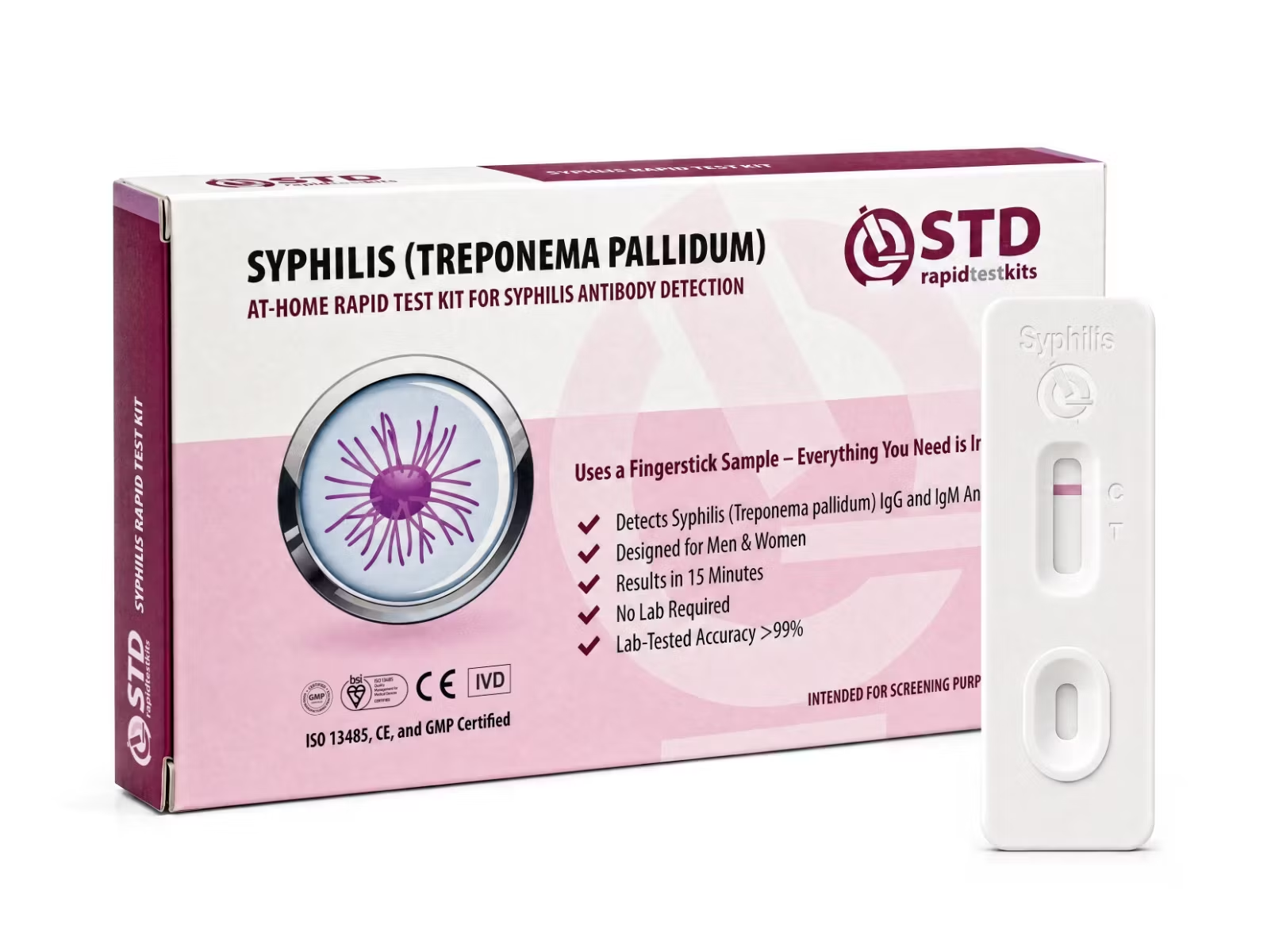
Modern at-home testing has cut several of those barriers. A discreet at-home STD test gives a result without a clinic visit, a referral, or a face-to-face conversation about exposure history.
What Neurosyphilis Looks Like Today
Neurosyphilis is not just a historical footnote. Cases continue to appear in clinical practice, particularly among people who never had visible symptoms or who assumed a rash or sore was something benign. Reported syphilis cases have been rising in the United States, and a small but real share of those cases progress to neurological involvement when treatment is delayed (per CDC About Syphilis).
Common signs when the bacterium reaches the central nervous system include:
Possible signs of neurosyphilis
- Persistent headaches that do not respond to typical pain relief
- Personality and mood changes such as irritability, paranoia, or depression
- Problems with coordination, balance, or gait
- Memory loss or confusion that mimics early dementia
- Vision or hearing changes, including blurred or hazy vision
Why Neurosyphilis Often Gets Missed
Some patients are first evaluated for Alzheimer's, schizophrenia, or Parkinson's before a syphilis serology is finally ordered and returns positive. That diagnostic delay is the most frustrating part of the modern picture, because at any earlier stage, syphilis responds reliably to antibiotics.
Caught early, the cure rate is very high. Caught after years of latent infection, treatment can stop further progression, but neurological damage already done may not fully reverse (see the StatPearls neurosyphilis review).
That asymmetry, fully curable early, partially reversible late, is why the CDC recommends syphilis screening for anyone with new partners, anyone who has had a sore or rash without an obvious cause, and pregnant patients at multiple points in pregnancy to prevent congenital syphilis (per CDC guidance on congenital syphilis).
Primary, secondary, and early latent syphilis are cured cleanly with a single dose of injectable benzathine penicillin G. Late latent and tertiary syphilis still respond to antibiotics, but neurological, cardiovascular, or ocular damage already done may persist. Earlier testing is the difference between a clean cure and a partially reversible one.
STD Testing Then vs Now
In the 1800s, syphilis diagnosis was based almost entirely on symptom recognition. A doctor might note the appearance of a chancre or a secondary rash and proceed from there, but the bacterium itself would not be visualized until 1905 (when Schaudinn and Hoffmann identified Treponema pallidum under a microscope), and laboratory testing in any modern sense did not exist.
The Wassermann test, developed in 1906, was the first usable blood-based diagnostic. It was crude by today's standards, with frequent false positives, but it was a major leap forward. Modern testing uses two-step serology: a treponemal test confirms exposure to T. pallidum, and a non-treponemal test (RPR or VDRL) helps assess active infection and response to treatment.
For at-home use, rapid lateral-flow tests can detect syphilis antibodies from a fingerstick blood drop. These are screening tools rather than confirmatory laboratory tests, and any positive result should be confirmed at a clinic. A home test result in hand is often what prompts the clinic appointment that follows.
Can Syphilis Still Kill You?
Yes, if it is ignored long enough. Late-stage syphilis can cause heart failure from aortic aneurysm (a complication called syphilitic aortitis), stroke, brain infection, and death. These outcomes are rare in countries with broad access to testing and antibiotics, but they do still occur, particularly among people who lack regular healthcare access or who delay testing for years.
According to the CDC About Syphilis page, men who have sex with men are disproportionately affected by syphilis in the United States. Congenital syphilis (transmission from a pregnant person to their newborn) has also been climbing, an outcome that is almost entirely preventable with timely screening and treatment (per CDC guidance on congenital syphilis).
What worries clinicians most is the quiet middle. Someone has a sore; it heals. Someone has a faint rash on the palms; it fades. Years pass. Symptoms that look like depression, fatigue, or memory trouble show up, and only after a long workup does the syphilis serology come back positive.
Syphilis is a sexually transmitted infection that can cause serious health problems without treatment. Infection develops in stages (primary, secondary, latent, and tertiary). Each stage can have different signs and symptoms.
Ocular Syphilis: The Lesser-Known Risk
Beyond the brain, syphilis can affect the eyes. Ocular syphilis is the term for involvement of the eye and surrounding structures, and it is considered a medical emergency because untreated cases can cause permanent vision loss. The infection can damage the optic nerve, retina, or uveal tissues, sometimes with little warning.
Cases of ocular syphilis have been reported with growing frequency in recent years, especially among people with HIV co-infection and people who were unaware they had syphilis. Symptoms can include blurred or hazy vision, eye pain, redness, sensitivity to light, or sudden vision changes. Because eye complaints often get worked up by optometrists or ophthalmologists rather than infectious disease specialists, the connection to a sexually transmitted infection can be missed unless someone asks the right question.
Fearing every eye symptom is not the point. A careful sexual history is. If a person has had sexual exposure and develops unexplained vision changes alongside a vague rash from earlier that they brushed off, a syphilis blood test is warranted.
For broader screening that catches more than just syphilis, a multi-test kit makes sense. Sexual exposures rarely come with neat labels, so testing for the common bacterial and viral STIs together gives a more complete picture in one go.

You Deserve Answers, Not Assumptions
The history of syphilis is a record of how stigma and silence let a treatable infection do enormous damage. Today, reliable antibiotics exist and screening is widely available, in clinic or at home. What remains is the cultural part: the willingness to test instead of wait, to ask instead of guess, to act on a small suspicion before it becomes a hospital admission decades later.
If something has felt off since a past exposure, or if a faded rash from months ago keeps coming back to mind, the next step is straightforward. A blood test, at home or in clinic, gives a clear answer. Caught early, syphilis is curable with a single course of penicillin.
- Order a rapid at-home syphilis blood test, or schedule a clinic blood draw if a kit is not practical.
- If a home test is positive, book a clinic appointment for confirmatory lab serology before any treatment decision.
- Notify recent sexual partners so they can test and, if needed, start treatment early.
FAQs
- Can untreated syphilis really cause permanent brain damage?
- Yes. When the bacterium reaches the central nervous system, the late-stage condition known as neurosyphilis can cause memory loss, mood changes, paranoia, and motor problems. Antibiotic treatment can halt further damage at any stage, but neurological injury already in place may not fully reverse. This is the clinical pattern that historians link to Al Capone, Nietzsche, and other late-stage cases.
- Did Al Capone actually die of syphilis?
- Capone died of cardiac arrest in 1947, but he had advanced neurosyphilis with severe cognitive decline by that point. Penicillin was administered late in his illness, after years of progression. Modern treatment in the primary or secondary stage would have cured him entirely. His case is frequently cited as a public example of what happens when stigma blocks early testing and care.
- I had a strange rash months ago. Could it have been syphilis?
- It is possible. Secondary-stage syphilis often shows up as a faint, non-itchy rash on the palms or soles. The rash typically resolves on its own in weeks, which is part of why the infection is missed. A blood test detects antibodies regardless of whether a rash is still visible, and it is the only way to be sure.
- Can syphilis be transmitted through oral sex or even with condom use?
- Yes. Syphilis spreads through direct contact with a sore, which can be located in areas a condom does not cover (mouth, lips, base of the genitals, inner thighs, anus). Condoms reduce transmission risk substantially but do not eliminate it. Oral sex carries real transmission risk if either partner has an active chancre.
- What does the very early stage of syphilis feel like?
- Usually, like nothing. The first sign is typically a single painless sore at the site of contact, which is easy to miss if it is inside the mouth, on the cervix, or in the anal area. Some people have mild flu-like symptoms. Many have no symptoms they would describe as illness, which is why screening matters even in the absence of complaints.
- How accurate is an at-home rapid syphilis test?
- Rapid lateral-flow antibody tests typically report sensitivities and specificities in the mid- to high-90s when used after the window period (roughly three to six weeks after exposure for most assays). Manufacturer label numbers vary, so check the specific kit. A positive home result should be confirmed with a lab serology workup before treatment decisions.
- Can syphilis be cured at every stage?
- Antibiotics can clear the bacterium at any stage, but the consequences of the infection are not always reversible. Primary, secondary, and early latent syphilis are cured cleanly by a single dose of injectable benzathine penicillin G. Late latent, tertiary, and neurosyphilis require longer courses, and damage to the brain, eyes, heart, or nerves already accrued may persist.
- U.S. Centers for Disease Control and Prevention. About Syphilis: stages, transmission, testing, and treatment overview.
- U.S. Centers for Disease Control and Prevention. Sexually Transmitted Infections Treatment Guidelines: syphilis section with penicillin dosing for each stage.
- World Health Organization. Sexually transmitted infections (STIs) fact sheet, including current epidemiology of syphilis.
- U.S. National Institutes of Health, StatPearls. Neurosyphilis: clinical presentation, diagnosis, and treatment review.
- U.S. Centers for Disease Control and Prevention. About Congenital Syphilis: prevention, screening, and outcomes.
- Mayo Clinic. Syphilis symptoms and causes: stages of infection and clinical course.