
Published: July 2025 | Last updated: May 2026 | Editorial review and quality control: Martina N.
The STD That Wore a Crown
For centuries, syphilis was the quiet collapse behind some of history's most catastrophic rulers. Henry VIII's late-life paranoia. Ivan the Terrible's rages. Friedrich Nietzsche's slow descent into catatonia. None of these were diagnosed with syphilis at the time, because no reliable diagnostic test for it existed until the early 1900s. But generations of historians and forensic psychiatrists have looked back at the symptom records and reached a similar working theory: a meaningful share of what was called royal madness fits the clinical pattern of advanced syphilis.
This matters now for two reasons. First, syphilis is back. U.S. cases passed 200,000 in 2022, the highest level since the 1950s, according to the CDC's STI surveillance reports. Congenital syphilis (passed from a pregnant patient to their baby) keeps climbing every year. Second, the bacterium responsible, Treponema pallidum, still works the same way it did in 1494. It can lie dormant for a decade or more, and it can still reach the brain when no one is looking.
So this article is not really a history lesson. It is a way to look at a disease most people now associate with plague paintings and Victorian novels, and notice that it is still here.
Key Takeaways
- Untreated syphilis can invade the central nervous system years after the original infection, causing personality change, psychosis, and dementia. Clinicians call this neurosyphilis.
- Syphilis is curable in its early stages with a single dose of penicillin, but the only way to catch it in time is to test, because most people have no obvious symptoms.
Can Syphilis Really Cause Madness?
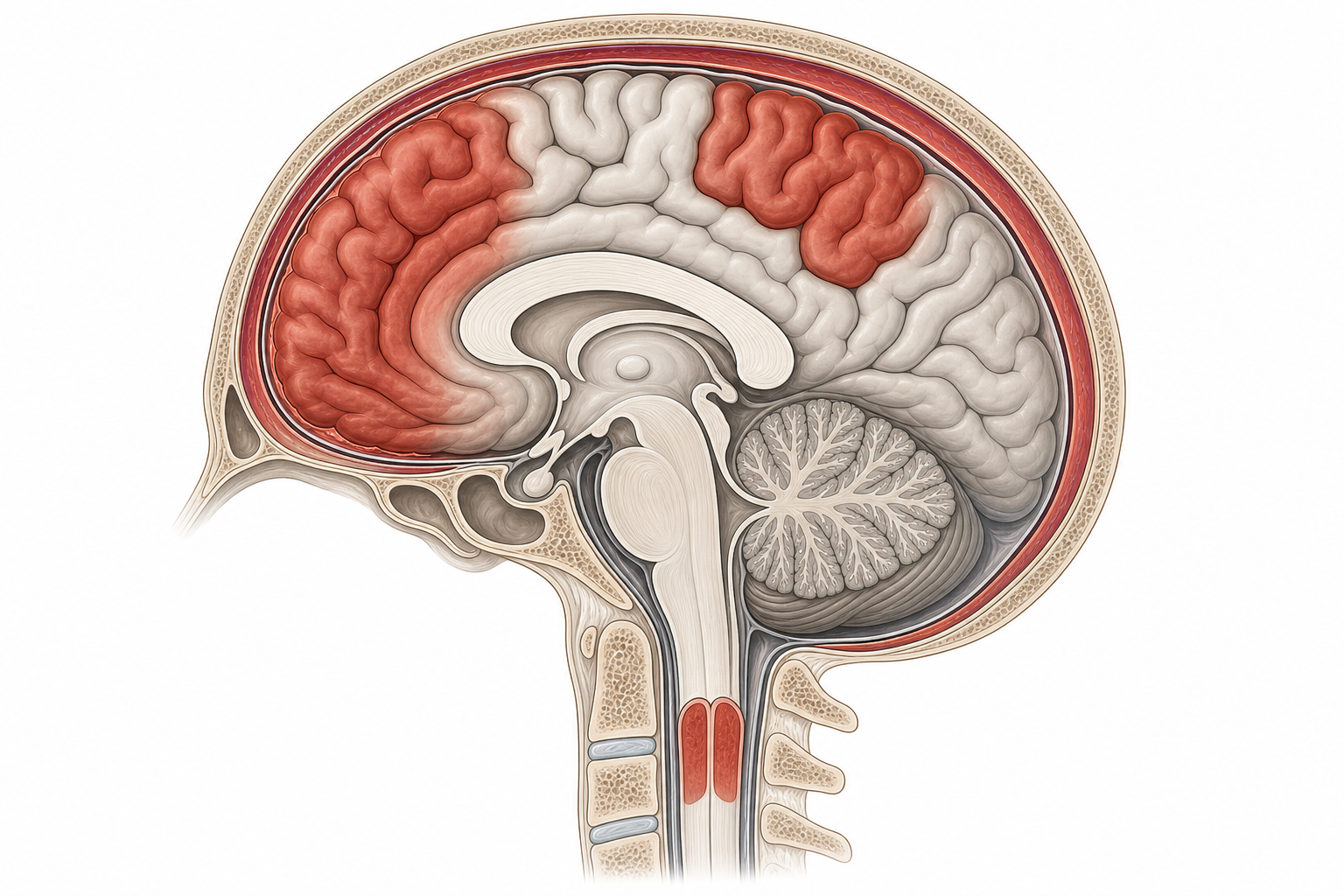
Yes, and it has a name. The clinical term is neurosyphilis, and it refers to what happens when Treponema pallidum invades the central nervous system. The CDC notes that neurologic complications can occur at any stage of syphilis, although the most dramatic psychiatric presentations (often grouped under the historical term general paresis of the insane) tend to appear 10 to 30 years after the original infection.
What does that actually look like in a person? The symptom list reads less like a single illness and more like a slow inversion of someone's personality:
- Memory loss and confusion that gets worse over months, not days
- Paranoia, grandiosity, or sudden irritability without an obvious cause
- Visual or auditory hallucinations
- Tremor, gait changes, problems with coordination
- Argyll Robertson pupils, a pupil reflex sign clinicians used to learn before penicillin made the diagnosis rare
- Eventually, dementia and physical wasting
In a pre-antibiotic era, a person with late-stage neurosyphilis who happened to be a head of state would have looked, to everyone around them, like someone who simply lost their mind. The infection was invisible. The collapse was not.
The Royal Case Files
It is important to be honest here. None of the historical figures below were ever clinically confirmed to have syphilis. The diagnoses are retrospective, made by historians reading symptom descriptions, court records, and (in some cases) bone analysis. Reasonable scholars still disagree. With that caveat in place, here is what the record suggests:
- Henry VIII of England (1491 to 1547). The hypothesis that Henry's reproductive struggles, leg ulcers, and late-life behavioral changes were syphilitic was first floated in the 19th century and has been argued and re-argued ever since. The opposing camp favors type 2 diabetes, traumatic brain injury, or Kell antigen incompatibility as more parsimonious explanations.
- Ivan the Terrible (1530 to 1584). Forensic examination of his remains showed unusually high mercury levels, which would fit with syphilis treatment of the era. His documented rage episodes, including beating his own son to death, sit comfortably within the neurosyphilis symptom range. Other historians point out that his reign also included plausible non-medical reasons for paranoia and violence.
- Friedrich Nietzsche (1844 to 1900). The traditional account has him contracting syphilis as a young man and collapsing into catatonia in 1889 at age 44. More recent reviews have suggested frontotemporal dementia or a hereditary stroke disorder instead. The case is genuinely unresolved.
- Napoleon Bonaparte (1769 to 1821). Syphilis rumors trailed him for centuries, partly because mercury treatments of the time would themselves cause neurological damage. Whether he actually had the underlying infection is contested.
What this collection of cases really shows is not that all these men had syphilis. It is that for several hundred years, neurosyphilis was common enough among the powerful that looking like Henry VIII in his last years was a recognizable clinical pattern.
The historical fascination with syphilis among royalty can make it feel like a closed chapter. It is not. The same bacterium, the same multi-stage progression, and the same risk of late neurological damage all still exist. The difference now is that a blood test and a single antibiotic shot can end the disease cleanly at the early stages, if it is caught.
So did syphilis really drive kings insane?
Probably, in some cases. Late-stage neurosyphilis can cause hallucinations, paranoia, personality change, and dementia, and the symptoms described in several historical rulers fit that pattern. None of these diagnoses are confirmed, because antemortem testing did not exist. What we can say with confidence is that the same disease still exists, still progresses the same way when untreated, and is fully curable today if caught early.
How Untreated Syphilis Reaches the Brain
The infection moves in distinct stages, each with its own window for treatment:
- Primary syphilis (about 3 weeks after exposure). A single firm, painless sore (a chancre) appears at the site where the bacterium entered the body. It heals on its own in a few weeks. The infection does not.
- Secondary syphilis (weeks to months later). A non-itchy rash on the palms and soles, swollen lymph nodes, low-grade fever, fatigue, and sometimes patchy hair loss. These symptoms also resolve without treatment, which is part of why the infection has historically been so easy to ignore.
- Latent syphilis (months to years). No symptoms at all. The bacterium is still alive and still detectable in the bloodstream, but the person feels fine. This stage can last decades.
- Tertiary syphilis (years to decades later). Damage to the heart, blood vessels, bones, and central nervous system. Neurosyphilis is the form most associated with the psychiatric symptoms above.
Crucially, neurologic invasion does not have to wait for stage four. The bacterium can reach the nervous system within months of the original infection in some patients, and people with HIV co-infection are at elevated risk of early neurosyphilis. That is one reason syphilis testing co-occurs with HIV care in most public-health settings.
This article is published by stdrapidtestkits.com, which sells at-home STI testing kits. We recommend products based on fit for the reader's concern, not commercial benefit.
Why Historical Records Are So Hard to Read
Retrospective diagnosis faces a stubborn problem: the infection was usually invisible while the person was alive, and the cure was almost as damaging as the disease.
- The infection is silent for most of its course. A king with latent syphilis would have no symptoms his court could record. The dramatic late-stage neurologic decline could be a decade or more downstream of a youthful exposure that nobody remembered.
- Mercury was the standard treatment for 400 years. The phrase "a night with Venus, a lifetime with Mercury" comes from this. Mercury is itself a potent neurotoxin. It causes tremor, mood swings, gum disease, tooth loss, and cognitive impairment. So when a 17th-century court records a king becoming erratic and physically deteriorated, it is often impossible to tell whether the syphilis or the cure was doing the damage.
- Royal physicians had every incentive to rename what they saw. Syphilis carried enormous shame. Records were edited, diagnoses softened, and the truth tucked into private correspondence rather than official documents. Some of what we now read as ambiguity is the result of careful narrative management by people who were paid to protect a dynasty.
The honest answer to did Henry VIII actually have syphilis is therefore: maybe, and we will likely never know for certain.
From Mercury to Penicillin
Treatment history is its own quiet horror show. For 400 years, syphilis was effectively untreatable, and the attempted cures often killed people faster than the disease.
- Mercury rubs, vapor baths, and pills. The dominant treatment from the 1500s through the early 1900s. Patients drooled, lost teeth, and suffered neurological damage from the mercury itself.
- Guaiacum wood from the Americas. Marketed as a cure-all, mostly placebo.
- Arsenic compounds (Salvarsan, 1910). The first targeted antimicrobial drug for syphilis. Effective, but toxic and difficult to administer.
- Malaria therapy (1917 onward). Julius Wagner-Jauregg won the 1927 Nobel Prize in Medicine for inducing malarial fevers in neurosyphilis patients to kill the bacterium with heat. It worked, sometimes. It also killed patients.
- Penicillin (1940s). The first treatment that was simultaneously effective, cheap, and safe. It changed everything.
Today, per the CDC's STI Treatment Guidelines, primary, secondary, and early latent syphilis are treated with a single intramuscular shot of benzathine penicillin G. Late latent or tertiary syphilis takes three weekly shots. Neurosyphilis is treated with IV penicillin over 10 to 14 days and can halt the damage, though already-destroyed nervous tissue does not regenerate.
Syphilis in 2026, by the Numbers
The data tells a worse story than most people expect.
- The CDC reported over 207,000 cases of syphilis in the United States in 2022, the highest annual count since 1950.
- Congenital syphilis cases have risen more than tenfold since 2012, according to CDC surveillance data, with most states now seeing year-over-year increases.
- Neurosyphilis cases are rising in parallel, especially among people with HIV co-infection and among older adults whose untreated latent infections are reaching the late stages decades after the original exposure.
- The World Health Organization's syphilis fact sheet estimates 8 million new adult infections globally in 2022.
What changed? Several things at once. Public-health budgets for STI surveillance shrank through the 2010s. Dating-app exposure patterns shifted faster than testing access. Pregnancy-care testing gaps widened in lower-resource settings. And syphilis quietly stopped being something anyone was scared of, which removed exactly the urgency that had kept it suppressed since the 1950s.
The result is that a disease everyone associates with the past is now growing in the United States at a rate that would have alarmed mid-century public-health officials.
Syphilis cases continue to rise in the United States, and congenital syphilis cases have increased dramatically in recent years. Screening and timely treatment are essential to reverse this trend.
What This Means If You Are Sexually Active Today
The practical lesson from all of this is unromantic but clear: the only reliable way to catch syphilis early is to test for it. The disease is specifically designed (in evolutionary terms) to be missable. The chancre is painless, often hidden, and resolves on its own. The secondary rash gets blamed on detergent, on stress, on a viral illness. Latent syphilis has no symptoms at all.
Per the CDC's STI Treatment Guidelines and screening recommendations, the people most likely to benefit from regular syphilis testing are:
- Anyone with a new partner or multiple partners in the past 12 months
- Anyone who is pregnant or planning a pregnancy
- Anyone who has had a different STI diagnosed recently
- Anyone with HIV, regardless of symptoms
- Anyone whose partner has been diagnosed with syphilis or any other STI
- Men who have sex with men, at least annually and more frequently if exposure risk is higher
The reassuring half of this story is that early-stage syphilis is curable. A blood test followed by a single intramuscular penicillin shot, and the bacterium is gone. The brain damage scenario in the historical figures above is a product of the disease running for decades without treatment.

Practical Next Steps
If reading this has nudged you toward action, the steps are short:
- If you have had a recent possible exposure, wait at least three weeks before testing for syphilis specifically. Antibodies need time to develop and a too-early test can return a false negative.
- If you have any current symptom that worries you (a painless sore, a rash on the palms or soles, unexplained mouth or genital ulcers, persistent fatigue), see a clinician now rather than waiting for an at-home result.
- If you are pregnant or planning a pregnancy, ask specifically about syphilis screening at your first prenatal visit. Routine prenatal testing has been mandatory in most U.S. states for decades, but coverage gaps still exist.
- If you test positive, treatment is straightforward and confidential. Penicillin works. The trickier part is partner notification, which most clinics can help with through anonymous tools.
None of this requires you to think about Henry VIII. It is just that he is one of the more memorable arguments for taking a 15-minute test seriously.
FAQs
- Can syphilis really cause psychosis?
- Yes. Untreated syphilis can invade the central nervous system, which is called neurosyphilis. The condition can cause hallucinations, paranoia, personality change, memory loss, and dementia. Most cases of dramatic psychiatric symptoms appear 10 to 30 years after the original infection.
- Did Henry VIII actually have syphilis?
- Historians have debated this for almost two centuries. His late-life symptoms are consistent with late-stage syphilis, but they are also consistent with diabetes, traumatic brain injury, and other conditions. There is no antemortem test result to confirm or refute it. The honest answer is that we will likely never know.
- How long can syphilis stay in the body without symptoms?
- Decades. The latent stage of syphilis has no symptoms at all but the infection remains active in the bloodstream and continues to be detectable by serologic testing. Late complications including neurosyphilis can appear 10 to 30 years after the original infection.
- Is syphilis still common today?
- Yes, and the trajectory is upward. U.S. syphilis cases hit their highest level since 1950 in 2022, and case counts have climbed every year for more than a decade. Congenital syphilis (passed from a pregnant patient to their baby) has risen most sharply of all.
- What are the earliest symptoms of syphilis?
- A single, painless sore (chancre) at the site of infection, appearing about three weeks after exposure. It heals on its own in a few weeks even without treatment. Later signs include a rash on the palms and soles, swollen lymph nodes, fatigue, and sometimes patchy hair loss.
- Can early-stage syphilis be cured?
- Yes. Primary, secondary, and early latent syphilis are cured with a single intramuscular shot of benzathine penicillin G. Later stages require longer courses, and neurosyphilis is treated with IV penicillin for 10 to 14 days. Existing nervous-system damage does not reverse, which is why early testing matters.
- How accurate is an at-home syphilis test?
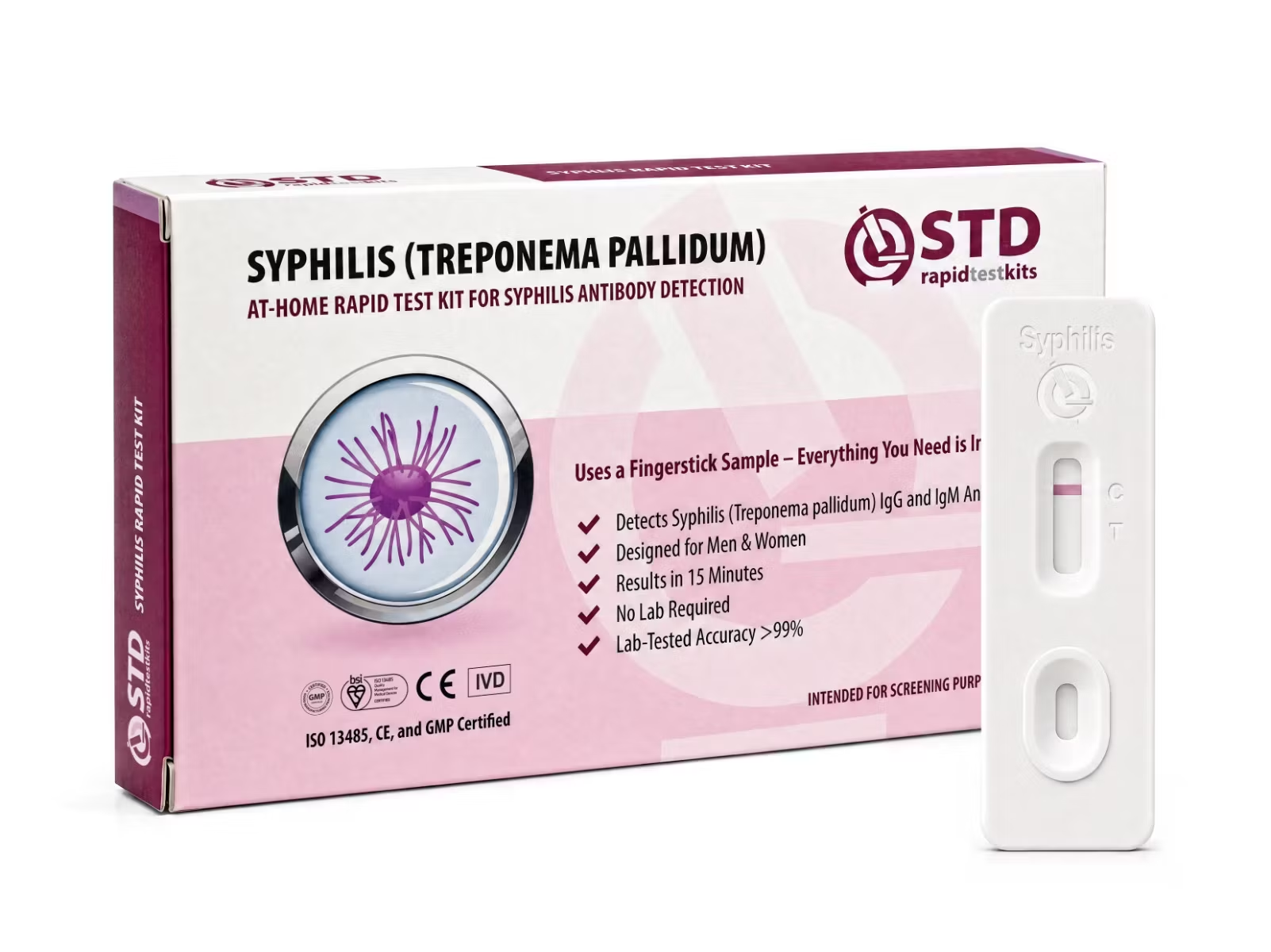
- At-home rapid syphilis tests are lateral-flow antibody tests, similar in chemistry to other rapid antibody tests. They are most reliable from about three weeks after a possible exposure onward. A positive result should be confirmed with a clinic-administered RPR or TPPA test, which is the diagnostic standard.
- Can you get syphilis from oral sex?
- Yes. Syphilis can be transmitted through oral, anal, or vaginal contact whenever the infectious sore or rash is in contact with mucous membranes or broken skin. The chancre can appear in the mouth or on the lips after oral transmission.
- U.S. Centers for Disease Control and Prevention. About Syphilis: overview, stages, transmission, and complications including neurosyphilis.
- U.S. Centers for Disease Control and Prevention. Sexually Transmitted Infections Surveillance, U.S. annual case data for syphilis and congenital syphilis.
- U.S. Centers for Disease Control and Prevention. STI Treatment Guidelines: screening recommendations and penicillin treatment protocols for primary, secondary, latent, and neurosyphilis.
- World Health Organization. Syphilis fact sheet, including global incidence estimates and congenital syphilis burden.
