UTI or Chlamydia? Why Delaware Women Get Misdiagnosed
Burning urination, pelvic pressure, the urge to pee twenty minutes after you just went: classic UTI symptoms, right? Often, yes. But for many women, those same symptoms turn out to be chlamydia, and a standard urine dipstick at urgent care will not catch it. Here is why misdiagnosis happens, what providers miss, and how to make sure you get the right test when something keeps feeling off.




- Most women with chlamydia have no symptoms or only mild ones (CDC), which is why so many infections are caught only when complications begin.
- A standard urine dipstick screens for UTI bacteria but does not detect chlamydia. The same urine sample can run a chlamydia NAAT, but only if a provider specifically orders it.
Published: December 2025 | Last updated: April 2026 | Editorial review and quality control: Martina N.
Most women know what a UTI feels like: burning when you pee, pelvic pressure, the urge to go again twenty minutes after you just went. When those symptoms hit, the urgent-care reflex takes over. You drop a urine sample in a plastic cup, leave with a five-day antibiotic prescription, and assume that is the end of it.
Sometimes it is. But sometimes the burning is not a urinary tract infection at all. It is chlamydia, the most common reportable bacterial STD in the United States, and the symptoms can look almost identical from the outside. The standard urine dipstick at urgent care does not test for it. Many providers do not ask. And so a treatable infection can sit in the body unchecked, sometimes for months, sometimes long enough to do permanent damage to the reproductive tract.
This piece exists because that gap, between what gets tested and what is actually causing the symptoms, is wider than most people realize. It is especially wide in Delaware, where chlamydia rates run consistently high and screening protocols are uneven, and in rural counties across the country where the same access pressures play out. We will walk through how the misdiagnosis happens, what to ask for, and how to test on your own when the system is moving too fast to listen.
Can chlamydia really feel like a UTI?
Yes. Burning urination, frequent urges to pee, and pelvic pressure can come from either a urinary tract infection or chlamydia, and a standard urine dipstick does not test for chlamydia. If your “UTI” keeps coming back, your symptoms persist after antibiotics, or you have any unusual vaginal discharge, ask for a chlamydia test (or screen at home with a chlamydia-specific kit). Most chlamydia in women causes no symptoms or only mild ones, so testing is the only reliable way to know.
Key Takeaways
- Most women with chlamydia have no symptoms or only mild ones (CDC), which is why so many infections are caught only when complications begin.
- A standard urine dipstick screens for UTI bacteria but does not detect chlamydia. The same urine sample can run a chlamydia NAAT, but only if a provider specifically orders it.
This article is published by stdrapidtestkits.com, which sells at-home STI testing kits. We recommend products based on whether they fit the reader's actual concern, not on commercial benefit. Where a clinic-administered test is the right tool, we say so plainly.
It Starts with a Burn: Why the Symptoms Blur
Chlamydia and UTIs both inflame the urogenital tract, so the early symptoms overlap heavily. Burning during urination, the constant urge to pee, lower-pelvic pressure: all of that fits either diagnosis. The differences exist, but they are subtle, and they are easy to miss in a ten-minute clinic visit.
The single biggest source of confusion is silence. According to the CDC's chlamydia overview, most women with chlamydia have no symptoms at all. When symptoms do appear, they are often mild enough to pass for irritation, hormonal shifts, or a routine UTI. UTIs, by contrast, almost always announce themselves loudly. So when something burns, the working assumption is bladder infection, and chlamydia hides under that assumption.
The clues that point toward chlamydia rather than a UTI tend to be: vaginal discharge or a different-than-usual smell, pain during sex, spotting between periods, or pelvic pain that sits deeper than the bladder. None of these are perfectly diagnostic. The NHS chlamydia overview notes that the infection can also cause lower-abdominal pain or pain on urination identical to a UTI, which is exactly the trap.
| Symptom | Typical in UTI | Typical in Chlamydia |
|---|---|---|
| Burning with urination | Very common | Common |
| Frequent urgency | Very common | Sometimes |
| Pelvic or lower-abdominal pain | Occasional | Common |
| Vaginal discharge or odor change | Rare | Common |
| Pain during sex | Rare | Common |
| Bleeding between periods | Not typical | Possible |
| No symptoms at all | Rare | Most cases |
Why Delaware (and Rural Counties Across the U.S.) Get Hit Hardest
Delaware ranks consistently among the higher-rate states for reported chlamydia per capita, with disproportionately high rates among women ages 15 to 29. State surveillance reports also show that screening uptake in that same age group is uneven: many sexually active young women only get tested when they are pregnant or when they specifically ask. In Wilmington, Dover, Newark, and across Sussex and Kent counties, the pattern shows up the same way. A patient comes in with burning urination, gets a urine dipstick, leaves with antibiotics, and never finds out whether chlamydia was the cause.
The same access squeeze plays out beyond Delaware. Studies of rural healthcare access have consistently found that patients outside urban centers are less likely to receive STI screening during visits for urogenital symptoms, even when clinical indicators are present. STI testing supplies are thinner, lab turnaround is slower, and providers are stretched between emergency presentations and chronic care. The result is the same triage shortcut: assume UTI unless something dramatic forces the question.
Stigma compounds the access gap. Many women never push back on a UTI diagnosis because they do not want to seem like they are asking for an STD test. They write off the recurrent burning as “just another bladder infection” and move on, until it gets worse, or until a fertility workup years later reveals scarring no one ever explained.
In rural counties, providers are stretched between emergency presentations and chronic care. The reflex is to assume UTI unless something dramatic forces the question. Many patients leave without ever knowing whether chlamydia was the cause, and the infection keeps spreading unchecked while “UTI” treatments rotate through different antibiotics.
The Pee-Cup Problem: Why Standard UTI Tests Miss Chlamydia
The plastic cup at urgent care is the cornerstone of the misdiagnosis pattern. A urine dipstick checks for nitrites, leukocyte esterase, and a handful of indicators that suggest bacterial inflammation in the urinary tract. It is fast, cheap, and useful for ruling in or out a typical UTI. It does not look for chlamydia. It cannot. The chemistry is for a different question.
To detect chlamydia, a provider has to specifically order a nucleic acid amplification test (NAAT), which finds bacterial DNA in either a urine sample or a self-collected vaginal swab. The NAAT is the lab gold standard for chlamydia detection, and it can run on the same urine sample you already gave for the UTI test. The catch: it only happens if the provider checks that box. Many do not, especially when the visit is presumed to be a routine UTI.
So the diagnostic blind spot is not a lab limitation, it is a workflow problem. Both the sample and the right test exist; the gap is that most UTI-presumed visits never prompt the provider to add a chlamydia NAAT order, even though the same urine sample could carry both. MedlinePlus's chlamydia test guidance describes both urine and swab NAAT testing as routine; the gap is in the visit, not in the science.
| Test type | Detects chlamydia? | What it is for |
|---|---|---|
| Urine dipstick (in-clinic) | No | Quick UTI screening only |
| Standard urinalysis (lab) | No | Checks white blood cells, nitrites, bacteria, not STIs |
| NAAT (urine or vaginal swab, lab) | Yes | Gold-standard lab detection of chlamydia DNA |
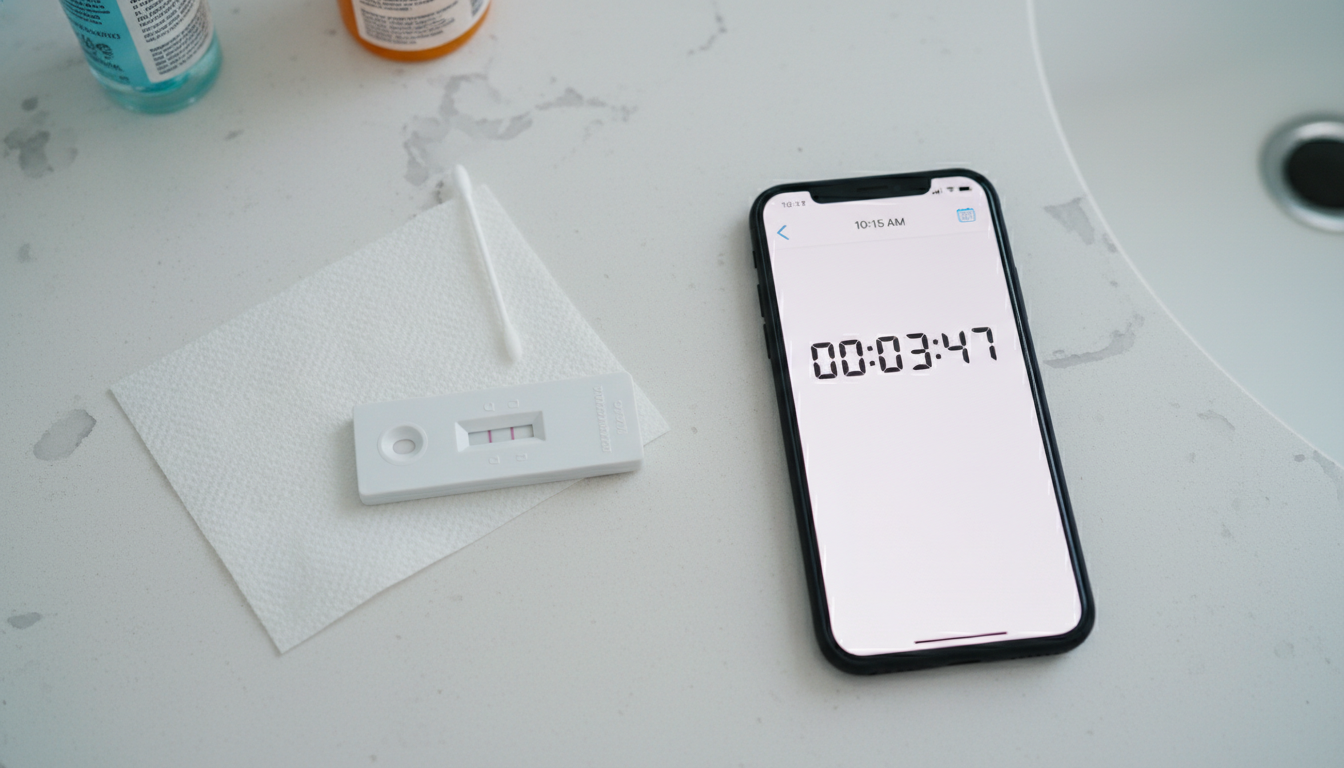
| Lateral-flow rapid swab (at home) | Yes (screening grade) | Self-collected vaginal swab; ~15-minute readout; positives are worth confirming with a lab NAAT |
When “It's Just a UTI” Costs More Than Time
The everyday pattern looks like this. A patient comes in with burning urination and gets a UTI diagnosis on a quick urine strip. Two weeks later the symptoms are back. Another visit, another antibiotic prescription, sometimes a different drug. By the third or fourth round, the patient starts searching online for “UTI keeps coming back STD?” and learns chlamydia can present this way. They go back, ask for a chlamydia test, and it is positive.
The lost time is not just inconvenient. Several of the antibiotics commonly prescribed for uncomplicated UTIs (nitrofurantoin, fosfomycin) do not treat chlamydia. So the “UTI treatment” relieves nothing because there was no UTI, and the chlamydia keeps spreading silently. Chlamydia is also frequently passed between partners during this delay, which can mean re-infection cycles even after the original case is finally caught.
For women who eventually face a fertility workup, the consequences become tangible. CDC guidance notes that untreated chlamydia in women can cause pelvic inflammatory disease (PID), which can scar the fallopian tubes and lead to chronic pelvic pain, ectopic pregnancy, or infertility. Catching the infection early prevents almost all of this. Catching it after months of misdiagnosis is harder.
Symptoms That Should Trigger a Chlamydia Test (Even If a UTI Is Possible)
Not every UTI is chlamydia, and not every chlamydia case shows up with classic STI symptoms. But the patterns below should always trigger a chlamydia-specific test, on top of (or instead of) a UTI workup:
- Recurring “UTIs” in a sexually active woman, especially under age 30, with no clear bacterial cause on culture.
- Burning urination plus any abnormal vaginal discharge or odor change.
- Pain during sex, or bleeding after sex, often misattributed to dryness, stress, or hormonal shifts.
- A negative UTI culture but persistent burning or pelvic pressure.
- “UTIs” that do not respond to standard antibiotics, or that come back within a couple of weeks of finishing a course.
- Lower-back pain combined with urinary symptoms that do not match a typical bladder infection.
For any of these, a basic urine strip is not enough. CDC screening recommendations already include annual chlamydia screening for sexually active women under 25 and for older women at increased risk; symptoms that fit any of the patterns above warrant testing regardless of age.
What Untreated Chlamydia Does to Your Body
Caught early, chlamydia is unfussy. A short course of antibiotics (most commonly doxycycline for seven days, per current treatment guidelines) clears the infection in the vast majority of cases. Caught late, the picture changes. Untreated chlamydia can ascend from the cervix into the uterus and fallopian tubes, where it triggers pelvic inflammatory disease.
The CDC notes that untreated chlamydia can cause pelvic inflammatory disease, which may lead to chronic pelvic pain, infertility, and ectopic pregnancy. PID is a leading driver of tubal-factor infertility in the U.S., and once the scarring is done, antibiotics cannot reverse it.
What makes the progression so sneaky is that you usually cannot feel any of it. Periods stay regular. There is no fever, no dramatic discharge. The only flag might be a recurring “UTI” that never quite went away. That is why standard screening exists, and why a UTI workup that ignores STIs is missing the more dangerous half of the picture.
Most people who have chlamydia have no symptoms. If you do have symptoms, they may not appear until several weeks after you have sex with an infected partner. Even when chlamydia causes no symptoms, it can damage your reproductive system.
How to Ask for the Right Test (Without It Being Awkward)
The most reliable way to avoid a chlamydia miss is to ask directly. The script does not have to be elaborate, and one sentence is enough. Most providers will say yes once you bring it up, because the chlamydia NAAT runs off the same urine sample you already provided, with no extra collection step. If a provider seems hesitant, you are entitled to insist; if you are within the U.S. screening threshold for routine annual testing and you have urinary symptoms, the request fits standard guidance, not unusual practice.
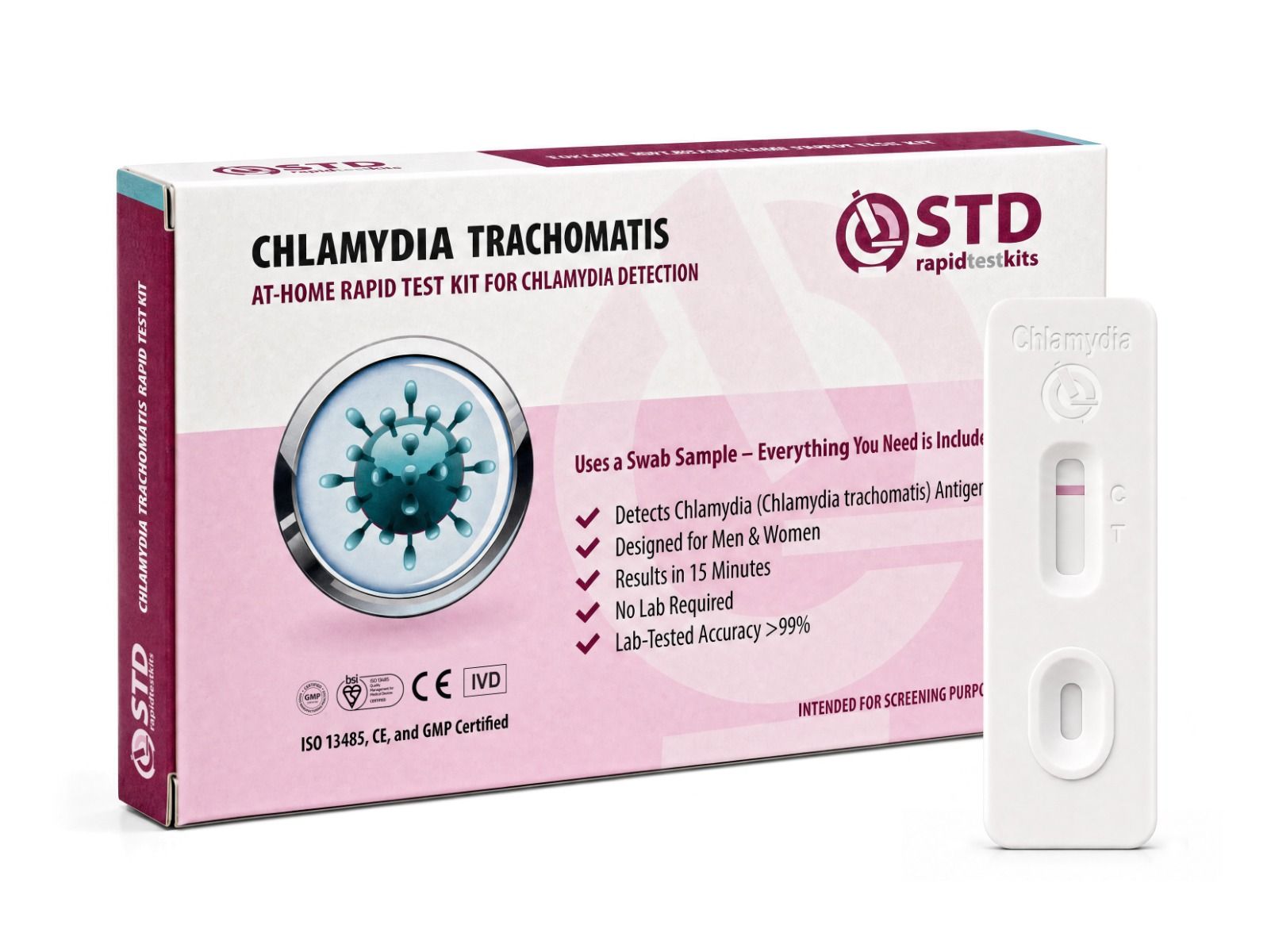
If a clinic visit is not realistic in the next few days, a self-collected swab at home is a reasonable bridge. Our at-home chlamydia kit is a lateral-flow rapid test using a vaginal self-swab. It is screening grade, not a lab NAAT, which means a positive should be confirmed clinically and a negative with stubborn symptoms is still worth following up on. But it gives you data fast, in private, while you decide whether to push for clinic testing.
“I'm having symptoms that look like a UTI, but I read that chlamydia can cause similar symptoms. Can you add a chlamydia test to my urine sample?”
That single ask is enough to shift the entire direction of the visit. No apology, no over-explaining, no need to disclose anything about your sex life. The provider checks one extra box on the lab order and the same urine sample carries both tests.
At-Home Testing as a Backup Plan
The thing at-home testing does best is remove friction. If you are in a small Delaware town or a rural zip code where the nearest clinic is hours away, or if a previous provider dismissed your concern, the question shifts from “can I get tested” to “when do I want to know.”
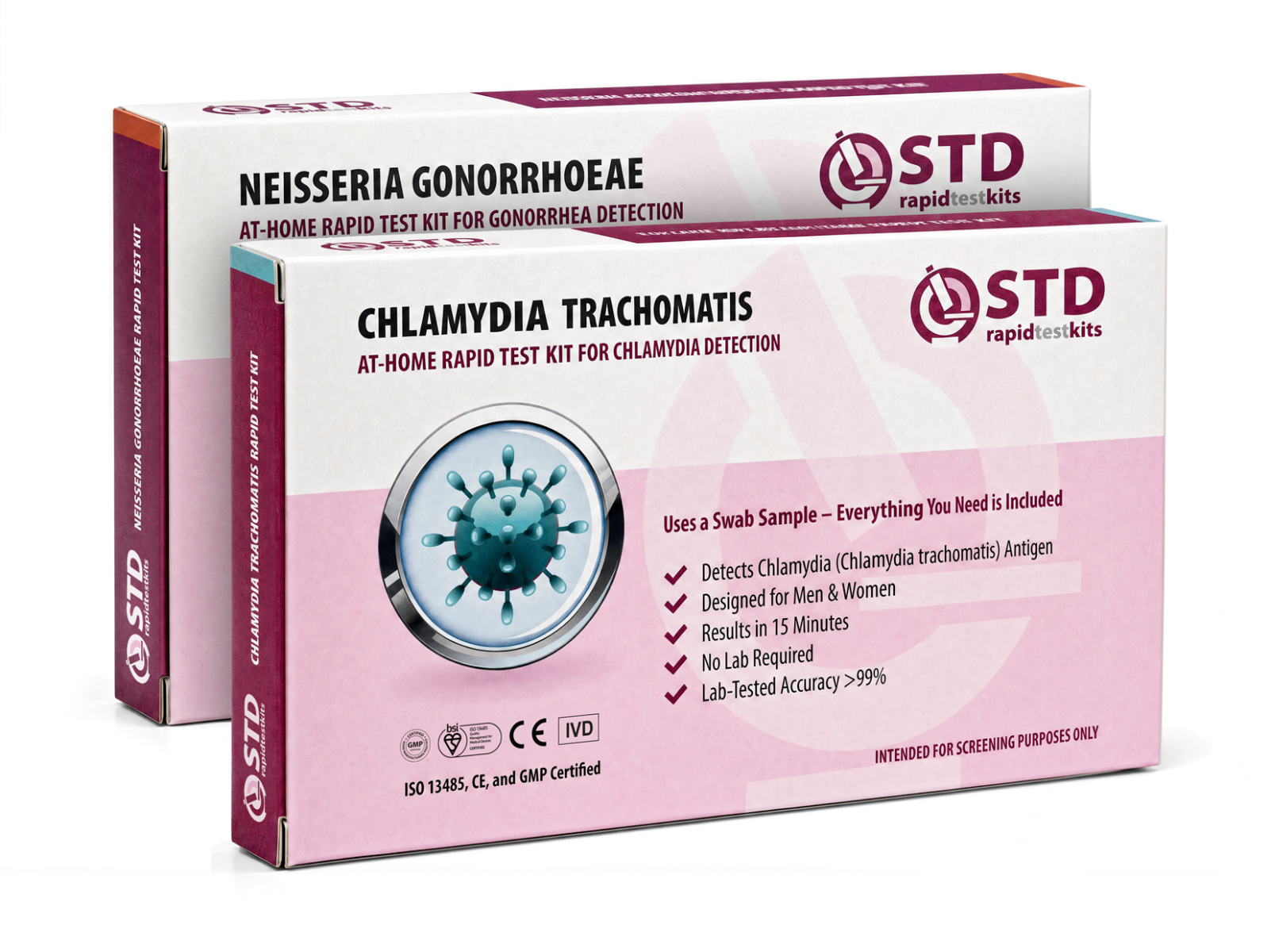
For UTI-like symptoms specifically, a chlamydia-only swab covers the most common missed infection. If you also want to rule out gonorrhea (which can present similarly and frequently co-occurs with chlamydia), a chlamydia-plus-gonorrhea combo kit covers both with one swab and one cassette. For a fuller screen after a new partner or after recurring symptoms across multiple body systems, a multi-STI panel covers the broader bloodwork (HIV, syphilis, hepatitis) on top of the swab tests.
What at-home rapid tests do not replace is a clinic visit when something is clearly clinically wrong. Severe pelvic pain, fever, blood in the urine, or symptoms that escalate quickly need in-person evaluation, not a screening cassette. The home test is a useful first move when the situation is uncertain and clinic access is slow, not a substitute for clinical care when the picture is alarming.
When Retesting Makes Sense (Even After Treatment)
Chlamydia retesting is not paranoia. The CDC recommends retesting roughly three months after treatment, regardless of whether the patient's partner was also treated, because reinfection is common. Reinfection happens for ordinary reasons: a partner who never got the message and was not treated, sex resumed before the antibiotic course finished, or a brand-new exposure.
Retest in particular if you fit any of these cases:
- You were treated for a “UTI” without an STI test, and your symptoms either persist or returned.
- You took antibiotics for chlamydia (or for what you assumed was chlamydia) but never had a follow-up test to confirm clearance.
- You had unprotected sex with a new partner since treatment, and you do not know their testing status.
- You tested very early after a possible exposure (within the first week) and want to confirm a negative result outside the window.
The retest can use the same kind of NAAT or rapid test as the original. The point is documenting that the infection is gone, not just that the symptoms went quiet. Because chlamydia is so often asymptomatic, “feeling better” is not a reliable end point.

Take Control on Your Terms
If you have been treated for a UTI but something still feels off, your instinct is worth trusting. Recurring burning, persistent pelvic pressure, or a sense that the antibiotics are not clearing the symptoms are all reasonable triggers to ask for a chlamydia test, and you do not need a doctor's permission to test on your own first. The misdiagnosis pattern that affects Delaware women, rural patients, and anyone who walks into a busy urgent care is fixable, but it usually gets fixed by the patient asking the question, not by the system catching it on its own.
Chlamydia is common, treatable, and reliably detectable. The cost of testing once is small. The cost of leaving it untested for months is large, and it falls on women's reproductive health more than any other group. Whether you take a single chlamydia swab home, run a chlamydia-plus-gonorrhea combo, or move straight to a broader multi-STI panel after a more complicated exposure history, the practical move is the same: stop guessing, get the data, and act on it.
- Targeted screen, single concern: the chlamydia rapid swab covers the infection most commonly missed when a “UTI” turns out to be something else.
- Two-bird coverage: the chlamydia + gonorrhea combo swab catches the two STIs most likely to cause UTI-like symptoms, with one self-collection.
- Comprehensive baseline: the 7-STI multi-panel adds bloodwork (HIV, syphilis, hepatitis B, hepatitis C, herpes) on top of the swab tests, useful after a new partner or unexplained symptoms across multiple body systems.
Across all three, a positive result is worth confirming with a clinical lab NAAT. Severe symptoms (high fever, intense pelvic pain, blood in urine) warrant an in-person workup, not a home cassette.
FAQs
- Can chlamydia really feel exactly like a UTI?
- The early symptoms can be almost identical: burning urination, pelvic pressure, frequent urges to pee. The difference is that a UTI usually announces itself, while chlamydia is silent in most women. The only reliable way to tell them apart is a chlamydia-specific test, since a urine dipstick screens only for UTI bacteria.
- I had a UTI test and it was negative, but it still burns when I pee. What now?
- A negative UTI test plus persistent symptoms is a strong signal to test for chlamydia and gonorrhea. The same urine sample can run a chlamydia NAAT if you ask, and an at-home swab kit can give you a fast screening result while you wait for clinic results.
- How do I ask my doctor for an STD test without it being awkward?
- Try this: “Can you add a chlamydia test to my urine sample, just in case?” That sentence is enough. The NAAT runs off the urine you already gave, so there is no extra collection step, and the request fits standard CDC screening guidance for sexually active women under 25, plus older women with symptoms or risk factors.
- Could I have had chlamydia for months without knowing?
- Yes. Most chlamydia infections in women are asymptomatic, and even symptomatic cases can be mild enough to ignore for weeks or months. The infection can keep spreading and quietly damage the reproductive tract during that time, which is why screening matters even when nothing feels obviously wrong.
- Do all UTI antibiotics also treat chlamydia?
- No. Several first-line UTI drugs (nitrofurantoin, fosfomycin) do not cover chlamydia at all. Some broader-spectrum antibiotics do, but not always at the right dose or duration. If your provider did not specifically treat for chlamydia, do not assume the prescription cleared it; test instead.
- If I'm in a long-term monogamous relationship, can I still have chlamydia?
- Yes. Chlamydia can be present from before the relationship started and stay asymptomatic for a long time. A positive result does not have to mean recent infidelity; it does mean both partners should be treated and retested to avoid bouncing the infection back and forth.
- Can I just use an at-home test instead of going to a clinic?
- An at-home rapid swab is a reasonable first move, especially when clinic access is slow or you want privacy. It is a lateral-flow screening test, not a lab NAAT, so a positive result is worth confirming clinically and a negative with persistent symptoms is still worth a follow-up. Severe symptoms (high fever, intense pelvic pain, blood in urine) need an in-person workup, not a home cassette.
- How often should I test for STIs?
- CDC guidance recommends annual chlamydia and gonorrhea screening for sexually active women under 25, and for older women with new or multiple partners or other risk factors. Beyond that, retest any time symptoms suggest a possible infection, three months after a positive treatment, or after a new partner whose status you do not know.
- U.S. Centers for Disease Control and Prevention. About Chlamydia: symptoms, transmission, complications, and treatment overview, including the asymptomatic-infection pattern in women and PID as a complication.
- U.S. Centers for Disease Control and Prevention. STI screening recommendations, including annual chlamydia and gonorrhea screening for sexually active women under 25.
- World Health Organization. Sexually transmitted infections (STIs) fact sheet, with global prevalence and complications data.
- NHS. Chlamydia overview: symptoms, testing, and treatment guidance for the U.K. patient population.
- MedlinePlus. Chlamydia test: how NAAT-based chlamydia testing works on urine and swab samples.
- U.S. Centers for Disease Control and Prevention. Sexually Transmitted Infections Treatment Guidelines, 2021 (MMWR), including current first-line treatment recommendations for chlamydia.