
Published: November 2025 | Last updated: May 2026 | Editorial review and quality control: Martina N.
When two people end up with the same STD diagnosis, the relief can be loud and the silence around what comes next can be even louder. Disclosure pressure drops. The fear of being judged lifts. But the medical realities of reinfection, asymptomatic shedding, and treatment timing do not dissolve the moment a second positive lab result shows up.
This guide walks through what mutual-positive couples actually need to know: when condoms still earn their place, why retesting after antibiotics matters, and how emotional comfort can quietly substitute for medical caution if you let it. The clinical points are drawn from current CDC and NHS guidance.
Key Takeaways
- Sharing a diagnosis takes the disclosure pressure off, but reinfection, asymptomatic shedding, and rising antibiotic resistance still apply, especially for bacterial STIs and herpes.
- Condoms, periodic retesting, and honest check-ins remain practical tools, especially right after antibiotic treatment or when symptoms shift.
What Changes, and What Doesn't, When You Both Test Positive
The emotional shift after a mutual-positive diagnosis is real. The exhausting calculation of who to tell and when quietly retires. So does the dread of being treated like a risk rather than a partner. That part is genuinely easier when you and the person you are dating share the same lab result.
What does not change is the underlying biology. Some infections, like herpes, do not produce full immunity even after years of carrying the virus. Outbreaks recur. Asymptomatic viral shedding still happens between outbreaks, and a different strain (HSV-1 in one partner, HSV-2 in the other) can cross to a new anatomical site through oral or genital contact, with a fresh wave of symptoms or prodromal sensations (the tingling or burning that signals an outbreak is starting) as the immune system catches up.
For bacterial STIs like chlamydia and gonorrhea, the body builds essentially no protection at all. If treatment was not completed correctly, or if one partner had sex before antibiotics fully cleared the bacteria, the infection cycles back. CDC guidance therefore recommends a follow-up test about three months after chlamydia treatment, since reinfection is the most common reason for persistent symptoms.
Testing positive together starts a new phase rather than closing one, and the rest of this guide breaks down what that phase looks like in practice.
What changes vs. what doesn't
- Emotional relief after a mutual diagnosis is genuine and worth honoring.
- Biology does not shift with that relief. Outbreaks, viral shedding, and bacterial reinfection still apply.
- Condoms, antiviral schedules, and retesting after antibiotic treatment remain part of the routine.
Re-Exposure Risk Across Common STIs
Whether reinfection is realistic between two people who already test positive depends on which infection it is, what treatment looked like, and what kind of immune response each body developed. The table below summarizes the practical risk for each common STI, along with the protective measures that still apply. Treat it as a starting point for the more detailed sections that follow.
| STI | Can You Reinfect Each Other? | Need for Protection | Extra Considerations |
|---|---|---|---|
| Herpes (HSV-1 / HSV-2) | Yes, with different strains or during active shedding | Yes, especially during outbreaks and prodromal symptoms | Daily antivirals reduce frequency and transmission |
| Chlamydia | Yes, if either partner is undertreated | Yes, until both have retested clear | Retest at three months after treatment |
| Gonorrhea | Yes, easily passed back and forth | Yes, until retesting confirms clearance | Antibiotic resistance is rising globally |
| HIV | Yes, with different viral strains or detectable viral loads | Yes, unless both partners are virally suppressed on ART | Sustained viral suppression effectively prevents transmission |
| Syphilis | Yes, after treatment re-exposure remains possible | Yes, until a follow-up blood test confirms clearance | Retest at 6 to 12 weeks after treatment |

Can You Get the Same STD Again From the Same Partner?
Sometimes, yes. The answer depends on the infection, whether treatment cleared it fully, and whether any partial cross-protection developed. With herpes, two partners can carry different types: one might have HSV-1 from oral exposure years earlier, the other HSV-2 acquired more recently. Oral sex between them can introduce a strain to a new anatomical site, with fresh outbreaks as the immune system adapts.
For bacterial infections, the picture is harsher. Chlamydia and gonorrhea generate essentially no protective immunity. If one partner missed antibiotic doses, took medication late, or resumed sex before the recommended waiting period ended, the bacteria cycle back. Repeated chlamydia infection is a known risk factor for pelvic inflammatory disease, ectopic pregnancy, and tubal-factor infertility, which is one reason CDC guidance is firm on retesting at the three-month mark.
Gonorrhea has its own complication: rising antibiotic resistance. Strains that no longer respond to first-line treatment have been documented across the United States and globally, which means a missed treatment cycle can become harder to clear the second time around.
Even when both partners share the same diagnosis, treatment timelines, symptom patterns, and immune responses often differ between two bodies that happen to have the same lab result.
Three patterns drive most repeat infections in mutual-positive couples: missed antibiotic doses, sex resumed before the recommended waiting period ended, and partial clearance left unconfirmed by retesting. With chlamydia in particular, an unconfirmed clearance raises the risk of pelvic inflammatory disease (PID) and tubal-factor infertility, which is why CDC retesting at three months matters.
Immunity After Infection: How STDs Compare
One of the most common assumptions, and one of the most dangerous, is that catching an STI once provides some kind of protection against catching it again. For most STIs, the immune system simply does not respond that way. The table below shows where partial protection does exist (mostly for herpes) and where it does not exist at all.
| STI | Immunity After Infection? | Risk of Reinfection From Same Partner | Testing or Treatment Notes |
|---|---|---|---|
| Chlamydia | No | High, if undertreated or re-exposed | Retest at 3 months post-treatment |
| Gonorrhea | No | High, especially with antibiotic resistance | Retest at 1 to 3 months |
| Herpes (HSV-1 / HSV-2) | Partial | Possible, especially across different strains | Antivirals reduce viral shedding |
| Syphilis | No | Yes, after treatment re-exposure remains possible | Blood-test follow-up at 6 to 12 weeks to confirm clearance |
| Trichomoniasis | No | Yes | Retesting after antibiotics is essential |
stdrapidtestkits.com sells the at-home rapid test kits linked in this article. Recommendations are based on fit-for-purpose for the reader's concern, not commercial benefit.
Emotional Safety vs Physical Risk: Why It Still Feels Complicated
Transmission math is only half the story. For many couples, the harder part of a mutual-positive relationship is emotional. Finding a partner who already understands what it feels like to read that lab result, to cry in a parked car, to type "can you date with herpes" into a search bar at 2 a.m., is genuinely powerful. That kind of recognition is rare.
The risk is that emotional comfort starts to substitute for medical caution. Couples often stop using condoms because it feels like a relief, then experience a new outbreak and quietly start blaming each other before realizing they had never actually talked through retesting, antiviral schedules, or what to do during prodromal symptoms. The relief was real. The conversation it replaced was also necessary.
Once both partners share a diagnosis, the choices about retesting, barriers, and medication still matter, sometimes more than they did before, because each of you is now responsible for protecting someone else who has walked the same road.
Most STI prevention messaging is written for serodiscordant pairs (where one partner tests positive and one does not). Once both partners share a diagnosis, providers often spend less time on the conversation. Periodic check-ins, an agreed retesting schedule, and a clear understanding of when barriers come back into play do most of the work.
Should Mutual-Positive Couples Still Use Protection?
This is one of the most common questions, and the answer is rarely a clean yes or no. Condoms and dental dams reduce the risk of reinfection, outbreak triggering, and co-infection (catching something else entirely). They also slow herpes transmission between people with different HSV types. None of those benefits disappear once both partners test positive.
That said, it is reasonable for some mutual-positive couples to skip barriers some of the time. If you have both completed treatment, retested, and confirmed clear (for bacterial STIs), or if you have both lived with the same chronic viral infection long enough to understand each other's outbreak patterns and triggers, the decision to go without barriers can be informed rather than reckless.
The key is honesty about why the choice is being made. "We both understand the medical facts and accept the residual risk" builds trust. "I am tired of thinking about my STD" tends to backfire when the next outbreak shows up. The first version is a calm, ongoing decision; the second is avoidance dressed up as intimacy.
There is no shame in needing condoms, dental dams, or daily antivirals in a shared-diagnosis relationship. Being in this together can include actively protecting each other, and plenty of mutual-positive couples use barriers for years and report no loss of intimacy.
Use condoms or dental dams while either partner is finishing antibiotics for chlamydia, gonorrhea, or syphilis; during a herpes outbreak or the prodromal symptoms that precede one; if either partner has a different HSV type than the other; and any time a new sexual partner has been involved outside the relationship.
What About New Partners After This Relationship?
Some people stay in a mutual-positive relationship because they are scared no one else will accept their diagnosis. That fear is understandable. It should not be the only reason to stay. If the relationship offers comfort, safety, intimacy, and joy, those are real reasons. If it feels like a closed door, leaving is allowed, and dating after testing positive is something many people do successfully every year.
The skills you build in a mutual-positive relationship transfer well. You have already learned how to bring up an awkward topic clearly, how to set limits without apologizing, and how to ask for what you need. Those are the same skills disclosure conversations require with future partners, regardless of what their status turns out to be.
One concrete suggestion when telling a new partner: speak from your own experience rather than abstract reassurance. Something like, "I have been with someone who shared my diagnosis, and it taught me how to talk about this safely and honestly. I want to give you that same respect."
Disclosure that lands well
- Choose a calm moment before things get physical, not in the middle of intimacy.
- Lead with how you manage the diagnosis (antivirals, regular testing, barrier use), not just the diagnosis itself.
- Offer the partner space to ask questions or read the CDC fact sheet on their own time.
Medication, Retesting, and the Reality Check
Even when both of you are positive for the same condition, you may not be on the same treatment plan. One partner might take daily antiviral suppression for HSV-2; the other might use medication only during outbreaks. One might be religious about retesting after every potential exposure; the other might assume "we are both fine now" and leave it there. These mismatches are normal and worth discussing rather than letting them quietly become resentments.
Alignment on a few specifics goes a long way. Periodic full-panel testing makes sense for any sexually active couple, regardless of shared diagnosis, because new infections (gonorrhea, syphilis, hepatitis) can still appear if either partner has had any contact outside the relationship. After a course of antibiotics for chlamydia or gonorrhea, both partners should retest at the recommended interval (typically 3 to 4 weeks for test-of-cure, and again at 3 months for re-screening) to confirm the infection cleared.
For chronic conditions like herpes or HIV, daily suppressive therapy reduces both symptom frequency and transmission risk. Couples managing HIV who both achieve sustained viral suppression on antiretroviral therapy lower their risk of transmitting the virus to a partner essentially to zero, the principle clinicians refer to as treatment as prevention or U=U (Undetectable equals Untransmittable).
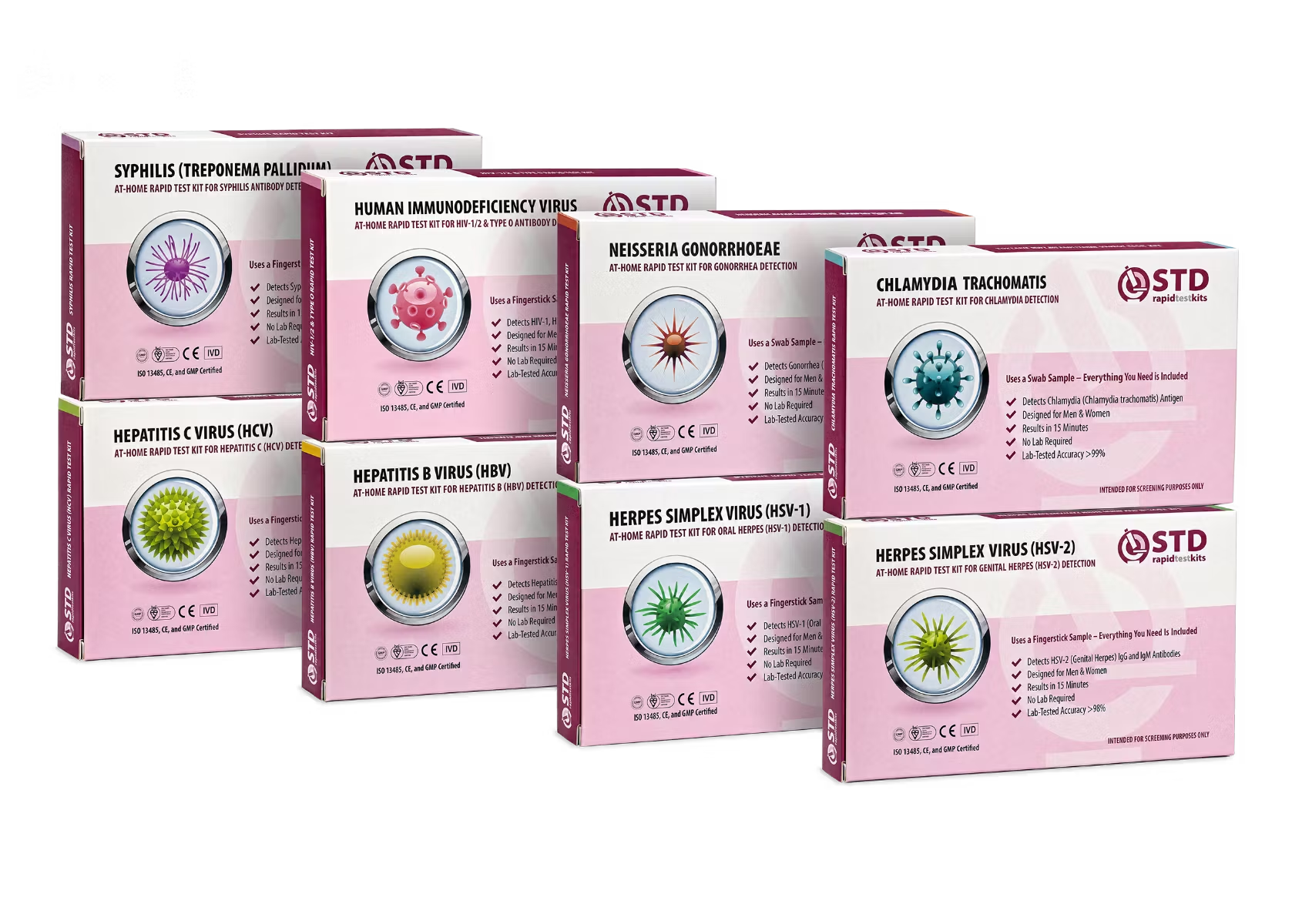
If a new symptom appears, or if one of you is unsure where you stand after treatment, an at-home rapid panel can answer common questions discreetly without scheduling a clinic visit.
For chlamydia and gonorrhea after antibiotics: a test of cure at 3 to 4 weeks, followed by a re-screen at three months. For chronic viral conditions (HSV-2, HIV): a full-panel screen annually, or sooner if symptoms shift or contact happens outside the relationship.
When Sex Feels Emotional Again
For many mutual-positive couples, sex eventually starts to feel like it did before the diagnosis: more spontaneous, more present, more emotionally connected. That return to a settled rhythm is real, but it is not automatic. Trusting your own body again, and trusting your partner's body alongside it, takes time. The timeline is rarely identical for both of you, and the gap between the two is one of the more common sources of friction.
Some people rush back into sex as a way to reclaim a sense of control. Others hesitate longer, watching for prodromal symptoms or feeling weighed down by the diagnosis. Neither approach is wrong; mismatched pacing simply needs naming. "How are you feeling about this tonight?" is a more useful sentence than assuming.
Even between two people who both know the diagnosis, vulnerability still belongs in the bedroom. Aim for supported sex over merely safe sex: sex that acknowledges what both of you have been through and invites each other to set a pace, rather than rushing past the discomfort to prove something is normal.
Practical check-ins for mutual-positive couples
- Ask about prodromal sensations or general energy before sex, not during.
- Agree on a quick word or gesture either of you can use to pause without explanation.
- Revisit barrier use openly every few months, especially around treatment changes or new symptoms.
When Shared Status Becomes a Relationship Strength
The part rarely written down: dating someone who tested positive at the same time you did can unlock an unusual depth of intimacy. Before the relationship is even three months old, you have both been humbled by uncertainty, absorbed stigma, and learned how to ask uncomfortable questions and accept imperfect answers.
Couples who navigate that storm together with humor, communication, and shared boundaries often emerge with a different baseline of trust than couples who never had to do the work. The diagnosis becomes context, not centerpiece. Conversations that used to feel impossible (about bodies, fluids, stigma, fertility, family) now happen quickly and without the long preamble that hides shame.
It can also reshape the sexual dynamic in unexpected directions. When neither partner is hiding anything, exploration tends to feel safer. Mutual-positive couples often report a deeper baseline of trust, more willingness to ask for what they want, and less anxiety about every minor sensation.
A daily anti-herpes medicine can make it less likely to pass the infection on to your sex partner(s).
You Deserve Love That Doesn't Flinch
There is no perfect script for dating someone who shares your diagnosis. There is, however, a workable path that includes honest medical care, ongoing communication, and real intimacy. Mutual-positive relationships sit on the same continuum as every other partnership. Two people happen to know more about each other's bodies than most couples, and that is the only meaningful difference.
Whether you are managing shared outbreaks, post-treatment retesting, or the small awkwardnesses of antiviral schedules and barrier conversations, none of it cancels out love. The diagnosis becomes one of many shared logistics inside a larger relationship. Plenty of mutual-positive couples have walked this road, settled into a rhythm, and built lives that look like every other healthy long-term relationship from the outside.
If you want to confirm post-treatment results or check in on your current status, a discreet at-home rapid test can answer common questions without scheduling a clinic visit. At-home combination STI test kits cover the most common infections and return results in around fifteen minutes, which makes routine retesting a much smaller chore than it used to be.
A workable path forward
- Confirm post-treatment clearance with a retest before changing how you use barriers.
- Agree on a retesting cadence together, annually at minimum and sooner if circumstances change.
- Treat ongoing communication and shared medical care as the foundation, with the diagnosis as one detail among many.
FAQs
- If we both have herpes, can we still pass it to each other?
- Yes, in two ways. If you have different types (one HSV-1, the other HSV-2), oral or genital contact can introduce a strain to a body part that has not seen it before. And even with the same type, asymptomatic viral shedding plus repeated exposure can trigger fresh outbreaks. Daily antiviral medication and barrier use during prodromal symptoms or active sores reduce that risk substantially.
- We both finished chlamydia treatment. Do we still need condoms?
- Yes, until you have both retested and confirmed it cleared. CDC guidance recommends retesting for chlamydia about three months after treatment because reinfection is common. Until that retest is negative, treat each other as potentially still infectious, especially if either of you missed doses or had sex before the antibiotics fully cleared the bacteria.
- How often should mutual-positive couples retest?
- For chlamydia and gonorrhea, target two checkpoints: a test-of-cure around three to four weeks after finishing antibiotics, then a re-screen at three months to catch any reinfection. For chronic viral infections like HSV-2 or HIV, repeat antibody testing for the same condition rarely adds information, but a full-panel screen still makes sense annually or any time symptoms change.
- Does having an STD make you immune to getting it again?
- For most STIs, no. Chlamydia, gonorrhea, syphilis, and trichomoniasis can be reacquired again and again. Herpes provides only partial cross-protection between HSV-1 and HSV-2. HIV does not grant immunity, and superinfection with a different viral strain has been documented. Each new exposure carries its own risk, regardless of past infections.
- Can we catch other STIs while only sleeping with each other?
- A truly closed sexual relationship between two partners who have both tested negative for everything other than the shared infection means new STIs should not appear out of nowhere. If a new infection does turn up, it almost always means a different exposure happened. That is worth a calm conversation supported by retesting, not a panic.
- Is oral sex safe if we share the same STD?
- It depends on the infection. Oral sex can move HSV-1 from mouth to genitals or HSV-2 from genitals to mouth, even between two people who already have herpes of one type. Gonorrhea and chlamydia can also colonize the throat. Barriers (condoms, dental dams) reduce transmission risk. A shared diagnosis covers one infection at one site; everything else still applies.
- We stopped using condoms and now I have symptoms. What is happening?
- Possibilities include reinfection (most likely with bacterial STIs if treatment did not fully clear, or if your partner caught something else), an HSV recurrence triggered by stress or hormonal shifts, or a new condition entirely. Do not blame your partner before testing. Get retested, talk it through, and let the lab results inform the conversation.
- Can a shared diagnosis actually strengthen our relationship?
- Often, yes. Mutual-positive couples frequently report deeper intimacy because they have already cleared the shame hurdle most couples never address. The diagnosis becomes background context rather than a hidden risk. Just be careful about confusing trauma bonding for compatibility; long-term intimacy still needs the usual ingredients of trust, communication, and mutual respect.
How We Sourced This Article: This guide is built from current CDC, NHS, and WHO clinical guidance on STI transmission, retesting cadence, and treatment, then translated into plain-English language for couples making everyday decisions about condoms, antivirals, and follow-up testing. It does not replace a conversation with a clinician.
- U.S. Centers for Disease Control and Prevention. About Genital Herpes. Source for asymptomatic viral shedding, recurrence patterns, and the role of daily suppressive antiviral therapy in lowering transmission risk.
- U.S. Centers for Disease Control and Prevention. About Chlamydia. Source for chlamydia reinfection patterns, three-month retesting guidance, and treatment considerations.
- U.S. Centers for Disease Control and Prevention. About Gonorrhea. Source for gonorrhea reinfection risk and rising antibiotic resistance.
- U.S. Centers for Disease Control and Prevention. HIV Treatment. Source for the U=U principle that an undetectable viral load on antiretroviral therapy means HIV is not transmitted through sex.
- U.S. Centers for Disease Control and Prevention. Getting Tested for STIs. Source for general STI screening cadence and retesting recommendations across populations.
- UK National Health Service. Genital herpes. Plain-language patient guidance on outbreak management, partner communication, and antiviral options.
