Gonorrhea, a widespread sexually transmitted disease (STD), can have devastating health implications if left untreated. This article elucidates the treatment guidelines, risk factors, symptoms, diagnostic procedures, and potential future treatment options for this persistent infection.
10 June 2023
5 min read
3397
What is Gonorrhea?
Gonorrhea is one of the most infamous STDs, caused by the bacterium Neisseria gonorrhoeae. It is one of the most prevalent sexually transmitted infections worldwide and affects both sexes, with the highest rates of infection amongst young adults aged 15-24 years in women and 20-24 years in men.
Those belonging to a higher risk category for acquiring gonorrhea are persons who have sexual exposure with an infected individual, those coming from endemic regions, and individuals who have previous infection. High-risk groups include HIV-positive individuals, sexually promiscuous persons, commercial sex workers, as well as homosexual males.
Infections due to gonococci involve the genital areas followed by the rectum and pharynx. Symptoms vary depending on sex and also on different stages of the disease. Most women usually have an asymptomatic onset. Eventually, females may present symptoms of abnormal vaginal discharge, painful urination, lower abdominal pain, or rectal pain; furthermore, abnormal uterine bleeding, fever, sore throat, and painful intercourse. Common male symptoms include urethral discharge and itching, painful urination, testicular pain, rectal pain, and sore throat.
Diagnosis of Gonorrhea
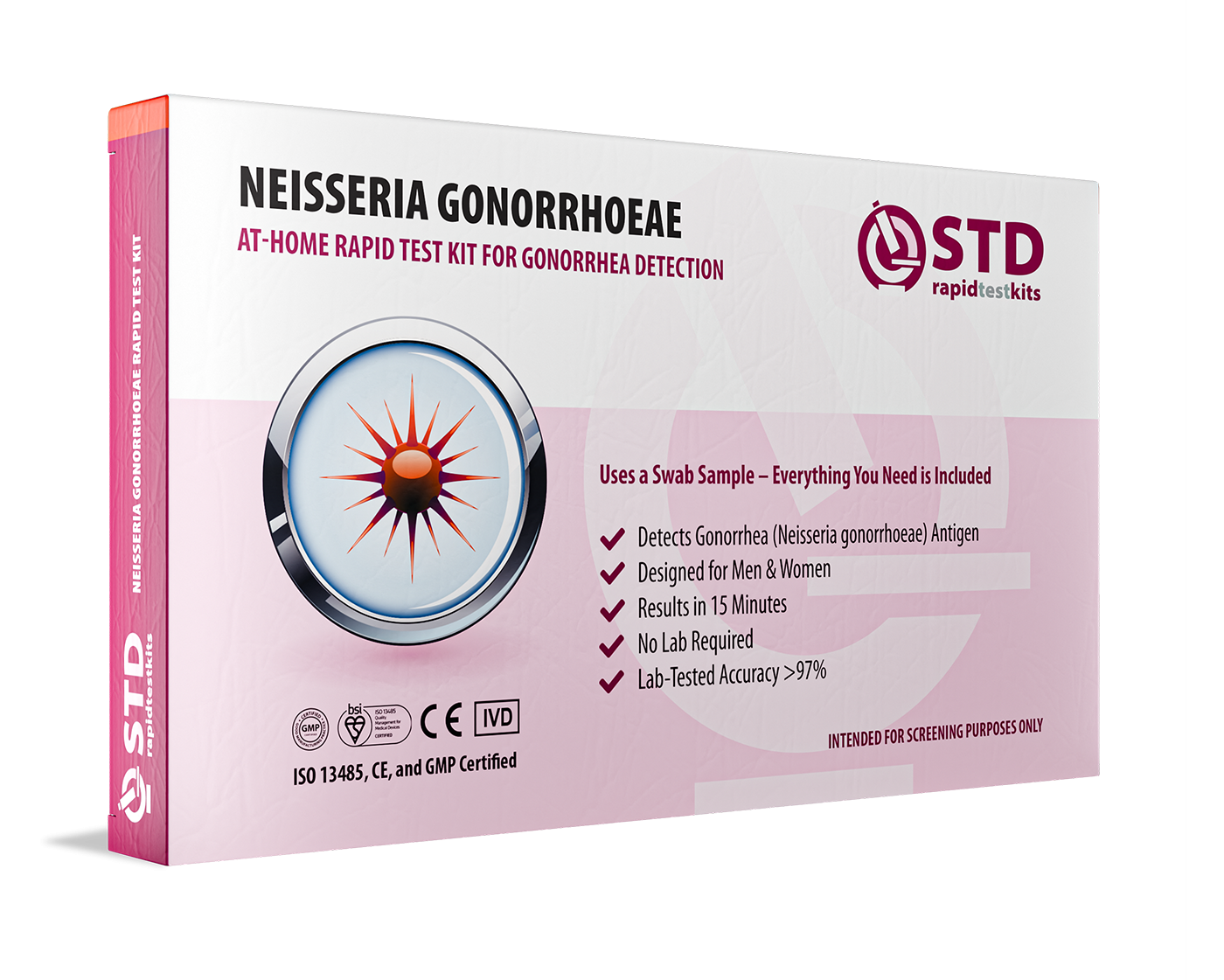
The diagnosis of gonorrhea is made by integrating the clinical manifestation of the patient and the investigative studies. The most important tests involve a urine test, which detects the DNA of the bacteria that causes gonorrhea, and a swab test, which takes a sample from the infected area of the penis, vagina, rectum, or throat and searches for gonorrhea bacteria. In some cases, confirmation of the diagnosis must be done through bacterial culture. Other tests for STDs may be required for those people who already have STDs since they are more prone to gonorrhea infection.
Gonorrhea, in particular the uncomplicated type, wherein the bacterium has not invaded organs beyond the genital system is curable. Treatment should immediately be instituted once the disease has been diagnosed to avoid exacerbation of the disease. Infection caused by gonorrhea is basically treated with antibiotic medication.
An ever-increasing trend of antibiotic resistance has forced the Center for Disease Control and Prevention to recommend dual therapy involving two antibiotic drugs for the treatment of gonorrhea. These two drugs are of different types, acting through different modes of action, aiming not to develop antibiotic resistance, hence improved efficacy of treatment.
Due to high bactericidal levels in the blood, ceftriaxone is considered the current first line antibiotic for gonorrhea treatment. CDC recommends a single dose of 250 mg ceftriaxone given IM along with a single oral dose of 1g of azithromycin. This combination will probably be curative against most uncomplicated infections of the urethra, cervix, and rectum due to gonorrhea.
Challenges Abound: Antibiotic Resistance and Gonorrhea
The era of effective use of antimicrobials against gonorrhea began in the mid-1930s. Over the ensuing decades, however, N. gonorrhoeae developed resistance to various groups of antimicrobials: penicillins, sulphonamides, tetracyclines, macrolides, and fluoroquinolones, and to early generation cephalosporins. This alarming trend of antimicrobial resistance imparts serious global health concerns and challenges the efficacy of current treatments.
Future Treatment Avenues for Gonorrhea
The current dual antibiotic therapy for gonorrhea remains effective, but concerns over the gonorrhea bacterium's evolving resistance remain. Strains in recent years have demonstrated reduced susceptibility to ceftriaxone, a major component of dual therapy. Concomitant resistance to both ceftriaxone and azithromycin—the two antibiotics being used in dual therapy—has also been observed in several regions. Besides, this dual therapy may not be that cost-effective in many resource-limited settings, and thus this treatment approach engenders fears of future failures.
Thus, the hunt for and evaluation of less costly alternatives to monotherapy—a single drug—antibiotics is in the works. These involve the promising antibiotics for future treatment: spectinomycin, injectable carbapenem ertapenem, injectable aminoglycoside gentamicin, and oral fosfomycin. Nevertheless, these alternatives still have drawbacks to consider, including diminished susceptibility to the gonorrhea bacteria and resistance in vitro.
These compounds reduce these problems and implement new approaches. Resulting in a new mechanism of action, the protein synthesis inhibitor, pleuromutilin BC-3781; a boron-containing inhibitor, AN3365; species-specific FabI inhibitors, MUT056399; bacterial topoisomerase inhibitors, VXc-486; and the orally active spiro pyrimidine trione ETX0914. Such anti-microbial compounds have provided in vitro effectiveness against gonorrhea bacterial strains and thus give a ray of hope for better treatment of gonorrhea in the years to come.
Gonorrhea-When Diagnosed, It Is a Serious Health Issue Requiring Forthwith Treatment
Gonorrhea is a serious health issue that requires immediate treatment once diagnosed. Even though the current dual therapy of antibiotics still works effectively, the rapid evolution of resistance by the bacterium gonorrhea requires constant research and development of new treatment options.
It should be stressed that prevention is the golden rule when managing sexually transmitted infections like gonorrhea. Other modalities, such as regular testing, protection during sexual exposure, and open communication about one's sexual health with the partner, could help in containing these infections.
References
Please refer to the originally provided references for more detailed information on gonorrhea, its current treatments, and future prospects.
Piszczek J, St Jean R, Khaliq Y. "Gonorrhea: Treatment update for an increasingly resistant organism." Can Pharm J (Ott). 2015;148(2):82-9. Link
Alirol E, Wi TE, Bala M, Bazzo ML, Chen X-S, Deal C, et al. "Multidrug-resistant gonorrhea: A research and development roadmap to discover new medicines." PLoS Med 14(7): e1002366. Link
Torpy JM, Lynm C, Golub RM. "Gonorrhea." 2013;309(2):196. Link
Unemo M. "Current and future antimicrobial treatment of gonorrhoea - the rapidly evolving Neisseria gonorrhoeae continues to challenge." BMC Infect Dis. 2015; 15:364. Link
"Gonorrhea - 2015 STD Treatment Guidelines." Centers for Disease Control and Prevention. Link








 For Men & Women
 Results in Minutes
 No Lab Needed
 Private & Discreet


