
Published: September 2025 | Last updated: May 2026 | Editorial review and quality control: Martina N.
Is genital burning, itching, or a rash always an STD?
No. Reactions to soap, detergent, lube, latex, spermicide, or shaving usually start within minutes to 24 hours of contact and ease within 48 to 72 hours once you stop the product. Most STIs take 2 days to several weeks to appear and tend to worsen rather than fade. Test when symptoms persist, evolve, or follow a recent unprotected exposure.
Burning, itching, redness, or tiny bumps in the genital area set off the same alarm in almost everyone: did I catch something? Often the answer is no. The skin between your legs is thinner and more porous than the skin on your forearm or scalp, and it reacts quickly to fragrance, dyes, latex, spermicide, friction, and pH shifts. A new body wash, a perfumed laundry pod, a spermicidal or latex condom, a flavored lube, or a fresh shave can each light up the same nerve endings as a sexually transmitted infection, on a completely different timeline and through a completely different mechanism.
This guide walks through the most common non-infectious culprits, including the lube and condom reactions that send a lot of people spiraling the morning after sex, the symptom-and-timing patterns that point toward irritation rather than infection, and the situations where testing genuinely belongs on your list.
Key Takeaways
- Soap, detergent, lube, latex, spermicide, and razor reactions usually appear within hours of contact and settle within 48 to 72 hours once the product stops touching the skin.
- Most STIs take 2 days to several weeks to produce symptoms, and rapid tests are most reliable from day 14 (chlamydia, gonorrhea), 6 weeks (HIV antigen-antibody), and 12 weeks (HSV-2 antibody) after exposure.
How fast product irritation shows up vs how fast STIs show up
Timing is the single most useful piece of information when you are trying to separate a hygiene-product or sex-product reaction from an infection. Contact dermatitis behaves like a chemistry problem, because that is essentially what it is: an irritant or an allergen meets sensitive tissue, the skin barrier is disrupted, and inflammation follows within minutes to a day. Sexually transmitted infections require a pathogen to enter the body, replicate, and reach a clinical threshold before producing visible or felt symptoms. That biological process takes days to weeks.
The U.K. National Health Service describes contact dermatitis as a rash that can appear within hours to a day or two after the skin meets an irritant, with allergic reactions sometimes taking longer to surface. The U.S. Centers for Disease Control and Prevention publishes infection-by-infection incubation windows in its STI treatment guidelines, and they consistently sit in the days-to-weeks range, not the same-day range. Fragrances, certain preservatives, and metal compounds are among the most documented skin allergens; the American Academy of Dermatology contact dermatitis overview specifically names nickel as a leading metal allergen.
If your burning started in the shower, on a fresh-laundry day, the same night as sex with a new condom or lube, or right after a shave, your timing window is too short for almost any sexually transmitted infection to be the cause.
| Cause | How fast symptoms start | Typical sensation | Visible changes |
|---|---|---|---|
| Soap, detergent, or lube reaction (contact dermatitis) | Minutes to 24 hours | Burning, stinging, raw or itchy | Diffuse redness, mild swelling, dry or scaly patches |
| Latex condom sensitivity or allergy | Minutes to a few hours after contact | Itching, sometimes whole-area swelling | Local redness, sometimes hives-like response in sensitive people |
| Spermicide (Nonoxynol-9) reaction | During or within hours of sex | Raw, burning, sometimes stinging on urination | Diffuse redness on contact surfaces, mild swelling |
| Razor burn or folliculitis | Hours to 1 to 2 days after shaving | Itchy, prickly, sometimes tender | Tiny symmetric red bumps along shaved skin, sometimes whiteheads |
| Genital herpes (HSV-1 or HSV-2) | 2 to 12 days after exposure | Tingling or nerve-like ache before sores | Clusters of small fluid-filled blisters that crust |
| Chlamydia | 7 to 21 days after exposure | Often no symptoms; sometimes burning urination | Possible discharge or mild pelvic ache |
| Gonorrhea | 2 to 14 days after exposure | Burning urination, sometimes throat or rectal symptoms | Thick yellow or green discharge |
| Syphilis (primary chancre) | 10 to 90 days after exposure | Usually painless | Single firm round sore at the contact site |
What a soap, lube, or condom reaction actually feels like
People who type “genital irritation after shower” or “burning after sex with a condom” into a search bar are usually describing surface-level skin discomfort tied directly to whatever just touched the area, not the deep pelvic pain or systemic body aches that often accompany an active infection.
Genital skin is more chemically reactive than skin elsewhere. Fragrance-heavy body washes, antibacterial cleansers, and so-called feminine washes can disrupt the local microbiome and pH balance within hours. The U.S. Office on Women’s Health notes that douching and scented intimate products can disturb the vagina’s natural balance and trigger irritation. The same logic applies externally and to penile skin.
A typical product reaction tends to look and feel like the signs below.
What a product reaction usually looks and feels like
These point toward irritation rather than infection, especially when they start right after contact and ease within a few days.
- Itching that flares right after washing, dressing, sitting in fresh laundry, or having sex with a new condom or lube, often with no discharge Common
- A raw or chafed feeling when clothing rubs across the area Common
- Diffuse redness or a pink wash across the labia, scrotum, or shaft, more like a sunburn than a sore Common
- Tiny raised bumps that resemble heat rash or goosebumps, scattered evenly rather than in tight clusters Less common
- Dryness, flaking, or a tight feeling in the skin once it dries Common
The usual suspects: soaps, detergents, lubes, condoms, spermicide, and razors
Six product categories are responsible for most of the genital irritation that gets misread as an STI.
Soaps and body washes. Fragrance blends and preservative chemicals are the leading drivers of allergic contact dermatitis on body-wash labels. Specific preservative and surfactant compounds, such as cocamidopropyl betaine and methylisothiazolinone, are among the contact allergens tracked by dermatology bodies like the American Academy of Dermatology. The label phrase “natural” has no regulatory meaning and does not predict whether something will sting your vulva or glans.
Laundry detergents, dryer sheets, and fabric softeners. Residue clings to underwear and bed sheets, then transfers to skin under heat and friction. Reactions can show up 12 to 48 hours after the wash, which makes them easy to misattribute to a hookup or a shared bed. Fragrances and preservatives in laundry products are among the most reliably documented allergens for body-skin reactions.
Latex condoms. A meaningful share of the general population has some degree of latex sensitivity, ranging from mild contact reactions to a true allergy. Mayo Clinic guidance on latex allergy describes reactions ranging from localized itching and redness to a wider hives-like response, depending on individual sensitivity. Polyisoprene, polyurethane, and nitrile alternatives exist for both partners, and most people with latex sensitivity see immediate improvement after switching brands.
Spermicide (Nonoxynol-9). The most common spermicide additive in U.S. condoms is a documented mucosal irritant. Repeated exposure can leave vaginal, vulvar, or penile tissue raw and reactive, which is why people who switch from spermicidal to non-spermicidal condoms often report an immediate reduction in post-sex burning. If your condom box reads “with spermicide” or lists Nonoxynol-9 in the ingredients, that is the first thing to swap out.
Lubricants. Glycerin, parabens, propylene glycol, and warming or flavored additives can shift vaginal or rectal pH and trigger stinging, swelling, and discharge that mimics infection. Lubes with high osmolality (a measure of how concentrated the solution is relative to body fluids) can also draw moisture out of mucosal tissue, leaving it raw. Health authorities including the World Health Organization have flagged high-osmolality and high-glycerin lubricant formulations as potentially disruptive to vaginal flora. Even without an infection, the local irritation can be intense enough to imitate an STI.
Shaving and waxing. Hair removal causes microscopic skin breaks. Folliculitis, ingrown hairs, and razor burn are common, and they are often misread as herpes, especially on the inner thighs, mons, or pubic area. Razor-burn bumps are usually symmetric, follow the direction of the shave, and resolve over a few days. Herpes vesicles are clustered, fluid-filled, and follow a nerve distribution rather than a stroke pattern.
- Condom: latex with spermicide → non-latex (polyurethane, polyisoprene, or nitrile), non-spermicidal.
- Lube: flavored, warming, glycerin-heavy → fragrance-free, glycerin-free, low-osmolality, water- or silicone-based.
- Soap on genital skin: any fragranced cleanser → plain water (the area does not need daily soap).
- Laundry: scented detergent and dryer sheets → fragrance-free, dye-free detergent, extra rinse cycle.
Why your brain jumps to “STD” first
There is a specific kind of panic that arrives when something is wrong in the genital area. It is not just fear of a diagnosis. It is shame, a rapid mental inventory of every recent partner, and the feeling that the body is delivering a verdict on choices. This spiral happens to people who are sexually active and people who are not. It happens to people whose tests come back negative. It happens to people who have only ever been with one partner.
Three things help more than any amount of mental searching:
- When the symptom started relative to product use or sexual exposure
- Your exposure history over the past several weeks
- How the symptom shifts over the next 48 to 72 hours of simple skin care
A rash on the elbow rarely triggers a midnight search session; the same rash on the vulva or the shaft does, because cultural framing makes genital symptoms feel like evidence of recklessness rather than skin doing what skin does. Reacting to a lube ingredient or a latex condom does not say anything about your hygiene, your choices, or your worth. It means your body happens to be sensitive to certain materials. None of that mental noise changes whether the cause is fragrance or a virus, but it does make it harder to read the signals calmly.
The single most useful reframe is that a test is a straightforward information-gathering step rather than an admission of anything. If your symptom pattern points toward irritation, you can spend a few days on simple skin care and watch what happens. If it points toward infection, the right move is to test on the schedule that matches the pathogen you are worried about.
This article is published by stdrapidtestkits.com, which sells at-home rapid STI tests. We recommend products based on fit for the reader’s concern, not commercial benefit. The advice here applies whether you ever buy a kit or not.
When testing actually makes sense (and what window to use)
Testing too early is the most common reason people get a false sense of security after an exposure. Each pathogen has its own window period, the time between exposure and when a test reliably picks it up. Testing inside the window can return a falsely reassuring negative even when an infection is brewing.
The following ranges reflect what the CDC publishes in its STI treatment guidelines. Specific test labels can shift the earliest detection by a few days, so always check the kit you are using. For HSV-2 antibody testing in particular, antibodies may begin to appear as early as 3 to 6 weeks in some people, but 12 weeks gives the highest confidence in the result.
| Infection | Earliest reliable detection | Best testing window |
|---|---|---|
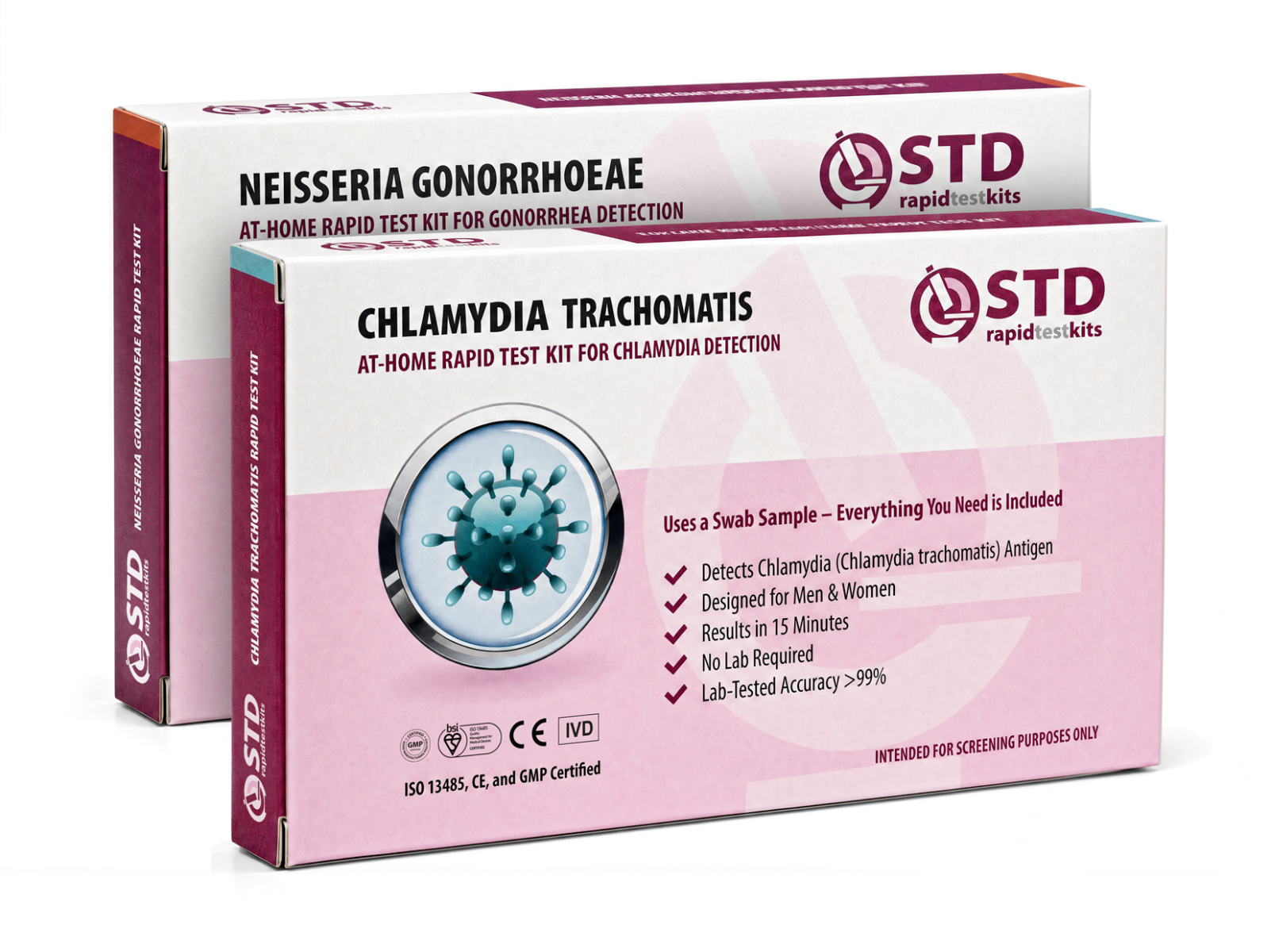
| Chlamydia (swab) | About 7 days after exposure | 14 days |
| Gonorrhea (swab) | About 7 days after exposure | 14 days |
| Syphilis (blood) | About 3 weeks | 6 weeks |
| HIV (rapid antigen-antibody) | 2 to 4 weeks | 6 weeks and beyond |
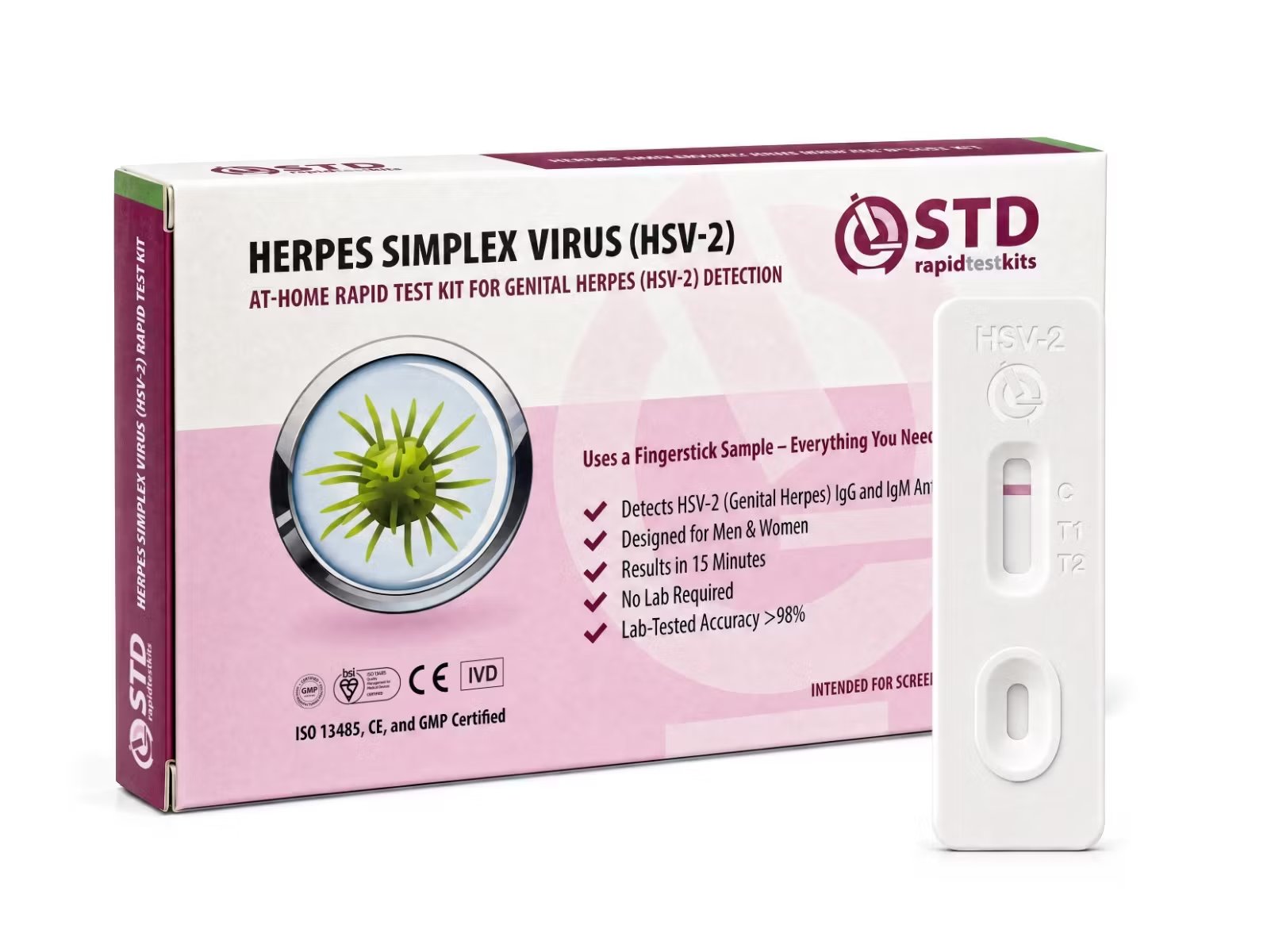
| HSV-2 antibody (blood) | About 3 to 6 weeks (earliest) | 12 weeks for highest sensitivity |
| Hepatitis B and C (blood) | About 4 to 8 weeks | 12 weeks |
Reading your own timeline
If your symptoms started the same day you used a new soap, lube, or condom, and your last possible exposure was three days ago, infection would not present that fast in the vast majority of cases. If your symptoms started a week or more after an unprotected exposure and they include burning urination or unusual discharge, chlamydia and gonorrhea are worth ruling out at the 14-day mark. If you are worried specifically about herpes after an exposure that was several weeks ago, an antibody blood test makes more sense than a swab once any sores have healed.
How to calm a product reaction in 24 to 72 hours
If the working theory is irritation, simplicity beats intervention almost every time. Skin needs a chance to repair its barrier; piling new products on top of an angry rash usually prolongs it.
- Stop using the suspected product immediately. The single biggest variable is removing whatever is touching the skin: scented soap, the new lube, the spermicidal condom box, the laundry pod.
- Rinse with lukewarm water only. Skip soap on the genital area for two to three days. The vulva and penile shaft do not need cleanser daily; warm water is enough.
- Pat dry with a soft towel. Do not rub.
- Wear loose, breathable cotton underwear. Skip tight leggings and synthetic fabrics until the skin settles.
- Pause shaving, waxing, and exfoliating until the area looks normal again.
- Strip your bedding and underwear in fragrance-free, dye-free detergent with an extra rinse cycle.
- If you suspect a condom or lube reaction, do not just stop the product; replace it on next use with a non-latex condom (polyurethane, polyisoprene, or nitrile) and a fragrance-free, glycerin-free, water- or silicone-based lube before drawing conclusions.
- If the area feels dry, a thin layer of plain petroleum jelly or a fragrance-free emollient can help the barrier recover. Avoid creams with botanical extracts or fragrance.
Most contact-dermatitis reactions improve noticeably within 48 to 72 hours once the irritant is removed. The NHS guidance on contact dermatitis uses the same do-less framework: identify the trigger, remove it, protect the barrier.
Stop every product touching the skin, switch to water only, and give it 48 hours. Most reactions plateau within a day and improve from there. Resist the urge to layer on a new soothing cream in the same window; the most common cause of a stalled flare is a second product introduced as a fix.
Red flags that mean test or call a clinician
Most genital itching is not an emergency, but a small subset of presentations should not be self-managed. Plan to test or get evaluated if you notice:
- Painful blisters or open sores that cluster, especially if they are preceded by a tingling or nerve-like ache.
- Thick, discolored, or foul-smelling discharge.
- A single painless firm round sore (a possible syphilis chancre) at a contact site.
- Burning urination that persists beyond a few days, regardless of what soap, lube, or condom you have stopped using.
- Pelvic, lower-abdominal, or testicular pain.
- Fever, swollen groin lymph nodes, or flu-like body aches alongside genital symptoms.
- A known partner who has tested positive for an STI.
- A rash that keeps getting worse after 72 hours of removing every suspected irritant.
Herpes is the diagnosis people fear most when sores appear. Genital herpes outbreaks commonly begin with an early warning phase of tingling, itching, or nerve-like ache in the area where sores will appear, hours to days before any visible blister. The blisters then crust and heal over a week or more. The CDC’s <a href="https://www.cdc.gov/herpes/about/index.html" target="_blank" rel="noopener noreferrer">genital herpes overview</a> covers diagnosis and treatment options once sores appear. If you see active sores, the most accurate test is a swab of the lesion sent for PCR while the sore is fresh. Antibody blood tests are useful weeks later to confirm long-standing infection but are not the right tool for an acute lesion.
Specifically: contact dermatitis vs herpes
The most common search after a new genital symptom is some version of “is this herpes or razor burn,” closely followed by “is this herpes or a condom reaction.” The patterns look different to a clinician, but they can look similar enough at first glance to fuel hours of mirror-checking.
What the symptom feels like before anything is visible. Herpes outbreaks frequently start with a prodrome (an early warning phase of sensory symptoms): a deep tingling, burning, or nerve-like ache in the area where the sores will appear, sometimes 24 to 48 hours before any visible lesion. Some people also describe shooting pain down the leg or low back during a first outbreak. Soap, lube, condom, or razor irritation tends to feel surface-level: stinging, raw, itchy, but not nerve-like.
What the lesions look like. Herpes sores are small, dome-shaped, fluid-filled vesicles that cluster on a clearly red base. They progress predictably: clear vesicle, then cloudy, then ruptured ulcer, then crust, then healed in roughly 7 to 14 days for a recurrence and longer for a first episode. Razor, soap, and lube reactions usually do not cluster into fluid-filled blisters, do not crust over in the same way, and do not follow a single nerve distribution.
What other symptoms come along. A first herpes outbreak commonly includes swollen and tender lymph nodes in the groin, low-grade fever, body aches, and headache, especially in the first week. Product reactions stay local and do not produce systemic symptoms.
If you cannot tell from the pattern alone, a clinic swab during an active outbreak is the most accurate test. Antibody blood testing is most reliable at 12 weeks after a suspected exposure for documenting long-standing HSV-2 infection; some antibody signal may appear as early as 6 weeks, but a negative result at 6 weeks should be repeated at 12 weeks. It is not the right tool for diagnosing an acute lesion.
Contact Dermatitis vs Genital Herpes
| Feature | Product or shave irritation | Genital herpes |
|---|---|---|
| Early sensation | Surface stinging, rawness, or itch | Deep tingling or nerve-like ache, often 1 to 2 days before any sore |
| What appears | Diffuse redness, dry patches, or evenly scattered bumps | Clusters of small fluid-filled blisters on a clearly red base |
| How it changes | Settles within 48 to 72 hours once the product stops | Blisters rupture, crust, then heal over 7 to 14 days |
| Pattern | Follows the contact area or the direction of the shave | Follows a single nerve distribution |
| Body-wide signs | None; stays local | A first outbreak often adds swollen groin nodes, low fever, body aches |
| Most accurate test | None needed; a product swap usually confirms it | PCR swab of a fresh sore, or an antibody blood test 12+ weeks later |
Irritation stays on the surface and fades fast; herpes follows a nerve pattern and a defined blister-to-crust arc.
Why pH matters when symptoms come from a vulva
The vagina maintains a naturally acidic environment that is part of how it resists infection. The U.K. National Health Service notes that bacterial vaginosis can leave the vagina less acidic and reduce its natural defenses against infection. Scented washes, antibacterial soaps, douches, glycerin-heavy lubes, and even some intimate wipes can shift that balance within hours. The disruption can produce stinging, dryness, itching, and odor changes that feel alarmingly like the early stages of an infection.
Two features distinguish irritation-driven pH disruption from a true infection. First, infections tend to escalate over days; irritation tends to plateau and then improve once the product is stopped. Second, infections like bacterial vaginosis, trichomoniasis, gonorrhea, and chlamydia tend to produce changes in discharge volume, color, or odor that are noticeably different from baseline. Surface-only itching with no discharge change, after a recent product change, almost always points back to the product.
There is also a secondary route worth naming. A lube or condom does not introduce pathogens on its own, but a high-osmolality or high-glycerin lube can shift the vaginal microbiome enough to allow yeast overgrowth or bacterial vaginosis to develop in the days that follow. The original irritation is chemical; the downstream symptoms can technically be an infection, just not a sexually transmitted one. The U.S. Office on Women’s Health is direct on the broader point: the vagina cleans itself, and intimate cleansers are usually unnecessary.
While reactive vulvar skin is settling, leave these on the shelf: scented body washes and shower gels, douches of any kind, intimate wipes (even those marketed as gentle or pH-balanced), bubble bath, antibacterial soaps, fragranced toilet paper, and any flavored, warming, or high-glycerin lube. Each can prolong the disruption you are trying to calm.
Penile rash after a new soap, condom, or shave
The glans (the head of the penis) and the inner foreskin in uncircumcised people have thinner, more absorbent skin than most other body areas. That makes them more reactive to new cleansers, condoms, and lubes. Common patterns include redness on the glans, mild swelling, a tight or dry feeling, and small bumps along the shaved pubic area.
Compared with gonorrhea or chlamydia, which often produce burning during urination or a discharge from the urethra (and which persist regardless of which soap is in the shower), product-driven penile irritation typically worsens right after the contact event (a shower, a sexual encounter with a new condom or lube) and improves over the day. If the redness fades within a few days of stopping the suspected product and switching to water-only cleansing, infection becomes unlikely. Plain water and a fragrance-free emollient outperform most marketed intimate products on reactive skin in this area, and a non-latex condom plus a glycerin-free lube on the next sexual encounter is the most useful diagnostic step you can take at home.
Several patterns argue for a product reaction rather than an STI: redness that improves within a few days of stopping the suspected product; symptoms that flare right after a shower or right after sex and ease over the day; no urethral discharge during urination; no burning urination once the soap or spermicidal condom is gone; and no fever, swollen lymph nodes, or systemic body aches. If most of these are true, watchful skin care for 48 to 72 hours is reasonable before testing.
A simple decision framework
If you are spiraling at 1 a.m., five honest questions usually settle whether the next move is patience or testing.
- Did symptoms start within hours of using a new soap, detergent, lube, condom, spermicide, or fresh shave?
- Are the symptoms staying surface-level (itching, raw feeling, diffuse redness) without blisters, thick discharge, or fever?
- Are symptoms already improving 48 to 72 hours after stopping the suspected product?
- Was your last possible sexual exposure outside the typical incubation window for whichever STI you are worried about?
- Have you avoided introducing two or three new products at once trying to fix the rash?
If most answers are yes, irritation is the leading explanation and watchful skin care is the right move. If two or more answers are no, especially if symptoms are worsening or evolving, plan a test on the right schedule for the pathogen you are worried about.
Contact dermatitis is a type of eczema where your skin becomes red, dry and itchy because it has reacted badly to something it has touched.
Smarter product choices to reduce the chance of this happening again
Once you have been through this once, you start to realize how much small product choices matter. The things you put on (or near) sensitive tissue interact directly with skin and mucosa, and a few low-cost swaps make recurrence much less likely.
| Category | What to avoid if you react easily | Better alternative |
|---|---|---|
| Condoms | Latex (if sensitive), spermicidal (Nonoxynol-9) | Non-latex (polyurethane, polyisoprene, nitrile), non-spermicidal |
| Lube | Flavored, scented, warming, high-glycerin, high-osmolality | Water-based or silicone, glycerin-free, low-osmolality, fragrance-free |
| Soaps and body wash | Fragranced, antibacterial, “feminine wash” | Plain water on genital skin; fragrance-free body wash above the waist only |
| Laundry routine | Scented detergent, dryer sheets, fabric softener | Fragrance-free, dye-free detergent with an extra rinse cycle |
| Hair removal | Dull razors, no lubrication, daily shaving close to the skin | Sharp razor, plain shaving gel, shaving with the grain, longer intervals |
What to do in the first 24 hours
Do less, not more. The most reliable single intervention is removing the suspected product, switching to water-only cleansing, and giving the skin two to three days. Do not start a new cream, ointment, or wipe in the same window. Do not exfoliate, scrub, or shave the area. Do not panic-Google new products marketed for the symptom; many of them contain the exact fragrance or preservative families that triggered the reaction in the first place.
If symptoms have not improved at all by day three, or if they are getting worse rather than better, that pattern argues for a clinical evaluation. Persistent inflammation deserves attention regardless of the cause, and a clinician can swab or test for what is most likely from your specific exposure history.
If you are not sure whether to test, give the skin 48 hours of the do-less plan: stop every suspected product, switch to water-only cleansing, loose cotton underwear, no shaving. If symptoms are clearly improving by hour 48, irritation is the leading explanation. If they are unchanged or worse, plan testing on the right window schedule for any possible exposure.
If you want broad reassurance after a possible exposure
For people who had a possible exposure several weeks ago and want to rule out the most common infections at once, a multi-infection at-home panel is more efficient than testing pathogens one at a time. Window-period rules still apply: a panel taken too soon will produce some falsely reassuring negatives. Testing at six weeks after exposure covers most bacterial STIs and gives early-window results for HIV; a follow-up at 12 weeks gives the most reliable HSV-2 antibody and HIV antigen-antibody read. The World Health Organization’s overview of sexually transmitted infections notes that the four most common bacterial and parasitic STIs (chlamydia, gonorrhea, syphilis, trichomoniasis) are curable, and the common viral STIs are manageable with modern treatment.
Your next move: wait it out or test?
Did your symptoms start within hours of a new product (soap, lube, condom, spermicide, or a fresh shave) and are they already easing within 48 to 72 hours of stopping it?
Yes: Irritation is the leading explanation. Stay with the water-only routine, keep the suspected product off the skin, and watch. No testing is needed unless the pattern changes.
Have you had a possible unprotected exposure in the past several weeks?
Yes: Test on the schedule that matches the pathogen: day 14 for chlamydia and gonorrhea, 6 weeks for HIV, and 12 weeks for HSV-2 antibody.
No: See a clinician if the rash worsens past 72 hours, or if you notice clustered blisters, thick discharge, fever, or pelvic or testicular pain.
Guidance only. A clinician can advise based on your specific exposure history and symptoms.
FAQs
- Could it really just be laundry detergent?
- Yes. Fragrances and preservatives in laundry detergents, dryer sheets, and fabric softeners leave residue on underwear and bedding that transfers to skin under heat and friction. Reactions often appear 12 to 48 hours after a wash, which makes them easy to misattribute to a sexual encounter. If the itching started after a wardrobe or bedding change and improves with fragrance-free, dye-free detergent and an extra rinse cycle, the laundry routine is the leading suspect.
- Can condoms or spermicide really cause itching that feels like an STI?
- Latex proteins and Nonoxynol-9 spermicide both trigger mucosal reactions on direct contact, not days later, which is what makes them so easy to mistake for an early infection. The symptoms can start during sex itself or in the first few hours afterward. Try a non-latex condom (polyurethane, polyisoprene, or nitrile) without spermicide on the next encounter; if symptoms do not return, the original culprit was almost certainly the condom material or the spermicide.
- How do I tell razor burn from herpes?
- Razor burn usually shows up within hours of shaving, sits in symmetric pinpoint bumps along the direction of the stroke, and resolves over a few days. Herpes typically starts with a tingling or nerve-like ache, then small fluid-filled blisters that cluster on a clearly red base, rupture, crust, and heal over 7 to 14 days. If you see clustered fluid-filled blisters that crust, get a clinic swab while the lesion is fresh; PCR on an active sore is the most accurate test.
- Why does it burn after sex if I tested negative?
- Several non-infectious culprits cause post-sex burning: lube ingredients (glycerin, parabens, propylene glycol, flavoring), high-osmolality lubes, latex sensitivity, spermicide, friction with too little lubrication, and tiny skin abrasions can all sting for 24 to 48 hours. Switch to a fragrance-free, glycerin-free, low-osmolality, water- or silicone-based lube and a non-latex, non-spermicidal condom. If a clear test still leaves you irritated, see a clinician to rule out a yeast infection, bacterial vaginosis, or contact dermatitis.
- How soon do STD symptoms show up after sex?
- It varies by infection. Gonorrhea symptoms typically appear 2 to 14 days after exposure, herpes 2 to 12 days, chlamydia 7 to 21 days, and syphilis 10 to 90 days. HIV symptoms (when they occur) usually appear 2 to 4 weeks after exposure. Symptoms that begin within hours of a new product almost always point to irritation rather than infection.
- Can lube throw off vaginal pH and cause secondary symptoms?
- Yes. Lubes with high glycerin content or osmolality outside the body’s natural range can disrupt the vaginal microbiome, sometimes triggering yeast overgrowth or bacterial vaginosis in the days that follow. The downstream symptoms (itching, discharge change, odor) can feel like an STI, but the origin is chemical, not sexually transmitted. Switching to a glycerin-free, low-osmolality lube usually breaks the cycle.
- Should I test if symptoms started right after a new product?
- If there has been no possible exposure in the relevant window period, immediate testing is unlikely to add information. Stop the suspected product, give the skin 48 to 72 hours, and watch for improvement. If you have had an exposure that fits an STI window (chlamydia or gonorrhea at 14 days, HIV at 6 weeks and beyond, HSV-2 antibody at 12 weeks for the most reliable result), test on the right schedule. Testing is most useful when timed to the pathogen, not to the panic.
- When should I see a clinician instead of waiting it out?
- Plan a clinic visit if you have painful clustered blisters, a single firm painless sore, thick or foul-smelling discharge, fever, swollen lymph nodes, pelvic or testicular pain, or a rash that worsens after 72 hours of removing the suspected irritant. Anyone whose partner has tested positive for an STI should also test on the right window schedule, regardless of symptoms.
- U.K. National Health Service. Contact dermatitis: causes, onset timing, treatment, and avoidance guidance.
- U.S. Centers for Disease Control and Prevention. Sexually transmitted infections treatment guidelines, including incubation windows and testing schedules.
- U.S. Centers for Disease Control and Prevention. Genital herpes overview: presentation, diagnosis, and treatment.
- Mayo Clinic. Latex allergy symptoms and causes, including the range of contact reactions to latex condoms.
- American Academy of Dermatology. Contact dermatitis management: identifying and avoiding triggers, including nickel, fragrance, and preservative allergens.
- U.K. National Health Service. Bacterial vaginosis: vaginal acidic balance and natural defenses against infection.
- U.S. Office on Women’s Health. Douching fact sheet: how scented intimate products can disturb vaginal flora and trigger irritation.
- World Health Organization. Sexually transmitted infections fact sheet covering global burden, symptom patterns, and which STIs are curable versus manageable.
