

Published: October 2025 | Last updated: April 2026 | Editorial review and quality control: Martina N.
Bisexual men sit in a healthcare gap that few clinics name out loud. Outreach campaigns aimed at gay men sometimes feel like they don't apply. STI education aimed at straight men assumes a single anatomical exposure pattern. The result is a population getting tested less thoroughly than the people on either side of them, despite often having the same or higher chlamydia exposure.
This guide explains where chlamydia sets up in the body when bi men have oral, anal, and vaginal partners, why a urine test alone catches only a fraction of infections, and what testing tools (at-home and clinic-based) cover which exposure routes. The goal is honest answers, not vague reassurance, so you can choose a testing plan that fits your real life.
Why does chlamydia get missed in bisexual men?
Bisexual men face higher rates of undetected chlamydia because standard urine testing misses rectal and pharyngeal infections. Roughly 70 percent of infections in men who have sex with men are missed when testing is limited to urethral or urine samples, because rectal and pharyngeal infections are usually symptom-free and require site-specific swabs (<a href="https://www.cdc.gov/std/treatment-guidelines/msm.htm">CDC, STI Treatment Guidelines for Men Who Have Sex with Men</a>). At-home rapid swab kits cover urethral chlamydia and gonorrhea plus blood-based screening; pharyngeal and rectal swabs require a clinic visit or a mail-in lab kit validated for those sample types.
Key Takeaways
- Roughly 70 percent of chlamydia infections are missed when testing is limited to urethra or urine, because rectal and pharyngeal infections are usually symptom-free and require site-specific swabs (CDC MSM treatment guidelines).
- CDC recommends men who have sex with men screen for chlamydia and gonorrhea at all exposed anatomical sites at least annually, every 3 to 6 months when partners or risk factors change.
Where chlamydia settles in the body
Chlamydia trachomatis is a bacterial infection that colonizes mucous membranes. In men whose sex life includes more than one type of contact, three sites are clinically relevant: the urethra (the tube running through the penis), the rectum, and the pharynx (the back of the throat). Which site picks up an infection depends on what kind of contact happened, not on how the person identifies.
The CDC's MSM screening guidance recognizes this explicitly. Men who have sex with men, including bisexual men, should be screened at every site of recent exposure, urethral, rectal, and pharyngeal as relevant (CDC, STI Treatment Guidelines for Men Who Have Sex with Men). A urine sample only checks the urethra. It tells you nothing about the throat or rectum.
This matters for bi men in particular because the same person may have had insertive vaginal sex, receptive oral sex, and receptive anal sex within a few weeks. Each contact creates a different mucosal exposure point. A clean urine result might still leave a rectal or pharyngeal infection silent and transmissible, both to future partners and back into the same partner network.
| Sexual contact | Possible infection site | Right test |
|---|---|---|
| Receptive oral sex (giving oral) | Pharynx (throat) | Pharyngeal swab, lab NAAT (clinic) |
| Insertive oral sex (receiving oral) | Urethra | Urine NAAT or urethral swab |
| Insertive anal sex | Urethra | Urine NAAT or urethral swab |
| Receptive anal sex | Rectum | Rectal swab, lab NAAT (clinic) |
| Insertive vaginal sex | Urethra | Urine NAAT or urethral swab |
Why a urine test alone misses most multi-site infections
Most walk-in clinics still offer a urine-only chlamydia and gonorrhea test as the default for men, often without asking detailed exposure questions. That practice is rooted in older screening protocols designed for heterosexual men, where urethral exposure is the primary route. For a man whose only recent exposure was insertive vaginal or insertive anal sex, urine testing is reasonable.
For everyone else, it is the wrong tool. Pharyngeal and rectal sites need their own swab samples processed via NAAT (nucleic acid amplification testing) at a laboratory (CDC, Chlamydial Infections, STI Treatment Guidelines). Without site-specific swabs, an infection in either location goes undetected. Three-site screening studies in MSM populations consistently find that adding rectal and pharyngeal swabs catches infections that urine testing misses entirely.
Several factors push men toward urine-only testing despite this. Some clinicians do not ask about oral or receptive anal contact. Some patients do not volunteer the information. Some clinics charge per site, which discourages full screening.
Studies referenced by the CDC's MSM screening guidance estimate that roughly 70 percent of chlamydia and gonorrhea infections in men who have sex with men are missed when only urine is tested. Rectal and pharyngeal infections rarely produce symptoms, so the only reliable way to detect them is a site-specific swab processed at a laboratory. If your recent exposure included receptive oral or receptive anal sex, ask for a three-site screen rather than a urine-only panel.
The symptom myth: feeling fine is not evidence of being infection-free
One of the most persistent assumptions about chlamydia is that an infection announces itself with painful urination, discharge, or visible irritation. For urethral chlamydia in men, that pattern shows up about a third of the time. Most cases are quieter, and infections at the pharynx and rectum are typically silent altogether.
The CDC notes that chlamydia often has no symptoms, but it can cause serious health problems even without symptoms; if symptoms occur, they may not appear until several weeks after sex with an infected partner (CDC, About Chlamydia). Pharyngeal infections almost never produce noticeable symptoms; rectal infections may cause mild discomfort, occasional bleeding, or nothing at all.
What this means in practice: feeling fine is not evidence of being infection-free. The bacterium can persist for months without producing symptoms, during which it remains transmissible and can cause complications including epididymitis (inflammation of the tube behind the testes) and reactive arthritis (joint inflammation triggered by the infection). Untreated chlamydia also raises HIV acquisition risk, roughly doubling per-exposure susceptibility because the underlying mucosal inflammation lowers the barrier HIV needs to cross during sexual contact. That elevated risk normalizes after antibiotic treatment clears the chlamydia infection. If HIV exposure is also a concern from the same encounter, a fingerstick blood antibody test covers seroconversion in the weeks-to-months after exposure depending on the test generation, which is one reason a positive chlamydia result is a reasonable trigger for adding HIV screening to the same testing visit.
Why bisexual men slip through the screening net
Walk into most clinics and you'll be asked some version of "Are you sexually active?" If you answer yes, the next question is usually "With men, women, or both?" That intake script is a step forward, but it does not always change the test that gets ordered. Many clinicians default to a urine-only chlamydia and gonorrhea panel regardless of the answer, especially in time-pressed primary-care settings.
The CDC's MSM treatment guidelines explicitly call for three-site testing where exposure routes warrant it, but bisexual men often do not get classified as MSM in clinical records. A bi man in a long-term relationship with a female partner who occasionally sleeps with men may not be coded as MSM at all, which means his clinic's standard MSM-tier screening protocols never trigger (CDC, STI Screening Recommendations).
The under-testing problem is not only clinical. It also has a behavioral side. Bisexual men are statistically less likely to disclose male partners to providers than openly gay men are, especially in geographies or family situations where being out carries social risk. The combination of provider defaults skewed toward heterosexual screening and patient hesitation to disclose male contacts produces a population that gets fewer site-specific swabs and therefore fewer diagnoses.
None of that is a moral failing on the patient's part. It is a systems problem with practical workarounds: knowing what to ask for, knowing which sites need swabs, and using whatever combination of clinic visits and at-home kits gets full coverage.
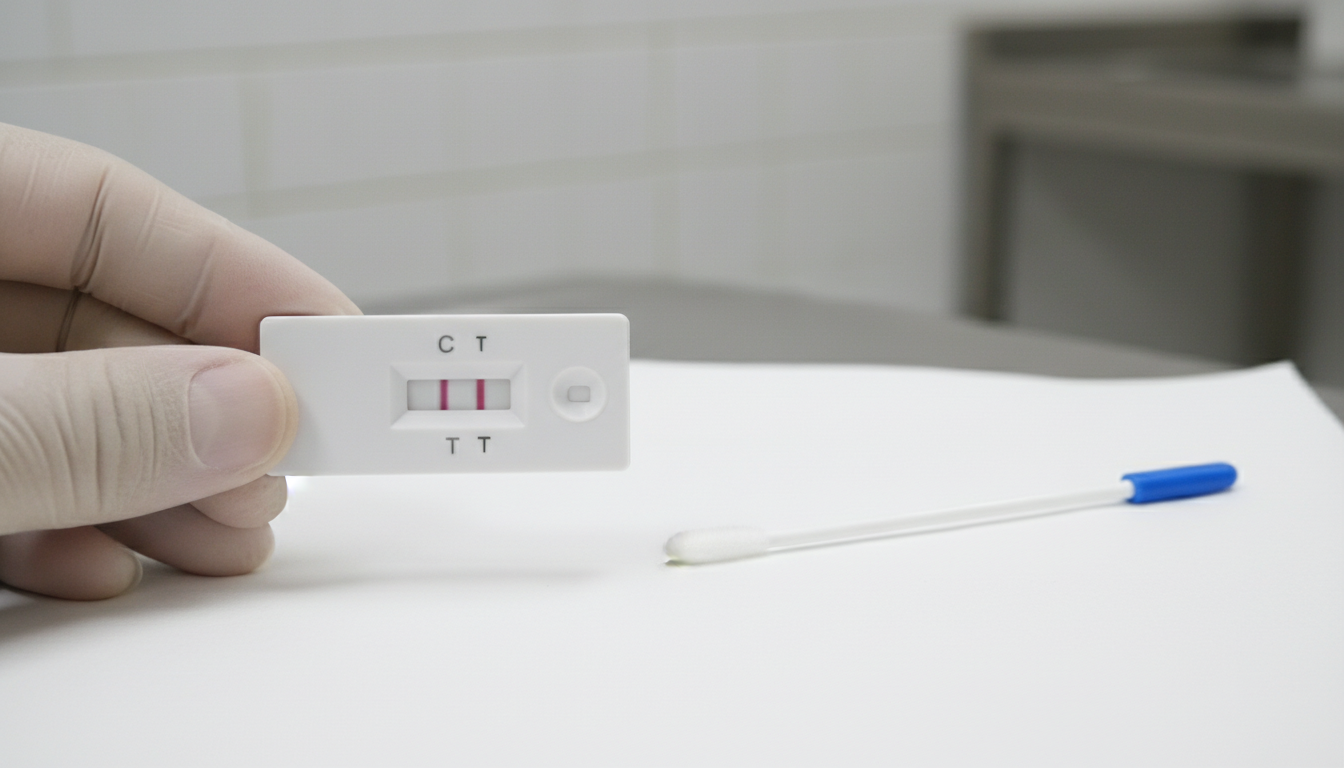
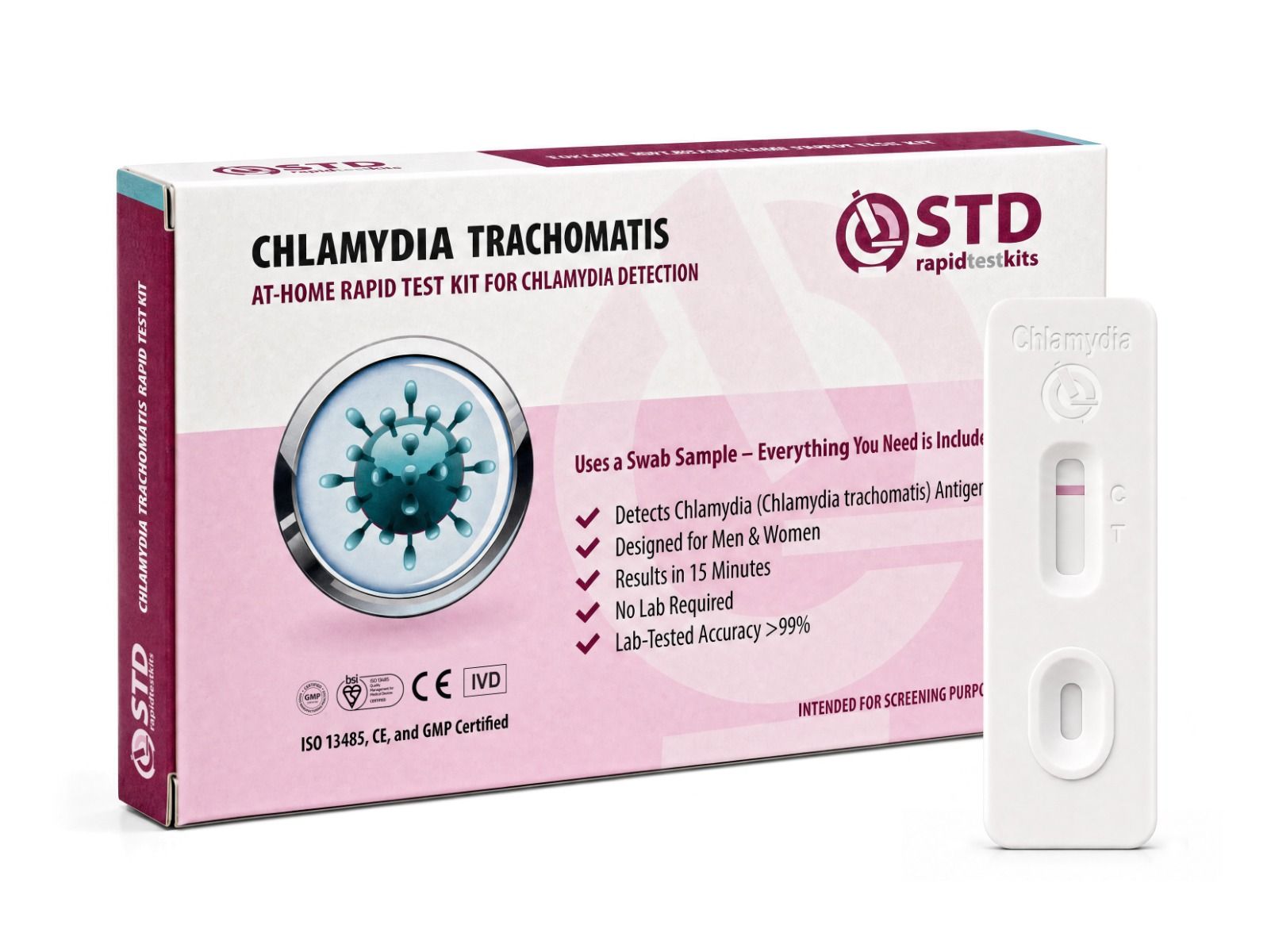
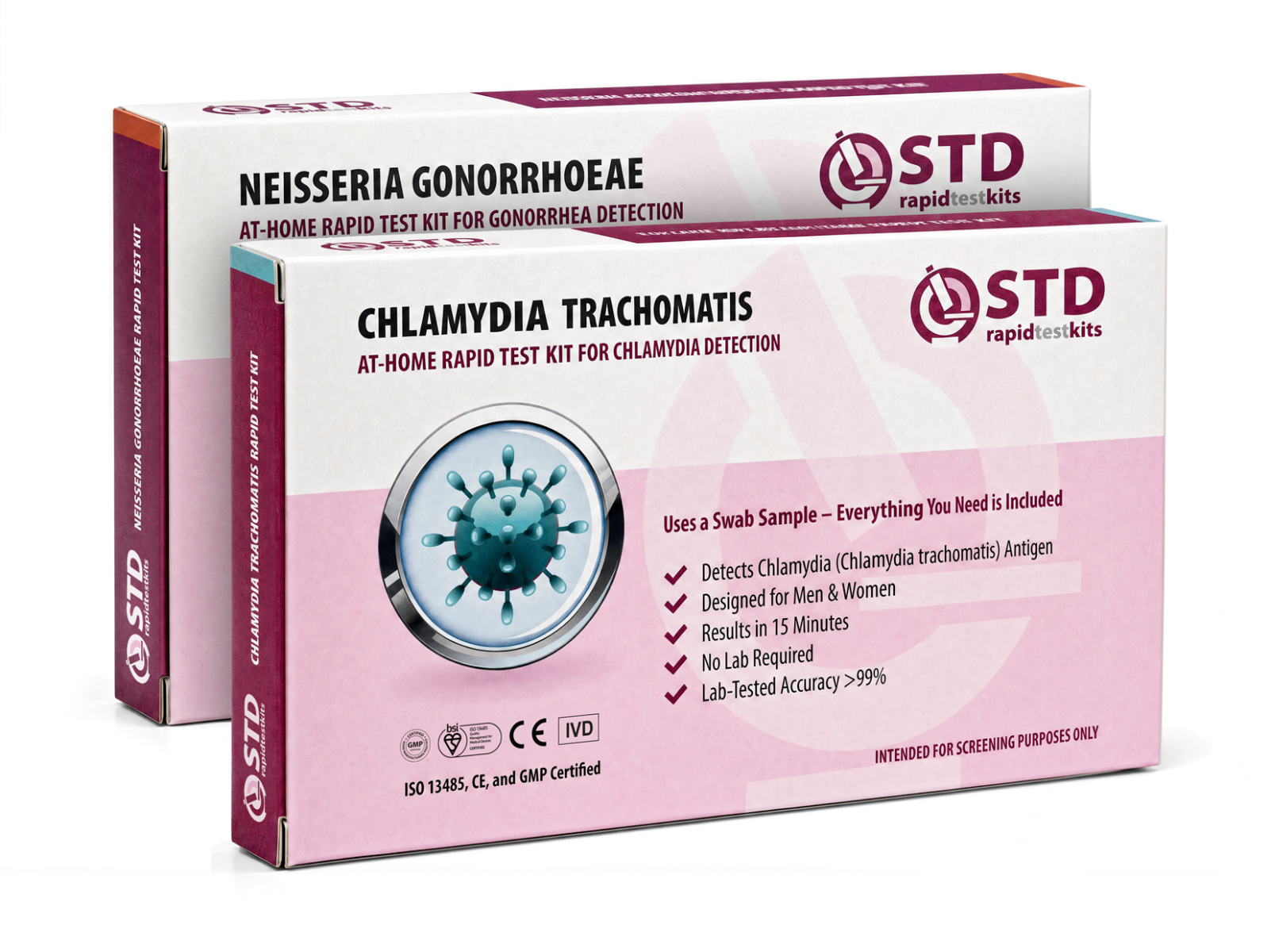
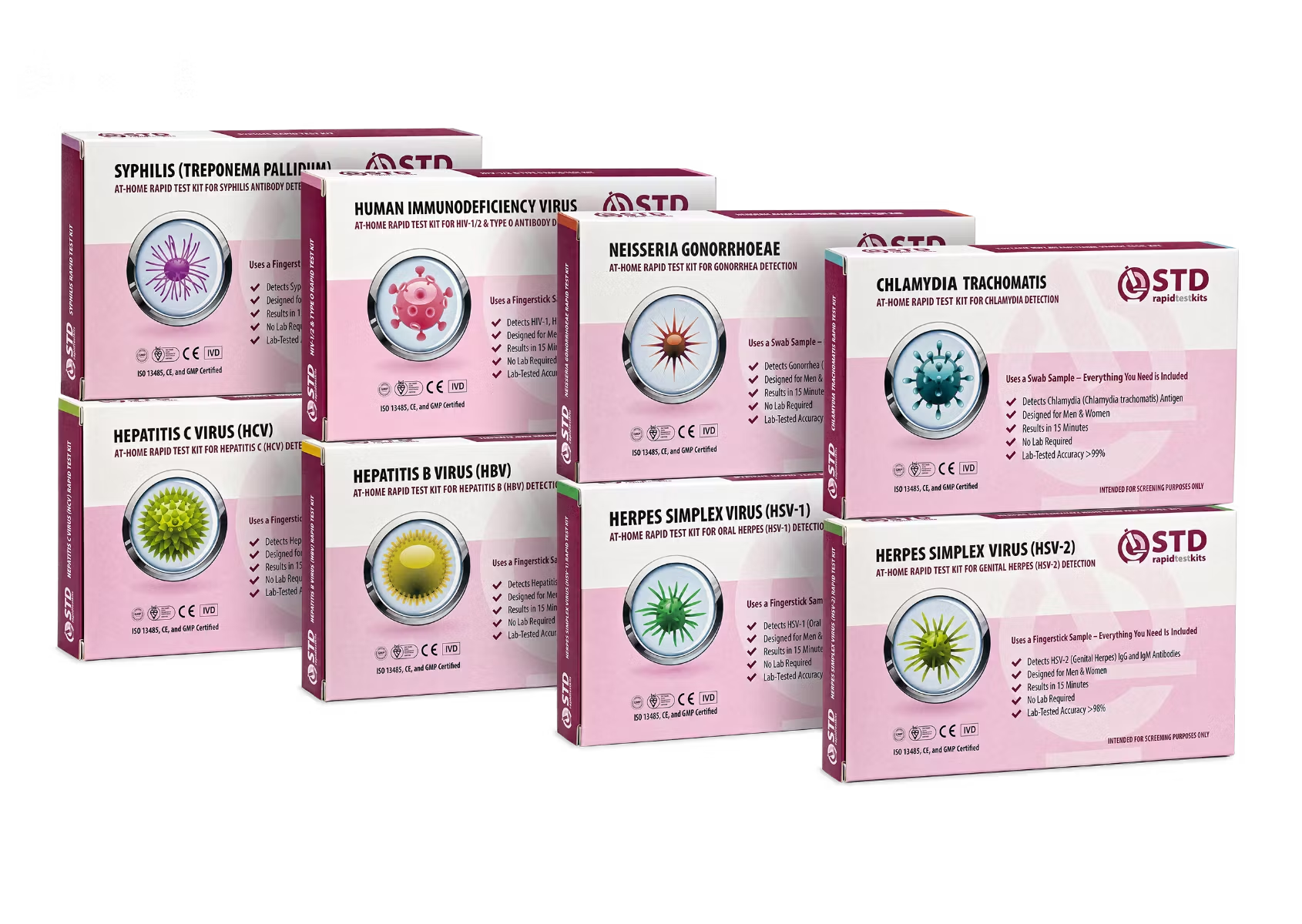
Honest framing matters here. The rapid at-home kits sold on this site test for chlamydia and gonorrhea using a self-collected genital sample (urethral or vaginal swab). They do not include pharyngeal or rectal swabs. If your recent exposure included receptive oral or receptive anal contact, plan to add a clinic visit or a mail-in lab kit validated for those sites. The at-home rapid kits also cover blood-based screening for HIV, syphilis, hepatitis B, hepatitis C, and HSV antibodies through fingerstick testing.
When to test, when to retest, and how often to screen
Timing matters because chlamydia has an incubation window. Testing too soon after a possible exposure can produce a false negative if the bacterial load is below the assay's detection threshold. The general guidance is to wait at least one to two weeks after a specific exposure before testing, with a confirmatory retest at three weeks if the initial result is negative and concern remains.
For routine screening (no specific exposure event, just sexually active life), the CDC recommends regular testing for groups at elevated risk. For men who have sex with men, common cadence is every three to six months depending on number of partners and consistency of barrier use (CDC, STI Screening Recommendations).
After a positive result, retesting after treatment is also important. The CDC recommends a test of reinfection at roughly three months post-treatment, since reinfection from an untreated partner is the most common cause of repeat positives. Retest at the original infection site, urethral, rectal, or pharyngeal, since reinfection patterns often follow the same exposure route.
| Scenario | When to test | Follow-up |
|---|---|---|
| Specific recent exposure (1 to 14 days ago) | Wait 1 to 2 weeks, then test at exposed sites | Retest at 3 weeks if negative and concern remains |
| Routine screening, sexually active with multiple partners | Every 3 to 6 months | Multi-site coverage when oral or anal contact is part of the picture |
| Partner just told you they tested positive | Test now at all exposed sites; treat empirically per provider guidance | Retest 2 to 3 weeks after treatment completes |
| You tested positive and finished treatment | Wait 3 weeks before retest if confirming clearance | Retest at 3 months to catch possible reinfection |
What at-home rapid tests cover, and what they do not
At-home STI testing has expanded the options for men who would rather not navigate clinic intake forms. The trade-off is that not every kit covers every exposure route, and home rapid tests use different chemistry than laboratory NAAT.
For chlamydia and gonorrhea, this site sells rapid lateral-flow swab kits that use a self-collected genital sample (urethral swab or, for partners with vaginal anatomy, vaginal swab). These detect infection at the genital site only. Pharyngeal and rectal swabs are not part of the at-home rapid kit offering. For throat or rectal site testing, the right tool is a clinic visit or a mail-in lab kit specifically validated for those sample types (CDC, Getting Tested for STIs).
A bi man whose recent exposures include receptive oral and receptive anal contact needs three-site coverage that an at-home rapid swab cannot deliver alone. The honest framing: at-home rapid testing covers urethral chlamydia and gonorrhea well, plus blood-based screening for HIV, syphilis, hepatitis B, hepatitis C, and HSV antibodies. For pharyngeal and rectal swabs, plan a clinic visit or supplement with a mail-in NAAT kit from a different provider that offers those sample types.
If you test positive: treatment, retesting, and partner notification
Chlamydia is one of the most treatable bacterial STIs. CDC's current preferred regimen for genital chlamydia in adolescents and adults is doxycycline 100 mg twice daily for seven days, with azithromycin as an alternative in specific clinical scenarios (CDC, Chlamydial Infections, STI Treatment Guidelines). The infection clears reliably with appropriate antibiotic therapy.
The clinical part is fast. The harder part for many readers is partner notification. Anyone with whom you have had relevant sexual contact in the previous 60 days should be informed and offered testing. Expedited partner therapy guidance allows providers in many U.S. states to dispense or prescribe treatment for partners without a separate clinical visit, lowering the barrier to getting partners treated quickly.
Anonymous partner-notification services exist for people who do not want to deliver the message directly. State health departments and several non-profit services let you send an anonymous tip with testing-site information. Whether you message partners directly or use a third-party tool, the underlying point is the same: untreated partners stay infectious, and the chain of transmission continues.
Talking to a partner without coming out further than you want to
Disclosure is a real and legitimate concern. Bi men who are not out to a particular partner sometimes worry that telling that partner about a chlamydia exposure will force a deeper disclosure than they intended. There are practical ways to handle this that protect both the partner's health and the messenger's autonomy.
The most common approach is short and factual. The sentence does not require disclosing other partners or sexual history. If a partner asks where the exposure came from and you do not want to answer, "I'd rather not get into the details" is a complete sentence.
For partners who would react badly to direct contact, anonymous notification services let you supply phone numbers or email addresses; the service sends an unsigned message indicating possible exposure to a specific STI, often with links to local testing resources. Health departments treat these notifications confidentially. The communication does not require coming out, naming yourself, or disclosing relationship structure.
If you need a sentence to start with, try: "I tested positive for chlamydia and want you to know so you can get checked too." That single sentence delivers what the partner needs to know, gives them a clear next step, and does not require explaining who else you have slept with or how you identify. You can send it by text. You can send it through an anonymous notification service. What matters is that the information reaches them.
A realistic prevention rhythm for bi men
Prevention in sexual health is layered rather than absolute. Condoms work well for penetrative anal and vaginal sex when used correctly, and they reduce (without eliminating) chlamydia transmission. Barrier use during oral sex is uncommon but offers some protection if the choice is made. Vaccination, regular screening, and partner communication round out the layers (WHO, Sexually Transmitted Infections Fact Sheet).
For someone with multiple partners or partners of different genders, a working rhythm looks like: barrier protection during penetrative sex when feasible; full multi-site screening every three to six months; site-specific screening one to three weeks after any specific concerning exposure; and prompt treatment plus partner notification on any positive result.
FAQs
- Can a bisexual man have chlamydia and not know it?
- Yes. Most cases of chlamydia in men are silent, and infections at the throat or rectum almost always produce no symptoms. The bacterium can persist for months without any noticeable change while remaining transmissible. Routine screening at exposed sites is the only reliable way to catch a silent infection.
- Does a urine test rule out chlamydia entirely?
- No. A urine test only checks the urethra. If you have had receptive oral or receptive anal contact, the urine test cannot detect chlamydia at the throat or rectum. Each exposed site needs its own swab. CDC's MSM screening guidance specifically calls for site-specific testing rather than urine alone.
- How long after exposure should I wait before testing?
- At least one to two weeks for chlamydia. Testing earlier than that can produce a false negative because the bacterial load may not be detectable yet. If you tested early and the result was negative, retest at three weeks to confirm. For routine screening without a specific exposure event, every three to six months is the standard cadence for sexually active MSM.
- Can chlamydia be in the throat from oral sex?
- Yes. Pharyngeal chlamydia is acquired by giving oral sex to an infected partner. It usually causes no symptoms and is missed entirely by urine testing. Detecting pharyngeal chlamydia requires a throat swab processed at a lab, which is part of clinic-based three-site MSM screening but not covered by the at-home rapid kits sold on this site.
- If my partner tested positive, do I need to test before treating?
- In many U.S. jurisdictions providers can offer expedited partner therapy without a separate visit, meaning your partner's diagnosis can prompt your own treatment without waiting for your test result. If you do test, do so at all sites that were exposed, and retest two to three weeks after completing treatment to confirm clearance.
- Can I pass chlamydia to a female partner if I have a rectal infection?
- A rectal infection by itself does not directly transmit to a vaginal partner unless there is shared mucosal contact. The bigger concern in practice is co-infection: someone with rectal chlamydia from receptive anal contact often also has urethral chlamydia from another exposure, and the urethral infection transmits readily during vaginal sex. Multi-site testing protects everyone in the partner network.
- How do I ask a clinic for a throat or rectal swab without explaining my whole sex life?
- You can say: "I would like a three-site STI screen, urethral, pharyngeal, and rectal." That sentence gets you the right test. Some clinics will probe for context; others will book the swabs without further questions. If a clinic refuses or shrugs off the request, an LGBTQ-affirming sexual health clinic or Planned Parenthood will typically handle it without friction.
- Will an at-home rapid test work for me as a bi man?
- It depends on your recent exposures. If you had urethral exposure (insertive vaginal or insertive anal) and want to screen the genital site, an at-home swab kit covers it. If you had receptive oral or receptive anal contact, you also need pharyngeal or rectal swabs that the at-home kit does not include. The right plan often combines an at-home kit for urethral and bloodwork with a clinic visit for pharyngeal and rectal swabs.
- U.S. Centers for Disease Control and Prevention. About Chlamydia. Public health overview covering symptoms, transmission, and asymptomatic prevalence.
- U.S. Centers for Disease Control and Prevention. STI Treatment Guidelines, special populations: men who have sex with men. Source for three-site screening recommendation, MSM cadence guidance, and detection-gap framing for urine-only testing.
- U.S. Centers for Disease Control and Prevention. STI Treatment Guidelines, chlamydial infections. Source for first-line treatment regimen (doxycycline 100 mg twice daily for seven days), retesting cadence, and expedited partner therapy guidance.
- U.S. Centers for Disease Control and Prevention. STI Screening Recommendations. Source for risk-tier screening cadence including three-to-six-month MSM intervals.
- U.S. Centers for Disease Control and Prevention. Getting Tested for STIs. Source for sample-type guidance and clinic versus at-home testing context.
- National Health Service (UK). Chlamydia overview. Reference for symptoms, asymptomatic prevalence, and treatment guidance from a major public-health authority outside the United States.
- World Health Organization. Sexually transmitted infections fact sheet. Reference for global epidemiology and prevention-layer framing.
