Published: December 2025 | Last updated: May 2026 | Editorial review and quality control: Martina N.
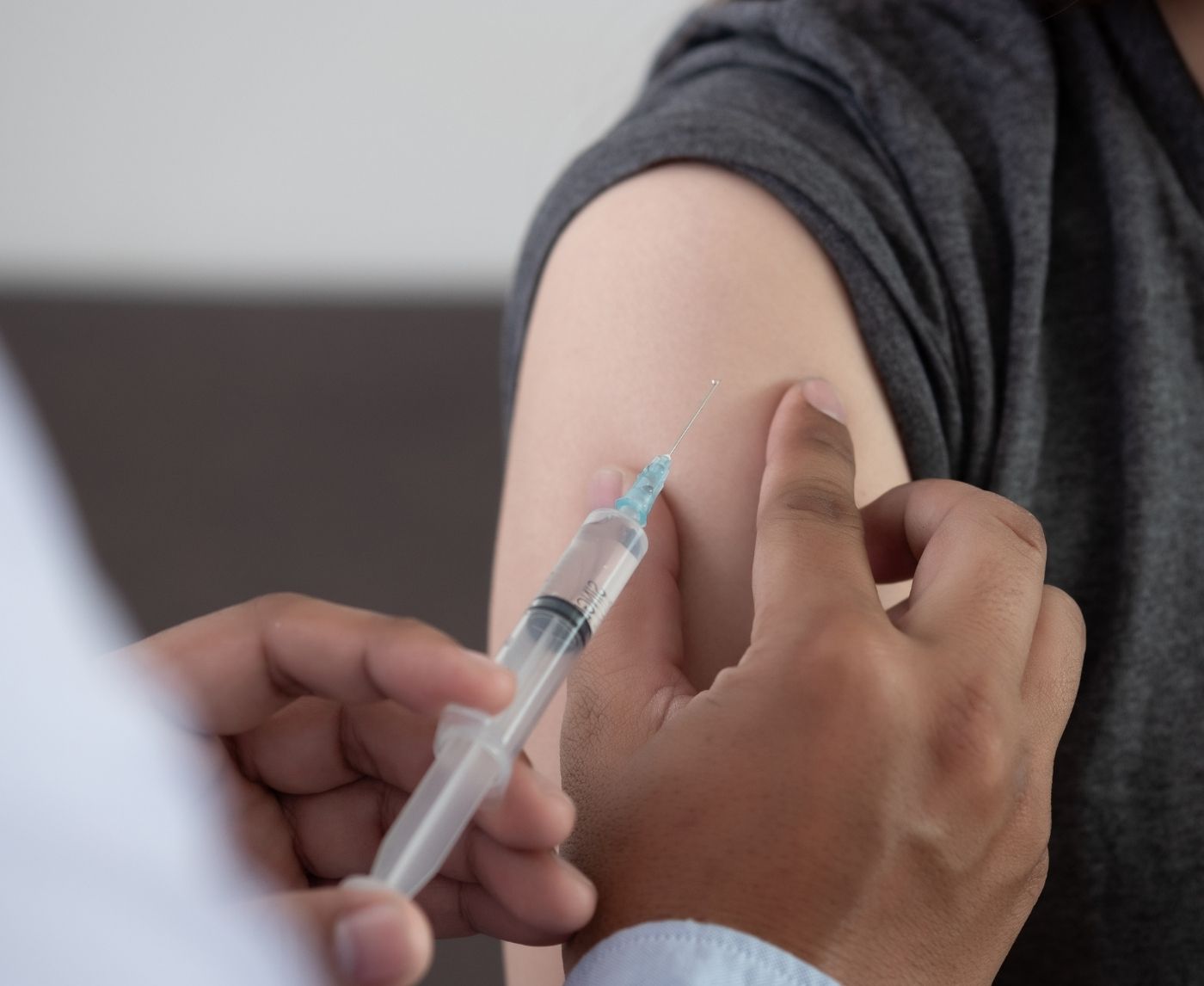
If a recent vaccine has you second-guessing whether to take an STD test, here is the reassurance most readers come for: routine vaccines (HPV, COVID-19, flu, hepatitis B, MMR, and the rest of the standard schedule) do not produce false positives or false negatives on the home and lab tests used to screen for chlamydia, gonorrhea, syphilis, herpes, hepatitis C, or HIV. Different biology, different test targets. Vaccines teach your immune system to recognize one specific pathogen, and STI tests either look for the genetic material of an infection (lab NAAT) or for highly specific antibodies that only develop after that particular infection.
The longer story is worth a few minutes, because the things that genuinely affect test accuracy are not on the vaccine card. They are timing relative to exposure, recent antibiotic use, immune-suppressing medication, and a narrow technical exception that only applies to people enrolled in experimental HIV vaccine trials. Below: what each of those means in plain terms, when retesting is the right call, and how to read a result you are not sure about.
Editorial note: this guide is published by stdrapidtestkits.com, which sells at-home STI testing kits referenced later in this article. Recommendations are based on fit-for-purpose for the reader's concern, not commercial benefit.
Key Takeaways
- Routine vaccines do not change the result of an STI test. HPV, COVID-19, and flu shots are biologically separate from the markers chlamydia, gonorrhea, syphilis, herpes, hepatitis, and HIV tests look for.
- What does affect accuracy is timing. Test too early in the window period, take antibiotics shortly before testing, or live with significant immune suppression, and the same test can read negative when an infection is present.
How an STD test actually works
Knowing what a test measures is the fastest way to understand why a vaccine cannot interfere with it. There are three broad categories of STI testing, each with its own biological target.
Nucleic acid amplification tests (NAATs and PCR) look for the genetic material (DNA or RNA) of a specific pathogen. The CDC's chlamydia treatment guideline names NAATs as the recommended test for detecting C. trachomatis infection because of their sensitivity across urogenital, rectal, and oropharyngeal specimens (CDC STI Treatment Guidelines, Chlamydia). These run in a lab on a urine sample or self-collected swab. They are looking for chlamydia or gonorrhea genes specifically. A vaccine cannot insert chlamydia DNA into your body, so there is nothing for the assay to mistakenly amplify.
Antibody tests look for the specific antibodies your immune system makes after a real exposure to a particular infection. Standard HIV antibody tests detect anti-HIV antibodies. Herpes IgG blood tests detect anti-HSV-1 or anti-HSV-2 antibodies. Syphilis treponemal and non-treponemal tests detect different antibodies tied to the syphilis bacterium. The COVID, HPV, or flu vaccine does not generate any of these antibodies. The molecular fingerprint your immune system makes against COVID looks nothing like the fingerprint it makes against HIV, and the test is calibrated to recognize only the relevant one.
Antigen tests (such as the p24 antigen part of fourth-generation HIV testing) look for proteins from the pathogen itself rather than your antibody response. Those proteins are unique to that infection.
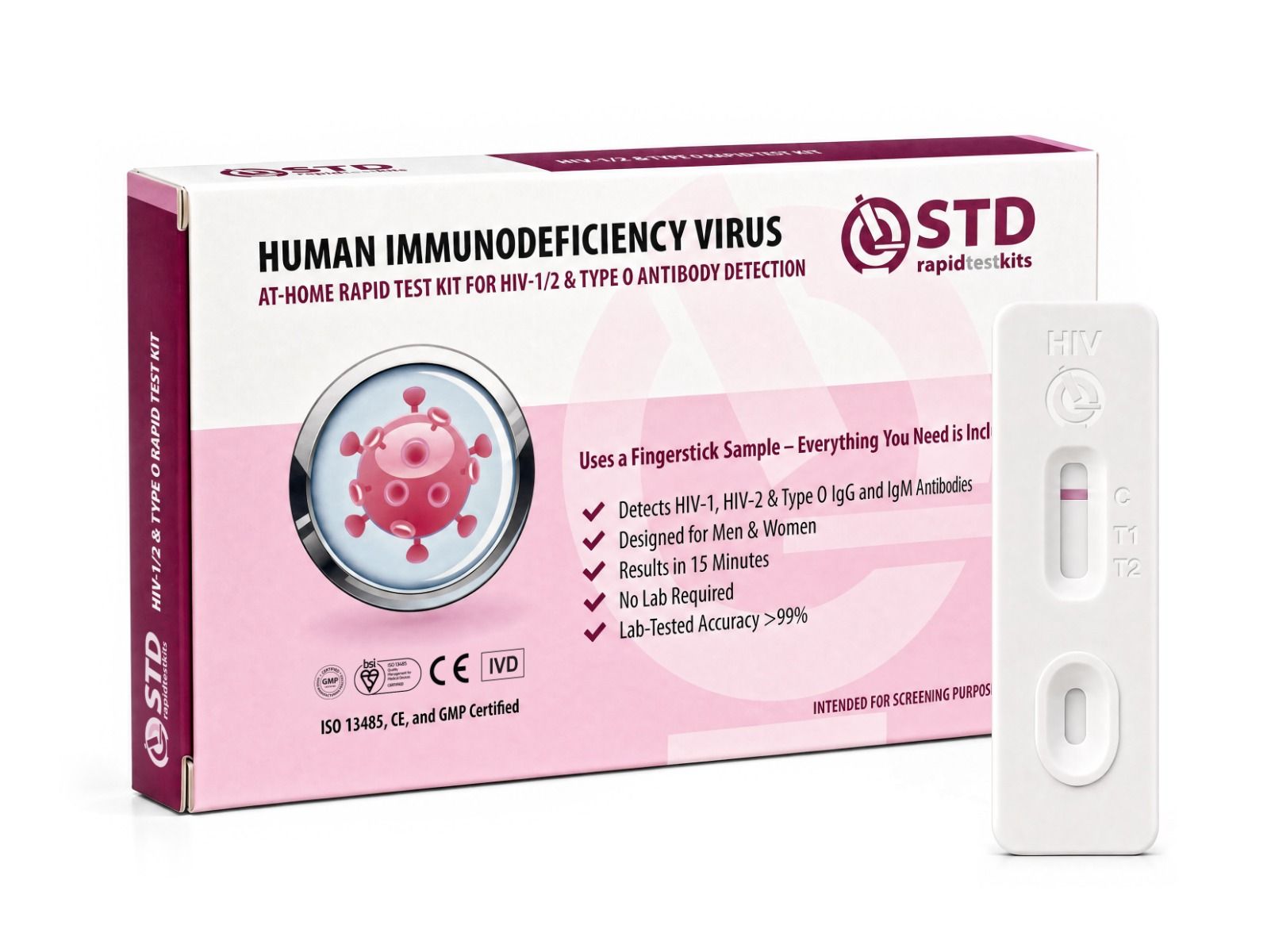
Rapid at-home tests, including the lateral-flow cassettes sold on this site, are not NAATs. They are immunoassays. A rapid HIV home test detects HIV antibodies in a fingerstick blood sample. A rapid herpes home test detects HSV antibodies. A rapid swab home test for chlamydia or gonorrhea detects bacterial antigens on the swab. These are different chemistry from a lab NAAT, with their own strengths (privacy, speed, no clinic visit) and trade-offs (lower analytical sensitivity than a lab NAAT, especially in asymptomatic infections, so a positive home result is worth confirming with a lab NAAT when possible).
| Test category | What it detects | Available at home? |
|---|---|---|
| NAAT / PCR | Genetic material (DNA or RNA) of the infection itself | Lab only — recommended test for chlamydia and gonorrhea per CDC |
| Antibody | Pathogen-specific antibodies your immune system makes after real infection | Yes — fingerstick rapid tests for HIV, herpes, syphilis, hepatitis B and C |
| Antigen / antigen-antibody combo | Proteins from the pathogen, sometimes paired with antibody detection | Lab fourth-generation HIV; some rapid swab tests detect bacterial antigens |
What the research says about vaccines and STI test accuracy
Public-health agencies that monitor vaccine surveillance (CDC, WHO, NHS) reach the same conclusion as the basic immunology: routine vaccines do not interfere with the standard tests used to detect sexually transmitted infections. Vaccine-induced immune responses are antigen-specific by design. Your immune system makes antibodies that recognize the vaccine's target (the HPV virus-like particle, the SARS-CoV-2 spike protein, the inactivated influenza protein), and those antibodies do not cross-react with the unrelated pathogens an STI test is looking for.
What that means in practical terms: a recent HPV vaccine does not produce antibodies that the HIV antibody test or the herpes IgG test can mistake for an STI. A recent COVID-19 mRNA dose does not generate proteins the chlamydia NAAT or gonorrhea NAAT can amplify by accident. A flu shot does not change the way a syphilis treponemal test reads.
The HPV vaccine is a useful illustration. The CDC's Pink Book chapter on HPV explains that the vaccine's L1 proteins "self-assemble into noninfectious, nononcogenic units called virus-like particles (VLPs)" — empty protein shells, no HPV genetic material (CDC Pink Book, Chapter 11: Human Papillomavirus). Because the VLPs contain no HPV DNA, the vaccine cannot make an HPV swab test come back positive, and it cannot affect any unrelated STI test.
One narrow exception is worth flagging here, even though it does not apply to the vast majority of readers. Some experimental HIV vaccines (still in clinical trials, not approved or licensed) intentionally generate anti-HIV antibodies as the whole point of the trial. Clinical researchers have documented this as vaccine-induced seropositivity (VISP), where standard HIV antibody tests can read positive even though the person does not have HIV. Trial participants are typically given documentation and access to a discriminatory test that distinguishes vaccine antibodies from infection antibodies. If you are not in a clinical trial for an experimental HIV vaccine, this exception does not apply to you.
| Vaccine | Effect on STI tests | What you would see if you tested |
|---|---|---|
| HPV vaccine (Gardasil 9) | None | Tests for HPV, chlamydia, gonorrhea, herpes, syphilis, hepatitis, and HIV are unaffected. Test anytime. |
| COVID-19 (mRNA, viral vector, or protein subunit) | None | All standard STI tests read normally. Test anytime. |
| Annual flu shot | None | All standard STI tests read normally. Test anytime. |
| Hepatitis B vaccine | Vaccine-induced anti-HBs antibodies are expected (a sign of protection) | The HBsAg test for active hepatitis B infection is unaffected. Antibody panels should be interpreted by a clinician aware of vaccine status. |
| Experimental HIV vaccine (clinical trial only) | Can cause vaccine-induced seropositivity (VISP) on standard HIV antibody tests | Trial participants are given documentation and a discriminatory follow-up test. |
Antibiotics: a different story
The thing readers often confuse with vaccine interference is recent antibiotic use, which actually can shift what an STI test detects. The test is performing correctly. The result reflects an infection that has been partially or fully cleared before the sample was taken.
Antibiotics treat bacterial STIs (chlamydia, gonorrhea, syphilis). If you took azithromycin, doxycycline, ceftriaxone, or another antibiotic in the days before testing (whether because you suspected an STI, were prescribed empirically, or took an antibiotic for an unrelated reason), the bacterial load in your sample may already be dropping. A NAAT swab can come back negative within 24 to 48 hours of starting effective antibiotic treatment for chlamydia or gonorrhea, even if you genuinely had the infection.
This matters in two situations. First, if you want to confirm the infection was there (so partners can be notified and treated), test before antibiotics begin if possible, or wait the recommended retest window before swabbing again. Second, after treatment, the CDC recommends retesting approximately 3 months after treatment for chlamydia to check for reinfection, regardless of whether sex partners were also treated (CDC STI Treatment Guidelines, Chlamydia). The 3-month retest exists to catch reinfection from an untreated partner, not because antibiotics make the test inaccurate.
Antivirals work the same way for the viruses they target. If you are on daily valacyclovir or acyclovir for herpes, a swab of an active lesion has less virus to detect, which can produce a false negative on a swab-based herpes test. Antibody-based herpes blood tests still work the same way, since antibodies stay in the bloodstream long after the active infection is suppressed.
This is the part of the conversation where home rapid testing fits naturally. If you started antibiotics empirically and want to confirm whether the infection was present, you can wait the recommended window and test at home. The HIV blood antibody test, in particular, is unaffected by antibacterial antibiotics (HIV is not bacterial), so an HIV result after antibiotic treatment is as reliable as before.
Immune-suppressing medication and one narrow exception
Living with significant immune suppression is the other category that can affect STI testing. The medications and conditions that fall into this group include:
- Active chemotherapy
- High-dose corticosteroids taken long-term
- Biologic immunomodulators (such as TNF-alpha inhibitors and certain interleukin-blocking agents) used for autoimmune conditions
- Anti-rejection therapy after organ transplant
- Untreated advanced HIV with very low CD4 counts
For tests that detect genetic material (NAATs and PCR for chlamydia, gonorrhea, hepatitis B and C nucleic acid testing), immune suppression does not change the result. The bacterium or virus is either present or not, regardless of how strong your immune response would otherwise be.
For antibody-based tests, immune suppression can extend the window period. If your body is producing fewer antibodies overall, it may take longer for an HIV antibody test, herpes IgG test, or syphilis antibody test to show a positive result after exposure. The test still works; it just may need a longer wait. Clinicians often recommend retesting at extended intervals (such as 12 weeks for HIV antibody testing in immunocompromised patients) and may use NAAT-based viral load testing to confirm or rule out infection more directly.
This is also where the experimental HIV vaccine exception lands. People enrolled in HIV vaccine clinical trials should always disclose trial enrollment when seeking HIV testing outside the trial setting, because the standard antibody test will not distinguish vaccine-induced antibodies from infection-induced ones without a discriminatory follow-up test.
NAAT and PCR (chlamydia, gonorrhea, hepatitis B and C nucleic acid) are unaffected by immune suppression and can be used on the standard timeline. Antibody-based tests (HIV, herpes IgG, syphilis treponemal) may need an extended retest window of 12 weeks or longer for a reliable negative. A clinician familiar with your immune status can help pick the right test type and timing.
Why timing matters more than your vaccine card
If a vaccine cannot affect the test, what does affect it? The window period. Every STI has a stretch of time after exposure during which the infection is replicating but has not yet reached detectable levels for the assay being used. Testing inside that window gives a false reassurance: the test reads negative because there is not enough of the infection (or its antibody) to detect, even though the person is infected.
This is the single biggest source of inaccurate negative results in home and clinic testing, and it has nothing to do with what is on the vaccine card. The window period depends on the infection itself, the test technology, and the individual immune response.
The figures below align with current CDC guidance for clinical assays. Home lateral-flow tests follow similar windows but are typically conservative; check the specific product's instructions for use, since some report slightly longer recommended windows than the lab equivalents (CDC STI Treatment Guidelines, Genital Herpes).
| Infection | Earliest detection | Most reliable result | Test type |
|---|---|---|---|
| Chlamydia | Approximately 1 week post-exposure | Around 2 weeks post-exposure | Lab NAAT (urine or swab); home rapid swab |
| Gonorrhea | Approximately 1 week post-exposure | Around 2 weeks post-exposure | Lab NAAT (urine or swab); home rapid swab |
| Syphilis | 3 to 6 weeks post-exposure | 12 weeks post-exposure | Treponemal and non-treponemal blood antibody tests |
| HIV (4th-gen lab Ag/Ab) | 18 to 45 days post-exposure | 45 days post-exposure | Lab fourth-generation Ag/Ab combination |
| HIV (rapid antibody home test) | 23 to 90 days post-exposure | 12 weeks post-exposure | Lateral-flow rapid antibody |
| Herpes (HSV-1 or HSV-2) | 3 to 6 weeks post-exposure | 12 weeks post-exposure | IgG antibody blood test (lab or home) |
| Hepatitis B (active infection) | 3 to 9 weeks post-exposure | 12 weeks post-exposure | HBsAg blood test (lab or home) |
| Hepatitis C | 4 to 10 weeks post-exposure | 12 weeks post-exposure | Anti-HCV blood test plus confirmatory NAAT |
What to do if you tested too soon
If a recent vaccine prompted you to test (which is a healthy instinct, not a problem), and your test was inside the window period for the infection you are concerned about, the right move is a follow-up test at the right time. Retesting is normal practice in sexual health, not a sign that something went wrong.
For example: a fingerstick rapid HIV antibody test taken three days after a possible exposure is too early to detect HIV. The test is performing correctly; the antibodies have not yet developed. The same applies to a herpes IgG blood test taken two weeks after exposure, since most people do not develop detectable IgG antibodies until 12 weeks after acquisition (CDC STI Treatment Guidelines, Genital Herpes). And a syphilis blood test in the first three weeks may show negative because the immune response has not built up yet.
The protocol that public-health clinics follow is to test at the earliest reliable window for the infection of concern, then retest at the most reliable window if the first result was negative and the exposure risk was significant. For HIV after a significant exposure, that often looks like a fourth-generation lab test at 4 to 6 weeks plus a confirmatory test at 3 months. For chlamydia or gonorrhea after a treatment course, it is a retest at 3 months for reinfection.
Home rapid tests fit naturally into this protocol because they are private, inexpensive relative to a clinic visit, and quick. Use them as a screening layer; confirm any positive at a clinic.
The myth that won't go away
One claim that circulates persistently in comment threads and conspiracy posts is that the vaccine itself caused an STI. This is biologically not how STIs work. The infections classified as STIs (chlamydia, gonorrhea, syphilis, herpes, hepatitis B, hepatitis C, HIV, HPV, and trichomoniasis) require direct transmission through fluids, mucosal contact, blood, or skin-to-skin contact. None of them are present in a routine vaccine, which contains either inactivated antigens, weakened virus, viral protein subunits, or mRNA encoding a single specific antigen.
What sometimes does happen is that a person tests for the first time after a vaccine appointment. The test reveals an infection that was already present before the vaccine, possibly for months or even years (asymptomatic infections are common, particularly for chlamydia and HSV-1). The vaccine did not cause the infection; it correlated in time with the testing decision. The WHO's STI fact sheet describes the actual transmission routes and prevention tools (including the hepatitis B and HPV vaccines, which prevent specific infections by training the immune system rather than introducing them) (WHO sexually transmitted infections fact sheet).
Another version of the myth says vaccines weaken the immune system, leaving you more vulnerable to acquiring an STI. The current evidence is the opposite. Routine vaccines train the immune system against a specific target without producing broad immunosuppression. People living with significant immune suppression (the medication categories above) acquire STIs at rates similar to the general population if behavioral risk is similar, and the testing approach is adjusted accordingly, not abandoned.
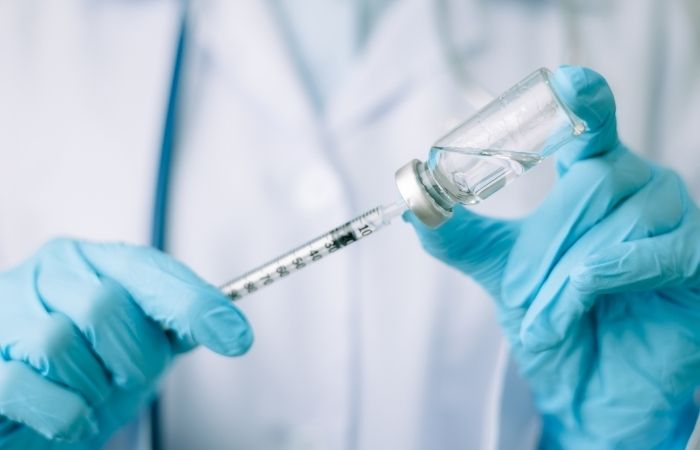
Vaccines work by imitating an infection to engage the body's natural defenses.
Your next step
If a recent vaccine is the only reason you are hesitant to test, here is what the evidence supports: take the test. Routine vaccines do not change the result, and the most common reason a home or clinic test reads negative when an infection is present is timing inside the window period, not vaccine interference.
If you have a specific exposure concern, time the test for the most reliable window for the infection involved. If you are taking antibiotics or antivirals, factor in the pharmacology: bacterial STI tests should be timed before treatment or at least 7 days after, and a swab-based herpes test on a suppressed lesion can give a false negative even though a herpes blood antibody test still works.
If you are immunocompromised, plan on extended retesting windows for antibody-based tests and have a clinician interpret your results in context. The test is performing as designed; it just needs more time to register a positive when the antibody response is slower.
FAQs
- Can the HPV vaccine affect an STD test result?
- No. The HPV vaccine contains virus-like particles that do not contain HPV DNA, so it cannot show up on an HPV swab test or on any unrelated STI test. If a chlamydia, gonorrhea, syphilis, herpes, hepatitis, or HIV test reads positive after a recent HPV vaccine, the infection was either present before the vaccine or acquired through a separate exposure.
- Do I have to wait after a vaccine before testing for STIs?
- No. Whether the vaccine was HPV, COVID-19, flu, hepatitis B, or any other routine vaccine, you can test for STIs the same day or any time after. The vaccine does not change what the test detects.
- Can antibiotics cause a false negative on an STI test?
- Yes, and the practical decision rule is short: wait at least 7 days after starting antibiotics before swabbing, or test before treatment begins if possible. The reason is that antibiotics for chlamydia, gonorrhea, or syphilis begin clearing the bacteria within 24 to 48 hours, which can drop the bacterial load below the threshold a NAAT or rapid swab test detects. Confirmatory blood testing for syphilis can be done across this window since antibodies persist.
- Will a recent COVID-19 vaccine affect an HIV test?
- No. mRNA, viral vector, and protein subunit COVID-19 vaccines all generate a response specific to the SARS-CoV-2 spike protein. There is no cross-reactivity with the HIV antibody test or the fourth-generation HIV antigen/antibody combination test. Test for HIV at any point before or after a COVID vaccination.
- If I am immunocompromised, can I still trust an STI test?
- Yes, with one timing adjustment. If you are on chemotherapy, high-dose corticosteroids, biologic immunomodulators, or live with advanced HIV, antibody-based tests may take longer to register a positive after a real exposure because your antibody response is slower. NAAT and PCR tests, which detect the genetic material of the infection directly, are not affected. A clinician familiar with your immune status can recommend the right window and the right test type.
- How soon after exposure can I test for herpes and trust the result?
- Herpes IgG antibody tests reach reliable accuracy at 12 weeks post-exposure for both HSV-1 and HSV-2, per CDC STI Treatment Guidelines. Earlier than that, a negative IgG result does not rule out infection because seroconversion may not have happened yet. If you have an active lesion, a swab PCR taken from the lesion is reliable in the moment, but for an asymptomatic exposure window, blood antibody testing at 12 weeks is the standard approach.
- I am vaccinated against HPV. Do I still need to test for other STIs?
- Yes. The HPV vaccine protects against the high-risk HPV strains it covers (typically the strains responsible for the majority of cervical, anal, and oropharyngeal cancers). It does not protect against chlamydia, gonorrhea, syphilis, herpes, hepatitis, HIV, or HPV strains not covered by the vaccine. Routine STI screening is still recommended on the schedule appropriate for your age, sex, and exposure history.
- Can taking antivirals for herpes affect a herpes test result?
- It can affect a swab-based test. Daily valacyclovir or acyclovir suppresses viral shedding, so a swab of an asymptomatic or healing lesion may not contain enough virus for a PCR test to detect. Blood antibody (IgG) testing for herpes still works, since antibodies persist in the bloodstream regardless of antiviral suppression.
This guide synthesizes current public-health guidance from the U.S. Centers for Disease Control and Prevention, the World Health Organization, and the U.K. National Health Service, alongside the principles of immunology that explain how vaccines and STI test technologies function. We do not provide individual clinical advice. For decisions about your specific exposure, vaccination history, or test result, work with a licensed clinician.
- U.S. Centers for Disease Control and Prevention. STI Treatment Guidelines, Chlamydial Infections: NAAT recommended as the diagnostic test for chlamydia; 3-month retest after treatment to detect reinfection.
- U.S. Centers for Disease Control and Prevention. Pink Book, Chapter 11: Human Papillomavirus. Describes HPV vaccine composition: L1 proteins self-assemble into noninfectious, nononcogenic virus-like particles (VLPs) with no viral genetic material.
- U.S. Centers for Disease Control and Prevention. STI Treatment Guidelines, Genital Herpes: HSV-2 type-specific antibody test sensitivity and recommended 12-week repeat antibody testing window after suspected acquisition.
- U.S. Centers for Disease Control and Prevention. Explaining How Vaccines Work: vaccines engage the body's natural defenses through antigen-specific immune responses that do not cross-react with unrelated pathogens.
- World Health Organization. Sexually transmitted infections (STIs) fact sheet: global epidemiology, transmission routes, and the role of hepatitis B and HPV vaccines as STI prevention tools.
- U.S. Centers for Disease Control and Prevention. Hepatitis B clinical testing and diagnosis: HBsAg interpretation and the role of vaccine-induced anti-HBs antibodies.
