Published: December 2025 | Last updated: May 2026 | Editorial review and quality control: Martina N.
An at-home herpes test can cost $25 at one site and $150 at another. The temptation is to grab the cheapest one and move on. The number on the box only tells part of the story, though. What you are really paying for is what the test detects, when it can detect it, whether it covers both HSV-1 and HSV-2, and what kind of support shows up if the result is unclear or positive.
This guide walks through what changes as the price climbs, what stays the same no matter what you spend, and how to pick a kit that fits the question you actually need answered.
Key Takeaways
- At-home herpes tests run from about $25 to $150. The cheapest are single-target rapid cassettes; mid-range and premium kits add lab analysis, both HSV types, and follow-up support.
- Timing matters more than price. Blood antibody tests need roughly 4 to 12 weeks after exposure to be reliable, no matter what you spent on the kit.
What Drives the $25 to $150 Price Gap?
On paper, every herpes test does the same job: looks for evidence of HSV-1 or HSV-2 infection. In practice, three things move the price up.
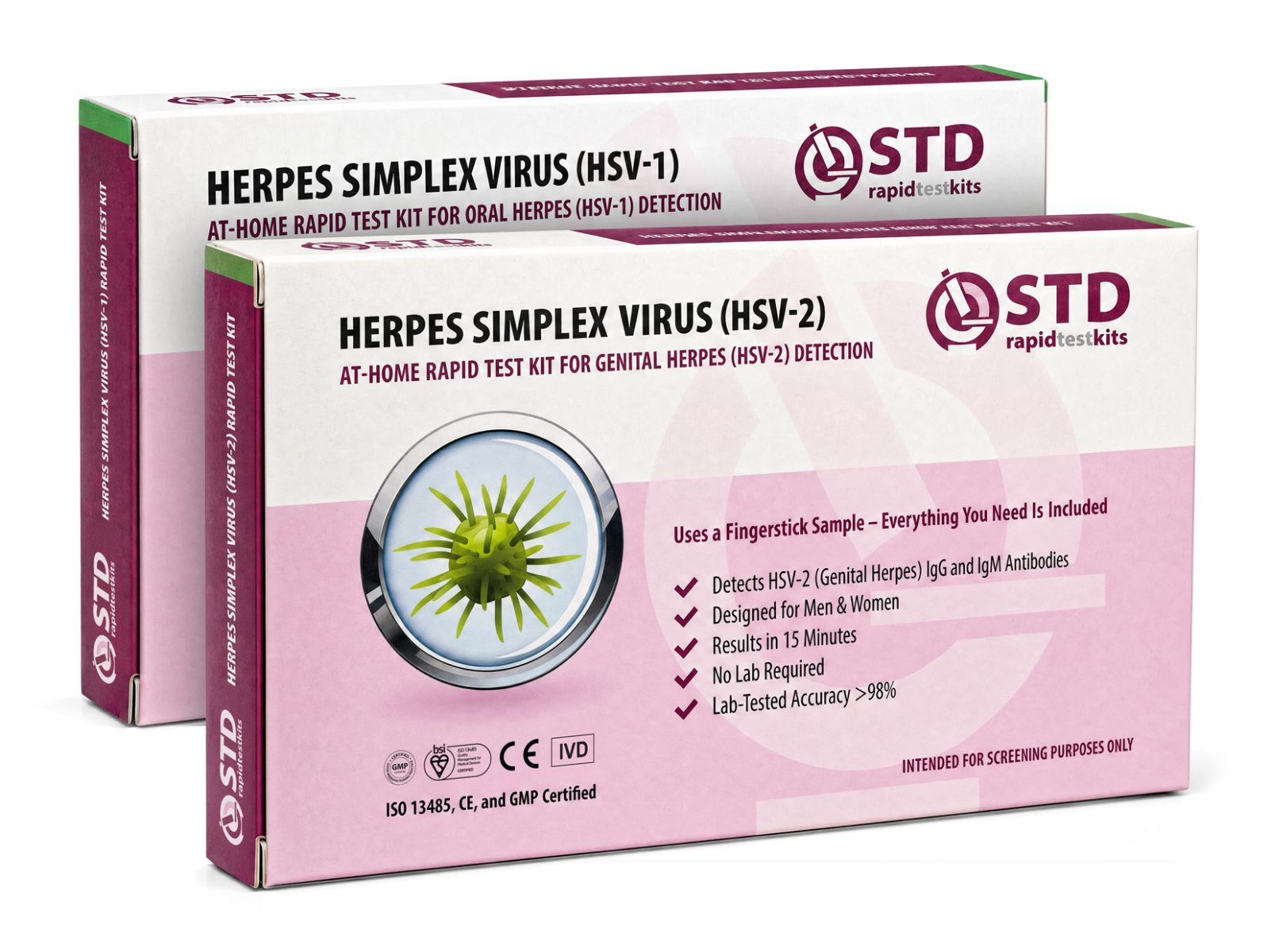
The first is what gets tested. The cheapest rapid cassettes often only screen for HSV-2 antibodies. Higher-priced kits cover both HSV-1 and HSV-2, which matters because HSV-1 now accounts for a meaningful share of new genital herpes cases in some populations, per CDC genital herpes guidance.
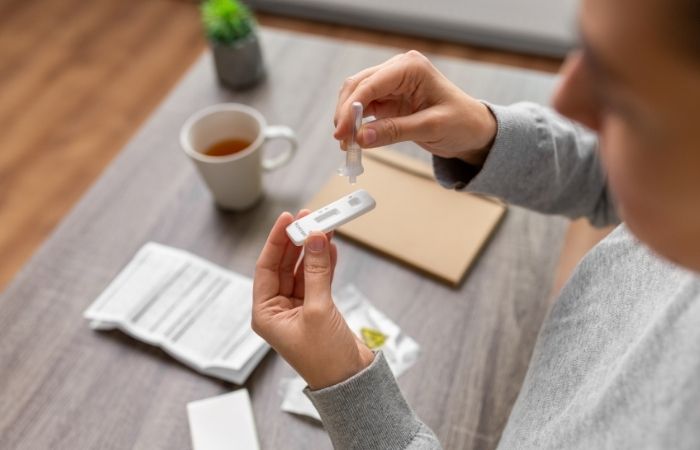
The second is who reads the result. With a rapid lateral-flow cassette, you read the line yourself, the same chemistry used in a COVID antigen test. With a mail-in kit, your fingerstick blood goes to a laboratory that runs a quantitative IgG immunoassay and sends back a digital report.
The third is what comes after the result. Premium kits often include a telehealth consult or written guidance on what a positive result means and what to do next. Bare-bones rapid kits hand you a line on a strip and leave the interpretation to you. None of these are NAAT or PCR tests; those are laboratory technologies used on swabs from active lesions, and they fall outside what at-home antibody kits do.
| Test Format | Price Range (USD) | What You Get | Result Time |
|---|---|---|---|
| Rapid at-home cassette | $25 to $45 | Lateral-flow strip, lancet, buffer, instructions | 10 to 20 minutes |
| Mail-in fingerstick | $75 to $130 | Lab IgG analysis, digital report, optional telehealth | 2 to 5 business days |
| Lab voucher via online portal | $90 to $150 | Local lab draw, secure result portal, doctor review | 3 to 7 business days |
What Cheap Tests Often Skip
A $29 test sounds like a relief until you read the fine print. Some of the cheapest kits on the market only test for HSV-2 antibodies, leaving HSV-1 unchecked. Some skip the FDA clearance step entirely. Some ship from suppliers with no manufacturer contact and no expiration date on the packaging.
The other gap is the type of antibody being detected. Many discount kits look for IgM antibodies, the first antibody class the body produces after a new infection. The CDC's STI Treatment Guidelines for genital herpes specifically advise against herpes IgM testing because it produces false positives at a high rate and cannot reliably distinguish a new infection from an older one. If the box does not specify type-specific IgG antibodies, the data on the readout may not be diagnostically useful.
Paying more does not guarantee clarity either. Some mid-range mail-in kits still skip HSV-1, route results through a third-party portal, or include no follow-up support. The price tag and the value of the test are not always lined up. What you want to check, regardless of cost, is what the test detects, what kind of antibodies it looks for, and what happens after the result lands.
Why Timing Matters More Than Price
Most people who buy a herpes test do it after a specific event: a partner's diagnosis, a new sexual partner, an unexpected symptom. The instinct is to test as soon as possible. With antibody tests, that instinct can produce a misleading negative. The body has not yet produced detectable antibodies; the kit did its job.
Herpes antibody tests, whether $30 or $130, share the same biology. The immune system typically needs several weeks after exposure to produce IgG antibodies at detectable levels. CDC guidance lists 12 weeks as the upper window for full reliability of antibody-based testing. Testing on day 3 with the most expensive kit on the market is still likely to read negative.
The exception is direct viral testing. If you have an active sore, a clinic can swab the lesion and use viral culture or PCR to detect HSV directly, often within the first week of symptoms. This is a different sample type, only available with a visible lesion, and it is not what at-home antibody kits do. If you are reading this with an active outbreak, a clinic swab is the more useful next step.
| Test Type | Sample / Method | Earliest Reliable Time After Exposure |
|---|---|---|
| Lab IgG antibody (fingerstick or venous blood) | Blood-based IgG immunoassay | 4 to 12 weeks |
| Rapid at-home cassette | Fingerstick whole blood, lateral-flow | Around 4 to 6 weeks (manufacturer dependent) |
| Clinic viral culture or PCR | Swab of active lesion | 1 to 7 days after symptoms appear |
How Clinic and Insurance Costs Compare
Public health clinics and urgent care centers offer herpes testing, but the experience and the bill vary widely. Free or low-cost public testing programs often do not include herpes by default; the CDC's STI screening recommendations do not list routine herpes screening for asymptomatic adults, so many clinic intake protocols skip it unless you have an active symptom or a specific exposure history.
If you do get tested through a clinic, expect a few patterns. Urgent care and primary care visits typically run $100 to $250 out of pocket for the visit plus the lab work, and insurance coverage depends on whether your plan considers the test medically necessary. Many plans label asymptomatic herpes screening as elective. Sexual health clinics tend to use sliding-scale pricing for the visit, with the lab itself running $90 to $130. Online lab referrals are typically $79 to $109 and are usually not billed to insurance.
| Location | Test Type | Out-of-Pocket Cost | Insurance Coverage |
|---|---|---|---|
| Sexual health clinic (sliding scale) | IgG antibody (lab) | $90 to $130 | Partial or full, varies by plan |
| Urgent care or primary care | Swab (viral culture or PCR) or blood IgG | $100 to $250 | Often covered with symptoms documented |
| Online lab referral (mail-in) | IgG fingerstick or lab draw | $79 to $109 | Usually not accepted |
How to Tell a Quality Kit From a Sketchy One
Four checks separate a kit worth using from one that just wastes money.
What is the cheapest reliable herpes test?
The least expensive option that still meets common quality markers is a type-specific IgG rapid test or a mid-range mail-in fingerstick kit, typically $35 to $90. Used at least 4 to 12 weeks after exposure, both formats can give a usable result. Anything cheaper that only covers HSV-2 or uses IgM detection is more likely to give a misleading answer than to save you money.
The Four Trust Markers to Check
Type-specific testing. Does the kit clearly state that it tests for both HSV-1 and HSV-2 separately? If the box only mentions “herpes” or “HSV” without specifying the type, assume it only covers HSV-2 or cannot distinguish between them. Either reduces the value of the result.
Regulatory status. Is the test FDA cleared, CE marked, or sold by a vendor that lists regulatory information openly? Avoid kits with no manufacturer name on the box and no contact information for the seller.
IgG, not IgM. The kit should specify that it detects IgG antibodies. IgM testing has well-documented accuracy problems and is not recommended for herpes diagnosis by CDC or in the current CDC STI Treatment Guidelines.
Result format and follow-up. Will you get a clear positive or negative report (a digital readout for lab-processed tests, clear line-reading instructions for rapid cassettes) and access to follow-up support if the result is unclear? A faint line on a strip with no support to interpret it is the worst-case scenario.
When to Retest, and Why
One negative result is not always a final answer. If you tested too soon after exposure, or if your kit only covered one HSV type when you might have been exposed to either, a follow-up test makes sense. CDC guidance is that antibody-based testing can take up to 12 weeks to become reliable, so a negative inside that window is best treated as preliminary.
Typical retest scenarios:
- Tested within the first 0 to 7 days after exposure: a negative result reflects no detectable antibodies yet, not the absence of infection. Retest at 6 to 12 weeks.
- Tested at 3 to 4 weeks: antibody levels may have started to rise but are not always detectable. A confirmation test at 12 weeks is the standard guidance.
- Symptoms present but antibody test is negative: a clinician can swab an active lesion for viral culture or PCR, which is a different sample type and may detect HSV-1 or HSV-2 in the first week of symptoms.
A 12-week retest after a suspected exposure closes the reliability window for antibody-based kits, and most people who need clarity will get it by that point.
IgM testing for HSV-1 or HSV-2 is not recommended, because IgM tests are not type-specific and can be positive during recurrent episodes of either oral or genital herpes.
What Happens If You Test Positive
A positive home test is information, not a verdict. The next step is confirmation. For a rapid cassette result, that typically means a lab-processed type-specific IgG test, run by a clinic or a mail-in lab service. If a visible sore is present, a clinic can swab it for viral culture or PCR, which directly detects HSV and identifies the type.
Once confirmed, treatment options exist. Antiviral medications such as acyclovir, valacyclovir, and famciclovir can shorten outbreaks, reduce their frequency, and lower the chance of transmission to partners. Treatment is typically managed by a primary care provider or a sexual health clinic. The CDC's STI treatment guidelines outline the standard regimens.
The clinical reality of herpes is calmer than the cultural fear around it. The infection is common, manageable with available medications, and not associated with serious long-term health consequences for most people. The World Health Organization estimates that 3.8 billion people under 50 globally carry HSV-1, and 520 million people aged 15 to 49 carry HSV-2. A positive result connects you to information, treatment options, and a clearer path forward, including how and when to disclose to partners.
Bottom Line: Match the Test to the Question
The cost of a herpes test should match the clarity it can provide. A $30 rapid cassette is a reasonable tool if you are 12 weeks or more past exposure, you only need an HSV-2 yes-or-no answer, and the vendor is reputable. A $90 mail-in kit is a better fit if you want both HSV types covered, want lab-grade reporting, or want a clinician available when the result lands.
Price is a real factor. Timing, what the test actually detects, and what happens after the result are bigger ones. If a kit reads positive, book a lab-processed IgG confirmation before acting on the result. If it reads negative inside the 12-week window, schedule a follow-up.
| Your Situation | Best Test Fit |
|---|---|
| 12+ weeks post-exposure, HSV-2 only needed | $25 to $45 rapid cassette from a reputable vendor |
| 12+ weeks post-exposure, want both HSV-1 and HSV-2 | $45 to $90 mail-in fingerstick with lab IgG analysis |
| Inside the 12-week window, asymptomatic | Wait, then test; or test now and schedule a 12-week retest |
| Active sore or lesion present | Clinic swab (viral culture or PCR), not an at-home antibody kit |
FAQs
- Is a $25 herpes test reliable?
- Check the label for three things before buying: type-specific IgG detection, coverage of both HSV-1 and HSV-2, and an FDA clearance or CE mark. A kit that passes all three at $25 is more reliable than one at $60 that fails any of them. Manufacturer transparency (name, contact information, expiration date on the packaging) is the fourth tiebreaker if you are choosing between two kits at similar prices.
- How soon after exposure can I test for herpes?
- Antibody-based tests, whether home rapid kits or lab-processed mail-ins, typically need 4 to 12 weeks after exposure to be reliable. CDC guidance lists 12 weeks as the upper window for full reliability. Testing within the first week or two after exposure often produces a negative that reflects not-yet-detectable antibodies rather than no infection.
- Should I test if I don't have symptoms?
- Many people with HSV-1 or HSV-2 have no clear symptoms but can still transmit the virus. If a partner has tested positive, if you have had unprotected sex with a new partner, or if you simply want to know your status, asymptomatic testing is reasonable. The CDC does not recommend routine herpes screening for the general asymptomatic population, but individual testing is available and not unusual to choose.
- Does insurance cover herpes testing?
- Sometimes, not consistently. Many insurance plans treat asymptomatic herpes testing as elective and do not cover it. Testing for documented symptoms or after a known exposure is more often covered, but coverage varies by plan. At-home kits are not billed through insurance; the cost is out of pocket.
- Can I get a herpes test at urgent care?
- Yes, with two caveats. First, urgent care will often only run a herpes test if you have an active sore that can be swabbed; routine antibody testing is less commonly offered in that setting. Second, the visit plus lab cost typically runs $100 to $250, which can exceed the price of a mid-range at-home kit if your concern is screening rather than an active symptom.
- What does a faint line on a rapid herpes test mean?
- Most rapid lateral-flow tests state that any visible test line, even a faint one, indicates a positive result. Read the manufacturer's interpretation guide carefully. If the result is unclear or you are not confident reading it, treat it as preliminary and confirm with a lab-processed type-specific IgG test.
- Do I need to test for HSV-1 separately from HSV-2?
- For most people, yes. Both HSV-1 and HSV-2 can cause genital infection, and HSV-1 now accounts for a meaningful share of new genital herpes cases in some populations. A test that only detects HSV-2 leaves HSV-1 unmeasured. Look for “type-specific” or “HSV-1 and HSV-2” on the kit label.
- How private are at-home herpes tests?
- Most reputable vendors ship in discreet packaging without identifying the contents on the outside. Lab-processed kits keep results in a password-protected portal, and rapid tests are read at home with no third party involved. Insurance is not billed, so there is no claim record. Privacy is one of the strongest practical reasons people choose at-home testing.
How We Sourced This Article: This guide combines current CDC, WHO, and NHS guidance on herpes testing with practical comparisons of the test formats and pricing tiers available to consumers in 2026. We are explicit about what at-home rapid lateral-flow tests can and cannot do (clinic swabs and lab NAATs are separate technologies), and we do not recommend tests we do not sell.
- U.S. Centers for Disease Control and Prevention. Genital Herpes overview, including transmission, symptoms, and the rising share of genital HSV-1 cases.
- U.S. Centers for Disease Control and Prevention. STI Treatment Guidelines for Genital Herpes, including diagnostic recommendations, the recommendation against herpes IgM antibody testing, and standard antiviral regimens.
- U.S. Centers for Disease Control and Prevention. Herpes testing guidance overview for clinicians and patients.
- U.S. Centers for Disease Control and Prevention. STI Screening Recommendations, including which infections are recommended for routine screening in asymptomatic adults.
- World Health Organization. Herpes simplex virus fact sheet, including global prevalence estimates of 3.8 billion people under 50 with HSV-1 and 520 million aged 15-49 with HSV-2.
- National Health Service (UK). Genital herpes overview, symptoms, and testing pathways.
