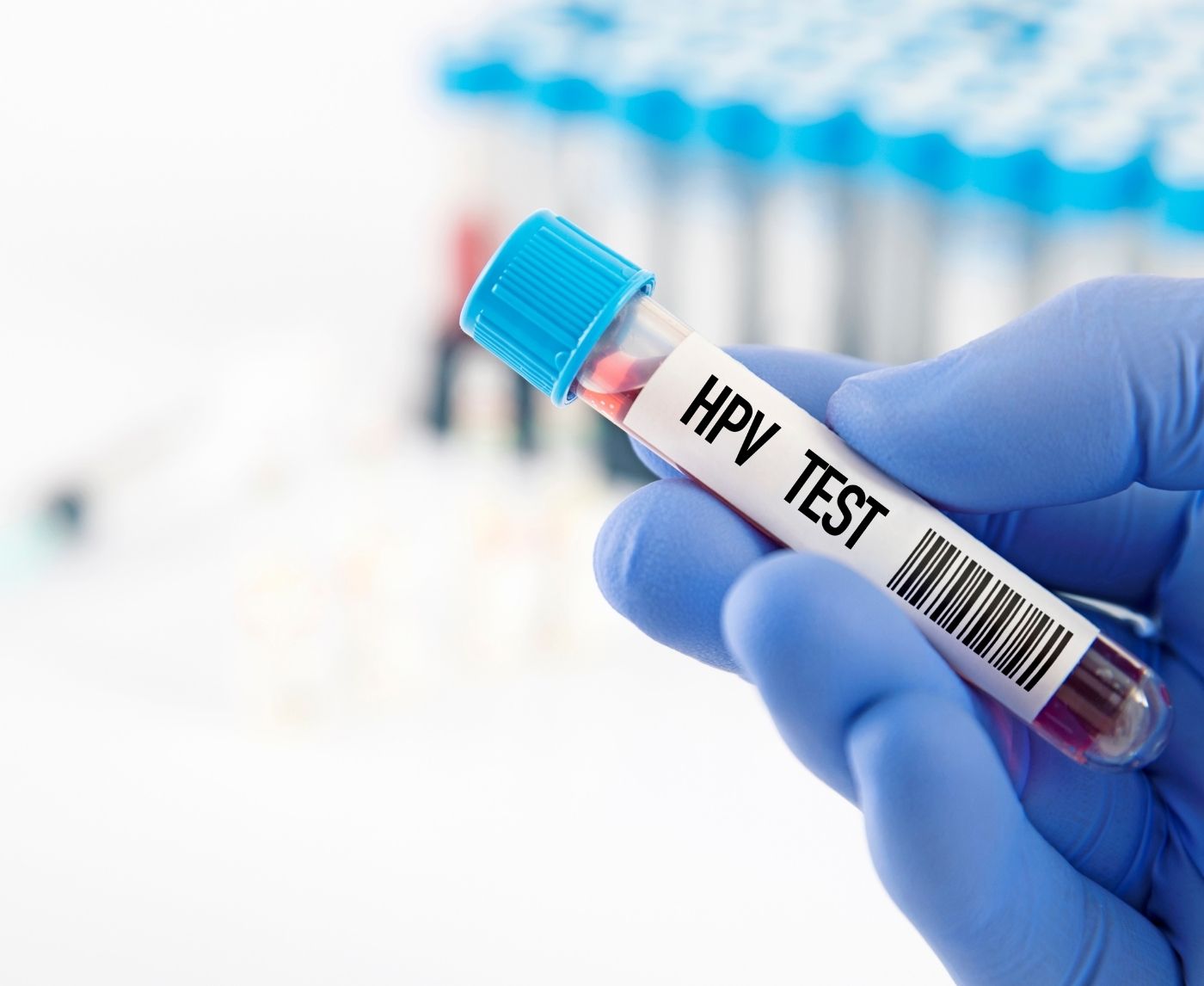
Published: October 2025 | Last updated: May 2026 | Editorial review and quality control: Martina N.
You ordered an at-home HPV test because waiting weeks for a clinic appointment felt impossible. Now the kit is sitting on the bathroom counter, the instructions look denser than expected, and a small voice is wondering: what happens if I do this wrong? That worry is normal. Technique matters with self-collected lateral-flow tests, and a few small mistakes are the difference between a clean result and a do-over.
This guide walks through every step that affects accuracy. How to open the kit and collect the sample without contamination. How long to wait before reading the cassette. What to do when the second line is faint, the control line never appears, or a follow-up test contradicts the first. The goal is a usable answer the first time you run it.
One scope note before going further: our at-home HPV rapid test is validated for vaginal self-swab only, which is the FDA-cleared sample type for HPV self-collection. Male readers concerned about HPV-related symptoms (genital warts, throat changes, anal warts) should see a clinic, since at-home kits for non-vaginal anatomy are not currently available in any cleared form factor. The rest of this article is written for that vaginal self-swab use case.
Key Takeaways
- Most invalid HPV rapid test results trace back to a small set of fixable user errors: touching the swab tip, applying the wrong number of buffer drops, or reading the cassette outside its 15 to 20 minute window.
- A faint test line that appears inside the read window still counts as positive. A second line that develops after the timer expires is usually an evaporation artifact, not a real result.
What's in the Box (and What You Might Miss)
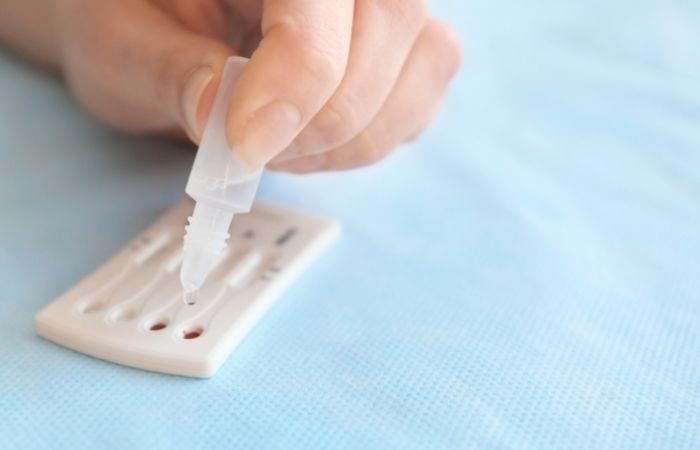
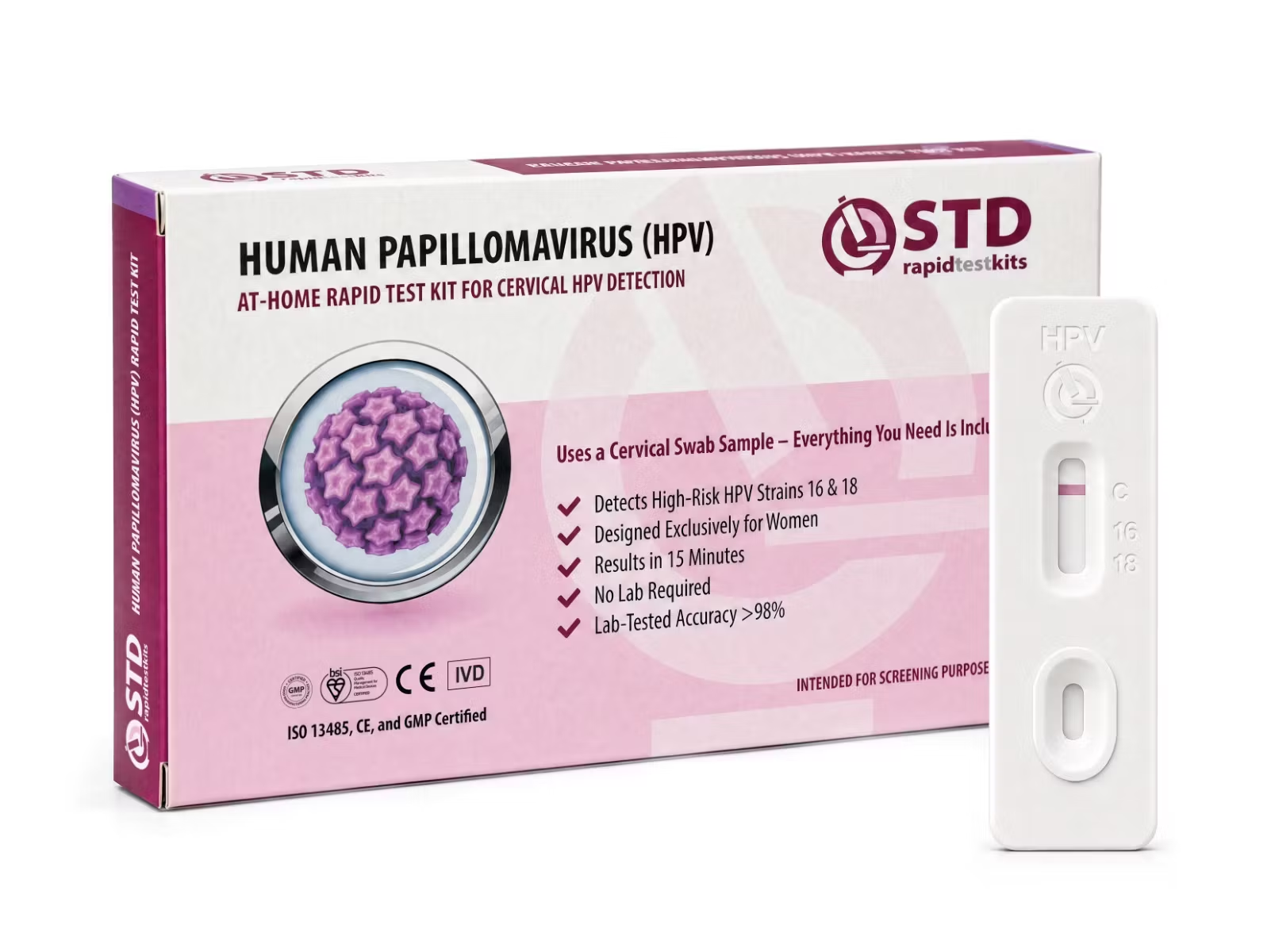
Most at-home HPV test kits include a sample collection swab, a buffer or reagent tube, a test cassette (the part that displays your result), and an instruction sheet. Some kits add gloves, a biohazard bag, or a disposable dropper. The packaging looks medical, but it is designed for ordinary users at home, not lab technicians.
The kit insert tells you what to do. It rarely tells you what not to do. It will not warn you that fresh nail polish residue can contaminate the swab tip, or that pressing the swab too hard against the tube wall can crack it, or that waiting longer than the stated read time can produce ghost lines that look just like a positive. Knowing those failure modes upfront is the entire reason this article exists.
One quick reality check before you open anything: confirm the printed expiration date, check that the foil pouches are still sealed, and look at the test cassette window for any moisture, discoloration, or visible damage. A kit that arrived in a hot mailbox or sub-freezing porch can degrade in ways that show up only as an invalid result later. If anything looks off, contact the brand for a replacement before you collect a sample.
Preparation Is a Mindset, Not Just Hygiene
The bathroom is not a lab. For the next twenty minutes, you are going to treat it like one. That means a clean dry surface, freshly washed hands, and a pocket of time where nothing else is competing for attention. Phone face down. Shower already done. Instruction sheet read once, fully, before any pouch is opened.
HPV detection is a viral DNA test on cells, not on surface fluid. The swab needs to make firm rotating contact with the vaginal wall to pick up enough cells for the assay to work. Half-hearted swabbing is one of the leading causes of false negatives in self-collected samples, which is why following the depth and rotation steps in the kit insert matters so much. The CDC's HPV resources cover the basics of how the virus behaves and spreads (CDC HPV basics); sample quality is something the kit insert speaks to directly.
One last piece of preparation: a phone stopwatch, not the wall clock. Read times for rapid tests are precise, usually 15 to 20 minutes for HPV cassettes. The stopwatch removes guesswork and stops you from reading too early or, far more often, too late.
1. Clean dry surface. Wipe the counter, lay down a clean towel, and keep the kit components on it. 2. Freshly washed hands. Soap and warm water, dry on a clean towel, no fragranced lotion afterward. 3. Phone stopwatch ready. Open the stopwatch app before you collect the sample so you can start it the moment the buffer drops hit the cassette.
Step-by-Step: From Swab to Cassette
Once preparation is done, the actual testing takes most users under fifteen minutes. The order matters, the depth matters, and the timing matters. The sequence below is the canonical flow that almost every at-home HPV swab kit asks you to follow.
The most common point where new users hesitate is depth. Instructions usually specify around 1.5 to 2 inches of insertion with a gentle rotation, often for ten seconds. Too shallow and the swab picks up surface mucus instead of the cells the assay needs. Too forceful and the swab can crack against the buffer tube wall during transfer. Read the depth and rotation instructions twice before opening the swab pouch, and treat them as load-bearing rather than suggestions.
The table below summarizes the typical sequence. Each row maps to one specific accuracy lever in the assay.
| Step | What to Do | Why It Matters |
|---|---|---|
| Wash hands and prep surface | Use soap and warm water; dry with a clean towel | Reduces contamination that can lead to invalid results |
| Insert swab carefully | Insert per insert (usually 1.5 to 2 inches), rotate gently | Ensures cells, not just mucus, are collected |
| Place swab in buffer tube | Swirl or squeeze per insert, then cap it | Releases viral DNA into the liquid for detection |
| Apply drops to cassette | Usually 2 to 3 drops; do not overflow | Excess liquid floods the test window and ruins flow |
| Start timer immediately | Use the exact time window (usually 15 to 20 min) | Reading too soon or too late skews the result |
The Faint Line Problem: Real Result or Just Panic?
Lateral-flow rapid tests use two lines. A control line confirms the test ran. A test line develops only when viral DNA is detected. One line at the control band means a valid negative. Two lines, even when the second line is barely visible, usually means a positive result inside the read window.
The catch is timing. A second line that appears inside the kit's stated read window (typically 15 to 20 minutes) counts as a positive even if it is faint. A line that develops after the window has closed is usually an evaporation artifact, where residual buffer reaches the test pad and binds non-specifically. That is not a positive. That is the strip drying out.
If a line is genuinely ambiguous and developed inside the read window, do not photograph it and zoom or run filters to enhance contrast. The reading is what your unaided eye sees in normal lighting at the read time. When the result is unclear, retest with a fresh kit, or order a mail-in PCR test that gets analyzed in a CLIA-certified lab. PCR has higher analytical sensitivity than rapid lateral-flow chemistry, so it is the better tool for borderline cases.
How do I read my HPV rapid test correctly?
Read the cassette window between 15 and 20 minutes after applying the buffer drops, in normal lighting. One line at the control band is a valid negative. Two lines, even a faint second line, is positive when both develop inside that read window. A line that appears after the timer expires is most often an evaporation artifact, not a real positive, and should not be treated as a result.
What Makes a Test Invalid (and How to Avoid It)
An invalid HPV rapid test returns neither a clear yes nor a clear no, just lost time and money. The technical definition is simple: if the control line never appears, the test failed and the entire result is meaningless regardless of what shows up in the test band. The control line is the proof that buffer flowed through the strip and the reagents reacted as expected. No control line, no answer.
Invalid results happen more often than the kit packaging suggests. The pattern is not random. A handful of repeat user-error mistakes drive the majority of failures, and almost all are preventable on a slower second pass through the instructions. The table below covers the five most common offenders and what to change next time.
Disclosure: stdrapidtestkits.com publishes this article and sells the at-home HPV rapid test kit referenced below. We recommend products based on fit-for-purpose for the reader's concern, not commercial benefit.
| Common Error | What It Does | How to Prevent It |
|---|---|---|
| Touching the swab tip | Contaminates the sample or damages cells | Handle only by the plastic stem and never let the tip touch surfaces |
| Too few or too many drops | Floods or starves the cassette and disrupts flow | Use 2 to 3 drops exactly; pause a beat between each |
| Reading the result too late | Allows evaporation lines to appear; control line may also fade | Use a phone timer; check between 15 and 20 minutes only |
| Improper swab depth | Collects insufficient cells for detection | Follow exact insert instructions for depth and rotation duration |
| Storing the kit improperly | Heat or humidity degrades reagents | Store at room temp; avoid humid bathrooms or freezing mailboxes |
Retesting: When to Repeat and When to Wait
If your first result was invalid, retest. There is no value in interpreting a test where the control line never appeared. If your first result was negative but the timing of the test felt too close to a specific exposure concern, a second test in two to three weeks gives the cells time to shed enough viral DNA to be detectable.
HPV is not like a bacterial STI with a clean window period. Cervical-screening guidance from major cancer organizations frames HPV testing as a screening interval rather than a fixed post-exposure timing test (American Cancer Society). For routine cervical screening of eligible women, primary HPV testing is repeated on an interval set by your provider's current screening schedule. Two to three weeks before retesting is a common practical interval that at-home test brands recommend after an early invalid or negative, but the underlying biology is more about cellular shedding than a fixed window like the one used for bacterial infections.
If anxiety is the real driver of testing right now, that is a valid reason on its own. Test now, plan to retest later if the first result is invalid or borderline, and treat the first result as one data point rather than a final verdict.
Invalid result: retest immediately with a fresh kit. Negative but tested fewer than two weeks after a specific exposure: retest in 2 to 3 weeks. Borderline or faint line: retest in 2 to 3 weeks with a fresh kit, or order a mail-in PCR for a lab-read confirmation. Clear positive: do not retest with another rapid kit; book a clinician follow-up or order a mail-in PCR for confirmation.
Mail-In Lab Tests vs Rapid HPV Tests: Trade-offs That Matter
Both at-home rapid tests and mail-in lab tests start the same way: you self-collect a vaginal swab in your bathroom. They diverge after that. A rapid lateral-flow cassette gives you a result in about fifteen minutes, read by your own eyes. A mail-in test ships your sample to a CLIA-certified lab where it is processed by PCR, and the result comes back in two to five business days with no manual interpretation needed on your end.
Neither is universally better. The right question is which trade-off matches your situation. Speed and self-reading versus a longer wait for a more sensitive analytical method. Cost ranges, error tolerance, and how comfortable you are reading a faint line all factor in.
| Feature | At-Home Rapid Test | Mail-In Lab HPV Test |
|---|---|---|
| Result time | 15 to 20 minutes | 2 to 5 business days after mailing |
| Reading method | User reads the cassette manually | Lab reads a PCR result |
| User error risk | Higher if instructions are skipped | Lower if sample is mailed correctly |
| Typical cost range | $39 to $79 | $69 to $129 |
| Best for | Fast screening with a confident reader | Borderline cases or anxious testers wanting lab reads |
What a Positive HPV Result Actually Means
A positive HPV result is information, not a verdict. It indicates the test detected viral DNA consistent with human papillomavirus on your sample. It does not mean cancer, a current symptom, or anything about your worth as a person seeking intimacy and care.
Most HPV infections clear on their own within two years without treatment, particularly in younger immune systems (CDC HPV basics). High-risk strains that persist beyond two years are the ones associated with cervical cell changes that, untreated over many years, can progress. That progression is slow, well-studied, and routinely caught early through follow-up screening. The window between a positive HPV test and any clinically meaningful change is measured in years, not weeks.
The action plan after a positive home result is straightforward. Confirm the result with either a clinician-collected Pap with HPV cotest or a mail-in PCR. Schedule a telehealth or in-person follow-up to discuss the strain type if it is reported and the recommended interval for the next screening. Telling current sexual partners is reasonable, not because they are in immediate danger but because shared awareness lets both of you make informed decisions about screening and HPV vaccination eligibility.
HPV is so common that nearly all sexually active men and women will get the virus at some point in their lives.
Disposal, Privacy, and Keeping It Nobody's Business
The test is done. Now what do you do with the cassette, swab, and buffer tube? The used components from a rapid lateral-flow test are not classified as medical biohazard waste in most jurisdictions, but you still want to dispose of them in a way that protects your privacy and prevents anyone in your household from accidentally finding them.
Wrap the cassette and swab in tissue, seal them in the foil pouch they came in or in a small zip bag, and put the bundle in your regular household trash. Do not flush the swab, the buffer tube, or any other component. The plastic stems and absorbent pads can clog plumbing, and the buffer is not water in any meaningful sense. The disposal bag included in many kits is meant exactly for this purpose: an opaque sealed container that does not advertise what is inside.
If you live in a shared bathroom or with people who do not know you are testing, the practical move is to time the disposal for the next bin day, or to take the wrapped components to an outside trash bin that gets emptied frequently. Many people find that double-bagging the test inside another wrapper (an empty food box, a coffee bag, an old shopping bag) gives the privacy buffer they actually want.
1. Wrap the cassette and swab in tissue. Bundle the used components together so nothing loose is visible. 2. Seal in an opaque bag. Use the disposal bag from the kit, the original foil pouch, or any small opaque wrapper you already have. 3. Put it in regular household trash. Never flush. If a shared bin is a concern, time disposal for collection day or use an outdoor bin.
When a Second Test Says Something Different
Inconsistent rapid test results are unsettling. A negative one week and a faint positive the next, or vice versa, looks like the test is broken. It usually is not. HPV is a slow-shedding viral infection where the amount of viral DNA on the cervical surface fluctuates over time. Two samples taken weeks apart can genuinely contain different amounts of detectable virus, even from the same person.
That said, real assay variability also exists. Lateral-flow rapid tests have lower analytical sensitivity than lab PCR. Reading a borderline rapid result is harder than reading a quantitative lab signal. If two rapid tests have given conflicting results, the next step is not a third rapid test. The next step is a mail-in PCR or a clinician-collected sample analyzed at a lab. PCR amplifies viral DNA exponentially and reduces the borderline-line ambiguity that rapid cassettes are most prone to.
Conflicting results are not a personal failure. They are a signal that the question needs a more sensitive analytical tool. A clinician or telehealth provider can also help interpret the broader context: vaccination history, prior screening results, current symptoms, and any recent exposures. That context often shifts what the conflicting results actually mean for next steps.
Coping with Testing Anxiety
Most of what people do not talk about with at-home testing is the emotional space between deciding to test and seeing the result. The pacing, the late-night Googling, the small dread that the box is sitting unopened on a shelf because looking at it makes the chest tight. That space is normal. It is not weakness. It is what care looks like when you actually care about the answer.
The practical countermove is to make the testing event itself contained. Set aside thirty quiet minutes. Open the kit, follow the steps, set the timer. While the cassette develops, leave the bathroom and do something neutral: load a podcast, fold a load of laundry, walk a block. Coming back to a finished result is easier than watching the cassette window for fifteen minutes hoping it does or does not develop a second line.
If the result is negative, that is real information you can act on. If it is positive, the next steps are concrete and well-defined. Either way, the anxiety of not knowing is heavier than the anxiety of acting on a known result. The test exists so you can move from the first kind of anxiety into the second.
Your Next Step
If the result was negative and you tested at the right time relative to any specific exposure concern, you have a clear screening data point. Add the date and result to your records, and schedule the next screening at the interval your provider or current cervical cancer screening guidance recommends (NHS HPV guidance covers the basics of how cervical screening is offered).
If the result was positive, confirm with a lab-based test (clinic Pap and HPV cotest, or a mail-in PCR), schedule a telehealth or in-person follow-up, and remember that most positive HPV results lead to a watchful-waiting plan rather than immediate treatment. The protocol is well established and your providers will walk you through it. You are not behind by waiting on follow-up; the timeline of HPV-related cell changes is measured in years.
If the result was invalid or borderline, retest with a fresh kit using everything in this article as a slower second-pass checklist. The second test almost always produces a clean result.
FAQs
- Can you really mess up an at-home HPV test?
- Yes, and not because you are careless. The process is unfamiliar and the stakes feel high. Touching the swab tip, miscounting the drops, reading the cassette too late, or skipping the insert are all common first-time mistakes. The good news: most are easy to avoid on a second pass with a calmer few minutes and an actual phone timer.
- What is the deal with faint lines? Do they count?
- If a second line appears inside the read window (typically 15 to 20 minutes), it counts as a positive even when it is faint. If the line shows up after the timer is up, or looks smudged or cloudy rather than a discrete band, it is more likely an evaporation artifact than a real result. When in doubt, retest with a fresh kit or order a mail-in PCR.
- Does stress change my test result?
- Stress does not change the chemistry of the assay. What it does change is your behavior: you skip steps, misread instructions, or check the cassette at the wrong time. So indirectly, being flustered can affect accuracy. The countermove is a slow read of the insert, a phone timer, and stepping out of the bathroom while the cassette develops.
- How soon after a possible exposure should I test?
- HPV does not have a clean window period the way bacterial STIs do. The virus needs time to colonize cells and reach a detectable level on a swab. Two to three weeks after a specific exposure concern is a common practical interval brands recommend. For routine cervical screening, the timing follows screening guidelines, not exposure timing.
- Should men use this at-home HPV test?
- No. Our HPV rapid test is validated for vaginal self-swab only. There is currently no FDA-cleared at-home HPV self-collection kit for male anatomy. Men with HPV-related concerns (genital warts, oral changes, anal warts) should see a clinic, where a clinician-collected sample or visual exam is the available option.
- Can I reuse a test if it did not work?
- No. Each cassette and swab is single-use. If the result is invalid (no control line, smudged window, or visibly damaged strip), discard the entire kit and start fresh. Reusing parts contaminates the chemistry and any second reading would not be reliable.
- Do I still need a Pap smear if I used an HPV test?
- If you have a cervix and are within the eligible screening age range, yes, follow your provider's recommended cervical-screening schedule. A home HPV test detects viral DNA. A Pap looks for cell-level changes. They answer different questions and are most powerful together as a cotest.
- I tested positive. What now?
- Book a confirmatory clinic Pap with HPV cotest, or order a mail-in PCR for a lab-read confirmation. Then schedule a telehealth or in-person follow-up to discuss the strain type and screening interval. Most HPV infections clear on their own within two years, and treatment, if any, is typically watchful waiting plus repeat screening rather than immediate intervention.
How we sourced this article: we summarized current guidance from leading public-health and cancer organizations and translated it into plain-English steps for at-home decisions. Sources include the U.S. Centers for Disease Control and Prevention, the World Health Organization, the U.K. National Health Service, the American Cancer Society, and ASHA Sexual Health. Our editorial team is not a clinical body, and this article does not replace personalized medical advice. For symptoms or results that worry you, please see a licensed provider.
- U.S. Centers for Disease Control and Prevention. HPV: basics, transmission, screening, and vaccination guidance.
- World Health Organization. Cervical cancer fact sheet, including the role of persistent HPV infection in cervical disease.
- U.K. National Health Service. Human papillomavirus (HPV) overview, screening, and follow-up information.
- American Cancer Society. Root site for HPV and cervical cancer information, screening intervals, and vaccination guidance.
- ASHA Sexual Health. HPV self-collection and patient education resources for at-home and clinic screening.
