Published: November 2025 | Last updated: May 2026 | Editorial review and quality control: Martina N.
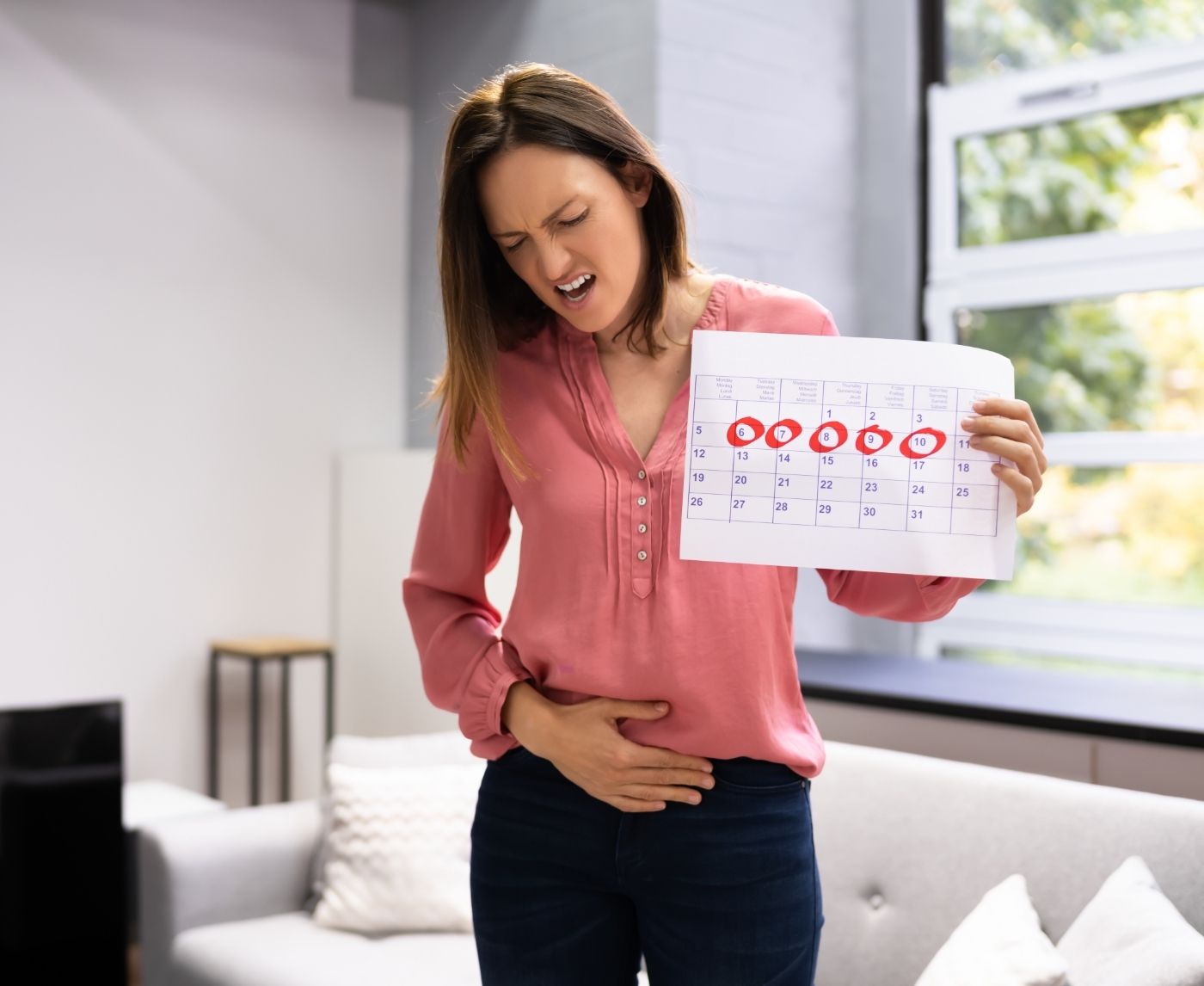
You woke up to bleeding and your testing date is today. The kit is on the bathroom counter. The exposure happened two weeks ago, the timing is right, and your cycle decided to show up anyway. Now the question is whether to test or wait the bleeding out.
The short version: for most at-home and clinic STI tests, your period is a side detail rather than a deal-breaker. The version with the science behind it, and the exceptions called out, takes a few more paragraphs.
Key Takeaways
- Fingerstick blood tests (HIV, syphilis, hepatitis B, hepatitis C, herpes) are unaffected by menstruation. Your cycle does not change what your immune system has produced in your bloodstream.
- Vaginal self-swabs for chlamydia, gonorrhea, trichomoniasis, or HPV stay accurate through light to moderate flow. Only unusually heavy bleeding is worth waiting out, and even then for sample comfort rather than chemistry.
First, let's separate the fear from the science
When someone worries that menstruation will sabotage an STI test, the usual picture is contamination of the sample, a lab rejection, or a false negative slipping through. The fear is reasonable because blood feels like an extra variable when you are already braced for a possible chlamydia, gonorrhea, or HIV result.
The reassuring part is that STI testing is not one technology. Different tests look at different biological signals. Lab nucleic acid amplification tests (NAATs) detect bacterial DNA directly. Lateral-flow rapid antibody tests look for antibodies your immune system has built. Fourth-generation HIV tests also pick up the p24 viral protein. None of those signals are erased by menstrual blood. The bacteria, antibodies, and viral proteins are still in the locations the test samples from, and the chemistry that detects them does not care whether your uterus is shedding tissue elsewhere in your body.
What does matter is which kind of test you are using and where it is sampling from. A fingerstick blood test draws blood on purpose, so menstrual bleeding is irrelevant to a sample you are actively collecting from your fingertip. A vaginal self-swab is collected from the vaginal walls, and during a period you may pick up some menstrual blood along with the cells the test needs. That mixture is rarely a problem, with one exception worth covering carefully.
Blood-based fingerstick tests for HIV, syphilis, hepatitis, and herpes are unaffected by menstruation in every scenario. Vaginal self-swabs for chlamydia, gonorrhea, trichomoniasis, or HPV stay accurate through light to moderate flow. Only unusually heavy bleeding is worth waiting out, and that is a sample concentration issue rather than a chemistry one.
What kind of STD test are you taking?
Picture two people running tests at home on the same day. One is doing a fingerstick rapid HIV test at the kitchen table. The other is self-collecting a vaginal swab for chlamydia and gonorrhea. Both are on day three of their period. The impact of bleeding on those two tests is not equivalent.
Understanding why starts with what each test is sampling and what it is looking for. The table below summarizes the common at-home and clinic-based tests for the infections most people worry about, the sample type each uses, and whether your period changes anything (CDC STD screening recommendations).
| Infection | Sample type (at-home test) | Effect of menstruation |
|---|---|---|
| Chlamydia | Vaginal or penile swab (lateral-flow cassette) | None under light flow; minimal under heavy flow |
| Gonorrhea | Vaginal or penile swab (lateral-flow cassette) | None under light flow; minimal under heavy flow |
| Trichomoniasis | Vaginal self-swab (women-only kit) | None under light to moderate flow |
| HPV | Vaginal self-swab (women-only kit) | None under light to moderate flow |
| HIV | Fingerstick blood (rapid antibody cassette) | None |
| Syphilis | Fingerstick blood (rapid antibody cassette) | None |
| Hepatitis B or C | Fingerstick blood (rapid antibody cassette) | None |
Urine tests at the clinic, swab tests at home
People often search 'can I do a urine STD test while bleeding' assuming home kits use urine. They usually do not. At a clinic, the laboratory gold standard for chlamydia and gonorrhea is a NAAT, which can run on either a urine sample or a swab. Urine collection is not affected by menstruation because the urethra and the vaginal canal are anatomically separate openings: urine flows through the urethra, menstrual blood exits through the vagina (CDC chlamydia fact sheet). As long as the urine cup itself does not pick up surface blood while you wipe and pee, the sample is clean.
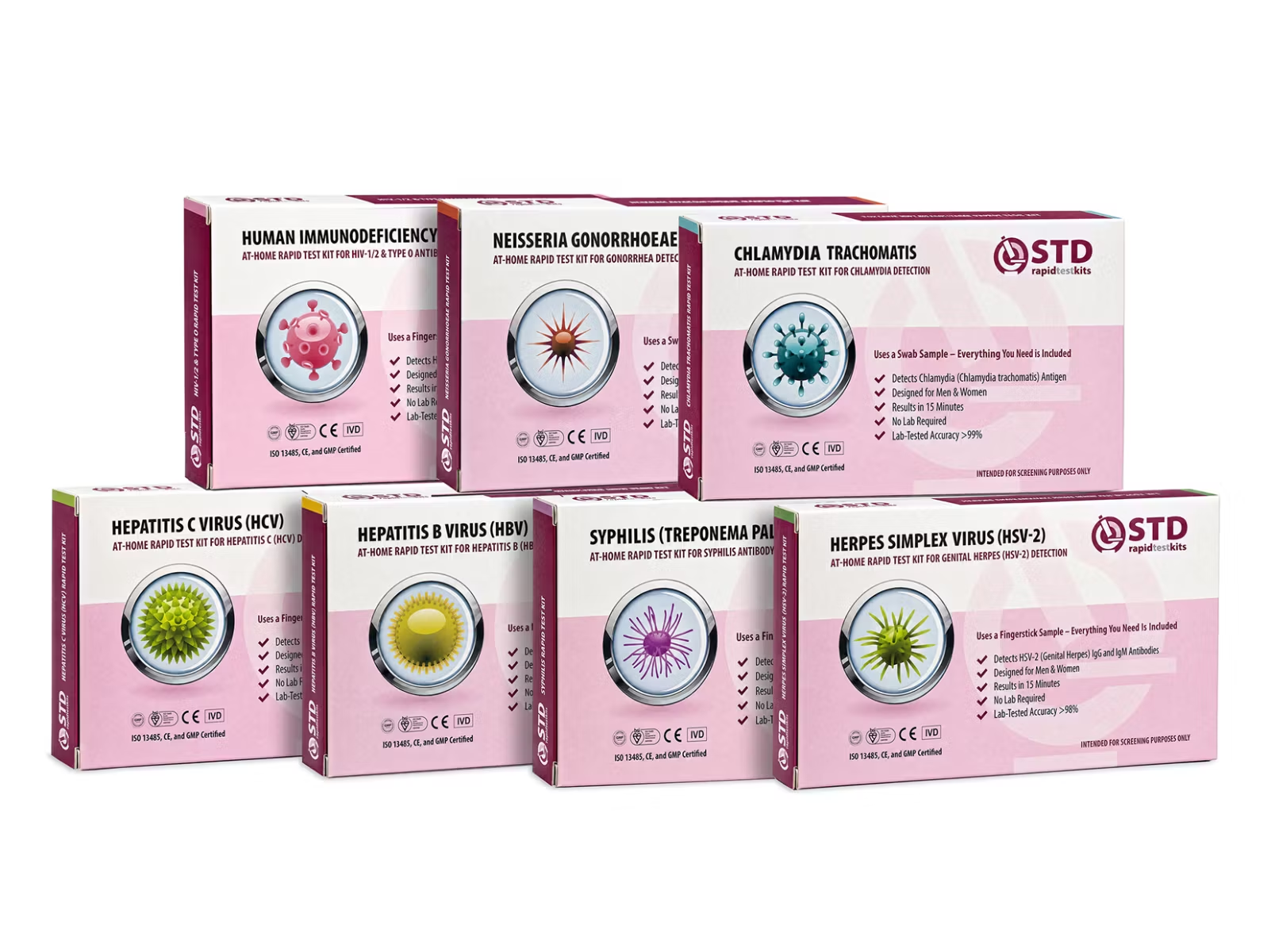
The at-home rapid tests sold on this site do not use urine. They use one of two sample types. Bacterial infections that live on the genital tract (chlamydia, gonorrhea, trichomoniasis, HPV) are detected with a self-collected swab. Bloodborne infections (HIV, syphilis, hepatitis B, hepatitis C, herpes) are detected with a fingerstick drop of blood. Neither sample type is replaced by menstrual fluid, but the swab can pick up some menstrual blood along the way.
That distinction matters because the question 'does my period affect the test' splits cleanly along sample type. Blood test: no effect at all. Swab: a small effect under heavy flow, often still accurate.
What happens during a vaginal swab on your period
Imagine day four of a moderate period. The kit is open. You are working through the instructions and you hit the part where you insert the swab into the vaginal canal. Hesitation arrives, along with the pressure of twelve days since an unprotected exposure and the question of whether to wait another week.
When the swab goes in during menstruation, it collects a mixture of vaginal fluid, vaginal-wall cells, and some menstrual blood. Laboratories that process clinical NAAT samples handle exactly this kind of mixed biological material every day. Menstrual blood is part of the vaginal environment during that part of the cycle and is not a foreign contaminant. The same is true for at-home lateral-flow swab cassettes: they are designed to read antigen presence in a sample buffer, and a small amount of menstrual blood in the mix does not erase the antigen if it is there.
The one situation that earns a real caveat is unusually heavy bleeding. If the flow is heavy enough to dilute the swab sample significantly, fewer target bacteria per microliter make it into the test buffer. The detection chemistry has not changed; the concentration of what it is looking for has. For light or moderate flow, current clinical guidelines treat testing as appropriate.
Heavy flow is the only scenario where a swab gets compromised, and the reason is sample dilution rather than chemistry failure. Light or moderate flow does not change the result. If you are soaking a pad or tampon every hour, a day or two of patience produces a cleaner sample.
Window periods matter more than your cycle
There is a single variable that influences STI test accuracy more than any other, and it is not menstruation. It is how many days have passed since the exposure you are worried about. Each infection has a window period: the time between exposure and the moment a test can reliably detect it. Test before that window opens and you can get a false negative even with a perfect sample. Test inside the window and you have a meaningful result regardless of where you are in your cycle.
The CDC's general framing on test timing is clear: each pathogen has a detection window that follows its own replication and immune-response timeline, and clinical guidance recommends testing relative to exposure date rather than any cycle date (CDC HIV testing overview).
| Infection | Earliest reliable detection (lab) | Recommended at-home test window |
|---|---|---|
| Chlamydia | 1 to 2 weeks (NAAT) | 2 to 3 weeks for the swab cassette |
| Gonorrhea | 1 to 2 weeks (NAAT) | 2 to 3 weeks for the swab cassette |
| HIV | 10 to 33 days (NAAT viral load) | 23 to 90 days for rapid antibody fingerstick; most positives by 12 weeks |
| Syphilis | 3 to 4 weeks (lab treponemal) | 6 to 12 weeks for the rapid antibody fingerstick |
| Hepatitis B | 3 to 6 weeks (HBsAg) | 6 to 12 weeks for the rapid antibody fingerstick |
| Hepatitis C | 4 to 10 weeks (lab antibody) | About 12 weeks for the rapid antibody fingerstick |
Spotting, breakthrough bleeding, or something else?
Not all bleeding is a true period, and the difference can change how you read what you are seeing. Light spotting between cycles, breakthrough bleeding on hormonal contraception, post-coital bleeding, and a regular period all look different but get lumped together in worry. The clinical question is whether the bleeding itself could be a symptom of something the test is meant to catch.
Light spotting on its own does not prevent accurate STI testing. Spotting has even less impact on a swab sample than a heavy flow does, because there is less fluid in the mix. The more useful question is whether the bleeding pattern is new for you. Cervical inflammation from untreated chlamydia or gonorrhea can cause bleeding after sex or between periods, and that is exactly the kind of pattern a test is designed to clarify (NHS chlamydia page).
None of that means every irregular cycle is an STI. Hormonal contraception, stress, recent travel, illness, breastfeeding, and emergency contraception all shift cycle timing. The point is the inverse: if the bleeding looks unfamiliar and you have had a recent exposure, testing is a way to get clarity sooner rather than waiting longer for certainty.
Light spotting alone does not block accurate testing. The question worth asking is whether the bleeding pattern is new for you. New inter-period bleeding after a recent exposure is itself a reason to test, not a reason to wait.
When period symptoms and STI symptoms blur together
Cramps, lower-abdominal ache, fatigue, back pain, and mild nausea all overlap heavily between a normal period and an early pelvic infection. That overlap is what drives searches like 'period cramps or STD' and 'how do I know if it's my period or something else.'
Most common bacterial STIs, including chlamydia and gonorrhea, are often asymptomatic in the first few weeks (CDC gonorrhea fact sheet). When symptoms do appear, they tend to involve unusual discharge, burning on urination, pelvic discomfort outside of normal menstrual timing, or bleeding after intercourse. Typical menstrual cramps that match your usual cycle pattern are rarely the only sign of an STI.
The risk worth focusing on is not testing during a period. The risk is dismissing new or unfamiliar symptoms as 'just my cramps' when something has shifted. If the pain is sharper than your baseline, accompanied by fever, foul-smelling discharge, or pain during sex, testing and a clinical evaluation are stronger choices than waiting another week to see what happens.
A note on what comes next: this site sells the at-home rapid STI panels referenced in this article, and the kit linked below is one of those products.
What if you tested on your period and got a negative?
A common scenario plays out like this. The test happens on day three of a period. The result is negative. Relief lands, then doubt creeps up: was the result accurate, did blood dilute the sample, is a retest needed?
The first question to ask is not about menstruation. It is about timing. If the test happened inside the window period of the infection you were exposed to, meaning earlier than the test can reliably detect that infection, a false negative is possible regardless of cycle phase. If the test happened at or beyond the recommended window and the instructions were followed, the negative is likely real. Menstrual blood does not neutralize bacterial DNA, erase antibodies, or trick antigen detection systems.
There is still a reasonable case for retesting after the period ends, but it is a confidence case rather than a chemistry case. If the flow was very heavy during a swab and the doubt has not settled, a second test once bleeding lightens can quiet the worry. Either way, a retest takes about fifteen minutes at home and does not require explaining a prior result.
Heavy flow: the one scenario that changes the math
Unusually heavy bleeding is the situation worth treating differently. Soaking through a pad or tampon every hour, passing large clots, or feeling lightheaded from blood loss makes a clean vaginal swab harder to collect. More fluid in the mix dilutes the bacterial DNA the test is looking for, and the physical act of swabbing is messier.
In those cases, clinical guidance is to either repeat the swab on a lighter day or use a lab-processed urine NAAT at a clinic. The reasoning is sample clarity, not the test failing on contact with blood. None of this applies to urine testing or blood-based testing. A fingerstick HIV or syphilis test is unchanged by menstruation, and a urine sample is collected through the urethra, which is anatomically separate from the source of menstrual flow.
Tampons and menstrual cups during sample collection
For urine collection, a tampon or menstrual cup does not affect accuracy. Internal menstrual products sit in the vaginal canal, and urine passes through the urethra. The chemistry that detects bacterial DNA in the urine sample is not influenced by anything in the vagina.
For a vaginal self-swab, remove an internal product before collecting the sample. The swab needs contact with the vaginal walls to pick up cervical and vaginal cells, and a tampon or cup blocks that contact. After collection, reinserting the product is fine. The concern is access during the swab, not contamination of the test itself.
People search 'can a tampon affect STD test' because they are nervous about doing something wrong. The kit instructions are written for real conditions, and the tests are designed to work with menstruating users.
For a vaginal swab: remove your tampon or cup before collection, then reinsert afterward. For urine and fingerstick blood tests: no removal needed.
Accuracy: how period bleeding ranks against other mistakes
If we step back and ask what drives inaccurate STI test results, menstruation sits near the bottom of the list. The bigger threats are biological timing and collection error.
| Factor | Impact on accuracy | More significant than menstruation? |
|---|---|---|
| Testing before the window opens | High risk of false negative | Yes |
| Poor swab depth or contact with the vaginal wall | Lower sample quality | Yes |
| Skipping first-catch urine on a clinic NAAT | Reduced bacterial detection | Yes |
| Extremely heavy flow during a swab | Possible mild sample dilution | Usually no |
| Menstruating during a fingerstick blood test | No effect | No |
HIV testing on your period
The HIV-specific question deserves its own answer because the worry tends to run deeper. People search 'HIV test on period accuracy' and 'HIV finger prick on period' imagining that the immune response varies with menstruation in a way that could hide infection. That is not how antibody or antigen testing works.
A rapid HIV test detects either the antibodies your immune system has produced in response to the virus or, in fourth-generation tests, the p24 antigen produced by the virus itself. Once those markers are present in your blood, they are present whether you are bleeding from your uterus or not. The fingerstick samples directly from the capillaries in your fingertip; menstrual flow happens elsewhere, and the two are not biologically connected.
The timing question with HIV is the window period. Rapid antibody fingerstick tests typically become reliable between 23 and 90 days post-exposure, with most positives detectable by 6 to 12 weeks. Fourth-generation antigen-antibody assays at a lab are sensitive earlier, often by 45 days, but the at-home rapid fingerstick antibody test remains in the 23 to 90 day window (HIV.gov testing overview). Testing earlier than that range is the real risk for a false negative result. Menstruating during the test does not change the picture.

Retesting: confidence, not correction
There is nothing wrong with retesting after a period ends if the doubt has not cleared. Retesting in that context is not a correction of an invalid first result. It is a way to put the worry down.
In clinical settings, repeat testing is recommended based on exposure risk, ongoing symptoms, or partner status, not on the day of the cycle at which the first test happened. If the first test was at the early end of an infection's window period (for example, a chlamydia swab on day seven instead of day fourteen), repeating at the peak detection window is reasonable. That is about the biology of the infection, not menstruation. Repeating for confidence after a heavy-flow swab is also a valid reason; clinicians generally support that choice when the doubt is significant.
When a retest is worth doing
- The first test happened before the recommended window opened for that infection.
- Heavy flow during a vaginal swab left real doubt about sample quality.
- New symptoms have developed since the first test was taken.
- A partner has tested positive since the first test.
When bleeding is a symptom, not a cycle
There is one scenario where menstrual timing becomes medically relevant in a different way. If the bleeding is heavier than your baseline, sharply painful, foul-smelling, or paired with fever, severe pelvic pain, or pain during sex, the bleeding itself may not be menstruation. Untreated chlamydia or gonorrhea can progress to pelvic inflammatory disease, which causes that constellation of symptoms (NHS pelvic inflammatory disease page).
In that situation, the priority shifts. The question is no longer whether to test during a period. The question is how quickly to be evaluated in person. PID needs prompt antibiotic treatment, and a delayed diagnosis raises the risk of fertility complications later. An at-home test can be a useful first step alongside a clinic visit, and it should not replace one when severe symptoms are present.
So, should you wait or not?
For light to moderate flow and a urine or blood-based test, there is no reason to wait. Your cycle is not part of the chemistry. For a vaginal self-swab with light to moderate bleeding, the same is true: the sample is workable and the result is meaningful.
The case for waiting comes down to one specific situation: a swab during heavy enough bleeding to dilute the sample or make collection physically difficult. In that case, a day or two of patience for sample clarity is reasonable, less because the test fails on contact with blood and more because fluid concentration matters at the margins.
If the test date lines up with the window period for the infection you are worried about, the exposure date wins out over the cycle date. Waiting longer than necessary carries its own costs: anxiety tends to grow while waiting, and stress does not improve test accuracy.
FAQs
- Can I take an at-home STD test during my period?
- Yes, and the answer splits by sample type. Fingerstick blood tests for HIV, syphilis, hepatitis, and herpes are fully unaffected by your cycle. Vaginal self-swabs for chlamydia, gonorrhea, trichomoniasis, or HPV work through light to moderate flow. Only unusually heavy bleeding warrants a brief wait, and even then for sample comfort rather than chemistry.
- Does menstrual blood cause false negatives?
- In almost all real-world scenarios, no. The chemistry of a lateral-flow rapid test does not become blind because of menstrual blood in the sample. The most common reason for a false negative is testing too early after exposure, before the window period for that infection has opened.
- Will a vaginal swab still work if I'm bleeding?
- For light to moderate flow, go ahead. For very heavy bleeding (soaking a pad every hour, passing clots), wait a day or two for sample clarity. The chemistry does not change with blood in the mix, but the concentration of bacterial DNA per microliter does, and that matters at the margins.
- Do I need to remove a tampon or menstrual cup first?
- For a vaginal swab, yes, because the swab needs contact with the vaginal walls. For urine and fingerstick blood tests, internal menstrual products do not affect accuracy. Reinsert after collection if you want to; no recovery period is required.
- Is HIV testing affected by menstruation?
- No. Rapid HIV tests detect antibodies or the p24 antigen in your blood. Those markers are present in your bloodstream regardless of menstrual flow, which happens elsewhere in your body. The fingerstick samples directly from your fingertip. Timing relative to exposure determines accuracy, not what day of your cycle the test happens on.
- How soon after exposure should I test?
- It depends on the infection and the test type. Chlamydia and gonorrhea are detectable on lab NAATs from about one to two weeks; at-home rapid swabs are typically most reliable from two to three weeks. Rapid HIV antibody fingerstick tests usually reach reliability between 23 and 90 days post-exposure, with most positives by 6 to 12 weeks. For syphilis, lab treponemal tests can detect from three to four weeks post-exposure, but the rapid fingerstick antibody test sold here requires six to twelve weeks for reliable results, so test at three weeks if you need early information then retest at twelve weeks if the first result is negative.
- I tested negative on day three of my period. Should I retest?
- If you tested at or after the recommended window period and followed the kit instructions, the negative is likely real, and menstruation did not change that. If you tested early in the window, or if very heavy bleeding made the swab feel poorly collected, retesting at the peak detection window is reasonable. Repeat testing for emotional certainty is also a valid reason on its own.
- When is bleeding itself a reason to test?
- When bleeding is new for you, heavier than your usual cycle, foul-smelling, or paired with fever, sharp pelvic pain, or pain during sex, it can be a symptom rather than a cycle event. Untreated chlamydia or gonorrhea can cause inter-period bleeding through cervical inflammation, and PID can cause heavier bleeding with pain. In that situation, both an at-home screen and an in-person evaluation are worth doing without waiting.
How we sourced this article: This guide draws on current public-health guidance from CDC, NHS, WHO, and HIV.gov, combined with peer-reviewed information on at-home rapid-test accuracy and the practical realities of testing during menstruation. Where specific window periods or detection ranges are cited, the linked source supports the figure stated.
- U.S. Centers for Disease Control and Prevention. HIV testing overview, including window-period guidance for rapid antibody and antigen/antibody tests.
- World Health Organization. Sexually transmitted infections fact sheet, covering global guidance on testing and screening.
- NHS. Chlamydia condition page, including symptoms such as abnormal vaginal bleeding from cervical inflammation.
- NHS. Pelvic inflammatory disease (PID) condition page, explaining PID as a complication of untreated chlamydia and gonorrhea.
- CDC. STI treatment guidelines, screening recommendations section, including the role of NAAT-based testing.
- CDC. Chlamydia fact sheet, including symptoms, complications, and the link to cervical inflammation and inter-period bleeding.
- CDC. Gonorrhea fact sheet, including the high rate of asymptomatic infection.
- HIV.gov. Learn about HIV testing, window-period detail for antibody vs antigen/antibody vs NAAT testing.
