Published: December 2025 | Last updated: May 2026 | Editorial review and quality control: Martina N.
A chlamydia diagnosis raises a deeper worry for many people: will it stop me from having children one day? For most readers, the evidence-based answer is reassuring. The CDC reports that chlamydia is curable with a single course of antibiotics, and people whose infection is caught and treated early go on to conceive at rates similar to the general population. A short, well-treated case rarely leaves lasting damage on the reproductive system.
The harder cases involve infections that went unnoticed or untreated long enough to climb from the cervix into the uterus and fallopian tubes. When that happens, the body's own inflammation response can leave behind scar tissue that quietly affects fertility years later. This guide walks through what's happening inside the body, how doctors check for damage, what the real treatment options look like, and how to read your own situation honestly without spiraling into worst-case thinking.
Key Takeaways
- Most people who treat chlamydia promptly retain full fertility; the infection itself rarely leaves lasting damage when caught early.
- Repeat or untreated chlamydia raises the risk of pelvic inflammatory disease, which is the main pathway to tubal scarring, but options like IVF, IUI, and tubal surgery still make pregnancy possible.
When Chlamydia Goes Untreated: From Infection to Inflammation
Chlamydia trachomatis enters the body through unprotected vaginal, anal, or oral sex. The bacteria first colonize the cervix, urethra, or rectum, where they can sit for weeks without producing noticeable symptoms. With early antibiotic treatment (the CDC's current recommendation is doxycycline 100 mg twice daily for 7 days for uncomplicated infections), the bacteria clear and the tissue typically heals without lasting consequence.
The trouble starts when an infection sits untreated for months. Chlamydia can travel upward through the cervical canal into the uterus and along the fallopian tubes. This upper-tract infection is called pelvic inflammatory disease, or PID. CDC guidance notes that untreated chlamydia can progress to PID; clinical references commonly cite a progression rate around 10 to 15 percent of women with untreated infection. Each PID episode raises the cumulative risk of permanent tubal scarring, which is how chlamydia causes most of its long-term fertility damage.
Inflammation doesn't always announce itself with pelvic pain or fever. Researchers have documented "silent" PID, where mild or asymptomatic upper-tract infection causes scarring detectable only later through imaging or surgery.
| Stage | What Happens | Possible Impact on Fertility |
|---|---|---|
| Initial infection (cervix or urethra) | Mild or no symptoms; infection stays localized | Usually no damage if treated within weeks |
| Spread to upper genital tract (PID) | Bacteria travel to uterus and fallopian tubes | Inflammation begins; early scarring may start |
| Chronic or repeated PID | Tubes become blocked, twisted, or filled with fluid (hydrosalpinx) | Higher risk of infertility and ectopic pregnancy |
| Post-infection phase | Bacteria gone; structural damage may persist | Fertility may be reduced; medical support sometimes needed |
Why Silent Infections Create the Biggest Fertility Risk
The frustrating part of chlamydia, from a fertility perspective, is how often it operates without symptoms. CDC guidance notes that chlamydia often produces no symptoms at all; clinical references commonly cite a majority of cases in this category, with figures around 70 percent of women and 50 percent of men. People can't seek treatment for an infection they don't know they have, and that quiet stretch is exactly what gives the bacteria time to do harm.
By the time someone notices unusual discharge, pelvic cramps, bleeding between periods, or pain during intercourse, PID may already be in motion. Some people only discover the past infection during routine pre-pregnancy testing, or when they're investigating why conception isn't happening. That's why the CDC recommends annual chlamydia screening for sexually active women under 25 and for older women with new or multiple partners, even when nothing feels wrong.
This is also the strongest case for proactive at-home or clinic-based STI testing. The cost of a missed silent infection, measured in months of inflammation accumulating before any symptom appears, is far higher than the cost of a regular screening test. People who've had chlamydia (even if treated) and aren't conceiving after six to twelve months of trying should ask their provider about a fertility evaluation that specifically checks for tubal damage.

How Doctors Check for Damage After a Past Infection
There's no single test that confirms or rules out chlamydia-related infertility, but a few standard tools give a strong picture together. The most informative is a hysterosalpingogram, or HSG. It's an X-ray performed after a contrast dye is injected through the cervix into the uterus and fallopian tubes. If the dye flows freely through both tubes and spills into the pelvic cavity, the tubes are open. If it stops or backs up, that suggests scarring or blockage.
Pelvic ultrasound (often a transvaginal scan) can pick up indirect signs of past PID: hydrosalpinx (fluid trapped in a damaged tube), ovarian cysts adjacent to scarred tubes, or thickened uterine lining. Ultrasound can't show patency the way HSG can, but it's useful as a first-pass evaluation. In more complicated cases, a reproductive surgeon may recommend laparoscopy, a minimally invasive surgery that allows direct visualization of the pelvic organs. Laparoscopy is the gold standard for assessing scarring and adhesions, and it sometimes allows the surgeon to remove problematic scar tissue during the same procedure.
Fertility workups for women also include hormone testing for ovarian reserve, such as anti-Mullerian hormone (AMH) and follicle-stimulating hormone (FSH) on day 3 of the menstrual cycle. For couples trying to conceive, a male partner's semen analysis is part of the standard workup; chlamydia can affect male fertility too, and isolating the cause matters when treatment options are limited and time-sensitive.
| Tool | What It Shows | When It's Used |
|---|---|---|
| Hysterosalpingogram (HSG) | Whether the fallopian tubes are open or blocked | First-line tubal patency test for couples not conceiving |
| Pelvic ultrasound | Hydrosalpinx, cysts, uterine shape, indirect signs of past PID | Initial pelvic-anatomy screen before or alongside HSG |
| Laparoscopy | Direct view of adhesions, scarring, and pelvic anatomy | When HSG and ultrasound are inconclusive, or to remove scar tissue |
What Can Heal and What Can't
Scar tissue inside the fallopian tubes does not dissolve on its own. Once a tube is physically blocked by adhesions from prior infection, no amount of antibiotics, rest, herbal supplements, or time will reopen it.
The rest of the reproductive system, though, is remarkably resilient. The uterus typically heals fully after PID. The ovaries are usually unaffected unless an abscess directly involved them. Egg quality, ovulation, and uterine receptivity often remain normal even when tubal anatomy is compromised. Many people with mild or moderate tubal damage still conceive naturally, especially when at least one tube remains open and they ovulate from the corresponding side that month.
Where conception isn't happening through natural intercourse, several medical pathways exist. Some involve restoring or working around blocked tubes through reproductive surgery. Others bypass the tubes entirely through in vitro fertilization (IVF). Each pathway has different success rates depending on age, the extent of damage, ovarian reserve, and partner sperm quality. The right choice usually emerges from a conversation with a reproductive endocrinologist after diagnostic imaging and bloodwork. A chlamydia history, even one with confirmed tubal damage, is rarely the end of someone's reproductive options; it usually shifts which path is most likely to work, and how quickly to start it.
Typically heals fully: uterine lining after PID; ovaries (in most cases); cervical inflammation. Hormones, ovulation, and egg quality usually stay intact.
Does not self-resolve: tubal adhesions and scarring once they form. Blocked or hydrosalpinx tubes need surgical or assisted-reproduction options to work around.
Paths to Pregnancy After Tubal Damage
When at least one fallopian tube is open and cycles are regular, timed intercourse with ovulation tracking is often the starting point. Careful attention to ovulation timing (with predictor kits, basal body temperature charting, or progesterone monitoring) can produce pregnancy naturally over several cycles, even when one tube is impaired. Some clinics add letrozole or clomiphene to encourage ovulation from the side opposite the blockage.
When timed intercourse isn't enough but at least one tube remains usable, intrauterine insemination (IUI) adds a more direct sperm delivery: washed, concentrated sperm placed directly into the uterus during ovulation. IUI helps when cervical factors interfere with sperm reaching the uterus, or when partner sperm motility is borderline. It's less invasive and far less expensive than IVF, with success rates per cycle ranging from roughly 5 to 20 percent depending on age and other factors.
For fully blocked tubes, in vitro fertilization (IVF) bypasses the anatomy entirely. Eggs are retrieved from the ovaries after stimulation, fertilized with sperm in the lab, and the resulting embryo is transferred directly into the uterus. Success rates vary widely by age and clinic, but people with isolated tubal-factor infertility often do well with IVF because the underlying problem is mechanical rather than hormonal or genetic. Egg donation, embryo adoption, and gestational surrogacy expand the menu further when ovarian reserve or uterine factors are also part of the picture.
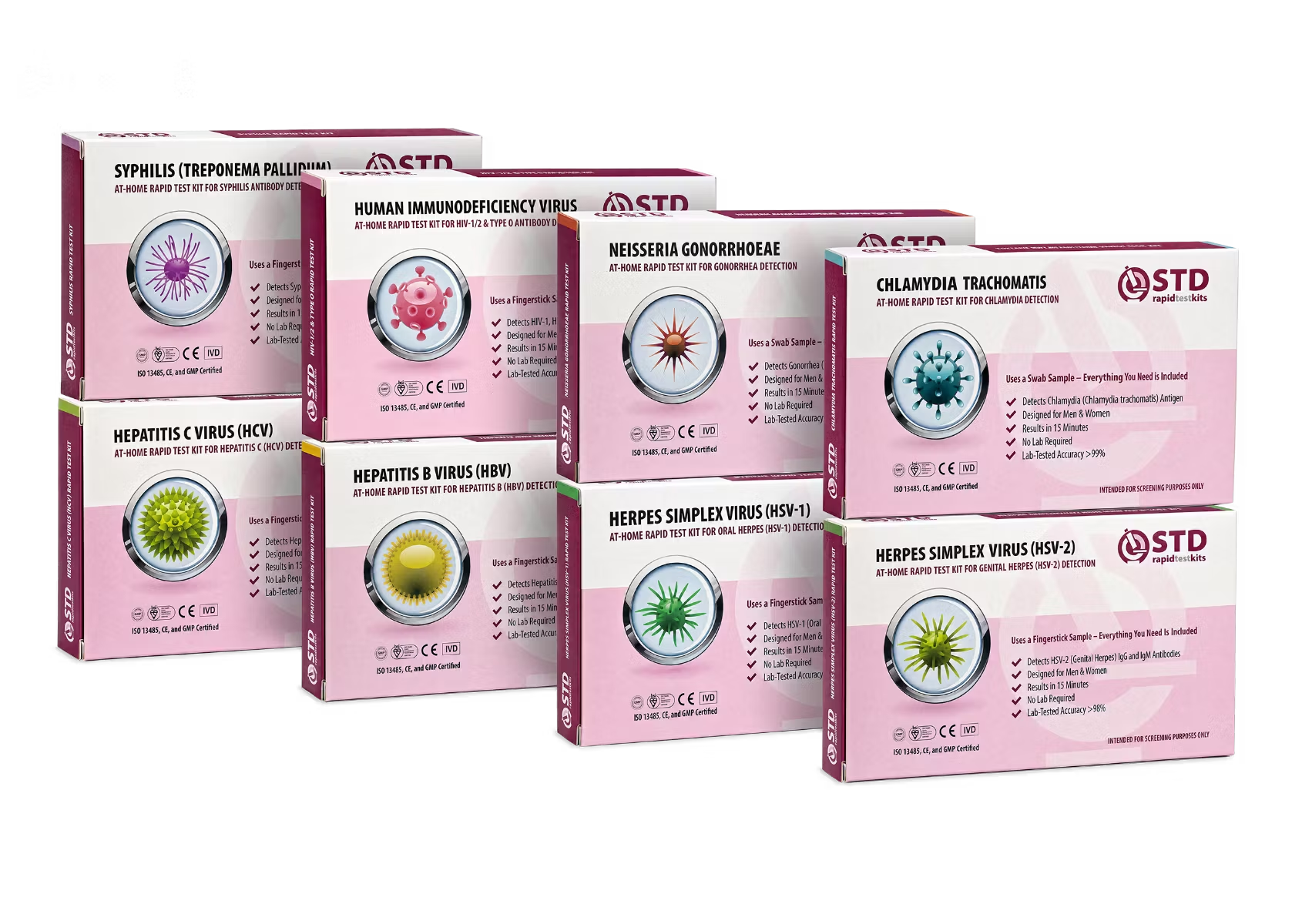
We sell at-home rapid STI test kits. The 8-in-1 option below is useful when both partners want to screen together as part of pre-conception planning or a fertility workup. Recommendations on this site are based on fit-for-purpose for the reader's concern, not commercial benefit.
When Reproductive Surgery Makes Sense
Surgery to repair fallopian tubes is less common today than it used to be, mostly because IVF has become more accessible and successful. It's still the right answer for some patients, though. A salpingostomy can open a blocked or hydrosalpinx tube, particularly when the blockage sits at the fimbrial end (the trumpet-shaped opening near the ovary) and overall damage is limited. A salpingectomy removes a severely damaged tube entirely, which is sometimes recommended before IVF because retained hydrosalpinx fluid can lower implantation rates by leaking back into the uterus.
Whether to attempt surgery depends on factors that include age, ovarian reserve, the extent and location of scarring, and partner sperm quality. Reproductive surgeons weigh the chance of restored natural fertility against the risk of ectopic pregnancy, which is meaningfully elevated after tubal repair. People who conceive after tubal surgery need careful early ultrasound monitoring to confirm the pregnancy has implanted in the uterus rather than the tube.
For some patients, the cleanest path is to skip tubal repair entirely and go directly to IVF. For others, especially younger patients with minimal damage, surgery offers a chance at multiple natural pregnancies without ongoing IVF cycles.
Salpingostomy: opens a blocked or hydrosalpinx tube, most useful for limited damage near the fimbrial end. Carries elevated ectopic-pregnancy risk afterward.
Salpingectomy: removes a severely damaged tube entirely. Often performed before IVF when hydrosalpinx fluid would otherwise lower implantation rates.
Lifestyle Support: What Helps and What Doesn't
Lifestyle changes alone won't dissolve scar tissue or reopen blocked tubes. They can meaningfully improve the broader environment for conception, whether someone is trying naturally or going through assisted reproduction.
Eating an anti-inflammatory diet, reaching and maintaining a healthy weight, quitting smoking, limiting alcohol, and managing stress all support egg quality, hormonal balance, and uterine receptivity. For people undergoing IVF, these factors influence how the body responds to fertility medications and how well the uterine lining accepts an implanting embryo. None of this is a magic bullet, but every gain stacks the deck slightly more in the patient's favor.
Complementary therapies (acupuncture, fertility-focused nutrition coaching, mind-body programs) have mixed evidence for direct effects on conception, though they consistently report improvements in stress and treatment tolerance. They work best as adjuncts to medical care, not replacements. Anything marketed as "unblocking your tubes" without surgery, including castor oil packs, fertility cleanses, or certain herbal protocols, lacks the evidence to support those claims and can delay needed evaluation.
Lifestyle factors with the strongest evidence
- Anti-inflammatory eating pattern (Mediterranean-style or similar)
- Healthy weight maintenance, both under- and overweight affect cycles
- No smoking, including secondhand exposure
- Limited alcohol, especially during active conception attempts
- Stress management through sleep, movement, or counseling support
Male Fertility After Chlamydia
Conversations about chlamydia and fertility often focus on women, but the infection affects men too. In men, untreated chlamydia can cause epididymitis, an inflammation of the small coiled tube at the back of the testicle where sperm mature. Severe or recurrent epididymitis can scar the epididymis or block sperm transport, leading to lower sperm counts or, in rare cases, complete obstruction.
Most men with treated chlamydia recover full sperm production. Sperm regenerates roughly every 70 to 90 days, which means the sperm a man produces today reflects testicular conditions from two to three months ago. Improvements after treatment, lifestyle changes, or supplementation often show up in semen analyses run a few months apart.
For couples investigating fertility issues with a male partner who has a chlamydia history, a semen analysis is the standard first step. It measures count, motility (how well sperm swim), and morphology (sperm shape). Mild abnormalities often respond to treatment of any active infection, smoking cessation, weight management, and time. Severe abnormalities may require fertility treatment such as IUI or intracytoplasmic sperm injection (ICSI) during IVF, which uses a single sperm injected directly into an egg. Both partners getting tested is the most efficient starting point in any couple's fertility workup, regardless of who carried the diagnosis last.
Sperm production runs on a 70 to 90 day cycle. A semen analysis taken today reflects testicular conditions from two to three months ago, which is why providers usually re-run the test after any treatment, lifestyle change, or new course of supplementation rather than acting on a single result.
Talking with a Partner About a Past Infection
Fertility conversations can surface old fears about how an infection was acquired, who passed it to whom, and whether anyone is to blame. Most chlamydia transmissions happen between people who didn't know they were infected. Symptom-free spread is far more common than detectable infection, which is part of why the CDC's screening recommendations exist in the first place. That reality is worth holding onto when these conversations get heavy.
What helps in practice: being upfront with a fertility provider about every relevant infection (treated or not), making sure both partners are screened during the workup, and treating the past as information rather than evidence. Clinicians aren't there to assign fault. They're trying to find any clue that points toward what's blocking conception so they can recommend the right next step.
Couples navigating fertility treatment after a past STI history often benefit from short-term counseling, especially when shame or relationship tension is part of the picture. The goal isn't to relitigate the past; it's to keep the partnership healthy through what can be a long and emotionally demanding process. Many fertility clinics either staff a mental health professional or maintain referral lists, so it's worth asking what support is built into the treatment plan from the start.

Why Retesting Still Matters After Treatment
The CDC recommends retesting for chlamydia about three months after treatment, especially for people under 25 or those with new or multiple partners. Reinfection is common, often from an untreated partner, and a second untreated round meaningfully raises the risk of progression to PID. Retesting catches that early, before any new round of inflammation has time to do structural damage.
For people focused on fertility, follow-up may go further. Providers sometimes recommend a test of cure (typically a nucleic acid amplification test, or NAAT, performed at least 4 weeks after treatment) for complicated cases or pregnancy. If symptoms persist, retesting can distinguish between an unsuccessful treatment course and a separate cause such as gonorrhea, mycoplasma genitalium, or a non-infectious source of inflammation.
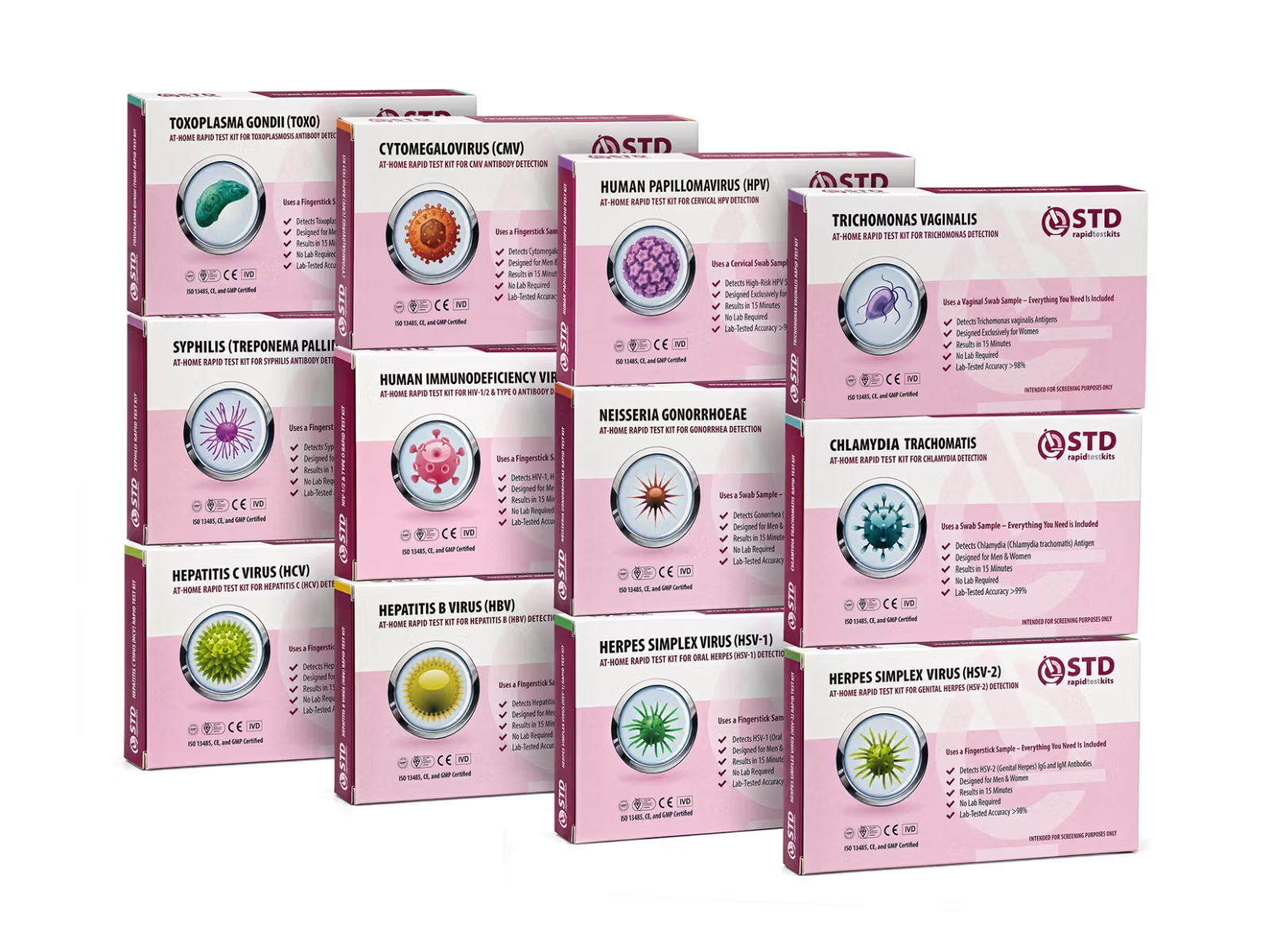
People who aren't trying to conceive yet but plan to in the future benefit from knowing their current status. Catching a silent reinfection now is far simpler than discovering tubal damage years later through a fertility workup. An at-home test kit is the simplest way to maintain regular screening between clinic visits, and the privacy makes it easier for people who prefer to stay out of crowded waiting rooms.
Carrying the Emotional Weight
A fertility evaluation that uncovers chlamydia-related damage carries a particular kind of grief. People often describe it as discovering something happened to their body that they didn't know about and didn't get to consent to. That feeling deserves space; it's a reasonable response to information that arrives years after the fact.
Two things tend to help. First, getting accurate, individualized information about what is and isn't possible in a specific case. Many patients walk into the conversation expecting the worst and walk out with at least one viable path to pregnancy, often more than one. Second, connecting with a clinician or therapist who specializes in fertility-related distress. Reproductive endocrinology and infertility (REI) clinics often have mental health professionals on staff or close referrals.
Chlamydia is one of the most common bacterial infections in the world; most people who have had it go on to build the families they want, with or without medical help. A diagnosis from years ago is data for the next set of decisions, nothing more.
The CDC's <a href="https://www.cdc.gov/pid/about/index.html" target="_blank" rel="noopener">About Pelvic Inflammatory Disease</a> page describes PID as a complication often caused by some STIs (including chlamydia and gonorrhea), and lists its potential long-term consequences as infertility, ectopic pregnancy, and chronic pelvic pain. The plain-language version: untreated chlamydia is the single most common preventable starting point for the kind of tubal damage that affects fertility years later.
Frequently Asked Questions
- Can I really still get pregnant after having chlamydia?
- Yes. Most people who treated chlamydia early go on to conceive without any medical help. Even when there's some damage from past PID, options exist: timed conception with one open tube, IUI for borderline cases, IVF when both tubes are blocked, and reproductive surgery for select scarring patterns. The infection itself is rarely the end of someone's reproductive options.
- How would I know if past chlamydia damaged my fertility?
- Start with an HSG: it shows whether your fallopian tubes are open. If flow is blocked, a pelvic ultrasound and, when needed, laparoscopy map the location and extent of the damage. Hormone panels (AMH, FSH) and a partner's semen analysis complete the picture for couples trying to conceive. There's no single "are you infertile" test; the workup builds the answer from several pieces.
- Does antibiotic treatment heal the damage chlamydia caused?
- Antibiotics clear the infection. Adhesions that already formed stay. If you were treated and are now trying to conceive without success, the clinical question shifts: it's no longer about the past infection but about what structural damage remains. An HSG and basic fertility workup answer that. The CDC's first-line treatment for uncomplicated chlamydia is doxycycline 100 mg twice daily for 7 days.
- When should I start a fertility workup if I've had chlamydia?
- If you've been trying to conceive for six to twelve months without success and you have a chlamydia history, ask for a referral to a reproductive endocrinologist. People over 35 should consider starting the workup after six months. Earlier evaluation gives more time to act if damage is found, which matters because age also affects success rates for every fertility option.
- Does chlamydia affect a male partner's fertility too?
- Yes. Chlamydia can cause epididymitis in men, which may temporarily lower sperm count or motility. A semen analysis is the standard first step. Most cases improve after the infection is treated and a few sperm-production cycles pass (about 70 to 90 days each). Severe damage can require IUI or ICSI as part of IVF.
- Is IVF the only option if both my tubes are blocked?
- It's the most common path because IVF bypasses the tubes entirely. Reproductive surgery is sometimes an alternative for partial blockages near the fimbrial end of the tube. Egg donation, gestational surrogacy, and embryo adoption remain options when ovarian reserve is also affected. The right path depends on age, ovarian reserve, and partner sperm quality.
- Should I retest for chlamydia even after a clear post-treatment test?
- The CDC recommends retesting around three months after treatment, especially for people under 25 or those with new partners, because reinfection is common. Annual screening still applies if you're sexually active. If you're planning pregnancy, knowing your current status before trying is far simpler than discovering a silent reinfection later.
- Can lifestyle changes restore fertility damage from past PID?
- Lifestyle changes don't reopen blocked tubes. They support overall reproductive health: anti-inflammatory eating, healthy weight, no smoking, limited alcohol, and managing stress. These factors meaningfully affect IVF outcomes and natural conception odds when tubes are at least partially open. They work as a useful complement to medical care, not a replacement.
- U.S. Centers for Disease Control and Prevention. About Chlamydia: overview of transmission, symptoms, complications, and screening guidance for the general public.
- U.S. Centers for Disease Control and Prevention. STI Treatment Guidelines, Chlamydial Infections section, including the doxycycline 100 mg twice daily for 7 days regimen.
- U.S. Centers for Disease Control and Prevention. About Pelvic Inflammatory Disease: complications including infertility, ectopic pregnancy, tubal blockage, and long-term pelvic pain.
- Mayo Clinic. Chlamydia: Symptoms and Causes, including general progression, complications, and treatment background.
- Mayo Clinic. Pelvic Inflammatory Disease (PID): Symptoms and Causes, including discussion of tubal scarring, ectopic pregnancy risk, and infertility.
- National Health Service (NHS). Chlamydia: overview, symptoms, testing, and complications guidance for the general public.
- MedlinePlus, U.S. National Library of Medicine. Chlamydia Infections: clinical overview and patient-facing summary.
