
Published: November 2025 | Last updated: May 2026 | Editorial review and quality control: Martina N.
You started with what felt like a yeast infection. The itching, the irritation, the unmistakable discomfort. You reached for an antifungal cream, the same one that worked last time. A few days in, things felt better. A week later, they did not.
This is one of the most common ways sexually transmitted infections go unnoticed. The symptoms looked exactly like something else, and the body produces the same inflammatory response regardless of the cause. Yeast infections and several STIs share an almost identical surface presentation: itching, burning, unusual discharge, pelvic discomfort. The tissue does not label what is happening to it; it just reacts.
What follows covers why the mix-up happens, the subtle differences that are actually worth watching, what to read when antifungal cream stops short of full relief, and what to do next when over-the-counter treatment is not closing the loop.
Key Takeaways
- Yeast infections and STIs like chlamydia, gonorrhea, trichomoniasis, and early herpes share the same surface symptoms, so misreading one for the other is common.
- Antifungal cream soothes inflamed skin even when fungus is not the cause, which is why partial relief without full resolution by day 10 to 14 is the clearest signal to stop self-treating and test.
This Mix-Up Is More Common Than People Realize
Sexual-health clinicians see this pattern constantly: a patient walks in with a recurring or stubborn symptom set that has already been treated as a yeast infection two or three times. The cream worked, then it did not. The itching faded, then came back. The original treatment was reasonable on the symptoms alone; the underlying cause was something the cream was never going to touch.
Why does it happen so often? The body produces the same inflammation signal regardless of whether the cause is fungal, bacterial, or viral. The vulva and vagina respond to almost any irritant with the same vocabulary of itching, redness, burning during urination or sex, and a change in discharge. Yeast does it. Chlamydia does it. Gonorrhea, trichomoniasis, and bacterial vaginosis all produce versions of it. Even early herpes can mimic the same opening few days before any sore is visible.
The CDC consistently emphasizes that many sexually transmitted infections have no symptoms, or symptoms so mild they are mistaken for other conditions. Self-treatment for yeast is a reasonable first guess, then, but it is a first guess made on incomplete information.
Most sexually transmitted infections cause no signs or symptoms, or symptoms so mild they are missed. Testing is the only way to know your status.
Why Antifungal Cream Can Feel Like It Is Working
Antifungal creams like miconazole and clotrimazole are designed to kill Candida, the fungus that causes most vaginal yeast infections. They are highly effective at that specific job. They are not effective against anything else.
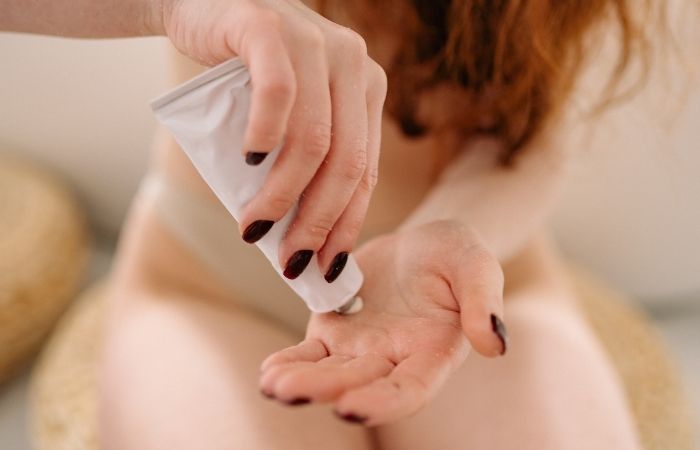
What confuses readings of treatment success is what else the cream does. Antifungal cream bases are typically emollient. They moisturize, occlude the skin barrier, and reduce mechanical friction on inflamed tissue. Some formulations include mild anti-inflammatory ingredients that calm redness and itching for hours. None of that addresses the underlying infection if the infection is bacterial or viral, but all of it makes the surface feel better.
Partial, temporary relief follows, and it looks like progress. Itching subsides for a day or two. Burning during urination softens. Discharge changes feel less alarming. If yeast were the cause, those changes would continue, and within a week or two the infection would be resolved. When yeast is not the cause, the relief stalls and the symptoms creep back, often with one or two new features the cream cannot explain.
According to the NHS guide to thrush, thrush should clear within 7 to 14 days of starting correct treatment, so a stalled trajectory beyond that window is a signal to reconsider the diagnosis rather than reapply the cream.
| Condition | Cause | Does Antifungal Cream Cure It? | What It Actually Needs |
|---|---|---|---|
| Yeast infection | Fungus (Candida) | Yes | Antifungal medication |
| Bacterial vaginosis | Bacterial imbalance | No | Antibiotics (e.g., metronidazole) |
| Chlamydia | Bacteria | No | Antibiotics |
| Gonorrhea | Bacteria | No | Antibiotics |
| Trichomoniasis | Parasite | No | Antiparasitic medication |
| Herpes | Virus (HSV) | No | Antiviral medication |
The Symptoms Yeast and STIs Genuinely Share
Itching, burning, redness, pain during sex, pelvic discomfort, and changes in discharge appear in both yeast infections and a long list of sexually transmitted infections. That overlap is what makes self-diagnosis at home so unreliable. The body picks one register of inflammation and uses it across causes.
What can sometimes be distinguished at home is the type of discharge and whether other systemic clues are present. Yeast infections classically cause thick, white, clumpy discharge that has little to no odor. Bacterial vaginosis, which is not an STI but is frequently mistaken for yeast or for an STI, tends toward thin, gray, fishy-smelling discharge. Trichomoniasis can produce a frothy yellow or greenish discharge with a strong odor. Chlamydia and gonorrhea may produce any color or volume change, or no discharge change at all.
Pelvic pain that radiates inward, fever, painful urination that is sharper than yeast usually causes, or unexplained bleeding between periods all point away from yeast and toward something that needs medical evaluation. So do visible sores, ulcers, or blisters, which yeast does not produce but herpes and syphilis can. None of these patterns is reliable enough on its own to confirm a diagnosis.
| Symptom | Typical Yeast Infection | Possible STI Indicator |
|---|---|---|
| Discharge | Thick, white, clumpy, odorless | Yellow, green, gray, or unusually frothy |
| Odor | Usually none | Fishy, foul, or unusually strong |
| Pain | Mild surface irritation | Deep pelvic or testicular pain possible |
| Bleeding between periods | No | Possible with chlamydia or gonorrhea |
| Sores or ulcers | No | Possible with herpes or syphilis |
| Trajectory with antifungal cream | Clear improvement by day 7 to 14 | Stalls, partial relief, or recurs |
Can you mistake an STD for a yeast infection?
Yes, and it happens often. Itching, burning, and discharge changes occur in both, so overlap is normal. Yeast infections typically produce thick, white, odorless discharge that responds clearly to antifungal cream within 7 to 14 days. If symptoms linger past day 10 to 14, fade and return, or come with an unusual odor, sores, or pelvic pain, infections like chlamydia, gonorrhea, trichomoniasis, or herpes are worth ruling out with a test.
When Self-Treatment Should Stop and Testing Should Start
Watch first for treatment failure. Antifungal creams used per package instructions should produce visible improvement within a few days and full resolution within 7 to 14 days, per NHS guidance. If you are at day 10 to 14 with symptoms that have stalled, returned, or only partially improved, you are outside the normal yeast-treatment trajectory.
A second clear signal is the return of symptoms after sex. Yeast infections do not typically reactivate in tight cycles around sexual activity, while STIs are commonly reintroduced or flare around exposure, so a pattern of feeling better, then worse a few days after intercourse, is worth taking seriously. The CDC's STI guidance repeatedly emphasizes that recurring or non-resolving genital symptoms are an indication for testing, not for repeat over-the-counter treatment.
A third signal is the appearance of any new feature the cream cannot explain: visible sores, a different discharge odor, fever, lower abdominal pain, or pain during urination that worsens rather than improves. Each new feature changes the diagnostic picture and warrants a test.
What Partial Relief Actually Means
One of the most consistent traps in this kind of misdiagnosis is partial relief. The itching does not stop completely, but it eases. The burning is less sharp. Discharge looks slightly more normal for a day or two. Symptoms are present but subdued, and the question becomes whether to keep waiting or to act.
Bacterial STIs in particular fluctuate. The CDC's overview of STIs describes chlamydia and gonorrhea as commonly asymptomatic or mildly symptomatic, with symptoms that can wax and wane. Layer antifungal cream on top of that fluctuation, and the surface picture becomes very hard to read. The irritation genuinely subsides, but the infection underneath has not been touched by the cream.
This produces a mental error: people assume less-bad equals better. Less-bad means the cream is doing its intended job of soothing inflammation, which it would do regardless of the underlying cause. It does not mean the underlying cause has been addressed. A useful rule when guessing about a second tube: if the cream is not delivering the trajectory of improvement you would expect from a yeast infection, a test is more informative than another round of cream.
Reduced irritation confirms the cream is soothing inflamed tissue. It does not confirm the infection has cleared. These are different things, and the difference is what matters for the next step.
The STIs Most Often Mistaken for Yeast
Four conditions show up over and over in this misdiagnosis pattern: chlamydia, gonorrhea, trichomoniasis, and the early phase of a herpes outbreak. Each has its own reasons for being confusable with yeast, and all of them require a different kind of treatment.
Chlamydia is the most common bacterial STI in many countries, and the CDC notes it is often asymptomatic. When it does produce symptoms, they tend to be mild and easily attributed to yeast or to a urinary tract infection: vaginal or urethral irritation, mild burning during urination, and a small change in discharge. None of these features is specific enough to point at chlamydia without a test, and antifungal treatment will not clear the infection.
Gonorrhea overlaps similarly. The discharge change tends to be more pronounced (often yellowish or greenish), and pelvic discomfort is more likely, but in the early days or in mild infections it can look generic enough to be mistaken for yeast. Both chlamydia and gonorrhea require antibiotic treatment, and untreated infection is what drives later complications like pelvic inflammatory disease and tubal damage.
Trichomoniasis is caused by a parasite, not a fungus or a bacterium, but the symptoms (itching, burning, discharge change, sometimes a strong odor) sit squarely in the yeast-or-STI overlap zone. Trichomoniasis is frequently misidentified in practice, partly because it does not always produce the textbook frothy yellow discharge, and the symptom overlap with yeast is close enough that many people treat it as such before the actual cause is identified. For trichomoniasis specifically, a self-collected vaginal swab kit is available for women through the dedicated trichomoniasis home test; the kit is validated for female anatomy only, so male readers needing a test should see a clinic.
Herpes is a different category of confusion. The first day or two of a herpes outbreak can be just itching, tingling, or a vague soreness, with no sores yet visible. Someone who has never had herpes and does not know what an outbreak feels like may reasonably reach for an antifungal cream. The diagnosis becomes apparent when the sores appear, but only after the misread has cost a few days.
Returning Symptoms Matter More Than How Bad They Feel
One of the more common reasons people delay testing is that the symptoms never feel urgent enough. They are uncomfortable, not painful. They are persistent, not severe. The internal calculus becomes, "if it were serious, I would know," and another week passes.
Severity is a poor proxy for what is actually happening. Many STIs are most contagious and most damaging in the asymptomatic or mildly symptomatic phase. Chlamydia silently scars fallopian tubes. Untreated gonorrhea moves into the upper reproductive tract. Herpes sheds virus during shedding episodes that the carrier may not feel at all. Severity tells you how angry the surface tissue is, not what is happening underneath.
Watch instead for a symptom that fades and returns, flares around sex, or keeps coming back despite multiple rounds of treatment. A persistent low-grade signal is worth more attention than a single sharp one, regardless of how mild it feels at any given moment.
Chlamydia and gonorrhea cause much of their long-term damage during phases when the carrier feels only mild irritation, or nothing at all. Asymptomatic does not mean inactive; it means the test, not the symptom, is the reliable signal.
What Happens If an STI Is Left Untreated
Untreated STIs cause downstream harm out of proportion to how mild the early symptoms feel. The WHO's STI fact sheet lists the major risks: pelvic inflammatory disease, infertility in women, and increased susceptibility to HIV transmission. Most of these are not visible in the first weeks of an infection. They develop over months or years of low-grade inflammation that the person does not feel as a clear symptom.
Chlamydia is the most common cause of preventable infertility related to tubal damage, and the damage often occurs in women who never had a noticeable acute infection. Untreated syphilis can progress to neurological and cardiovascular involvement years after exposure. Gonorrhea can disseminate beyond the genital tract. Herpes does not cause those kinds of long-term internal complications, but untreated herpes increases the risk of acquiring or transmitting HIV.
None of this is meant to alarm. Most of these outcomes are entirely preventable with timely detection and treatment, and a rapid home test takes about fifteen minutes from sample to result.

What At-Home Testing Looks Like Now
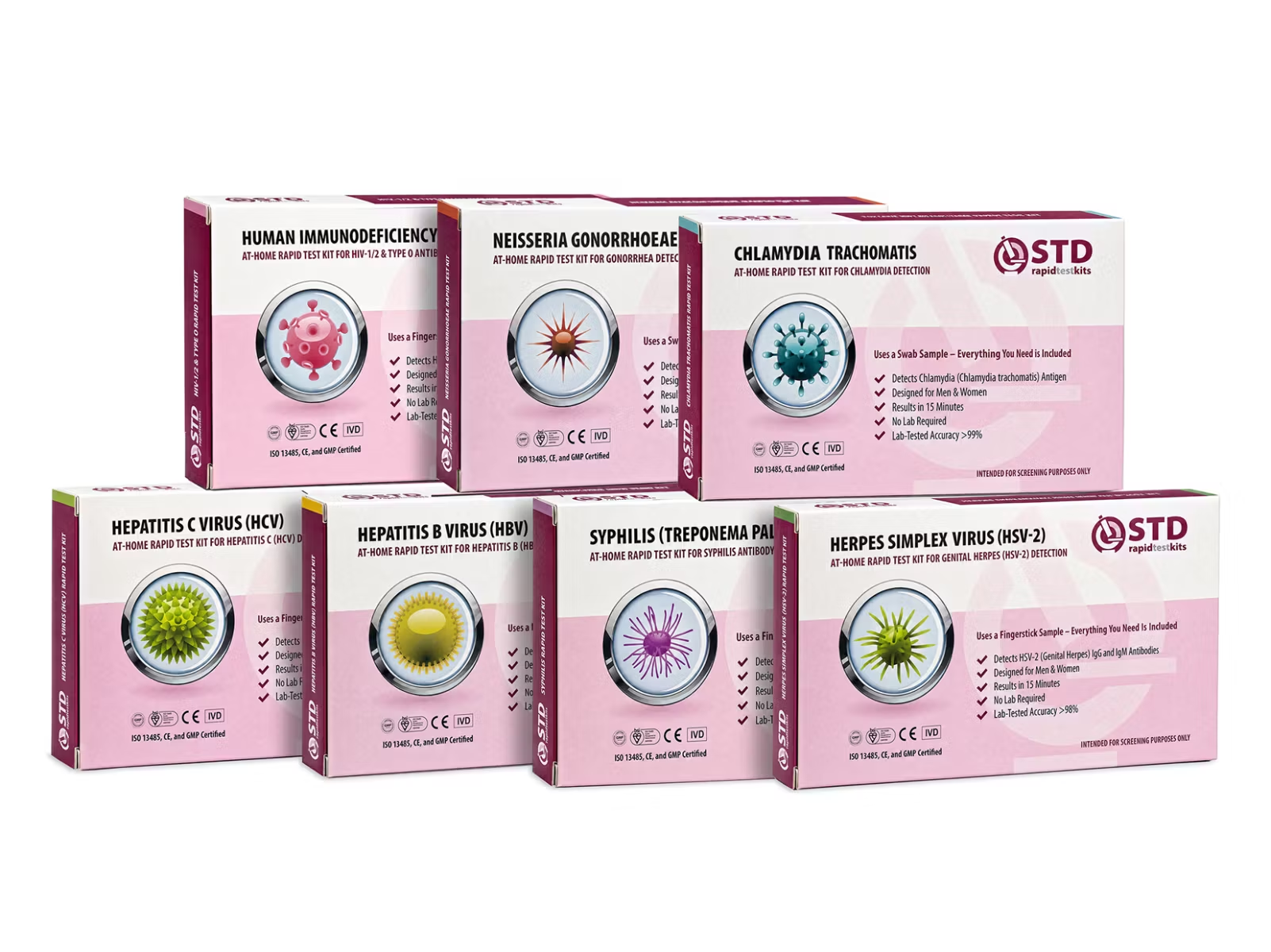
For many readers, the friction around testing is not the test itself but the surrounding logistics: the clinic visit, the wait time, the conversation, the privacy. At-home rapid tests remove most of that friction. A typical at-home test arrives in plain packaging, contains a self-collected sample tool (a vaginal swab or a fingerstick lancet, depending on the infection being tested), and produces a result on a lateral-flow strip within about 15 minutes.
The tests are not as analytically sensitive as the lab-based NAAT (nucleic acid amplification test) that a clinic would run, but they are a useful screening tool. A positive result at home is a strong signal to confirm with a clinician and start treatment. A negative result, especially when taken inside the appropriate window period, narrows the diagnostic space and helps direct what to do next.
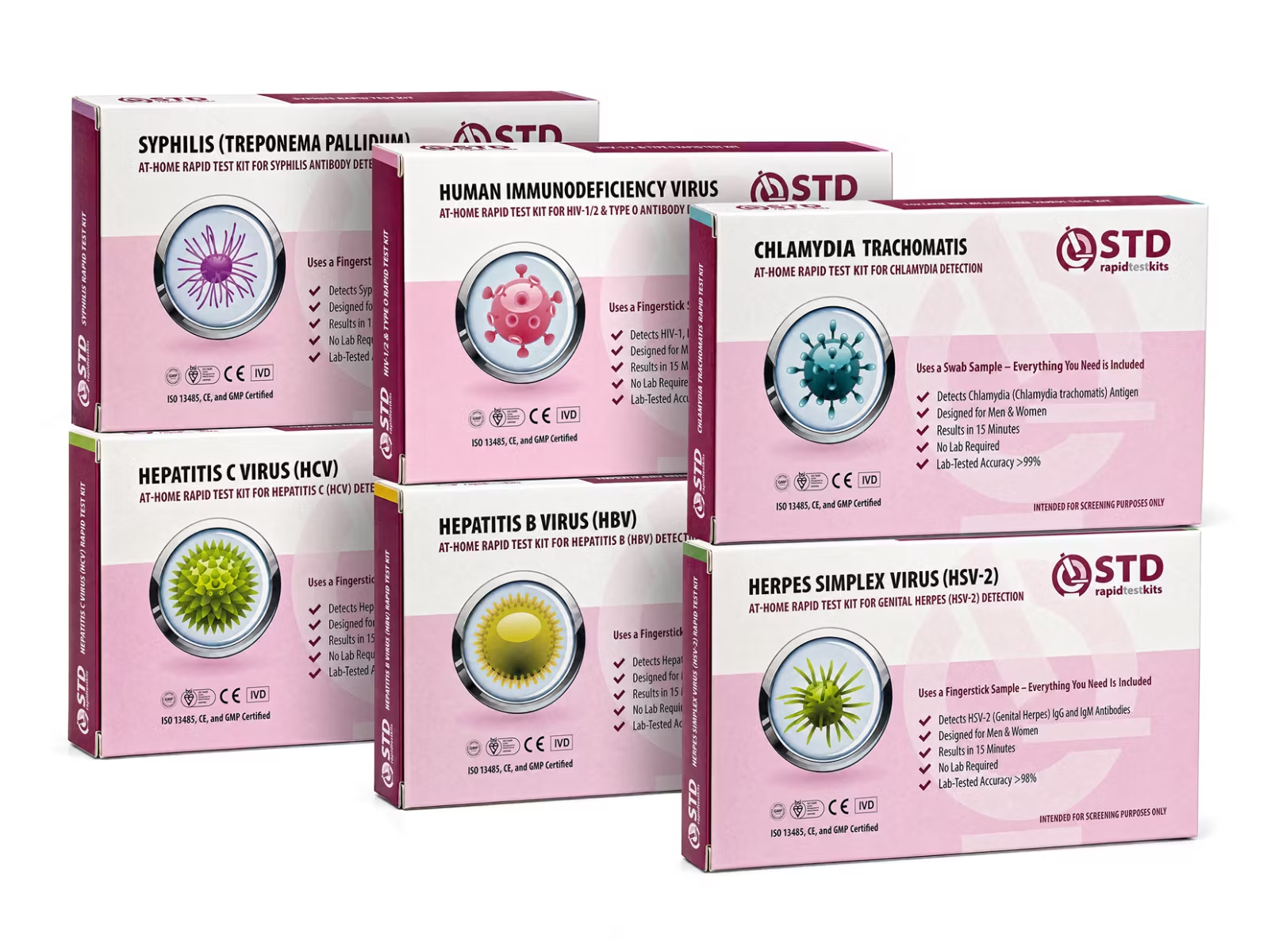
For symptoms that overlap with yeast, the most useful tests are usually those for chlamydia, gonorrhea, and trichomoniasis (for women), and for any reader concerned about possible bloodborne exposure, the panel can include HIV, syphilis, and hepatitis screening as well. Multi-infection combo kits do this in a single sitting.
At-home rapid tests use lateral-flow strips. They are faster and more private than a clinic visit, but less analytically sensitive than lab NAAT testing. A positive result warrants clinic confirmation. A negative result taken inside the correct window period narrows the diagnostic space and points toward yeast variants or non-infectious causes.
So Can an Antifungal Actually Mask an STI?
Strictly speaking, no. Antifungal cream does not cure a bacterial or viral infection, and it does not make the infection invisible to a test. What it does is dampen the surface signal. Inflammation is soothed, itching is reduced, discharge can look less alarming, and the perception of how serious the situation is gets softened.
That softening is what causes delay. People feel better for a few days, conclude that the cream is working, and put off the next step. Meanwhile the actual infection has not changed. The clinical pattern is well-recognized: patients arrive at sexual-health clinics with infections that have been present for weeks or months because the early symptoms were managed (not treated) with over-the-counter creams.
Antifungal cream is a reasonable first guess for a clear-cut, classic yeast infection in a person who has had them before and knows the pattern. It does not substitute for diagnostic testing when symptoms persist, fluctuate, return, or look at all different from the usual yeast presentation.
The Window Period and Why Timing Matters
Once self-treatment shifts to testing, timing trips people up. There is something called a window period: the time between exposure to an infection and when a test can reliably detect it. Test too early and a negative result can be falsely reassuring; test inside the window and an antibody-based test in particular may not yet have anything to find.
For chlamydia and gonorrhea, the typical reliable detection window is roughly one to two weeks after exposure. Syphilis antibodies take longer; per the CDC's syphilis information, antibody tests typically detect early-stage syphilis within three to six weeks of exposure. HIV antibody and antigen testing windows depend on the assay used, but most fourth-generation tests detect infection by about 18 to 45 days after exposure. Herpes is usually diagnosed visually at the point of an outbreak via clinic swab/PCR, with IgG antibody testing useful only several weeks later for prior exposure.
If your symptoms have been present for at least a week or two, you are most likely past the window for chlamydia and gonorrhea testing. If you suspect a more recent exposure, plan to test and retest at the appropriate window if needed.
| Infection | Earliest Reliable Detection | Best Time to Test |
|---|---|---|
| Chlamydia | 1-2 weeks after exposure | 2 weeks or more after exposure |
| Gonorrhea | About 1 week after exposure | 2 weeks after exposure |
| Trichomoniasis | About 1 week after exposure | 2 weeks after exposure |
| Syphilis | 3-6 weeks after exposure | 6 weeks after exposure, repeat at 3 months if negative |
| HIV (fourth-generation test) | 18-45 days after exposure | 45 days or more after exposure |
| Herpes (HSV antibody) | 6-12 weeks after exposure | At time of active outbreak (PCR/swab via clinic), or 12+ weeks after exposure (IgG antibody) |
When Your Body Feels Off but Not Urgent
A lot of STI symptoms live in a particular kind of register: present, but not severe enough to feel like an emergency. A slight itch that comes and goes, a discharge change that does not match the usual pattern, or a vague soreness without a clear cause are all signals worth acting on rather than waiting out. None of those things screams for attention, so the easy path is to retry the cream or assume the body will settle on its own.
Watch for persistence, not intensity. A symptom that lingers for more than a week or two without a clear trajectory is information, and so is a symptom that follows a sex-related cycle, does not match what a yeast infection has historically felt like, or comes with any new feature like sores, odor, fever, or pelvic pain.
What makes the persistence reading worth acting on is cost asymmetry: persistent low-grade symptoms can mark infections that quietly cause long-term damage, while the downside of testing too soon is small. A rapid home test is about fifteen minutes of your time and can be repeated later in the window period if needed.
Signals worth acting on
- A symptom that has not clearly improved within 10 to 14 days of correct antifungal use.
- Symptoms that fade and return in cycles, especially around sex.
- Any new feature the cream cannot explain: visible sores, an unusual or fishy odor, fever, lower abdominal or pelvic pain, or unexplained bleeding between periods.
Clarity, Not Guesswork
Most readers who arrive at this article are not in a crisis. They are in the in-between space where over-the-counter treatment did not quite work, the symptoms are not quite urgent, and the next step is not quite obvious. That space is where most STI delays happen, and where a single decision (to test or not) tends to break the loop.
If antifungal treatment did not resolve the symptoms cleanly, that is information, not failure. The body is signaling that the first guess was either incomplete or incorrect. A test replaces the guesswork with a definite reading and, in the cases where the result is negative, narrows the diagnostic space toward yeast variants, irritation, or other non-infectious causes.
Practical Next Steps
- Stop self-treating with antifungal cream if symptoms have not clearly improved by day 10 to 14.
- Take a rapid home test covering chlamydia, gonorrhea, and (for women) trichomoniasis if symptoms have been present for at least one to two weeks.
- Confirm any positive home result with a clinician before starting treatment, and retest after the appropriate window period if recent exposure is the concern.
Frequently Asked Questions
- Can antifungal cream actually hide an STI?
- Not in a medical sense. Antifungal cream does not cure a bacterial or viral infection and does not affect what a test can detect. What it does is soothe inflamed skin so symptoms feel less urgent, which often delays testing. The infection itself continues underneath.
- Why did I feel better after using yeast infection treatment if it was not yeast?
- Most antifungal creams contain emollient and mildly anti-inflammatory ingredients in their base. Those calm redness and itching regardless of the underlying cause. The relief is real but temporary, because the cream is treating the surface, not the root.
- How do I know if this is more than just a yeast infection?
- The clearest signals are a treatment failure (no clear improvement within 7 to 14 days of correct antifungal use), recurring symptoms after sex, or new features the cream cannot explain such as sores, an unusual odor, fever, or pelvic pain. Any of these is reason to test rather than retreat.
- Can chlamydia or gonorrhea really feel that mild?
- Yes. Both are frequently asymptomatic or only mildly symptomatic, which is why they are commonly diagnosed late. A small change in discharge or mild burning during urination is often the only signal, and it overlaps almost entirely with what yeast infections produce.
- Is it reasonable to try antifungal treatment first?
- For someone with a textbook yeast presentation who has had yeast infections before, a single round is reasonable. The problem is staying in that loop after the cream has clearly failed. One round is fine; three rounds without resolution means the diagnosis was wrong, and a test should be the next step.
- Can you have a yeast infection and an STI at the same time?
- Yes. Co-infection is common, partly because both share risk factors and partly because inflammation from one condition can make the tissue more vulnerable to another. Treating the yeast may produce partial relief while the other infection continues unaddressed.
- How long should I wait before deciding the treatment did not work?
- Per NHS guidance, thrush should clear within 7 to 14 days of correct treatment. By day 10 to 14 without clear improvement, you are outside the normal yeast-treatment trajectory, and a test is more useful than a second course of cream.
- What is the smartest next step if I am unsure?
- Test. A rapid home test or a clinic visit will narrow the diagnostic space in a way that more antifungal cream cannot. A negative result still moves you forward by ruling things out; a positive result connects you with the right treatment instead of one that was never going to work.
How we sourced this article. This article summarizes current public-health and clinical guidance from the U.S. Centers for Disease Control and Prevention, the NHS, and the World Health Organization on yeast infections, sexually transmitted infections, and the overlap between them. It is written by editorial staff, not by a treating clinician, and reviewed for clinical accuracy by a licensed medical doctor. This site, stdrapidtestkits.com, sells at-home rapid STI testing kits. We recommend tests based on fit for the reader's concern, not commercial benefit, and we encourage clinic follow-up after any positive home result.
- U.S. Centers for Disease Control and Prevention. Sexually transmitted infections (STIs) overview, symptoms, and testing guidance.
- U.S. Centers for Disease Control and Prevention. Syphilis category page covering testing-window and treatment information for early-stage syphilis.
- National Health Service (UK). Thrush in men and women: causes, symptoms, and the 7-14 day resolution window for correct antifungal treatment.
- National Health Service (UK). Sexually transmitted infections: overview of symptoms across the major STI types including trichomoniasis.
- World Health Organization. Sexually transmitted infections fact sheet, including long-term complications of untreated STIs (PID, infertility in women, increased HIV susceptibility).
