

Published: September 2025 | Last updated: April 2026 | Editorial review and quality control: Martina N.
There is a real difference between an STI that crosses the placenta during pregnancy and one that only matters at the moment of delivery. Both are concerns, but they call for different testing windows, different treatment plans, and different decisions on the day of birth. This guide separates the two so you can focus on what is actually relevant to your stage of pregnancy.
The most important thing to know up front: with routine prenatal screening and timely treatment, transmission to the baby is uncommon for almost every infection on this list. Headline-grabbing outcomes typically follow infections that went undetected, while caught and managed infections rarely cause the harm people fear. Universal screening for HIV, syphilis, and hepatitis B at the first prenatal visit is the single biggest reason perinatal transmission rates have dropped over the past two decades, per CDC guidance on STIs and pregnancy.
Can STIs pass to a baby during pregnancy?
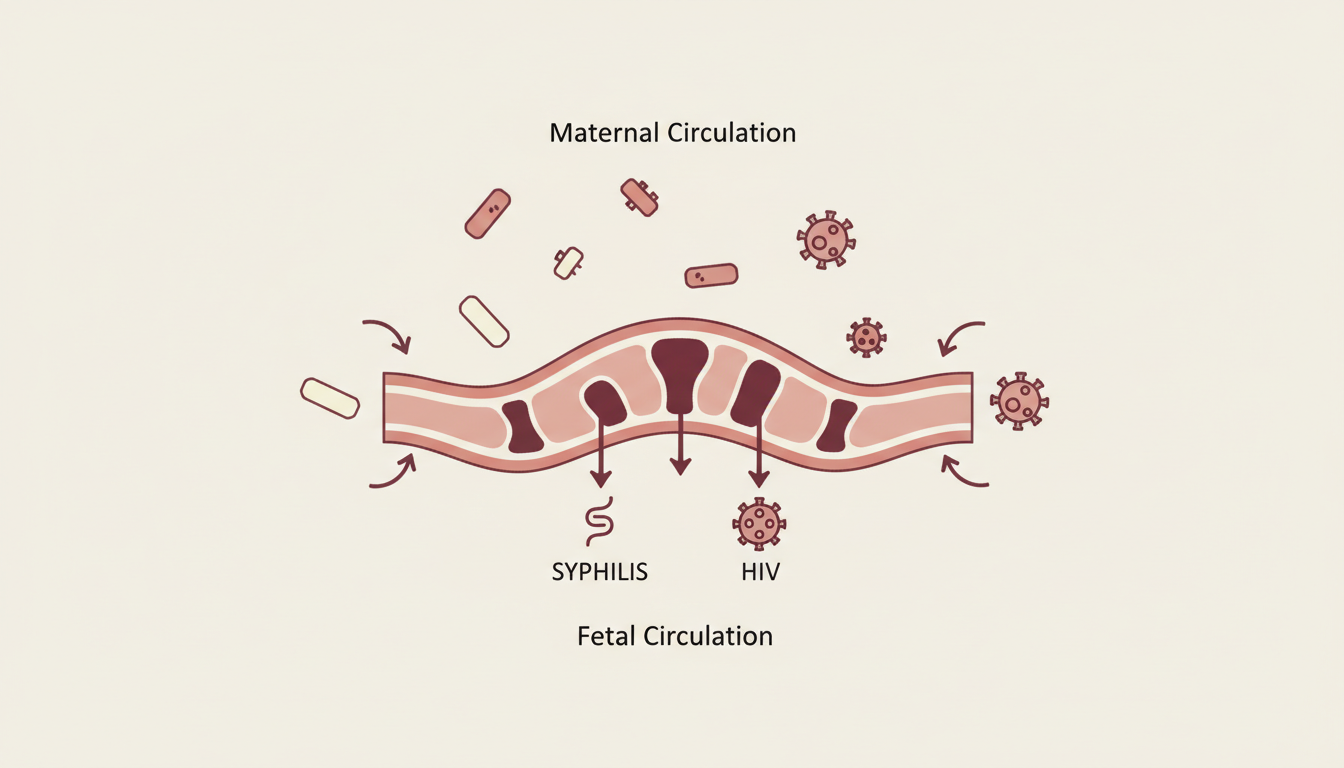
Yes, but the risk profile is specific to each infection. Syphilis and HIV can cross the placenta during pregnancy itself. Herpes, gonorrhea, chlamydia, hepatitis B, and HPV transmit primarily during vaginal delivery rather than in the womb. With routine prenatal screening, treatment, and (in some cases) a planned C-section, transmission rates fall dramatically. Untreated syphilis carries the highest in-utero risk, while HIV transmission to the baby drops to less than 1% with antiretroviral therapy and an undetectable viral load through pregnancy and delivery, per <a href="https://hivinfo.nih.gov/understanding-hiv/fact-sheets/preventing-perinatal-transmission-hiv-during-pregnancy-and-childbirth" target="_blank" rel="noopener">the NIH's HIVinfo fact sheet on preventing perinatal HIV transmission</a>.
Key Takeaways
- Two infections cross the placenta during pregnancy: syphilis and untreated HIV. The rest (herpes, gonorrhea, chlamydia, hepatitis B, HPV) transmit mostly during vaginal delivery.
- First-prenatal-visit screening for HIV, syphilis, and hepatitis B is universal in U.S. prenatal care; chlamydia and gonorrhea are added for those under 25 or with risk factors.
Pregnancy Risk vs. Delivery Risk: Two Different Windows
Most people picture STI transmission to a baby as something that happens at the moment of birth. Sometimes it does. But some infections start much earlier than that, crossing the placenta during pregnancy itself. Clinicians call this category vertical transmission, and the timing depends entirely on the pathogen.
Two infections sit firmly in the in-utero category. The bacterium that causes syphilis can cross the placenta at almost any stage of pregnancy, with risk rising as gestation progresses. HIV can transmit during pregnancy, during labor, and through breast milk after birth, with the highest single risk window being delivery itself when the viral load is unsuppressed.
A different group of infections is mostly a delivery-time concern. Herpes simplex virus, gonorrhea, chlamydia, and HPV transmit primarily through direct contact during vaginal birth, when the baby moves through the birth canal. Hepatitis B is mixed but mostly intrapartum: most perinatal HBV transmission happens at delivery rather than across the placenta, which is why the birth-dose vaccine and immunoglobulin within 12 hours of birth are so effective at blocking it (see CDC's clinical overview of perinatal hepatitis B).
The reason the distinction matters in practice: the test you take, the treatment you start, and the delivery decisions you make are all driven by which window applies. The table below summarizes which side each major infection sits on.
| Infection | Main transmission window | Routine prenatal screen? |
|---|---|---|
| Syphilis | In utero (placental); also at delivery | Yes, universal at first visit; repeat in third trimester recommended |
| HIV | In utero, at delivery, via breast milk | Yes, universal at first visit |
| Hepatitis B | Mostly at delivery (intrapartum) | Yes, universal at first visit (HBsAg) |
| Herpes (HSV) | At delivery (vaginal birth) | Symptom-based; no universal serologic screen |
| Chlamydia | At delivery | Universal under 25 or with risk factors |
| Gonorrhea | At delivery | Universal under 25 or with risk factors |
| HPV | Rarely, at delivery | Cervical cancer screening on standard schedule |
The Infections That Can Cross the Placenta
This is the smaller of the two groups, and it is the one that drives most of the urgency around early prenatal screening. If a placenta-crossing infection is detected and treated early, the outcome for the baby is almost always good. If it is missed entirely, the consequences can be severe.
Syphilis is the most serious untreated in-utero infection of the modern era. Untreated maternal syphilis can lead to miscarriage, stillbirth, premature birth, low birth weight, or congenital syphilis (a multi-system infection in the newborn). The bacterium Treponema pallidum can cross the placenta starting in the first trimester, and the transmission rate climbs as the maternal infection ages without treatment. The treatment itself is straightforward and pregnancy-safe: a single intramuscular dose of benzathine penicillin G for early syphilis, with longer regimens for later-stage disease, per CDC's STI treatment guidelines for pregnant women. ACOG now recommends syphilis screening at the first prenatal visit AND in the third trimester, with an additional screen at delivery in higher-prevalence areas, per ACOG's 2024 practice advisory on syphilis screening in pregnancy.
HIV transmission to a baby was once high enough that delivery itself was the major intervention point. With modern antiretroviral therapy taken during pregnancy, an undetectable maternal viral load at delivery, and (when needed) a planned C-section before labor begins, the perinatal transmission rate drops to less than 1%, per NIH HIVinfo guidance on preventing perinatal HIV transmission. The current ACOG position: every pregnant person should be screened for HIV at the first prenatal visit, with repeat screening in the third trimester for those at ongoing risk, per ACOG's HIV and pregnancy FAQ.
Hepatitis B is technically mixed but mostly intrapartum. The hepatitis B surface antigen (HBsAg) test at the first prenatal visit identifies the carriers, and the baby of a positive parent receives both the hepatitis B vaccine and hepatitis B immunoglobulin (HBIG) within 12 hours of birth. That combination is about 94% effective at preventing perinatal HBV transmission, compared with 75% for the vaccine alone, per CDC's perinatal hepatitis B vaccine administration page. Without that intervention, an infected newborn faces about a 90% chance of developing chronic hepatitis B, per the CDC perinatal HBV clinical overview, which is why the birth-dose intervention exists in the first place.
The Infections That Mainly Pass at Delivery
This is the larger group, and it is the one where delivery method, timing, and newborn-side prophylaxis matter most. The risk window is narrower (the hours of labor and birth), and the protections are well established.
Herpes simplex virus is the headline concern in this group, because neonatal herpes can be severe even though it is rare. The risk is not equal across cases. A first-ever herpes infection acquired late in pregnancy carries a substantially higher neonatal transmission risk, because the parent has not yet developed protective antibodies and the virus can be present at delivery in high amounts. A recurrent outbreak in someone with longstanding HSV carries a much lower risk, because antibodies cross the placenta and partially protect the baby. Specific transmission percentages by infection type are summarized in ACOG's practice bulletin on managing genital herpes in pregnancy. The clinical decision tool: if there are active herpes lesions or a prodrome at the time of labor, a C-section is recommended. If there are no active lesions, vaginal delivery is generally safe, often with daily suppressive antiviral medication starting around 36 weeks per the CDC genital herpes overview.
Chlamydia and gonorrhea can pass to the baby during vaginal delivery and cause neonatal eye infections (ophthalmia neonatorum) and, in chlamydia, infant pneumonia. The newborn-side protection is universal in U.S. delivery rooms: erythromycin eye ointment is applied to every newborn shortly after birth, regardless of maternal status, specifically to prevent gonococcal eye disease. Maternal treatment during pregnancy clears the infection well before delivery in most cases. Untreated chlamydia or gonorrhea during pregnancy can also raise the risk of preterm labor and premature rupture of membranes, and untreated chlamydia is a leading cause of pelvic inflammatory disease and tubal-factor infertility outside pregnancy; early antibiotic treatment substantially reduces all of these risks, which is one of the main reasons these infections are screened for in the first place, per CDC STI treatment guidelines.
HPV is the rarest concern of this group. Vertical transmission can produce recurrent respiratory papillomatosis (RRP) in the child, but RRP is uncommon, and a C-section does not reliably prevent it. The clinical guidance: HPV alone does not change the planned mode of delivery.
Hepatitis C deserves a brief mention here because U.S. screening is now universal in pregnancy. The CDC reports a vertical transmission rate of about 5.8% (95% CI 4.2% to 7.8%) for infants born to HCV antibody-reactive parents with detectable HCV RNA, with no current pregnancy-safe antiviral that prevents transmission, per CDC's MMWR recommendations on perinatal HCV testing. The intervention is to identify exposed infants and screen them so any infection is caught and treated early.
| Infection | Newborn risk if transmitted | Newborn-side prevention or response |
|---|---|---|
| Syphilis (in utero) | Congenital syphilis: rash, organ involvement, sometimes stillbirth | Maternal penicillin treatment during pregnancy; newborn evaluation if maternal status uncertain |
| HIV | Infant HIV without intervention | Maternal antiretroviral therapy; planned C-section if viral load unsuppressed; infant prophylaxis |
| Hepatitis B | Chronic hepatitis B in roughly 90% of perinatally infected infants if untreated (per CDC) | Birth-dose vaccine + HBIG within 12 hours of birth |
| Herpes (HSV) | Neonatal herpes: skin, eye, brain, or disseminated disease | C-section if active lesions; suppressive antiviral from 36 weeks; close newborn observation |
| Chlamydia | Eye infection (5-12 days after birth) or pneumonia (1-3 months) | Maternal antibiotics in pregnancy; routine newborn eye prophylaxis |
| Gonorrhea | Severe eye infection (2-5 days after birth) | Maternal antibiotics in pregnancy; universal newborn eye prophylaxis (erythromycin ointment) |
| HPV | Rare: respiratory papillomatosis in childhood | No specific intervention; mode of delivery not changed |
When a C-Section Helps and When It Does Not
A planned cesarean is one of the most powerful tools for preventing delivery-time transmission, but it is not a universal solution. It works for infections whose main risk window is the birth canal itself. It does not help when the infection has already crossed the placenta.
A C-section is generally recommended in two specific situations: an active herpes outbreak or prodrome at the time of labor, and HIV with an unsuppressed viral load near delivery (typically defined as more than 1,000 copies per milliliter). In both cases, avoiding the birth canal cuts the transmission risk substantially.
A C-section does not help with syphilis or hepatitis B, because the transmission has either already occurred (syphilis crossing the placenta in pregnancy) or is well-blocked by other means (hepatitis B birth-dose vaccine plus immunoglobulin). And a C-section is never recommended just because a person has HSV antibodies in their bloodwork, only when there are active lesions or symptoms at the time of labor.
The other thing worth knowing: the decision is made at delivery, not weeks in advance. Someone with herpes who has been outbreak-free for months may go into labor with no symptoms and deliver vaginally without issue. Another person may develop a late outbreak in the final week of pregnancy, and the plan adjusts in real time. This flexibility is by design, not a sign that the plan failed.
C-section: when it changes the math
- Helps: active herpes lesions or prodrome at labor; HIV with an unsuppressed viral load near delivery.
- Does not help: syphilis (already across the placenta) or hepatitis B (birth-dose vaccine plus HBIG handles it).
- Not triggered by HSV antibody status alone, only by visible symptoms at the time of labor.
- The decision is made at the labor unit, in real time, not weeks in advance.
What Routine Prenatal Screening Actually Tests For
One of the most reassuring facts for a worried reader: the U.S. prenatal screening protocol was specifically designed around the assumption that infections are often silent. Doctors do not wait for symptoms or a confession of risk. Everyone gets the same first-visit panel.
The universal first-prenatal-visit STI panel in the U.S. covers HIV, syphilis (a blood antibody screen, typically RPR or VDRL, confirmed with a follow-up treponemal test that confirms the result is genuinely from syphilis exposure), and hepatitis B (the HBsAg surface-antigen blood test). Hepatitis C screening became universal in pregnancy in 2021. Chlamydia and gonorrhea testing is universal for those under 25, and risk-based for everyone older. Cervical cancer screening (which catches HPV-related changes) follows the standard adult schedule rather than a pregnancy-specific protocol.
Several of these tests are repeated in the third trimester depending on local prevalence and individual risk factors. ACOG's 2024 practice advisory specifically recommends a third-trimester syphilis re-screen for everyone, given how rapidly congenital syphilis rates have risen in the U.S. since 2017.
What the screening does NOT cover: routine HSV antibody testing. Universal HSV serology is not recommended for pregnancy, because most positive results in asymptomatic people do not change clinical management and the test has a meaningful false-positive rate. The clinical approach to herpes in pregnancy is symptom-based: any history of genital outbreaks, any active lesion or prodrome, and the team plans around that.
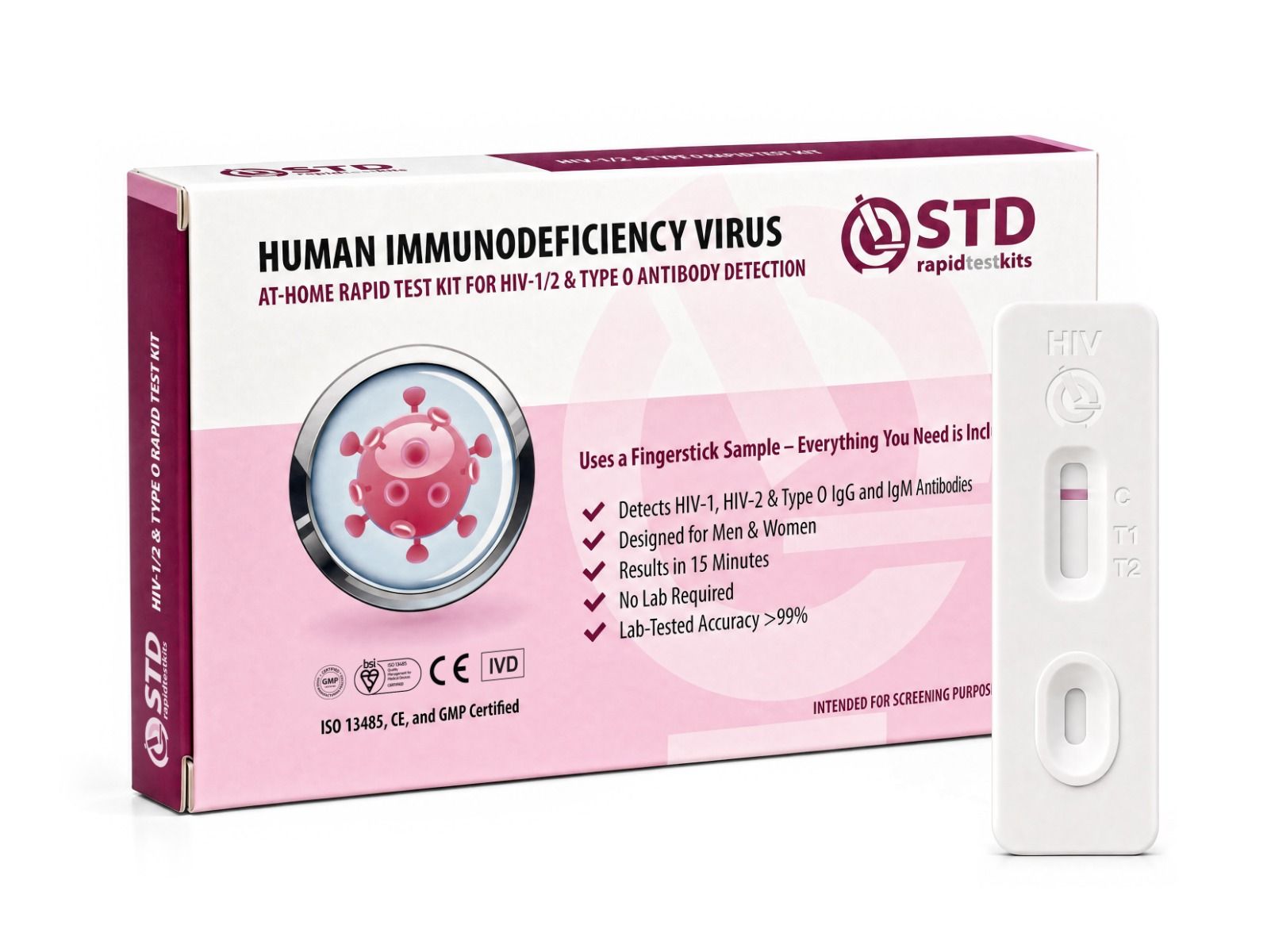
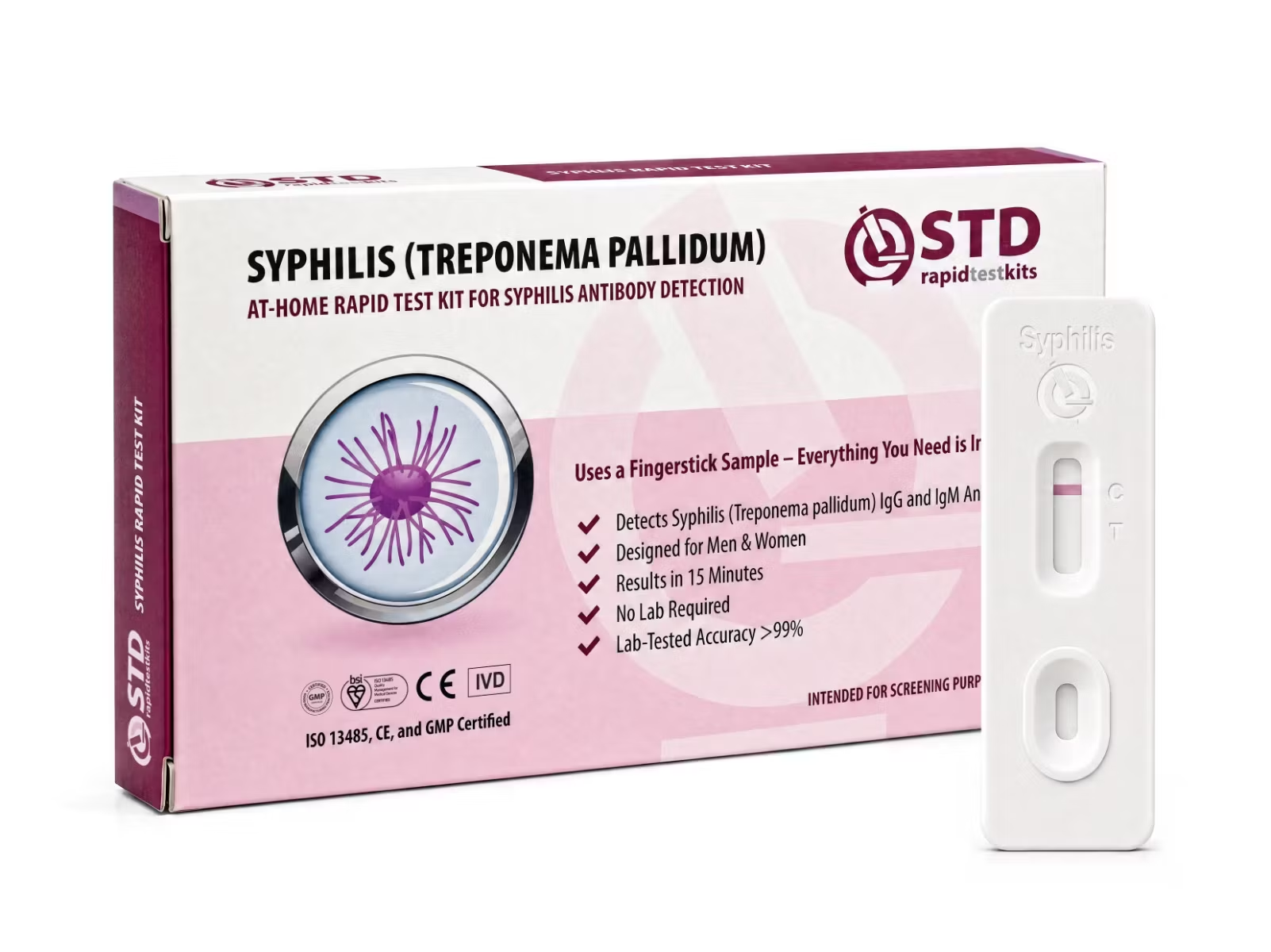
The screens above are not single-shot. If you began prenatal care later than ideal, your provider runs the panel at the first visit you attend, with no penalty for the delay. Catching a treatable infection at week 28 is still vastly better than missing it entirely. This is also where at-home screening can help fill a gap, especially if your first prenatal appointment is several weeks out. As context: this site sells at-home rapid STI tests, and the kits below are intended to fill that pre-clinic gap or support partner testing, not to replace clinic prenatal care.
What Happens If a Test Comes Back Positive
A positive prenatal STI result does not mean something already went wrong. In almost every case, it means the screening system worked: the infection was found in time to do something about it. The medical response is structured and well-rehearsed.
For syphilis, treatment is intramuscular benzathine penicillin G. The full regimen depends on disease stage. Penicillin is the only treatment proven effective at preventing congenital syphilis, so people with a documented penicillin allergy are typically desensitized and treated rather than given a substitute. Treatment as early as possible in pregnancy gives the best outcome.
For HIV, antiretroviral therapy is started or continued throughout pregnancy. The goal is an undetectable viral load by the third trimester. If that goal is met, vaginal delivery is generally safe; if it is not, a planned C-section before labor begins is added. The baby receives a short course of antiretroviral prophylaxis after birth.
For chlamydia and gonorrhea, pregnancy-safe antibiotics clear the infection (azithromycin or amoxicillin for chlamydia, ceftriaxone for gonorrhea). A test of cure is performed three to four weeks after treatment to confirm it worked. Partners are also tested and treated to prevent reinfection.
For hepatitis B, no treatment is needed during pregnancy in most cases. The intervention happens at the baby's bedside: hepatitis B vaccine plus hepatitis B immunoglobulin within 12 hours of birth.
For herpes, daily suppressive antiviral medication (acyclovir or valacyclovir) is offered starting around 36 weeks for anyone with a history of genital HSV. This reduces the chance of an active outbreak at delivery and lowers the rate of cesarean delivery.
All pregnant women should be screened for syphilis serologically at the first prenatal visit. Repeat serologic testing in the third trimester and at delivery is recommended for women who are at high risk.
Protecting the Baby If You Do Not Know Your Status
The hardest version of this question shows up when a pregnant person is not yet in prenatal care, missed an appointment, or is unsure when they were last tested. The instinct is to assume the worst and spiral. The more useful response is concrete: get a screen on the calendar.
The shortest path is a clinic visit. Every prenatal practice runs the standard panel at intake regardless of timing in pregnancy. If a clinic appointment is more than a few weeks out, an at-home rapid test for HIV, syphilis, and hepatitis B can fill the gap, with the understanding that any reactive home result needs clinic-based confirmation.
Partner testing matters too. A partner who tests positive can pass an infection to the pregnant person mid-pregnancy, restarting the screening clock. Partner testing is part of the standard prenatal protocol because the parent's status at the first prenatal visit is not necessarily the parent's status at delivery, and many third-trimester re-screens exist precisely because of this.
The behavioral piece is straightforward: condom use during pregnancy meaningfully reduces the chance of acquiring a new STI mid-pregnancy. Avoiding new untested partners, particularly in the third trimester, is the single highest-impact prevention step.
If you are unsure about your status, do these in order
- Book a clinic appointment for the standard prenatal STI panel; intake runs it at any gestational age.
- If the soonest clinic slot is weeks out, use an at-home rapid test for the highest-priority infections (HIV, syphilis, hepatitis B) to bridge the gap.
- Have your partner screened too; a partner-acquired infection mid-pregnancy is the main reason third-trimester re-screens exist.
- Use condoms with any new or untested partner for the rest of pregnancy, especially in the third trimester.

Common Myths Worth Clearing Up
A handful of beliefs about STIs and pregnancy circulate widely and tend to make people more anxious without making them safer. The corrections are simple.
“If I felt fine going into pregnancy, I cannot have an STI.” Many of the relevant infections are silent for months or years. Chlamydia, gonorrhea, and early HIV often produce no noticeable symptoms. Universal first-visit screening exists because how you feel is not a reliable indicator.
“A C-section eliminates all transmission risk.” A C-section helps when the risk window is the birth canal (active herpes lesions, unsuppressed HIV). It does not help when the infection has already crossed the placenta (syphilis) or when the protection works through a different route (hepatitis B vaccination).
“Testing positive means I caused harm to my baby.” The opposite is closer to the truth. A positive result that gets caught and treated typically prevents the harm that would have occurred if the infection had stayed undetected. The act of being screened is the protective behavior.
“I would have to be very symptomatic to need a partner conversation.” Partners can carry an STI silently and reinfect the pregnant person mid-pregnancy. Partner testing is part of the screening protocol for a reason, regardless of whether either of you has symptoms.
Symptoms are unreliable, screening is universal for a reason, and a positive result caught early is what prevents harm rather than causing it. If a piece of online advice contradicts any of those three points, treat it as a myth rather than a guideline.
FAQs
- Which STIs can actually cross the placenta during pregnancy?
- Syphilis and untreated HIV are the only two STIs that routinely cross the placenta during pregnancy. Both are caught by universal first-visit screening, and both have effective pregnancy-safe treatments that drop transmission risk substantially. Most other STIs (herpes, chlamydia, gonorrhea, hepatitis B, HPV) transmit primarily during vaginal delivery rather than in the womb, which is why the testing window, treatment plan, and delivery decisions all depend on which group an infection sits in.
- What does a routine prenatal STI screen cover in the U.S.?
- At your first prenatal visit, the standard panel covers HIV, syphilis, hepatitis B, and hepatitis C. Chlamydia and gonorrhea are added for anyone under 25 or with ongoing risk factors. Several of these tests are repeated in the third trimester, and ACOG specifically recommends a third-trimester syphilis re-screen for everyone given recent rises in U.S. congenital syphilis rates. HPV-related changes are picked up by routine cervical cancer screening on the standard adult schedule rather than a pregnancy-specific protocol.
- If I have herpes, do I need a C-section?
- Only if there is an active outbreak or prodrome at the time of labor. People with longstanding HSV who are outbreak-free at delivery typically deliver vaginally, often after taking daily suppressive antiviral medication starting around 36 weeks. The decision is made at the time of labor based on actual symptoms, not on antibody status alone.
- Can I still protect my baby if I started prenatal care late?
- Yes. The standard prenatal panel runs at the first visit you attend, regardless of how far along you are. For syphilis, treatment at any point in pregnancy, including the third trimester, substantially reduces the risk of congenital syphilis. For HIV, antiretroviral therapy started later in pregnancy still meaningfully lowers perinatal transmission. Earlier is always better, but starting in the second or third trimester is genuinely worth doing.
- What is the most concerning STI for pregnancy if it is missed?
- Untreated syphilis is the highest-stakes scenario in the modern era. It can cross the placenta from the first trimester onward and is linked to miscarriage, stillbirth, prematurity, and congenital syphilis. The good news: it is also the most preventable outcome on this list. A single intramuscular dose of penicillin treats early syphilis in pregnancy.
- Should my partner get tested too?
- Yes. Partner testing is part of the standard protocol because a partner can carry an STI silently and reinfect the pregnant person mid-pregnancy. This restarts the screening clock and undoes earlier treatment. A negative panel at the first prenatal visit is not a guarantee of negative status at delivery if a partner has not been tested.
- Are at-home STI tests useful during pregnancy, or should I just wait for clinic screening?
- Clinic prenatal screening is the gold standard and is what your obstetric team is making decisions on. At-home rapid tests are useful when a clinic visit is weeks away, for partner testing, or for pre-conception screening before pregnancy starts. Any reactive at-home result should be confirmed at a clinic before treatment decisions are made.
- Can my baby still get infected even if I am treated during pregnancy?
- It is possible but uncommon. Treatment during pregnancy substantially reduces transmission risk for every STI on the standard panel, but no intervention is 100% effective. That is why newborn-side measures exist as a second line: hepatitis B birth-dose vaccine plus immunoglobulin, erythromycin eye ointment for every newborn, and antiretroviral prophylaxis for infants of HIV-positive parents. Layered protection is the design.
- U.S. Centers for Disease Control and Prevention. About STIs and Pregnancy: overview of which STIs are screened for, when, and why during routine U.S. prenatal care.
- U.S. Centers for Disease Control and Prevention. STI Treatment Guidelines, Pregnant Women section: pregnancy-safe regimens for syphilis, chlamydia, gonorrhea, hepatitis B, herpes, and HIV; source for the pull quote on first-visit syphilis screening.
- U.S. Centers for Disease Control and Prevention. Clinical Overview of Perinatal Hepatitis B: chronic-infection risk in untreated infants (~90%) and rationale for intrapartum-focused prophylaxis.
- U.S. Centers for Disease Control and Prevention. Perinatal Hepatitis B Vaccine Administration: source for the 94% effectiveness figure for vaccine plus HBIG within 12 hours of birth, vs. 75% for vaccine alone.
- U.S. Centers for Disease Control and Prevention. MMWR Recommendations and Reports: CDC Recommendations for Hepatitis C Testing Among Perinatally Exposed Infants and Children, 2023. Source for the 5.8% (95% CI 4.2-7.8%) HCV vertical transmission figure.
- National Institutes of Health, HIVinfo. Preventing Perinatal Transmission of HIV During Pregnancy and Childbirth: source for the under-1% transmission figure with antiretroviral therapy and undetectable viral load.
- U.S. Centers for Disease Control and Prevention. Genital Herpes Basic Fact Sheet: transmission, symptoms, and management of HSV including pregnancy considerations.
- American College of Obstetricians and Gynecologists. Practice Advisory: Screening for Syphilis in Pregnancy (April 2024). Source for first-visit, third-trimester, and at-delivery syphilis screening recommendations.
- American College of Obstetricians and Gynecologists. HIV and Pregnancy FAQ: source for first-visit and third-trimester HIV screening guidance.
- American College of Obstetricians and Gynecologists. Practice Bulletin: Management of Genital Herpes in Pregnancy (2020). Source for relative neonatal transmission risks of primary vs. recurrent maternal HSV at delivery.
