
Published: November 2025 | Last updated: May 2026 | Editorial review and quality control: Martina N.
A persistent myth keeps showing up in the same places: friends warning each other in hushed tones, abstinence-heavy health classes, and late-night forum threads where one wrong assumption builds on another. The idea is that catching an STD somehow shuts down the reproductive system, as if the body has a moral sensor that flips off fertility when something feels wrong. Biologically, that is not how sexually transmitted infections work. Yes, you can still get pregnant with an STD. Most of them do not stop ovulation, do not block fertilization, and do not protect anyone from an unintended pregnancy.
The fear behind the myth is understandable. STDs sit at an uncomfortable intersection of stigma, secrecy, and health information that gets watered down in popular sources. This piece walks through what actually happens in the body during an active infection, why short-term pregnancy ability is different from long-term fertility risk, and what current public-health guidance recommends for testing before, during, and after pregnancy. Most readers come here to confirm one thing fast and stay for the parts that affect their next decision.
Key Takeaways
- Most STDs do not prevent ovulation, fertilization, or implantation. Pregnancy is biologically possible during an active infection in any partner.
- Fertility risk from STDs builds slowly over months and years of untreated infection, not in the days after exposure. Early testing is the single most protective step.
The Myth That Won't Die: "An STD Means You Can't Get Pregnant"
This belief shows up everywhere, often dressed as common sense. The intuition behind it is simple: infection equals damage, and damage equals broken fertility. From the outside it looks plausible. From the inside, the body's reproductive machinery does not actually work that way. Ovulation does not pause because someone has chlamydia. Sperm do not refuse to fertilize an egg because gonorrhea is present. The reproductive system is not a moral arbiter that switches off when a person is infected.
Most of this confusion comes from collapsing two different ideas into one. There is the immediate question of whether pregnancy can happen during an active infection, and there is the longer-running question of whether untreated infections can damage fertility over time. Those are different timelines with different mechanisms, and treating them as one outcome is what leaves people misinformed and unprotected. The same mental shortcut also makes it harder for someone to recognize early warning signs, because the brain has already filed STDs and infertility under the same label.
Three reinforcers keep this idea alive: incomplete sex education that frames STIs only in worst-case terms, online forums where one person's complication becomes everyone's expected outcome, and a cultural shortcut that pairs infection with damage. None of those reflects what the body typically does during a common infection.
What Actually Happens in the Body When You Have an STD
To make sense of pregnancy risk, it helps to slow down and look at where each infection lives. Different STIs occupy very different tissue territory, and that geography is what determines whether they can interfere with conception, gestation, or neither.
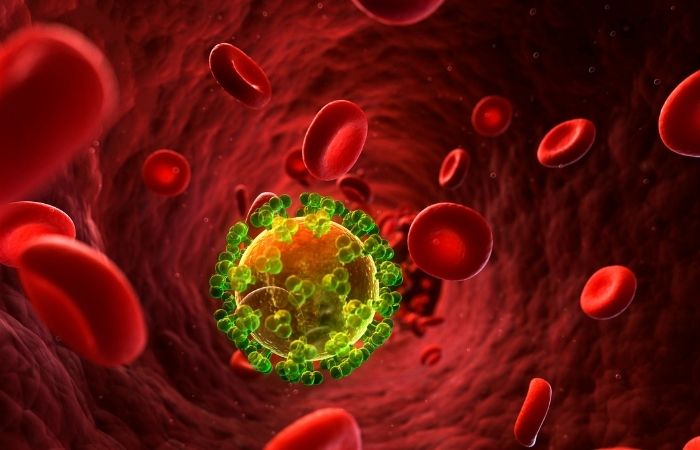
Chlamydia and gonorrhea are bacterial infections that typically settle in the cervix, urethra, throat, or rectum. They cause localized inflammation and, in many people, no symptoms at all (CDC chlamydia overview). Herpes simplex viruses live quietly in nerve cell clusters between outbreaks, traveling along nerve pathways during reactivation. HPV affects skin and mucosal tissue at the site of infection. HIV, syphilis, and hepatitis B and C are different in kind: they circulate through the bloodstream and reach the whole body, which is why they are diagnosed with blood tests and why they matter most during pregnancy when they can cross to the fetus.
None of these locations directly stop the ovaries from releasing an egg or prevent sperm from doing their job in the short term. In the early phase of an infection, many people ovulate, conceive, and carry pregnancies without ever knowing they were positive. That is not evidence that STIs are harmless. It is evidence that fertility usually keeps running on its own track, which is exactly why routine screening is built into prenatal care.
Short-Term Pregnancy Risk vs Long-Term Fertility Risk
This is the distinction most popular articles fail to make, and it is where clarity finally replaces fear. In the short term, having an STD usually does not prevent pregnancy. In the long term, untreated infections can raise the risk of complications that affect fertility over months and years.
Someone might test positive for chlamydia today and conceive next month. Another person might carry an untreated infection for years and develop pelvic inflammatory disease, which can scar the fallopian tubes and make pregnancy harder later. According to the CDC, about one in eight women with a history of PID experience difficulties getting pregnant (CDC: About Pelvic Inflammatory Disease). Same diagnosis, two very different timelines, two very different outcomes. The table below separates what is happening now from what can happen later.
| STD | Can You Get Pregnant While Infected? | Potential Long-Term Fertility Impact if Untreated |
|---|---|---|
| Chlamydia | Yes, pregnancy is possible | Risk of pelvic inflammatory disease and tubal scarring |
| Gonorrhea | Yes, pregnancy is possible | Increased risk of PID and ectopic pregnancy |
| Herpes (HSV-1, HSV-2) | Yes, pregnancy is possible | No direct fertility damage; pregnancy management needed to lower neonatal transmission |
| HPV | Yes, pregnancy is possible | Fertility usually unaffected; some treatment procedures may matter |
| Syphilis | Yes, pregnancy is possible | Serious pregnancy complications and congenital syphilis if untreated |
Where Pregnancy Complications Actually Come From
When people hear that STDs can affect pregnancy, the assumption is usually that the infection is directly attacking fertility. Most of the time, the real cause is inflammation, untreated spread up into the reproductive tract, or care that arrives too late. Pelvic inflammatory disease is not an STD on its own. It is a complication that develops when bacterial infections such as chlamydia or gonorrhea travel from the cervix into the uterus and fallopian tubes, leaving scar tissue behind that can block the tubes and increase the risk of ectopic pregnancy (CDC PID overview).
This distinction reframes the conversation. The risk is not the diagnosis itself. The risk is not knowing about it, or being unable to access timely treatment. That shifts the focus from shame to access, awareness, and timing, which are the variables that can be changed. It also explains why many people with STDs still conceive without complications. The body does not instantly suffer permanent damage; risk accumulates over months and years.
Pelvic inflammatory disease is what can develop when untreated chlamydia or gonorrhea travels upward from the cervix into the uterus and fallopian tubes. The infection is the cause; PID is the downstream injury. Treating the original infection early prevents the upward spread, which is why screening intervals matter as much as the test itself.
Does Treatment Change Pregnancy Risk?
Yes, and this is where the conversation moves from fear to control. The bacterial STDs people worry about most for fertility, namely chlamydia, gonorrhea, and syphilis, are curable with single-dose or short-course antibiotics, along with the parasitic infection trichomoniasis (WHO Sexually Transmitted Infections fact sheet). The CDC's pregnancy treatment guidelines recommend azithromycin during pregnancy for chlamydia, with a test-of-cure approximately four weeks after treatment to confirm clearance (CDC chlamydia treatment guidelines). Treated promptly and confirmed cured, the long-term fertility impact is significantly reduced.
Viral STIs such as HSV-1, HSV-2, and HPV are managed rather than cured. They do not block conception. Treatment focuses on suppressing outbreaks, monitoring tissue changes, and arranging delivery in a way that lowers transmission risk to the baby. Knowing your status before pregnancy widens the options instead of shrinking them.
Cured with antibiotics: chlamydia, gonorrhea, syphilis, trichomoniasis. Cure is confirmed by a follow-up test, not just symptom resolution.
Managed long-term: HSV-1, HSV-2, HPV, HIV, hepatitis B (lifelong management for some), hepatitis C (now curable in most cases with direct-acting antivirals).
Pregnancy Doesn't Care About Gendered Myths
A surprising amount of misinformation about STDs and pregnancy is built on the idea that fertility responsibility belongs to only one body. People with uteruses are taught to fear infertility, while people who produce sperm are often left out of the conversation entirely. This gap creates confusion on both sides, especially when an STD diagnosis enters the picture.
Someone might assume that if they have an infection, they cannot get a partner pregnant. Another might believe that because their partner tested positive, pregnancy is off the table. Neither assumption holds up medically. STDs do not selectively turn off sperm production or egg release based on gender, behavior, or intention. What matters most is exposure timing, untreated infection duration, and whether care is delayed.
What gender doesn't change
- STIs do not selectively suppress sperm production or ovulation based on which partner is infected.
- Pregnancy risk continues for both partners as long as viable sperm and ovulation are present, regardless of who tested positive.
- Routine screening is recommended for both partners during preconception planning, not only the partner who can carry a pregnancy.
Can Men With STDs Get Someone Pregnant?
Yes, and this is one of the most consequential myths. The short answer is that an STD does not stop sperm from fertilizing an egg. People who produce sperm often have no symptoms at all from chlamydia or gonorrhea, which makes the assumption of infertility feel even more convincing. There is no clinical basis for it. Sperm count and motility are typically unaffected during the early stages of these infections, and pregnancy can happen as easily as it would without the infection present.
Long-term, untreated infections can affect sperm health, but the timeline is gradual and the outcome is not preordained. Fertility risk increases quietly, not suddenly. This is one of the reasons routine STI testing makes sense for both partners, not only the partner who can become pregnant. A negative test rules out the treatable causes. A positive test points toward a short course of antibiotics for bacterial infections, and sperm parameters typically return to baseline within weeks of clearance.
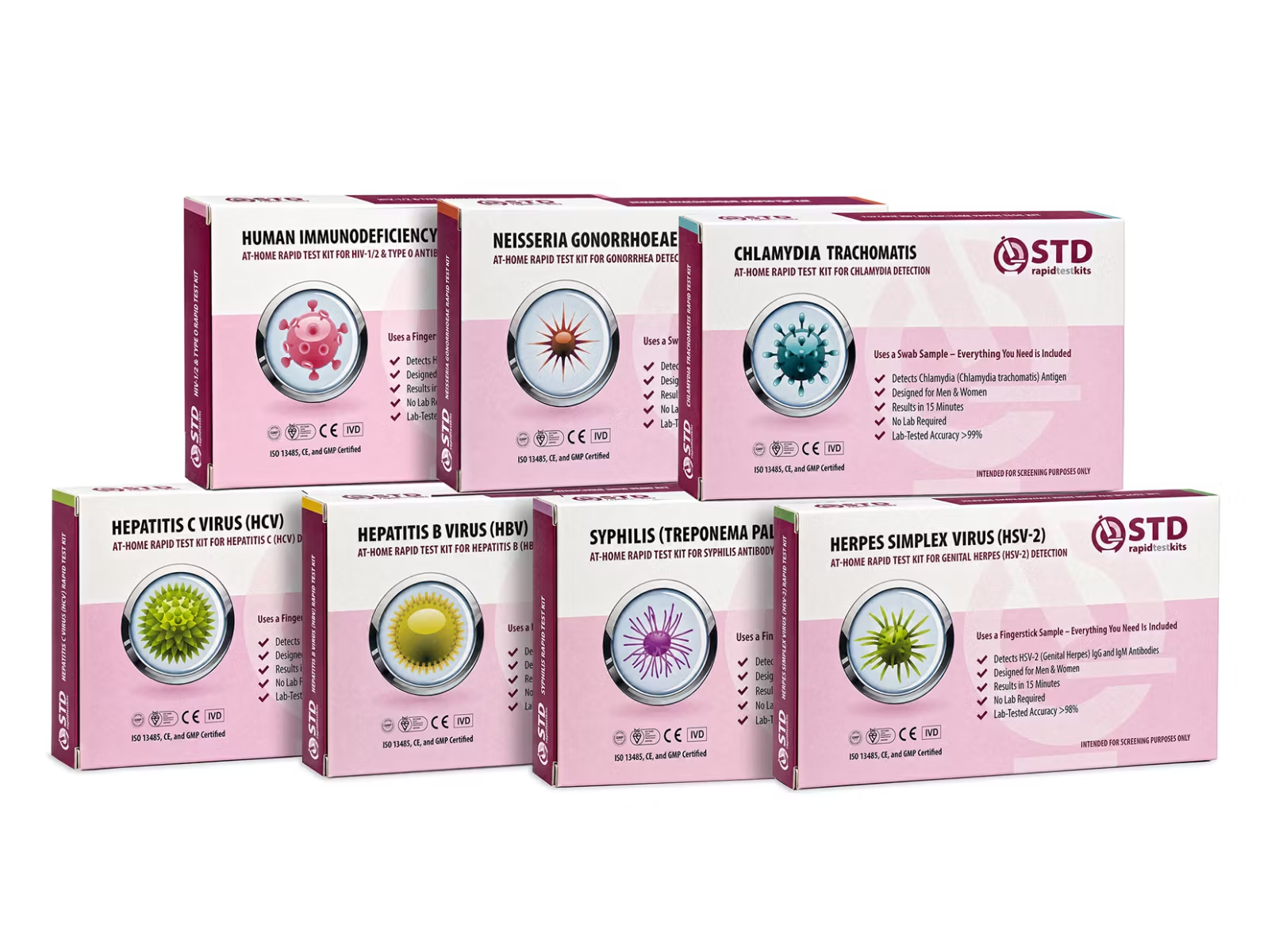
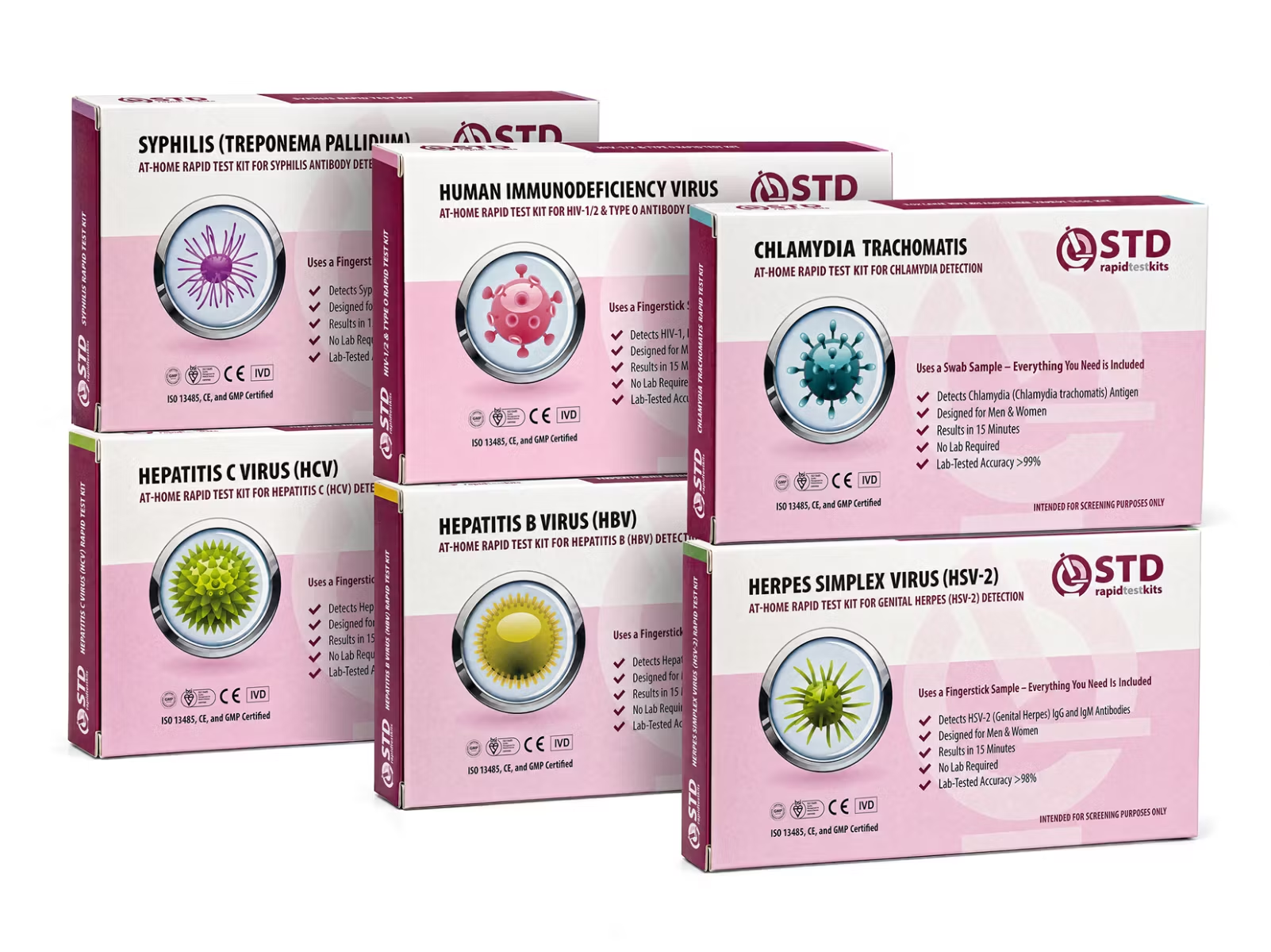
Disclosure: stdrapidtestkits.com sells the rapid lateral-flow STI tests referenced in the product panels in this article. Product picks here are based on topic fit for the reader's question, not commercial preference.
Trying to Conceive While Managing an STD
Some readers arrive here from the opposite direction, actively trying to get pregnant when an STD diagnosis lands. The fear arrives quickly. Did this ruin our chances? Should we stop trying? In most cases, the answer is reassuring. Treatable bacterial STIs are best addressed before conception, and a positive test does not close the window. It opens a clear next step: a short course of antibiotics, a test of cure, and then continued family planning with confidence that the infection has been cleared.
For viral infections such as HSV-2 or HPV, planning looks different but is still workable. The goals shift toward reducing transmission risk to the partner, tracking outbreaks, and coordinating with an obstetric provider if pregnancy occurs. Suppressive antivirals in the third trimester lower the risk of an active outbreak at delivery, which is why providers typically discuss a medication plan well before the due date.
Pause briefly, treat first: chlamydia, gonorrhea, syphilis, trichomoniasis. Resume after a confirmed test of cure (typically about four weeks after treatment for chlamydia per CDC guidance).
Continue with a management plan: HSV-2, HPV, HIV. Coordinate suppressive antivirals, cervical monitoring, or antiretroviral plans with your prenatal provider rather than pausing.
How Timing Changes Risk
Timing shapes nearly every part of this picture. The duration of an untreated infection matters more than the fact of infection itself. Early detection often means zero impact on fertility. Late detection raises the odds that complications have already begun.
Someone who tests for chlamydia within weeks of exposure and completes treatment may never see any reproductive impact. Someone who carries an unrecognized infection for years has higher odds of facing scarring, ectopic pregnancy, or PID-related infertility. The difference is not about behavior or worth. It is about access, awareness, and how soon care begins. The table below shows how those windows shift the picture in concrete terms.
| Timing of Detection | Short-Term Pregnancy Risk | Long-Term Fertility Risk |
|---|---|---|
| Early testing and prompt treatment | Pregnancy still possible | Minimal to no increased risk |
| Delayed diagnosis without symptoms | Pregnancy possible but unmanaged | Moderate risk depending on infection |
| Long-term untreated infection | Pregnancy may still occur | Higher risk of complications or infertility |
Why Birth Control and STDs Get Confused
Another layer of misinformation sneaks in through birth control conversations. Many people subconsciously lump pregnancy prevention and infection prevention into the same mental category. If one thing is present, they assume the other must be blocked. STDs do not function like contraception. An infection does not create a biological barrier to fertilization, and ovulation continues on its normal cycle in nearly all common infections.
That is why people can become pregnant while infected, and why relying on an STD as a form of natural birth control is both inaccurate and dangerous. The same confusion explains why some pregnancies feel shocking rather than surprising: when someone believes infection blocks pregnancy, a positive pregnancy test arrives without the usual mental preparation, especially if they were not using contraception.
STDs and birth control sit in different mental categories. Contraception is designed to prevent fertilization or implantation. Sexually transmitted infections do neither. Treating a positive STI status as a substitute for contraception leaves both reproductive and health risks unaddressed at the same time.
When Pregnancy and an STD Happen Together
For people who find out they are pregnant and have an STD at the same time, the panic is immediate. Questions about harm to the baby, blame, and future health hit all at once. This moment deserves calm information rather than judgment. Many bacterial STIs are safely treated during pregnancy with antibiotics that have decades of safety data. Viral infections are managed with antiviral medications and careful planning around delivery.
The single most dangerous scenario is not pregnancy with an STD; it is pregnancy without testing. For herpes specifically, the CDC notes that transmission to an infant during delivery is the highest-risk pathway, which is why providers examine for active sores at delivery and may recommend cesarean section if symptoms are present (CDC genital herpes overview).
The World Health Organization estimated 1.1 million pregnant women had syphilis in 2022, resulting in more than 390,000 adverse birth outcomes globally. Most of these were preventable with one screening test and a course of penicillin (<a href="https://www.who.int/news-room/fact-sheets/detail/sexually-transmitted-infections-(stis)" target="_blank" rel="noopener">WHO STI fact sheet</a>).
Why Testing Before or During Pregnancy Matters
STIs do not become more dangerous because someone gets pregnant. They become dangerous when they are not noticed and not treated. Routine prenatal screening is the standard of care for a reason. The CDC recommends HIV and syphilis testing at the first prenatal visit for all pregnant patients, hepatitis B surface antigen screening for everyone at the initial visit, and chlamydia and gonorrhea screening for those under 25 or with risk factors, with retesting in the third trimester for those at higher risk (CDC STI screening recommendations for pregnant women).
Many people assume STD testing is something you do only when symptoms appear or after a partner cheats. In practice, infections are often silent and almost always treatable when caught early. Knowing your status before trying to conceive is preparation, not pessimism. It gives time to treat what is treatable and plan for what needs ongoing monitoring.
All pregnant women in the United States should be tested for HIV at the first prenatal visit.
What Different Test Results Actually Mean for Pregnancy
A positive STD test does not change whether pregnancy is biologically possible. It changes how care should be handled. That distinction gets lost online, where results are framed as endpoints rather than information.
A negative result is reassuring but does not erase the need for protection or follow-up if exposure continues. A positive result for a curable bacterial STI opens a treatment pathway that, in most cases, fully resolves the infection within weeks. A positive result for a viral STI opens a management pathway centered on outbreak suppression and prenatal coordination. Neither result, on its own, defines fertility or pregnancy outcome. The table below outlines how common testing outcomes affect pregnancy planning and care.
| Test Result | Immediate Pregnancy Impact | Next Medical Step |
|---|---|---|
| Negative STD test | No infection-related barrier to pregnancy | Continue routine screening if exposure risk continues |
| Positive, treatable bacterial STD | Pregnancy still possible | Treat infection before or during pregnancy; test of cure |
| Positive viral STD | Pregnancy possible with planning | Ongoing management and prenatal coordination |
The Role of At-Home Testing in Real Life
Access shapes outcomes more than biology does. For many people, clinics are far away, expensive, or carry social weight that makes appointments hard to schedule. At-home rapid testing exists because real lives do not always accommodate ideal healthcare scenarios. Being able to test privately allows people to act sooner, before symptoms appear or pregnancy complicates the picture.
What matters most is accuracy of the test, follow-up on any positive result, and prompt treatment. At-home rapid tests are lateral-flow immunoassays, a different technology from the laboratory NAAT or PCR tests used for confirmation. They are screening tools that work well within their stated window periods, and a positive at-home result is worth confirming with a clinician-administered NAAT when possible. The test itself does not create risk; it surfaces information that has been there the whole time.
What Changes When You Know Your Status
Looking back, the most common reflection from people who delayed testing is that no one explained the difference between infection and infertility clearly. Pregnancy was still possible during an active infection. Testing did not have to feel like an admission of guilt. Information was the protective step, not the punishing one.
STDs do not act as secret birth control. They do not quietly decide who deserves to conceive and who does not. Most of the fear surrounding pregnancy and infection comes from silence and half-truths. What protects fertility and pregnancy outcomes is straightforward: screening at the right intervals, treating what can be cured, managing what cannot, and getting prenatal care early. Whether the goal is conceiving, avoiding pregnancy, or already managing one, knowing your status keeps the next decision in your hands. If you are uncertain, a private at-home rapid test can confirm or rule out the most common infections quickly. A positive result means starting treatment, and a clinician or online prescriber can typically initiate a course within days of a confirmed positive.
FAQs
- Can you actually get pregnant if you have an STD?
- Yes. Having an STD does not flip a switch that turns fertility off. Ovulation can still happen. Sperm can still fertilize an egg. That is why so many people end up pregnant while infected without ever planning to be. The risk is not that pregnancy is impossible. The risk is not realizing it is still very possible.
- I have chlamydia. Does that mean pregnancy is off the table?
- Not automatically. Plenty of people get pregnant while they have chlamydia, especially early on. Where problems can arise is when chlamydia hangs around untreated for months or years and causes pelvic inflammatory disease. That is a slow-burn issue, not an instant one. Early treatment with the antibiotic regimen recommended by the CDC usually protects fertility very well.
- What about gonorrhea? Isn't that worse?
- Gonorrhea has a tougher reputation, but the timeline matters here too. In the short term, pregnancy can absolutely still happen. In the long term, untreated gonorrhea can increase the risk of scarring or ectopic pregnancy, similar to chlamydia. Testing sooner rather than later is what changes the outcome.
- If I have herpes, can I still become pregnant?
- Yes, and many people do. Herpes does not interfere with ovulation or conception. The focus with herpes during pregnancy is management, not fertility. Doctors plan around outbreaks and delivery timing to lower the risk of neonatal transmission, which is the most serious concern.
- Can men with STDs still get someone pregnant?
- Yes. STDs do not stop sperm from doing their job, especially early in an infection. Many people who produce sperm have no symptoms at all, which makes it even easier to assume fertility is not an issue. Biology does not back that assumption up. Routine testing matters for everyone.
- I thought having an STD was basically natural birth control. Is that not true?
- It is not true, and it is a dangerous belief. STDs are infections, not contraceptives. They do not block fertilization or prevent ovulation. They do not protect anyone from pregnancy. What they can do, if untreated, is increase health risks later. Those are very different things.
- Is it dangerous to be pregnant with an STD?
- It can be if the infection is not treated or monitored, but many STDs are safely managed during pregnancy every day. Prenatal screening exists for a reason. Early care dramatically lowers risks, and most people with proper treatment go on to have healthy pregnancies and babies.
- Should I get tested even if I feel fine?
- Yes, especially if pregnancy is possible or planned. Many STDs do not cause symptoms, but that does not mean they are not there. Testing is more about preventing issues before they arise than responding to something that has already gone wrong.
How We Sourced This Article: This piece draws on current guidance from the U.S. Centers for Disease Control and Prevention and the World Health Organization, including their 2021 STI Treatment Guidelines, screening recommendations for pregnancy, and condition-specific fact sheets. Specific quantitative claims (PID fertility outcomes, syphilis-related birth complications, screening intervals, chlamydia treatment regimens) were verified against the cited primary sources at the time of writing. The aim is to balance medical accuracy with plain-English clarity, reduce stigma around testing, and reflect how pregnancy and infection actually overlap rather than how stigma assumes they do.
- World Health Organization. Sexually Transmitted Infections fact sheet, including curable-STI list, global syphilis-in-pregnancy estimates (1.1 million in 2022), and adverse birth outcome data.
- U.S. Centers for Disease Control and Prevention. About STIs and Pregnancy, general overview of risks and the importance of prenatal screening.
- U.S. Centers for Disease Control and Prevention. About Pelvic Inflammatory Disease (PID), including the one-in-eight infertility statistic referenced in this article.
- U.S. Centers for Disease Control and Prevention. STI Treatment Guidelines: screening recommendations for pregnant women, covering HIV, syphilis, hepatitis B, chlamydia, and gonorrhea.
- U.S. Centers for Disease Control and Prevention. Chlamydial Infections, STI Treatment Guidelines, including pregnancy-specific azithromycin regimen and test of cure.
- U.S. Centers for Disease Control and Prevention. About Genital Herpes, including pregnancy-specific guidance on neonatal transmission and delivery planning.
