







Quick Answer: You can get an STD from oral sex because several infections spread through skin-to-skin contact or contact with infected fluids. Oral gonorrhea, chlamydia, herpes, syphilis, HPV, and even HIV (rarely) can transmit through giving or receiving oral sex.
“We Didn’t Even Have Sex.” Why That Belief Gets People in Trouble
In clinics, one sentence comes up again and again: “But we didn’t even have sex.” What people usually mean is there was no vaginal or anal penetration. Culturally, we treat oral sex like a technicality. Medically, it’s a form of sexual contact that can absolutely transmit infection.
Chlamydia and gonorrhea can infect the throat. Herpes spreads easily through skin-to-skin contact, even without visible sores. Syphilis can pass through contact with a mouth sore you might not even recognize. HPV can infect the throat and has been linked to certain cancers. And while the risk is much lower, HIV transmission through oral sex is not impossible.
None of that means you should panic. It means you should understand how transmission actually works instead of relying on a cultural myth that “oral is safe.” It’s lower risk than unprotected vaginal or anal sex in many cases, but lower risk does not mean zero risk.
How STDs Spread Through Oral Sex (Without Penetration)
Transmission doesn’t require penetration. It requires opportunity. That opportunity can be microscopic, a tiny abrasion in the mouth, inflamed gums, a small tear in genital skin, or viral shedding when someone has no symptoms at all.
When someone gives oral sex, their mouth comes into direct contact with genital fluids and skin. When someone receives oral sex, their genitals are exposed to saliva and potentially viral shedding from the giver’s mouth. Both directions carry different levels of risk depending on the infection.
| Infection | Can Spread Through Oral? | How It Transmits | Common Oral Symptoms |
|---|---|---|---|
| Gonorrhea | Yes (common) | Genital fluids to throat lining | Sore throat, redness, often no symptoms |
| Chlamydia | Yes (less common than gonorrhea) | Genital fluids to throat tissue | Mild throat irritation or none |
| Herpes (HSV-1/HSV-2) | Yes (very common) | Skin-to-skin contact, viral shedding | Blisters, tingling, sometimes silent |
| Syphilis | Yes | Contact with syphilis sore | Painless mouth ulcer |
| HPV | Yes | Skin-to-skin contact | Usually none, sometimes throat changes |
| HIV | Rare but possible | Exposure to infected fluids | Often none initially |
The key thing most people miss? Many oral STDs are asymptomatic. You can have oral gonorrhea and feel absolutely normal. You can transmit herpes when no sores are visible. That’s why “I feel fine” doesn’t always equal “I’m fine.”

People are also reading: Myths About Herpes That Keep You From Knowing the Truth
The Sore Throat Spiral: STD or Just a Cold?
Let’s talk about the 2AM Google search: sore throat after oral sex STD or cold?
Most sore throats are viral colds. That’s the statistically honest answer. But oral gonorrhea and oral chlamydia can also cause throat inflammation, redness, or mild discomfort. The problem is that the symptoms overlap almost completely with everyday illnesses.
Oral gonorrhea symptoms may include persistent soreness, swollen lymph nodes, or a feeling like something is “off.” Or nothing at all. Many people only find out through routine screening.
Herpes in the mouth tends to be more obvious when symptomatic, clusters of blisters, tingling, pain when swallowing. But again, it can be silent between outbreaks.
If you’re trying to self-diagnose based on symptoms alone, you’ll likely just increase your anxiety. Testing, not guesswork, is what brings clarity.
Timing Matters More Than Fear: When to Test After Oral Sex
Testing too early can give you a false sense of security. Testing too late keeps you in limbo. The sweet spot depends on the infection and the type of test used.
When people search “how long after oral sex to test,” what they really mean is: when will this result be accurate enough that I can breathe again?
| Infection | Earliest Testing Window | Optimal Accuracy Window |
|---|---|---|
| Gonorrhea | 5–7 days | 14 days |
| Chlamydia | 5–7 days | 14 days |
| Syphilis | 3 weeks | 6 weeks |
| HIV (4th gen test) | 2–3 weeks | 6 weeks+ |
| Herpes (blood test) | 3–4 weeks | 12 weeks |
If it’s only been three days, your anxiety may be loud, but biologically, it’s too soon for most tests to detect infection. Around the two-week mark is when throat testing for gonorrhea or chlamydia becomes far more reliable.
If you don’t want to wait in uncertainty, at-home testing options can give you privacy and speed. Many people prefer ordering directly from STD Rapid Test Kits rather than scheduling a clinic visit they’ll stress about for days.
Peace of mind is not dramatic. It’s responsible.
What About HIV? Let’s Separate Fear from Facts
When people type “can you get HIV from oral sex,” what they’re usually asking is: should I be terrified right now?
The realistic answer is that HIV transmission through oral sex is considered very low risk, especially compared to unprotected vaginal or anal sex. That doesn’t mean zero. Risk increases if there are open sores in the mouth, bleeding gums, a high viral load in the partner, or ejaculation in the mouth. But statistically, documented cases are rare.
The problem is that low risk still feels like high panic when it’s your body and your memory replaying in your head. That’s where testing timing becomes grounding. A fourth-generation HIV test can detect most infections by about six weeks. Testing earlier may provide clues, but confirmatory timing matters for true reassurance.
Anxiety thrives in vagueness. Numbers, windows, and clear next steps shrink it down to something manageable.
Check Your STD Status in Minutes
Test at Home with Remedium6-in-1 STD Test Kit
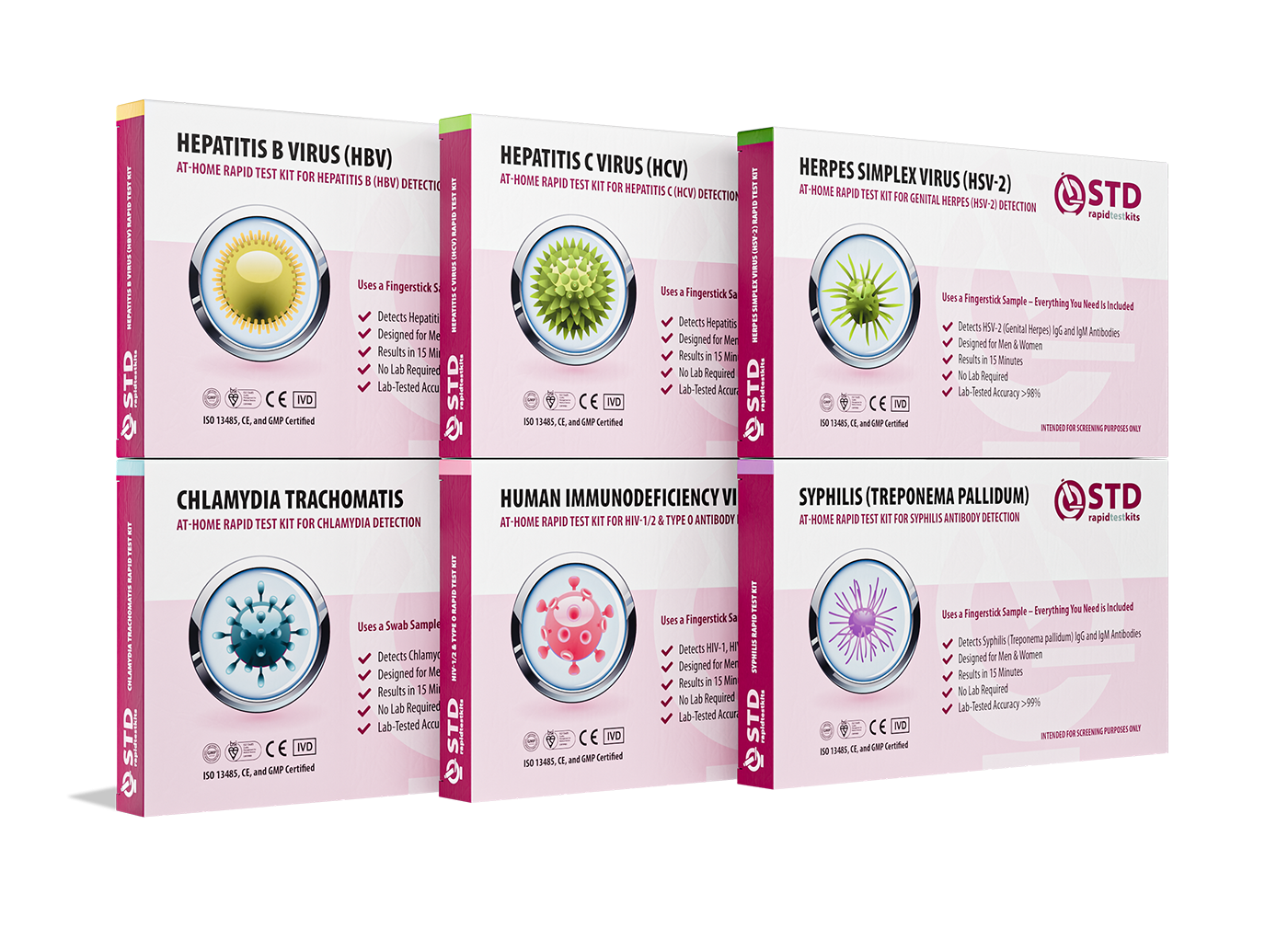
 For Men & Women
 Results in Minutes
 No Lab Needed
 Private & Discreet
Order Now $119.00 $294.00
For all 6 tests
Herpes, Kissing, and the Skin-to-Skin Reality
If there’s one infection that truly ignores the “but there was no penetration” argument, it’s Herpes.
HSV-1, often called oral herpes, spreads easily through kissing. It can also spread from a partner’s mouth to your genitals during oral sex. That means someone with a history of cold sores can transmit genital herpes even if they’ve never had genital symptoms themselves.
Here’s the part no one explains clearly: herpes can shed when there are no visible blisters. That’s called asymptomatic shedding. It’s not rare. It’s not reckless. It’s just how the virus behaves.
Receiving oral sex from someone with oral HSV-1 is now one of the most common ways young adults acquire genital herpes. That doesn’t make anyone “dirty.” It makes herpes incredibly efficient at spreading through normal intimacy.
Testing for herpes is tricky. Swab tests are accurate when a sore is present. Blood tests detect antibodies but take up to 12 weeks for full reliability. That’s why timing conversations matter more than shame spirals.
HPV in the Throat: The Quiet One
HPV is different from the others. Most strains cause no symptoms and clear on their own. But certain high-risk strains are linked to throat cancers, particularly in men.
There is currently no routine oral HPV screening test for people without symptoms. That fact alone fuels a lot of anxiety. People hear “HPV in throat symptoms” and expect something obvious. Often, there is nothing noticeable.
Vaccination dramatically reduces risk. Many adults are still eligible for the HPV vaccine, and it remains one of the most effective prevention tools available.
The goal here isn’t alarm. It’s awareness. HPV spreads through skin-to-skin contact, including oral sex, and the vast majority of infections resolve naturally. Monitoring unusual, persistent throat symptoms, especially those lasting more than a few weeks, is where medical evaluation becomes important.
At-Home Testing vs Clinic Testing for Oral STDs
When you need it, how comfortable you are, and what symptoms you have will all affect whether you need a "oral STD test kit" or a trip to the clinic.
Throat swabs for gonorrhea and chlamydia are widely used in clinics and increasingly available through mail-in kits. Rapid testing options give you results faster, but you may need to do confirmatory testing depending on the results and the time.
| Situation | Best First Step | Why |
|---|---|---|
| Mild sore throat, recent exposure (under 7 days) | Wait and schedule testing at 14 days | Improves accuracy, reduces false reassurance |
| Persistent throat symptoms (2+ weeks) | Clinic or telehealth consultation | May need throat exam or culture |
| No symptoms, anxiety after exposure | At-home test at appropriate window | Private, fast clarity |
| Visible sores or ulcers | Immediate swab testing | Highest accuracy when lesions present |
If you want privacy and control, the Combo STD Home Test Kit is a complete kit that can test for the most common infections in one step. That way, you’re not guessing which exposure “counts.”
You deserve answers that don’t require sitting in a waiting room feeling exposed. You deserve testing that meets you where you are.

People are also reading: Do Vaccines Interfere With STD Test Accuracy? Here's the Truth
A Story You’ve Probably Lived (Or Will)
Jenna, 22, sat on her dorm bed staring at her phone. “We didn’t even have sex,” she kept telling her roommate. It had been five days since she’d given oral sex to someone she barely knew. Now her throat felt scratchy, and Google had convinced her she had oral gonorrhea.
“I felt stupid. Like I’d messed up something that wasn’t even supposed to count.”
She tested at day six. Negative. But her provider advised retesting at two weeks for more reliable results. That second test was also negative. The sore throat? Seasonal allergies.
What Jenna needed wasn’t shame. She needed timing information and access to testing without judgment.
Most people’s stories end that way, with relief. And when they don’t, they end with treatment, clarity, and moving forward.
If You’re Spiraling Right Now, Read This
First: breathe.
Most exposures do not result in infection. Many oral STDs are treatable. Some clear on their own. And testing exists specifically so you don’t have to keep guessing.
Second: timing beats panic. If it’s too early, mark your calendar. If you’re in the optimal window, test. If symptoms persist, seek care. Those are action steps. Action is power.
Third: oral sex is common. Extremely common. Transmission through oral sex does not make you reckless or irresponsible. It makes you human.
If you’re ready to stop Googling and start knowing, explore discreet options at STD Rapid Test Kits. Your health isn’t a confession. It’s maintenance.
What No One Explains About “Low Risk”
“Low risk” is one of the most misunderstood phrases in sexual health.
When medical professionals say oral sex is lower risk for certain infections compared to unprotected vaginal or anal sex, people often hear “safe.” That translation is where confusion starts. Lower risk simply means statistically less likely, not biologically impossible.
Think of it this way: if something happens 1 in 1,000 times, it’s rare. But if you’re the one, it doesn’t feel rare at all. It feels personal. That’s why relying on population averages to calm individual anxiety doesn’t always work. What works is understanding what actually increases or decreases transmission likelihood.
Risk goes up with:
Open sores in the mouth or on genitals. Inflamed or bleeding gums. Recent dental work. Ejaculation in the mouth. Multiple concurrent partners. High viral load in a partner with untreated HIV. Active lesions from herpes or syphilis.
Risk goes down with:
Barrier methods like condoms or dental dams. Consistent STI screening. Vaccination for HPV. Partners who know their status and are treated when necessary. Time, because many infections become less transmissible once treated.
Notice what’s not on that list? Moral character. Relationship status. Whether it was a one-night thing or someone you’ve known for years. Viruses and bacteria don’t care about narratives. They care about exposure.
Check Your STD Status in Minutes
Test at Home with Remedium7-in-1 STD Test Kit
 For Men & WomenResults in MinutesNo Lab NeededPrivate & Discreet
Order Now $129.00 $343.00
For all 7 tests
The Part That’s Harder to Talk About: Silence
Oral STDs spread partly because people don’t test the throat routinely. Many clinics default to urine tests unless a patient specifically asks for a throat swab. If you’ve ever searched “negative test but symptoms throat,” this is why that disconnect happens. The sample matters.
Another layer is embarrassment. People will say they had “protected sex” and quietly leave out oral exposure because it feels minor. But medically, it’s relevant. Not scandalous. Not dramatic. Just relevant.
I’ve had patients whisper, “Do I have to tell you about the oral part?” The answer is always yes, because that detail determines which test we run. That whisper is often the difference between a missed infection and a clear result.
And here’s something grounding: most oral STDs are either easily treatable or manageable. Gonorrhea and chlamydia respond well to antibiotics. Syphilis is curable in early stages. Herpes is manageable with antivirals. Even when a diagnosis happens, it usually leads to a plan, not catastrophe.
If You’re Deciding Whether to Test Right Now
Ask yourself three calm questions.
First: How long has it been since exposure? If it’s under five days, your biology hasn’t caught up to your anxiety yet. Mark your calendar. Give your body time to show what’s real.
Second: Do I have symptoms that are persistent or unusual? If yes, testing sooner, especially for visible sores, makes sense.
Third: Is this anxiety disrupting my peace? Sometimes the reason to test isn’t just clinical. It’s emotional. Clarity restores sleep.
If you’re within the accurate testing window and want privacy, ordering from STD Rapid Test Kits can remove the waiting room from the equation. Not because you should panic, but because you deserve certainty.
Sex doesn’t become irresponsible because it involved a mouth instead of penetration. It becomes responsible when you follow up with knowledge.
FAQs
1. “We only did oral. Do I actually need to worry?”
I’m going to answer you the way I answer patients in real life: worry isn’t helpful, information is. Oral sex can transmit infections like gonorrhea, chlamydia, herpes, syphilis, and HPV. It doesn’t mean you’re doomed. It means if there was exposure and you’re in the right testing window, getting tested is smart, not dramatic.
2. I have a sore throat after oral sex. Is that basically oral gonorrhea?
Probably not. Most sore throats are boring, everyday viruses. But here’s the catch: oral gonorrhea can look exactly like a mild cold, or nothing at all. If the timing lines up and the anxiety won’t leave you alone, test at around two weeks. Guessing won’t calm your nervous system. A result will.
3. Can you get herpes from receiving oral sex?
Yes. This is actually one of the most common ways people get genital HSV-1 now. If your partner has a history of cold sores, even if they didn’t have one that day, transmission can still happen through asymptomatic shedding. That doesn’t make anyone irresponsible. It makes herpes very good at what it does.
4. Okay, but what about HIV from oral sex? Be honest.
Honestly? The risk is very low. Not zero, but low. Factors like bleeding gums, open sores, or ejaculation in the mouth increase risk slightly. If this is the exposure keeping you up at night, mark six weeks on your calendar for a fourth-generation test and let science, not fear, be the loudest voice in the room.
5. Can I see oral STDs in the mirror?
Sometimes. Herpes sores are usually visible. Syphilis can cause a painless ulcer. But gonorrhea and chlamydia often look like… absolutely nothing. That’s why relying on a flashlight and a tongue depressor isn’t a strategy. Lab tests exist for a reason.
6. If I test negative at one week, am I in the clear?
Maybe, but maybe not fully. One week is often too early for peak accuracy for gonorrhea or chlamydia. Think of early testing as a preview, not the final verdict. Retesting at the two-week mark gives you a much stronger answer.
7. What if my partner says oral sex is “basically safe”?
It’s lower risk than unprotected anal or vaginal sex for many infections. But “lower risk” and “no risk” are not twins. They’re distant cousins. Adults can hold two truths at once: oral sex is common and pleasurable, and testing afterward can still be wise.
8. I feel embarrassed even asking about this. Is that normal?
Completely. Sexual health is loaded with silence and weird cultural rules. But in clinics, these conversations are routine. Boring, even. You deserve care without shame attached to it.
9. Do I need a throat swab specifically?
If your concern is oral exposure, yes, a throat swab is often the right way to test for oral gonorrhea or chlamydia. A urine test alone won’t detect a throat infection. Matching the test to the exposure is how you get meaningful answers.
10. If something comes back positive, what then?
Then you treat it. Most bacterial STDs are cured with antibiotics. Herpes is manageable. HPV is usually cleared naturally. A positive result is a plan, not a life sentence. The goal isn’t perfection. It’s awareness and action.
You Deserve Clarity, Not Shame
Oral sex is common. It’s intimate, it’s normal, and it’s part of many people’s sex lives. Getting an STD from oral sex doesn’t mean you were reckless. It means infections spread in ways that health class rarely explained clearly.
The real power move is not pretending risk doesn’t exist. It’s testing when appropriate, treating when necessary, and moving forward without stigma. If you’re in the right window period and ready for answers, this discreet at-home combo test kit checks for the most common infections quickly and privately. Your results. Your timeline. Your control.
You are not dramatic for wanting to know. You are responsible.
How We Sourced This Article: This guide was built using current guidance from the Centers for Disease Control and Prevention, the World Health Organization, the Mayo Clinic, and peer-reviewed infectious disease journals. We also reviewed epidemiological data on oral transmission rates and window periods, and incorporated lived-experience narratives to ensure the information reflects both clinical reality and emotional context.
Sources
1. CDC Sexually Transmitted Infections Treatment Guidelines
2. CDC – STD Risk and Oral Sex
3. World Health Organization – Sexually Transmitted Infections Fact Sheet
4. Mayo Clinic – Gonorrhea Overview
5. Planned Parenthood – STDs and Safer Sex
7. CDC – Genital Herpes Fact Sheet
8. NHS – Sexually Transmitted Infections (STIs) Overview
About the Author
Dr. F. David, MD is a board-certified infectious disease specialist focused on STI prevention, diagnosis, and treatment. He blends clinical precision with a no-nonsense, sex-positive approach and is committed to expanding access for readers in both urban and off-grid settings.
Reviewed by: L. Martinez, PA-C | Last medically reviewed: March 2026
This article is meant to give you information, not medical advice.


