







Quick Answer: You cannot get most STDs from a towel. Infections like HIV, chlamydia, and gonorrhea die quickly outside the body and don’t spread through fabric. A few exceptions exist with skin conditions like herpes or HPV, but even then, transmission from towels is extremely unlikely.
The Fear Is Real, Even If the Risk Isn’t
A 26-year-old named Jordan once described it like this: “I used my roommate’s towel after a shower, and later I remembered they’d been seeing someone new. I went from totally fine to Googling symptoms for hours.” That reaction isn’t irrational, it’s human.
We’re taught early on that STDs are everywhere and nowhere at the same time. They feel invisible, unpredictable, and honestly a little mysterious. So when something as everyday as a towel gets involved, your brain tries to fill in the blanks with worst-case scenarios.
But here's the truth: most sexually transmitted infections can't live outside of the human body. They are weak and need warmth, moisture, and direct contact to live. They just can't live in a dry towel.
What Actually Has to Happen for an STD to Spread
To understand why towels aren’t a real risk in most cases, you have to understand how STDs move from one body to another. It's not random, and it's not just for fun. Transmission usually needs very specific conditions to work.
Most STDs are spread when infected body fluids, like blood, semen, or vaginal fluids, come into contact with someone else. Some can be passed from one person to another by touching their skin, but this only happens when people are very close together for a long time, like when they are having sex.
These infections aren't meant to live outside or on surfaces, so think of it that way. They need a direct route between bodies. Without that, they break down quickly and can't spread.
| Factor | Why It Matters |
|---|---|
| Moisture | Many pathogens die quickly when dried out |
| Body Temperature | They thrive in warm, internal environments |
| Direct Contact | Transmission requires close physical interaction |
| Time | Exposure must happen quickly before organisms die |
A towel, especially one that’s been sitting for even a short time, fails almost all of these conditions. It cools down, dries out, and breaks that direct pathway completely.

People are also reading: Blinded by Syphilis: The STD That’s Silently Attacking Eyes
Let’s Talk About Specific STDs (Because Not All Are Equal)
Not all infections behave the same way, and this is where a lot of confusion comes from. Some people hear that one infection might survive briefly outside the body and assume that applies to everything. It doesn’t.
Here’s a clearer breakdown of the most commonly Googled infections when it comes to towels and surfaces.
| STD | Can It Spread via Towels? | Why or Why Not |
|---|---|---|
| HIV | No | Dies quickly outside the body; cannot survive on surfaces |
| Chlamydia | No | Requires direct mucosal contact; very fragile organism |
| Gonorrhea | No | Cannot survive long outside the body |
| Herpes (HSV-1/2) | Extremely unlikely | Needs skin-to-skin contact; virus dies quickly outside the body. |
| HPV | Very unlikely | Mainly spreads through direct contact with the skin |
| Trichomoniasis | Rare but theoretically possible | Can live for a short time in wet places, but this is very unusual. |
When people ask, "Can you get an STD from a towel?" they usually mean infections that don't spread that way at all.
So Why Does This Myth Stick Around?
Part of it is how we talk about hygiene growing up. Towels are labeled as “personal,” which is good advice, but not because they’re a major STD risk. It’s more about general cleanliness and preventing things like fungal infections or bacteria.
Another part is how we put all infections in our minds into one group. If something spreads through touch, it makes sense to think that any touch could be dangerous. But sexually transmitted infections are more specific than that.
There’s also a cultural layer here. STDs carry stigma, so people look for “safe” explanations that don’t involve sexual contact. Towels, toilet seats, and shared objects become convenient suspects, even when the science doesn’t support it.
When You Might Actually Pause (And Why It’s Still Rare)
There are a few edge cases worth mentioning, not to scare you, but to keep things honest and grounded. Some organisms like wet places and can live outside the body for a short time if the conditions are right.
For example, trichomoniasis has been shown to persist on moist substrates for short periods of time in rare cases. But even then, transmission would need a very specific set of circumstances: direct contact, enough moisture, and direct exposure to tissue that is weak.
That’s a narrow window. It’s not something that happens casually from grabbing a towel that’s been hanging for a while.
As one clinician put it bluntly: “If towels were a common way STDs spread, we’d see outbreaks linked to gyms and hotels all the time. We don’t.”
If You’re Still Worried, Here’s What Actually Helps
Anxiety doesn’t always respond to logic right away. Even when you understand the science, your brain might still loop back to “but what if?” That’s where practical steps can help you feel grounded again.
If there was no sexual contact, no exchange of bodily fluids, and no direct skin-to-skin exposure, your risk is essentially zero. That’s the medical consensus across organizations like the CDC and WHO.
But if you’re already in that spiral, getting clarity can feel better than sitting with uncertainty. Testing is less about fear and more about control, knowing your status, on your terms.
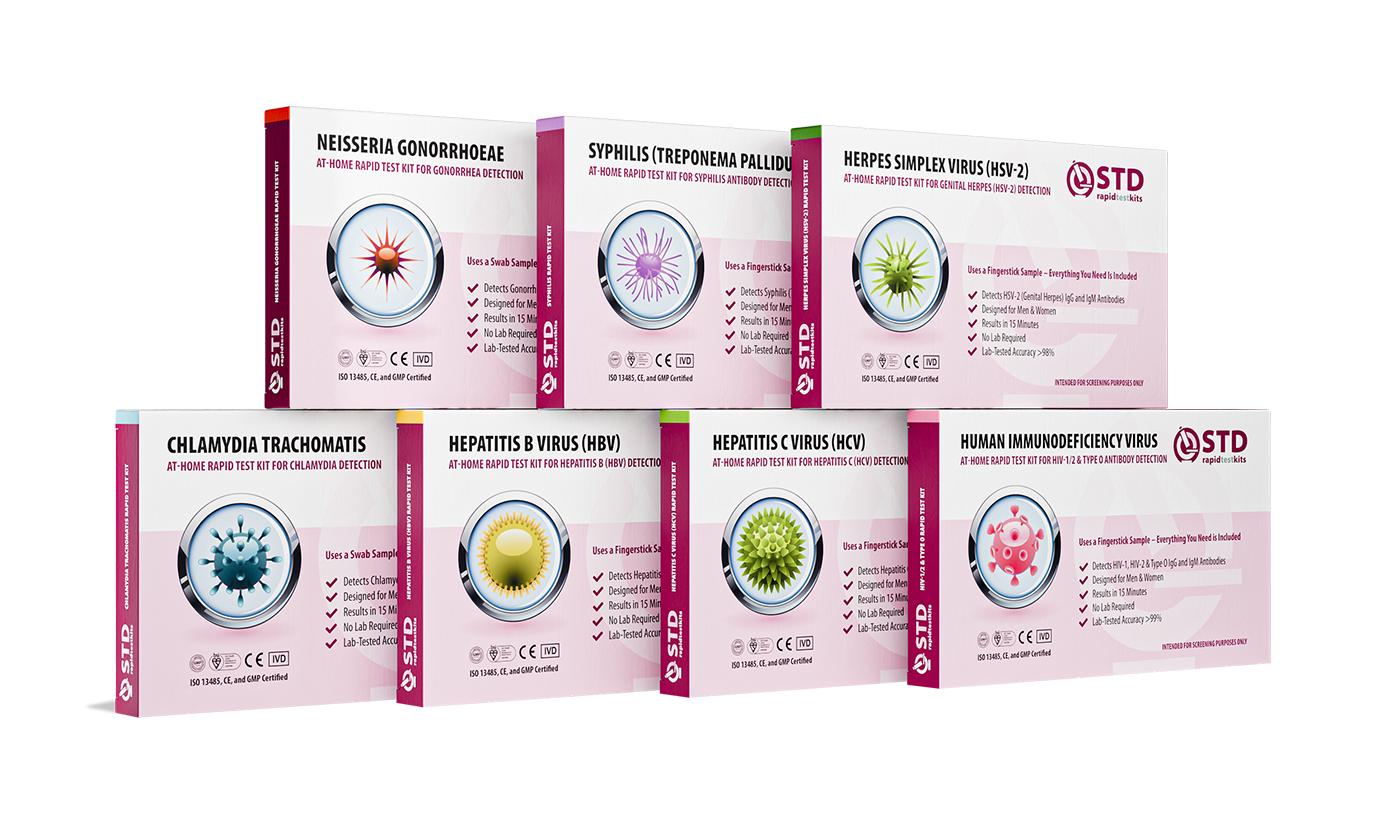
Take back that control with a discreet, at-home option. Browse STD Rapid Test Kits here and choose a test that fits your situation. You don’t have to wait, wonder, or overthink it.
If you want broader coverage, the Combo STD Home Test Kit checks for multiple infections at once, giving you a clearer picture without stepping into a clinic.
What Towels Can Spread (Because It’s Not Nothing)
Let’s be real for a second, just because towels don’t spread most STDs doesn’t mean they’re harmless. They can absolutely carry other things, and this is where the confusion often starts. People feel something off after using a shared towel and assume the worst.
But what’s actually happening is usually something far less dramatic, and far more common. Towels can hold onto bacteria, fungi, and skin-related microbes, especially if they stay damp or are reused frequently without washing.
That means if you’ve ever felt itching, irritation, or a rash after using someone else’s towel, your body isn’t lying to you. It’s just not an STD in most cases.
| Condition | How It Spreads | Common Symptoms |
|---|---|---|
| Fungal infections (like athlete’s foot or jock itch) | Damp environments and shared fabric | Itching, redness, peeling skin |
| Bacterial skin infections | Contact with contaminated surfaces | Red bumps, tenderness, swelling |
| Molluscum contagiosum | Skin-to-skin or shared items | Small, raised, flesh-colored bumps |
Notice something important here: none of these are the infections people usually panic about when they Google “can you get an STD from a towel.” But they can still cause symptoms that feel scary if you don’t know what you’re looking at.
Check Your STD Status in Minutes
Test at Home with Remedium7-in-1 STD Test Kit
 For Men & Women
 Results in Minutes
 No Lab Needed
 Private & Discreet
Order Now $129.00 $343.00
For all 7 tests
“But I Used It Right After Them…”, Let’s Walk Through That Scenario
This is the version of the story that keeps people up at night. Not just sharing a towel, but using it immediately after someone else, while it’s still warm, still damp, still feeling a little too… fresh.
So let’s slow that moment down and look at it clearly.
Even in that situation, the risk of getting an STD like chlamydia, gonorrhea, or HIV is effectively zero. These infections do not survive long enough outside the body to make that leap, and they don’t transfer through fabric in a meaningful way.
For skin-related viruses like herpes, the story is slightly more nuanced, but still not alarming. Herpes requires direct skin-to-skin contact with an active lesion. A towel acts as a barrier, not a bridge.
A clinician once explained it this way: “You’d need a perfect storm, active sores, immediate transfer, enough viral load, and direct contact with vulnerable skin. That’s not how real life usually works.”
So yes, your brain might latch onto that “what if.” But medically speaking, that scenario still doesn’t translate into meaningful risk.
Where People Get Misled Online
If you’ve Googled this before, you’ve probably seen mixed answers. Some sites say “no risk,” others say “rare but possible,” and suddenly it feels like no one actually knows.
What’s happening there is a mix of caution and context getting lost. Medical sources often acknowledge theoretical possibilities, but those are not the same as real-world likelihood.
For example, saying something is “possible” in a lab-controlled environment doesn’t mean it happens in everyday life. That nuance disappears in headlines, and what’s left is fear.
This is especially true for searches like "can you get herpes from a towel?" or "can STDs live on fabric?" It's not just a yes or no answer; it's about the odds. And in this case, the probability is extremely low to nonexistent for most STDs.
The Line Between “Possible” and “Plausible”
This is where being clear really counts. In medicine, something can be technically possible in rare cases, but not likely to happen in real life. Towels and STDs fit perfectly into that space.
Yes, under highly specific circumstances, certain organisms might survive briefly on damp materials. But that doesn’t mean transmission is likely, efficient, or something you need to actively worry about.
In real-world public health data, towels are not a meaningful transmission route for STDs. Not in homes, not in gyms, not in hotels. If they were, we’d see patterns, and we don’t.
So when you’re asking yourself, “Should I be worried?” the better question is: “Is this something that actually happens in real life?” And in this case, the answer is no.
What Your Body Is Feeling vs What It Means
Here’s another piece that doesn’t get talked about enough: your body can react to something unfamiliar without it being an infection at all. New soaps, different detergents, rough fabric, these can all trigger irritation that feels suspicious if you’re already on edge.
That’s why so many people connect symptoms to the last “risky” thing they remember, even when the timing or mechanism doesn’t line up medically.
Take this example: someone notices itching hours after using a shared towel. Their brain immediately jumps to STDs. But most STDs don’t show symptoms that quickly, and they don’t present as simple surface irritation.
Instead, what’s far more likely is a mild skin reaction or a non-sexually transmitted condition. It feels urgent, but it isn’t dangerous.

People are also reading: Syphilis vs Herpes: How to Tell Them Apart Without Guessing
If You’re Spiraling, Let’s Ground It in Reality
That spiral feeling, the one where your brain keeps looping back to the same question, isn’t about logic. It’s about uncertainty. And uncertainty can feel louder than facts, especially when it involves your health.
So let’s anchor this clearly: if your only concern is using someone else’s towel, your risk for STDs like HIV, chlamydia, or gonorrhea is essentially zero. That’s not reassurance, it’s medical consensus.
If there were no other exposures, no sexual contact, no fluid exchange, no direct skin-to-skin contact with active lesions, then there’s nothing here that fits how these infections spread.
But if you still feel that lingering “what if,” you’re not alone. And you don’t have to sit in that feeling. You can always choose clarity over guessing.
That’s where at-home testing can shift things from anxiety to answers. It’s private, fast, and puts you back in control of your own timeline.
So… When Should You Actually Consider Testing?
This is where we separate fear from real decision-making. Not every anxious moment needs a test, but some situations do. The key is understanding what actually counts as exposure.
If your only concern is sharing a towel, even if it was damp or recently used, testing is not medically necessary for STDs. That scenario simply doesn’t match how infections like HIV, chlamydia, or gonorrhea spread.
But if there was any sexual contact involved, oral, vaginal, anal, or even close skin-to-skin contact with active symptoms, then testing becomes a smart, proactive step. Not because something is wrong, but because knowing removes the guesswork.
| Situation | Should You Test? | Why |
|---|---|---|
| Shared a towel | No | No viable transmission pathway |
| Used damp towel immediately after someone | No | Still lacks direct contact required for infection |
| Unprotected sexual contact | Yes | Direct exposure to bodily fluids |
| Skin contact with visible sores | Consider | Possible herpes or HPV exposure |
| Symptoms like discharge, sores, or burning | Yes | Symptoms warrant evaluation regardless of cause |
The goal here isn’t to push testing for no reason, it’s to match your actions to your actual risk. And towels just don’t fall into that risk category.
What Doctors Wish More People Understood About STD Transmission
If you ask clinicians what frustrates them most, it’s not the infections themselves, it’s the misinformation. People come in terrified about things that don’t matter, while sometimes overlooking situations that do.
One provider put it like this: “I spend a lot of time reassuring people they didn’t get an STD from a toilet seat or towel. Meanwhile, they’re not always aware of how common asymptomatic infections are after real exposure.”
That disconnect matters. Because when energy goes into the wrong fears, it can pull attention away from real sexual health habits, like routine testing, open communication, and understanding your own body.
So if there’s one takeaway here, it’s this: focus on what actually spreads infections, not what sounds scary online.
How to Protect Yourself Without Overthinking Everything
You don’t need to treat the world like it’s contaminated. Sexual health isn't about avoiding all surfaces; it's about knowing what the real risks are and making smart choices.
Using your own towel is a good habit, sure. But not because you’re dodging STDs. It’s about general hygiene, comfort, and avoiding minor skin issues.
The bigger picture is simpler than it feels:
- Know your exposures: STDs spread through specific types of contact
- Test when it matters: after unprotected sex or new partners
- Don’t chase unlikely scenarios: towels, toilet seats, and casual contact aren’t real risks
That shift, from fear-based thinking to informed awareness, is what actually protects your health long-term.
Check Your STD Status in Minutes
Test at Home with Remedium6-in-1 STD Rapid Test Kit
 For Men & WomenResults in MinutesNo Lab NeededPrivate & Discreet
Order Now $119.00 $294.00
For all 6 tests
Clarity Beats Guessing Every Time
There’s a quiet kind of stress that comes from not knowing. It’s not always loud panic, it’s that background hum of “maybe I should check.” And that feeling tends to stick around longer than it needs to.
If you’ve had a real exposure and want certainty, testing gives you a clear answer instead of a hundred “what ifs.” It’s not about assuming something is wrong, it’s about removing doubt.
You can explore discreet, reliable options at STD Rapid Test Kits. Everything is designed to be private, fast, and easy to use at home.
And if you want a full-picture check, the Combo STD Home Test Kit covers multiple infections in one step, so you’re not left piecing things together.
FAQs
1. I used someone else’s towel and now I can’t stop thinking about it, did I mess up?
No, you didn’t mess up. That spiral you’re in right now is incredibly common, but towels just aren’t how STDs spread. Unless there was actual sexual contact involved, there’s no realistic pathway for infection here.
2. Okay but what if the towel was still warm… like they JUST used it?
I get why that feels different, it makes it seem more “alive” somehow. But even then, infections like chlamydia, gonorrhea, and HIV don’t survive or transfer that way. Warm doesn’t equal risky here, even if your brain is trying to convince you otherwise.
3. Can herpes be passed this way if someone had an outbreak?
It’s extremely unlikely. Herpes needs direct skin-to-skin contact with an active sore, not a middleman like fabric. A towel actually disrupts transmission more than it helps it.
4. Why do I feel itchy after using a shared towel then?
Great question, and this is where people get tripped up. Towels can carry bacteria or fungus, especially if they’re damp, which can irritate your skin. It feels suspicious, but it’s usually something minor and not sexually transmitted.
5. Is this one of those “rare but possible” situations I should worry about?
Technically, medicine leaves room for rare scenarios, but this isn’t one that plays out in real life. If towels were spreading STDs, we’d see it constantly in gyms and hotels. We don’t.
6. Can you get anything at all from sharing a towel?
Yes, but not the things you’re worried about. Fungal infections, mild skin irritation, maybe something like athlete’s foot, that’s the real risk. Annoying? Sure. Dangerous or sexually transmitted? No.
7. I keep Googling this over and over, should I just get tested to be safe?
If this is about a towel and nothing else, testing isn’t necessary. But if testing would genuinely help you stop the mental loop, there’s nothing wrong with choosing clarity. Just know it’s for peace of mind, not because there was real risk.
8. What situations actually DO put me at risk for STDs?
Direct sexual contact, oral, vaginal, anal, or close skin-to-skin contact with active symptoms like sores. You should focus on that, not on everyday things like towels.
9. Why does this myth seem so real?
Because it has some truth (don't share towels, hygiene matters) and a lot of misunderstanding. When you add in the stigma around STDs, everyday things start to seem dangerous. Your brain is trying to protect you, but it picked the wrong target.
10. So bottom line, can I relax now?
Yes. If the only thing you did was use someone else’s towel, you’re okay. This is one of those moments where the internet made it feel bigger than it is, and now you get to walk away with the actual facts.
You Deserve Clarity, Not Guesswork
Using someone else’s towel shouldn’t turn into a full-blown mental spiral, but it does, all the time. Not because it’s risky, but because it feels uncertain. And uncertainty has a way of getting louder the longer you sit with it.
Here’s the grounded version: towels don’t spread STDs. Not the ones people worry about, not in real life, not in the way your brain is imagining. The real risks come from direct contact, not everyday objects that just happen to be nearby.
If there was actual exposure, sex, skin contact with symptoms, something concrete, then test and get clarity. If not, this is one of those moments where you get to step out of the loop and move on. And if you need that confirmation anyway, start with a discreet option like the Combo STD Home Test Kit. Private, simple, and done on your terms.
How We Sourced This Article: This article is based on CDC, WHO, and NHS advice on how STDs spread, as well as peer-reviewed research on how pathogens survive outside of the body. We focused on real-world transmission patterns, not just theoretical lab scenarios, and paired that with common search behavior to address the exact fears people have around towels, surfaces, and indirect contact.
Sources
1. Centers for Disease Control and Prevention – STD Overview
2. World Health Organization – Sexually Transmitted Infections Fact Sheet
3. NHS – Sexually Transmitted Infections Overview
4. Mayo Clinic – STDs Symptoms and Causes
5. Planned Parenthood – STD Basics
6. MedlinePlus – Sexually Transmitted Infections
7. Mayo Clinic – Sexually Transmitted Diseases (STDs): Symptoms and Causes
About the Author
Dr. F. David, MD is a board-certified expert in infectious diseases who works to stop STIs, test for them, and teach patients about them. His work combines clinical accuracy with a direct, stigma-free approach that helps people make informed decisions without fear or shame.
Reviewed by: Dr. Michael R. Levin, MD, Infectious Disease Specialist | Last medically reviewed: March 2026
This article is only for informational purposes and should not be used instead of professional medical advice, diagnosis, or treatment.


