






Quick Answer: You cannot catch an STD from a toilet seat, wet or dry. Most STDs die quickly outside the body and require direct sexual or skin-to-skin contact to transmit.
Why the Toilet Seat STD Myth Won’t Die
Ask any urgent care nurse or Reddit thread on STD testing, and you’ll see it: a flood of people genuinely worried that their herpes, gonorrhea, or chlamydia came from a toilet. This belief is more than just old wives’ tales, it’s generational. Parents warned kids not to sit on public seats. Schools skipped over STI education entirely or taught abstinence-only rules that left huge gaps in understanding how infections actually spread.
But the biology doesn’t back the fear. STDs like chlamydia, gonorrhea, syphilis, and HIV don’t survive well outside the body. They need moisture, warmth, and direct access to mucous membranes, like those inside the genitals, mouth, or rectum. A hard, cold surface like a plastic toilet seat just doesn’t offer that kind of environment.
And yet, the myth lingers. That’s because fear isn’t rational, it’s visceral. Especially when a bathroom is sketchy, you’re hungover or anxious, or you feel a twinge in your groin that wasn’t there before. But we need to separate fear from fact, because panicking over impossibilities can distract from actual risks that deserve your attention and care.
Can STDs Live on Surfaces Like Toilet Seats?
Let’s get clear on the science. Sexually transmitted infections are overwhelmingly fragile outside of the body. Unlike viruses like norovirus or bacteria like MRSA, which can survive on surfaces for hours or even days, STDs tend to break down within minutes once exposed to air, light, and temperature changes.
In one study published in the Journal of Infectious Diseases, researchers found that chlamydia trachomatis was unable to survive more than a few minutes outside a moist, human host environment. Similarly, herpes simplex virus may survive on surfaces for a short time under lab conditions, but real-world conditions like a wiped-down toilet seat? Extremely inhospitable.
Here’s how surface survivability plays out by infection type:
| STD | Can It Survive on Surfaces? | Risk from Toilet Seat |
|---|---|---|
| Chlamydia | Extremely poor surface survival | Essentially zero |
| Gonorrhea | Dies quickly without body fluids | Zero documented cases |
| Herpes (HSV) | Short surface survival in lab settings | Theoretically possible, but not clinically observed |
| HIV | Rapidly deactivated by air exposure | No surface transmission documented |
| Syphilis | Dies within minutes outside the body | Not a realistic surface risk |
Table 1. Common STDs and surface survivability on objects like toilet seats, benches, and towels.
The upshot? Even if there were live organisms present on a toilet seat, and that’s a big if, they’d still need a direct pathway into your bloodstream or mucous membranes. Dry skin, intact thighs, or briefly brushing a butt cheek against plastic aren’t it.
People are also reading: Rural HIV Care in Arkansas, Getting Help When You’re Miles Away
Real People, Real Panic: When the Fear Feels Real
Jordan, 27, left a music festival in the middle of the night to find a bathroom. The only option? A portable toilet that had clearly seen better days. “It was wet,” he said. “Like… all over. I wiped it down with a napkin, but I still felt gross. Two days later I felt a little itchy and spiraled hard. I Googled ‘can you get herpes from a porta-potty’ at least fifty times.”
This is more common than you think. A single sensation, a tingle, a rash, a tiny bump, can trigger a full-body anxiety loop. And when that happens, it’s easy to anchor the fear to a moment that felt contaminated, even if it wasn’t risky. Public bathrooms are perfect breeding grounds for this kind of fear: they’re private, sensory-heavy, and socially loaded with shame about hygiene, sexuality, and vulnerability.
Here’s what most people are really experiencing in these moments:
| Sensation | Common Cause (Not an STD) | How Long It Lasts |
|---|---|---|
| Burning or tingling | Urinary irritation, sweat, cleaning chemicals on the seat | 1–2 days |
| Red rash or itching | Contact dermatitis, shaving irritation, allergic reaction | 2–5 days |
| Small bumps | Folliculitis, ingrown hairs, heat rash | Clears on its own |
| Clear discharge | Normal physiological process, dehydration, or irritation | Transient |
Table 2. Common toilet-related symptoms that aren’t caused by STDs.
When we’re anxious, our bodies can mimic symptoms. This is called somatic symptom amplification, and it’s especially common after high-stress bathroom situations. You didn’t imagine the burning, you felt it. But it doesn’t mean it was an infection, especially when there’s no realistic exposure route.
Check Your STD Status in Minutes
Test at Home with Remedium6-in-1 STD Test Kit
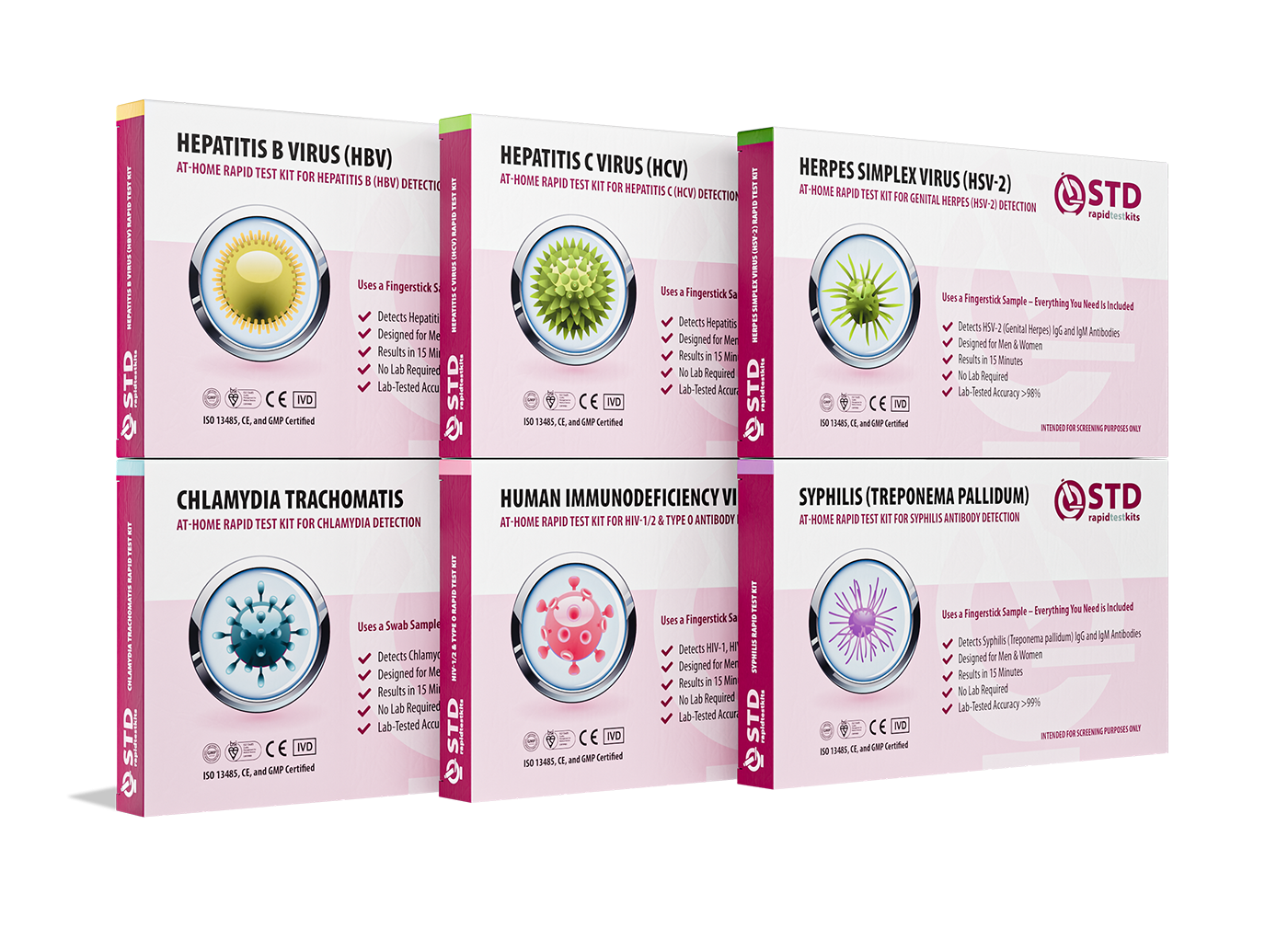
 For Men & Women
 Results in Minutes
 No Lab Needed
 Private & Discreet
Order Now $119.00 $294.00
For all 6 tests
What Would It Actually Take to Catch an STD This Way?
Let’s run a scenario. Say someone with an active herpes outbreak uses a toilet and sheds some viral material onto the seat. You come in seconds later and sit. What would have to happen for transmission to occur?
First, the virus would have to still be alive, which is not likely after being in the air, UV light, and disinfectants. Then it would have to touch broken skin or mucous membranes. That means that a new cut or open wound on your genitals or inner thigh would have to touch the exact spot on the seat that has the virus. Even then, the viral load might be too low to infect you.
No wonder that in all the published medical literature, there are zero confirmed cases of toilet seat–based STD transmission. The CDC itself has made it clear: STDs are passed through sexual fluids, skin-to-skin genital contact, or blood, not toilet seats, towels, or shared bathroom surfaces.
If you’re still worried, it’s not irrational. Fear doesn’t need to be logical to feel real. But knowledge helps deflate shame, and this is one fear we can confidently retire.
The Wet Seat Factor: Does Moisture Increase Risk?
It’s true that many bacteria and viruses thrive in moist environments. That’s why wet public surfaces make people nervous. But “moist” isn’t enough. The seat would have to be drenched in fresh, infectious bodily fluid, and even then, survival depends on temperature, exposure time, and host vulnerability.
Dr. Sara Taylor, an infectious disease epidemiologist, put it this way: “You’re more likely to sprain your ankle in a gas station restroom than you are to catch chlamydia from the toilet.” The visual may be grim, but the point stands: the perceived risk is wildly out of proportion to the actual risk.
Also important: most cleaning products used in public bathrooms are harsh on pathogens. The very chemicals that make you wrinkle your nose are doing the work, disrupting cell membranes and inactivating infectious particles. That dampness you feel? It’s likely Lysol, not body fluid.
Still Anxious? Here’s What You Can Do
If you’re reading this article because your mind is racing, you’re not alone. Plenty of people Google their way through sleepless nights after one weird bathroom moment. Maybe there’s no actual exposure history, just a vibe, a sensation, or an echo of something your mom said when you were twelve.
The good news is: peace of mind is actually accessible. While a toilet seat won’t give you herpes or gonorrhea, it’s still okay to test if that’s what will quiet the noise in your head. In fact, at-home STD tests now make it easier than ever to get answers discreetly, affordably, and without a clinic visit.
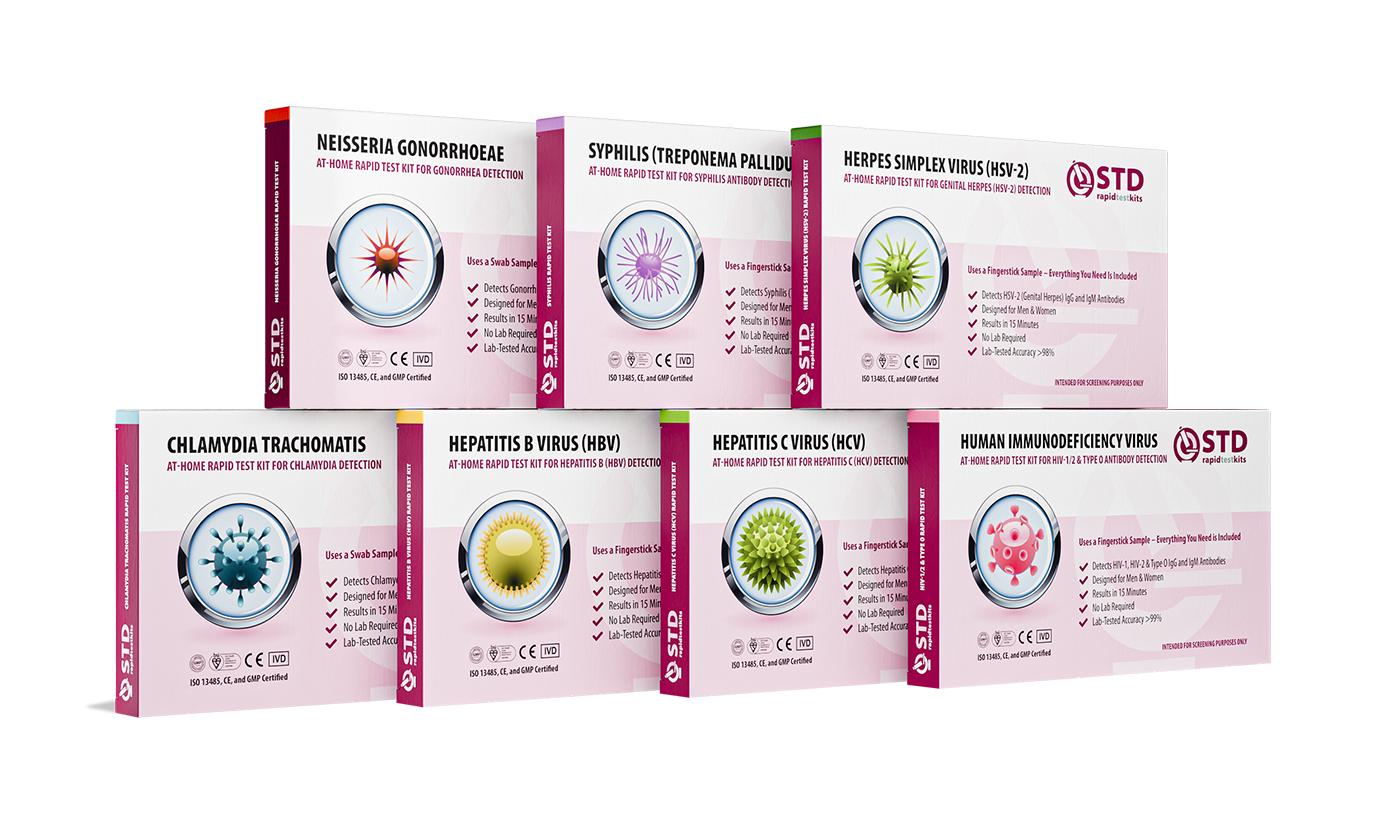
Depending on what you're worried about, you can choose from combo panels (which test for multiple infections) or single-infection kits like this chlamydia rapid test kit. Results come fast, and instructions are easy to follow, even if your hands are shaking.
Here’s how the three most common test types compare:
| Test Type | Speed | Privacy | Best If You... |
|---|---|---|---|
| At-Home Rapid Test | 10–20 minutes | Very High | Need quick reassurance |
| Mail-In Lab Kit | 2–5 days | High | Want lab-grade confirmation |
| Clinic-Based Test | Same day to several days | Low to Moderate | Have ongoing symptoms or no home test access |
Table 3. STD testing options for people experiencing exposure anxiety, whether rational or not.
STD Rapid Test Kits offers both rapid and lab-based options, and ships discreetly. No logos, no judgment, just a plain box and your right to know.
People are also reading: STD Symptoms You Might Have Ignored During Lockdown
Let’s Talk About Shame (Because It’s Always in the Room)
Part of the reason the toilet seat myth sticks around is because it's shame-safe. Blaming a toilet means you didn’t have sex, didn’t make a “bad decision,” didn’t cheat, didn’t experiment, didn’t take a risk. It’s the invisible scapegoat of sexual anxiety. But the truth is, most STDs are passed by people who didn’t even know they had one. It doesn’t take “recklessness”, it just takes contact. And shame has no place in that conversation.
Nico, 34, shared his story in a support forum: “I was monogamous. My partner wasn’t. I tested positive for chlamydia and immediately started spiraling back to a public toilet I used a week before. It took a doctor explaining basic biology, twice, before I stopped blaming that gas station seat.”
This myth doesn’t just mislead. It delays diagnosis. It diverts attention. It gives people a false sense of immunity if they’ve only had “safe” sex but sat on the wrong bench. And it piles unnecessary anxiety onto already-overloaded nervous systems. You deserve better than that.
When to Actually Consider Testing (Hint: Not Just the Toilet)
So when should you actually test? Real reasons include:
If you’ve had unprotected vaginal, anal, or oral sex. If you’re starting a new relationship. If a partner has symptoms or has tested positive. If you’ve had symptoms like burning, discharge, bumps, or pain, even if you think it came from a toilet, and especially if it hasn’t gone away.
But the reason doesn’t have to be logical. If you just want to know, that’s reason enough. Testing is clarity. Testing is calm. Testing is yours to choose, even if the actual risk is zero. Because at the end of the day, it’s not always about biology. It’s about reclaiming power over your own body and brain.
Check Your STD Status in Minutes
Test at Home with Remedium7-in-1 STD Test Kit
 For Men & WomenResults in MinutesNo Lab NeededPrivate & Discreet
Order Now $129.00 $343.00
For all 7 tests
The Fear Is Real, Even If the Risk Isn’t
Let’s be honest: public bathrooms are already weird spaces. They’re loud, too quiet, overlit or underlit, sometimes rushed, sometimes awkwardly still. When you add bodily anxiety to the mix, say, after a bad hookup or in the middle of a sexual health scare, it’s no wonder our brains default to panic. The fear might not be based in science, but it’s still deeply human.
Marisol, 22, remembers sitting in the airport terminal after a red-eye flight. She used the restroom, noticed the toilet was a little wet, and didn’t think much of it, until three days later when she got a red patch near her vulva. “I was sure it was herpes,” she said. “I was Googling ‘STD from toilet seat’ while standing in the pharmacy aisle. I couldn’t breathe.”
It turned out to be a reaction to a new body wash, but Marisol's story isn't rare. What’s rare is talking about it out loud. And that’s what makes these myths so sticky, they thrive in silence. When we’re afraid to ask questions, misinformation fills in the blanks. The shame kicks in. The spiral takes over. But here’s the truth: your fear doesn’t make you foolish. It makes you conscious. You care about your body, and that’s powerful.
So let’s reframe the question. Instead of asking, “Did I catch an STD from that toilet?” ask: “What made me feel unsafe in that moment? And what can I do to take care of myself now?” That’s a better use of your energy. That’s where your power lives.
And if you do need to test, because you had sex, or you’re just not sure, that’s a smart, stigma-free decision. Whether it’s to confirm a hunch or calm a spiral, you deserve access to tools that give you real answers. You deserve facts, not fear. Clarity, not shame. That’s what testing is about.
One more thing: public bathrooms aren’t the enemy. They’re places you pass through. What you carry in your mind when you enter is sometimes more powerful than anything left behind on the seat. If you're still anxious? Test. If you’re not? Let yourself move on. Either way, you’re not alone, and you’re not dirty, broken, or “gross” for wondering.
FAQs
1. Can I really get herpes from a toilet seat?
Nope. You’d have a better chance of finding a twenty-dollar bill in the stall than catching herpes off that seat. Herpes spreads through skin-to-skin contact, specifically friction-based, intimate, often mucosal contact. A cold, dry plastic seat just doesn’t cut it. Even if someone sat right before you, the virus dies quickly in air and isn’t going to leap onto your thighs and set up camp.
2. But what if the seat was wet?
We get it, nothing sends a shiver down your spine faster than mystery moisture. But wet doesn’t mean risky. Unless someone literally bled or oozed live infection onto the seat right before you sat (unlikely and undocumented), that damp spot is most likely water, urine, or cleaning solution. None of which spread STDs.
3. I started itching after using a public toilet. Should I panic?
Let’s slow that spiral. Itching can come from a dozen things, friction from rough TP, razor burn, new detergent on your underwear, or even stress. If the itch goes away in a day or two and nothing else shows up, it probably wasn’t an infection. But if it lingers or worsens, testing is still a no-shame move. Not because the toilet gave you something, but because peace of mind is valid.
4. Can chlamydia live on surfaces like seats or towels?
Short answer: no. Chlamydia is picky, it needs human cells and mucous membranes to survive. It doesn’t last on cold, dry surfaces, and there are no proven cases of it spreading through toilet seats or towels. It’s not that kind of organism. You don’t catch it from your environment; you catch it from sex, often from someone who didn’t know they had it.
5. Why do people still think you can get STDs this way?
Shame, mostly. And misinformation passed down like folklore. Blaming a toilet is easier than talking about sex, partners, or trust issues. It's a way of saying “I didn’t do anything wrong” when really, there doesn’t have to be a “wrong” to get an STD. It just takes life happening, and not enough people talking about it honestly.
6. Is there any STD I actually could get from a public bathroom?
If we’re being technical: pubic lice or scabies might survive long enough on damp towels or shared fabric, but even that’s rare in bathrooms today. Most modern stalls don’t have the plush seating or close quarters that made that a thing decades ago. And even then, it’s bugs, not infections. Treatable, annoying, not life-altering.
7. How long do STDs survive on surfaces?
Most STDs die within seconds to minutes outside the body. The only exceptions are lab-controlled scenarios or blood-borne viruses like hepatitis B, which can stick around on surfaces for a while, but only pose a risk through open wounds or needle-sharing, not sitting on a toilet.
8. I wiped the seat, but now I’m worried. Should I test?
If you’re still spiraling even after reading this far, go ahead and test. Not because you’re at real risk, but because sometimes the only way to shut off the “what if” noise is to get a clear answer. Think of it as emotional hygiene. Just like washing your hands, but for your brain.
9. Are those paper toilet seat covers even doing anything?
Physically? Minimal. Mentally? Sometimes everything. They’re great for shielding you from that cold shock or a splash, but they won’t protect you from infections (because you weren’t going to get one anyway). So use them if they make you feel better, but don’t let the lack of one trigger a shame spiral.
10. How do I know if my symptoms are just in my head?
Honestly? Sometimes you don’t. That’s what anxiety does, it hijacks your body and makes every itch feel like doom. But if symptoms come and go quickly, shift around, or vanish when you're distracted, it’s probably your nervous system doing somersaults. That said, trust your gut. If something truly feels off, test, but test from a place of power, not panic.
You Deserve Answers, Not Assumptions
If your brain won’t shut off after a bathroom trip, you’re not overreacting, you’re reacting to uncertainty. That uncertainty deserves real answers, not judgment or dismissal. It's normal to want to be sure that STDs don't live on toilet seats.
Testing isn’t just for when things go wrong. It’s for peace of mind, sexual self-care, and taking control of your narrative. This at-home combo test kit checks for the most common infections, quickly, privately, and without shame.
How We Sourced This Article: We combined current guidance from leading medical organizations with peer-reviewed research and lived-experience reporting to make this guide practical, compassionate, and accurate.
Sources
1. CDC – STD Prevention & Transmission Basics
2. About Sexually Transmitted Infections (STIs) | CDC
4. Sexually transmitted diseases (STDs) – Symptoms and causes | Mayo Clinic
5. Genital herpes: Can you get it from a toilet seat? | Mayo Clinic
6. STDs and toilet seats: Possible risks and preventions | Medical News Today
7. What Can You Catch in Restrooms? | WebMD
8. Sexually transmitted infections - StatPearls | NCBI Bookshelf
9. Five Common Sexual Health Myths Debunked | Boston University
About the Author
Dr. F. David, MD is a board-certified infectious disease specialist focused on STI prevention, diagnosis, and treatment. He blends clinical precision with a no-nonsense, sex-positive approach and is committed to expanding access for readers in both urban and off-grid settings.
Reviewed by: Dr. Alicia Thompson, MPH, PhD | Last medically reviewed: January 2026
This article is for informational purposes and does not replace medical advice.


