
Published: August 2025 | Last updated: May 2026 | Editorial review and quality control: Martina N.
For rural Arkansans, getting HIV care often involves more than finding a doctor. It means navigating distance to the nearest clinic, the silent weight of small-town visibility, and a clock that runs faster with every week of delayed diagnosis. Early symptoms can feel like a stubborn flu, easy to brush off when you are working two jobs or caring for family. By the time those symptoms become hard to ignore, the virus has already had a head start.
With current antiretroviral therapy, people who start treatment soon after infection can expect a long, healthy life and a near-normal life expectancy, according to the U.S. Centers for Disease Control and Prevention. Even from the backroads. The path to that care is real, and it is usually more confidential and more affordable than people in small Arkansas towns assume.
Key Takeaways
- Acute HIV often appears as flu-like fever, rash, fatigue, and swollen lymph nodes 2 to 4 weeks after exposure; testing during this window matters because early antiretroviral therapy protects your health and dramatically reduces the chance of passing HIV to a partner.
- Confidential testing outside your county, free care through the Ryan White Program, sliding-scale options at ARcare and Healthy Connections, telehealth follow-ups, and at-home rapid tests all close the rural distance gap in Arkansas.
Recognizing Early HIV Signs Before They Disappear
HIV does not announce itself with a clear signal. For many people, the first signs feel like a stubborn flu: fever, sore throat, chills, and body aches. About two to four weeks after exposure, some develop a blotchy rash across the chest, arms, or face. Fatigue can make climbing stairs feel like hiking a mountain. Glands swell in the neck or armpits. This pattern is known clinically as acute retroviral syndrome, and it usually fades within days to a few weeks (CDC HIV testing guidance).
The fade is the dangerous part. When the symptoms go away, the virus does not. It settles into the immune system and continues replicating quietly, often for years, before the next round of more serious symptoms appears. By that point, the immune system has taken real damage and treatment becomes more complicated.
In Arkansas's rural counties, where hospital access is limited and primary care visits are often brief, these early signs are easy to miss. They get written off as allergies, seasonal flu, work stress, or "a bug going around." Missing that early testing window has real consequences. The CDC notes that starting antiretroviral therapy soon after infection keeps viral loads low, protects long-term immune health, and dramatically reduces the chance of transmitting HIV to a partner.
If you have had a possible exposure and develop a cluster of these symptoms within a month or two, a single rapid test can give you a starting answer. Even a negative result early after exposure is not the full story; antibody-based tests need time before they reliably detect early infection, so retesting at the right window is part of the process.
- Fever, chills, body aches, sore throat (flu-like illness)
- Swollen lymph nodes in neck or armpits
- Blotchy rash on chest, arms, or face
- Deep fatigue out of proportion to your day
- Night sweats and sometimes unexplained weight loss
Symptoms usually fade within days or weeks. The virus does not. If this cluster appears within a month or two of a possible exposure, test now and retest at the recommended window.
The Rural Reality: Distance and Silence in Small-Town Arkansas
Arkansas has one of the highest proportions of rural residents in the country, and that geography carries a real cost. Rural residents living with HIV often face delayed diagnosis because clinics are far, public transportation is scarce, and taking a half-day off work to drive 90 minutes each way is not always possible. Add the fear of being recognized at the only nearby testing site, and many people wait until they are visibly sick before getting help.
A pattern that case managers and outreach workers in rural Arkansas describe sounds something like this: a person in a town of a few hundred people notices unusual fatigue, night sweats, and a faint rash. They worry. But the parking lot of the only county clinic is visible from the diner across the street, and everyone knows whose pickup is whose. The fear of being noticed becomes louder than the fear of the symptoms themselves. Weeks pass. Sometimes months.
That delay carries real cost beyond the individual. Every week of an unsuppressed viral load means a higher chance of transmitting HIV to a partner, and a more complicated treatment path once care does begin. Public health researchers studying the rural South point to this combination of stigma and logistics as the central reason rural HIV outcomes lag behind urban ones.
You do not have to use the closest clinic. Arkansas residents can be seen at any participating site in the state, and programs like Ryan White can help cover the cost of getting somewhere more private than your own county.

The Numbers That Map the Gap Between Rural and Urban Care
HIV does not discriminate by ZIP code, but the availability of care does. In Little Rock, Fayetteville, or Fort Smith, residents typically have multiple testing options, infectious-disease specialists, and peer support groups within a short drive. In some rural counties, the nearest HIV-specific clinic can be more than 90 miles away. The Arkansas Department of Health HIV Prevention Program runs the state's testing-referral hotline and points residents to community testing sites, but on-site HIV treatment providers remain concentrated in urban centers.
Rural HIV patients are also less likely to stay continuously engaged in care than urban patients, according to public-health research on the rural South. The reasons stack on top of each other: transportation barriers, limited clinic hours, the need to schedule around shift work, and the social weight of being seen at a clinic in a town where everyone knows everyone. Consistent care is what keeps the virus suppressed, which is why retention, not just first-time testing, drives long-term outcomes.
Telehealth, mobile testing events, and Ryan White transportation funding have measurably shortened that gap over the past five years, making the math of "can I get there" workable for more people each year.
| Access factor | Urban Arkansas (Little Rock, NWA, Fort Smith) | Rural Arkansas counties |
|---|---|---|
| Distance to nearest HIV-specific clinic | Typically within 20 miles | Often 60 to 100+ miles |
| Infectious-disease specialists on site | Multiple options | Often none locally |
| Peer support groups | Available, sometimes weekly | Rare; many use video meetings |
| Mobile testing events | Less needed; clinics are nearby | Periodic; check county-health schedule |
| Transportation assistance | Less critical | Often essential; Ryan White can cover |
| Telehealth follow-ups | Optional add-on | Frequently the primary visit format |
What HIV Care Actually Costs in Rural Arkansas
HIV treatment sounds expensive when you read the list price. Annual antiretroviral therapy retails in the tens of thousands of dollars per year. That number scares people away before they ever pick up the phone.
If you qualify for the Ryan White HIV/AIDS Program, you may pay nothing at all. Ryan White is a federally funded program of last resort that covers HIV medication, lab work, primary care visits, mental health services, and in many cases transportation to appointments. Arkansas administers the program through the state HIV Prevention Program and partners with community clinics across the state to deliver care.
For people who do not qualify for Ryan White, sliding-scale options exist. ARcare and Healthy Connections set fees based on income, so monthly costs scale down to what someone earning a rural Arkansas wage can actually afford. Pharmaceutical companies run patient assistance programs that can cover the medication itself for people with limited or no insurance. And for the uninsured, you can get tested and start treatment first; the payment paperwork is sorted out afterward, not at the front door.
This last point matters. The common assumption is that you have to prove insurance before anyone will see you. In practice, rural HIV clinics in Arkansas regularly see new patients without insurance, get them onto medication the same day or the next, and then file paperwork to make the care free or near-free. Walking in with a positive at-home rapid test and no insurance is a workable starting point, not a barrier.
Privacy and Your Legal Rights to Confidential Care
A common fear in small-town Arkansas is that your health information will somehow become public. The legal reality runs the other way. HIPAA protects your medical privacy, and that protection covers your HIV status. Clinics cannot share your information without your written consent, except in narrow situations like direct treatment coordination with another provider you have already agreed to involve. Even in those cases, only the minimum information needed gets shared.
A few specifics that come up often in rural Arkansas:
- Minors can consent to HIV testing and treatment on their own. Arkansas law allows people under 18 to access confidential HIV care at public health clinics and at qualifying community providers like ARcare, without parental notification.
- You do not have to use a clinic in your county. If you are worried about being recognized at the closest site, you can ask for testing at a clinic an hour or two away. Ryan White can often help cover transportation costs for those visits.
- Disclosure to partners is your decision. Your provider cannot inform a partner of your status without your consent. If you do not want to handle partner conversations yourself, some clinics offer case-manager support to arrange confidential partner notification on your behalf.
- Your insurance company sees billing codes, not detailed medical notes. If your concern is family members on a shared insurance plan, ask the clinic about cash-pay or Ryan White-covered visits that bypass insurance entirely.
Under HIPAA, no Arkansas clinic can share your HIV status with family, employers, neighbors, or anyone else without your written consent. You can also choose to be seen at a clinic outside your county, with transportation often covered through Ryan White.
Getting to Care When the Clinic Is Hours Away
When the nearest HIV-focused clinic is hours away, making the trip can feel impossible. Several workarounds exist that rural Arkansans use routinely.
Mobile testing events bring confidential screenings directly into rural Arkansas counties. ARcare and the Arkansas Department of Health periodically run these in smaller towns; schedules are usually published in advance on clinic and county-health websites. If you can catch one, you can test without ever stepping into a clinic building.
Telehealth has expanded sharply since 2020. Many infectious-disease clinics in Arkansas now offer video follow-up appointments for stable patients, which means monthly or quarterly check-ins no longer require a 100-mile drive. Initial appointments typically still need an in-person visit for blood work, but most of what follows can happen by video.
Ryan White funds can cover not just mileage reimbursement but also rideshare costs or scheduled medical transportation, depending on your county and case manager. When you call a clinic, ask explicitly about transportation help; case managers often know about funding sources that are not advertised on the website.
Three practical strategies rural patients use
- Bundle appointments. Ask your case manager to coordinate labs, medication refills, and physician visits on the same day to cut total trips down.
- Pick up multi-month supplies. Some clinics dispense a 90-day medication supply during quarterly visits, which cuts trips to roughly four per year.
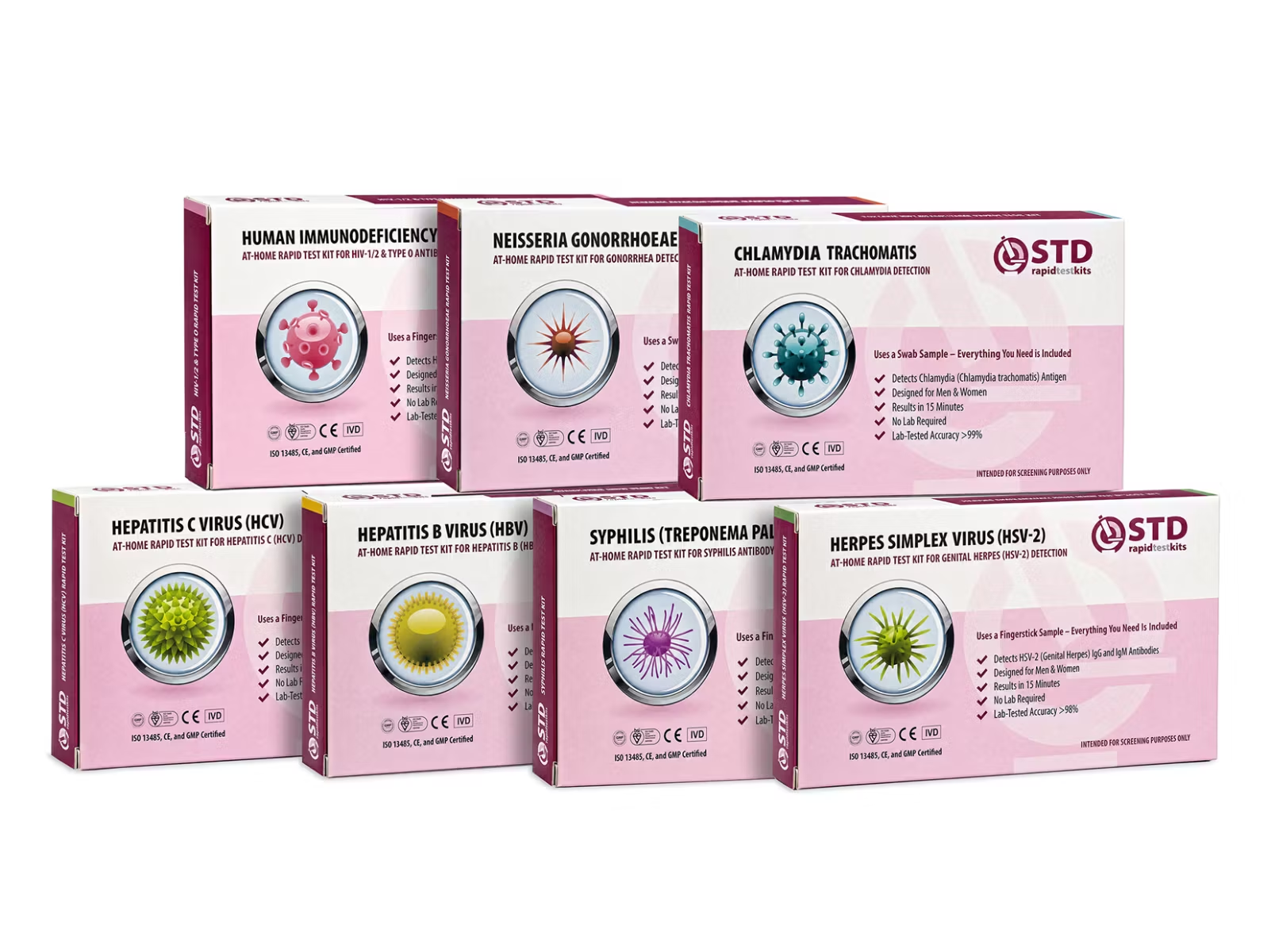
- Use at-home rapid tests for ongoing screening or as a first step before clinic visits. They give you an immediate, private baseline without a single appearance at a local site.
Stigma: The Hidden Barrier That Outweighs Distance
In many rural Arkansas towns, the fear of being labeled is more paralyzing than the fear of the virus itself. You cannot walk into a pharmacy without running into someone you know. A car parked outside a county health clinic can spark gossip before you have left the lot. That whisper network keeps people from getting tested even when they suspect something is wrong.
Stigma also fuels misinformation. When people feel unsafe talking openly about HIV, myths fill the silence. "Only certain people get HIV." "It is a death sentence." "If you test positive, you can never have a normal life again." None of these are true. HIV is now a chronic, manageable condition. People who take their medication consistently and reach an undetectable viral load have effectively no risk of transmitting the virus to a sexual partner. The CDC describes this as "Undetectable equals Untransmittable," or U=U.
The hardest part of the rural stigma trap is that it operates without anyone saying anything overt. People internalize the silence and assume judgment that may never actually come. A way out usually runs through quiet, trusted private channels: a clinic outside your county, an at-home test, a phone call to a confidential helpline, or a single close friend or family member who can hold the news without sharing it.
Once people see that the legal protections are real and that other rural patients have built quiet, ordinary lives around HIV care, the stigma loosens. It does not disappear, but it stops driving every decision.
People with HIV who take HIV medicine as prescribed and get and keep an undetectable viral load have effectively no risk of transmitting HIV to their HIV-negative sexual partners.
What an At-Home HIV Rapid Test Can and Cannot Tell You
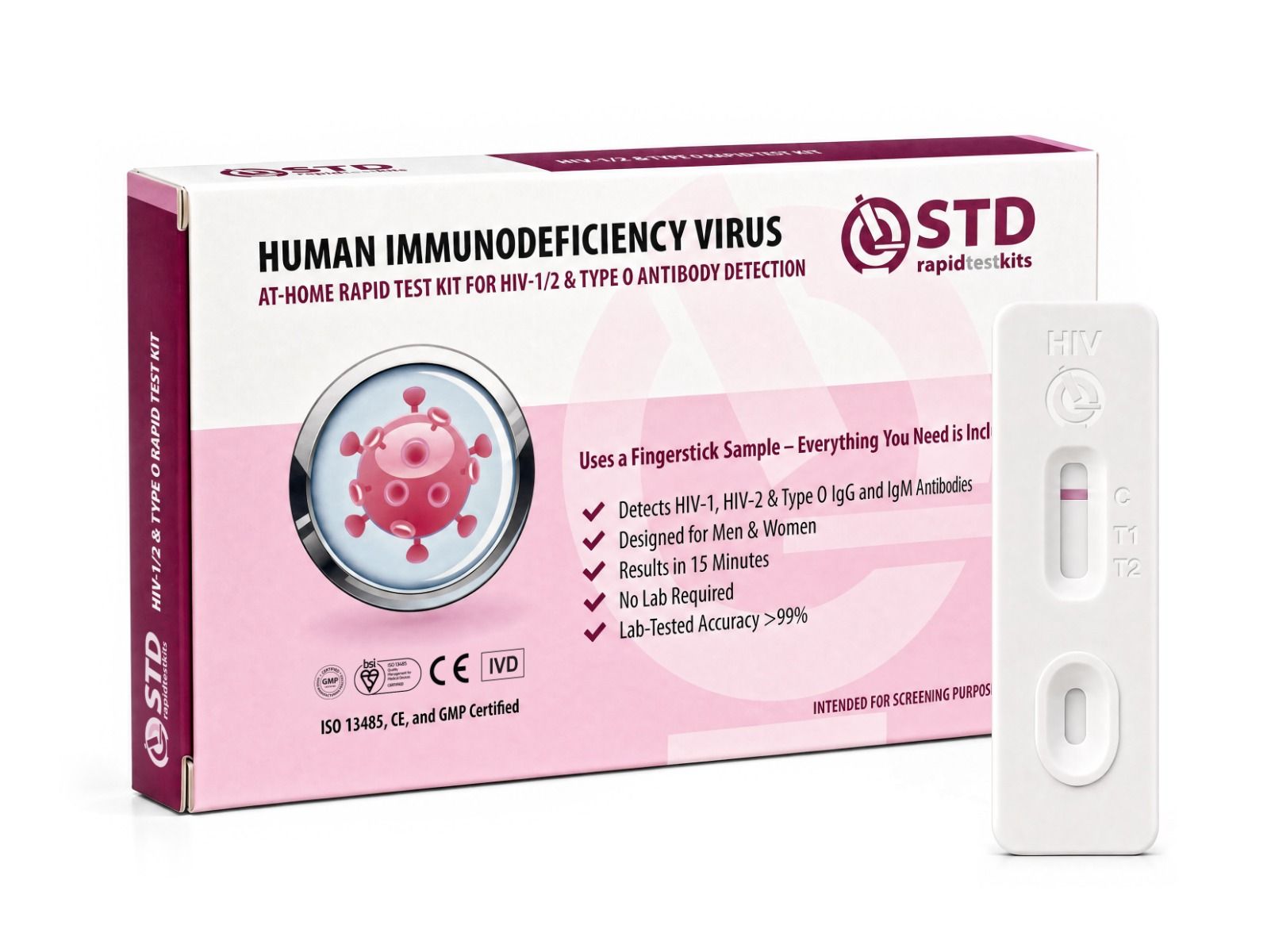
At-home rapid HIV tests are useful in rural Arkansas precisely because they bypass the two biggest barriers: distance and visibility. You order discreetly, you test in your own bathroom, and you read a result in about 15 to 20 minutes.
A few things to know about how rapid antibody tests actually work:
- They detect antibodies your immune system produces against HIV, not the virus directly. After exposure, your body needs a few weeks to develop enough antibodies to register on a rapid test. Most home rapid tests reliably detect HIV by about three months after exposure, with earlier detection possible depending on the specific assay.
- Sensitivity and specificity on lateral-flow rapid HIV tests are high (typically above 99% for both, per manufacturer data sheets), but a positive result on any home test should always be confirmed at a lab or clinic. Confirmation rules out the rare false positive and identifies the specific HIV type for treatment planning.
- A negative result close in time to a possible exposure is not conclusive. Retesting at three weeks, six weeks, and three months is the safest pattern when there has been a real exposure event.
What rapid tests do well: give you a fast, private, reasonably accurate first answer. What they cannot do: replace the lab-based confirmatory testing and ongoing care that come after a positive result.
Your First Moves When You Are Scared and Far From Help
When you are hours from a clinic, the first step can feel like the hardest. The good news is that you do not have to do everything at once. HIV care unfolds over months and years. It starts with a single action you can take today, often from home.
A simple sequence works for most people:
- Test first. If you suspect a possible exposure, and especially if you have early symptoms like fever, rash, night sweats, fatigue, or swollen lymph nodes, use an at-home HIV rapid test. The result gives you a starting point in private, on your own timeline. A negative result very soon after exposure may still need follow-up testing at the right window.
- Call a clinic, even a far one. Once you have a result, call an HIV-focused clinic. It does not have to be the closest one. Explain your situation, your location, and any privacy concerns. ARcare and the Ryan White Program can walk you through free or low-cost confirmatory testing, transportation help, and scheduling.
- Ask about PEP if exposure was recent. If you may have been exposed in the past 72 hours and your test is currently negative, ask about post-exposure prophylaxis immediately. PEP is a 28-day course of antiretroviral medication that can prevent HIV infection when started within 72 hours of exposure. It is available at emergency rooms, urgent care centers, and many community clinics. The faster it starts, the better it works.
- Stay connected to a provider. Whether your initial result is positive or negative, link with a primary care or HIV provider. If positive, antiretroviral therapy typically begins the same day or within days; you do not have to wait for confirmatory labs to start treatment. If negative but at ongoing risk, talk to that provider about PrEP, the daily preventive medication that lowers the risk of getting HIV by about 99% when taken as prescribed (CDC HIV Prevention).
None of these steps requires you to walk into your local county clinic, and none requires perfect insurance or a clean explanation.
If you may have been exposed to HIV within the past 72 hours, ask about post-exposure prophylaxis (PEP) immediately. It is a 28-day course of medication that can prevent infection if started in time. Available at most ERs, urgent care centers, and HIV clinics across Arkansas. The earlier you start, the better the protection.
Taking Back Control in a Small-Town World
Living in a rural community does not mean choosing between your health and your privacy. You can choose where you receive care, when you receive it, and who knows about it. You can use telehealth to skip long drives. You can schedule mobile testing visits when they come to your county. You can lean on programs designed to make care accessible regardless of income or ZIP code.
The biggest shift for many rural patients is recognizing that the law and the support systems are genuinely on their side, even when the local social environment feels like it is not. That recognition turns "I cannot risk being seen" into "I have options I did not know about."
Control in rural Arkansas usually comes down to three things: knowing your options, using them, and refusing to let stigma write your story.
- Free or low-cost care: Arkansas Ryan White HIV/AIDS Program covers medication, labs, and transport for eligible patients.
- Sliding-scale community care: ARcare and Healthy Connections clinics statewide adjust fees to your income.
- Confidential at-home testing: rapid blood test kit delivered to any Arkansas address, 15-minute result.
- If exposure was within 72 hours: call any ER or urgent care and ask for PEP.
- State HIV hotline: Arkansas Department of Health HIV Prevention Program, 501-661-2408.
FAQs
- What are the first signs of HIV?
- Early HIV often appears as flu-like fever, sore throat, body aches, fatigue, swollen lymph nodes, and sometimes a blotchy rash on the chest, arms, or face. Symptoms usually show up 2 to 4 weeks after exposure and fade within days to a few weeks. The virus continues replicating after the symptoms disappear, which is why testing during or shortly after the symptom window matters.
- Can I get confidential HIV testing in rural Arkansas?
- Yes. HIPAA protects the privacy of your HIV status, and Arkansas clinics cannot share your information without your written consent. If you are worried about being recognized locally, you can request testing at a clinic outside your county; Ryan White funds can often help cover the transportation.
- How long after exposure will HIV show up on a test?
- Antibody-based rapid tests typically detect HIV reliably by about 3 months after exposure, with many detecting earlier. Lab-based fourth-generation tests can detect HIV sooner. After a possible exposure, retesting at 3 weeks, 6 weeks, and 3 months is the safest pattern.
- Are there free HIV treatment programs in Arkansas?
- Yes. The Ryan White HIV/AIDS Program covers HIV medication, labs, primary care, mental health support, and transportation for eligible patients, often at no cost. ARcare and Healthy Connections also offer sliding-scale fees based on income, and pharmaceutical patient assistance programs can cover specific medications.
- Can minors get HIV testing without parental consent in Arkansas?
- Yes. Arkansas law allows people under 18 to consent to HIV testing and treatment on their own. Confidential care is available at public health clinics and qualifying community providers like ARcare.
- What is PEP, and can I get it in rural Arkansas?
- PEP (post-exposure prophylaxis) is a 28-day course of antiretroviral medication that can prevent HIV infection when started within 72 hours of a possible exposure. It is available at emergency rooms, urgent care centers, and many community clinics across Arkansas. The earlier it starts, the better it works.
- Can I order an HIV test online in Arkansas?
- Yes. Order online and a discreet kit ships to any Arkansas address in plain packaging within a few business days. You collect a fingerstick blood sample at home and read the result on the cassette. Use it as a private first step; a positive result should be confirmed at a clinic or lab before treatment decisions.
- Does having HIV mean I cannot have relationships?
- No. With consistent antiretroviral therapy, people with HIV live long, healthy lives, including healthy sex lives and long-term relationships. An undetectable viral load means effectively no risk of transmitting HIV to a sexual partner, a principle the CDC describes as Undetectable equals Untransmittable (U=U).
- U.S. Centers for Disease Control and Prevention. HIV Basics, symptoms of acute infection, U=U, and prevention guidance including PEP and PrEP.
- U.S. Centers for Disease Control and Prevention. HIV testing types, window periods, and antibody/antigen detection guidance.
- Health Resources and Services Administration (HRSA). Ryan White HIV/AIDS Program overview, eligibility, and covered services.
- Arkansas Department of Health HIV Prevention Program. State HIV education, testing referrals, and prevention guidance.
- U.S. Department of Health and Human Services. HIPAA Privacy Rule and individual rights.
- ARcare. Community health network in Arkansas offering HIV services, sliding-scale care, and rural-clinic access.
