
Published: August 2025 | Last updated: May 2026 | Editorial review and quality control: Martina N.
In Idaho's most remote counties, a routine pap smear is sometimes the first sign of a chlamydia infection that has been quiet for months. Most sexually transmitted infections cause no obvious early symptoms, which makes testing the only reliable way to know your status. Yet rural Idaho still carries some of the country's most stubborn misinformation about STIs: assumptions about who gets them, what they look like, and where they spread. This piece works through the five most persistent myths, shows what current CDC and Idaho Department of Health and Welfare guidance says instead, and walks through the testing options that actually work when the nearest clinic is sixty miles away.
If you came here because something happened or because something feels off, the short version is reassuring: most STIs are silent, most are easily treated when caught early, and most rural Idahoans now have at-home and telehealth options that did not exist a decade ago.
Key Takeaways
- Most STIs cause no early symptoms, so feeling healthy is not evidence you are infection-free, especially after a new exposure.
- Rural Idahoans can test at home with FDA-approved rapid kits or use telehealth, both of which avoid the long drive to a clinic.
Myth #1: "I'd Know If I Had an STI"
This is the most common assumption in rural Idaho, and it is also the most dangerous. Chlamydia, gonorrhea, trichomoniasis, HSV-2, HPV, hepatitis B, hepatitis C, and HIV can all live in the body for weeks, months, or even years before producing any noticeable symptom. According to the CDC's 2021 STI Prevalence, Incidence, and Cost Estimates report covering 2018 data, roughly one in five Americans had an STI on any given day, totaling close to 68 million infections, and the vast majority of those infections are silent at the time of diagnosis.
The Idaho Department of Health and Welfare lists asymptomatic transmission as one of the biggest challenges to controlling rising STI rates in the state. By the time symptoms appear, the infection has often had time to cause real damage. Untreated chlamydia and gonorrhea can lead to pelvic inflammatory disease, scarring of the fallopian tubes, infertility, and ectopic pregnancy. Untreated syphilis can progress to neurological and cardiovascular complications years after the initial chancre fades. Untreated HIV gradually weakens the immune system, even when the carrier feels well.
Many rural patients describe a similar pattern: a small change they put down to dehydration, allergies, a urinary tract infection, or stress, only to find a positive STI result during a routine annual exam. The screening came first; the symptom-checking came second.
The practical implication is that "I feel fine" should never be your test result. If you are sexually active, especially with a new or non-monogamous partner, plan an annual screen even when nothing feels wrong. The CDC recommends annual chlamydia and gonorrhea screening for all sexually active women under 25 and for older women with new or multiple partners, plus at least one HIV test in every adult's lifetime, repeated annually for higher-risk populations.
Most chlamydia and gonorrhea infections produce no noticeable symptoms in the people carrying them. That is the central reason annual screening matters even when nothing feels wrong, per CDC and Idaho Department of Health and Welfare guidance. "I feel fine" is not a test result.
Myth #2: "Oral Sex Is Totally Safe"
Oral sex generally carries a lower transmission risk than unprotected vaginal or anal sex, but it is far from risk-free. Herpes (both HSV-1 and HSV-2), syphilis, gonorrhea, chlamydia, and HPV can all spread through oral contact. Pharyngeal gonorrhea, which is gonorrhea of the throat, has been increasing in U.S. surveillance data and is frequently asymptomatic in the people carrying it.
Pharyngeal infections are particularly easy to miss. They produce no symptoms in many carriers, which means a person can have a sore throat and assume it is allergies, a cold, or seasonal sinus drainage when they actually have a treatable bacterial infection. Public-health surveillance in Idaho has flagged this as a contributing factor in ongoing community transmission, particularly in counties where seasonal allergies and respiratory bugs make a vague sore throat easy to dismiss.
Three practical points for readers in remote counties:
- Barrier methods such as condoms and dental dams reduce oral STI risk substantially, though they do not eliminate it.
- Symptom-based self-diagnosis of throat infections is unreliable. A clinical pharyngeal swab is the only way to confirm or rule out gonorrhea or chlamydia of the throat. We do not sell a pharyngeal swab kit, so for that specific test you will need to see a clinician or use a lab-based mail-in option.
- Our at-home rapid kits cover the common genital and bloodborne STIs that an oral exposure could carry forward to a partner. Testing for those at home is reasonable even when the primary suspected route was oral.
If you suspect a recent oral exposure and develop persistent throat symptoms, a clinic visit is the right call.
Myth #3: "Only People With Lots of Partners Get STIs"
This is the most stigma-heavy myth in rural communities, and the most directly harmful. In small towns where reputations stick and privacy is thin, the assumption that STIs only affect people with many partners or with particular lifestyles makes testing feel like a public confession of misbehavior. It is not.
Any sexually active person can contract an STI from a single exposure if a partner has been exposed previously and was unaware. Long-term monogamous relationships are not protective when one partner brought a silent infection into the relationship years earlier. HPV is so common that the CDC notes most sexually active people will get it at some point in their lives; most clear it on their own, some do not, and a small fraction develop persistent infections that can lead to cervical, anal, oropharyngeal, or other cancers years later.
The bacteria and viruses that cause STIs respond to exposure events, not partner counts. A single exposure with the wrong timing can be enough to transmit infection, and that is true whether you have one lifetime partner or twenty.
Reframing testing as routine self-care, similar to a dental cleaning or a blood-pressure check, removes the moral weight that keeps people from getting tested at all. The shift is subtle in language but it changes who walks into the clinic, or who reaches for an at-home kit on the kitchen table.
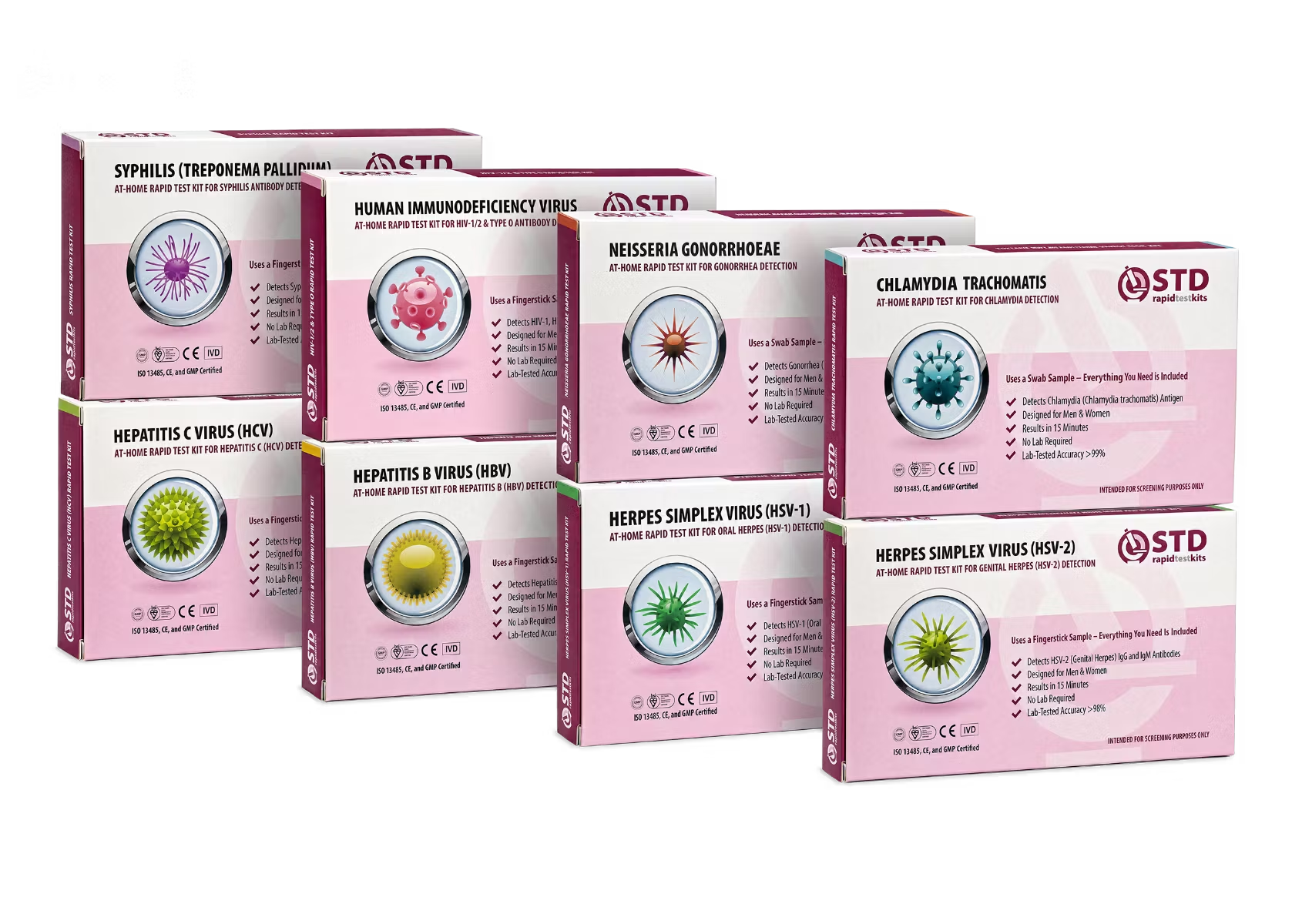
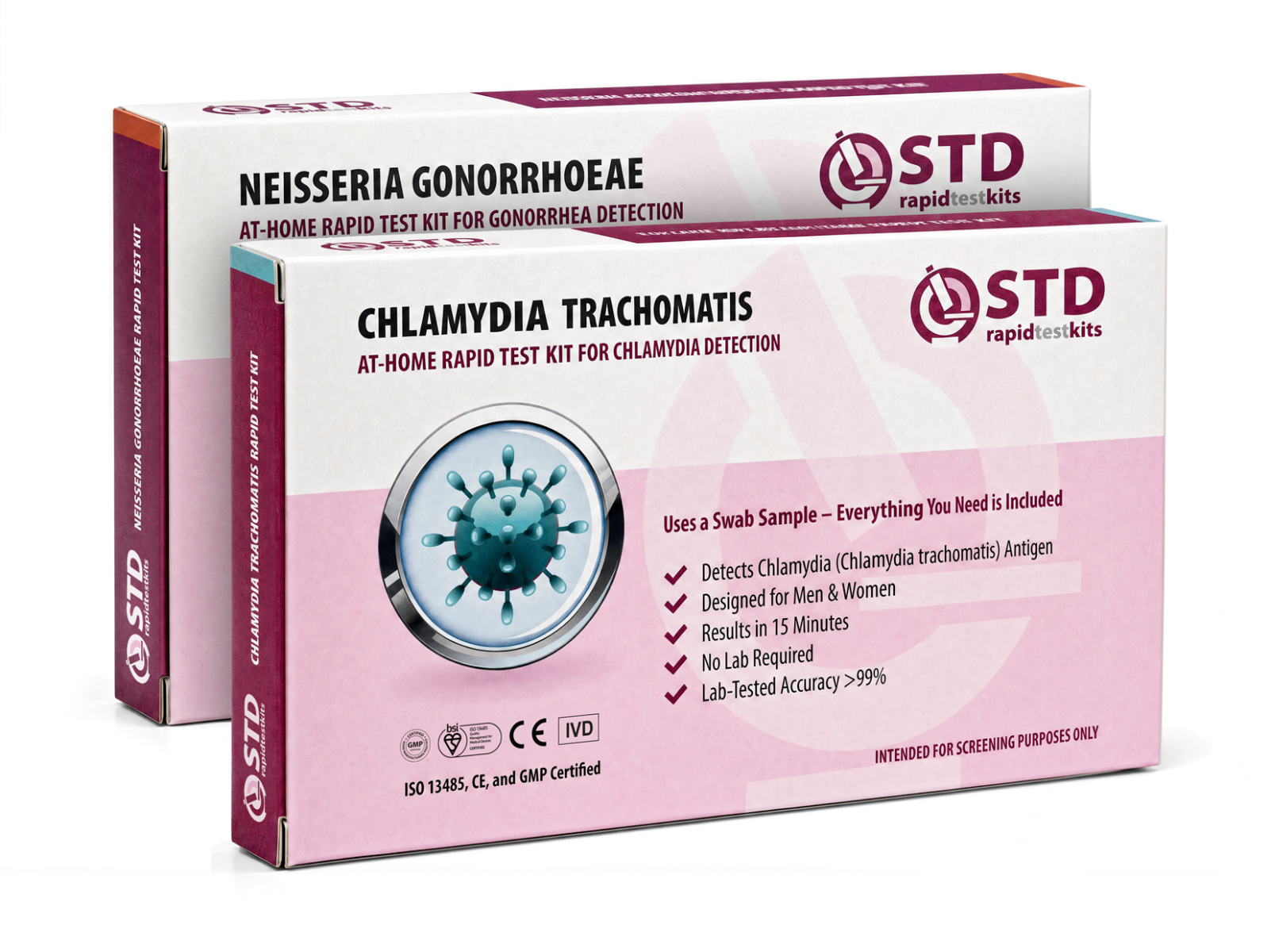
stdrapidtestkits.com, which publishes this article, sells rapid at-home STI kits. We recommend only products relevant to the reader's concern, not on commercial benefit. For test types we do not sell (such as pharyngeal or rectal swabs and lab-processed NAAT panels), we direct readers to clinic-based options instead.
Myth #4: "Once You're Treated, You're Immune"
Most STIs do not behave like measles or chickenpox. Treatment clears the active infection but it does not give you lifelong protection against being reinfected. Chlamydia, gonorrhea, syphilis, and trichomoniasis can all be caught again from a new exposure. Reinfection is in fact common, especially when a partner was not treated at the same time and unprotected sex resumes too soon.
The CDC recommends a "test of cure" or repeat test for several bacterial STIs at about three months after treatment, specifically because reinfection is the most common reason people show up positive again. The repeat test catches reinfection from an untreated partner before it has time to cause complications or onward transmission.
Viral infections work differently. HIV, HSV-1, and HSV-2 stay in the body for life once acquired. HSV outbreaks become less frequent and shorter over time and can be suppressed pharmacologically. Hepatitis B may be cleared by the immune system or become chronic; hepatitis C is now curable for most patients with direct-acting antiviral therapy.
The full cure protocol therefore includes repeat testing and treatment of all partners alongside the prescription itself, especially in rural areas where a single untreated partner can quietly restart a reinfection cycle that lasts for years.
People living with HIV who reach and maintain an undetectable viral load on consistent antiretroviral therapy cannot transmit the virus sexually, a status known as Undetectable equals Untransmittable, or U=U (CDC). Modern treatment changes both the personal-health and the public-health math; starting treatment early requires knowing your status, which means testing first.
Myth #5: "You Can Catch STIs From Toilet Seats or Hot Tubs"
This myth has been around for decades and it is reliably wrong. The bacteria and viruses that cause STIs are fragile outside the human body. Most do not survive long on hard, dry surfaces. Toilet seats, public-restroom faucets, and hot-tub water are not realistic transmission routes for any of the common STIs.
Hot tubs are particularly low-risk because chlorinated water inactivates most bacteria and viruses quickly, and skin-to-water-to-skin transmission of STI pathogens is not a documented route. You can pick up other things in shared wet environments, including fungal foot infections in locker-room showers and pseudomonas folliculitis from poorly maintained hot tubs, but those are not STIs.
Why does the toilet-seat story persist? Because it offers an alternative explanation that does not involve a sexual-history conversation. The cost is real: it shifts attention away from the exposure routes that actually matter (unprotected sex, sharing of needles, mother-to-child transmission, and rare blood-product exposures) and lets people delay testing on the comforting assumption that the infection "must have come from somewhere else."
The exposure routes that matter: unprotected vaginal, anal, or oral sex; sharing of needles or other injection equipment; mother-to-child transmission during birth or breastfeeding; and rare blood-product exposures. Toilet seats, hot tubs, gym equipment, and shared drinks are not on the list.
What Happens When Myths Delay a Diagnosis
Consider a composite case that public-health nurses across Idaho describe regularly. A young man in a small farming town starts feeling mild discomfort while urinating during harvest season. He has heard the toilet-seat rumor and knows it is nonsense, but he also believes the "you would know if it were serious" myth. He chalks the symptom up to dehydration and keeps working. By the time he sees a clinician two months later, he has advanced gonorrhea, his partner has it as well, and both are entering treatment with avoidable complications and an awkward conversation about the past two months of contact.
This pattern is well-documented in rural-health literature. The combination of long travel times, scarce primary-care access, and the cultural cost of being seen at a county clinic produces consistent delays in care-seeking, and bacterial STIs in particular do real damage during those delays. Pelvic inflammatory disease, scarring, infertility, and onward transmission to multiple partners all become more likely with each week of untreated infection.
The lesson in rural settings is to lower the threshold for testing rather than the threshold for symptoms. If you have had a new partner since your last screen, or if you have any change you would normally explain away (urinary discomfort, an odd discharge, a sore throat that lingers, a new bump or rash), test now rather than wait. At-home rapid kits compress the time between concern and answer.
How Rural Idahoans Can Test Without a Long Drive
Three approaches reduce the access burden in remote Idaho counties. None of them requires you to drive into Boise or Idaho Falls.
Option 1: At-home rapid test kits
FDA-approved at-home kits use lateral-flow rapid-test chemistry, the same diagnostic principle as a home pregnancy test or a COVID-19 antigen test. You collect the sample yourself (a self-administered vaginal or penile swab for swab-based tests, or a fingerstick blood drop for blood-based tests), apply it to a cassette with the included buffer, and read the result in around 15 minutes.
Lateral-flow rapid tests are not the same technology as the laboratory NAAT (nucleic acid amplification test) that the CDC describes as the diagnostic gold standard for chlamydia and gonorrhea. NAAT has higher analytical sensitivity, particularly in very early infections. Rapid home tests are excellent for screening once the appropriate window period has passed since exposure, and a positive home result is worth confirming with a clinical NAAT when you can. The two technologies are complementary; the home kit answers the question "do I need to act now," and the clinic NAAT confirms the answer for treatment and partner notification.
Option 2: Telehealth consultations
Idaho's telehealth network has expanded substantially since 2020. A video or phone consultation with a licensed provider can produce a same-day prescription for a confirmed bacterial STI, a referral for further testing, or a mail-order test kit shipped directly to your home or to a partner lab. Most major insurance plans now cover telehealth STI consultations.
Option 3: Mobile and pop-up clinics
Several Idaho public-health districts run mobile testing vans and pop-up clinics, particularly during summer events such as county fairs, farmers' markets, and community-health days. They typically offer free or low-cost testing in non-clinical settings, which lowers the social cost of being seen. Check your local district's website or social channels for upcoming dates; the Southwest, South Central, and Panhandle districts have been the most active to date.

Addressing the Stigma Head-On
In small towns, the fear of being seen at a clinic is often a bigger barrier than the distance. That fear is based on a real social fact: rural communities have less anonymity than urban ones. The county clinic parking lot is not anonymous, and people remember who they saw there last Wednesday.
At-home and telehealth options remove the parking-lot problem entirely. The package arrives in plain shipping packaging with no sender branding identifying the contents. Results live in your account, not in a county-clinic chart that someone you went to high school with may glance at while pulling another file. Privacy is a real and reasonable consideration in rural settings, and the testing infrastructure has finally caught up to it.
Public-health educators across Idaho describe a useful framing they call "health neutrality": treat STI screening as ordinary self-care, the same way most adults accept regular dental cleanings, blood-pressure checks, or annual flu shots. The framing matters because the alternative ("only people with something to hide get tested") is itself a barrier, and removing the moral charge makes the appointment easier to schedule.
Why Waiting Is Risky
Several STIs cause permanent harm if left untreated, even when they cause no early symptoms.
- Chlamydia and gonorrhea are the leading preventable causes of female infertility in the U.S., largely through pelvic inflammatory disease and tubal scarring. Untreated gonorrhea also drives the rise of antibiotic-resistant strains.
- Syphilis can progress to neurosyphilis (cognitive, sensory, and motor effects), cardiovascular syphilis (aortic damage), and ocular syphilis (vision loss) years after the initial chancre. Congenital syphilis rates have been climbing nationally and are particularly concerning for pregnant patients in rural areas with delayed prenatal screening.
- HIV gradually depletes CD4 T-cell counts and weakens the immune system. Modern antiretroviral therapy is highly effective, and people who start treatment early live near-normal lifespans, but starting treatment requires a positive diagnosis first.
- Hepatitis B and C can cause chronic liver inflammation, cirrhosis, and hepatocellular carcinoma over decades. Hepatitis C is now curable in most patients with direct-acting antivirals, but only after diagnosis.
- HPV can persist as a high-risk infection that develops into cervical, anal, oropharyngeal, penile, or vulvar cancer years later. ACIP recommends routine HPV vaccination through age 26 and shared clinical decision-making for vaccination through age 45.
Early detection is the single most modifiable variable on this list. Test on a routine schedule, not only when something feels wrong, and the worst-case versions of these conditions become rare.
About 1 in 5 people in the U.S. had a sexually transmitted infection on any given day in 2018, totaling nearly 68 million infections.
Frequently Asked Questions
- Can you get chlamydia without having sex?
- Genital-to-genital contact without penetration can transmit chlamydia. Vaginal, anal, and oral sex are the main routes, but the bacteria can spread through close mucous-membrane contact. Casual non-sexual contact (handshakes, hugs, sharing toilets) does not transmit chlamydia.
- Can you get herpes from kissing?
- Yes. Oral HSV-1 is very common and spreads readily through kissing, including from a partner who has no visible cold sore at the time. Asymptomatic viral shedding is well documented. CDC seroprevalence data indicates roughly half of U.S. adults carry HSV-1 by middle age.
- Does oral sex carry STD risks?
- Lower risk than vaginal or anal sex, but real. Several common pathogens have documented oral transmission. Barrier methods (condoms, dental dams) reduce risk further but do not eliminate it. Pharyngeal infections in particular often produce no symptoms, which is why testing matters even when the only contact was oral.
- Can I be reinfected with an STI after treatment?
- Yes, and it is common enough that the CDC recommends a repeat test about three months after treatment for the bacterial STIs. The main driver is an untreated partner restarting the cycle. Viral infections (HIV, HSV, chronic hepatitis B) work differently: once acquired, they persist for life, though effective treatment controls them and, for HIV, prevents sexual transmission.
- Can toilet seats spread STIs?
- No. The bacteria and viruses that cause STIs are fragile outside the human body and do not survive long on hard, dry surfaces. There is no documented case of STI transmission through toilet seats.
- Is STI testing confidential in Idaho?
- Yes. Both clinic-based and at-home testing are protected by federal HIPAA law and Idaho state privacy law. Results are not shared with employers, family members, or anyone you have not specifically authorized.
- How often should I get tested?
- The CDC recommends at least annual screening for sexually active women under 25 and for older women with new or multiple partners, annual chlamydia and gonorrhea screening for sexually active gay and bisexual men, and at least one HIV test for every adult, with annual HIV testing for higher-risk populations. Test more often after a new partner or a known exposure.
- Are at-home rapid STI tests as accurate as clinic tests?
- At-home rapid tests are lateral-flow immunoassays, which are reliable for screening once the appropriate window period has passed. Laboratory NAAT (the CDC's gold standard for chlamydia and gonorrhea) has higher analytical sensitivity in very early infections. A positive at-home result is worth confirming with clinical NAAT when accessible. The two technologies are complementary.
Take Charge of Your Sexual Health Today
In Idaho's smallest towns, silence and distance can let infections spread unchecked, and the myths above are part of how the silence holds. The reality is simpler than the rumor: most STIs are silent, most are easily treated when caught early, and most rural Idahoans now have at-home and telehealth options that did not exist a decade ago. If you have been sexually active since your last screen, especially with a new or non-monogamous partner, schedule an annual test or order a kit. The cost of testing is low; the cost of not knowing can be permanent.
- U.S. Centers for Disease Control and Prevention. STI hub, source for the 2021 Prevalence, Incidence, and Cost Estimates report covering 2018 U.S. data (one in five Americans, approximately 68 million infections).
- U.S. Centers for Disease Control and Prevention. HIV testing recommendations, including the once-in-a-lifetime baseline screen and annual testing for higher-risk populations.
- Idaho Department of Health and Welfare. State-level STI surveillance and resources, including notes on asymptomatic transmission as a major control challenge.
- World Health Organization. Sexually transmitted infections fact sheet covering global prevalence, transmission routes, and recommended testing frameworks.
- U.K. National Health Service. Overview of common STIs, symptoms, and recommended testing pathways, used here as a parallel public-health reference.
- Mayo Clinic. Patient-facing overview of sexually transmitted diseases, symptoms, and complications.
- U.S. Centers for Disease Control and Prevention. HPV resource center, including information on cancer risks associated with persistent high-risk infection.
