







Quick Answer: Yes, you can get an STD from a one-night stand while traveling, especially if the sex was unprotected or involved oral/genital contact. Some STDs have no early symptoms. Testing is the only way to know.
Why This Matters More Than You Think
Let’s talk about what happens when the vacation ends. You’re back at work, at school, or trying to get over jet lag, and your mind won’t shut up. “Was that burning from the hot springs or from something else?” “Was that bump always there?” “I used a condom… I think.” You’re not alone. In fact, post-travel STD testing spikes in urban clinics every year during spring break, summer, and just after the holidays.
Camila, 25, went to Greece with friends. They danced until sunrise, and she had a one-night stand with a bartender she’d met that same day. “He was so respectful,” she said. “We used protection. But a week later I got this weird itching. I convinced myself it was just the soap there or a reaction to my swimsuit. But it didn’t go away.” It turned out to be chlamydia. Camila didn’t feel sick, and there was no discharge, just a subtle itch. That’s how these things start.
Here’s the problem: most STDs don’t follow the courtesy of making themselves obvious. And when you’re traveling, you’re often exposed to new environments, different hygiene standards, and partners whose sexual health history you can’t possibly know in one night.
How STD Exposure Works When You’re Abroad
The risk of getting an STD while traveling isn’t necessarily higher because of geography, it’s higher because of behavior. Vacation sex tends to be impulsive, anonymous, and often substance-influenced. Combine that with jet lag, unfamiliar languages, and romanticized spontaneity, and you get a perfect recipe for skipped precautions and delayed testing.
STDs are opportunistic. They don’t care if you were in love, tipsy, lonely, or "being safe enough." Oral sex without a condom can transmit gonorrhea, chlamydia, syphilis, and herpes. Kissing can pass oral herpes. Skin-to-skin contact, even without penetration, can lead to HPV or genital herpes. And semen or vaginal fluids are just part of the equation; mucous membranes in the mouth, anus, and genitals don’t need a full-on sex session to transmit infections.
According to the World Health Organization, more than 1 million STIs are acquired every day globally, and many are asymptomatic. That means someone can feel perfectly fine and still carry an infection, especially in the early days after exposure.

People are also reading: The Physical Impact of HIV Side Effects You Shouldn't Ignore
STD Incubation: Why Timing Matters After Exposure
Let’s break down a hard truth: testing too early after a one-night stand can give you false reassurance. Every STD has an “incubation period”, the time between exposure and when it becomes detectable by a test. Some infections like gonorrhea and chlamydia may show up within a week. Others, like HIV or syphilis, may take longer. Testing too soon could mean your body hasn’t built enough of a response yet to be picked up.
That doesn’t mean you have to wait forever. In fact, testing in stages is often the best approach, an early screen, followed by a recheck at the window period's peak. The following table summarizes the typical timelines for STD testing after a single exposure while traveling:
| STD | Min Time to Detect | Best Time to Test | Early Symptoms? |
|---|---|---|---|
| Chlamydia | 5–7 days | 14+ days | Rare or mild (burning, discharge) |
| Gonorrhea | 3–5 days | 7–14 days | Common (pain, discharge) |
| Syphilis | 3 weeks | 6–12 weeks | Sore or rash later |
| HIV | 10 days (NAAT) | 4–6 weeks (Ag/Ab test) | Flu-like or none |
| Herpes (HSV) | 4–12 days | 3–12 weeks (blood test) | Blisters, itching |
| HPV | Weeks to months | Only visible with warts or Pap smear | Usually silent |
Figure 1. Typical detection windows for common STDs after a single exposure.
If you’re not sure when your exposure was, or if you had multiple partners while abroad, it’s better to test sooner rather than later, and plan for a follow-up test later in the window. Many people get a false sense of security from a negative test at day five, only to test positive on day twenty.
Check Your STD Status in Minutes
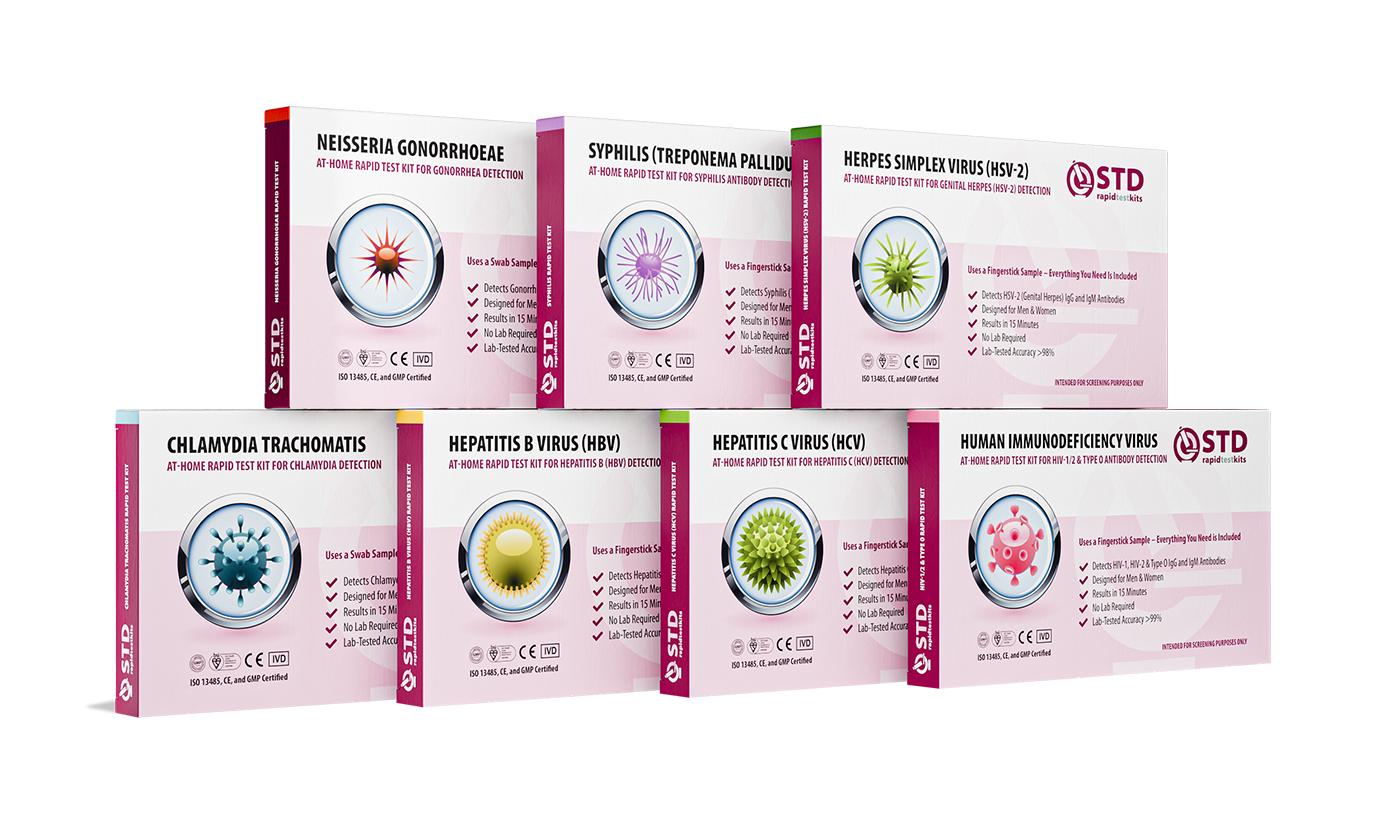
Test at Home with Remedium7-in-1 STD Test Kit
 For Men & Women
 Results in Minutes
 No Lab Needed
 Private & Discreet
Order Now $129.00 $343.00
For all 7 tests
Case Example: Testing Too Soon, Regret Later
Jake, 29, had a casual encounter with another traveler in Thailand. They used a condom, but the condom slipped off halfway through. "We both laughed it off,” he admitted, “but it was in the back of my mind the whole flight home." Jake tested three days later at a walk-in clinic, results came back negative. He felt relieved. But two weeks later, he developed a painful sore. It was primary syphilis. The clinic had tested him too early, and the infection hadn’t shown up yet.
Jake isn’t alone. This exact scenario is common. That’s why test timing matters just as much as whether you get tested at all. Getting a rapid test right away can be helpful to rule out high-transmission risks, but you still need a follow-up to confirm your status.
So if you’ve been Googling “can you get chlamydia from a one-night stand abroad,” the answer is yes, and it doesn’t always show up right away.
Which Type of STD Test Is Right After Travel?
Not all tests are created equal, especially when you’re back from a trip and trying to decode what happened in one blurry night. Whether you’re dealing with a one-time lapse or a steamy vacation fling, the kind of test you choose will shape how fast you get answers and how confident you can be in them.
If you just got back and you’re panicking, it’s tempting to grab whatever test you can find at a pharmacy or clinic. But slow down for a second. Here’s how different test options compare when you're dealing with post-travel anxiety:
| Test Type | Speed | Privacy | Accuracy Window | Best For |
|---|---|---|---|---|
| At-Home Rapid Test | 10–20 minutes | Very High | Moderate accuracy if tested 2+ weeks after exposure | Quick peace of mind, discreet results |
| Mail-In Lab Kit | 2–5 days after mailing | High | High accuracy, especially for chlamydia, gonorrhea, HIV | Lab-level confirmation without clinic visit |
| Clinic Test (NAAT or blood draw) | Same-day to 7 days | Moderate | Very high accuracy, varies by infection | Persistent symptoms or high-risk exposures |
Figure 2. STD test options based on speed, privacy, and accuracy post-exposure.
If your symptoms are severe or involve discharge, sores, or pain, an in-person clinic visit is a good idea. But if you’re asymptomatic and anxious, especially if you’re not ready to talk to a doctor, an at-home test can be your first line of clarity.
This Combo STD Test Kit covers multiple infections in one discreet kit, shipped directly to you. No judgment, no clinic wait, no awkward conversations.
The Emotional Fallout of “Just One Night”
You might be wondering: “Why am I spiraling over one night?” That’s valid. Shame and uncertainty often hit harder after travel. You're away from your regular support system. You’re trying to rationalize, “It was just one time,” or “We used protection,” even as a small voice keeps whispering, “But what if…”
Keon, 33, met someone at a hostel bar in Mexico City. “It felt like a movie,” he said. “But when I got home, I started Googling symptoms like a maniac. I convinced myself I had every STD known to man.” Keon ended up testing negative for everything. But it took two rounds of testing, one early and one at six weeks, to finally calm his nerves.
The truth is, you don’t need to have symptoms to justify testing. You don’t need to feel sick to deserve answers. STD testing isn’t a confession, it’s an act of care. For yourself, for anyone you’ve been with, and for the partners you haven’t even met yet.
And if the idea of going to a clinic makes you want to crawl out of your skin, remember: privacy-first options exist. You can take control of this, even from your bedroom.

People are also reading: Is a Cold Sore a Dealbreaker? Relationship Advice for HSV-1 Disclosur
Should You Retest? Most Likely, Yes
Even if your initial test comes back negative, don’t breathe a full sigh of relief just yet. Many infections take time to show up on tests. That’s why follow-up testing, called “retesting”, is crucial. Especially for infections like syphilis, HIV, or herpes, which might be missed if you test too soon.
Here’s a general roadmap you can follow post-travel:
- If you had a high-risk exposure (unprotected sex, condom failure, unknown partner status), test once at 10–14 days, then again at 6 weeks.
- If you’re having symptoms, test immediately, regardless of when the exposure happened. A visible sore or painful urination can mean an active infection that needs attention now.
- If your test was negative but you're still worried, test again around the 30–45 day mark. This is where most STDs become clearly detectable.
Think of it like checking luggage twice after a trip, once when you land, and again when you’re unpacking. Better to catch something early than miss it altogether.
If you're unsure what timeline applies to you, or you’ve had multiple encounters during your trip, an all-in-one approach like the Combo STD Test Kit can help simplify decisions. You don’t have to pick just one infection to test for, you cover the most common ones in one go.
Your Sex Life Deserves Privacy, Especially After Travel
One of the biggest barriers to testing post-travel isn’t just shame, it’s logistics. You're jet-lagged. Your schedule’s full. You’re not even sure where to go or what to say. Maybe you’re staying with family, or you’re on the road again for work.
That’s where discreet testing steps in. At-home kits let you avoid the awkwardness and handle everything in your own space. Most are shipped in plain packaging. Results come directly to you. No receptionist. No insurance trail. No small talk about where you’ve been or who you slept with.
Many readers report feeling empowered after using at-home kits. Not just because they got answers, but because they made the decision themselves. They took control when everything else felt blurry. And that matters.
STD Rapid Test Kits offers medically reviewed, lab-backed options that balance speed with discretion. For people coming home from travel, it’s one of the few ways to get peace of mind without sacrificing privacy or adding stress to an already anxious situation.
Check Your STD Status in Minutes
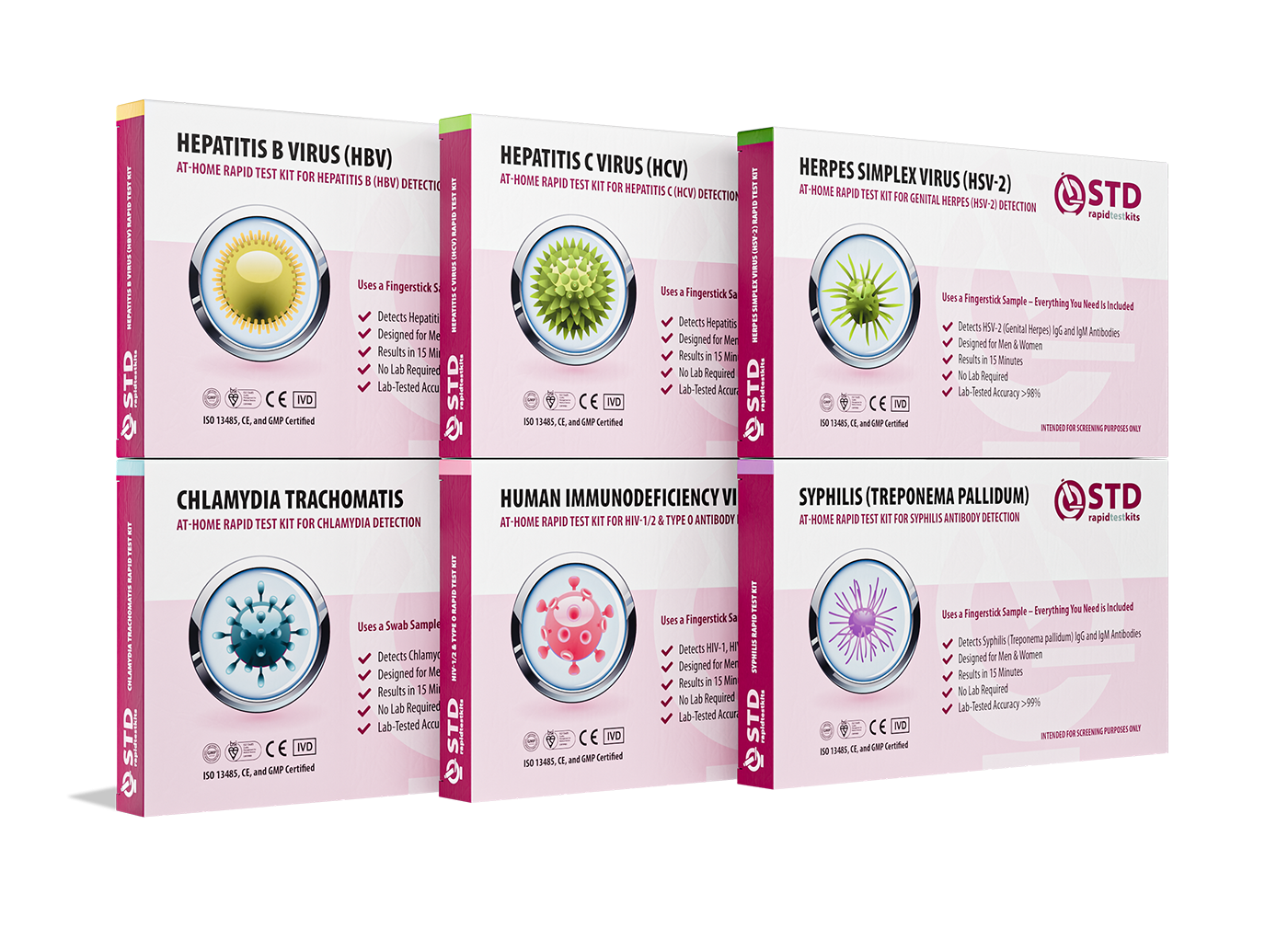
Test at Home with Remedium6-in-1 STD Test Kit
 For Men & WomenResults in MinutesNo Lab NeededPrivate & Discreet
Order Now $119.00 $294.00
For all 6 tests
What If You Test Positive?
Let’s say you took the test. And it came back positive. Maybe it was chlamydia. Maybe syphilis. Maybe something you hadn’t even heard of before your vacation. First of all: take a breath. You are not dirty. You are not broken. You are not alone.
According to the CDC, millions of people test positive for an STD every year, and most are completely treatable. Even incurable infections like herpes or HIV can be managed with medication and routine care. The key is not to delay the next steps out of fear or shame.
Arden, 27, tested positive for gonorrhea two weeks after returning from a music festival in Spain. “I almost didn’t test at all,” they said. “I had no symptoms. Just guilt. But I had this feeling, like I owed it to myself to know. The result hit me like a slap, but once I got the antibiotics, I felt more in control than I had in weeks.”
If your result is positive, here’s what happens next:
You’ll need either a prescription or clinical follow-up. Many at-home testing companies provide telehealth referrals or guidance. Others may send your result to a partner clinic if you request it. If you tested through a clinic, they’ll walk you through treatment protocols directly. The goal isn’t to scare you, it’s to get you better, fast.
Then comes the hard part: partner notification. If you were with someone local during your travels, this may feel impossible. You might not even have their contact info. But if you do, sending a respectful, clear message matters, for their health and yours. Anonymous notification services exist. Some clinics will contact partners for you. You don’t have to carry the burden alone.
And remember, one positive result doesn’t mean you can’t ever have sex again. It doesn’t make you “less dateable.” What it makes you is human. Testing, treating, and informing partners is how you show up for yourself and your future relationships.
Before You Spiral, Here’s What to Do Instead
Stop scrolling every Reddit thread about “STD signs after travel.” Close the tab that’s telling you your life is over. Here’s the truth: most people who have a travel hookup and test get either a negative result or a treatable infection. What makes the biggest difference is timing, information, and action, not panic.
You deserve peace of mind. Whether your symptoms are real, imagined, or in-between, there’s a simple next step: test, breathe, and follow up. No judgment. No moral lesson. Just clarity.
If you’ve been putting it off because you’re scared of what a test might say, think about what it means to not know. One test can silence a hundred “what ifs.”
This at-home combo test kit screens for multiple STDs in one go, discreetly, quickly, and without needing to explain yourself to anyone. Whether it’s been a week or a month since your trip, it’s not too late to take care of yourself.
FAQs
1. Can you get an STD from oral sex during travel?
Yes. Chlamydia, gonorrhea, syphilis, and herpes are just a few of the STDs that can be spread through oral sex. Many people assume it's “safer,” but unprotected oral sex is still a risk, especially when neither partner knows their status. You won’t always feel symptoms in your mouth or throat, so testing is the only way to be sure.
2. How long should I wait to get tested after a travel hookup?
It depends on the infection. Gonorrhea and chlamydia may show up in 5–7 days, while syphilis or HIV can take several weeks. A good rule of thumb is to test at two weeks, then again around six weeks to catch anything that takes longer to appear. This is called a dual testing window.
3. I used a condom, do I still need to test?
Honestly? Yes. Condoms are great, and they help a lot, but they’re not magic shields. They don’t cover everything, especially when it comes to skin-to-skin STDs like herpes or HPV. Plus, stuff happens, slips, breaks, or those “it was just for a second” moments. If your gut is nagging you, listen to it. Testing isn’t about guilt, it’s about peace of mind.
4. Can I skip the test if I don't have any symptoms?
Some sexually transmitted diseases (STDs), like chlamydia, HPV, and even HIV, don't show any symptoms at first. You might feel fine, but that doesn't mean you're safe.
5. Can you get an STD by kissing someone from another country?
It’s possible, though rare. Kissing can spread oral herpes (HSV-1), and if there are open sores in the mouth, it could theoretically transmit syphilis. Most other STDs don’t spread this way, but if your partner had an active infection in their mouth, there’s still some risk.
6. Is it too late to test if my trip was months ago?
Not at all. Some infections, like herpes or HPV, may not show signs for a long time. It's still a good idea to get tested, even if the window period has passed. This is especially true if you've noticed changes or started a new relationship since you got back.
7. What do I do if I test positive with a kit at home?
Most reputable at-home testing services will provide follow-up instructions, treatment guidance, or even telehealth options. If you test positive using a rapid test, you may need a confirmatory lab test. Either way, treatment is accessible, and you're not alone in managing it.
8. Can I bring an STD test kit with me when I travel?
Yes, for sure. A lot of people who travel now bring a discreet kit, just like they would bring first aid supplies or emergency medications. It's a good idea to do this ahead of time, especially if you plan to have sex or go to places where care is hard to get.
9. Do travel-related STDs show different symptoms?
Not exactly, but climate, hygiene, or even stress can confuse your body’s signals. A rash might feel like heat rash. Itching might seem like a reaction to local soap. The symptoms are the same, but they’re easier to overlook when you’re in a new environment.
10. Will testing abroad affect my insurance or records?
If you test at a clinic while traveling, results may not integrate with your home medical record unless you request it. At-home kits allow full discretion. If you're concerned about privacy, choose an option that doesn’t report to insurance or store results on shared networks.
You Deserve Answers, Not Assumptions
It doesn’t matter if it was one night, one mistake, or one love story under foreign skies, if you’re reading this, you’re probably worried. That worry is valid. But what you do next matters more than what happened then.
You don’t need a clinic, a diagnosis, or a moral verdict to start taking care of yourself. You just need one clear step. That could be a discreet at-home test. It could be booking a follow-up. It could be choosing to learn instead of fear.
Don’t wait and wonder, get the clarity you deserve. This at-home combo test kit checks for the most common STDs discreetly and quickly, even if your exposure was weeks ago.
How We Sourced This Article: We combined current guidance from leading medical organizations with peer-reviewed research and real-user narratives to make this guide accurate, compassionate, and practical. About fifteen sources were consulted in total.
Sources
1. WHO: Sexually Transmitted Infections (STIs)
2. Verywell Health: The Time It Takes for Common STIs to Show Up
3. Cleveland Clinic: STD/STI Testing – What To Expect
4. CDC: STI Screening Recommendations
5. Mayo Clinic: STD Diagnosis and Treatment
6. NHS: Sexually Transmitted Infections (STIs)
About the Author
Dr. F. David, MD is a board-certified infectious disease specialist focused on STI prevention, diagnosis, and treatment. He blends clinical precision with a no-nonsense, sex-positive approach and is committed to expanding access for readers in both urban and off-grid settings.
Reviewed by: A. Leroux, MPH | Last medically reviewed: September 2025
This article is for information only and should not be taken as medical advice.


