Published: September 2025 | Last updated: May 2026 | Editorial review and quality control: Martina N.
Most sexually active people will encounter HPV at some point, and for most, the immune system quietly suppresses and clears the virus within roughly two years without treatment (CDC HPV basic information). When that timeline stretches out, the question that surfaces almost immediately is whether stress, sleep, or anxiety made things worse.
The short answer: stress does not cause HPV, and it does not magically reactivate it. Chronic stress can subtly slow the immune work that keeps the virus in check, which means a positive test may persist longer than it would in someone with steadier sleep and lower baseline anxiety. This article walks through what's actually happening inside the body when stress lasts for months instead of hours, why HPV clears at very different rates for different people, and what genuinely helps without turning your life into a wellness project.
Key Takeaways
- Most HPV infections clear on their own within about two years, and stress alone does not make that timeline worse for everyone.
- Chronic stress, fragmented sleep, and untreated anxiety can slow the immune surveillance that keeps HPV suppressed, but these are slowdowns, not verdicts.
What Stress Actually Does Inside Your Body
Stress is not just a feeling. It is a biological response that shifts how the body allocates energy. When you face a real or perceived threat, the nervous system releases cortisol, adrenaline, and other hormones that prepare you to react. In short bursts, this system is genuinely useful: it sharpens focus during a hard conversation, helps you react quickly in traffic, pushes you through a deadline.
The problem is when the system never fully resets. Living under constant pressure (financial strain, caregiving, ongoing health anxiety, work that does not pause) keeps stress hormones elevated for far longer than the body is built to handle. The NIH's National Center for Complementary and Integrative Health notes that long-term stress contributes to a range of physical and mental health effects, including disrupted sleep, mood changes, and a sense of being constantly worn down (NCCIH stress overview).
None of this means the immune system breaks. It means it operates with less margin.
Cortisol is not the villain people sometimes imagine. It is a survival hormone that becomes a problem only when it does not get the chance to drop. In short bouts, it sharpens focus and mobilizes glucose. When it stays high for months, the body's inflammatory and immune balance shifts in ways that researchers continue to study, and that shift is relevant for viral infections the immune system needs to keep monitoring quietly over time, including HPV.
Why HPV Cares What Your Immune System Is Doing
HPV does not behave like a cold or the flu. There is no dramatic fever, no clear moment when you can say, "that's when my body fought it off." Most infections are detected only through routine cervical screening, and clearance happens gradually as immune cells recognize and suppress infected cells over months or years.
This is why immune function matters so much for HPV specifically. The virus is not being chased out in a single battle. It is being managed in the background, quietly, by a system that needs steady resources to keep doing its work. When those resources are constantly being diverted to handle stress, the management takes longer.
So does stress make HPV worse?
Not in a sudden, dramatic way. Stress does not flip HPV like a switch, and it does not turn the virus into cancer. What chronic stress can do is slow the immune system's ability to clear HPV, which means a positive test may persist longer than it would in someone with steady sleep, low anxiety, and stable circumstances. The effect is real but gradual, and clearance still happens for most people.
How Chronic Stress Slows HPV Clearance
There is a meaningful difference between everyday stress and stress that becomes the baseline. Missing a deadline or arguing with a partner will not derail your immune system. Living for months in a state of constant pressure can shift how the body allocates resources, including the resources used for slow, long-term viral suppression.
This is why clinicians sometimes see HPV persist longer in people dealing with burnout, caregiving strain, financial insecurity, or untreated anxiety. It is not because their bodies are weak. It is because their immune systems are managing too many alarms at once. A weakened immune system is one of the well-documented factors that can prolong HPV infection and raise the chance of cell changes (National Cancer Institute HPV fact sheet).
| Stress Pattern | What's Happening in the Body | Possible Effect on HPV |
|---|---|---|
| Short-term stress (days) | Temporary cortisol spike, normal recovery within hours | Minimal to no impact on HPV control |
| Chronic stress (months) | Persistently elevated cortisol, disrupted immune signaling | May slow viral suppression and lengthen clearance time |
| Burnout with poor sleep | Reduced immune cell coordination and slower tissue repair | Greater likelihood of HPV persistence on follow-up testing |
The Sleep Connection People Don't Want to Hear About
Sleep is where the immune system does most of its quiet housekeeping. During deep sleep, memory cells form, inflammatory responses reset, and the body fine-tunes which cells should remain on patrol. When sleep is fragmented or consistently cut short, immune efficiency drops.
Many people with HPV do not have insomnia because they are careless. They are caretakers, shift workers, students, parents, or people whose nervous systems cannot settle while waiting for a follow-up test. They fall asleep replaying worst-case scenarios and wake up scrolling forums at 3 a.m. Over weeks and months, that pattern matters.
The fix is not perfection. It is enough consistency that the body can enter deeper sleep cycles often enough to do its work. Aiming for the same approximate sleep window, dimming screens an hour before bed, and addressing nighttime anxiety directly all help, often more than any supplement.
Does Sex Make HPV Worse, or Is That a Myth?
This question carries a lot of quiet shame, even though it should not. Many people wonder if having sex while HPV is present sabotages their immune system or somehow feeds the virus. That fear often leads to unnecessary abstinence and emotional isolation, which then increases stress and can make things harder, not easier.
Sex itself does not weaken your immune system. Intimacy in a consensual, stable context allows the immune system to keep working on HPV clearance the same way it would otherwise. What can matter is whether sex is accompanied by repeated irritation, micro-trauma, or significant stress about transmission, all of which can keep the body in a heightened inflammatory state.
Condoms and dental dams reduce the chance of passing HPV to a partner who has not already been exposed, and they remain worth using when a partner's HPV status is unknown or different from yours. Pleasure is not the enemy here.
If worry about transmitting HPV is the thing keeping you tense around intimacy, two grounding facts help. First, long-term partners often already share the same HPV strains, so the abstinence-as-protection logic frequently does not apply. Second, condoms and dental dams reduce, but do not fully eliminate, transmission risk, and many couples accept that residual risk as part of normal life with a very common virus. Talking through this openly tends to reduce stress more than avoiding the conversation does.
Why HPV Clears Faster for Some People
Two people can have the same strain of HPV and very different timelines. One clears it within a year. Another takes three. That difference is not about discipline or virtue. It is about immune context.
Immune systems are shaped by genetics, age, cumulative stress history, sleep patterns, smoking exposure, nutrition access, and mental health. Smoking in particular has a well-documented effect on HPV persistence and on the local immune environment of cervical and genital tissue (National Cancer Institute HPV fact sheet). Age plays a role too, with immune responses gradually shifting after midlife.
Someone navigating chronic stress, caregiving demands, or trauma may simply need more time, and staying current with recommended follow-up screening is the most useful thing they can do while that immune work happens.
Clearance timelines reflect a stack of factors, not a single variable. The biggest contributors clinicians weigh:
- Genetics and age. Immune responses naturally vary between people and shift after midlife.
- Smoking status. The single lifestyle factor most consistently linked to longer HPV persistence.
- Cumulative stress history. Years of pressure carry more weight than the past few weeks.
- Sleep consistency. Regularity matters more than total hours on any single night.
- Mental health. Untreated anxiety and depression shift inflammatory regulation over time.
- Nutrition access. Steady meals matter more than supplements.
What Genuinely Helps Your Immune System
Once stress enters the HPV conversation, the temptation to fix it instantly takes over. Supplements, detoxes, extreme diets, and rigid routines start to feel like control. The reality is less dramatic and more forgiving. Immune systems respond to consistency over months, not to single heroic actions.
The pattern across genuinely useful interventions is repetition over intensity. A person who goes to bed thirty minutes earlier most nights, eats reasonably regularly, and gets outside in daylight is doing more for immune support than someone running through a cycle of supplements and elimination diets every six weeks. Below is a clearer comparison of what supports immune control of HPV versus what tends to get oversold.
| Factor | What It Really Does | Impact on HPV |
|---|---|---|
| Consistent sleep window | Improves immune signaling and tissue repair | Supports viral suppression over time |
| Regular meals | Stabilizes blood sugar and stress hormones | Indirect immune benefit through reduced cortisol load |
| Quitting smoking | Reduces nicotine-driven local tissue damage | Strongest single lifestyle factor for faster clearance |
| HPV vaccination (when eligible) | Prevents infection with the strains it covers | Does not clear an existing infection, prevents future ones |
| Extreme detoxes / juice cleanses | No proven immune benefit | No reliable effect on HPV |
| High-dose vitamin supplements | Largely unsupported by clinical evidence | Unclear or negligible impact in well-nourished people |
How Long Does HPV Usually Take to Clear?
The honest answer is that there is no fixed schedule. For the majority of people, the immune system suppresses and clears HPV within about one to two years, often without symptoms or intervention (CDC HPV basic information). For others, clearance takes longer, sometimes several years.
Part of what makes timelines hard to interpret is that "clearance" is not something you can feel happening. There is no symptom that signals immune control is improving. Follow-up tests and the absence of detectable viral activity are the only way to know, which creates a gap between effort and feedback that can feel emotionally brutal.
Stress often stretches that gap. When life is unstable, bodies prioritize immediate survival over long-term viral housekeeping. That does not mean clearance will not happen. It means patience becomes part of the plan, whether anyone says it out loud or not.
| Time Since Detection | What's Common | What Doctors Usually Monitor |
|---|---|---|
| 0 to 12 months | Initial immune response, often no detectable progression | Routine follow-up at recommended interval |
| 12 to 24 months | Clearance for the majority of people | Repeat HPV or co-test, observation if cleared |
| 24+ months | Persistent infection (still detectable) | Closer monitoring, possible colposcopy if cell changes |
When Persistence Matters Medically
Hearing the word "persistent" attached to HPV can sound alarming, especially when stress is already high. Persistent HPV stays detectable on follow-up testing, but in most cases it is simply being watched rather than progressing.
Persistence matters to clinicians because long-term infection with high-risk HPV strains is what gradually raises the risk of cellular changes that can eventually progress to cervical, anal, or oropharyngeal cancers (WHO cervical cancer fact sheet). Monitoring is how clinicians catch and treat cellular changes early, long before they become serious, and most people with persistent HPV never develop a serious problem when they stay current with their recommended follow-up schedule.
Most sexually active people will get HPV at some point in their lives if they don't get the HPV vaccine.
The Mental Health Piece We Don't Talk About Enough
Living with HPV can quietly reshape how people think about their bodies. Some become hyper-aware of every sensation. Others avoid appointments because the emotional cost feels heavier than the medical risk. Mental health is not a side issue here. It is part of how the immune system functions over time.
Long-term stress is associated with mood changes, sleep disruption, and physical health effects that intersect with how the body regulates inflammation and recovery (NCCIH stress overview). That matters for HPV because the immune work involved in suppressing the virus depends on the same regulatory systems that chronic anxiety and depression strain over time. The point is not that emotions cause disease on their own; it is that sustained emotional distress is one more demand on a body that is already trying to manage a slow viral infection.
Treating anxiety directly, whether through therapy, structured stress-management, peer support, or medication when appropriate, is not an indulgence. It is a legitimate part of HPV care, even if no one frames it that way in a clinic.
Testing as Part of Stress Reduction
One of the most stressful elements of HPV is uncertainty. Not knowing whether the virus is still present, or whether something has changed, can keep people stuck in a worry loop that feeds the very stress that may be slowing clearance.
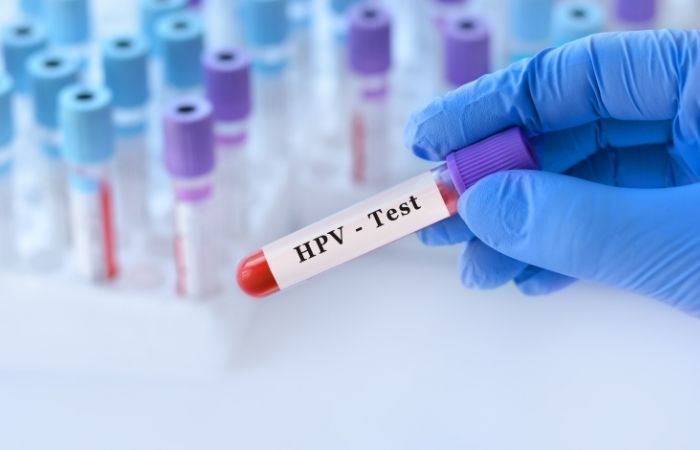
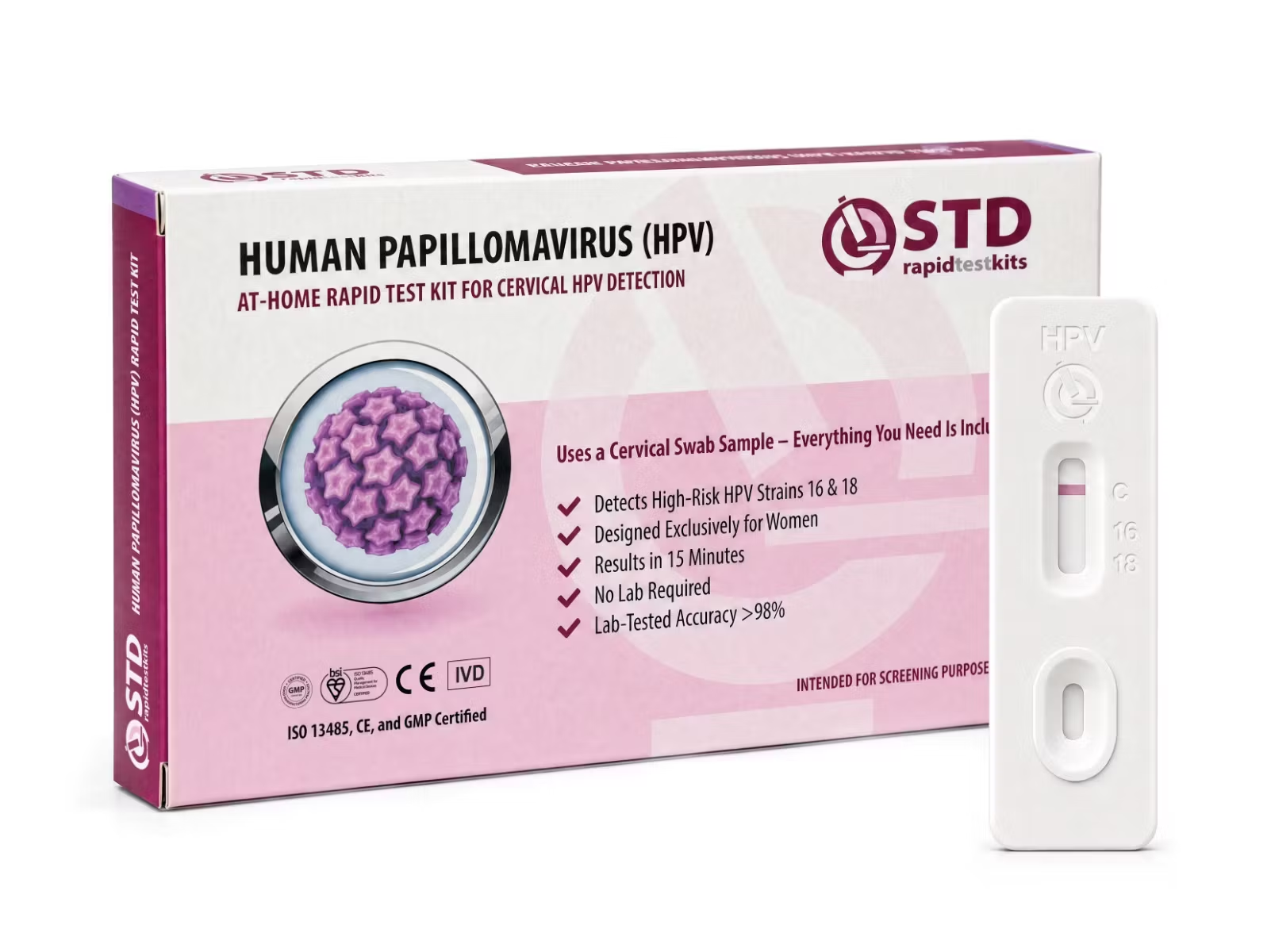
Regular follow-up at the intervals your clinician recommends helps break that loop. Knowing where you stand lets the nervous system stand down a little. For people who find clinic visits triggering, or who do not have easy access to one, a private at-home HPV self-collection swab can fill in part of that picture, especially between scheduled cervical screenings. It does not replace a Pap smear or a lab-run HPV NAAT, but it can reduce the emotional cost of waiting.
One note on scope: the at-home HPV swab kit below is validated for vaginal self-collection only. Male readers who want to test for HPV should see a clinic, since there is no validated at-home HPV swab for male anatomy on the market. This site sells the at-home HPV kit described below, and the description that follows is honest about what it can and cannot tell you.
Living While You Wait
HPV often asks people to wait without milestones. That waiting can feel unbearable when life is already overwhelming, but waiting is not the same as stagnation. Your body is working even when you cannot feel it. Immune systems rarely announce progress. They do their work quietly, over time.
If stress has been unavoidable in this season of your life, that is not a moral failing. It is context. HPV does not define your worth, your choices, or your future health. Most infections clear, most persistent infections never progress to anything serious, and most people who feel terrified at diagnosis eventually look back at this period with relief rather than regret.
Three things that support immune work while you wait
- Keep follow-up appointments at the interval your clinician recommends, rather than testing constantly or avoiding testing entirely.
- Protect a consistent sleep window most nights, even if individual nights are imperfect.
- Treat anxiety as part of your HPV care, not separate from it: therapy, peer support, or medication when appropriate all count.
Frequently asked questions
- Can stress make HPV come back?
- Stress does not reactivate HPV in a sudden way. If your immune system is stretched thin, the virus may stay detectable on testing longer than it would otherwise, which can show up as continued positive results. That is not failure. It is the immune system operating with less margin while it handles other demands.
- Does anxiety really affect the immune system?
- Yes, but the effect is gradual. Anxiety is a physical state as well as a mental one. When the body stays tense for long periods, stress hormones remain elevated, which can blunt immune coordination over time. Treating anxiety supports immune function the same way sleep and nutrition do.
- Can poor sleep make HPV last longer?
- Probably, when it is persistent. Deep sleep helps immune cells communicate and remember what they are supposed to be controlling. A few bad nights are not going to change your HPV trajectory, but months of chronic sleep deprivation can slow the body's long-term viral surveillance.
- Should I avoid sex until HPV clears?
- Not for immune reasons. Sex does not weaken your immune system or prevent HPV clearance. Many long-term partners already share strains, and isolation often increases the stress that may be slowing clearance in the first place. Condoms and dental dams reduce the chance of passing HPV to a partner with a different exposure history.
- Does stress increase my risk of HPV-related cancer?
- Not directly. Cancer risk is linked to long-term persistence of high-risk HPV strains and gradual changes in cervical, anal, or oropharyngeal cells, which is exactly what regular screening is designed to catch. Stress may influence how quickly the immune system clears HPV, but it does not flip a hidden cancer switch.
- If my HPV has not cleared in two years, is something wrong with me?
- It usually means your immune system is on its own schedule. Clearance timelines vary widely. "Persistent" is a clinical label your clinician uses to decide on monitoring intervals, not a personal judgment. Plenty of people clear HPV after longer periods, especially once life circumstances stabilize.
- Is smoking really worse for HPV than stress?
- The evidence for smoking is more direct and stronger. Nicotine exposure affects local immune response and the health of cervical and genital tissue, which is why smoking is associated with longer HPV persistence and higher rates of cervical cell changes. If quitting feels possible, it is one of the more impactful changes a person can make.
How We Sourced This Article: Our article was constructed based on current advice from major public-health and medical organizations, including the CDC, WHO, NCI, and NCCIH, and then translated into plain-English explanations for the situations people actually experience. We do not offer clinical diagnosis. For symptoms or test results that concern you, please see a licensed clinician.
- U.S. Centers for Disease Control and Prevention. HPV (Human Papillomavirus) overview, prevalence, vaccination, and screening guidance.
- U.S. Centers for Disease Control and Prevention. HPV basic information, including clearance timelines and cancer-risk context.
- National Cancer Institute. HPV and cancer fact sheet, including the role of smoking and a weakened immune system in HPV persistence and the link between persistent high-risk infection and cancer risk.
- World Health Organization. Cervical cancer fact sheet, including the role of persistent high-risk HPV infection in cervical cancer development.
- National Center for Complementary and Integrative Health (NIH). Stress overview, including general physical and mental health effects of long-term stress.
- Mayo Clinic. Patient health information library covering HPV infection and related conditions.
