Can You Get an STD from a Public Pool or Hot Tub? Here's the Truth
The fear of catching an STD from a public pool or hot tub is one of the stickiest health myths around. The actual public-health record is calm and consistent. Here is what the chemistry says, what you can actually catch in the water, and the small set of situations where a real STI test makes sense after a swim.




- Chlorinated pool and hot tub water inactivates the pathogens that cause chlamydia, gonorrhea, herpes, syphilis, and HIV within seconds to minutes. Casual swimming with an infected person carries effectively zero STI risk.
- The bumps, itching, or burning you might notice after swimming are almost always recreational water illness, irritation, or a UTI from sitting in a wet swimsuit, not a sexually transmitted infection.
Published: November 2025 | Last updated: May 2026 | Editorial review and quality control: Martina N.
Can you actually catch an STD from a public pool or hot tub?
For practical purposes, no. There are no documented cases of STI transmission through properly chlorinated pool or hot tub water; pathogens are inactivated within seconds to minutes. The single carve-out: if you had unprotected sex in or near the water, standard post-exposure testing logic applies.
The fear of catching an STD from a public pool, a hotel hot tub, or a shared shower is one of the stickiest health myths around. It runs in pop-culture jokes, panicked Reddit threads, and viral TikTok confessionals. The actual public-health record is calm and consistent: standard sexually transmitted infections do not spread through chlorinated recreational water. What CAN happen at the pool is a separate, much milder set of skin and stomach infections that look scary but are not STIs. The article below walks through the chemistry, the real risks, the cases where the rumor has a kernel of truth, and the situations that genuinely warrant a test.
The Four Routes STIs Use to Spread (and Why Water Doesn't Cut It)
Sexually transmitted infections move from person to person through one of four routes: direct mucosal contact (vaginal, anal, or oral sex), exchange of genital fluids, blood-to-blood contact, or close skin-to-skin contact during a sexual encounter (the route HSV and HPV use). The WHO's STI fact sheet lists exactly these routes plus mother-to-child during pregnancy, childbirth, or breastfeeding, and unsafe blood transfusion. Recreational water is not on the list, and no public-health agency has ever added it. The NHS guidance on STIs reaches the same conclusion using slightly different language.
Every one of those routes requires direct contact with another person's tissue or body fluid. Diluted into a few thousand gallons of treated water, the pathogens drop below any infectious dose almost instantly.
The pathogens themselves are also exquisitely fragile outside the body. Chlamydia trachomatis and Neisseria gonorrhoeae need a warm, moist mucosal surface to stay viable; they die within minutes once they hit air, dry skin, or chlorinated water. HIV is an enveloped virus, easily destroyed by soap, alcohol, or chlorine; the CDC's HIV transmission page notes that HIV does not survive long outside the human body and cannot reproduce outside a human host. Herpes simplex virus survives a few seconds on dry surfaces and effectively zero seconds in chlorinated water. Treponema pallidum (syphilis) is fragile enough that even brief drying inactivates it.
Combine fragile pathogens with massive dilution and an active disinfectant, and the public-health consensus follows: standard STIs do not transmit through pool or hot tub water.
(1) Direct mucosal contact during vaginal, anal, or oral sex. (2) Exchange of genital fluids. (3) Blood-to-blood contact, including shared needles or transfusion of unscreened blood. (4) Close skin-to-skin contact during a sexual encounter, the route HSV and HPV use. None of these can happen through diluted, chlorinated recreational water.
What Chlorine Does to STI Pathogens in Pool Water
Public pools in the U.S. typically run free chlorine at 1 to 3 parts per million (ppm), with hot tubs slightly higher (3 ppm or more for chlorine, or 4 to 8 ppm for bromine) because warm water around 36 to 40 degrees Celsius degrades disinfectant faster. Pool pH stays in the 7.2 to 7.8 band so the chlorine remains chemically active. At those concentrations, free chlorine reacts with the cell membranes of bacteria and the lipid envelopes of viruses, breaking them apart on contact.
Inactivation times are well-studied. Gonorrhea and most other gram-negative bacteria are killed in seconds. Enveloped viruses such as HIV and HSV are inactivated in seconds to a minute. Even hardier organisms (norovirus, hepatitis A) usually fall within minutes. The notable chlorine-resistant exception, Cryptosporidium, is a parasite encased in a tough oocyst (a hard protective shell), and it is not an STI; it is a recreational water illness covered in the next section.
Chlorine is not magic, though, and pools are not sterile. Disinfection only works when chlorine levels are correctly maintained AND when contact time is sufficient. A neglected backyard hot tub, an unregulated thermal spa, or a pool with depleted chlorine after a busy weekend can grow bacteria and parasites that a properly chlorinated facility would kill, producing recreational water illness rather than chlamydia or HIV. The three usual suspects in CDC outbreak surveillance are Cryptosporidium, Pseudomonas aeruginosa, and Legionella. None of them are sexually transmitted.
The water did not transmit anything. Chlorine inactivates STI pathogens within minutes, and dilution finishes the job. The risk vector is sexual contact, not shared water. Test if you had sex with that person (anywhere) or if you have symptoms. Don't panic-test because of the soak.
What You CAN Actually Catch in Public Pools and Hot Tubs
Pools and hot tubs are not risk-free; they are just risk-different. The infections that genuinely do spread through recreational water are called recreational water illnesses (RWIs), and the CDC tracks them carefully. None of them are sexually transmitted.
Hot-tub folliculitis (caused by Pseudomonas aeruginosa) is the headliner. Per the CDC's hot tub rash guidance, the rash usually appears a few days after exposure to a contaminated hot tub. It looks like itchy red bumps clustered around hair follicles, often densest where the swimsuit pressed against skin. It usually resolves on its own in one to two weeks. It is the single most common reason someone sees a rash after a hot tub visit and assumes the worst.
Cryptosporidiosis is a parasitic infection caused by swallowing pool water contaminated with oocysts. It causes 1 to 2 weeks of watery diarrhea, mostly in the days after a high-volume pool visit (especially in summer at busy aquatic facilities).
Legionnaires' disease is a pneumonia caused by inhaling water aerosolized from a poorly maintained spa or whirlpool. It is rare but serious in older adults and immunocompromised people.
UTIs, yeast infections, and bacterial vaginosis can flare after long sessions sitting in a wet swimsuit. The wet, warm, occluded environment disrupts the natural bacterial balance in that area. These are uncomfortable but not sexually transmitted.
| Condition | How you catch it | What it looks like | Severity |
|---|---|---|---|
| Hot tub folliculitis (Pseudomonas) | Skin contact in undertreated hot tubs | Itchy red bumps around hair follicles, often where swimsuit pressed | Mild, resolves 1 to 2 weeks |
| Cryptosporidiosis | Swallowing contaminated pool water | Watery diarrhea 2 to 10 days after exposure | Moderate; severe in immunocompromised |
| Legionnaires' disease | Inhaling aerosolized water from spa jets | Cough, fever, shortness of breath | Serious, can be fatal in older adults |
| Molluscum contagiosum | Skin contact with shared towels or surfaces | Pearly dome-shaped bumps with central dimple | Mild, resolves over months |
| UTI or yeast infection | Sitting in wet swimsuit for hours | Burning urination or vaginal itching | Mild, treatable with standard meds |
Hot Tub Rash vs Herpes: Telling Them Apart
Most of the post-swim panic this article is meant to calm comes down to a single question: is this rash a hot tub thing or a herpes thing? The clinical features are different enough that a careful look usually tells the story, though a clinician's exam is the only way to be certain.
Hot tub folliculitis typically appears a few days after exposure to a contaminated tub. The bumps are centered on hair follicles, scattered across whatever skin was in the tub (often densest under the swimsuit), and tend to be itchy more than painful. They are not localized to the genitals. They resolve in 1 to 2 weeks on their own, faster with topical care.
Genital herpes typically appears 2 to 12 days after a sexual exposure (not a hot tub exposure). The lesions are grouped vesicles (small fluid-filled blisters) on a red base, painful or tingling rather than itchy, and concentrated on the genitals, perianal area, or wherever direct skin-to-skin contact occurred. A first outbreak often comes with flu-like symptoms (fever, swollen lymph nodes, muscle aches).
Molluscum contagiosum is a third pattern people sometimes confuse with the other two. It produces small, painless, pearly dome-shaped papules with a tiny central dimple, develops 2 to 7 weeks after exposure, and tends to spread by direct contact with skin or shared items.
The figures below show each pattern. If yours doesn't match any of them clearly, see a clinician rather than self-diagnosing.
Sex In or Near the Water: Where the Real STI Risk Lives
This is the section where the rumor has a kernel of truth. If you had unprotected sex in a hot tub, in a pool, or on the deck next to one, you carry the same STI risk you would carry from sex anywhere else. The water did not protect you, and (importantly) the water did not infect you either. Sex is sex. Chlamydia, gonorrhea, syphilis, herpes, HIV, trichomoniasis, and HPV all transmit through the routes covered earlier, and unprotected genital contact with a partner whose status you don't know is the actual risk event.
Two things make pool or hot tub sex slightly riskier than dry-land sex, and neither has anything to do with germs in the water:
- Lubrication washes away. Pool and hot tub water flushes out natural vaginal lubrication and any added water-based lubricant, which raises friction and the chance of small mucosal tears. Tiny tears mean better access for any pathogen the partner happens to be carrying.
- Condoms perform worse. Heat above 100°F (typical hot tub water) softens latex. Pool chemicals and hot tub disinfectants degrade it further. Add water washing away lubrication and you get a measurably higher rate of slippage and breakage. Spermicides also lose effectiveness in hot water. The CDC and most family-planning agencies suggest moving sex out of the water.
- Shared sex toys carry the same risk in or out of the water. If a toy moves between partners without cleaning or a fresh condom, that is a transmission route the water does not neutralize.
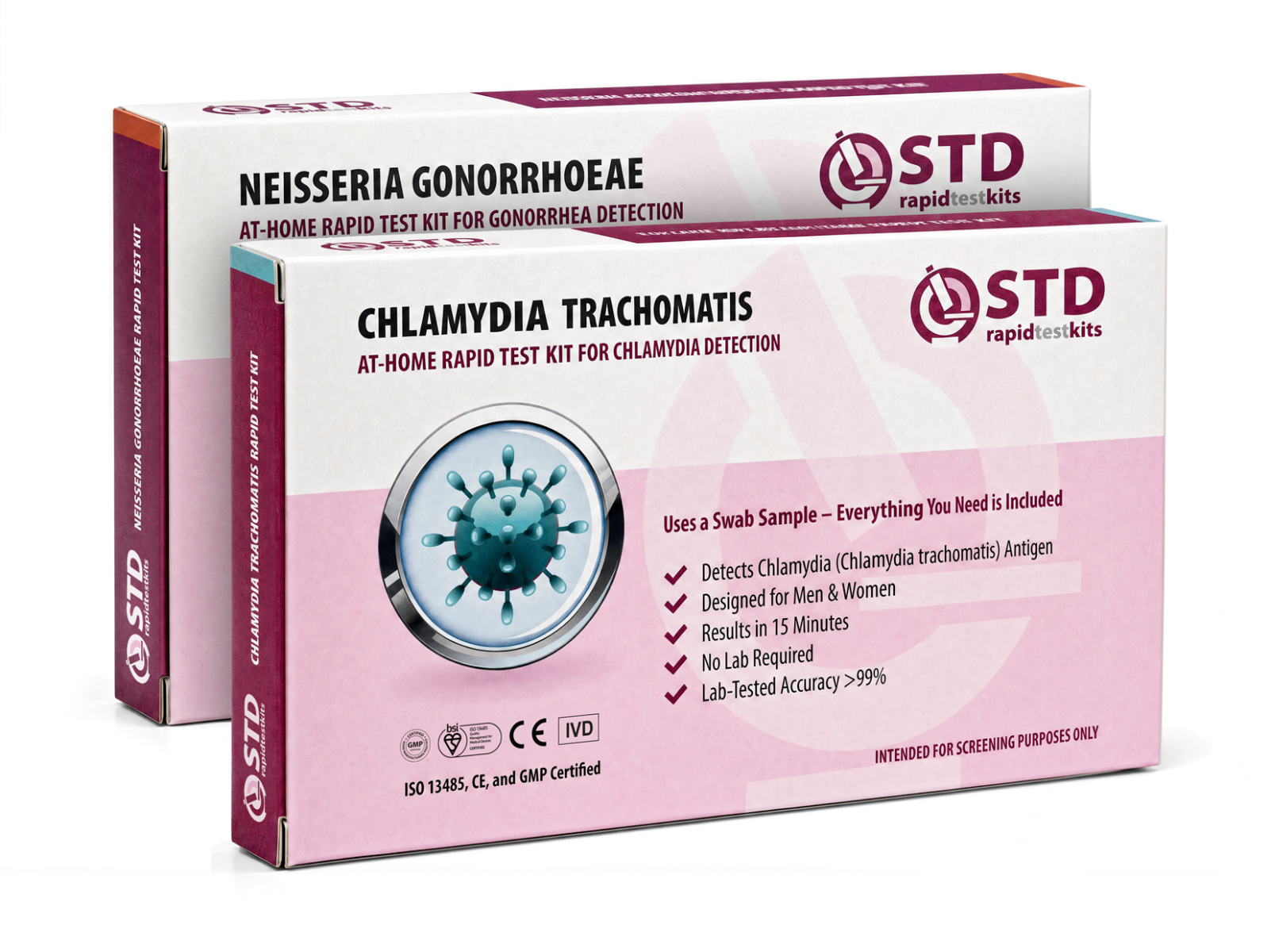
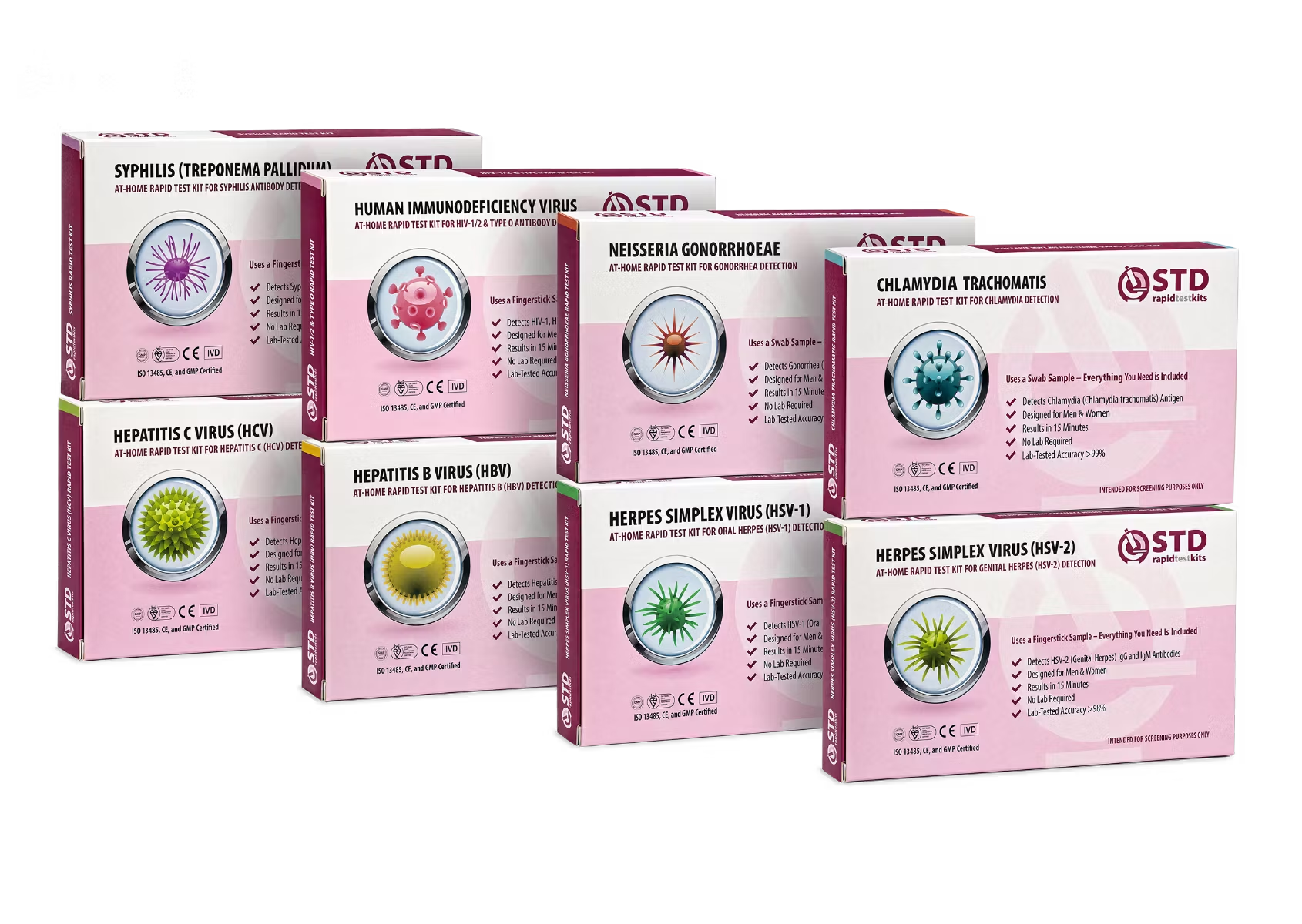
So if there was unprotected sex in connection with a pool or hot tub, the testing decision is the same as for sex anywhere else; the relevant window periods are covered further down. (Disclosure: this site sells rapid at-home STI test kits; the kit linked below is one we stock.)
Hot tub water at 100 to 104°F (typical home and resort settings) softens latex. Chlorine and bromine, the main disinfectants in pool and tub water, accelerate latex degradation. Combined with the loss of natural lubrication during submerged sex, condom slippage and breakage rates are higher than on dry land. If sex is happening, the safer pattern is to step out of the water first.
Showers, Towels, Benches, and Other Communal Surfaces
Pool decks, locker-room benches, kickboards, public showers, and shared towels get more attention than they deserve, but a few infections genuinely do hop via fomites (contaminated objects). Water draining from a showerhead does not transmit any STI. STI pathogens do not survive on a wet tile floor or in a puddle long enough to seed a new infection.
Athlete's foot and plantar warts are the realistic locker-room threats. Both are caused by skin organisms (dermatophyte fungi and cutaneous HPV strains, respectively) that can persist on damp shared floors. Neither is an STI. The cutaneous HPV strains that cause plantar warts are different from the genital strains that cause STI-relevant disease.
Molluscum contagiosum is the realistic communal-surface viral concern. The virus survives well on damp towels and surfaces, and skin-to-surface contact transmits it. Use your own towel, sit on a personal towel rather than directly on shared benches, and don't share razors or kickboards.
HPV (genital strains) is theoretically possible to transmit through fomites, but in practice it requires direct skin-to-skin contact (most often sexual). Public benches are a vanishingly small risk.
Herpes lives only briefly on surfaces and outside the body. Towel transmission is described in the literature but extremely uncommon, and it requires the towel to be used immediately after contact with an active lesion. The CDC's general guidance is that herpes is not a meaningful concern from inanimate surfaces, including swimming pools, silverware, soap, or towels.
Razors are the one shared item with a real bloodborne route. A razor that nicks one person and then nicks another carries trace blood, and hepatitis B, hepatitis C, and (much more rarely) HIV are theoretically transmissible that way. Documented cases are rare, but the rule is easy: use your own razor.
Pubic lice can survive 24 to 48 hours on bedding or towels and can transfer through that route. They do not survive submersion in pool water. They are uncomfortable but treatable.
Bring and use your own towel. Sit on it rather than directly on damp benches. Wear flip-flops or shower sandals on locker-room floors. Don't share razors, washcloths, or unwashed kickboards. Wash shared linens in hot water. These rules cover essentially every realistic skin-infection route from public pool and spa surfaces.
When to Test After a Pool or Hot Tub Visit
The point of an at-home STI test is not to rule out a fear; it is to answer a real question after a real exposure. After a pool or hot tub visit, the question is straightforward: did anything happen that would have transmitted an STI in any setting?
- You shared a pool or hot tub with someone who has an STI, no sexual contact: testing is not indicated. The water did not transmit. Sleep on it.
- You had unprotected sex (water-related or otherwise) in the past few weeks: testing is appropriate. Use the correct window period for each infection. Chlamydia and gonorrhea are reliably detectable from about 14 days. Syphilis from about 6 weeks for blood-based antibody tests, with a definitive negative at 12 weeks. HIV antibody rapid tests are reliable from 12 weeks, and fourth-generation lab antigen-antibody tests have a detection window of 18 to 45 days per CDC HIV testing guidance (meaning the test can pick up infection as early as 18 days post-exposure, with a definitive result by 45 days). Hepatitis B is reliable from about 6 weeks, with antibody response complete by 6 months. Hepatitis C antibody tests are reliable from 8 to 11 weeks, with a definitive window at 6 months. A broad multi-test panel is often the simplest path.
- A condom broke or slipped off during sex in or near the water: treat it as an unprotected exposure and follow the timelines above.
- You have a rash and want to know what it is: a clinician's exam is more useful than a test kit because the differential includes folliculitis, irritation, and other non-STI causes. If a clinician suspects herpes, type-specific testing is appropriate.
- You have burning urination or unusual discharge: see a primary-care provider or sexual-health clinic. UTI vs STI vs irritation is a clinical call and the wrong choice delays the right treatment.
- You suspect a serious HIV exposure within 72 hours: go to an emergency room or sexual-health clinic now for post-exposure prophylaxis (PEP). Don't wait for an at-home test.
The broad-panel kit below covers the most common scenario, when someone wants to test after recent unprotected sex and wants reassurance across several infections at once.
If there was no sexual exposure, there is nothing to test for. If there was sexual exposure, use the window periods above and pick a panel that matches what you might have been exposed to.
How to Swim Safer at Public Pools and Hot Tubs
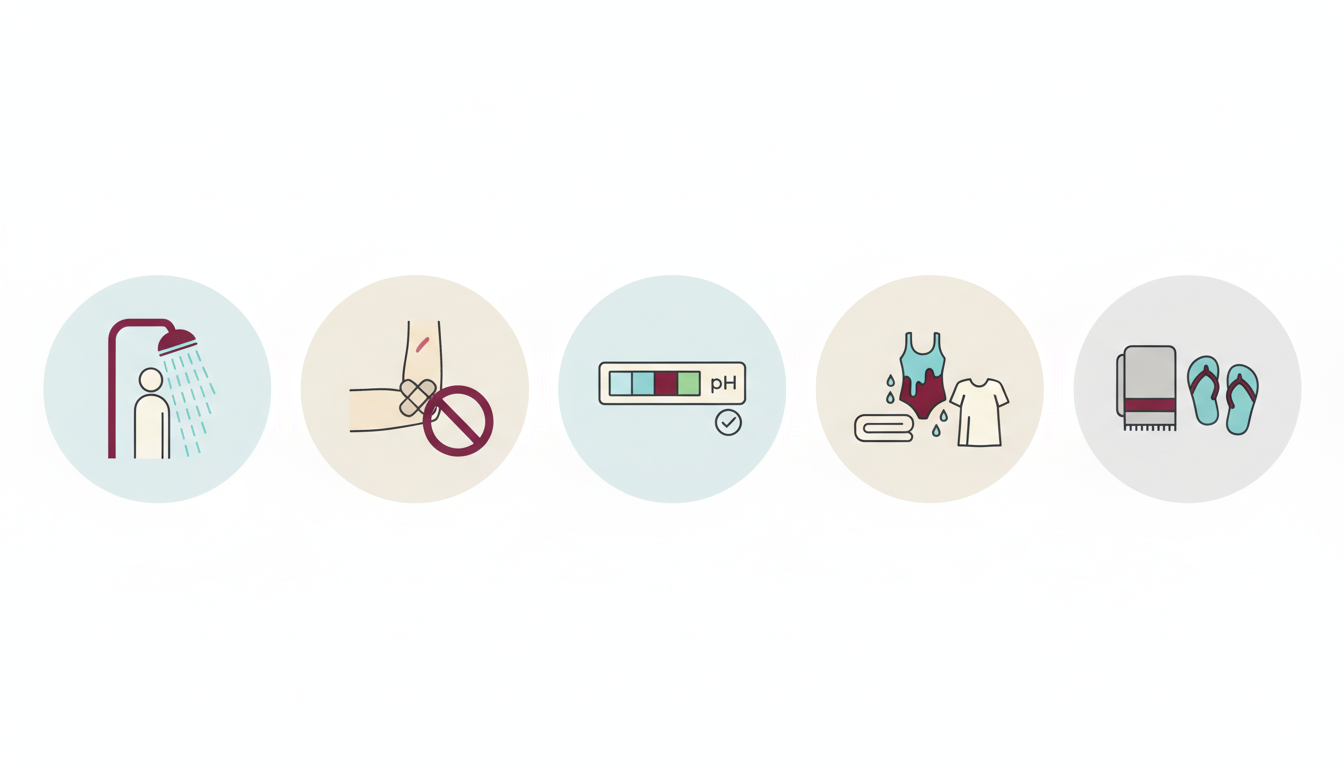
The way to reduce real (non-STI) risk at a public pool is straightforward and matches the CDC's healthy swimming guidance:
- Shower with soap before and after. Pre-swim showering removes most of the body oils, sweat, and personal-care residues that bind chlorine and reduce its effectiveness for everyone. Post-swim showering reduces folliculitis and skin irritation.
- Avoid pools with a strong chlorine smell. Counterintuitively, that aggressive chlorine smell is usually chloramines, the byproduct of chlorine reacting with sweat and urine in poorly maintained water. Clean, well-balanced pools have very little odor.
- Don't swim with open wounds, an active rash, or recent diarrheal illness. Both for your own protection and for everyone else's.
- Change out of wet swimsuits within 30 minutes. The wet-suit microclimate is what feeds yeast, BV, and UTI bacteria. This is the single most overlooked piece of pool hygiene.
- Bring your own towel and flip-flops. Communal surfaces are where molluscum, plantar warts, and athlete's foot actually transmit. Personal items remove most of that risk.
- Check posted inspection scores if your county or city publishes them. Some jurisdictions now post chlorine and pH check results on QR codes at the gate; if they're available, glance.
None of these rules are about STIs. They are about the actual things that go wrong at public pools and hot tubs.
HIV does not survive long outside the human body (for example, on surfaces) and cannot reproduce outside a human host. You cannot get HIV from saliva, sweat, tears, urine, or casual contact with surfaces in shared environments.
Common Myths, Briefly
The claims that come up most often in panicked Googling, and what the evidence shows:
Myth: You can get herpes from a pool. Herpes simplex virus is fragile outside the body and is inactivated almost instantly by chlorine. There are no documented cases of waterborne pool transmission.
Myth: You can catch oral herpes by drinking from the same glass. Older advice on some health-information sites repeated this, but current CDC guidance contradicts it directly. HSV needs contact with a herpes sore or with saliva at the moment of an active oral lesion entering your own mucosa. Picking up a contaminated cup is not a documented transmission route, and the virus does not survive on a dry surface long enough to seed a new infection.
Myth: Chlorine doesn't kill STI germs. Free chlorine at 1 to 3 ppm inactivates the bacteria and viruses that cause STIs within seconds to minutes. The exception (Cryptosporidium) is not an STI.
Myth: Hot tubs breed sexually transmitted disease. Hot tubs are warmer and tend to grow Pseudomonas if undermaintained, which causes folliculitis (a non-STI rash). They do not breed STIs.
Myth: You can get an STI from a wet bench. The vast majority of STIs require direct mucosal or skin-to-skin contact. The single realistic communal-surface concern is molluscum contagiosum, which is a skin infection rather than a classic STI.
Myth: Urine in a pool can transmit STIs. Urine is not a primary vehicle for any STI pathogen, and even if it were, pool dilution and chlorination would inactivate it. The strong chlorine smell that follows heavy urine load in a pool is chloramines, not a transmission signal.
Myth: Any rash after swimming is an STI. The far more likely diagnoses are folliculitis, contact dermatitis from pool chemicals, heat rash, or chafing. STIs are usually located in places that match a sexual exposure rather than scattered randomly across the body.
The Most-Searched Pool and Hot Tub Myths at a Glance
Myth: Chlorinated pool water can transmit herpes.
Fact: HSV is fragile outside the body and inactivated almost instantly by chlorine. The CDC explicitly states herpes is not transmitted through swimming pools, towels, or shared bathroom surfaces.
Myth: Sharing a hot tub with someone who has an STI is a transmission risk.
Fact: The risk vector is sexual contact, not shared water. Chlorine and dilution inactivate STI pathogens within minutes. No public-health agency has documented hot-tub-water STI transmission.
Myth: A strong chlorine smell means the pool is clean and well-disinfected.
Fact: The opposite is true. That sharp odor is chloramines, the byproduct of chlorine binding to sweat and urine. A properly balanced pool has almost no detectable smell.
When to See a Clinician (and Skip the At-Home Test)
At-home STI tests are excellent for one job: answering whether a specific infection is present after a defined window period following an exposure. They are not a substitute for a clinician's exam when the question is something else.
See a clinician (in person, not by test kit) if:
- You have a rash that doesn't match folliculitis and isn't resolving on its own. A dermatology exam differentiates folliculitis, herpes, contact dermatitis, eczema, and other conditions far better than any at-home test.
- You have a genital sore that doesn't heal within a couple of weeks. Painless ulcers are a syphilis red flag and warrant prompt evaluation.
- You have pelvic pain plus abnormal discharge, which can indicate pelvic inflammatory disease (PID); a clinic visit and antibiotics are needed quickly.
- You suspect a significant HIV exposure within the past 72 hours; you may be eligible for post-exposure prophylaxis (PEP), and the window is short.
- You have fever, cough, and shortness of breath after spa exposure, especially if you are over 50 or immunocompromised; Legionnaires' disease should be ruled out.
For everything else, a calm look at the symptom, a quick look at the actual exposure history, and either a wait-and-see week or a window-correct at-home test is usually the right next step.
(1) A genital sore that isn't healing on its own can be a primary syphilis chancre; it is painless, easy to ignore, and benefits from prompt antibiotic treatment. (2) A high-risk HIV exposure within the past 72 hours opens the window for post-exposure prophylaxis (PEP), but the window is short. In either case, head to a clinic or emergency department rather than waiting on a home test.
Putting It All Together: Should You Test?
If you read this far and still aren't sure whether your situation warrants a test, the two-step check below collapses the article into a clear recommendation. Walk through it in order; the second step only matters if you answered no to the first.
Should I Test After a Pool or Hot Tub Visit?
Did you have unprotected sexual contact (vaginal, anal, oral, or a shared sex toy) with someone in or near the water?
Yes: Treat it as a standard sexual exposure. Pick the panel matching what you might have been exposed to, and respect each test's window period: chlamydia and gonorrhea from about 14 days, syphilis and hepatitis B from about 6 weeks (definitive at 12), HIV antibody from 12 weeks (4th-generation lab tests from 18 days). For a high-risk HIV exposure within 72 hours, head to a clinic now for PEP rather than waiting on an at-home test.
Do you have a rash, burning urination, or unusual discharge that started within days of the swim?
Yes: See a clinician for an exam. Most post-swim symptoms are folliculitis, contact dermatitis, a UTI, or yeast irritation, and a clinical look differentiates these better than any at-home STI test. If herpes is on the table after the exam, ask for type-specific testing.
No: No testing indicated. The water did not transmit anything. Casual swimming or hot-tub sharing, even with someone who has an STI, is not an exposure event.
Two-step check for whether a recent water exposure warrants any test.
Frequently Asked Questions
- Can STIs survive in pool water?
- No, and the reason is simple: chlorine destroys the fragile cell membranes and viral envelopes that STI pathogens depend on, almost on contact. Combine that with massive water-volume dilution and any infectious dose drops below threshold instantly. There are no documented cases of standard STIs transmitted through properly maintained pool water.
- Can you get an STD from a hot tub?
- Not from the water. If unprotected sex happens in a hot tub, that carries the same STI risk as sex anywhere else, and condom performance is worse in hot water than on dry land. Sharing a tub with an infected person without sexual contact is not a transmission event.
- Can HIV survive in a swimming pool?
- No. HIV is inactivated almost immediately upon contact with chlorinated water, and it does not reproduce outside a human host. The CDC states explicitly that you cannot get HIV from swimming pools, hot tubs, or shared bathing water.
- How long do STI pathogens survive outside the body in water?
- Most STI pathogens (HIV, gonorrhea, chlamydia, syphilis, trichomonas) lose viability within minutes outside the body and even faster in chlorinated water. Herpes survives only briefly on dry surfaces. HPV particles can persist longer on dry fomites but still require direct skin contact for transmission. None of these have a documented water-transmission route.
- Should I get tested after visiting a public pool or spa?
- Only if you had a real exposure event (unprotected sex with a new or untested partner, anywhere) or you have symptoms that warrant evaluation. Sharing chlorinated water with someone, even someone with an active STI, is not an indication for testing.
- Does a strong chlorine smell mean a pool is clean?
- Actually the opposite. That sharp smell comes from chloramines, the byproduct of chlorine binding to sweat and urine, not from clean chlorine itself. A properly balanced pool has almost no detectable odor; the smell signals the disinfectant is being consumed rather than disinfecting.
- What if I shared a towel with someone who has an STI?
- Most STIs do not transmit through towels. The realistic concerns are molluscum contagiosum, pubic lice, and (rarely) HSV from a freshly contaminated towel. The safe move is to use your own towel and to wash shared linens in hot water.
- Can pubic lice spread through pool water?
- Pubic lice are spread almost exclusively through close skin-to-skin contact, usually sexual. Lice do not survive long away from a human host and they do not survive submersion in pool water. Casual pool exposure is not a recognized transmission route. Shared bedding or towels are the rare non-sexual route worth knowing about.
- U.S. Centers for Disease Control and Prevention. How HIV is transmitted: HIV does not survive long outside the human body and cannot reproduce outside a human host.
- U.S. Centers for Disease Control and Prevention. Preventing Hot Tub Rash (Pseudomonas folliculitis): typical onset, course, and recommended disinfectant ranges for chlorine and bromine.
- U.S. Centers for Disease Control and Prevention. About genital herpes: explicit statement that herpes is not transmitted through toilet seats, bedding, swimming pools, silverware, soap, or towels.
- World Health Organization. Sexually transmitted infections fact sheet: STI transmission routes are vaginal, anal, and oral sex; mother-to-child during pregnancy, childbirth, or breastfeeding; and unsafe blood transfusion. Recreational water is not listed.
- UK National Health Service. Overview of sexually transmitted infections (STIs): how they spread, testing pathways, and which behaviors increase risk.
- Mayo Clinic. Sexually transmitted diseases (STDs): symptoms, causes, transmission routes, and prevention guidance for the major bacterial and viral STIs covered in this article.