
Published: October 2025 | Last updated: April 2026 | Editorial review and quality control: Martina N.
The bathroom-floor moment, staring at a blister you thought you had managed, is more common than most birth-control inserts suggest. Hormonal contraception is one of the most studied medical interventions in reproductive health, yet the link between hormone shifts and herpes reactivation gets almost no airtime in routine counseling. The connection is real, the mechanisms are partly understood, and you have more options than you may have been told.
This guide pulls together what the research shows, what it does not, and what you can do if your outbreaks line up with a new pill, a recent shot, or the week your hormones drop. We focus on practical steps: how to spot a hormone-linked pattern, how to talk to your provider about it, and when testing or antiviral suppression makes sense.
Can hormonal birth control trigger a herpes outbreak?
Birth control does not cause herpes. The pill, the patch, the ring, the shot, and hormonal IUDs can shift immune function, vaginal flora, and stress hormones in ways that may make it easier for an existing HSV infection to reactivate. Some people notice more outbreaks after starting, switching, or stopping a hormonal method, particularly with high-progestin methods like Depo-Provera. Tracking outbreak dates against your contraception timeline and discussing antiviral suppression with your provider are the two highest-leverage steps.
Key Takeaways
- Synthetic estrogen and progestin affect immune pathways that influence whether dormant HSV reactivates; neither transmits the virus.
- If outbreaks cluster around starting, switching, or stopping a method, that pattern is worth tracking for at least three months and bringing to your provider with the data.
Why a virus you already have can flare with hormone changes
Herpes simplex virus (HSV-1 and HSV-2) is a permanent resident once acquired. After initial infection, the virus retreats into sensory nerve ganglia and stays quiet between outbreaks. Per the WHO HSV fact sheet, herpes simplex is one of the most common viral infections globally, with HSV-1 affecting roughly two-thirds of the world's under-50 population and HSV-2 affecting around half a billion adults aged 15 to 49. Most people never know they carry it.
Reactivation happens when local conditions change enough for the virus to leave the nerve and travel to skin or mucosa. The standard list of reactivation triggers includes stress, illness with fever, UV exposure, fatigue, surgery, and immune-suppressing medications. Hormone fluctuations belong on that list too, even though they are rarely discussed in routine contraceptive counseling. The reason is structural: your immune system uses estrogen and progesterone signaling to coordinate parts of its response, and synthetic versions of those hormones (the kind in contraceptives) feed into the same pathways.
This does not mean every person on hormonal birth control will see more outbreaks. Many people see no change. Some see fewer outbreaks because stable hormone levels reduce the natural premenstrual immune dip. Others see clear pattern shifts that line up with starting, switching, or stopping a method.
Documented HSV reactivation triggers include psychological or physical stress, illness with fever, UV exposure, fatigue, recent surgery, and immune-suppressing medications. Hormone fluctuations belong on the same list, alongside the menstrual cycle, pregnancy, perimenopause, and contraception transitions. Most people with HSV will recognise at least two or three of these from their own outbreak history.
How each method may affect outbreak risk
Hormonal contraception is not a single thing. The pill, the patch, the ring, the implant, the shot, and hormonal IUDs use different combinations and doses of synthetic estrogen and progestin. Each delivery route also affects how the hormone reaches tissues and how steady the level stays.
Progesterone and synthetic progestins receive the most attention in HSV research. Animal studies have shown that progesterone exposure can reduce production of interferon, dampen natural killer cell activity, and increase susceptibility to genital HSV-2 infection. Some human observational research has found higher rates of HSV-2 cervical shedding among users of injectable progestin contraceptives like Depo-Provera, although the size of the effect varies by study and population.
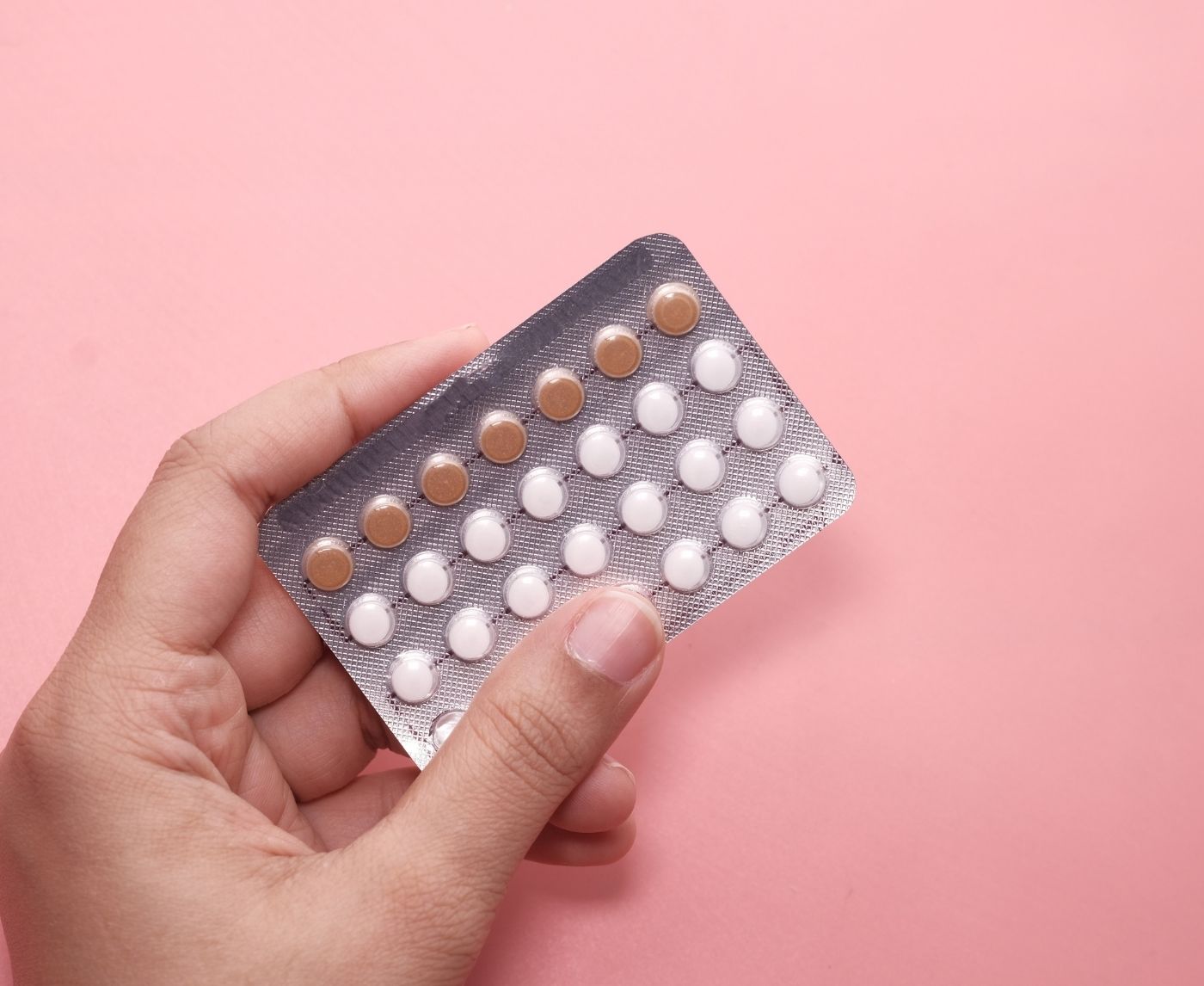
Estrogen-containing methods produce a different pattern. The combination pill, the patch, and the ring deliver both hormones, with most pill formulations including a hormone-free interval each cycle. The drop in hormone levels during that interval is a common time for breakthrough outbreaks in people who report a hormone-cycle pattern. Continuous-use combined methods that skip the hormone-free week may reduce that specific trigger for some users.
The table below summarizes the patterns most often reported in research and patient surveys. These associations are observational. They do not prove causation in any individual case, and your own experience may not match the average.
| Method | Hormones used | Reported pattern with HSV outbreaks |
|---|---|---|
| Combined oral pill | Estrogen + progestin | Mixed reports; some users describe flares clustering around the placebo (hormone-free) week |
| Progestin-only pill (mini-pill) | Progestin only | Some studies link to increased HSV-2 cervical shedding |
| Depo-Provera shot | High-dose progestin | Most consistent reports of increased outbreak frequency in observational data |
| Hormonal IUD (Mirena, Skyla, Kyleena) | Levonorgestrel (progestin) | Localized hormone delivery; some users report flares, particularly after insertion |
| Patch / vaginal ring | Estrogen + progestin | Limited research; anecdotal flares during the start-up transition |
| Implant (Nexplanon) | Etonogestrel (progestin) | Limited research; some users report shifts in outbreak frequency |
What the research actually shows
Mainstream randomized trials have not isolated hormonal contraception as a specific HSV trigger. Most evidence comes from three sources: animal models, observational cohort studies, and patient-reported data. Each tells a slightly different part of the story.
Animal models give the cleanest mechanistic picture. Mice given medroxyprogesterone (the active hormone in Depo-Provera) showed greater susceptibility to genital HSV-2 infection and worse symptoms than controls, an effect tied to suppression of mucosal immune defenses. Studies on 17-beta estradiol have shown a different kind of effect: certain estrogen exposures appear to promote HSV-1 reactivation in lab settings. Together, these results suggest that both major sex hormones can influence HSV behavior, just through different pathways.
Human studies are messier. Some cohorts of women using hormonal contraceptives show modestly higher rates of HSV-2 cervical shedding compared with non-users. Other studies find no significant difference once age, partner-risk profile, and concurrent infections are controlled. Systematic reviews note that the evidence is suggestive but not definitive, and clinical guidelines from major organizations still recommend hormonal contraception as effective and broadly safe.
Patient-reported data fills in the texture. Online forums, peer-support communities, and case reports describe consistent patterns: outbreaks within two to four weeks of starting a new method, flares clustering around the placebo week of combined oral contraceptives, and reduction in outbreak frequency after switching from progestin-heavy methods to either combined low-dose pills or non-hormonal options.
The hormone-HSV link is real but modest. Most people on hormonal contraception do not see meaningful changes in outbreak frequency. For those who do, the effect is most often associated with high-progestin methods, and the link is reversible by switching methods. Hormonal contraception remains a safe, effective choice for most people, including those with HSV.
The period connection
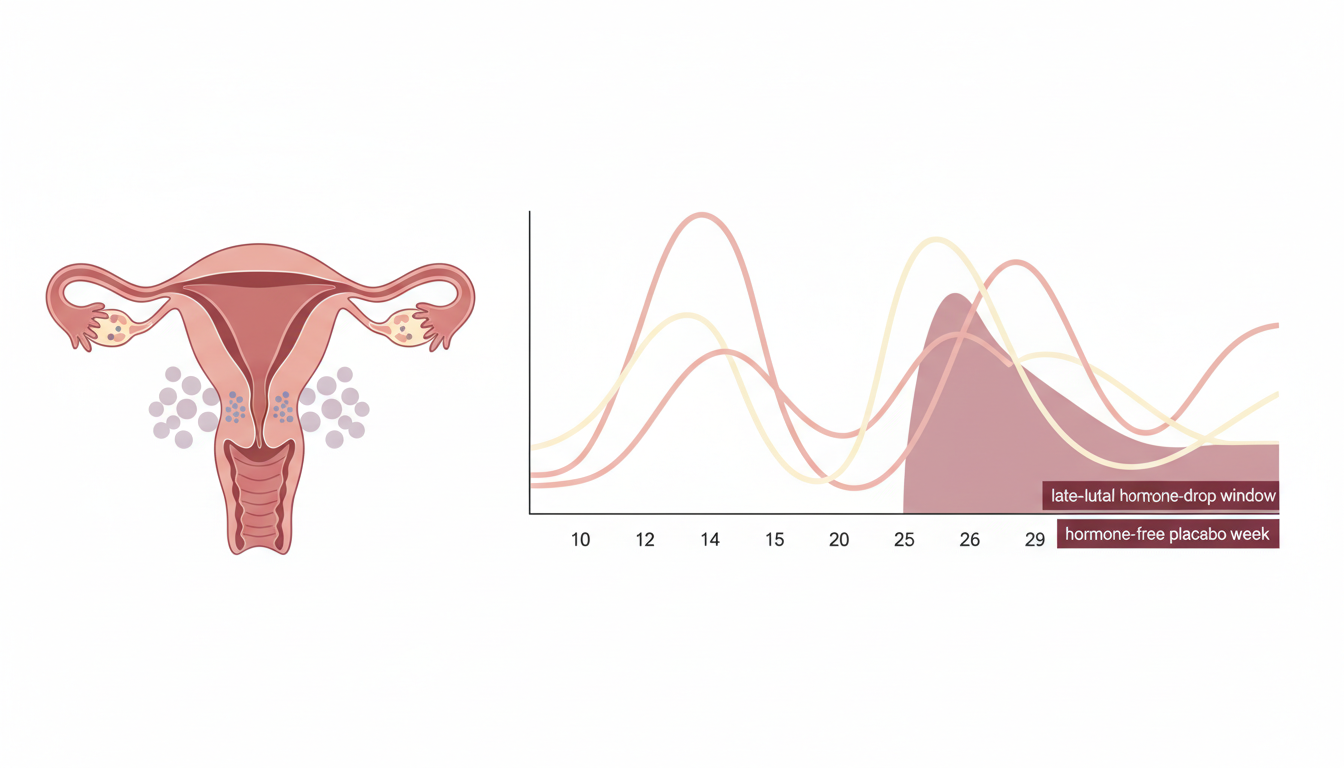
Even without contraception, many people with HSV notice outbreaks clustering around their period. The mechanism is straightforward. Estrogen and progesterone both peak in the luteal phase, then fall sharply just before menstruation begins. That late-luteal hormone drop coincides with a brief dip in mucosal and systemic immune activity. For someone with HSV in local nerve ganglia, that window is sometimes enough for reactivation.
Hormonal contraception interacts with this pattern in two ways. Combined oral contraceptives create their own monthly hormone-drop window during the placebo week, which functionally mimics the natural premenstrual dip. Some users report outbreaks that line up with this week month after month. Continuous or extended-cycle pills (designed to skip the placebo week) eliminate the regular drop and, for some, reduce period-linked flares.
The opposite pattern shows up too. People who have been suppressing their natural cycle with a hormonal method for years sometimes notice outbreak clusters returning when they stop. The cycle re-establishes itself unevenly for several months, and the variable hormone curves can be more disruptive than either steady contraception or a settled natural cycle.
Period and HSV at a glance
- Estrogen and progesterone fall sharply just before menstruation; that drop is when reactivation reports cluster most.
- Combined oral contraceptives create a similar hormone-drop window during the placebo week.
- Continuous-cycle pills that skip the placebo week eliminate the regular drop and may reduce period-linked flares for some users.
Emergency contraception and rapid hormone surges
Emergency contraceptive pills (Plan B and other levonorgestrel formulations) deliver a single high dose of synthetic progestin to delay or prevent ovulation. The hormone level spikes sharply, then falls within days. For someone with HSV, that rapid surge-and-drop functions like a compressed version of the cycle pattern: a brief immune disruption that may be enough for reactivation.
Patient reports of outbreaks within 48 to 72 hours of taking emergency contraception are common in HSV support communities. Formal research on this specific question is limited, partly because emergency contraception is taken episodically and case-controlled studies are difficult to organize.
If you have frequent HSV outbreaks and may need emergency contraception in the future, a practical step is to talk to your provider about keeping a short course of antiviral medication (acyclovir or valacyclovir) on hand. Taking the antiviral alongside the hormone dose may reduce the chance of a reactivation outbreak in the days that follow. The two medications do not have known significant interactions.
If you have a history of frequent HSV outbreaks and may need emergency contraception, a five-day course of valacyclovir or acyclovir started at the same time as the Plan B dose may reduce the chance of a reactivation flare in the 48 to 72 hours that follow. Discuss this with your provider in advance so the antiviral is on hand when you need it, not the morning after. The two medications do not have known significant interactions.
When stopping birth control triggers a flare
Stopping hormonal contraception is also a transition. The body needs time to re-establish its endogenous hormone production after months or years on synthetic versions. During the first cycles after stopping, hormone levels can fluctuate more than usual, and that variability is what some people experience as a temporary outbreak cluster.
Reports of flares in the weeks after stopping the pill, removing a hormonal IUD, or letting a Depo-Provera shot wear off are not unusual. The pattern is usually self-limited: outbreaks may cluster for one or two cycles, then settle into a new baseline that often matches the person's pre-contraception experience.
If you are planning to stop a hormonal method and have a history of frequent or severe outbreaks, consider a short course of suppressive antiviral therapy across the transition. A common approach is daily valacyclovir for the first one to three months after stopping, then reassessing once your cycle stabilizes. This is a conversation worth having with your provider before you stop, not after the first flare.
Reports of transition flares cluster in a predictable window:
- First 2 to 4 weeks: hormone levels drop and the natural cycle has not re-established. Highest reported flare frequency.
- 1 to 3 cycles in: the body re-establishes endogenous hormone production. Outbreaks often cluster around the new period weeks.
- 3 to 6 months: baseline usually settles. Outbreak frequency typically returns to a pre-contraception pattern.
If you have frequent or severe outbreaks, ask your provider about daily valacyclovir for the first one to three months across the transition.
Non-hormonal options and how they compare
Non-hormonal contraception bypasses the immune-modulation pathway entirely. Copper IUDs (ParaGard), condoms, fertility awareness methods, diaphragms, and cervical caps do not contain estrogen or progesterone, so they do not influence HSV reactivation through hormone-driven mechanisms.
That does not mean they have no effect on outbreaks at all. Copper IUD insertion can cause localized cervical inflammation and cramping in the first weeks, and some users report a single outbreak in the days after placement. Once the IUD is settled, ongoing influence on HSV is generally not reported. Per the Office on Women's Health, the copper IUD provides up to 10 years of contraception with no hormonal exposure.
Condoms reduce HSV transmission risk between partners (though not as completely as for fluid-borne infections like HIV) and have no hormonal effect. Fertility awareness requires consistent cycle tracking but introduces no medication or device interaction. Diaphragms and cervical caps offer barrier contraception with no hormone exposure, although they provide less STI protection than condoms.
For someone who has identified a clear hormonal trigger pattern, switching to a non-hormonal method is one of the most informative experiments available. If outbreak frequency drops after the switch and stays lower for at least three to six months, you have your answer.
| Non-hormonal method | How it works | Notes for HSV management |
|---|---|---|
| Copper IUD (ParaGard) | Copper-induced sperm hostility; up to 10 years | No hormonal pathway to HSV; insertion may cause brief local irritation |
| External / internal condoms | Barrier; reduces fluid and skin-to-skin contact | Reduces HSV transmission risk between partners; no hormonal effect |
| Fertility awareness methods | Cycle tracking + abstinence or barriers in fertile window | No immune impact; requires consistent and accurate tracking |
| Diaphragm or cervical cap | Barrier with spermicide; user-inserted | No hormonal effect; provides less STI protection than condoms |
What you can do if you suspect a hormonal trigger
The first step is data. Track outbreaks against your contraception timeline. Note the date of every flare, the method you are using, where you are in your cycle, and any other obvious triggers (sleep, stress, illness, recent travel, sun exposure). Three months of data is enough to start seeing patterns. Six months is better.
The second step is a structured conversation with your provider. Bring the data. Frame it as a pattern you have observed, not a complaint about the medication. Ask specifically about three options: switching to a different hormone formulation, switching to a non-hormonal method, or adding daily antiviral suppression to your current regimen. Most prescribers can support all three on a trial basis.
The third step is symptom-specific care. If outbreaks are frequent or severe, antiviral suppression is well-established and well-tolerated. Daily acyclovir or valacyclovir reduces outbreak frequency for most people and lowers transmission risk to partners. If you have not been on suppression before, this conversation is worth having even before changing your contraceptive method, since it isolates the variable.
A note on diagnosis. If you are unsure whether a recurring symptom is herpes versus another condition (yeast, bacterial vaginosis, ingrown hairs, contact dermatitis from a new product), confirm the diagnosis. Active-lesion clinic testing is the highest-yield approach. For confirming a past exposure, blood antibody testing becomes reliable around 12 to 16 weeks after initial infection.
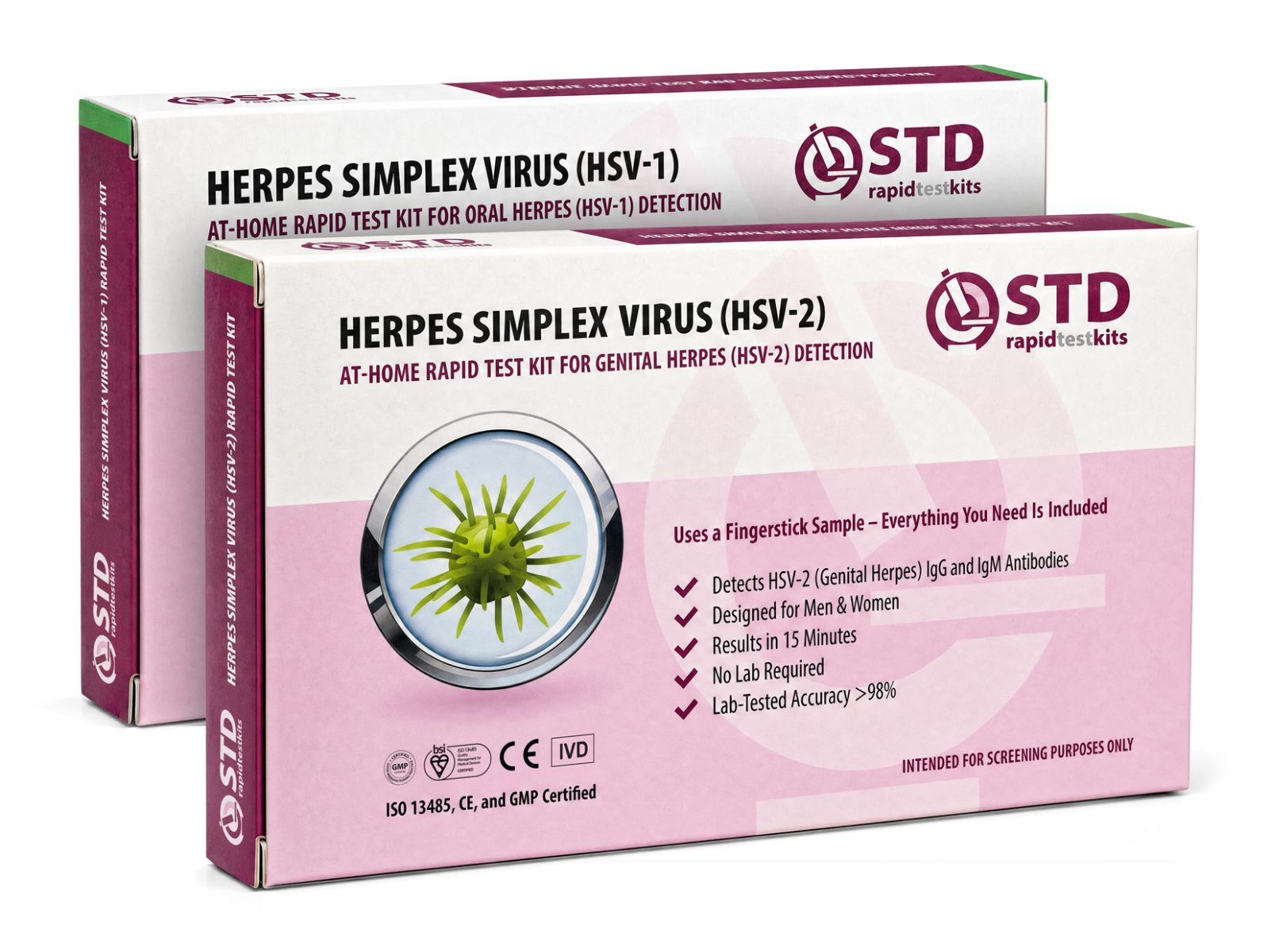
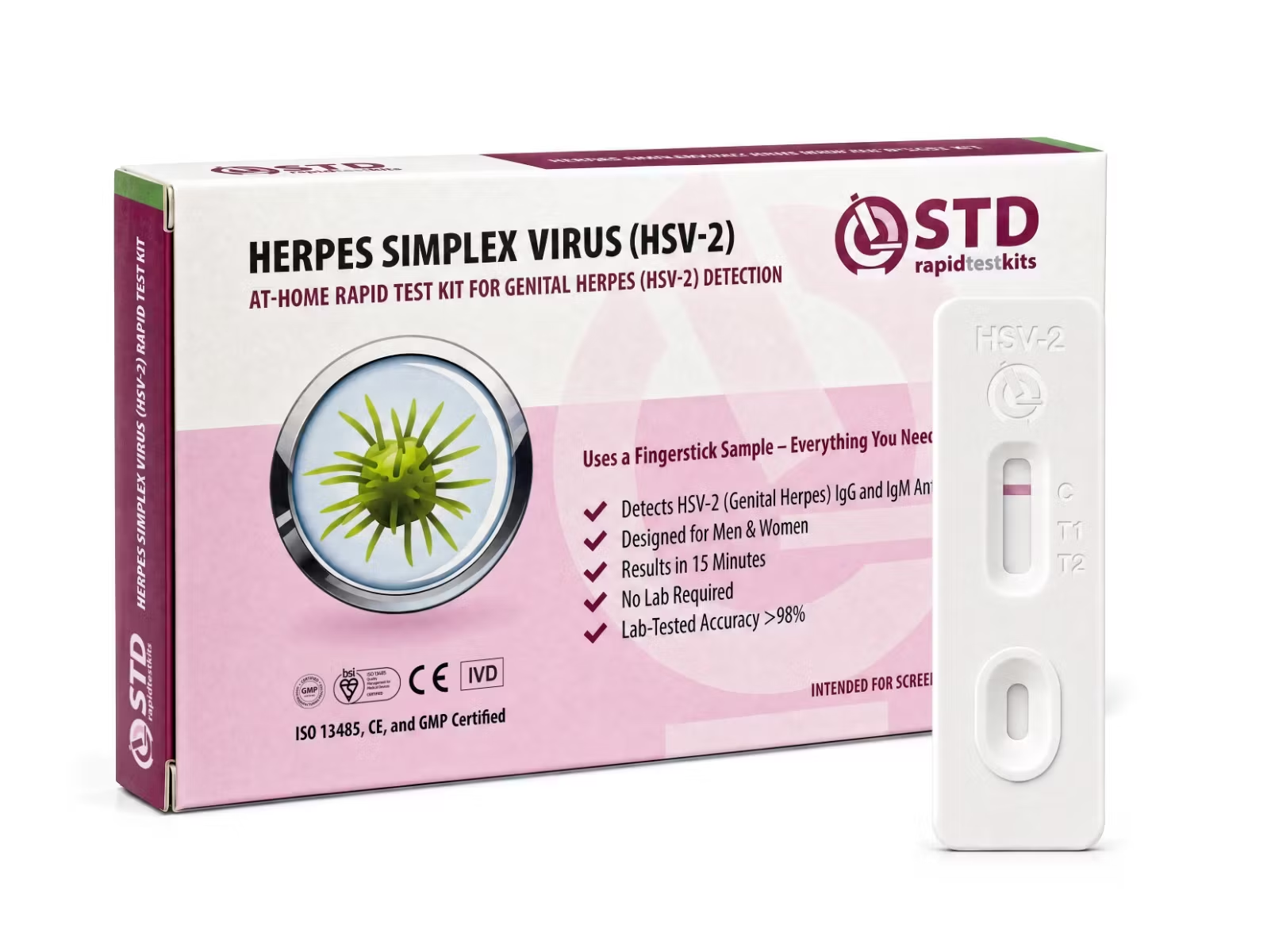
This site sells at-home rapid STI test kits. The options below reflect what is currently available in our catalog and are recommended based on fit-for-purpose, not commercial benefit.
Talking to your provider without being dismissed
This conversation does not always go smoothly. Many primary-care and OB/GYN visits are short, and the link between hormones and HSV reactivation is not a routine training topic. If you have brought the pattern up before and felt dismissed, the framing matters. Lead with data, not symptoms.
Bring your tracking log: dates of outbreaks, the contraceptive method in use at each one, and the cycle day where applicable. Frame the request as a hypothesis you would like to test, not as an accusation about the medication. Ask specifically about a trial period, what you would track during it, and what would constitute meaningful change.
If your provider is uninterested in a structured trial, a second opinion from a sexual-health specialist or a women's health nurse practitioner is reasonable. Many providers in those specialties are familiar with the hormone-HSV question and can support a trial across two or three contraceptive methods.
Try a sentence shaped like this: "I have been tracking my outbreaks for three months and they cluster in the week after I start a new pill pack. I would like to test for three more months on a non-hormonal method, or with daily valacyclovir, and see whether the pattern changes. Can we plan that together?"
Three things make this work: it leads with observed data, it proposes a defined experiment with a defined endpoint, and it frames you as a partner rather than a patient demanding a fix.
When testing makes sense
For most people with already-confirmed HSV, repeat testing is not useful. The diagnosis is in your medical record, and home tests will not change clinical management. The exception is when a new symptom does not match your usual outbreak pattern. New genital lesions, unusual discharge, or symptoms in a new anatomical location are worth confirming.
For people who suspect they may have been exposed but never received a formal diagnosis, antibody-based blood testing has a place. The window for reliable HSV antibody seroconversion is around 12 to 16 weeks after initial exposure. Testing earlier produces inconclusive results. Type-specific testing distinguishes HSV-1 from HSV-2, which matters for understanding reactivation patterns and risk to partners.
Broader STI screening is also worth considering when herpes outbreaks change abruptly. Concurrent infections (chlamydia, gonorrhea, syphilis, HIV) can affect immune function in ways that may also influence HSV recurrence. If you have new partners or new symptoms outside your usual pattern, a fuller panel removes ambiguity.
| Test now if | Skip testing if |
|---|---|
| You suspect HSV exposure but never received a formal diagnosis (and at least 12 to 16 weeks have passed) | Your HSV diagnosis is already confirmed and the current outbreak matches your usual pattern |
| Symptoms appear in a new anatomical location or look different from your usual outbreak | The flare lines up with a known trigger (period week, recent stress, recent illness) |
| You have new partners or want a broader STI panel to rule out concurrent infections | You are within the seroconversion window (less than 12 weeks since possible exposure); retest later instead |
Most people with genital herpes have no symptoms or have very mild symptoms.
FAQs
- Can hormonal birth control give me herpes?
- No. Herpes spreads through skin-to-skin contact with someone shedding the virus, not through a contraceptive method. What hormones can do is shift immune function in ways that may make a dormant infection easier to reactivate. The pill did not infect you; it may have changed the conditions that kept the virus quiet.
- Why did I get an outbreak right after starting the pill?
- The first two to four weeks of any new hormonal method are the highest-reported flare window. Your immune system, vaginal flora, and stress response are all adjusting at once, and that variability is enough for some people's HSV to reactivate. If outbreaks cluster around starting a method, log the dates and bring the pattern to your provider rather than assuming you have to ride it out.
- Which methods seem most likely to trigger flares?
- Reports point most often to high-progestin methods like Depo-Provera and progestin-only pills. Combined oral contraceptives, hormonal IUDs (Mirena, Skyla, Kyleena), the patch, and the ring sit in a middle band where some users report shifts and others report no change. Copper IUDs do not contain hormones, so they do not affect viral reactivation through that pathway.
- Can Plan B or the morning-after pill cause a breakout?
- It can, in some users. The morning-after pill delivers a high-dose hormone surge that acts like a compressed cycle event. Outbreak reports within 48 to 72 hours of taking it are common in HSV support communities. If you have a history of frequent outbreaks, ask your provider about keeping a short course of acyclovir or valacyclovir on hand to take alongside emergency contraception.
- Will stopping birth control fix the pattern?
- Sometimes. Coming off synthetic hormones lets your body re-establish its natural cycle, which for some people stabilizes outbreak patterns within two or three cycles. The transition itself can be rocky; some people get a temporary outbreak cluster in the first weeks after stopping, then settle into fewer flares. Tracking three to six months on either side of the change is the only way to see your real baseline.
- Are there safer birth control options if I have herpes?
- Many people with HSV do well on copper IUDs, condoms, fertility awareness, or barrier methods. None of these alter immune function through hormones. Each has trade-offs (copper IUDs can cause heavier periods, fertility awareness requires consistent tracking, barrier methods need consistent use), but they bypass the hormone pathway entirely. If hormones are working for you in other ways, an extended-cycle pill that minimizes hormone-free intervals may also help.
- Does antiviral suppression still work during hormonal changes?
- Generally yes. Daily acyclovir or valacyclovir keeps HSV dormant in most people regardless of hormonal state, and there are no known significant interactions with hormonal contraception. If you are noticing breakthrough outbreaks during specific hormonal windows (period week, the days after a Depo shot), your provider can adjust the dose or add short courses around predictable trigger times.
- Should I get tested if I am having outbreaks I cannot explain?
- If your HSV diagnosis is already confirmed, repeat testing is rarely needed. If you are not sure whether what you are seeing is herpes or another condition (yeast, bacterial vaginosis, ingrown hairs, contact dermatitis), an in-clinic visit during an active lesion gives the highest-yield diagnosis. For confirming a past HSV-1 or HSV-2 exposure, blood antibody testing becomes reliable around 12 to 16 weeks after initial infection.
- U.S. Centers for Disease Control and Prevention. About Genital Herpes overview covering transmission, reactivation, symptoms, and management.
- World Health Organization. Herpes simplex virus fact sheet, including global HSV-1 and HSV-2 prevalence and reactivation patterns.
- U.K. National Health Service. Genital herpes overview, symptom management, and guidance on antiviral treatment and recurrence.
- U.S. National Library of Medicine, MedlinePlus. Genital herpes patient reference covering symptoms, recurrence triggers, and treatment options.
- U.S. Office on Women's Health. Birth control methods reference covering hormonal and non-hormonal options, mechanisms, and safety.
- U.S. Centers for Disease Control and Prevention. Contraception overview including effectiveness, mechanism, and counseling guidance.
