Published: November 2025 | Last updated: May 2026 | Editorial review and quality control: Martina N.
Do antivirals cause false negative STD tests?
In most cases, no. Antivirals reduce viral replication but do not erase antibodies already formed, so blood tests for herpes, HIV, syphilis, and hepatitis stay reliable on suppression therapy. The one exception is a PCR swab of a healing herpes sore. Antibiotics treat bacterial STIs rather than hide them.
The worry usually arrives at the same time as the result. Someone on daily valacyclovir for HSV-2 sees a negative test and freezes. Someone who started acyclovir within hours of new symptoms wonders whether they outsmarted their own immune system. A reader on HIV pre-exposure prophylaxis quietly worries that the medication meant to prevent infection might mask one. Someone who grabbed antibiotics before reaching a clinic wonders whether they wiped out a chlamydia result.
In most cases, the answer is reassuring. Antivirals do not erase antibodies, hide bacterial infections, or silence standard blood tests, and antibiotics treat bacterial STIs rather than conceal them. One narrow exception involves herpes lesion swabs taken during healing, and even that is about testing timing rather than the medication itself. This guide walks through what STD tests measure, where antivirals, PrEP, PEP, and antibiotics can and cannot interfere, and what to do when a result still feels uncertain.
Key Takeaways
- Blood antibody tests for herpes, HIV, syphilis, and hepatitis measure immune memory, not current viral activity, and suppression therapy does not erase antibodies once they have formed.
- The most common cause of a false negative is testing before the window period closes. Medication is rarely the deciding factor.
Why the Question Comes Up
The concern is logical, even when the answer turns out to be reassuring. If antivirals suppress viruses, would they not also suppress the markers a test looks for? If antibiotics kill bacteria, can they erase the evidence of an infection that was there a few days ago? The answer depends on what the test measures, and most people have never been told that part clearly. Four scenarios show up in search histories almost daily, and they share one underlying anxiety: that doing the responsible thing might have undermined the test.
- Someone on daily HSV-2 suppression therapy who is dating again and wants a current read on their status.
- Someone who started acyclovir within hours of new symptoms and is now testing.
- Someone on HIV PrEP, or who just finished a 28-day PEP course, wondering whether a routine screening test still gives a reliable answer.
- Someone who took antibiotics for something unrelated, then got swabbed for chlamydia or gonorrhea, and worries the medication cleared the infection before the test could find it.
What STD Tests Actually Detect
Tests for sexually transmitted infections fall into two broad groups. Direct-detection tests look for the pathogen itself: viral genetic material in a swab, bacterial DNA in urine, viral antigen in blood. Indirect tests look for the immune response, meaning the antibodies the body produced after exposure. The distinction matters because medication interacts with these two groups very differently.
Many STD blood tests do not measure how much virus is present at the moment of the test. They measure whether the immune system has produced a response. That is why, for most people on herpes suppression therapy, an IgG blood test stays accurate: antivirals reduce replication, not the immune system's memory of an exposure. The table below summarizes what each common test measures and whether the medications people worry about can plausibly interfere.
| Infection | Common Test Type | What the Test Detects | Can Medication Reduce Detection? |
|---|---|---|---|
| Herpes (HSV-1 / HSV-2) | IgG blood test | Antibodies made by the immune system | Unlikely once antibodies have formed; suppression therapy does not erase them |
| Herpes (HSV-1 / HSV-2) | PCR swab of lesion | Viral genetic material in an active sore | Possibly, if the lesion is already healing on antivirals |
| HIV | Antigen/Antibody (4th-gen) or RNA test | HIV p24 antigen, antibodies, or viral RNA | PrEP or PEP may slightly shift the earliest detection window; ART does not erase antibodies |
| Chlamydia / Gonorrhea | NAAT (lab) or rapid lateral-flow swab (at-home) | Bacterial DNA or bacterial antigens | Antibiotics treat the bacteria; an effective course can clear infection before the test |
| Syphilis | Treponemal / non-treponemal antibody | Antibodies to T. pallidum | Not affected by herpes antivirals; antibiotics treat, but antibodies can persist for years |
| Hepatitis B / C | Antibody or RNA test | Antibodies or viral RNA | Only relevant on a hepatitis-specific therapy; herpes meds do not interfere |
The Herpes Question Everyone Is Really Asking
Most of the searches behind this article involve three suppression drugs: valacyclovir, acyclovir, and famciclovir. The phrase "can valacyclovir hide herpes" gets typed thousands of times a month. The clinical answer comes in two parts, and it depends on which herpes test you took.
A blood IgG test taken weeks or months after infection looks for antibodies the body has already produced, and those antibodies persist. Antivirals do not delete them, and daily suppression does not retrain the immune system to forget an exposure. Someone who has taken suppression therapy for two years should still show a positive antibody result if they were genuinely infected. The U.K.'s NHS notes that there is no cure for genital herpes and the virus stays in the body, while antiviral medicine manages outbreaks rather than clearing the infection.
One scenario does change the picture. Someone exposed recently who started antivirals within days, then tested very early (within the first few weeks), may get a negative result. The antiviral did not erase the virus; the immune system simply has not produced enough detectable antibodies yet. Per the CDC STD treatment guidelines, repeat type-specific antibody testing about 12 weeks after the presumed time of acquisition is the recommended path, and false-negative serology is more common at the earliest stages of infection. Some assay package inserts cite up to 16 weeks for full antibody development.
Swab testing follows a different rule. If an active lesion is present and antivirals start immediately, the sore heals faster and viral shedding drops within days. A PCR swab taken late in healing can read negative simply because too little viral DNA remains on the surface.
Daily suppressive therapy can reduce the frequency of outbreaks and lower the risk of transmitting genital herpes to sex partners.
Timing vs. Medication: Which Matters More?
Two illustrative cases show why timing usually drives the result far more than the prescription bottle on the counter.
The first is someone on daily suppression therapy for two years with no outbreaks in months. They get a routine herpes blood test, and it comes back positive for HSV-2 antibodies. That makes biological sense, because suppression therapy reduces outbreaks; it does not eliminate antibody evidence of past infection.
The second is someone with a new partner and new symptoms who starts valacyclovir within 24 hours of noticing tingling. A week later the sore is barely visible, they swab it, and the PCR result comes back negative. Most people blame the medication, but timing more often explains it. PCR tests rely on active viral shedding at the surface, and once a lesion has nearly healed, there may not be enough virus left to detect.
| Scenario | Test Type | Risk of False Negative | Main Factor |
|---|---|---|---|
| Long-term suppression, routine blood test | IgG antibody | Very low | Antibodies persist |
| Early infection, blood test within 2 to 3 weeks | IgG antibody | Moderate | Window period (not medication) |
| Active sore, swabbed within 24 to 48 hours | PCR swab | Low | High viral presence at the surface |
| Healing sore after several days on antivirals | PCR swab | Higher | Reduced viral shedding |
| HIV test on PrEP, three months after exposure | Antigen/Antibody | Very low | Markers persist outside acute phase |
HIV, PrEP, and PEP: Where Timing Questions Get Loudest
If you are on PrEP, PEP, or HIV treatment (ART), the worry makes sense on its face, because these medications directly suppress viral replication. Per CDC HIV testing guidance, fourth-generation antigen/antibody lab tests typically detect a new infection within 18 to 45 days, rapid finger-stick versions of the same generation detect HIV 18 to 90 days after exposure, and nucleic acid (NAT/RNA) tests can detect it between 10 and 33 days. The window depends mostly on test technology, not on whether someone is taking medication.
PrEP (pre-exposure prophylaxis) does not stop HIV antibodies from forming if infection occurs, though it may delay the earliest stages of viral replication, so extremely early RNA detection could shift by days to a couple of weeks. It does not make an established infection invisible. The CDC's PrEP guidance builds routine HIV testing into every follow-up visit so any breakthrough infection is caught early. Clinic follow-up usually uses a lab-based fourth-generation test; an at-home rapid HIV test is a reasonable screening tool between appointments as long as it is taken at least 18 days after the exposure of concern.
PEP (post-exposure prophylaxis) is different, because it is started after a possible exposure and can suppress early viral replication when taken correctly. The CDC's PEP page documents the 28-day course and the 72-hour start window. After finishing PEP, repeat HIV testing is standard, continuing until the relevant test's window period has fully closed.
ART (antiretroviral therapy for someone already diagnosed) drives viral load down to undetectable levels, yet it does not cause a false negative antibody test. Modern HIV screening detects both p24 antigen and antibodies, and the WHO HIV fact sheet notes that most widely used HIV tests detect the antibody response, which most people develop within about 28 days of infection. Once those antibodies are present, they stay detectable even when treatment fully suppresses the virus.
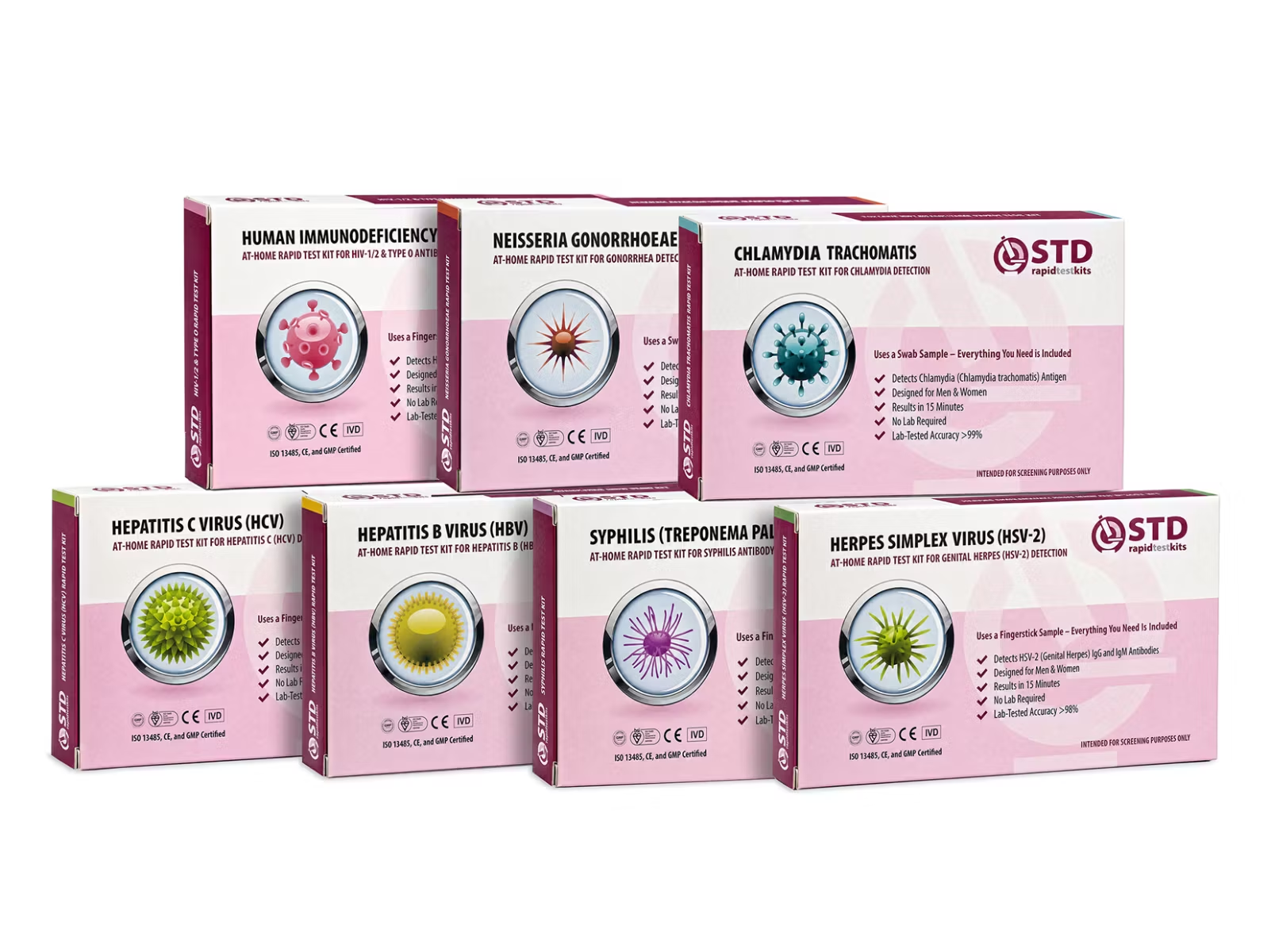
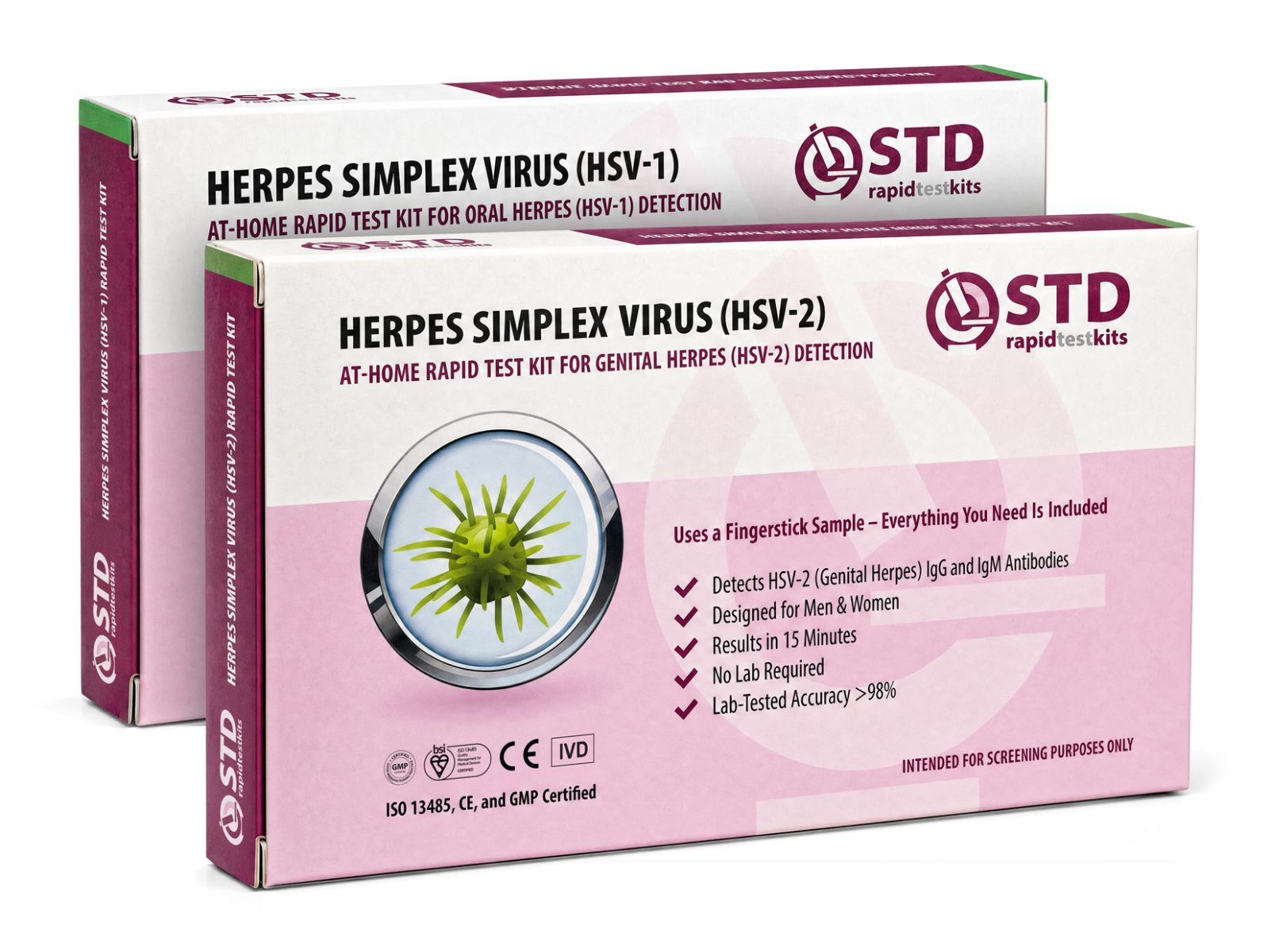
Disclosure: stdrapidtestkits.com sells at-home rapid STI test kits. Recommendations on this site are based on fit for the reader's concern, not commercial benefit.
Antibiotics and Bacterial STIs: Can Treatment Hide Infection?
Chlamydia and gonorrhea are bacterial. Labs usually find them with nucleic acid amplification tests (NAAT) or PCR that look for bacterial genetic material directly, while at-home rapid lateral-flow swabs use a different chemistry (immunoassay strips) on the same self-collected vaginal or penile swab sample. So can antibiotics make one of these tests come back negative when it should not? Yes, with a caveat.
If you took an antibiotic that works against the bacteria before testing, it may have partly or fully cleared the infection. A negative result then means the bacteria were no longer present to detect. The test is accurate; the infection was simply treated before sampling. That differs from an antiviral and a virus, because the bacteria are gone rather than hidden.
Premature retesting causes the bigger interpretive problem. Testing too soon after finishing antibiotics can pick up leftover bacterial fragments and produce confusing results. Per the CDC's chlamydia treatment guidance, a test-of-cure about 4 weeks after completing therapy is recommended for pregnant patients; for most non-pregnant patients on standard regimens, the CDC does not advise a test-of-cure but recommends routine retesting at 3 months because reinfection is common. Incomplete treatment, antibiotic resistance, or reinfection from a new partner can all complicate interpretation.
Should Antivirals Be Stopped Before Testing?
The next anxious leap usually sounds like this: should I stop my medication so the test can work properly? For a herpes blood antibody test, the answer is almost always no. If antibodies have formed, they will still be detected, and pausing therapy for a few days does not meaningfully change antibody levels in the bloodstream.
For a swab of an active lesion, early testing matters far more than stopping medication. A fresh, open sore sheds more virus, so a swab taken early is more likely to detect it. Waiting for a sore to fully appear before pausing medication often reduces the chance of confirmation rather than improving it.
A few highly specific contexts are different. Someone partway through an antiviral course for a complicated outbreak, or on combination antiviral therapy for another condition, may get different guidance from their clinician. For the average person using at-home testing or routine screening, stopping antivirals just to make a test show up is not the recommended path, and PrEP and PEP should never be paused to influence a result.
If a clinician prescribed daily suppression therapy, post-exposure antivirals, PrEP, PEP, or antibiotics, do not pause the medication just to influence a test result. Talk through the testing timeline with the prescribing clinician first. The goal is an accurate result without compromising treatment that is keeping outbreaks (and transmission risk) under control.
Medications Can Mask Symptoms, Not Lab Results
This is one of the most important distinctions in the whole topic. Medications (antivirals, antibiotics, even anti-inflammatory drugs) can genuinely change how the body feels. They reduce pain, calm sores, shorten discharge, and ease swelling, which can leave someone thinking nothing was ever there.
Molecular tests are not reading symptoms. They detect viral RNA, bacterial DNA, or antibodies in a sample or the bloodstream, so symptom relief does not equal test suppression. Medication can quiet the surface story without changing the laboratory reality. This matters most for people on long-term herpes suppressive therapy: daily valacyclovir lowers outbreaks and transmission risk, yet it does not eliminate the underlying virus or the antibodies the immune system has already made.
Reduced pain, a calmed sore, or lighter discharge usually signals that the medication is working rather than a change in what a test can detect. A PCR test still looks for viral or bacterial genetic material, and an antibody test still looks for your immune response. What matters for a result is the window period and the test method.
The Real Culprit: Testing Inside the Window Period
When people ask whether antivirals caused a false negative, what they usually ran into is the window period: the gap between exposure and when a test turns reliably positive. The pattern is familiar. You had sex on a Saturday, anxiety peaks by Wednesday, you test on Friday, and the result is negative. Because you are on PrEP, the medication becomes the suspect. Biologically, the body simply has not had time to produce detectable markers yet.
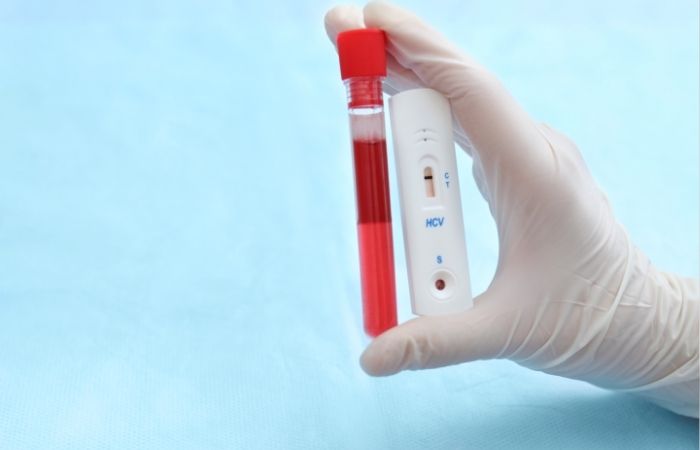
This is why a planned retest beats reactive testing. A negative result taken inside the window period, with or without medication, is not the same as a definitive negative. MedlinePlus puts it plainly for HIV: a negative result during the window period does not always mean you do not have HIV, and you may need another test later. If a swab of a nearly healed herpes sore came back negative but symptoms strongly suggested herpes, a follow-up blood test at the right timeline can confirm or rule out infection by letting the immune response reach a detectable level. Coordinating several retests is easier when you control the calendar, which is part of why at-home STI test kits appeal to people working through a multi-step timeline.
- Herpes IgG (blood): retest at around 12 weeks; some assays may need 16.
- HIV antigen/antibody: a lab venous draw typically clears at 45 days; a rapid finger-stick detects HIV 18 to 90 days. NAT/RNA tests can detect HIV between 10 and 33 days.
- Syphilis serology: antibodies are usually detectable within several weeks; a 90-day retest is conventional if the first test was very early.
- Chlamydia and gonorrhea: usually detectable within 1 to 2 weeks of exposure; retest at 2 weeks if the first test was within days of contact, and at 3 months as a routine retest after treatment.
What Really Causes a False Negative
It helps to define the term. A true false negative means the infection is present and detectable, yet the test misses it despite correct timing and technique. That is rare with modern testing. Most results people call false negatives fall into one of four ordinary categories: testing before the window period closes, testing the wrong sample type, not following the test instructions, or testing after effective treatment has already cleared the infection. Only the first overlaps at all with the medication question.
By far the most common cause is the window period. Herpes IgG testing can take 6 to 16 weeks to turn positive depending on the assay. HIV antigen/antibody lab tests detect new infection within 18 to 45 days, while rapid finger-stick versions detect HIV 18 to 90 days after exposure. Syphilis antibodies usually appear within several weeks, and standard guidance suggests retesting at 90 days if the first test was very early.
Sampling error comes second: a swab taken too late in a lesion's life, urine collected incorrectly, a rapid test read outside its timing window, or the wrong anatomical site sampled, such as a genital swab when the infection sits in the throat or rectum. The third cause is a category error, assuming that because antivirals lower viral load, a blood test measuring antibodies must read lower too, which is not how antibody-based detection works.
- Testing inside the window period before antibodies or antigen reach detectable levels.
- Sampling error: a swab taken too late, urine collected incorrectly, the wrong anatomical site sampled, or a rapid test read outside its timing window.
- Misreading what the test measures: assuming a blood antibody test reflects current viral activity, when it reflects immune memory.
Edge Cases Where Medication Slightly Shifts Timing
A handful of clinical edge cases do shift timing, by a few days to a few weeks at most. The table below covers the three situations that fuel the most anxiety, along with the expected delay in each. Notice that in every row the slowdown comes from biology and the immune response, not from the medication hiding anything.
| Scenario | Mechanism | Expected delay |
|---|---|---|
| HIV on inconsistent PrEP or very early PEP | Viral replication partially suppressed in the earliest phase; antibody response still develops if infection occurs | Days, rarely a few weeks, for the earliest RNA detection |
| Immediate high-dose antivirals during a first-ever herpes infection | Antibody development may proceed slightly more slowly | 6-week blood test may read negative; reliable by at least 12 weeks |
| Immunosuppression (advanced untreated HIV, chemotherapy, post-transplant) | Slower overall antibody production driven by the immune system, not the antivirals | Variable; testing schedule per provider |
Suppression Therapy and a Current Status Check
Plenty of people take daily suppression therapy for herpes not because they feel symptomatic, but because they want fewer outbreaks and a lower transmission risk for partners. The pill becomes as routine as a daily vitamin. Months or years later, testing comes up again: a new relationship, a partner's question, or a simple wish for current clarity.
Long-term suppression does not flip a positive herpes IgG blood test back to negative. Once antibodies have formed, they remain detectable. Suppression may slightly delay antibody development if it starts extremely early in a first infection, but once seroconversion happens the test stays reliable. Clinicians focus on exposure timing rather than on whether someone skipped a few antiviral doses before testing.
Putting It All Together
Can antivirals cause a false negative STD test? In most cases, no. They do not erase antibodies, hide bacterial infections, or silence standard blood tests. In one narrow situation, a herpes lesion swab taken late in an outbreak while on medication, reduced viral shedding makes detection harder, so the virus was harder to catch from a healing surface rather than hidden. PrEP and PEP can push the earliest HIV detection window out by days to a few weeks in very early infection, without creating permanent invisibility. Antibiotics treat bacterial STIs rather than mask them.
The useful question is rarely whether a medication sabotaged the test. It is whether you tested at the right time, with the right method. So make a plan instead of testing every few days: pick the correct follow-up window for your situation, put that date on the calendar, and step back from symptom searches until it arrives. And talk to a clinician before pausing any prescribed medication.
Two things to take away
- Match the test type to the question being asked: blood antibody tests for known or older exposures, PCR swabs for active lesions, NAAT for bacterial infections.
- Wait out the window period for recent exposures. Retest at 12 weeks for herpes serology, 45 days for HIV lab antigen/antibody (or 18 to 90 days for rapid finger-stick), at 90 days for syphilis if the first test was very early, and at 3 months as a routine retest after a positive chlamydia or gonorrhea treatment.
What to Do Next With an Uncertain Result
Was the test taken before its window period closed (a herpes IgG blood test before 12 weeks, or an HIV test before your assay's window)?
Yes: Treat the result as preliminary and put a retest on the calendar for the correct date. Note which medication you took and when, so a clinic can interpret the result accurately.
Did you swab a herpes sore that was already healing after several days on antivirals?
Yes: A negative PCR swab can reflect reduced shedding rather than no infection. Follow up with a type-specific IgG blood test 12 to 16 weeks after the exposure.
Are you thinking about pausing a prescribed medication (PrEP, PEP, suppression therapy, or antibiotics) to make a test read differently?
Yes: Do not stop on your own. Talk to the prescribing clinician about the testing timeline first.
No: If you tested after the full window with the right method for that infection, a negative result is reliable. Keep to your routine screening schedule.
Guidance only; a clinician can advise based on your specific situation.
FAQs
- Did valacyclovir cause my herpes test to come back negative?
- If the exposure of concern was within the last 12 weeks, the most likely explanation is the window period, not valacyclovir. Herpes IgG antibodies can take 6 to 16 weeks to reach detectable levels depending on the assay, with 12 weeks as the standard repeat-test timing per CDC. Suppression therapy reduces outbreaks but does not delete antibodies once they have formed. Plan a retest at 12 weeks (or 16 weeks if the original test was very early after exposure) and the timing question usually resolves itself.
- I am on PrEP and tested negative 10 days after sex. Should I trust it?
- At 10 days, even without PrEP, that is early. PrEP does not make HIV invisible, but it can slightly slow early viral replication. Plan a retest once your test's window has fully closed. Per CDC HIV testing guidance, NAT/RNA tests can detect HIV as early as 10 days after exposure with the window closing by 33 days; rapid antigen/antibody finger-stick tests detect infection 18 to 90 days after exposure.
- What if antivirals were started right at symptom onset?
- Early treatment can shorten outbreaks and reduce viral shedding, which is generally a good thing. The catch is that a PCR swab taken several days into treatment, after the sore has mostly healed, may not find enough virus on the surface to detect. The medication is not hiding herpes; timing has closed the window for surface-level testing. A follow-up blood test at 12 to 16 weeks after exposure can confirm or rule out infection.
- Can antibiotics hide chlamydia or gonorrhea from a test?
- They do not hide it; they treat it. If you took an antibiotic that works against the bacteria, the bacteria may simply be gone by the time you test. The bigger practical issue is retesting too soon after treatment and getting confusing results from leftover bacterial fragments, which is why the CDC recommends routine retesting at 3 months for non-pregnant patients and a test-of-cure at 4 weeks for pregnant patients.
- What is the biggest reason people think they have a false negative?
- Testing inside the window period, almost every time. Something feels off, worry spikes, a test goes in within days, the result is negative, and the mind reaches for an explanation. Medication is a tangible suspect, so it gets the blame. Usually the infection, if present, simply was not detectable yet. Re-testing once your test's window has closed clears up most of these cases.
- Can antivirals delay antibodies from forming?
- In very early infection, starting antivirals quickly may slightly delay antibody development. The key word is slightly; the immune system still files the record. Current public-health guidance and most assay package inserts recommend a follow-up herpes IgG test at around 12 to 16 weeks after a new possible exposure when uncertainty remains.
- I tested negative on daily suppression therapy. Can I trust it?
- If you have been on daily suppression for months or years and the negative result is from a routine status check (not after a recent exposure), the result is most likely accurate. Once HSV antibodies have formed they remain detectable, so a person taking suppression therapy who is genuinely seropositive should still show positive on a blood test. If the result is inconsistent with a prior confirmed diagnosis or earlier positive test, follow up with a clinician for a confirmatory assay rather than assuming the medication caused it.
- Does HIV treatment (ART) ever cause someone to test negative for antibodies?
- No. Once HIV antibodies are formed, they stay detectable, even when viral load becomes undetectable on treatment. Undetectable viral load means treatment is working. It does not mean the immune response disappeared.
- Should antivirals or PrEP be stopped before testing?
- For most blood antibody testing, stopping is not necessary. For active outbreaks, testing early matters more than stopping medication. A prescribed medication, including PrEP or PEP, should not be paused based on internet advice alone. A clinician can advise whether timing or method needs adjustment based on the specific situation.
How We Sourced This Article: This guide draws on current clinical guidance from major public-health authorities and on standard references about STI testing technology and window periods. Primary sources include the U.S. Centers for Disease Control and Prevention (the STD treatment guidelines for herpes and chlamydia, the HIV testing overview, and the PrEP and PEP pages), the World Health Organization HIV fact sheet, the U.K. National Health Service genital herpes page, and MedlinePlus from the U.S. National Library of Medicine. Every external link was checked against the live page during this update.
- U.S. Centers for Disease Control and Prevention. STI Treatment Guidelines, genital herpes section, covering type-specific serologic testing and the recommendation to repeat antibody testing about 12 weeks after the presumed time of acquisition.
- U.S. Centers for Disease Control and Prevention. HIV testing overview, including window periods for lab antigen/antibody tests (18 to 45 days), rapid finger-stick tests (18 to 90 days), and NAT/RNA tests (10 to 33 days).
- U.S. Centers for Disease Control and Prevention. Chlamydial infections treatment guidance, including the 4-week test-of-cure for pregnant patients and routine retesting at 3 months for others.
- U.S. Centers for Disease Control and Prevention. Pre-exposure prophylaxis (PrEP) guidance, including routine HIV testing at every follow-up visit.
- U.S. Centers for Disease Control and Prevention. Post-exposure prophylaxis (PEP) protocol, including the 28-day course duration and the 72-hour start window.
- World Health Organization. HIV fact sheet covering transmission and antibody-based diagnostic testing (most people develop detectable antibodies within about 28 days of infection).
- U.K. National Health Service. Genital herpes overview, including that the virus stays in the body and antiviral medicine manages outbreaks rather than curing the infection.
- MedlinePlus, U.S. National Library of Medicine. HIV screening test, including the window period and the point that a negative result during the window does not rule out infection.
