
Published: August 2025 | Last updated: April 2026 | Editorial review and quality control: Martina N.
Antibiotics do not cause sexually transmitted infections. They do, however, change the environment that normally keeps STI bacteria from gaining a foothold. The friendly bacteria that line your vagina, the slightly acidic pH they maintain, the cervical mucus that filters pathogens, and the immune cells in your mucosal surfaces all interact during a course of antibiotics. When you also have unprotected sex during or shortly after that course, the risk math is not the same as it would be on a normal day.
This guide explains the biology in plain terms, separates antibiotic side effects from STI symptoms, and tells you when post-antibiotic discharge or burning deserves a real test rather than another guess at the pharmacy aisle. It also covers why hormonal birth control does not stand in for condoms, and what to do if you are mid-course and worried.
Can antibiotics make you more vulnerable to STDs?
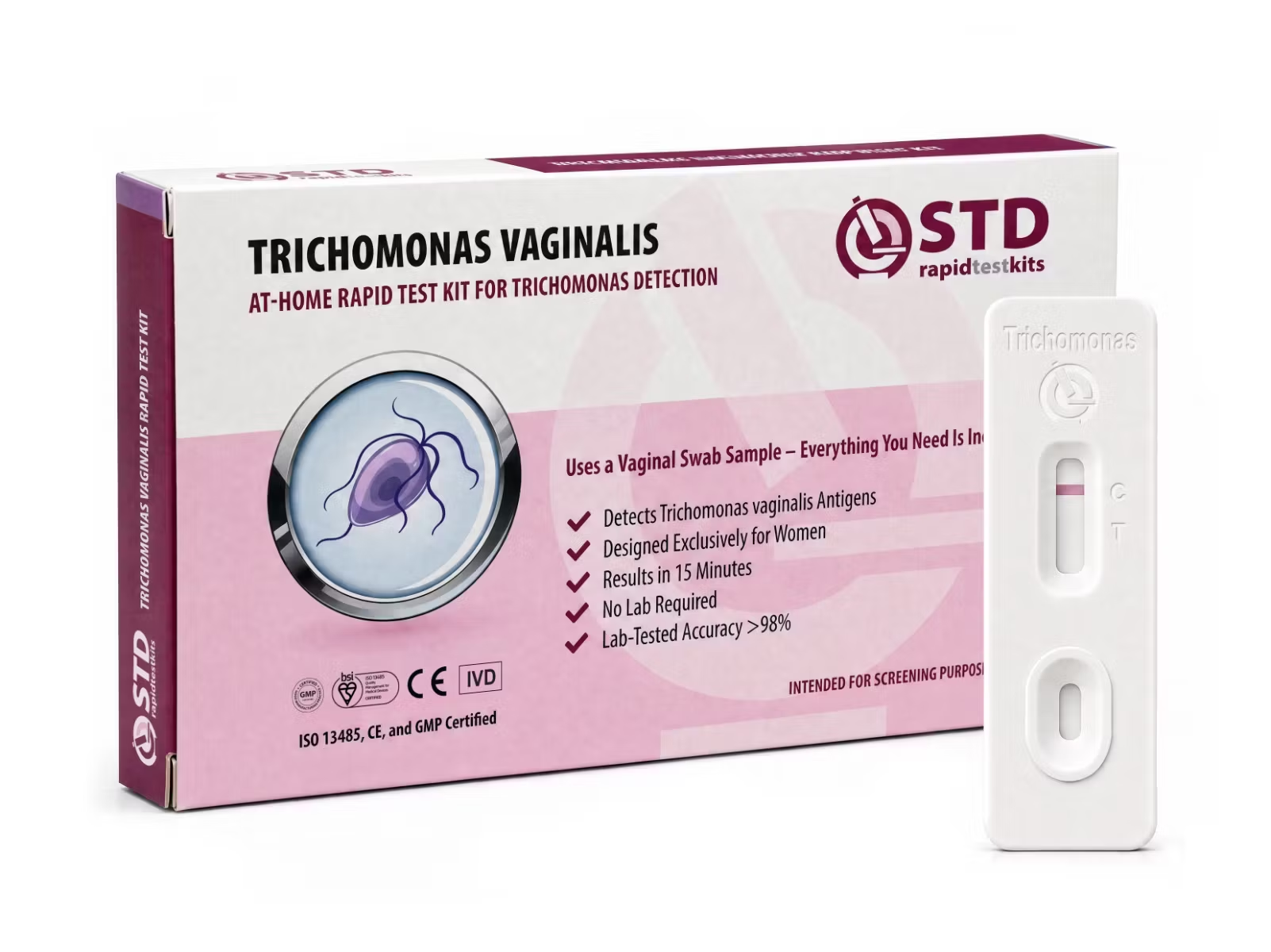
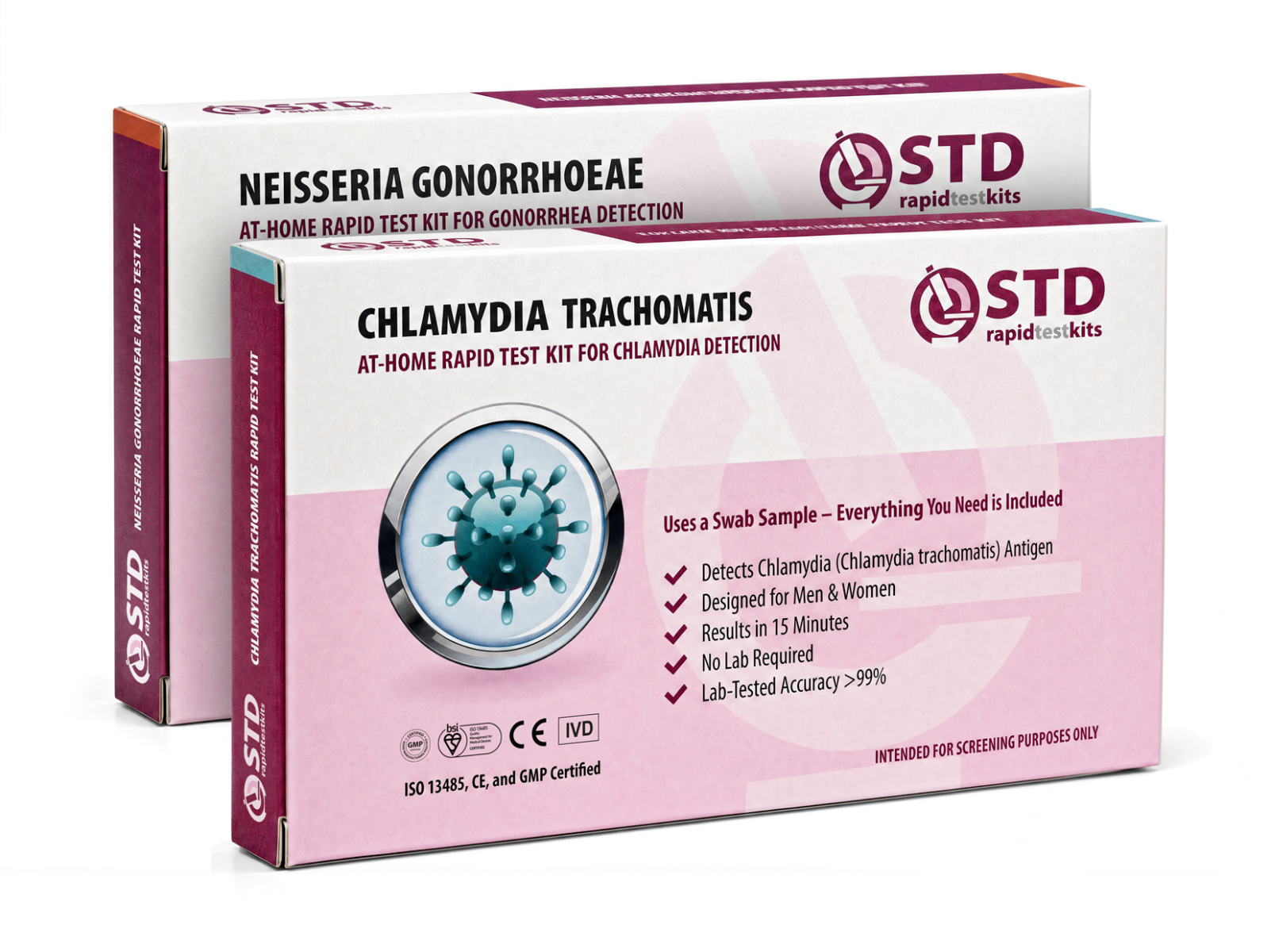
Indirectly, yes. A typical 7 to 14 day antibiotic course can reduce protective Lactobacillus, raise vaginal pH above the usual 3.8 to 4.5 range, and thin the mucus layer that ordinarily slows pathogens. Antibiotics do not transmit STIs. They can, however, create a window where condomless sex carries higher risk than usual. If you had unprotected sex during or right after a course and notice burning, unusual discharge, pelvic pain, or spotting, get tested. Common rapid kits screen for chlamydia, gonorrhea, syphilis, HIV, hepatitis B and C, and trichomoniasis (vaginal swab, female anatomy only).
Key Takeaways
- Broad-spectrum antibiotics like amoxicillin, ciprofloxacin, and clindamycin can lower Lactobacillus populations within 48 hours and shift vaginal pH for weeks after the course ends.
- Hormonal birth control prevents pregnancy, not infection. If you skipped condoms during an antibiotic course, a rapid STI panel is the only way to rule infection in or out.
How antibiotics shift the body's natural barrier
The vagina is one of the most chemically defended surfaces in the body. Beneficial bacteria, especially several species of Lactobacillus, ferment glycogen into lactic acid. Lactic acid keeps vaginal pH in a tight 3.8 to 4.5 range, hostile to most STI pathogens and to opportunistic yeast. The same bacteria also produce hydrogen peroxide and bacteriocins, small antimicrobial molecules that directly inhibit invaders. A thin layer of cervical mucus sits over this microbial mat, filtering particles and binding immune molecules called secretory IgA antibodies. Together they form a layered defense that pathogens like Chlamydia trachomatis and Neisseria gonorrhoeae have to negotiate before they can attach to host cells.
Antibiotics are not surgical. Even targeted drugs interact with bacteria at multiple body sites: the gut, the mouth, and the vagina all see population shifts within days. Broad-spectrum drugs like amoxicillin, ciprofloxacin, doxycycline, and clindamycin reduce protective Lactobacillus alongside the pathogen the prescription was meant to treat. As Lactobacillus drops, lactic acid drops, and vaginal pH rises toward neutral. Opportunistic organisms benefit from that shift, including the same STI pathogens the acidic environment normally suppresses.
The NHS notes that bacterial vaginosis reduces the body's natural defenses against infection, raising susceptibility to chlamydia and other sexually transmitted infections, a pattern that antibiotic-triggered microbiome disruption can replicate (NHS bacterial vaginosis overview).
We sell at-home rapid STI testing kits. Recommendations in this article are based on what fits the reader's actual concern, not commercial benefit. If you do not need a test, you do not need a test.
The microbiome math: why your vagina has built-in protection
The vaginal microbiome is dominated, in most healthy reproductive-age people, by one or a few Lactobacillus species. L. crispatus, L. iners, L. gasseri, and L. jensenii are the most common. These bacteria do three things at once. They acidify the environment, they crowd out competitors by sheer population density, and they secrete molecules that kill or inhibit other microbes.
This defense is sensitive to disruption. Antibiotics are one trigger. Others include douching, harsh intimate cleansers, hormonal changes around menstruation and menopause, and untreated bacterial vaginosis. When the Lactobacillus population drops, the pH climbs from acidic toward neutral, and the door opens to a different mix of bacteria, often anaerobes associated with bacterial vaginosis. Studies show that women with bacterial vaginosis have a higher likelihood of testing positive for chlamydia and gonorrhea than women with a Lactobacillus-dominant flora, and that BV during pregnancy is linked to preterm birth (NHS overview of bacterial vaginosis).
Symptom confusion: STI, yeast infection, or bacterial vaginosis
Post-antibiotic vaginal symptoms are a classic crossover problem. The same itching, burning, discharge changes, and mild pelvic pressure can come from a yeast overgrowth, from bacterial vaginosis, or from a sexually transmitted infection like chlamydia, gonorrhea, or trichomoniasis. The pharmacy aisle does not solve this question. An over-the-counter antifungal works for yeast and only for yeast.
Some patterns help:
- Yeast (candidal) infection: thick, white, cottage-cheese-textured discharge, intense itching, vulvar redness, no strong odor. Common after a course of antibiotics.
- Bacterial vaginosis: thin, grayish-white discharge, fishy odor often stronger after sex, mild itch or no itch.
- Trichomoniasis (an STI): frothy, yellow-green discharge, strong odor, sometimes itching and burning during urination. Often presents with no symptoms at all in many people.
- Chlamydia or gonorrhea: often silent. When symptoms occur, they include unusual discharge, burning during urination, pelvic pain, spotting between periods, or pain during sex.
The CDC notes that more than half of women with gonorrhea and most people with chlamydia have either no symptoms or symptoms mild enough to be mistaken for something else (CDC STI overview). After a course of antibiotics, the noise level is even higher. Self-treating with antifungals when the real problem is chlamydia delays diagnosis by weeks, and untreated chlamydia can climb into the upper reproductive tract and cause pelvic inflammatory disease.
If you have used an over-the-counter antifungal for two cycles without resolution, if you have a fever, if pelvic pain extends past your period, or if a new sexual partner is in the timeline, treat it as a testing situation rather than a yeast situation. A second failed OTC cycle is at minimum another week of delay on a treatable infection.
Why birth control does not block STDs (and why so many people think it does)
Sex education in much of the United States ties the phrase "being safe" to pregnancy prevention. The result is a real and measurable confusion. Survey data from the Guttmacher Institute and CDC reproductive health reports indicate that a substantial fraction of sexually active people associate hormonal contraception with general protection against sexual health risks, even though hormonal methods do not block any sexually transmitted infection.
The biology is simple. Combined oral contraceptive pills, the patch, the ring, hormonal IUDs, the implant, and the shot all work by suppressing ovulation, thickening cervical mucus to block sperm, and altering the uterine lining. None of those mechanisms stop bacterial pathogens like Chlamydia trachomatis or Neisseria gonorrhoeae, viral pathogens like HIV, herpes simplex, or HPV, or parasitic ones like Trichomonas vaginalis. Only condoms (external or internal) and dental dams provide a physical barrier.
Hormonal methods can also do something subtle that affects STI signaling. Some users notice changes in cervical mucus volume, breakthrough bleeding, or vaginal dryness. Those changes can mask early STI symptoms or make them easier to dismiss as a side effect of the method. Combined with an antibiotic course, the perception that "something is off but it is probably the meds or the pill" can delay testing by weeks. The CDC's STI guidance notes that barrier methods are the only contraceptive category that reduces STI risk, and that they reduce rather than eliminate it (CDC STI overview).
Reduce STI transmission: external (male) condoms, internal (female) condoms, and dental dams. They reduce risk rather than eliminate it.
Do nothing for STI risk: the pill, the patch, the ring, the shot, the implant, copper IUDs, hormonal IUDs. These prevent pregnancy only. If your contraception plan is hormonal-only, your STI plan needs a separate barrier method or a recent test.
Doxycycline post-exposure prophylaxis (doxy-PEP): what is and is not true
A search for "does doxycycline prevent STDs" usually surfaces doxy-PEP, a strategy where 200 mg of doxycycline is taken within 72 hours of condomless sex. The CDC's clinical guidance recommends doxy-PEP for a narrow population: cisgender men who have sex with men and transgender women with a history of bacterial STIs in the past year. Trial data behind that guidance showed substantial reductions in chlamydia, gonorrhea, and syphilis acquisition in those populations, which is what drove the targeted recommendation rather than a general one. The eligibility limit is intentional, because evidence in cisgender women has been mixed and resistance concerns are still being studied (CDC STI program).
Doxy-PEP is not the same as taking leftover doxycycline from a previous prescription, taking a partner's pills, or assuming that an antibiotic course for acne or bronchitis covers your STI risk.
Doxy-PEP carries eligibility criteria, follow-up testing, and resistance monitoring built into the protocol. It does not replace standard post-exposure testing on the windows below, and it is not appropriate for everyone. If you think you might benefit, raise it with a sexual health clinic rather than reaching for leftover pills.
But aren't STDs treated with antibiotics? Why being on a course is not protection
Some sexually transmitted infections are bacterial and respond to antibiotics: chlamydia, gonorrhea, syphilis, and trichomoniasis among them. Others are viral or protozoal and do not: HIV, herpes simplex, HPV, and hepatitis B and C are managed with antivirals or vaccines, not antibiotics. Even within the bacterial group, the antibiotic regimens are specific.
- Chlamydia: CDC currently recommends doxycycline 100 mg twice daily for 7 days as first line for most uncomplicated genital infections.
- Gonorrhea: a single 500 mg intramuscular dose of ceftriaxone, due to widespread resistance to older oral regimens.
- Syphilis: intramuscular benzathine penicillin G, dosed by stage of infection.
- Trichomoniasis: oral metronidazole or tinidazole, with specific dosing differences for women versus men.
An amoxicillin course for a sinus infection does not cover any of those at the right dose or duration. A cephalexin course for a skin infection does not treat gonorrhea even though both are beta-lactams. Mycoplasma genitalium, an increasingly recognized STI, is resistant to several first-line drugs and often requires resistance-guided therapy.
The other risk of assuming a current course covers STIs is that partial or wrong-drug exposure can suppress symptoms briefly without curing the infection. A test taken too soon after an unrelated antibiotic course can give a false-negative for some pathogens because of reduced bacterial load. The CDC and WHO both recommend specific testing windows for each infection and confirmatory testing for any positive screen (WHO STI fact sheet).
Most people with chlamydia have no symptoms. If you do have symptoms, they may not appear until several weeks after you have sex with an infected partner. Even when chlamydia causes no symptoms, it can damage a woman's reproductive system.
When to test if you had condomless sex on antibiotics
The right time to test depends on the pathogen, because each STI has its own window period (the time between exposure and the earliest reliable detection). Testing too early gives false negatives. Testing once and then again at the right window is the standard approach when you know the exposure date.
| Infection | Earliest reliable test window | Typical confirm window | Test type at home |
|---|---|---|---|
| Chlamydia | 14 days post-exposure | 2 to 3 weeks | Vaginal/penile swab (lateral flow) |
| Gonorrhea | 7 to 14 days post-exposure | 2 weeks | Vaginal/penile swab (lateral flow) |
| Trichomoniasis | 5 to 28 days post-exposure | Up to 4 weeks | Vaginal swab (women only at home) |
| Syphilis | 3 to 6 weeks post-exposure | 12 weeks for confirmation | Fingerstick blood (lateral flow) |
| HIV (4th-gen lab) / 3rd-gen rapid | 18 to 45 days / 23 to 90 days | 12 weeks for definitive | Fingerstick blood (lateral flow) |
| Hepatitis B | 3 to 6 weeks post-exposure | Up to 9 weeks | Fingerstick blood (lateral flow) |
| Hepatitis C | 8 to 11 weeks post-exposure | Up to 6 months | Fingerstick blood (lateral flow) |
What to do mid-course if you are worried
You do not need to wait until the antibiotic course ends to start managing STI risk. Concrete steps that help, in order of impact:
- Use condoms or internal condoms for all sexual contact during and for at least two weeks after the course ends. This is the only intervention that reduces transmission risk in the moment.
- Note the date of any condomless contact with a new or untested partner. The date sets the testing window.
- Do not start a probiotic in place of medical care. Vaginal-targeted probiotics with L. crispatus or L. rhamnosus may help microbiome recovery after the course, but they are not a substitute for testing or treatment.
- Skip douching and harsh intimate washes. Both make the microbiome shift worse, not better. Plain water, mild fragrance-free cleansers on the external vulva only, and breathable cotton underwear are enough.
- Test at the right window. If symptoms appear at any point, test sooner with a swab-based kit and follow up with a clinic if the result is positive or symptoms persist.
Antibiotics also interact with some forms of birth control. Rifampin and rifabutin, used for tuberculosis and certain other infections, are well-documented to reduce hormonal contraceptive effectiveness. Most other antibiotics, including amoxicillin and doxycycline, do not meaningfully change pill levels in clinical studies, but the older blanket warning persists in pharmacy leaflets. NHS contraception guidance covers this rifampin/rifabutin exception (NHS contraception overview).
How to support your microbiome after a course
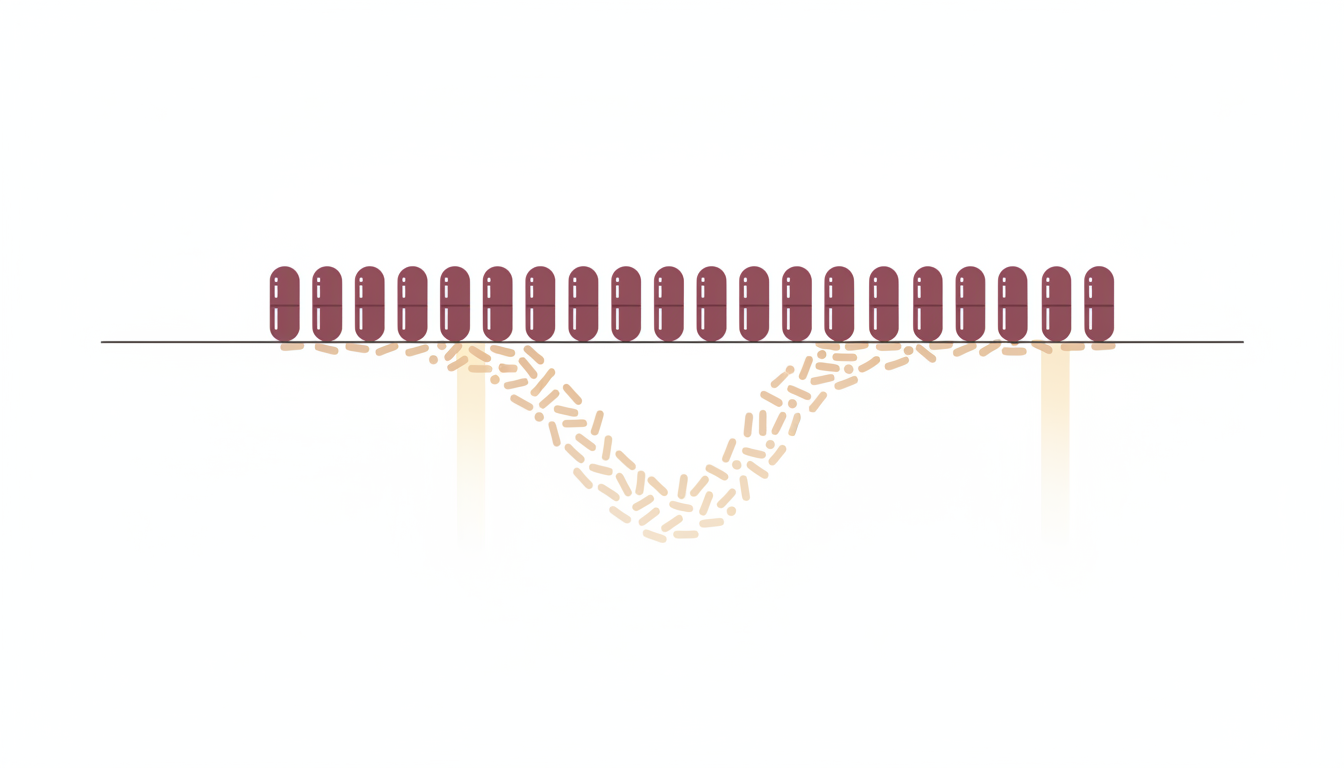
The vaginal microbiome usually recovers on its own within 4 to 6 weeks after a typical antibiotic course, faster for short courses and slower for long ones or repeated courses within a year. A few choices help that recovery and reduce the chance of the rebound becoming a yeast overgrowth or bacterial vaginosis.
- Probiotics with documented vaginal strains. Strains studied for vaginal recovery include L. rhamnosus GR-1 and L. reuteri RC-14. Effects on bacterial vaginosis recurrence are modest in trials but generally safe.
- Avoid douching and antibacterial intimate washes. Both wipe out the recovering bacteria you are trying to encourage.
- Hydration and fiber. Gut microbiome recovery influences vaginal microbiome recovery indirectly. Whole-food fiber feeds the same bacterial families.
- Limit unnecessary antibiotics. If a viral infection (cold, flu, most sore throats) is the likely cause, antibiotics will not help and will disrupt flora unnecessarily. The CDC's antibiotic stewardship guidance directly addresses this overuse pattern (CDC antibiotic use).
- Practice barrier protection during recovery. The most exposed window for STI acquisition is during and just after the course, when defensive bacteria are lowest.
What about HIV transmission risk specifically
HIV transmission risk during antibiotic courses is not a special category in CDC or WHO guidance, but the underlying conditions matter. The presence of any other STI, including bacterial vaginosis, raises HIV transmission risk per exposure by a factor of two to five depending on the infection. A disrupted vaginal microbiome with more inflammatory cytokines and a thinner mucus barrier can increase the local concentration of CD4 cells, which are the cells HIV targets. So while antibiotics do not give you HIV, a course can create conditions that, in combination with condomless sex with an HIV-positive partner not on suppressive treatment, raise risk above baseline.
A negative HIV result requires the right window. A 4th-generation antigen/antibody lab test detects most infections by 18 to 45 days after exposure. Rapid 3rd-generation antibody-only tests need longer, typically 23 to 90 days. The CDC recommends a 90-day final test for definitive results when the exposure is recent and the first test is negative (CDC HIV overview). PEP (HIV post-exposure prophylaxis) is a 28-day antiretroviral regimen that, if started within 72 hours of a high-risk exposure, can prevent HIV. PEP is a clinic decision and a separate one from any antibiotic you may be taking.
HIV post-exposure prophylaxis must begin within 72 hours of a high-risk exposure to be effective. If that window applies, go to a clinic, urgent care, or emergency room now. The at-home blood test below is for after PEP is complete, or for lower-risk exposures where PEP is not indicated. A rapid antibody test does not substitute for PEP.
Frequently asked questions
- Can antibiotics directly cause STD symptoms?
- Not directly. Antibiotics can cause yeast overgrowth, bacterial vaginosis, mild irritation, and pH-related discharge changes. Those symptoms (itching, burning, discharge) overlap closely with STI symptoms, which is why testing is the only reliable way to tell them apart after a recent unprotected exposure.
- Does birth control reduce my STD risk in any way?
- No. Hormonal birth control (pill, patch, ring, IUD, implant, shot) prevents pregnancy. None of these block bacterial or viral pathogens. Only external or internal condoms and dental dams reduce STI transmission, and they reduce rather than eliminate the risk.
- If I am on antibiotics and have unprotected sex, am I covered against STDs?
- No. The antibiotic prescribed for your sinus infection, UTI, or skin infection is dosed and chosen for that infection, not for STIs. Different STIs require specific drugs at specific doses. Doxycycline post-exposure prophylaxis (doxy-PEP) is a separate, supervised strategy with CDC guidance limited to specific populations.
- How long should I wait to test for STDs after a possible exposure?
- If you can only test once, day 14 covers chlamydia and gonorrhea, the two infections most likely to take advantage of a disrupted microbiome. For syphilis, HIV, and hepatitis B and C, follow the longer windows shown in the testing-window table above.
- Can antibiotics affect STI test results?
- It can, depending on the test. A current course of antibiotics may briefly suppress bacterial load enough to affect some lab tests, especially for chlamydia and gonorrhea. A repeat test after the course ends and at the standard window period gives the most reliable result. Antibody-based tests (HIV, syphilis, hepatitis) are not affected by short antibiotic courses in the same way.
- Do antibiotics make my hormonal birth control less effective?
- Almost never. Rifampin and rifabutin are the only antibiotics with documented effects on hormonal contraceptive levels. For every other antibiotic, the shared leaflet warning is a precaution without strong clinical evidence behind it. A condom during any antibiotic course answers both the pregnancy and STI questions at once.
- I had an antibiotic course and now have unusual discharge. Is it yeast or an STI?
- Both are possible. Thick white cottage-cheese discharge with intense itching and no odor is more consistent with yeast. Frothy yellow-green discharge with strong odor suggests trichomoniasis. Thin gray discharge with a fishy odor suggests bacterial vaginosis. Discharge with burning during urination, pelvic pain, or spotting between periods raises concern for chlamydia or gonorrhea. If antifungals do not resolve symptoms within one cycle, test.
- Should I take probiotics during an antibiotic course?
- Yes, with timing in mind. Take probiotic doses several hours apart from antibiotic doses so the antibiotic does not immediately kill the probiotic bacteria. Probiotics support microbiome recovery, but they cannot prevent STI acquisition from an unprotected exposure. If exposure happened, schedule a test on the standard window.
- U.S. Centers for Disease Control and Prevention. Sexually transmitted infections overview, including symptom presentation, asymptomatic prevalence, doxy-PEP program scope, and prevention guidance.
- U.S. Centers for Disease Control and Prevention. STI treatment guidelines, used here for first-line bacterial STI regimens (chlamydia, gonorrhea, syphilis, trichomoniasis).
- U.S. Centers for Disease Control and Prevention. Antibiotic use and stewardship resources, including patterns of overuse for viral infections and resistance impact.
- World Health Organization. Sexually transmitted infections fact sheet covering global incidence, transmission, and recommended testing approaches.
- National Health Service (UK). Bacterial vaginosis overview describing symptoms, microbiome shift, reduced natural defenses, and link to higher susceptibility to chlamydia and other STIs.
- National Health Service (UK). Contraception overview, including guidance on antibiotic interactions and the rifampin/rifabutin exception.
- U.S. Centers for Disease Control and Prevention. HIV overview including transmission risk factors, testing windows, and PEP guidance.
