
Published: August 2025 | Last updated: May 2026 | Editorial review and quality control: Martina N.
Can an STD cause joint pain?
Yes, but it is uncommon. Untreated gonorrhea can spread into the bloodstream and inflame joints and tendons (disseminated gonococcal infection). Chlamydia can trigger reactive arthritis, an immune response that inflames joints one to four weeks after the original infection, affecting roughly 2% to 4% of urogenital cases. If your joint pain followed a recent exposure, testing is the fastest way to clarify.
A swollen knee a few weeks after sex feels like a sentence with the wrong subject. Workout strain, a slept-on shoulder, dehydration, and autoimmune flares are all far more common causes than a sexually transmitted infection. In rare cases, though, certain STIs do reach the joints: sometimes the bacteria travel through the bloodstream, and sometimes the immune system, after fighting an infection, keeps firing at joint tissue by mistake. This guide covers what that link really looks like, what the timing tends to be, how diagnosis and treatment unfold, and when home testing for chlamydia or gonorrhea is the right next step versus a clinic visit.
Key takeaways
- Joint complications from STIs are uncommon but real. The two pathways are bloodstream spread (mainly gonorrhea, called disseminated gonococcal infection) and immune-triggered reactive arthritis, which the peer-reviewed clinical literature estimates affects roughly 2% to 4% of people with urogenital chlamydia.
- Reactive arthritis usually appears one to four weeks after the original infection, so the link to a past exposure is easy to miss. Most cases improve within three to six months once the trigger is treated.
How an STD Reaches the Joints
Most STIs start at mucosal surfaces. Chlamydia and gonorrhea infect the cervix, urethra, throat, or rectum. Syphilis enters at the site of contact and replicates locally. In many people, especially women and people with vaginas, those early infections are mild or completely silent (CDC chlamydia fact sheet). Silent infection is part of why complications can develop weeks later: the original signal never registered.
From there, two distinct pathways can carry an infection to the joints.
Pathway one: bloodstream spread. Untreated gonorrhea can occasionally cross from the original mucosal site into the bloodstream. Once the bacteria are circulating, they can deposit in joint linings, tendon sheaths, and skin. The clinical name is disseminated gonococcal infection, or DGI. The CDC's treatment guidelines describe DGI as uncommon but well documented, with classic features including migratory joint pain, tenosynovitis (inflammation of the tendon sheaths), and small skin lesions on the arms or legs (CDC STI Treatment Guidelines).
Pathway two: immune misfire. Sometimes the bacteria never physically reach the joint. Instead, after the immune system fights the original infection, it keeps firing at tissues that resemble bacterial proteins. The result is reactive arthritis. The most common sexual trigger is chlamydia, with gonorrhea less often implicated, and certain gut pathogens (Salmonella, Shigella, Yersinia, Campylobacter) can also do it. NHS guidance describes reactive arthritis as joints becoming sore and swollen after an infection, often a sexually transmitted infection such as chlamydia or a bout of food poisoning (NHS reactive arthritis overview). A peer-reviewed clinical summary estimates that about 2% to 4% of urogenital chlamydia cases develop some degree of post-infectious arthritis (StatPearls clinical summary).
Both pathways are uncommon. The vast majority of people with chlamydia or gonorrhea never develop joint complications.
| Infection | Mechanism | Typical timing of joint symptoms | Common joint pattern |
|---|---|---|---|
| Gonorrhea | Bloodstream spread (disseminated gonococcal infection) | Days to a few weeks after infection | Migratory pain across multiple joints, often wrists, fingers, ankles, knees |
| Chlamydia | Immune-triggered reactive arthritis | 1 to 4 weeks after infection | Asymmetric pain in knees, ankles, feet, sometimes lower back |
| Syphilis (later stages) | Systemic inflammatory response | Months to years if untreated | Deep bone or joint discomfort, less localized |
| HIV (advanced) | Immune dysregulation | Variable | Diffuse joint and muscle aches |
Disseminated Gonococcal Infection: What It Actually Feels Like
DGI rarely announces itself with one dramatic symptom. It tends to show up as a cluster.
The classic presentation is sometimes called the arthritis-dermatitis syndrome: tender swollen joints, inflammation of the tendon sheaths (especially in the wrists, fingers, ankles, or knees), and a small number of pustular or hemorrhagic skin lesions on the limbs (CDC STI Treatment Guidelines). Fever and chills can accompany the joint findings. The pain often migrates: a wrist hurts on Monday, an ankle on Wednesday, a knee by the weekend.
A second, less common presentation is purulent arthritis, where a single joint (often a knee) becomes severely inflamed and hard to move. This pattern needs urgent evaluation because it can damage joint cartilage if left untreated.
Two things make DGI easy to miss. First, genital symptoms are often absent. Many people with DGI never noticed discharge or burning, because the original infection sat at a mucosal site that produced no loud signs. Second, the joint pattern resembles other inflammatory conditions, including viral arthritis and early rheumatologic disease, so the initial workup sometimes starts down the wrong path.
What tips the balance toward STI testing is context: a new partner in the past few weeks, a known exposure, or a partner treated for chlamydia or gonorrhea. Add joint pain plus a faint rash plus a low-grade fever, and the case for screening becomes straightforward.
High fever (above 38.5C / 101F), severe joint swelling, inability to bear weight on the affected joint, eye pain with vision changes, or rapid worsening over hours all need urgent in-person evaluation. Disseminated gonococcal infection often requires intravenous antibiotics, which a home rapid test cannot deliver.
Reactive Arthritis: When the Immune System Keeps Firing
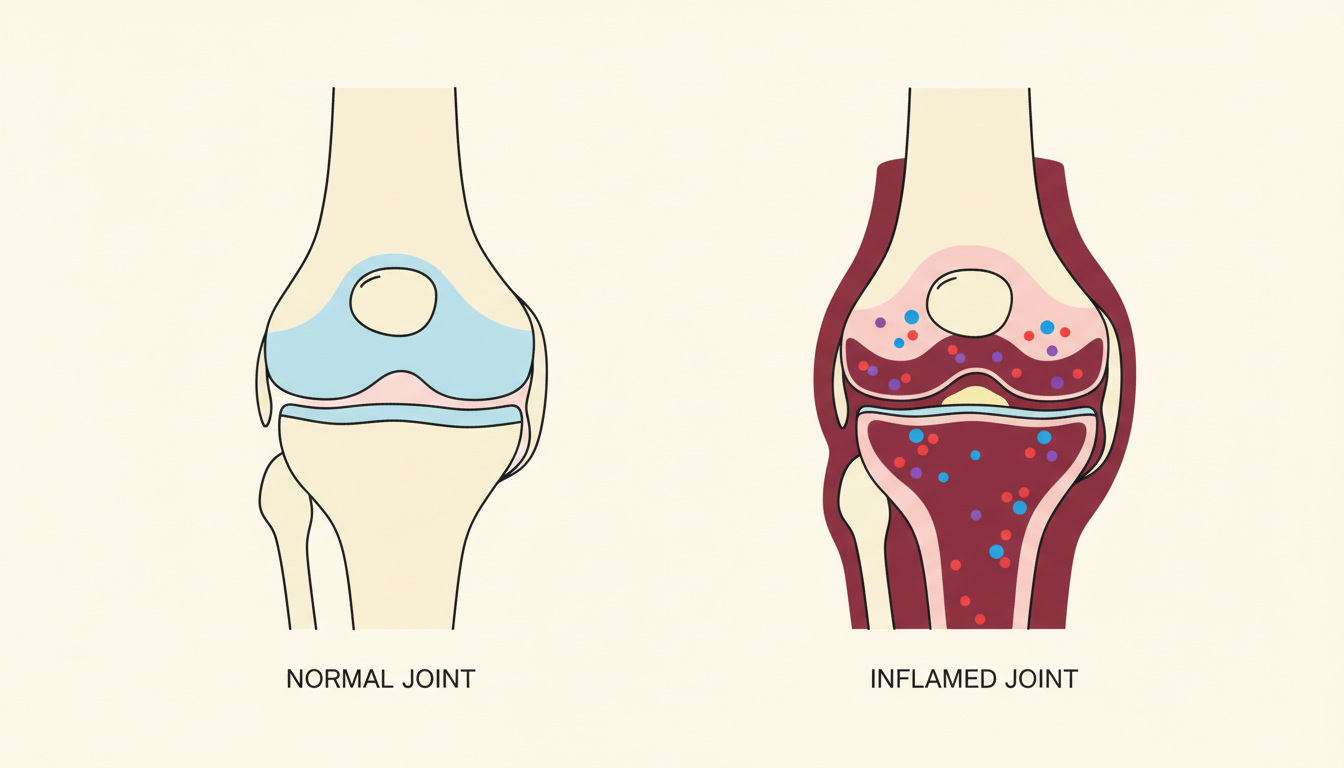
Reactive arthritis (called Reiter syndrome in older medical literature) is the most common sexually triggered joint condition in younger adults. The mechanism is an immune overreaction to the original infection, not bacteria invading the joint. Fluid drawn from a swollen joint typically grows nothing in a lab culture; the joint itself is sterile.
A helpful mental picture: a smoke alarm that keeps blaring after the smoke has cleared. The original threat is gone, but the alarm does not know that yet. After an infection, immune cells release signaling proteins called cytokines that recruit reinforcements and clear debris. In reactive arthritis, that protective response overshoots. The rheumatology literature proposes two contributing mechanisms. Bacterial protein fragments may persist even after antibiotics clear the active infection, keeping the immune response engaged in genetically susceptible people. Separately, structural similarities between bacterial antigens and the body's own joint proteins can lead the immune system to keep targeting joint tissue long after the bacteria are gone.
Chlamydia is the most common sexual trigger; gonorrhea, gastrointestinal pathogens, and other infections can also do it (NIAMS reactive arthritis overview). The shared feature is timing: symptoms typically appear one to four weeks after the original infection.
The classic triad clinicians watch for is arthritis, conjunctivitis (red, irritated eyes), and urethritis (burning urination). Not everyone gets all three. Many people develop only the joint symptoms. The pattern tends to be asymmetric: one knee may be obviously swollen while the other stays normal, or one heel hurts while the other does not. Pain that eases with movement but worsens with rest points toward inflammation rather than a mechanical injury, which usually behaves the opposite way.
One genetic factor matters. People who carry the HLA-B27 immune marker have a higher chance of developing reactive arthritis after a triggering infection, and a higher chance of more persistent symptoms (American College of Rheumatology patient resource). Most people do not know their HLA-B27 status, and routine screening for it is not recommended. The marker does not guarantee reactive arthritis, and plenty of cases occur without it. The condition is most often seen in adults between 20 and 40, which overlaps with the group that has the highest rates of asymptomatic or undertreated chlamydia.
Most cases improve within three to six months. The NHS notes that reactive arthritis usually goes away within six months, though for some people it lasts longer or returns, and a minority develop longer-term joint disease (NHS reactive arthritis overview). Early identification and treatment of the triggering infection improve the odds.
Enthesitis: heel pain (Achilles or plantar) from inflammation where tendons attach to bone.
Dactylitis: a single toe or finger swollen end to end, sometimes called a sausage digit in clinical notes.
Conjunctivitis: a gritty or watery red eye that flares alongside the joints. Skin and mucous-membrane signs (a rash on the palms or soles called keratoderma blennorrhagicum, plus painless mouth ulcers and circinate balanitis) are less common but documented in the clinical literature.
What STI-Related Joint Pain Looks Like
STI-linked joint pain has a recognizable shape. It tends to be asymmetric, often favors the lower body, and shows up weeks rather than hours after an exposure. The checklist below gathers the signs clinicians weigh when deciding whether a swollen joint deserves an STI workup. No single item confirms an infection; together they raise or lower the odds that testing is worth doing.
Signs Joint Pain Might Be Linked to an STI
Having one or more of these does not confirm an STI. Only testing plus a clinical evaluation can do that.
- Joint pain or swelling that began one to four weeks after a new sexual exposure Common
- Asymmetric swelling: one knee or ankle clearly affected while the other stays normal Common
- Pain that eases with movement and worsens after rest Common
- Heel or Achilles pain where the tendon meets the bone (enthesitis) Less common
- A single toe or finger swollen end to end, like a sausage (dactylitis) Less common
- Red, gritty, or watery eyes (conjunctivitis) flaring alongside the joints Less common
- Low-grade fever, a faint rash, or a return of urinary symptoms Less common
- Small pustular or blood-spotted skin lesions on the arms or legs with migratory joint pain Rare
Reactive Arthritis vs Disseminated Gonococcal Infection
Both can produce a swollen, painful joint after a sexually transmitted infection, but they are different problems with different treatments. Reactive arthritis is an immune reaction in a sterile joint. Disseminated gonococcal infection is live bacteria in the bloodstream that can seed the joint itself. Telling them apart guides everything that follows, from whether intravenous antibiotics are needed to how quickly you should be seen.
Reactive Arthritis vs Disseminated Gonococcal Infection
| Feature | Reactive arthritis | Disseminated gonococcal infection |
|---|---|---|
| Mechanism | Immune reaction after a cleared or clearing infection | Live bacteria spreading through the bloodstream |
| Joint fluid culture | Sterile, no bacteria recovered | May grow Neisseria gonorrhoeae |
| Fever | Uncommon | Common |
| Onset relative to infection | 1 to 4 weeks after | During or shortly after active infection |
| Typical treatment | NSAIDs, sometimes steroids or DMARDs | Urgent intravenous antibiotics |
The same swollen joint can have two very different causes, and the treatments are not interchangeable.
How Doctors Arrive at a Diagnosis
There is no single blood test that confirms reactive arthritis. Diagnosis is clinical, which means a doctor builds the case from history, examination, lab work, and ruling out alternatives. The sequence usually looks like this:
- Detailed history. Recent infections, sexual-health exposures, prior STI testing, gastrointestinal illness (reactive arthritis can also follow certain gut infections), and the timeline of joint symptoms.
- Examination. Looking for asymmetric joint swelling, enthesitis at tendon insertion sites, dactylitis, and any eye, skin, or mucous-membrane signs.
- Blood work. Inflammatory markers like ESR and CRP are often elevated. HLA-B27 testing is not required for diagnosis but supports the picture when positive.
- Joint fluid analysis. If a joint is significantly swollen, aspiration helps rule out septic arthritis (a true joint infection) and gout. Joint fluid in reactive arthritis is sterile.
- Repeat STI testing. Confirming whether the triggering infection has cleared, or whether reinfection occurred.
The American College of Rheumatology notes that diagnosis is a pattern of clinical clues rather than a single confirmatory test, which is why an unhurried, complete history matters so much. That includes saying out loud, even when it feels awkward, "I had chlamydia three weeks ago and now my knee is swollen." The National Institute of Arthritis and Musculoskeletal and Skin Diseases describes the condition as developing in reaction to a bacterial infection in the digestive or urinary tract or the genitals, with joint symptoms typically setting in only after the original infection has cleared.
The Exposure-to-Symptom Timeline
If you are trying to connect a recent encounter with a current ache, timing matters a lot. Joint complications from STIs almost never appear the morning after sex. They take time, either for bacteria to spread or for the immune system to mount its delayed response. By the time the joints start hurting, the original encounter can feel like old news.
The table below shows the rough exposure-to-symptom windows for the infections most often linked to joint complications, along with the windows for at-home rapid detection.
| Infection | Window for at-home rapid detection | Joint symptom onset (if it occurs) | Urgency level |
|---|---|---|---|
| Gonorrhea | About 7 to 14 days after exposure | Days to a few weeks if disseminated | Prompt medical evaluation, especially with fever |
| Chlamydia | About 7 to 14 days after exposure | 1 to 4 weeks if reactive arthritis develops | Test and discuss symptoms with a clinician |
| Syphilis | About 3 to 6 weeks after exposure (antibody-based) | Months to years if untreated | Requires staged evaluation and confirmatory bloodwork |
When Joint Pain Is Probably Not an STI
Most joint pain has nothing to do with sexual activity. Overuse injuries, autoimmune conditions like rheumatoid arthritis, viral infections unrelated to sex, dehydration, and even stress can all produce joint discomfort.
Symmetrical pain in both hands, long-standing morning stiffness lasting more than an hour, or a family history of autoimmune disease points more toward rheumatologic conditions than STIs. Sudden pain that started during a workout, with swelling localized to one joint and no systemic symptoms, looks much more like a mechanical injury. Pain that fluctuates over many months, with no fever or rash and no recent exposure, generally lives in the autoimmune or orthopedic camp.
The table below summarizes the patterns clinicians use to sort signal from noise.
| Feature | Infectious (STI-related) pattern | Mechanical injury pattern | Autoimmune pattern |
|---|---|---|---|
| Onset | Days to weeks after exposure | Immediate after strain or trauma | Gradual over months |
| Systemic symptoms | Fever, rash, urinary symptoms possible | Absent | Fatigue, prolonged morning stiffness |
| Joint distribution | Often asymmetric, sometimes migratory | Single injured joint | Symmetric small joints common |
| Response to rest | Limited improvement, may worsen | Usually improves with rest | Variable |
When (and How) to Test
For chlamydia and gonorrhea, the at-home rapid swab tests sold here use lateral-flow immunoassay chemistry. They take the same self-collected sample type that labs run through a NAAT, but the chemistry differs. Lateral-flow strips give a result in about 15 minutes at home; lab NAATs run in a clinical laboratory and have higher analytical sensitivity. The two are complementary. A home test is useful for fast, private screening, and a positive result is worth confirming with a lab NAAT, especially before partner notification or treatment.
The at-home rapid tests are most reliable starting about 7 to 14 days after a suspected exposure for chlamydia and gonorrhea. Testing earlier can miss an early infection because the bacterial load may be too low to detect. Syphilis antibody tests are most reliable from about 3 to 6 weeks after exposure (CDC STI Treatment Guidelines).
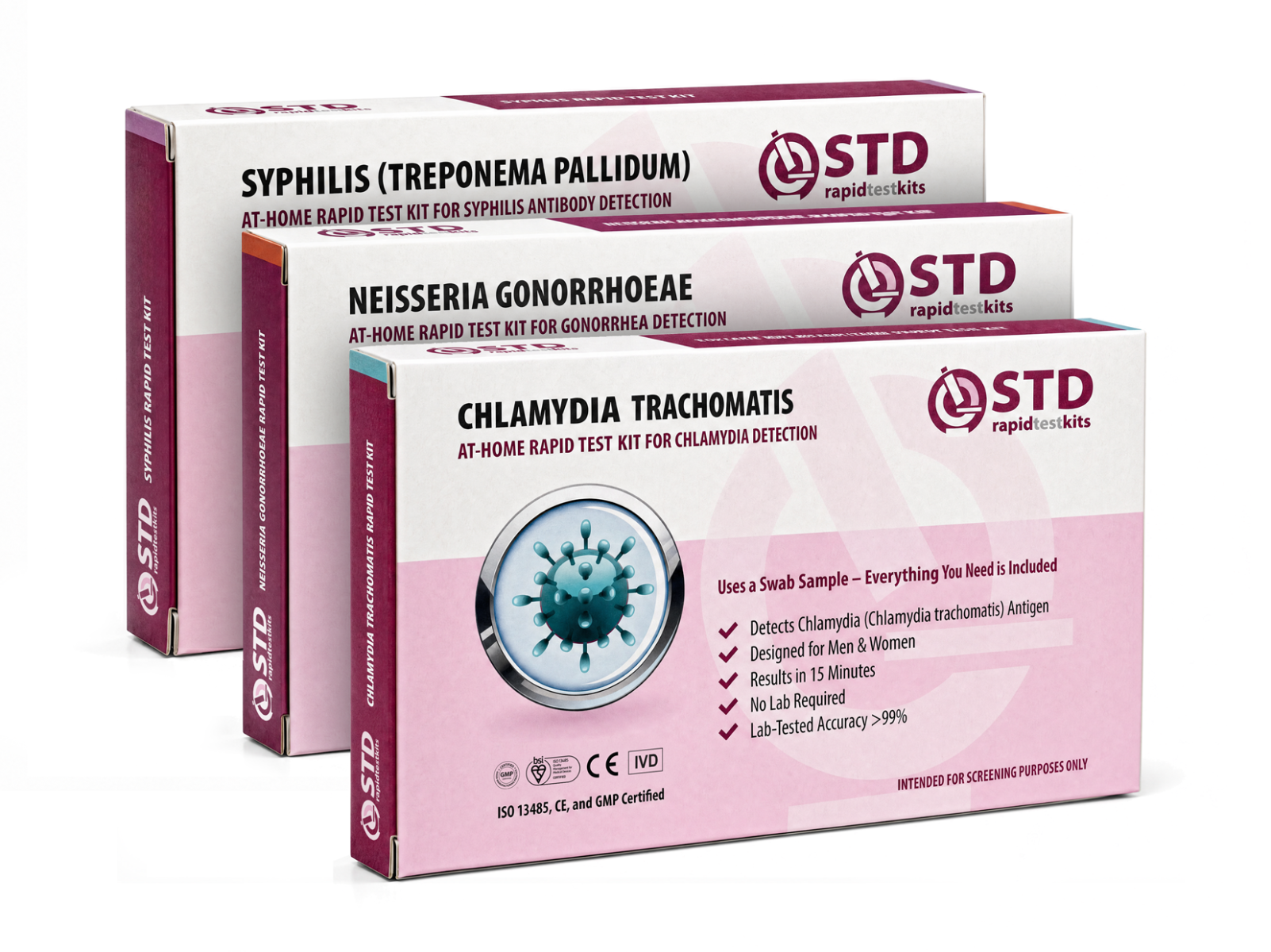
If your symptoms are mild, you are outside the danger zone described in the warning above, and you are past the basic detection window, an at-home rapid test is a reasonable first step. The 3-in-1 panel below covers the three infections most often linked to the joint patterns this article describes.
This article is published by stdrapidtestkits.com, which sells at-home STI testing kits. We recommend products based on fit for the reader's concern, not commercial benefit.
Treatment and Recovery Outlook
Treatment splits into two layers: confirm the triggering infection is fully cleared, and calm the joint inflammation while the immune system stands down.
Treat the trigger. If chlamydia or gonorrhea is confirmed, antibiotics are prescribed. Current CDC guidelines recommend ceftriaxone for gonorrhea (often combined with doxycycline if chlamydia is also suspected or confirmed) and doxycycline as the standard regimen for chlamydia (CDC STI Treatment Guidelines). For disseminated gonococcal infection, initial treatment is usually intravenous ceftriaxone, often as an inpatient or in a closely supervised outpatient setting. Sexual partners from the past 60 days should also be evaluated and treated. Even when urinary or genital symptoms have faded, treating the underlying infection still matters. Disappearing symptoms are not the same as a cleared infection.
Treat the inflammation. For reactive arthritis, nonsteroidal anti-inflammatory drugs (NSAIDs) like ibuprofen or naproxen are the usual first line. More severe or persistent cases may need short courses of corticosteroids, either oral or injected into a swollen joint. A small minority with chronic symptoms need disease-modifying anti-rheumatic drugs (DMARDs) like sulfasalazine, prescribed and monitored by a rheumatologist. For DGI, joint inflammation usually settles as antibiotics clear the underlying infection, though severe cases sometimes need joint aspiration or short-term steroid support.
Physical therapy plays a quietly important role. Gentle strengthening and mobility work keep stiffness from hardening into long-term limitation. Complete rest tends to be counterproductive after the first few acute days; supervised movement helps the joint recover its range and confidence.
| Time frame | Common experience | Medical focus |
|---|---|---|
| First 4 weeks of joint symptoms | Swelling, stiffness, and pain when standing or walking. | Confirm diagnosis, rule out septic arthritis, control acute inflammation. |
| 1 to 3 months | Gradual improvement with intermittent flares. | Anti-inflammatory therapy, physical-therapy guidance. |
| 3 to 6 months | Most patients feel substantially better. | Monitor for recurrence; reassess if symptoms persist. |
| Beyond 6 months | Persistent symptoms in a minority of patients. | Rheumatology referral and longer-term management. |
Reactive arthritis is where your joints become sore and swollen after you've had an infection. It usually affects knees and feet, but your hands, elbows, spine and tendons around joints might also be affected.
Why Retesting Still Matters After Treatment
Here is a piece of public-health guidance that often surprises people: the CDC recommends retesting for chlamydia about three months after treatment, regardless of whether symptoms returned (CDC chlamydia overview). The reasoning is straightforward. Reinfection, often from an untreated partner, is more common than people expect, and chlamydia is asymptomatic in a large share of cases. A retest catches what symptoms cannot.
When reactive arthritis is part of the picture, retesting carries extra weight. Confirming that the original infection cleared protects the joints from ongoing immune stimulation. If the test comes back positive again, antibiotic treatment can be repeated and the inflammatory load on the body is reduced.
For readers who never tested in the first place because symptoms were mild or absent, joint inflammation that began weeks after a possible exposure is a perfectly valid reason to start testing now. Reactive arthritis can follow infections that were never noticed. A discreet at-home chlamydia test is built for exactly this scenario. If a kit was used and the result was negative but you remain symptomatic, retest after the appropriate window or see a clinician for a lab NAAT, since false negatives during the early window period are the most common reason for a missed diagnosis.
The CDC recommends retesting for chlamydia about three months after treatment because reinfection is common and often without symptoms. If reactive arthritis developed from the original infection, confirming the trigger has fully cleared protects against ongoing joint immune stimulation.
Reducing Risk Going Forward
Reactive arthritis and DGI are downstream complications of untreated infections. The cleanest way to reduce the risk of either is to keep the original infections short-lived.
Three habits do most of the work. Use condoms consistently with new or non-monogamous partners. The WHO describes condoms as one of the most effective methods of protection against STIs, including HIV, when used correctly and consistently (WHO STI fact sheet). Get a baseline screen with each new partner, even without symptoms, since chlamydia and gonorrhea are frequently silent. And do not ignore short-lived urinary or genital symptoms that resolved on their own; a signal that quiets briefly can still mean bacteria are present.
Cultural narratives sometimes frame STI complications as a moral consequence. Reactive arthritis disproves that framing. It develops regardless of precautions: in people who used protection, in people who tested regularly, and in people who never had a single symptom and did not know they carried an infection. It follows the biology of an immune system that occasionally overshoots, not the circumstances of the exposure. Routine screening after each new partner is the single most reliable way to keep the triggering infection short-lived.
The Bottom Line
Joint pain after sex usually has nothing to do with the sex. Strain, sleep position, dehydration, viral illness, and overuse are all far more common explanations than an STI. The overlap zone, where joint pain plus a recent unprotected exposure plus systemic features like fever or rash all point the same way, is real but narrow.
If your story fits that overlap, screening is the fastest path to clarity. If it does not, watching your symptoms over the next week or two and a routine check-in with your provider is usually enough.
Most STI-linked joint complications respond well to treatment when caught early. The biggest factor in delayed diagnosis tends to be hesitation about testing rather than medical complexity. Pushing through that hesitation, by ordering a kit or booking a clinic visit, is the most useful single step.
Should You Test at Home or Head to a Clinic?
Do you have a high fever, severe joint swelling, an inability to bear weight, or sudden eye pain with vision changes?
Yes: Go straight to urgent care or an emergency department now. Disseminated gonococcal infection and septic arthritis need blood cultures, joint aspiration, and IV antibiotics, which a home test cannot provide.
Did your joint pain start one to four weeks after a recent unprotected exposure, alongside mild signs like a low-grade fever, a rash, or returning urinary symptoms?
Yes: Screen now. You are past the 7-to-14-day detection window for chlamydia and gonorrhea, and an at-home 3-in-1 kit covers the likely triggers. Confirm any positive with a lab NAAT before partner notification or treatment, and have partners from the past 60 days evaluated.
No: STI-linked joint pain is less likely. Watch your symptoms for a week or two and book a routine check-in with your provider. If you were treated for chlamydia, still retest at three months per CDC guidance, even if symptoms cleared.
Guidance only. A healthcare provider can advise based on your specific situation.
FAQs
- Can an STD really cause joint pain?
- Yes. The two mechanisms work differently. In disseminated gonococcal infection, live gonorrhea bacteria reach the bloodstream and seed joint linings directly, which is rare but needs urgent antibiotics. In reactive arthritis, which follows roughly 2 to 4 of every 100 urogenital chlamydia infections, the bacteria never enter the joint; the immune system inflames it by mistake weeks after the infection clears, and treatment focuses on calming that immune response rather than clearing bacteria. Knowing which pattern fits guides both the urgency and the approach.
- Why does my joint still hurt if my STD symptoms have cleared up?
- Because reactive arthritis is the immune aftermath, not the infection itself. Bacteria may already be gone, but inflammatory signaling and, in some cases, lingering bacterial protein fragments keep the immune system engaged. That mismatch between cleared infection and persistent joint pain is one of the most confusing parts of the condition. Joint fluid drawn from a reactive arthritis swelling is typically sterile, which confirms the bacteria themselves are not in the joint.
- How long after sex does STI-related joint pain usually appear?
- Almost never the next morning. Disseminated gonococcal infection typically develops days to weeks after the original infection. Reactive arthritis usually appears one to four weeks after the trigger. That gap is wide enough that people often forget about the original encounter. If joint pain started within 48 hours of sex with no systemic symptoms like fever or rash, mechanical strain or dehydration is more likely.
- If I don't have genital symptoms, could it still be an STI?
- Yes, and that is the part that surprises people most. Many chlamydia and gonorrhea infections are silent, particularly in women, people with vaginas, and pharyngeal or rectal infections in any anatomy. An absent or minor genital symptom history does not rule out a triggering infection. If the timing and other patterns fit, screening is still useful.
- How do I know it isn't just a workout injury?
- Look at the pattern. Reactive arthritis often involves multiple joints, especially in the lower body, without a clear injury moment. Morning stiffness that improves with movement, heel or Achilles pain, and a recent infection in the previous month all point toward an inflammatory cause. A sports injury typically has a specific moment of strain that this condition does not, and the pain pattern is the opposite: mechanical injuries usually improve with rest, while inflammatory joint pain often eases with movement.
- Is reactive arthritis permanent?
- For most people, no. Symptoms usually improve within three to six months and most people recover fully. A smaller group sees symptoms persist past a year or recur, and a minority need rheumatology follow-up for long-term management. Early treatment of the triggering infection, confirmed with retesting, shortens the inflammatory window. Long-term disability is uncommon when the condition is caught and managed properly.
- Can women get reactive arthritis too?
- Yes. Older clinical literature reported it more often in men, but that pattern was partly an artifact of underdiagnosis in women, whose initial chlamydia infections are more often silent. The immune mechanism applies to any gender, so a woman with an asymptomatic chlamydia infection can develop reactive arthritis just as a man can.
- Do I need to retest for chlamydia after treatment?
- Yes. The CDC recommends retesting roughly three months after chlamydia treatment, regardless of whether symptoms returned, because reinfection is common and often silent. If you have also had joint symptoms, confirming the original infection cleared is doubly important. Ongoing exposure to bacterial antigens can keep the immune system engaged and prolong joint inflammation.
- When should I go to urgent care instead of testing at home?
- Septic arthritis, where bacteria directly infect the joint, is a medical emergency that can mimic DGI in its early hours. Either condition warrants urgent care if you have severe joint swelling, inability to bear weight, high fever, or rapidly worsening symptoms over hours. Sudden eye pain with vision changes, a possible sign of anterior uveitis, is another red flag. At-home testing adds no value at that stage; go straight to urgent care or an emergency department, where blood cultures, joint aspiration, and IV antibiotics are available if needed.
- U.S. Centers for Disease Control and Prevention. Chlamydia resource (asymptomatic infection, transmission, complications, and the three-month post-treatment retest recommendation).
- U.S. Centers for Disease Control and Prevention. STI Treatment Guidelines (antibiotic regimens for chlamydia and gonorrhea, presentation and management of disseminated gonococcal infection, syphilis testing windows).
- UK National Health Service. Reactive arthritis overview (definition, joints affected, infection triggers, and recovery timeline).
- National Institute of Arthritis and Musculoskeletal and Skin Diseases. Reactive arthritis health topic (clinical definition, triggering infections including chlamydia, infection-trigger mechanism, treatment options).
- American College of Rheumatology. Reactive arthritis patient-education resource (HLA-B27 risk marker, diagnostic pattern, management discussion).
- World Health Organization. Sexually transmitted infections fact sheet (epidemiology, prevention including condom efficacy, screening recommendations).
- StatPearls (NCBI Bookshelf). Peer-reviewed clinical summary of reactive arthritis (2% to 4% post-urogenital incidence estimate, HLA-B27 association, dermatologic manifestations including keratoderma blennorrhagicum and circinate balanitis).
