
Published: August 2025 | Last updated: May 2026 | Editorial review and quality control: Martina N.
Burning, itching, or feeling sore after using a sex toy is one of those moments that can turn a private experience into a quiet panic. Most of the time the body is signaling something simple: not enough lubrication, a material that did not agree with sensitive tissue, or a hygiene gap that introduced a microbe that did not belong there. But the same sensations can also flag something that genuinely needs treatment. Reading the pattern matters more than fixating on the single symptom.
This guide is built around what your body is most likely telling you, how the timing of symptoms helps separate friction from infection, and when an at-home test makes sense versus a clinic visit.
Key Takeaways
- Most burning or itching after sex toy use comes from friction, residue, or a temporary shift in vaginal bacteria. These cases usually settle within 24 to 72 hours and are not an STI.
- Symptoms that linger past three days, come with discharge, sores, odor, or follow shared or uncleaned toy use are worth screening. Common STIs in this pattern can be tested at home with a swab or fingerstick blood panel.
What Burning, Itching, or Soreness Are Actually Telling You
Most people assume post-toy discomfort is just friction, and often it is. But the body uses a small vocabulary of sensations to flag very different things. The same raw, tingling feeling can mean tissue that needs an hour or two to settle, a microbiome that has been knocked off balance, or, less commonly, an infection that was already brewing and got nudged into action by the friction.
A better question than "is this normal?" is "what pattern is this following?" Symptoms that show up immediately and fade by morning are almost always mechanical. Symptoms that drift in a day later, or that stick around past 48 hours, are usually telling a different story.
The sections below sort the most common patterns by likely cause, how long they tend to last, and what to do about each.
How a symptom behaves over the first 72 hours tells you more than how it feels in the first hour. A symptom that fades steadily is reassuring even if it was sharp at first. A symptom that drifts in slowly, or that picks up a new feature (discharge, odor, a visible bump), is worth taking seriously even if it started mild.
Different Symptoms, Different Stories
Here is how the most common after-toy symptoms tend to sort themselves out, based on when they appear and how they behave over the next few days. This is not a diagnostic chart. It is a way to stop guessing blindly so you can decide whether to wait, treat, or test.
| Symptom | Most Likely Cause | Timing | What To Do |
|---|---|---|---|
| Burning right after use | Friction or lack of lubrication | Immediate, fades within hours | Rest, hydrate, avoid reuse for a day |
| Itching within 1 to 2 days | Yeast or bacterial imbalance | Delayed onset | Monitor, consider OTC antifungal |
| Painful urination | UTI | 24 to 72 hours | Increase fluids, seek clinical care |
| Sores, blisters, or unusual bumps | Possible STI or skin reaction | Several days or longer | Get tested promptly |
| Odor or unusual discharge | BV, yeast, or STI | 1 to 5 days | Clinical evaluation or at-home test |
When It Really Is Just Friction
Friction is the most overlooked cause of burning after using a vibrator or dildo, and it is rarely about being "too rough." Duration matters. Positioning matters. So does whether enough natural arousal, or added lubricant, was actually in play.
That delayed sting you sometimes notice an hour or two later is a classic friction response. The tissue becomes mildly inflamed, blood flow normalizes, and nerve endings start broadcasting. This kind of irritation almost always settles within 24 hours.
If it does not, something else is layered on top: residue from soap, an introduced microbe, or a tissue that was more sensitive than usual that day. A water-based lubricant is usually the safest reset, since silicone lubes can sometimes interact with silicone toys and oil-based lubes can degrade many materials over time.
Is burning after using a sex toy a sign of an STI?
Usually no. The most common cause is friction or low lubrication, and most cases settle within a day. STI-linked symptoms tend to appear later, last longer, and bring company: sores, persistent discharge, odor, or pelvic pain. If symptoms last beyond 72 hours, recur, or evolve, an at-home STI test or clinic visit is the next step.
When Itching, Discharge, or Burning Lingers
This is where searches spike at 2 a.m. and where the picture genuinely changes. Itching that starts a day or two after toy use usually means the natural balance of vaginal yeast and bacteria has been disrupted. The NHS notes that vaginitis, the umbrella term for vaginal inflammation, often follows shifts in this balance and shows up as itching, soreness, or unusual discharge.
A toy that was not cleaned thoroughly can carry bacteria from one body region to another. Moving a toy from anal to vaginal use without a barrier or a wash, even once, is enough to set this off. Residual soap, harsh toy cleaner, or certain lubricant ingredients (glycerin and parabens are common offenders for sensitive users) can also irritate tissue for several days after exposure.
The pattern is what gives it away. Immediate burning is almost always mechanical. Burning or itching that crept up the next day is more likely a microbiome story. Bacterial vaginosis specifically is, according to the CDC's bacterial vaginosis page, the most common vaginal condition in women aged 15 to 44, and it often follows exactly this kind of microbial disruption.
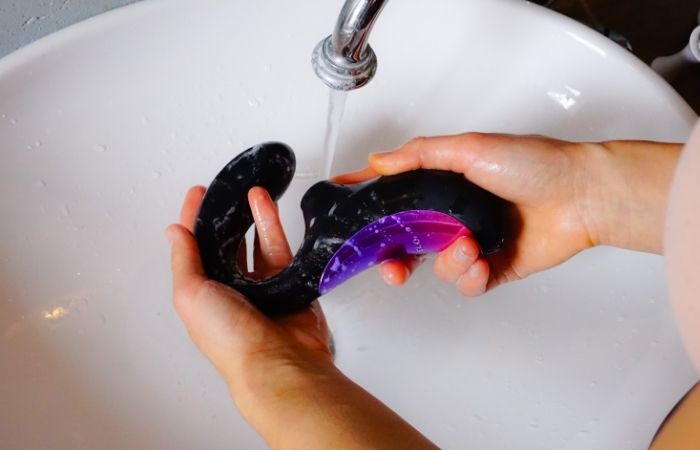
Wash the toy with warm water and a fragrance-free mild soap, then air-dry it fully before storage. Switch to a water-based lubricant for the next session. Give irritated tissue 48 to 72 hours to settle before reusing any insertable toy.
Can a Sex Toy Actually Cause an STI?
Yes, in specific circumstances. It is not the default outcome though, and the conditions matter. The CDC's STI overview describes transmission as fluid or skin contact reaching mucous membranes or broken skin. A sex toy can act as the vehicle if it was shared with a partner who has an active infection, if it carried fluids between body regions on the same person, or if microtears in skin gave a pathogen an entry point.
That includes herpes and HPV, which transmit through skin-to-skin contact, and bacterial infections like chlamydia and gonorrhea, which can survive briefly on a toy surface coated in genital fluids. Trichomoniasis, a parasitic infection, has been documented surviving on damp toys longer than most people assume. The WHO STI fact sheet reinforces that asymptomatic carriers can transmit through any route that exchanges fluids.
Risk drops sharply when the toy is solo-use, cleaned between sessions, and made of a non-porous material. What separates a toy-linked STI symptom from simple irritation is shape and persistence: sores, ulcers, raised painless bumps, persistent unusual discharge, or pelvic pain that does not resolve in a day or two all deserve a test. Plain burning that fades by morning does not.
Painless ulcers or sores, raised flesh-colored bumps, persistent unusual discharge, frothy yellow-green discharge with itching, or pelvic pain lasting more than 48 hours are pattern shifts. These belong in a testing decision, not a wait-and-see queue.
When to Watch, When to Treat, When to Test
Not every twinge needs medical attention, and ignoring the body entirely is also a poor strategy. The matrix below sorts the most common scenarios into watch, treat, and test categories, based on symptom severity and how long things have been going on.
| Situation | Best Next Step |
|---|---|
| Mild burning that fades quickly | Rest and skip toy use for 24 to 48 hours |
| Itching or irritation lasting several days | Consider OTC antifungal or clinical evaluation |
| Pain, unusual discharge, or strong odor | Seek medical advice or at-home STI testing |
| Sores, blisters, or new bumps | Get tested promptly, ideally with a panel |
| Burning on urination plus pelvic ache | Seek care for suspected UTI |
Toy Materials Most People Overlook
Not all sex toys are built the same way, and sensitive tissue can tell the difference long before you can. A lot of what feels like overuse is actually a material reaction. Lower-cost rubber and so-called "jelly" toys are porous. Microscopic pits in the surface hold bacteria, residue, and lubricant compounds even after a careful wash, and the next session reintroduces them all.
There is also the issue of plasticizers. Some imported toys still contain phthalates, the chemicals used to soften plastic, which can irritate mucosal tissue. Combine a porous, chemically loaded toy with friction, and discomfort is almost guaranteed.
Safer options are non-porous: medical-grade silicone, tempered glass, and stainless steel. They wipe clean easily, tolerate soap and water (and boiling water for non-electronic models), and do not leach softening agents. If you have had repeated, unexplained irritation, the toy itself is often the variable worth changing first.
Safer for sensitive tissue: medical-grade silicone, tempered glass, stainless steel, ABS plastic with a smooth seal. Riskier: PVC, "jelly" rubber, TPE, TPR, and any toy that does not list its material on the packaging.
Cleaning Mistakes That Quietly Cause Problems Later
Most people believe they clean their toys properly. A quick rinse under running water rarely does enough, especially on toys with seams, textures, or vibrating components that hide residue. Improper cleaning is one of the bigger reasons people end up with itching, recurring yeast, or UTIs that seem to come out of nowhere.
Here is where things usually go wrong:
- Rushing the process. A few seconds under water does not remove biofilm or residue from textured surfaces.
- Using harsh hand soap or scented body wash. Fragrances and dyes leave behind irritants that tissue reacts to later.
- Not drying fully before storage. Moisture trapped in a drawer encourages bacterial growth between uses.
- Sharing a toy across body regions without cleaning in between, especially anal to vaginal or vaginal to oral.
- Storing toys touching each other, particularly mixing materials, which can degrade silicone over time.
Infections That Sometimes Follow Toy Use
When symptoms persist or evolve, the most likely culprits fall into a short list. Using a sex toy does not directly cause an infection on its own, but it can create conditions where one takes hold: microtears, shifts in bacterial balance, or a fresh introduction of microbes from one body region to another.
The most common post-toy infections include:
- Yeast infections (vulvovaginal candidiasis). Itching, thick white discharge, and burning are the classic combination.
- Bacterial vaginosis. A fishy odor, thin gray or white discharge, and mild irritation are the usual pattern.
- Urinary tract infections. Sharp burning on urination, urgency, and lower pelvic ache, often within 24 to 72 hours of toy use.
- Trichomoniasis. A parasitic STI that can survive briefly on damp surfaces and shows up as frothy yellow-green discharge with itching.
- Herpes (HSV) and HPV transmission. Possible if a toy was shared with a partner who has the infection, particularly during shedding.
When an At-Home Panel Fits
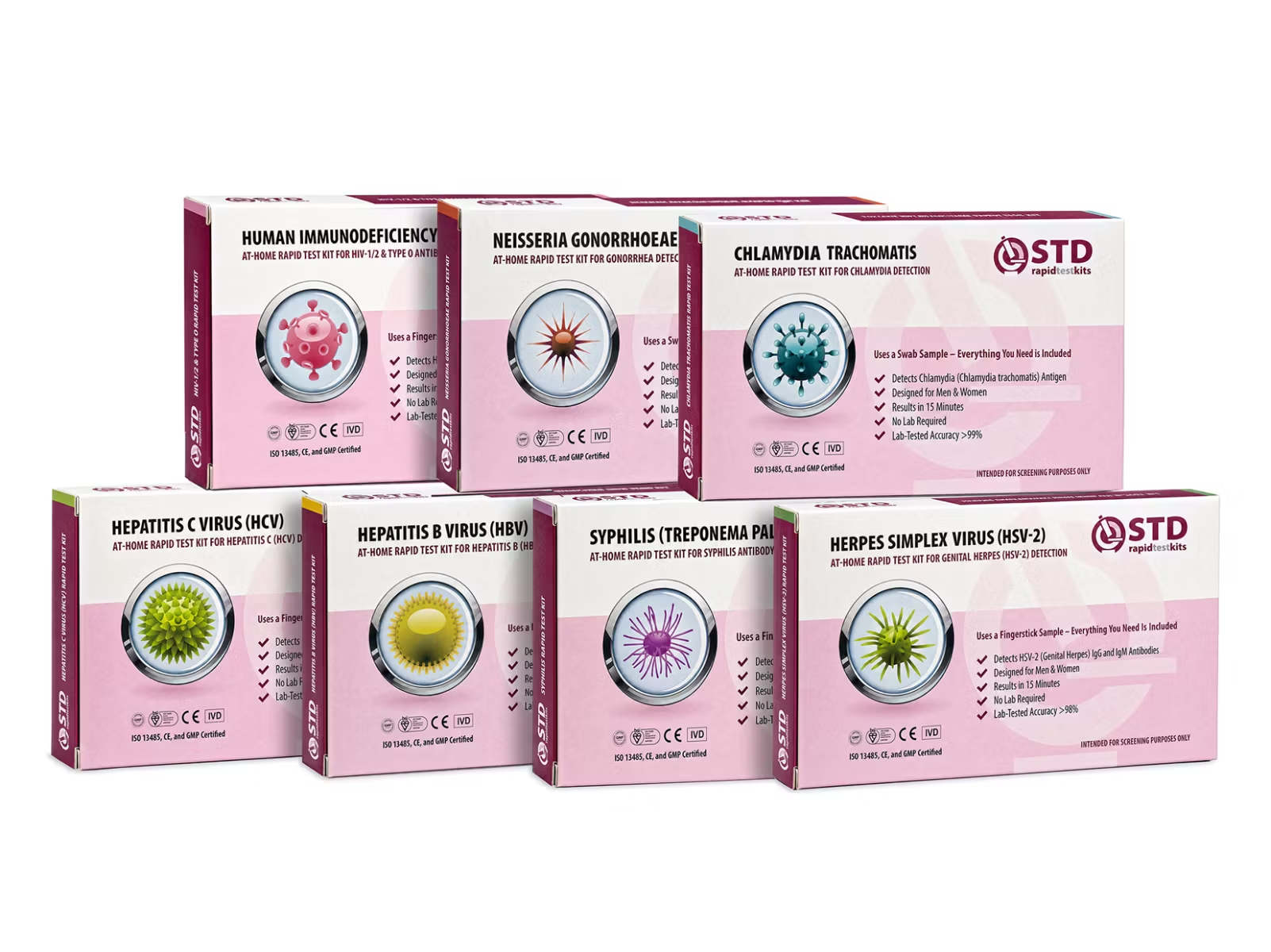
If the symptom pattern is unclear, an at-home panel cuts down on the days of uncertainty. A multi-infection swab and blood panel screens the most common STIs from a single self-collected sample. The CDC notes that many early STIs produce few or no symptoms, which is exactly why screening matters even when symptoms are mild or have already begun to fade (see the CDC STI hub for the general guidance).
This article is published by stdrapidtestkits.com, which sells the at-home STI testing kits mentioned below. Product recommendations here are based on fit for the reader's situation, not commercial benefit. A positive at-home result should always be confirmed with a lab NAAT.
How to Prevent This From Happening Again
This is not about turning intimacy into a clinical checklist. It is about a few habits that quietly remove the most common failure points without changing how the experience feels.
| Habit | Why It Matters |
|---|---|
| Use enough lubrication for the duration of play | Reduces friction and microtears in the tissue |
| Clean toys before and after every use | Prevents biofilm buildup and bacterial transfer |
| Use a fresh condom on toys shared with a partner | Lowers STI transmission risk between users |
| Wash between body regions during the same session | Prevents bacterial migration between zones |
| Choose non-porous toy materials | Easier to sanitize fully and less likely to harbor microbes |
How Symptom Timing Tells the Story
One of the most useful details when something feels off is the clock. Not just what you feel, but when. Timing helps separate friction from infection, and infection from something more serious. Most symptoms slot into one of four windows after toy use.
| When Symptoms Start | What It Usually Means |
|---|---|
| Immediately after use | Friction or material sensitivity |
| Within 24 to 72 hours | UTI or bacterial imbalance |
| 3 to 7 days later | Yeast infection, BV, or early STI |
| 1 to 3 weeks later | STI symptoms in their typical window |
What Clinicians Actually Look For
A doctor evaluating burning or itching after toy use does not focus on one symptom. They look for patterns across several axes, because a single sensation rarely tells the full story.
Location of the discomfort matters first: external vulvar irritation behaves differently from deeper vaginal or urethral pain. So does consistency, whether the sensation is constant or only triggered by touch, urination, or sitting. Progression is the third axis: improving day by day is reassuring, holding steady is neutral, and worsening is the signal that pushes toward treatment.
Associated signs shift the differential significantly. Discharge color and consistency, odor, visible sores, swelling, and fever each redirect the likely diagnosis. Recent exposures fill in the rest: a new partner, a shared toy, recent antibiotics, or recent douching all change what the most likely cause is.
When the Clinic Visit Is the Right Move
An at-home rapid kit is useful for the uncertainty zone, where the symptom is mild but unfamiliar and a clear negative or positive can end the mental loop. It is not the right tool for every situation. Sores that are opening, blisters, severe pelvic pain, fever, suspected pregnancy, or symptoms that worsen rapidly all belong with a clinician who can examine the tissue, prescribe targeted treatment, and run lab-grade NAAT testing. The NHS guide to thrush and the NHS vaginitis page are useful reads on when self-care is reasonable versus when an examination is the better route.
For situations where shared toys, multiple partners, or unknown hygiene are part of the context, a broader at-home multi-infection panel rules out several common STIs at once rather than testing one at a time. A positive at-home result should always be followed up with a lab NAAT for confirmation.
According to the <a href="https://www.cdc.gov/std/" target="_blank" rel="noopener">CDC's STI overview</a>, many sexually transmitted infections produce few or no early symptoms, which is why routine screening is the only reliable way to know your status. A negative at-home test plus symptoms that resolve on their own is solid reassurance. A positive result, or symptoms that keep evolving, is the cue to follow up with a clinician for confirmatory testing.
Frequently asked questions
- How do I tell a normal post-toy burn from something I should actually worry about?
- A normal post-toy burn shows up immediately, is mild, and fades within a day. The ones worth attention behave differently: they drift in later, last past 72 hours, or pick up extra features like discharge, odor, sores, or pain on urination. Pattern and progression matter more than the initial sensation.
- Why did the itching only show up the day after?
- Delayed itching is the body reacting to a shift, not to the friction itself. Yeast or bacterial imbalance often takes 12 to 48 hours to register as itching, as the microbe population grows past what your immune system can quietly hold in check.
- Can you actually get an STI from a sex toy used solo?
- Solo use carries very low STI risk if the toy is cleaned between sessions and is not shared. Risk rises with shared use, with moving a toy between body regions, and with toys made of porous materials that hold microbes after washing.
- How do I know if I should test or just wait?
- Wait if the symptom is mild and steadily improving over 24 to 48 hours. Test if it is unchanged or worse after 72 hours, has shifted in character (started as burning, now there is discharge or sores), or followed a higher-risk encounter.
- Should I stop using the toy in the meantime?
- Yes, at least until the tissue settles. Continuing through irritated tissue prolongs healing and can turn a minor friction injury into a microtear that lets bacteria or viruses through more easily.
- Does cleaning the toy after use undo bacterial transfer?
- Not completely. Cleaning after use reduces what gets carried into the next session, but it cannot undo bacteria that already moved between body regions during use. The within-session move matters more than the post-session wash.
- Could this be a UTI rather than an infection or irritation?
- Very possibly, especially if peeing burns sharply, you are going more often, or there is lower pelvic ache. Sex toys can push bacteria toward the urethra. UTIs typically escalate without antibiotics, so a clinical evaluation in the first day or two is the right move.
- How fast can an at-home STI test give me an answer?
- Lateral-flow rapid kits return a result within roughly 15 minutes. Timing matters more than speed though: each infection has a window period during which a test cannot reliably detect it. For chlamydia and gonorrhea, around 14 days post-exposure. For HIV via rapid antibody test, around 23 to 90 days depending on the assay generation. A positive at-home result should be confirmed by a lab NAAT.
- U.S. Centers for Disease Control and Prevention. Sexually Transmitted Infections overview, transmission routes, and screening guidance.
- U.K. National Health Service. Vaginitis symptoms, common causes, and self-care guidance.
- U.K. National Health Service. Thrush in men and women: symptoms, when to self-treat, and when to see a clinician.
- World Health Organization. Sexually transmitted infections fact sheet, including transmission routes and asymptomatic carriage.
- U.K. National Health Service. Urinary tract infections (UTIs): symptoms, causes, and when to seek care.
- U.S. Centers for Disease Control and Prevention. About Bacterial Vaginosis (BV): symptoms, transmission, prevalence in women 15–44, and treatment.
