Published: October 2025 | Last updated: May 2026 | Editorial review and quality control: Martina N.
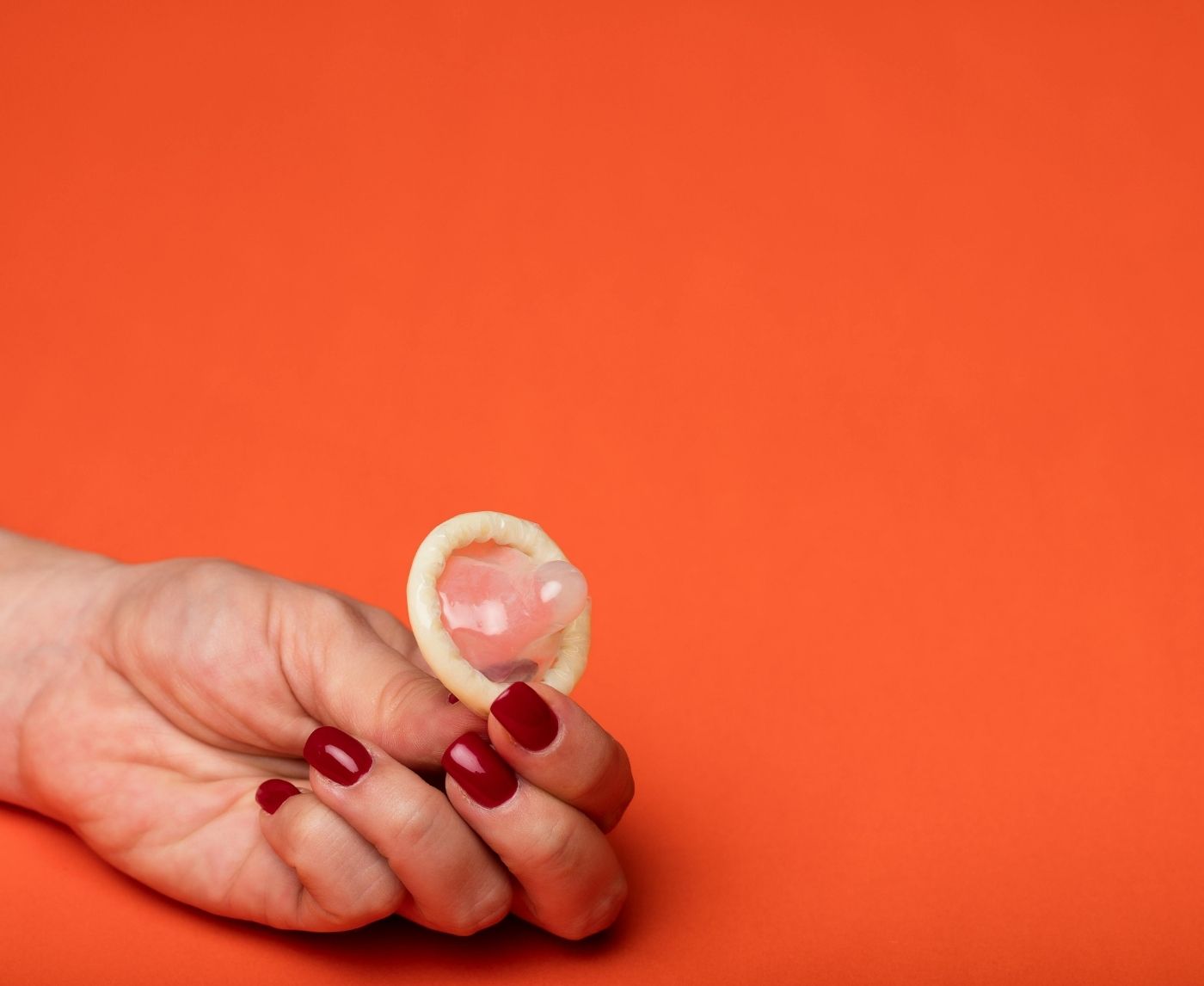
The night after sex with a new partner, you notice burning or itching where the condom touched your skin. Within minutes your brain jumps to the worst case. Did something get through? Should you be testing tomorrow? The good news is that immediate irritation after a condom is rarely a sexually transmitted infection. It almost always points to one of three things: a latex sensitivity, a reaction to the lubricant or spermicide on the condom, or simple friction.
Real STD symptoms behave very differently. They take days or weeks to show up, they often come with other warning signs like sores or unusual discharge, and they do not match the outline of where a condom sat on your skin. Once you know those patterns, you can tell them apart without spending the next 48 hours in panic mode. This guide walks through how to read what your body is doing, and what to do if you do want testing to remove the guesswork.
Key takeaways
- Burning or itching that starts within minutes to a few hours after sex usually points to latex, lubricant, or friction, not to an STD.
- Most STD symptoms take days to weeks to appear. If irritation lasts longer than 2 to 3 days or comes with sores, discharge, or fever, that is the signal to test.
Why burning or itching happens after condom use
The skin on the vulva, penis, and surrounding genital area is some of the most reactive on the body. It is thinner than the skin on your arms, has a dense supply of nerve endings, and during sex it is exposed all at once to friction, pressure, fluids, and any chemicals coating the condom. That combination produces irritation reliably, even when nothing infectious is going on.
Clinicians who run sexual-health appointments see this pattern constantly. A patient describes burning or itching after sex with a condom, assumes the worst, and arrives at the clinic ready for an STD diagnosis. In most of those visits, the actual finding is contact irritation, mild latex sensitivity, or a reaction to a spermicide or flavored lubricant. The body is responding to something physical or chemical on the surface, not to an infection.
Three causes account for the large majority of post-condom burning or itching: latex allergy or sensitivity, contact irritation from condom additives or friction, and, less commonly, a sexually transmitted infection. Each behaves differently in the body, and the timing of symptoms is the single most useful clue for telling them apart.
| Cause | Typical timing | Common symptoms | How long it lasts |
|---|---|---|---|
| Latex allergy or sensitivity | Minutes to a few hours after sex | Itching, redness, swelling, rash, sometimes hives | Several hours to a few days |
| Friction or additive irritation | Right after sex, often same hour | Burning, soreness, redness | 24 to 48 hours |
| Sexually transmitted infection | Days to weeks after exposure | Sores, blisters, unusual discharge, painful urination, flu-like symptoms | Persists or worsens until treated |
Telling latex allergy from STD: why timing matters most
The most reliable way to separate an allergic or contact reaction from an infection is to look at when symptoms appeared. The immune system reacts to something it considers a threat almost immediately. A latex protein touching sensitive skin sets off a histamine release within minutes, which produces itching, redness, swelling, or a small rash where the contact happened. Friction works on the same fast timeline: the irritation is already present when you get up.
Infections behave on a slower clock. A virus or bacterium has to enter the body, replicate, and trigger enough inflammation for symptoms to surface. Per the CDC's sexually transmitted infections overview, most STIs take days to weeks to produce noticeable signs, and many produce none at all. That gap between exposure and symptom is the single biggest reason same-night irritation almost never means infection.
The other reliable clue is the shape of the reaction. Allergic or contact reactions tend to match the contact area: itching and redness right where the latex sat against the skin, fading as you get further away. Infections do not respect that outline. An STD lesion shows up because of where the pathogen took hold, not where the condom was.
This is why a sexual-health clinician will almost always ask, "Exactly when did the symptoms start?" If the answer is "within an hour of sex," the conversation moves toward latex or lubricant. If the answer is "a week later," the conversation moves toward testing.
| Condition | Typical symptom onset after exposure | Example signs |
|---|---|---|
| Latex allergy or sensitivity | Minutes to hours after sex | Itching, redness, hives, mild swelling |
| Contact irritation (lube, spermicide, friction) | Immediate or within the same day | Burning, soreness, raw feeling |
| Genital herpes (HSV-1 or HSV-2) | Roughly 2 to 12 days | Tingling, then painful blisters or ulcers, sometimes flu-like symptoms |
| Chlamydia | Roughly 1 to 3 weeks | Burning during urination, unusual discharge, often no symptoms at all |
| Gonorrhea | Roughly 2 to 14 days | Discharge, painful urination, sometimes asymptomatic |
| Primary syphilis | Roughly 2 to 6 weeks (range 10 to 90 days) | A single painless sore (chancre) at the exposure site |
How do I tell a latex allergy or condom irritation from an STD?
Timing is the single most useful clue. Latex sensitivity and lubricant or friction irritation usually appear within minutes to a few hours after sex, often exactly where the condom touched your skin, and fade within 1 to 2 days. STD symptoms typically take 2 to 21 days to appear (and sometimes longer), and they often come with other signs such as sores or blisters, unusual discharge, painful urination, or flu-like symptoms. If irritation lasts more than 2 to 3 days, returns whenever you have sex, or comes with any of those additional signs, get tested rather than guessing.
Beyond latex: lubricants, spermicides, and friction
Latex gets blamed for a lot of reactions that are not actually about latex. Many condoms come pre-coated with lubricants, spermicides, fragrances, or preservatives, and any of those can irritate genital skin even when the latex itself is fine. Sexual-health clinics frequently see people who assumed they had a latex allergy when the real trigger was a chemical additive on the condom they used that week.
The single most common culprit is nonoxynol-9, a spermicide once added to many condoms. The CDC's STI prevention guidance has cautioned for years that nonoxynol-9 can irritate genital and rectal tissue, and that the resulting microabrasions may actually raise the risk of acquiring HIV with frequent use. Flavored or warming lubricants frequently contain glycerin, sugars, and fragrance compounds that can disrupt the vaginal pH balance or trigger contact dermatitis.
The NHS overview of contact dermatitis describes the two patterns that show up here: irritant contact dermatitis, which is a direct chemical effect on skin, and allergic contact dermatitis, which is a true immune reaction. Both produce itching, redness, and sometimes a small rash, and both can be mistaken for the start of an STD outbreak.
If burning or itching only appears with one brand of condom and not others, the formula on that brand is the most likely cause. Switching to a fragrance-free, spermicide-free condom, or to a lubricant-free condom paired with a separate water-based or silicone-based lubricant you tolerate, usually resolves the problem.
| Ingredient | Why it is used | Possible reaction |
|---|---|---|
| Nonoxynol-9 | Spermicide coating | Burning, soreness, raw or inflamed skin |
| Glycerin | Lubricant base, sweet taste | Itching, irritation, sometimes yeast overgrowth |
| Fragrance or flavoring | Scent or taste additive | Skin irritation or mild contact dermatitis |
| Parabens and other preservatives | Extend shelf life | Contact dermatitis in sensitive users |
Why condoms reduce STI risk without eliminating it
Condoms are one of the most effective tools for preventing sexually transmitted infections, but the protection they give depends on how the specific infection spreads. For STIs that move through bodily fluids, such as chlamydia, gonorrhea, HIV, and trichomoniasis, a correctly used condom acts as a physical barrier and dramatically reduces transmission risk. The CDC's condom-effectiveness guidance is clear that consistent condom use substantially lowers the risk of acquiring or transmitting these infections.
Skin-to-skin infections are a different story. Genital herpes (HSV-1 and HSV-2), human papillomavirus (HPV), and syphilis can all spread through contact with infected skin or mucous membranes that the condom does not cover. A condom shields the shaft of the penis and most of the vulva during penetration, but it does not cover the scrotum, the upper inner thighs, the labia majora, or the perianal area. If a partner has a herpes lesion or HPV-related warts on uncovered skin, transmission can still happen.
This is the practical reason a thoughtful clinician will say "condoms reduce risk" rather than "condoms eliminate risk." It does not make condoms less worth using. It just means that if symptoms appear several days after sex, even with correct condom use, those symptoms are worth taking seriously rather than dismissing. The WHO fact sheet on STIs notes that more than 1 million curable STIs are acquired every day globally, and a large share of those infections happen in people who use condoms inconsistently or for whom skin-to-skin contact was the route.
Using condoms greatly reduces the risk of getting or spreading STIs. However, condoms provide less protection against STIs spread through skin-to-skin contact like genital herpes, syphilis, and human papillomavirus (HPV).
When at-home testing helps you move on
Even when symptoms strongly suggest irritation or allergy, plenty of people still want confirmation that nothing infectious is going on. That instinct is reasonable, and it is the practical reason at-home testing exists. Rather than living for a week with a mental loop of "what if," a test result either rules an infection in or out and lets you act.
A few things to keep in mind about timing. Most rapid antibody tests, including those for HIV and syphilis, have a window period during which the body has not yet produced enough antibodies for the test to detect. For HIV, fourth-generation tests can usually detect infection 4 to 12 weeks after exposure, with the most reliable results by 12 weeks. Chlamydia and gonorrhea can typically be tested 1 to 2 weeks after exposure. Herpes antibody tests are most informative 12 weeks or more after a suspected exposure. Testing too early can produce a negative result that is technically accurate for that moment but does not yet reflect a recent exposure.
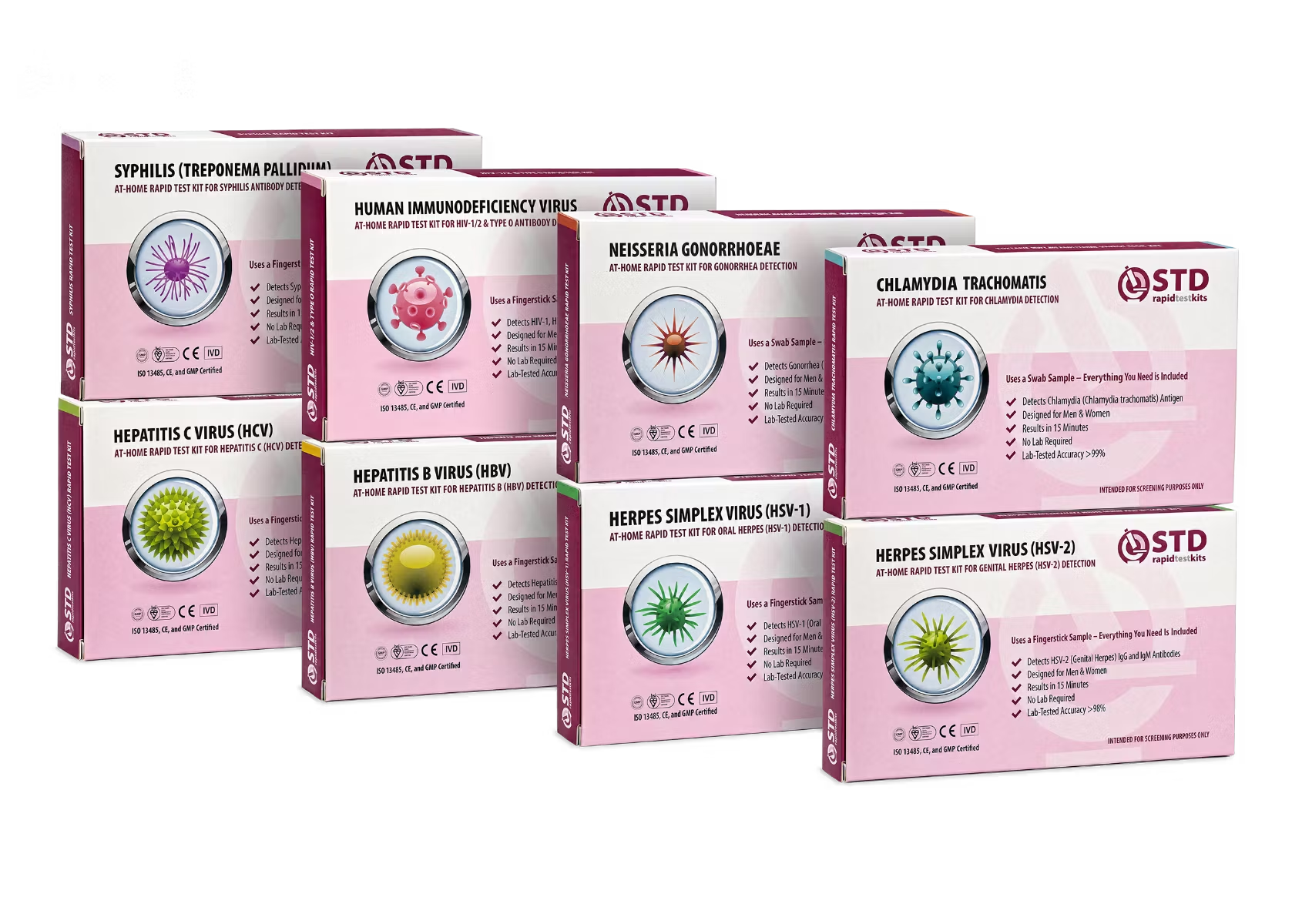
For people who want broader peace of mind after a new-partner encounter, a multi-infection home screen makes that easier than scheduling separate clinic visits. The choice between a 6-in-1 and an 8-in-1 panel mostly comes down to whether you want HPV and herpes type 2 added to the standard bloodwork and bacterial-swab combination.
Finding a condom that stops irritating you
If burning or itching shows up reliably every time you use condoms, the practical fix is to change what is touching your skin. Latex sensitivity, additive irritation, and friction all respond well to swapping materials and formulas, and most people land on a combination that works after one or two trial brands.
The two main latex-free options are polyurethane and polyisoprene. Polyurethane is a thin plastic that conducts heat well and is suitable for people with confirmed latex allergy. Polyisoprene is a synthetic rubber that feels closest to latex in stretch and softness, also latex-free, and is usually the easier transition for couples who liked the feel of latex but cannot tolerate it. The Cleveland Clinic overview of latex allergy notes that people with confirmed latex allergy should avoid not just latex condoms but also latex diaphragms and gloves, since cumulative exposure matters.
Lambskin condoms (sometimes called natural-membrane condoms) are latex-free but do not block viruses, including HIV, herpes, and HPV. They prevent pregnancy but not infection transmission, so they are not a useful option for anyone whose concern includes STI prevention.
On the lubricant side, look for water-based or silicone-based products that are fragrance-free, glycerin-free, and spermicide-free if your skin tends to react. Adding more lubricant than the condom comes with is one of the simplest changes that reduces friction-related burning, especially for longer or rougher sex.
| Condom type | Material | Best for |
|---|---|---|
| Polyurethane | Plastic polymer | Confirmed latex allergy; thinner feel; conducts heat well |
| Polyisoprene | Synthetic rubber | Latex allergy users who liked the feel of latex |
| Latex, fragrance-free, spermicide-free | Natural rubber latex | Mild sensitivity to additives but not to latex itself |
| Lambskin (natural membrane) | Sheep intestine | Pregnancy prevention only; does NOT block viruses, do not use for STI protection |
You deserve clarity, not guesswork
Burning or itching after sex can send your mind racing in unhelpful directions. One minute everything felt fine, and the next you are scrolling herpes images at 2 a.m. Most of the time, what your body is reacting to is something on the surface: the latex itself, the lubricant or spermicide coating it, or simple friction. Those reactions show up fast, match the contact area, and fade within a day or two.
Infections behave differently. They take days or weeks to produce symptoms, they do not respect the outline of a condom, and they usually bring other warning signs along with them. That is the difference worth holding onto when you are trying to decide whether something is worth panicking about.
The honest middle path is this. If timing and pattern look like irritation, change condom brand or material and watch what happens. If irritation lasts more than 2 to 3 days, comes back, or arrives alongside any other symptom, test. A discreet at-home screen takes 15 minutes and gives you a result you can act on.
- If symptoms appeared within hours and match the contact area: switch condom brand or material, and observe for 48 hours.
- If irritation persists beyond 2 to 3 days, returns with every encounter, or comes with sores or discharge: test rather than wait.
- If the encounter involved a new partner and you want baseline peace of mind: a rapid home screen covers the most common STIs in about 15 minutes.
Frequently asked questions
- Burning after a condom: should I panic about an STD?
- Usually no. If irritation shows up within minutes or a few hours of sex, it is far more likely to be latex sensitivity, lubricant or spermicide reaction, or friction. Most STD symptoms take days or weeks to appear because the infection has to develop. The rule of thumb: same-night reactions point to the condom itself, delayed reactions point to testing.
- What does a latex allergy feel like on the genitals?
- Most people describe sudden itching, warmth, or redness exactly where the condom touched the skin. There may be mild swelling, small irritated bumps, or a localized rash. The hallmark is fast onset (within minutes to hours) and resolution as the skin calms down over a day or two. Severe latex allergy can cause more serious reactions, including hives spreading beyond the contact area or trouble breathing, and that requires urgent medical attention.
- Why do I only react with certain condom brands?
- Because brands vary widely in what they put on the condom. Some are coated with spermicide (often nonoxynol-9), flavoring, fragrance, or specific lubricants that irritate sensitive skin. If one brand triggers a reaction and a different one does not, the formula is almost always the cause, not latex itself.
- Can friction alone cause burning after sex?
- Yes, easily. Genital skin is thin and reactive, and longer or rougher sex without enough lubrication can leave it raw or tender afterward. It is essentially a mild surface irritation, similar to a small skin scrape. Adding a generous water-based or silicone-based lubricant usually solves it.
- If I used a condom, can I still get an STD?
- Risk is lower, not zero. For fluid-borne STIs such as chlamydia, gonorrhea, HIV, and trichomoniasis, a correctly used condom is highly effective. For infections that spread through skin contact, such as herpes, HPV, and syphilis, condoms reduce but do not eliminate risk because they do not cover all exposed skin. If that uncertainty matters to you, a home screen 2 to 4 weeks after the encounter is the fastest way to confirm you are clear.
- How long should mild condom-related irritation last?
- Most mild reactions clear within 24 to 48 hours. If burning or itching gets worse, lasts more than 2 to 3 days, returns every time you have sex, or develops into sores, blisters, or unusual discharge, see a clinician or get tested rather than waiting it out.
- Can someone suddenly become allergic to latex?
- Yes. Latex allergy can develop with repeated exposure over time, a process clinicians call sensitization. Someone who used latex condoms for years without trouble may start reacting after the immune system flips to treating latex proteins as a threat. The fix is the same either way: switch to polyurethane or polyisoprene.
- If the irritation goes away, should I still test?
- If the encounter was with a new partner or you are unsure about exposure, testing is the cleanest way to settle the question. Many STIs (especially chlamydia) cause few or no symptoms even when present, so the absence of irritation a few days later is not proof you are clear. An at-home screen lets you confirm without a clinic visit.
How we sourced this article: This guide draws on current STI guidance from the U.S. Centers for Disease Control and Prevention, sexual-health information from the World Health Organization, and dermatology references for latex allergy and contact dermatitis from Cleveland Clinic, DermNet NZ, and the NHS. We translated those sources into plain-English guidance for distinguishing same-night condom reactions from delayed STI symptoms. This article is informational; it is not a diagnosis. If symptoms persist or worsen, see a licensed clinician.
- U.S. Centers for Disease Control and Prevention. Sexually transmitted infections (STIs) overview, including incubation periods, symptoms, and prevention.
- U.S. Centers for Disease Control and Prevention. Condom effectiveness against fluid-borne vs skin-to-skin STIs, including guidance on nonoxynol-9 spermicide.
- Cleveland Clinic. Latex allergy: symptoms, causes, sensitization, and treatment.
- DermNet NZ. Latex allergy and natural rubber latex contact reactions, including clinical presentation.
- NHS. Contact dermatitis: irritant vs allergic contact dermatitis, symptoms, and management.
- World Health Organization. Sexually transmitted infections (STIs) fact sheet, including global incidence and transmission routes.
