
Published: November 2025 | Last updated: May 2026 | Editorial review and quality control: Martina N.
Burning. A streak of bright red blood. A pressure that lingers when you sit down. Most of the time, sensations like these after anal sex come from a mechanical cause: friction on thin rectal tissue, a small fissure at the anal opening, or an aggravated hemorrhoid. They start within minutes of the encounter, and they usually fade within a day or two with no other symptoms.
Sometimes the same symptoms appear two, three, or seven days later, with no obvious cause. That delay is the single biggest clue that something other than a tear is happening. It is also the reason rectal chlamydia and gonorrhea so often get mistaken for ordinary post-sex irritation, and the reason people delay testing until the infection has moved on to a partner.
This guide walks through the differences in plain terms: what a normal post-sex sensation tends to feel like, which patterns are more consistent with a rectal STI, and what kind of test you actually need. That last point is where many articles online get it wrong. Standard at-home rapid kits, including the ones sold on this site, are not designed to detect rectal chlamydia or gonorrhea. We will be specific about what they can confirm, what they cannot, and when a clinic visit is the right call.
Key Takeaways
- A burning or stinging sensation that starts right after anal sex and fades within 24 to 48 hours is almost always friction or a small tear; symptoms that appear 2 to 14 days later are far more consistent with a rectal infection.
- At-home rapid tests sold on this site are blood-based (HIV, syphilis, hepatitis, herpes antibodies) or genital-swab based, not rectal swabs. For rectal chlamydia or gonorrhea you need a clinic, while our kits cover the bloodborne risks that the same exposure event raises.
Friction or Infection? Reading the Early Signs
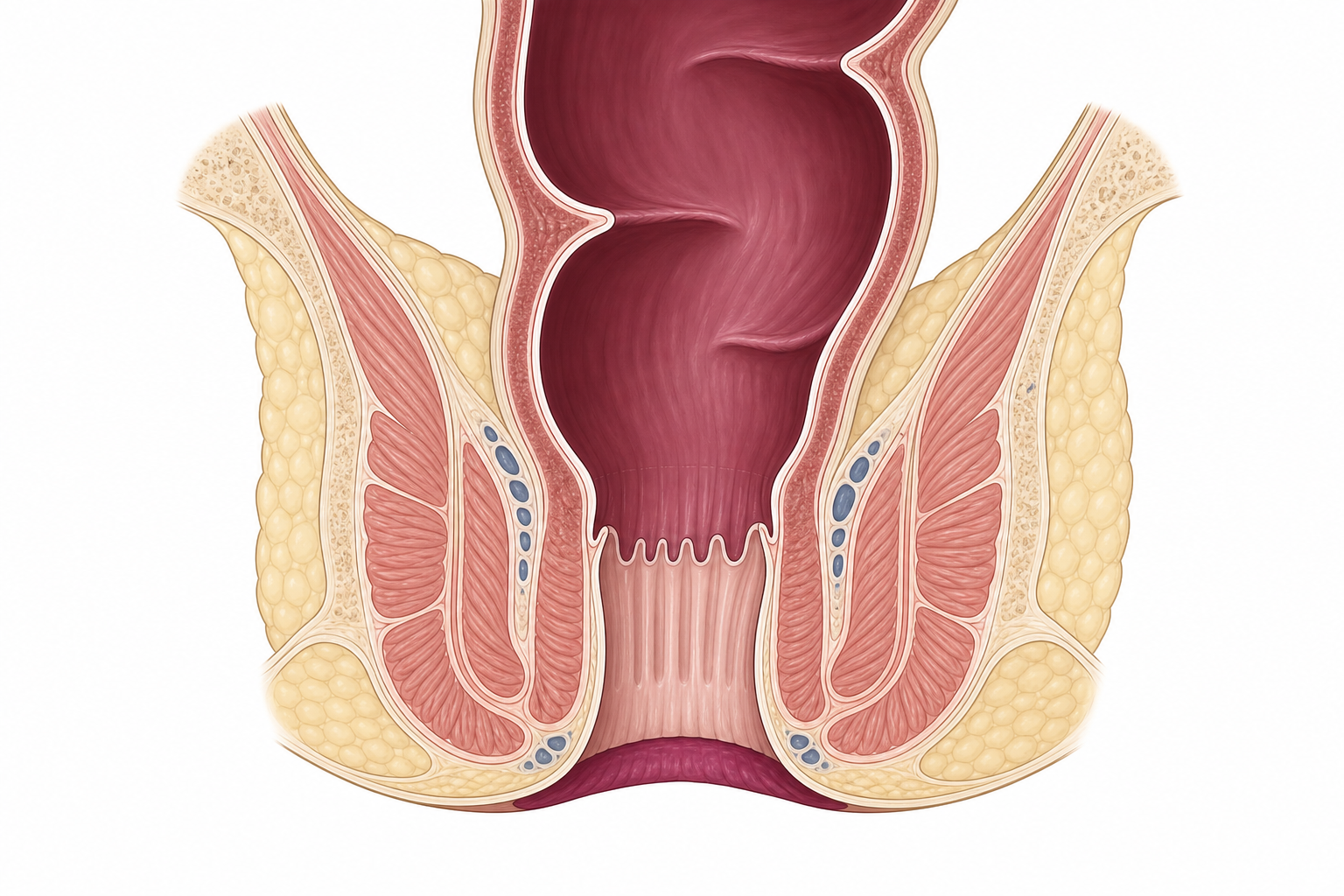
The rectal lining is one of the thinnest mucosal surfaces in the body. It is also highly vascular, which is why a minor mechanical injury can produce a sharp sting, a small amount of bright red blood, or a sense of rawness for a day or two. That same fragility is what makes the rectum a relatively efficient route for sexually transmitted infections.
A useful way to separate the two patterns is to focus on three variables: when the symptom started, what it feels like, and how it is changing over time.
Friction injuries and small anal fissures (the kind the NHS describes in its anal fissure overview) almost always present immediately. Pain is sharpest during the encounter or right after, often peaks during the next bowel movement, and improves day by day with nothing new appearing. Bleeding, if present, is bright red, small in volume, and tends to streak the stool or the toilet tissue rather than show up on its own.
Rectal infections follow a different timeline. Symptoms tend to surface 2 to 14 days after exposure, deepen rather than fade, and bring company: rectal discharge, a feeling of incomplete bowel emptying, mild fever, or a persistent itch that does not match a healing tear. Pain may come and go in waves rather than steadily improve.
| Sign | Friction or tear | Rectal infection |
|---|---|---|
| Onset | Within minutes of the encounter | 2 to 14 days after exposure |
| Pain pattern | Sharpest at first, fades within 1 to 2 days | Builds over days, may come and go |
| Bleeding | Bright red, small volume, streaks on tissue | Less common; if present, often mixed with discharge |
| Discharge | Absent | Pus-like, mucus-like, or blood-tinged |
| Itching | Mild, during healing | Persistent, sometimes with surrounding irritation |
| Fever or feeling unwell | Absent | Sometimes present with chlamydia or gonorrhea |
| Improvement | Better each day | Plateaus or worsens |
When It Is Almost Certainly a Small Tear
Anal fissures are common after anal sex. They show up most often when there was not enough lubrication, when the rate or angle was uncomfortable for the receiving partner, or when there was strain during a subsequent bowel movement. The NHS describes fissures as more common in people aged 15 to 40, and notes that most heal on their own with conservative care over a few weeks; post-sex fissures are likely underreported because most people do not seek care for a problem that resolves on its own.
A fissure feels like a sharp paper-cut sensation at the anal margin. It hurts most during defecation, often produces a thin streak of bright red blood, and tends to settle within a week with the basics: stool softeners, warm sitz baths, plenty of fluids, and avoiding repeat trauma until the tissue has time to heal. Topical analgesic ointments can help with the pain at the margin. If a fissure is taking longer than two to three weeks to heal, a clinician can confirm whether it has become chronic and may prescribe a topical vasodilator to improve blood flow to the area.
What separates a fissure from something that needs further testing is trajectory, not severity. A fissure improves. If your symptoms are not improving by day 3 or 4, or if new symptoms (discharge, pressure deep inside the rectum, fever, or persistent itch) appear, the working assumption shifts away from a tear.
Pain is sharpest at the first bowel movement after the encounter and improves each day. Bleeding, if any, is a thin bright-red streak on tissue or stool. No discharge, fever, or deep internal pressure appears. By day 5 to 7, day-to-day discomfort is largely gone.
Rectal STIs That Are Easy to Miss
Three rectal infections are worth knowing about. Each one behaves a little differently, and each one can be mistaken for ordinary post-sex irritation if you do not know the pattern.
Rectal chlamydia is the most commonly missed of the three. The majority of cases produce no symptoms at all, which is why the CDC's STI Treatment Guidelines include routine extragenital screening for people with any receptive anal exposure. When symptoms do appear, they tend to be mild: a faint discharge, a sense of pressure, or vague discomfort that does not feel like an injury.
Rectal gonorrhea is louder. It often produces a visible discharge that can look yellowish or be blood-tinged, along with anal itching, soreness, and sometimes painful bowel movements. The CDC's STI Treatment Guidelines describe an incubation period that is typically a few days to two weeks. Untreated, gonorrhea can spread beyond the rectum and contributes to the broader public-health problem of antimicrobial resistance.
Herpes simplex virus (most commonly HSV-2 in rectal cases, occasionally HSV-1) can present internally rather than as the textbook external sore. People describe a deep aching, a burning that comes in waves, or an unusual sensitivity in the days following exposure. Lesions, when present, can be inside the anal canal and not visible from outside. Recurrences can repeat at the same site.
A less common but more serious pattern is lymphogranuloma venereum (LGV), a chlamydia subtype the WHO lists among re-emerging neglected STIs. LGV produces deeper rectal ulceration, marked discharge, and lymph-node swelling in the groin. It does not respond to the standard short-course antibiotic regimen used for ordinary chlamydia, and it needs a longer treatment plan a clinician can prescribe.
Rectal chlamydia and gonorrhea are frequently asymptomatic. Routine screening at extragenital sites is recommended for people with any history of receptive anal exposure.
What Our At-Home Tests Can Actually Confirm After Anal Exposure
The at-home rapid tests sold on this site cannot diagnose rectal chlamydia or gonorrhea. Detecting a rectal-site bacterial infection requires a swab taken from inside the rectum and processed by a clinical laboratory using nucleic acid amplification (NAAT). At-home rapid kits use a different chemistry (lateral-flow immunoassays) and a different sample type (a self-collected genital swab or a fingerstick blood drop), and neither will reliably pick up a rectal-site bacterial infection.
A false negative from the wrong test type can delay the single antibiotic course that would have cleared the infection in one visit, so the sample type matters more than how convenient the test is to run.
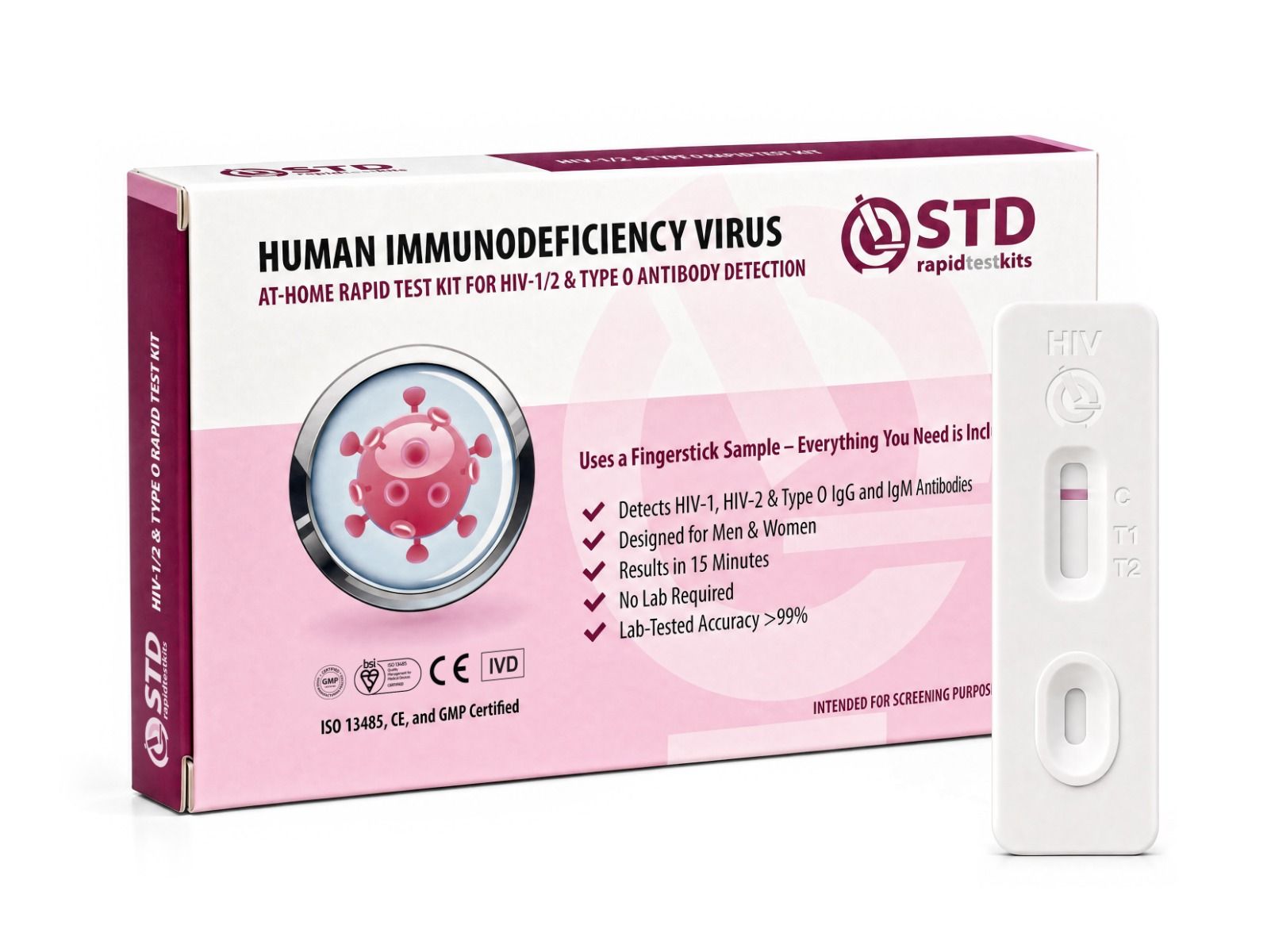
What our at-home tests can do, and do well, is confirm the bloodborne infections that the same anal exposure event raises your risk for. The rectal route is the highest-risk anatomical route for HIV transmission per act, per CDC HIV risk guidance. Receptive anal exposure also carries meaningful risk for syphilis, hepatitis B (if you are not vaccinated), and hepatitis C (especially when there has been bleeding or trauma involved). Our blood tests cover all of these.
A combined panel that screens for HIV, syphilis, hepatitis B, hepatitis C, and herpes antibodies in one sitting is a practical way to clear the bloodborne questions after a higher-risk encounter, while a clinic handles the rectal-site swab separately. Think of the two as complementary checks rather than substitutes, and you will not waste an inconclusive test cycle.
Window Periods for the Right Tests
A window period is the time between exposure and when a test can reliably detect that exposure. Test too early and you can read a true infection as negative. Test inside the recommended window and you get an answer you can trust.
For at-home rapid tests in particular, sensitivity climbs the longer you wait, and most kits give a reliable result a few weeks beyond the absolute earliest detection date. Knowing these timelines helps you avoid the frustration of a false negative, and helps you sequence what to test and when. A few useful reference points based on CDC STI treatment guidance:
| Test | Earliest reliable detection (rapid) | Recommended retest |
|---|---|---|
| HIV (rapid antibody/antigen) | About 23 to 45 days after exposure | Retest at 90 days if initial result is negative and concern remains |
| Syphilis (rapid antibody) | About 3 to 6 weeks | Retest at 12 weeks for confirmation |
| Hepatitis B (HBsAg rapid) | About 4 to 10 weeks | Retest at 24 weeks if exposure was high-risk |
| Hepatitis C (rapid antibody) | About 8 to 11 weeks | Retest at 24 weeks |
| HSV-2 (rapid antibody) | About 6 to 12 weeks, sometimes longer | Retest at 16 weeks if seroconversion status is unresolved |
| Rectal chlamydia or gonorrhea (clinic NAAT swab) | About 5 to 7 days after exposure | Repeat if symptoms persist or partner tests positive |
When a Clinic Visit Is the Right Call
For most readers reaching this article, the right path is a mix of both options: a sexual-health clinic for the rectal-site swab, plus the at-home blood tests on your own time for HIV, syphilis, hepatitis, and herpes antibodies once each window has opened.
Book a clinic visit (or call urgent care the same day) if any of the following apply:
- Heavy or persistent bleeding (more than a small streak on tissue)
- Visible external sores, blisters, or ulcers around the anus
- A fever above 38°C (100.4°F) with rectal pain
- Severe pain that does not respond to over-the-counter measures within 48 hours
- Known exposure to a partner who has tested positive for an STI
- Any symptom that is not improving by day 5
- A previous fissure that has not healed after 2 to 3 weeks of conservative care
Clinics can collect a rectal swab and run a NAAT for chlamydia and gonorrhea, examine for fissures or hemorrhoids visually, take a culture or PCR swab of any visible lesion, and prescribe antibiotics on the same visit when needed. If cost is a barrier, every U.S. state has at least one CDC-funded sexual-health clinic that provides screening on a sliding scale or for free; the NHS sexual-health service in the U.K. offers free walk-in care.
For people who have regular receptive anal exposure but no symptoms at all, current CDC guidance recommends rectal-site chlamydia and gonorrhea screening every 3 to 6 months for men who have sex with men, and at least annually for any other adult with regular receptive anal exposure. That is screening rather than symptom-driven testing, and it is the single biggest tool in catching the asymptomatic infections covered in the next section.
The Quiet Risk: Asymptomatic Rectal Infections
A significant share of rectal chlamydia cases produce no symptoms whatsoever. The same is true for a smaller but still meaningful fraction of rectal gonorrhea cases. People feel fine, assume nothing is going on, and move on. Months later, a partner tests positive, or a routine screen flags a positive result, and the infection has been quietly present the whole time.
This matters for two reasons. First, untreated rectal chlamydia and gonorrhea can produce ongoing local inflammation and increase your susceptibility to HIV if a future exposure occurs. Second, an asymptomatic carrier is still infectious, which means the infection continues to move through partner networks until somebody decides to screen.
The practical takeaway: if you have receptive anal exposure regularly, schedule rectal-site screening on a calendar interval, the same way you would schedule a dental cleaning. Symptoms are not a reliable trigger for testing because so many cases never produce symptoms in the first place. Booking screening twice a year for a higher-frequency situation, or annually for a steadier one, is what national screening guidelines from both the CDC and the WHO recommend.
Most rectal chlamydia cases produce no symptoms. Calendar-interval screening, rather than waiting for a symptom, is the only reliable way to catch it before it passes to a partner. Set a recurring reminder for every 3 to 6 months if you have regular receptive anal exposure, or annually for a steadier situation.
A Simple Decision Guide
When everything feels uncertain, the choice almost always falls into one of three categories: watch it for a couple of days, test at home, or see a clinician. The table below maps the most common situations to a sensible next step.
| Situation | Most likely cause | Right next step |
|---|---|---|
| Burning starts immediately, fades by day 2 | Friction or small fissure | Sitz baths, lubrication next time, monitor |
| Bright red streak on tissue, no other symptoms | Anal fissure or hemorrhoid | Monitor for 3 to 5 days |
| Discharge, persistent itch, or pain after day 3 | Possible rectal STI | Book a clinic rectal swab now |
| Heavy bleeding or visible sores | Needs in-person evaluation | Same-day clinic or urgent care |
| No symptoms but recent higher-risk exposure | Likely clear, still worth screening | Rectal swab at clinic; at-home blood panel for bloodborne STIs after each window opens |
| Recurring symptoms each time after sex | Pattern, not coincidence | Clinic visit plus partner conversation |

FAQs
- How long after anal sex should I wait before symptoms point to an infection rather than a tear?
- Most friction injuries and small fissures show up immediately and improve every day. If you are still uncomfortable on day 3 or 4, or if new symptoms appear (discharge, an itch that does not match a healing cut, fever, or pressure deeper in the rectum), an infection becomes the more likely cause. The CDC's STI Treatment Guidelines describe a typical incubation window for rectal gonorrhea of a few days to two weeks, and rectal chlamydia is similar.
- Why can a home rapid test not pick up rectal chlamydia or gonorrhea?
- Rectal infections live in tissue that only a clinic-collected swab can reach. Our kits read either a fingerstick blood drop or a self-collected genital swab, and neither sample type touches the rectal mucosa. A clinic NAAT is a different test, from a different anatomical site, processed by a laboratory; a lateral-flow immunoassay run at home cannot substitute for it.
- Is a small amount of blood after anal sex always a tear?
- Usually yes. A bright red streak on tissue or stool, with no other symptoms and pain that improves day by day, is almost always a fissure or an aggravated hemorrhoid. Blood that is dark, mixed with mucus or pus, ongoing past day 3, or accompanied by other symptoms is worth a clinic visit.
- How long should I wait before an at-home HIV test gives a reliable answer?
- Rapid antibody and antigen tests reach reliable sensitivity around 23 to 45 days after exposure. CDC guidance is to retest at 90 days if your initial result is negative and you remain concerned. Our HIV kit follows that same window. PEP (post-exposure prophylaxis), if relevant to your situation, must be started within 72 hours of exposure and is prescribed by a clinician.
- What if I have no symptoms but had unprotected receptive anal sex recently?
- Screening rather than symptom-driven testing is the right framework. Book a rectal swab at a clinic 5 to 7 days after the exposure for chlamydia and gonorrhea. For HIV, syphilis, and hepatitis, use a blood-based home test once you are inside each window: roughly 3 to 6 weeks for syphilis antibodies, 4 to 10 weeks for hepatitis B surface antigen, 8 to 11 weeks for hepatitis C antibodies.
- Can hemorrhoids be confused with a rectal infection?
- They share some symptoms: itching, light bleeding, mild discomfort. Hemorrhoids tend to flare around bowel movements rather than after sex specifically, and they do not produce discharge or a feeling of pressure deeper inside the rectum. Persistent symptoms that do not match hemorrhoid behavior are worth testing.
- Do I need to tell a recent partner that I am getting tested?
- You do not have to disclose preemptively. If any test comes back positive, partner notification is part of standard public-health practice, and many clinics offer anonymous notification services that contact partners without identifying you. Letting partners know lets them screen before an asymptomatic infection passes further along the chain.
- Is there any at-home test that works for rectal STIs?
- In some regions, mail-in self-collection kits exist where you take a rectal swab at home and post the sample to an accredited lab for NAAT processing. That is a different product category from the rapid at-home immunoassays we sell, and it is not part of our catalog. If you want that option, look for state or national public-health home-collection programs in your region; the NHS in the U.K. and several U.S. state health departments run them.
- U.S. Centers for Disease Control and Prevention. Sexually Transmitted Infections Treatment Guidelines, used here for screening intervals, incubation windows, extragenital screening recommendations, and rectal-site NAAT recommendations.
- U.S. Centers for Disease Control and Prevention. Gonorrhea topic page, used here as a general orientation to rectal gonorrhea symptoms and public-health context.
- U.S. Centers for Disease Control and Prevention. Chlamydia topic page, used here as a general orientation to rectal chlamydia symptoms and asymptomatic-infection context.
- U.S. Centers for Disease Control and Prevention. HIV information portal, used here for per-act transmission risk by anatomical route.
- U.K. National Health Service. Anal fissure overview, used here for symptom pattern, age distribution, and conservative treatment timelines.
- U.K. National Health Service. Sexually transmitted infections overview, used here for general STI signs and the U.K. screening pathway.
- World Health Organization. Sexually transmitted infections fact sheet, used here for global incidence framing and the listing of LGV among re-emerging neglected STIs.
