
Published: November 2025 | Last updated: May 2026 | Editorial review and quality control: Martina N.
Are body aches after sex an STD or just exertion?
Body aches in the first 48 hours after sex are almost always exertion, dehydration, or a passing virus, not an STI. Acute HIV symptoms typically start 2 to 4 weeks after exposure. If fever, swollen lymph nodes, and a non-itchy trunk rash appear in that window, test with a fourth-generation HIV test at 4 to 6 weeks.
Most people do not search "body aches after sex" when everything feels fine. They search at 2 a.m. with the bedside lamp on, replaying the encounter and inspecting their own neck for swollen glands. The actual question underneath the search is rarely "what disease causes muscle soreness?" It is "did I just mess up, and how worried should I be?" The honest answer is that body aches alone, especially in the first 48 hours, almost never signal a sexually transmitted infection. They almost always signal something more boring: physical exertion, alcohol, short sleep, or a passing seasonal virus. Acute HIV, mononucleosis, and other systemic causes that get confused with each other all run on a slower clock. They take time, and that timing is the single most useful filter you have.
Key Takeaways
- Soreness in the first 48 hours after sex is almost always exertion, dehydration, or coincident viral illness; acute HIV symptoms typically begin 2 to 4 weeks after exposure, not the next morning.
- A fourth-generation HIV antigen/antibody test reliably detects infection 18 to 45 days after exposure per CDC guidance, with 12 weeks considered conclusive.
This article is published by stdrapidtestkits.com, which sells at-home rapid lateral-flow STI testing kits. We recommend products based on what fits the reader's actual concern, not on commercial benefit. Our at-home rapid kits are screening tools; lab-based NAAT/PCR remains the diagnostic gold standard for confirmation.
When It Is Just a Long Night
Even gentle sex activates muscle groups most people do not use the rest of the week. Thrusting, bracing, gripping, holding positions, bending hips at unfamiliar angles. If it has been a while since the last time, or if the sex was particularly athletic, you can wake up with delayed-onset muscle soreness in the thighs, hips, lower back, or shoulders. That soreness peaks 24 to 48 hours later, the same way it does after a hard workout.
Alcohol stacks on top of that. It lowers inhibitions, increases physical intensity, and dehydrates muscle tissue at the same time. Dehydrated muscles ache more. Add four hours of sleep instead of eight and your immune system runs slightly below baseline the next day, which is why ordinary tiredness can feel a lot like a low-grade flu.
There is also a hormonal piece. After orgasm, neurochemicals including prolactin rise while others fall sharply, and most people get a brief crash that registers as fatigue, weakness, or even mild chills, then resolves on its own without anything that needs treatment.
If body aches show up within 24 to 48 hours of sex, the usual suspects are not infections. The five common drivers are: physical exertion in muscle groups you do not use day to day, dehydration (worsened by alcohol), short sleep, the post-orgasm hormonal drop in prolactin and oxytocin, and a coincident seasonal virus you would have caught regardless of the encounter. None of these need testing. They need water, food, and a longer night of sleep.
When Body Aches Are Part of Something Bigger
Some sexually transmitted infections do produce flu-like illness, and the most discussed is acute HIV. Per the U.S. Centers for Disease Control and Prevention's overview of HIV, most people who develop symptoms do so 2 to 4 weeks after infection, with a cluster that typically includes fever, sore throat, body aches, fatigue, swollen lymph nodes, and sometimes a flat non-itchy rash on the trunk. The virus needs time to replicate before the immune system reacts loudly enough to make you feel anything, and that process runs in weeks rather than hours.
Other systemic patterns exist. Untreated chlamydia or gonorrhea can ascend in people with a uterus and cause pelvic inflammatory disease, which combines pelvic pain and fever with general malaise. Primary syphilis usually presents with a painless ulcer rather than body aches, but secondary syphilis weeks later can include fever, fatigue, swollen glands, and a characteristic rash. Hepatitis B acute infection occasionally causes flu-like symptoms before any liver-specific signs appear.
Even with all of that on the table, the flu, COVID-19, mononucleosis, adenovirus, and a hundred other seasonal viruses can land in the same week someone happened to have sex without any of them having anything to do with it.
| Possible cause | When symptoms typically start | Other common signs | Likelihood after a single encounter |
|---|---|---|---|
| Muscle exertion | 12 to 48 hours | Localized soreness, stiffness in thighs, hips, lower back | Very common |
| Dehydration and alcohol | Next morning | Headache, fatigue, dry mouth | Common |
| Seasonal viral illness (flu, cold, COVID) | 1 to 4 days after viral exposure | Fever, cough, congestion, sore throat | Common |
| Mononucleosis (Epstein-Barr virus) | 4 to 7 weeks after EBV exposure | Severe fatigue, sore throat with white patches, big neck nodes | Possible, unrelated to sexual exposure |
| Acute HIV infection | 2 to 4 weeks after a higher-risk exposure | Fever, sore throat, non-itchy rash, swollen lymph nodes | Uncommon but possible |
| Pelvic inflammatory disease | Several days to weeks after untreated chlamydia or gonorrhea | Pelvic pain, abnormal discharge, fever | Possible if an STD went untreated |
| Secondary syphilis | Several weeks to months after exposure | Fever, swollen glands, rash on palms or soles | Possible if primary syphilis went undetected |
Acute HIV vs Flu vs Mono: Why These Three Look So Similar
The early stage of HIV infection has a clinical name: acute retroviral syndrome, or ARS. During ARS, which usually starts 2 to 4 weeks after exposure, the virus replicates fast and the immune system mounts a vigorous response. Within that window, about two-thirds of people develop noticeable flu-like symptoms, while the rest feel little or nothing at all (HIV.gov). When symptoms do arrive, they cluster (fever, fatigue, sore throat, swollen lymph nodes, body aches, headache, sometimes a faint trunk rash and small painless mouth ulcers) in a pattern that looks exactly like dozens of other viral illnesses.
The pattern most often confused with acute HIV is mononucleosis rather than the flu. Both ARS and mono cause severe fatigue, persistent sore throat, swollen lymph nodes in the neck, and fever that hangs on longer than a typical cold. Seasonal flu, by contrast, leans hard on respiratory symptoms (runny nose, sneezing, cough, sinus pressure) that acute HIV tends to skip. Per the World Health Organization HIV fact sheet, many people in early HIV infection experience no symptoms at all, while others develop a flu-like illness; the variability is the whole problem.
Some people with acute HIV run a high fever and feel knocked flat; others barely notice a sore throat and a faint rash. Both pictures can be early HIV, and symptom-spotting alone does not separate them from look-alike illnesses.
| Symptom | Acute HIV | Mononucleosis | COVID-19 | Influenza |
|---|---|---|---|---|
| Onset after exposure | 2 to 4 weeks (CDC) | 4 to 7 weeks (EBV) | 2 to 14 days | 1 to 4 days |
| Fatigue | Severe, lasts weeks | Extreme, long-lasting | Moderate to severe | Sudden and intense |
| Fever | Low to high, intermittent | High, persistent | Variable, often with chills | High, with body aches |
| Sore throat | Common, usually no white patches | Severe, often white tonsillar patches | Frequent | Frequent |
| Swollen lymph nodes | Common (neck, groin, armpits) | Very common, especially neck | Occasional | Uncommon |
| Non-itchy rash on trunk | Possible | Rare (sometimes drug-induced) | Sometimes (more often in children) | Rare |
| Cough, runny nose, congestion | Uncommon | Uncommon | Frequent | Very common |
| Painless mouth ulcers | Possible | Rare | Rare | Rare |
Symptoms Worth Watching in the 2-to-4-Week Window
No single item on this list means HIV. What shifts the odds is a cluster of them arriving together 2 to 4 weeks after a higher-risk exposure and hanging on past the few days a common cold would last. The checklist below sorts the acute HIV symptoms by how often they tend to appear, so you can weigh what you are actually feeling against the typical pattern instead of fixating on one sensation at 2 a.m.
Acute HIV Symptoms, Ranked by How Often They Appear
Having one or several of these does not confirm HIV. Only a test taken at the right window can do that.
- Fever, often low-grade and intermittent rather than a single high spike Common
- Heavy fatigue that does not lift with rest Common
- Sore throat, usually without the white tonsillar patches seen in mono Common
- Swollen lymph nodes in the neck, groin, or armpits Common
- Body and muscle aches with headache Common
- Flat, non-itchy pink-to-red rash across the chest, back, or shoulders Less common
- Night sweats Less common
- Small, painless mouth ulcers Less common
Window Periods in Plain English
The window period is the gap between exposure and when a test can reliably detect the infection. It is not the same as incubation, which refers to when you feel symptoms. Some infections cause symptoms before tests turn positive. Others are detectable before you feel a thing. Guessing based on body aches alone is unreliable in both directions.
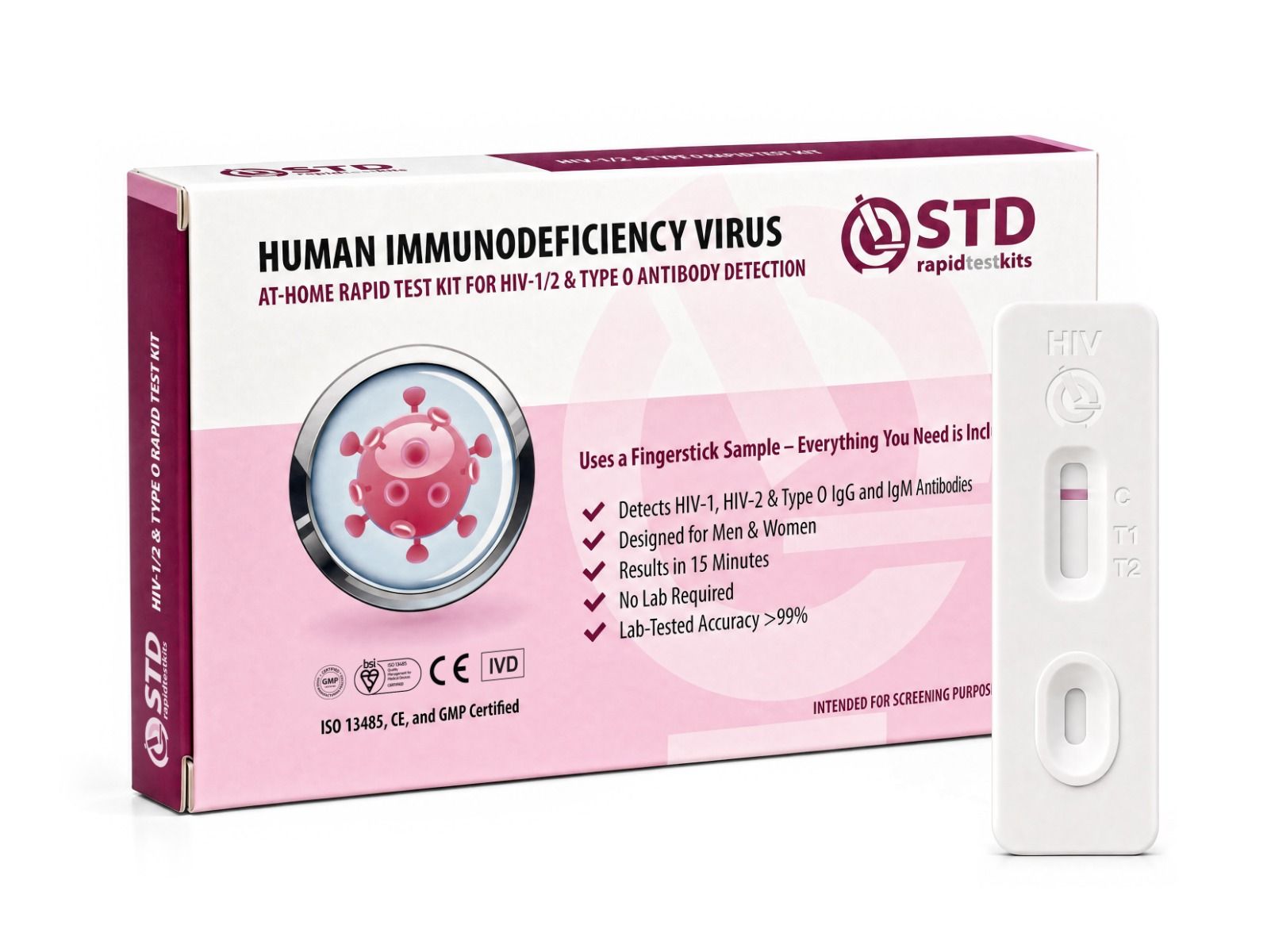
For HIV, the CDC's testing guidance publishes specific numbers worth knowing. A nucleic acid test (NAT or NAAT) can usually detect HIV 10 to 33 days after exposure. A fourth-generation antigen/antibody lab test can usually detect HIV 18 to 45 days after exposure. A rapid antigen/antibody fingerstick test can usually detect HIV 18 to 90 days after exposure. An antibody-only test can usually detect HIV 23 to 90 days after exposure. None of these say "next morning," and that fact alone resolves a great deal of unnecessary fear.
A fourth-generation antigen/antibody test reaches infection sooner than antibody-only tests because it looks for two things at once: the p24 antigen the virus itself produces in the first weeks, and the antibodies the body makes against it later. If your muscle pain started the day after sex, especially without fever or swollen glands, infection is statistically unlikely. Symptoms that show up 1 to 3 weeks later, resembling the flu but without the cough and congestion, are the ones that point toward an HIV or syphilis test rather than a wait-and-see.
| Infection | Earliest reliable detection | Recommended retest window | Can cause flu-like body aches? |
|---|---|---|---|
| HIV (NAT) | 10 to 33 days | Often used for very early concerns; confirm with antigen/antibody later | Yes, during acute phase |
| HIV (4th-gen antigen/antibody, lab) | 18 to 45 days | 12 weeks for conclusive result | Yes, during acute phase |
| HIV (rapid fingerstick antigen/antibody) | 18 to 90 days | 12 weeks for conclusive result | Yes, during acute phase |
| Chlamydia | 5 to 7 days | 2 weeks post-exposure | Rarely, unless complicated by PID |
| Gonorrhea | 5 to 7 days | 2 weeks post-exposure | Rarely, unless complicated by PID or epididymitis |
| Syphilis | About 3 weeks (when chancre appears) | 6 weeks for confidence | Possible during secondary stage |
| Trichomoniasis | About 7 days | 2 to 4 weeks | Uncommon |
When Fever Changes the Equation
Body aches alone are vague. Add a measured fever above 100.4°F and the story gets slightly sharper, because fever means the immune system is actively fighting something. That something could be influenza, COVID-19, mono, a urinary tract infection, or, in some cases, acute HIV or another systemic infection.
Context still rules. Fever and chills three days after a hookup during peak respiratory-virus season overwhelmingly favors a respiratory virus. Fever 14 days after unprotected anal or vaginal sex with a partner of unknown status, paired with swollen neck or groin lymph nodes and a faint trunk rash, is the combination that warrants an HIV test at the 4-to-6-week mark.
Fever above 100.4°F, plus swollen neck or groin lymph nodes, plus a faint non-itchy rash on the chest or back, appearing 14 to 28 days after a higher-risk sexual exposure, is the cluster most clinicians treat as a reason to test for acute HIV. Any one of these in isolation, especially within the first week, is far more likely to be a passing virus or anxiety than HIV.
What the HIV Rash Actually Looks Like
Of all the acute HIV symptoms, the rash is the one most often misjudged. It is also one of the more specific signals when it does appear. The classic pattern described in clinical references is a non-itchy, flat or barely raised rash of small pink-to-red spots distributed across the upper chest, back, shoulders, or upper arms. It does not look like hives. It does not weep, crust, or peel. There is rarely warmth or burning. Most people who develop it describe noticing it in the mirror after a shower, not feeling it before they saw it.
That said, rashes have a long list of causes (heat, friction from new fabric, contact allergies, eczema flares, drug reactions, unrelated viral exanthems), so a rash by itself rarely points at HIV. What raises suspicion is the combination: a non-itchy flat truncal rash appearing 2 to 4 weeks after a sexual exposure, alongside fever, persistent sore throat, swollen lymph nodes, and unusual fatigue.
| Rash cause | Location | Texture | Itchy? | Timing |
|---|---|---|---|---|
| Acute HIV | Chest, back, shoulders, upper arms | Flat, small red-to-pink spots | No (or mild) | 2 to 4 weeks after exposure |
| Allergic reaction | Anywhere; often itchy patches or welts | Bumpy, raised, hive-like | Yes | Within hours of trigger |
| Heat rash | Neck, chest, skin folds | Tiny clear or red bumps | Yes | During heat or sweat |
| Eczema flare | Wrists, knees, neck, hands | Dry, rough, flaky patches | Often intensely | Recurrent |
| COVID-19 rash | Variable; often torso or limbs | Spots, blotches, or hive-like | Sometimes | During active infection |
Anxiety Can Mimic Infection
Adrenaline and cortisol, the stress hormones that spike when someone believes they may have made a sexual mistake, produce real physical sensations: muscle tension in the neck and shoulders, fatigue, mild chills, stomach unease, even a brief sense of being feverish without a measurable temperature rise. The brain and the immune system are not separate departments; they share signaling pathways and they talk constantly.
Repeated body-scanning amplifies the effect. Tissue around the lymph nodes becomes tender when poked every twenty minutes for three days. Normal salivary glands feel like enlargement. Standard end-of-day fatigue feels diagnostic. None of this means the symptoms are imaginary; it means the dial is turned up. Anxiety after casual or new-partner sex is common, and it spikes hardest in the hours and days when biology cannot yet tell you anything definitive.
Most people have flu-like symptoms within 2 to 4 weeks after infection. Symptoms may last for a few days or several weeks. Having these symptoms alone doesn't mean you have HIV.
Day-by-Day: What to Notice and When
Day 1 to 2 after sex is almost always too early for STD-related body aches. Soreness in the thighs, hips, lower back, or shoulders here is exertion. If alcohol was involved, dehydration compounds it. This is the stage where rest, water, and time do more than testing.
Day 3 to 5 is where anxiety usually peaks. People search "flu symptoms after sex" in this window because mild fatigue or throat irritation appears. Biologically this fits common respiratory viruses much better than sexually transmitted infections. It remains too early for acute HIV symptoms in nearly everyone.
Day 7 to 14 is where certain bacterial STIs begin to declare themselves. Chlamydia and gonorrhea are mostly local rather than systemic, but burning during urination, abnormal discharge, or pelvic and testicular pain can show up here. Acute HIV symptoms remain uncommon at this point, though the leading edge of the 2-to-4-week window opens around day 14.
Day 14 to 28 is the most common window for acute HIV symptoms in the people who get them. Fever, sore throat without congestion, swollen lymph nodes, and a faint non-itchy rash matter more here than they did earlier. If you had a real higher-risk exposure and you develop that cluster in this window, testing is appropriate.
Day 21 and beyond is where antibody-based detection gains reliability. By 4 to 6 weeks, fourth-generation antigen/antibody tests are highly accurate per CDC guidance. By 12 weeks, results are considered conclusive for nearly all modern testing methods.
When Body Aches Come With Pelvic or Genital Symptoms
Body aches rarely travel alone when bacterial STIs are involved. If systemic discomfort shows up alongside pelvic pain, abnormal discharge, burning during urination, or testicular pain, the probability of chlamydia, gonorrhea, or trichomoniasis goes up.
For people with a uterus, untreated chlamydia or gonorrhea can ascend into pelvic inflammatory disease, which combines lower-abdominal pain, fever, and general malaise. For people with a penis, epididymitis from the same untreated infections produces testicular pain and tenderness with body discomfort. These patterns look different from generic muscle strain, and they are signals to act rather than wait. Per the CDC's STI treatment guidelines, both PID and epididymitis benefit from prompt evaluation; delay raises the risk of fertility consequences.
If genital symptoms are present alongside aches, do not sit on it. Either book a clinic visit or use a credible at-home STI test kit for the most likely culprits, and if anything reads positive, follow up with a clinician for treatment.
Most post-sex aches resolve on their own. A few patterns deserve same-day medical evaluation rather than at-home screening: a fever above 102°F that will not come down, severe one-sided pelvic or testicular pain, signs of sepsis (confusion, very fast heart rate, low blood pressure), or any rash with mucosal involvement plus fever. These are not the typical acute-HIV picture; they suggest something acute that needs hands-on care. At-home rapid tests are screening tools, not substitutes for emergency evaluation.
Smart Testing and a Retesting Schedule That Works
Testing right after exposure can feel empowering, and it can also create confusion. A negative result taken inside the window period reflects the detection timeline rather than the absence of infection: not enough time has passed for markers to appear. That is the common cause of the cycle where someone tests at day five, again at day nine, again at day twelve, sees three negatives, and still cannot sleep, because none of those tests was taken at a time when a positive was biologically possible.
Smart testing follows a rhythm. First, assess the encounter honestly. Was there condomless anal or vaginal sex? Was the partner's status unknown? Was there visible blood or a known mucosal injury? Higher risk argues for a structured testing plan rather than impulsive checks. Second, time the tests to the windows that make them meaningful. For chlamydia and gonorrhea, two weeks post-exposure is a reasonable point. For HIV using a fourth-generation antigen/antibody test, 4 to 6 weeks gives strong reliability and 12 weeks is the conclusive mark. For syphilis, 6 weeks is a reasonable retest. Three or four well-timed tests at meaningful windows answer more questions than ten impulsive tests bunched into the first week.
Third, if a recent partner could also be at risk, give them the chance to test. A direct, calm message works for most situations: "I'm getting tested after a possible exposure. You might want to test too." Many state and local health departments offer anonymous partner-notification services that contact recent partners without revealing your identity, useful when a relationship has ended or the situation feels unsafe to handle directly.
Retesting schedule by initial test timing
- Tested within 7 days of exposure: retest at 3 weeks, then again between 6 and 12 weeks for a conclusive answer.
- Tested between 14 and 21 days: a follow-up fourth-generation antigen/antibody test at 6 weeks is recommended.
- Tested after 28 days: most fourth-generation and rapid antibody tests are highly reliable; a 12-week follow-up gives full confirmation.
If a Test Comes Back Positive
For many people the loudest fear behind the search is not the soreness itself but what a positive result would mean. That fear deserves a direct answer. A positive screening result today is a manageable medical situation, not the catastrophe the word HIV still carries for people who remember the 1980s and 1990s.
People diagnosed now, especially those caught near the acute phase this article describes, have life expectancies that approach the general population. The severe outcomes that once defined HIV tracked late diagnosis far more than the virus itself.
A positive home result is a starting point, not a verdict. The next move is a lab-based confirmatory test, because rapid lateral-flow tests carry a small false-positive rate. A clinician or HIV clinic then starts antiretroviral therapy, usually one pill a day, and most people reach an undetectable viral load within a few months. At an undetectable viral load, HIV is not sexually transmissible, the principal public-health agencies call U=U (undetectable equals untransmittable), per the CDC and WHO.
When Symptoms Persist or HIV Tests Negative
If HIV testing comes back consistently negative through the full window period and the symptoms are still there, those symptoms are real and they have a cause. Many infections produce the same flu-like cluster as acute HIV. Mononucleosis from Epstein-Barr virus, known in the UK as glandular fever, is the most common look-alike, with severe fatigue, sore throat often with white tonsillar patches, and persistent swollen lymph nodes. Cytomegalovirus, primary herpes infection, and the acute phase of hepatitis B or C can all cause overlapping symptoms.
Beyond infections, post-viral syndromes (long COVID, post-EBV fatigue, post-influenza recovery), thyroid dysfunction, iron-deficiency anemia, and severe stress responses can all create the same body-wide "something is wrong" feeling. A negative HIV result narrows the differential to one fewer cause; the symptoms still warrant a clinician's attention.
Body aches that linger more than two weeks without fever, rash, or localized symptoms are less likely to be sexually transmitted and more likely connected to stress, viral recovery, sleep disruption, or unrelated medical conditions. Acute STIs cause clusters of signs over a defined window. A single vague ache that drags on for a month rarely fits that picture. A primary-care visit with a clear list of what has been ruled out gives a clinician a useful starting point: a complete blood count and metabolic panel, a thyroid check, inflammatory markers, and a broader STI panel if not yet done. "It is probably nothing" is not a diagnosis; pushing for an answer is reasonable, not paranoid.
- Mononucleosis (Epstein-Barr virus): severe fatigue, sore throat with white tonsillar patches, persistent neck lymph-node swelling.
- Cytomegalovirus (CMV): prolonged low-grade fever, fatigue, sometimes hepatitis-like liver-enzyme bumps.
- Primary herpes (HSV) infection: painful genital or oral lesions plus regional lymph-node swelling.
- Acute hepatitis B or C: fatigue, nausea, abdominal discomfort, sometimes jaundice.
- Post-viral syndromes (long COVID, post-EBV fatigue, post-influenza recovery): persistent body-wide tiredness and brain fog after the acute illness passes.
- Thyroid dysfunction and iron-deficiency anemia: a standard panel of bloodwork ordered at an annual physical rules these in or out without another round of STI testing.
Frequently asked questions
- Can body aches the morning after sex be early HIV?
- Almost certainly not. The CDC's overview of HIV puts the typical onset of acute flu-like symptoms at 2 to 4 weeks after infection, because the virus needs time to replicate before the immune system reacts strongly. Soreness 12 hours after sex fits exertion, dehydration, or short sleep, not viral replication.
- How can I tell if my flu-like symptoms are HIV, mono, or just the flu?
- The sharpest single filter is whether you have respiratory symptoms. Cough, runny nose, sneezing, and sinus pressure point hard at influenza or COVID-19 and away from acute HIV, which tends to skip head-cold features. Heavy fatigue plus a severe sore throat with white tonsillar patches, peaking 4 to 7 weeks after a possible EBV exposure, points at mono. A non-itchy faint rash on the trunk, swollen lymph nodes in the neck and groin, and fever appearing 2 to 4 weeks after a higher-risk sexual exposure raises HIV on the list.
- What does a non-itchy HIV rash actually look like?
- When it appears, an acute HIV rash is usually flat, red or pink, and not particularly itchy. It commonly shows up on the chest, back, or upper abdomen. It does not blister, ooze, or crust. Many people with acute HIV never develop a noticeable rash at all, so a rash is supportive evidence at best, not a diagnostic feature.
- Can you have early HIV without a fever?
- Yes. Fever is the most commonly reported acute symptom, but a meaningful share of people never run one. Some have only heavy fatigue, swollen lymph nodes, and a sore throat; others have no noticeable symptoms at all and are diagnosed later through routine screening. The absence of a fever neither rules HIV in nor out, which is exactly why timing and testing matter more than any single symptom.
- If my symptoms go away on their own, am I in the clear?
- Not necessarily. Acute HIV symptoms often fade within 1 to 3 weeks even when infection has occurred, because the immune system partially controls the initial viral surge. The virus remains in the body even as symptoms resolve; only testing at the appropriate window confirms status either way.
- I tested negative at day 10. Should I retest?
- Yes, almost always. At day 10, only an HIV NAT (nucleic acid test) is in its detection range, and even that test starts at 10 to 33 days. Antibody tests and most rapid antigen/antibody tests are unreliable that early. Retest at 4 to 6 weeks with a fourth-generation antigen/antibody test, and at 12 weeks for a conclusive result.
- Can anxiety alone produce body aches and chills?
- Yes. Cortisol and adrenaline can cause real muscle tension, mild chills, fatigue, and a feeling of being feverish without a measured temperature rise. Repeated body-scanning makes lymph nodes and tender muscle groups feel worse, because pressing on tissue every hour irritates it. If body-scanning is amplifying the sensations rather than settling them, wait out the window period before testing; a result taken too early gives you a negative that is not yet meaningful and tends to add anxiety rather than reduce it.
- When is an HIV test considered fully conclusive?
- 12 weeks post-exposure is the point most modern guidance treats as definitive. Before that, 4 to 6 weeks with a fourth-generation antigen/antibody test gives most people actionable confidence. An uncertain or borderline result at six weeks warrants a retest at 12 to close the loop.
You Deserve Clarity, Not a Worst-Case Spiral
Body aches after sex feel like a moral verdict when anxiety is loud. Most of the time they reflect exertion, dehydration, or coincidence with a passing virus or a brewing case of mono. In a smaller share of cases, when fever and a systemic cluster appear inside a realistic window after a higher-risk exposure, they signal that testing is the next sensible step. The action is the same in both directions: ask three quick questions, then let the answers shape the plan instead of the panic.
If your timeline is under 72 hours and nothing else is wrong, give the body time. If you are inside a realistic window and the cluster fits, test at the right interval. Walk the three questions below before you do anything else.
Should You Wait, Test, or See a Clinician?
Did the symptoms start within 72 hours of sex, with no fever and no swollen lymph nodes?
Yes: This is almost certainly exertion, dehydration, or a passing virus. Rest, hydrate, and give it a few days. No test is needed yet.
No: Move to the next question.
Has a cluster of fever, swollen lymph nodes, and a faint non-itchy trunk rash appeared 14 to 28 days after a higher-risk encounter?
Yes: Schedule a fourth-generation HIV antigen/antibody test at 4 to 6 weeks post-exposure, and a follow-up at 12 weeks for a conclusive result.
No: Move to the next question.
Have HIV tests stayed negative through the full 12-week window while symptoms persist?
Yes: See a clinician for a broader workup: EBV/mono, thyroid, complete blood count, and inflammatory markers.
No: If you are still inside the window and the cluster fits, test at the right interval rather than impulsively bunching tests into the first week.
Guidance only. A healthcare provider can advise based on your specific situation.
- U.S. Centers for Disease Control and Prevention. About HIV: stages of infection and acute retroviral syndrome timing (2 to 4 weeks for typical flu-like symptom onset).
- U.S. Centers for Disease Control and Prevention. HIV Testing: published window periods for NAT, antigen/antibody lab tests, rapid fingerstick tests, and antibody-only tests.
- U.S. Centers for Disease Control and Prevention. About Pelvic Inflammatory Disease: clinical presentation including pelvic pain, fever, and malaise from untreated chlamydia or gonorrhea.
- World Health Organization. HIV and AIDS fact sheet: clinical course, acute infection signs, and global testing recommendations.
- U.K. National Health Service. Glandular fever: symptoms, Epstein-Barr virus cause, and recovery timeline for the most common acute-HIV look-alike.
- HIV.gov. Symptoms of HIV across acute, clinical-latency, and AIDS stages, including the acute-phase figure that about two-thirds of people develop flu-like symptoms within 2 to 4 weeks.
