
Published: November 2025 | Last updated: May 2026 | Editorial review and quality control: Martina N.
Walking into urgent care with vaginal irritation can feel like reading from a script if you are a Black woman. A provider hears a symptom, names a likely cause, hands you a prescription, and sends you home. Yeast infection. Bacterial vaginosis. Maybe “normal discharge.” Few clinicians stop to ask about your full sexual history. Fewer still order a complete STI panel. The cost of that fast-track triage is documented and consistent: Black women's symptoms are misread, undertested, and dismissed at higher rates than their white peers, and the result is delayed treatment, avoidable complications, and broken trust in the system meant to protect them.
This article walks through why the pattern happens, what the published evidence shows, what the most commonly missed infections actually look like, and what tools (in-clinic and at-home) can put accurate information back in your hands when a single appointment isn't enough.
Key Takeaways
- Symptoms like discharge, pelvic pain, or burning are routinely labeled BV, yeast infection, or hormonal disruption without a full STI panel, which means trichomoniasis, chlamydia, and gonorrhea regularly go untreated in Black women for weeks or months.
- When a clinic visit doesn't produce the test you needed, you can ask directly for a full STI panel in writing or order a validated at-home test; both are legitimate ways to confirm what is and is not happening in your body.
BV Isn't Always BV, and That's the Problem
Bacterial vaginosis is the single most common cause of vaginal discharge in adult women, so when a Black woman walks in describing odor, discharge, or irritation, BV is the default working diagnosis. The trouble is that trichomoniasis (a sexually transmitted parasite) and early chlamydia present with strikingly similar symptoms, and none of these conditions can be told apart reliably by smell or appearance alone. A clinician who treats every discharge complaint as BV will miss the trich case sitting in front of her, every single time.
That mismatch matters because trichomoniasis is not part of most routine STI screening panels in primary care, per the CDC 2021 STI Treatment Guidelines. The same antibiotic that clears BV (metronidazole) sometimes clears trich at the standard BV dose, which means some women get incidentally treated and never know they had a sexually transmitted infection. Others get the BV diagnosis but a topical treatment that doesn't touch the parasite, and the infection keeps running. Either way, the partner isn't told, isn't tested, and the chain of transmission stays open.
Trichomoniasis and bacterial vaginosis cannot be reliably told apart by symptoms, smell, or appearance alone. Only a swab test can confirm which one a patient has, and only trichomoniasis triggers a partner-notification requirement. A topical BV treatment will not clear a trich infection.
Why Black Women Get Misdiagnosed: A Closer Look
The misdiagnosis pattern isn't random. It sits at the intersection of three problems: implicit bias in how providers weigh Black women's pain reports, real symptom overlap between vaginal infections, and short appointment times that punish curiosity. A 2021 Health Affairs review describes how structural racism shapes the sexual and reproductive care Black women receive: fewer minutes of clinician attention, lower likelihood of a counseling conversation, higher likelihood of being prescribed without being examined.
The table below maps the symptom-to-diagnosis shortcuts most commonly applied to Black women, and what the missed infection underneath each one might actually be. None of these are exotic conditions; each is testable with a swab or a blood draw that takes seconds in a clinic.
| Common STD Symptom | Often Misattributed To | What May Actually Be Missed |
|---|---|---|
| Persistent vaginal discharge with odor | Bacterial vaginosis (BV) | Trichomoniasis, which mimics BV but needs different treatment and partner notification |
| Pelvic pain or cramping outside the cycle | Menstrual irregularity or fibroids | Chlamydia (untreated chlamydia drives pelvic inflammatory disease and fertility risk) |
| Genital itching or burning | Yeast infection | Genital herpes prodrome or trichomoniasis |
| Bleeding between periods | Birth control or hormonal imbalance | Cervical inflammation from gonorrhea or chlamydia; HPV-related changes on the cervix |
| Burning during urination | Urinary tract infection | Chlamydia or gonorrhea (the urethral symptom set overlaps almost completely) |
What the Pattern Actually Looks Like
These are not isolated stories. They are composite patterns reported repeatedly across patient surveys, qualitative research, and community health worker case logs.
One pattern shows up across urgent care notes: a woman in her early thirties feels burning during urination, is told it is “probably a UTI,” is sent home with three days of antibiotics, and feels better for a week. The pain returns. A second visit blames “irritation from sex.” No STI test is ordered at either visit. Weeks later, a routine pap smear flags a chlamydia infection that has already started causing early pelvic inflammatory disease.
Another pattern: a woman in her mid-twenties notices spotting between periods. Her OB-GYN attributes it to “your birth control” without confirming she is on any. When she pushes, she is told to monitor it. Months pass. A community health fair finally tests her, and she learns she has untreated gonorrhea.
A third pattern: a woman in her early thirties reports erratic periods, a change in discharge odor, and pain during sex. Her primary care doctor reviews her labs, declares them “fine,” and tells her the issue is “probably hormonal.” No swab is taken. No partner is asked about. By the time she tests herself at home, two infections are confirmed: one bacterial, one parasitic.
The exact names change. The structure repeats: a real symptom, a quick non-STI explanation, an unordered test, weeks or months of delay, and a diagnosis that finally arrives outside the room where it should have been made.
How At-Home Testing Helps You Bypass the Bias
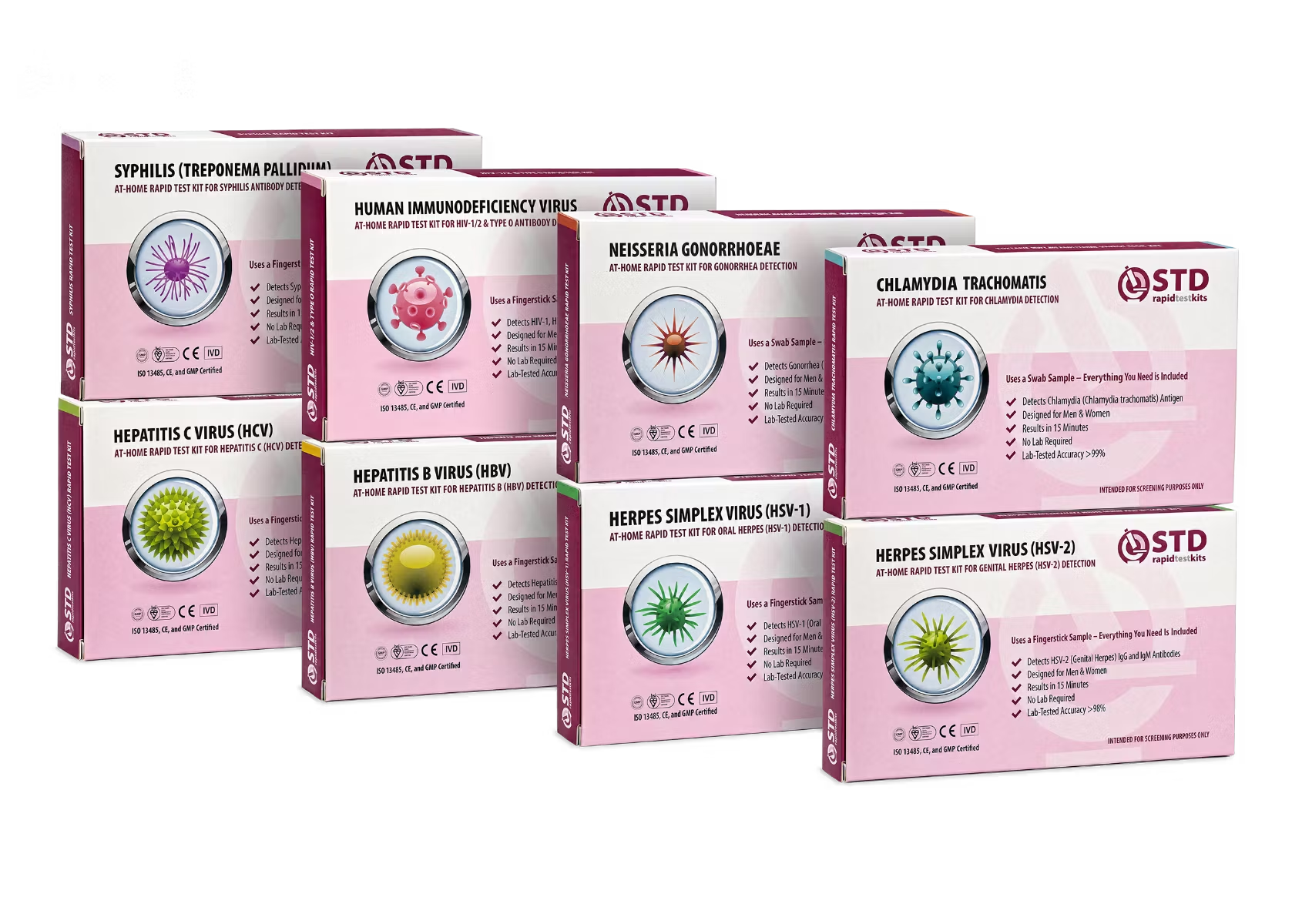
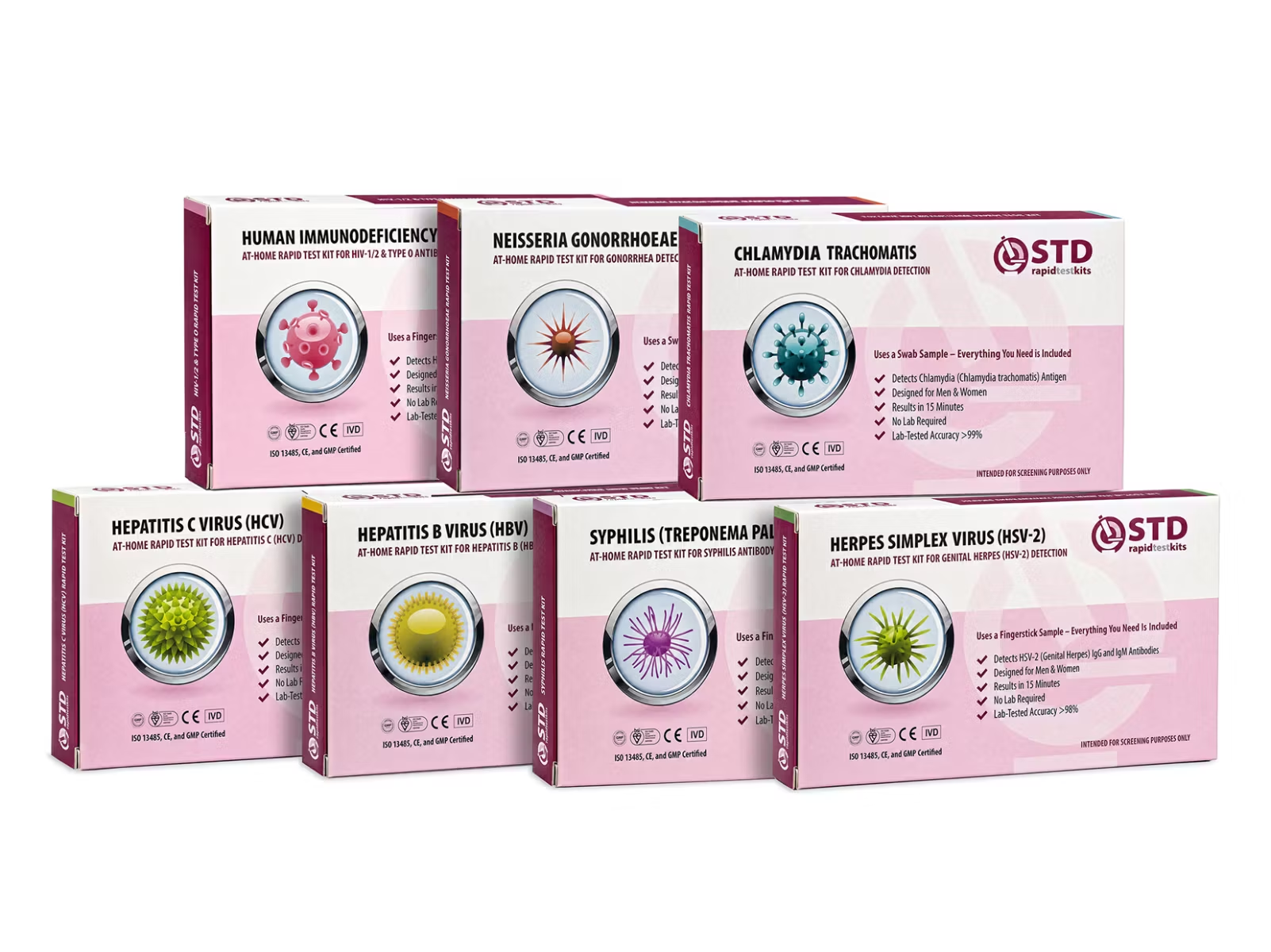
When a clinic visit doesn't produce the test you needed, the next step doesn't have to be another appointment running the same script. At-home STI testing uses the same sample types most clinics rely on: a self-collected vaginal swab for bacterial and parasitic infections, a fingerstick blood drop for HIV, syphilis, and viral hepatitis. The gatekeeping step (a provider deciding whether to order the test) is removed. You are the one ordering the test, collecting the sample, and reading the result.
At-home rapid kits are lateral-flow immunoassays, not laboratory NAATs. They are an excellent screening layer for confirming an infection is present, especially when symptoms persist after an in-clinic visit that didn't test. A positive at-home result is worth confirming with a lab NAAT when one is accessible, and treatment will need a clinician's prescription regardless. Window periods apply the same way they do for any test: if you suspect a recent exposure, testing too early can return a false negative, and repeat testing two to three weeks later closes that window for most common infections.
One disclosure: this article is published by stdrapidtestkits.com, which sells at-home STI testing kits. The recommendation here is honest, not reflexive. We suggest these kits when they fit the reader's concern. If your symptoms point to a route we do not cover (a throat or rectal swab, for example), see a clinic for that specific test.
| Testing Method | What It Does Well | Limitations | When to Choose It |
|---|---|---|---|
| At-home rapid lateral-flow kit | Confirms an active infection within minutes, fully private | Less analytical sensitivity than lab NAAT; subject to window period | When a clinic visit dismissed you or in-person wait is too long |
| Mail-in lab NAAT kit | High sensitivity for chlamydia, gonorrhea, trich; covers most common infections | Days of mailing delay before results arrive | When you want lab-grade results without negotiating a clinician encounter |
| Clinic-based testing | Physical exam plus targeted swab if the provider orders it | Depends on the provider deciding to test; quality varies by clinic | When you already have a clinician who runs full panels when asked |
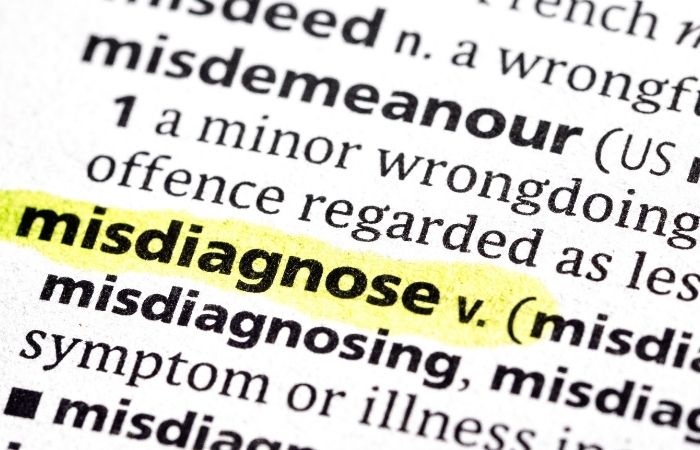
Medical Bias Isn't Just an Opinion, It's Measurable
The pattern this article describes is supported by published research, not just anecdote. The CDC's health disparities reporting documents that Black or African American people in the United States experience substantially higher rates of reportable STIs than non-Hispanic white people.
Published work in Health Affairs and peer-reviewed reproductive-health journals links those gaps to structural factors: shorter clinician visit times for Black patients, lower likelihood of preventive counseling conversations, and lower rates of being offered or completing a full STI panel even when symptoms warrant one. The mechanism is rarely overt racism. More often it is the cumulative effect of small choices: shorter appointments, faster pattern-matching to the “most common” diagnosis, fewer follow-up questions, less time spent walking through a sexual history.
Many Black women carry residual trauma from these experiences: a dismissal that turned out to be a missed infection, a “you're fine” that preceded a positive test by months. That trauma does not disappear with the eventual diagnosis. It shapes every future medical encounter and is itself a barrier to care.
CDC health-disparities reporting documents that Black or African American people in the United States are diagnosed with chlamydia and gonorrhea at rates several times higher than non-Hispanic white people. The gap is not a behavior story; it tracks differences in access, screening uptake, and follow-through along the care pathway. When a population is already screened less consistently, missing the trich or chlamydia case in front of you compounds the disparity rather than catching it.
“Just Hormones”: A Dismissal That Delays Real Diagnoses
Among the verbal dismissals Black women report, “it's probably hormonal” is near the top. Irregular bleeding? Hormones. Pelvic pain that comes and goes? Hormones. Painful sex? Stress and hormones. The phrase is a placeholder that sounds clinical but moves no diagnostic work forward. Hormones do affect cycle length and mood. They do not, on their own, cause burning, sharp odor, persistent foul-smelling discharge, or bleeding after intercourse. Those symptoms warrant a test.
The damage of the hormonal-dismissal pattern is twofold. It defers a real diagnosis (HPV, chlamydia, gonorrhea, or advanced infection can each cause the symptom set above), and it teaches the patient that her own sense of “something is off” is unreliable. Many Black women describe leaving such a visit feeling not reassured but second-guessed: maybe it really is in her head, maybe the symptom isn't real, maybe she is overreacting. None of those conclusions are supported by what her body is reporting.
The corrective is straightforward, even if the situation isn't easy: a clinician who declines to test can be asked, in plain language, to either run a full STI panel or to document in the chart that one was requested and declined. Many providers reconsider when the request enters the written record. If they don't, the at-home option remains.

When Misdiagnosis Becomes Medical Gaslighting
“Gaslighting” gets overused, but in a medical context it has a specific shape: a patient reports a real symptom, the provider names a non-cause without testing for it, and over time the patient stops trusting her own perception. For Black women, who already navigate a healthcare system shaped by historical mistrust, this version of dismissal is especially damaging.
STIs do not slow down while a patient is being disbelieved. Each week a treatable chlamydia or gonorrhea infection runs untreated increases the risk of pelvic inflammatory disease, scarring of the fallopian tubes, and downstream fertility complications, per CDC clinical guidance. Untreated trichomoniasis is associated with an elevated risk of acquiring HIV if exposed. The cost of dismissal is not abstract; it shows up in measurable reproductive outcomes.
Breaking the cycle is mostly a matter of trusting the signal your body is sending more than you trust a rushed appointment. If something feels off, that is reason enough to test. Even on a third visit. Even after another provider said you were fine.
Untreated chlamydia and gonorrhea can progress to pelvic inflammatory disease, scarring of the fallopian tubes, and downstream fertility complications, per CDC clinical guidance. Untreated trichomoniasis is associated with elevated risk of acquiring HIV if exposed. The cost of a dismissed symptom is measured in years of reproductive impact, not days of discomfort.
When “Normal” Isn't Normal: Symptoms Worth Testing
STI symptoms often aren't textbook. Cycle-linked discharge changes, mild pH shifts after sex, and stress are all real variables that make background variation hard to read. The challenge is separating background variation from a signal that warrants testing, and the rough rule is persistence: changes that last more than a few days, get worse rather than better, or arrive in combination with another symptom deserve a test, not a wait-and-see.
Specific patterns worth acting on: burning during urination, sharp or unfamiliar odor, persistent itch that doesn't resolve with the cream a provider handed you, discharge that has changed color or consistency for more than a few days, pelvic pain unconnected to your cycle, bleeding between periods or after sex, and any sore, blister, or lesion on the genital area regardless of size.
None of these symptoms by themselves diagnose anything specific. Each of them, in combination with a possible exposure, is sufficient reason to order a test. The table below shows three realistic symptom timelines and the testing windows that match.
| Symptom Onset | What You Are Often Told | What It Could Actually Be | Testing Window |
|---|---|---|---|
| Day 1: mild itch, no discharge | “Probably dryness or shaving irritation” | Herpes prodrome or early trichomoniasis | Rapid testing possible at any time once symptomatic |
| Day 5: new odor with thin discharge | “Likely BV, here is metronidazole” | Trichomoniasis or chlamydia masquerading as BV | Optimal NAAT window once symptoms persist 3+ days |
| Day 14: bleeding after sex | “Probably cervical irritation” | Gonorrhea, chlamydia, or HPV-related changes | Both at-home and lab tests are accurate at this stage |
Protecting Partners When You're Still Waiting on Answers
One of the harder edges of misdiagnosis is the partner conversation. Until a result is confirmed, you don't know whether you have been carrying an infection. If you have, your partner deserves the chance to test and treat too. Waiting until you have a final name for the infection before saying anything to them feels safer in the moment but extends the window during which they may transmit it forward, or you may be reinfected by them.
Keep the partner conversation short: you have had symptoms, you are getting tested, they should consider testing too. You do not need a final diagnosis to start it, and you are not making an accusation; you are sharing uncertainty. A partner who responds with blame instead of support is telling you something about how they handle health information, which is its own data point.
If the conversation is awkward in person, an at-home multi-test kit ordered to either of you removes the “where do I even go” friction and gives both of you concrete results to work from.
The partner conversation, stripped down
- What to say: “I've had some symptoms, I'm getting tested, you might want to too.” That's the script. A final diagnosis is not a prerequisite for sharing uncertainty.
- What not to do: apologize, accuse, or wait silently. Sharing uncertainty isn't blame; it's basic respect for someone else's body and their right to make an informed testing decision.
Reclaiming Your Health After Being Dismissed
If you are reading this with a recent dismissal in mind, the practical next step is straightforward. Decide whether you want to revisit the original clinician (with an explicit ask for a full STI panel), seek a second opinion from a different provider (often a sexual health clinic or a sexual health service in your area, or Planned Parenthood in the U.S.), or test at home. Any of the three is a legitimate path forward.
If you choose the clinic route, bring written notes: dates of symptoms, dates of any possible exposure, the names of medications already tried, and a specific request for what testing you want done. Written notes shift the encounter from a free-form conversation into a clearer chart entry. Many providers respond differently when the request is in writing.
If you choose the home route, pick a kit that covers the infections plausible for your symptom pattern. A multi-infection panel is usually the right answer when you don't have a single suspected exposure and want to rule several things out at once. Order it, take the sample, and follow up on any positive with a clinic visit for treatment, since rapid kits screen, but they do not prescribe.
Three paths forward
- Revisit the original clinician with written notes and an explicit, on-the-chart request for a full STI panel; many providers reconsider once the request is documented.
- Seek a second opinion at a dedicated sexual health clinic (in the U.S., Planned Parenthood; in the U.K., NHS sexual health services), where full STI panels are the routine, not the exception.
- Order a validated at-home STI test on your own timeline, then confirm any positive with a clinic for treatment and use the result to inform the partner conversation.
FAQs
- Why do Black women keep getting misdiagnosed when it comes to STDs?
- Because the symptom patterns of BV, yeast infections, trichomoniasis, and early chlamydia overlap almost completely, the fastest clinical shortcut is to name the most common diagnosis and write a prescription. When shorter appointment times and fewer follow-up questions are applied more often to Black patients, the infections sitting underneath those overlapping symptoms never get confirmed by a test. That is the structural pattern, not a series of individual errors.
- Can an STD look like a yeast infection?
- Yes. Trichomoniasis and early chlamydia can mimic a yeast infection's itch or unusual discharge. If you treat with an antifungal and the symptoms don't fully resolve within a few days, that is a signal the original diagnosis was wrong. The right next step is a test, not a second course of the same medication.
- My doctor brushed off my symptoms. What now?
- Document the request. Ask your provider in writing to run a full STI panel, and ask that any refusal be noted in your chart. Many providers reconsider once the request is on paper. If that doesn't move the needle, a sexual health clinic will run the panel without negotiation, and a validated at-home kit covers the interval while you wait for an appointment. Sitting with unresolved symptoms costs you treatment time and keeps a potential partner uninformed.
- Which STD gets missed most often in Black women?
- Trichomoniasis. It sits outside most routine STI screening panels in primary care, so unless someone specifically asks for the test, it doesn't get run. It also mimics BV so closely that metronidazole prescribed for BV sometimes clears it incidentally, meaning the woman never gets a trich diagnosis, the partner never gets told, and the transmission chain stays open.
- If I have symptoms, should I wait to get tested?
- If you are currently symptomatic, test now. If your concern is a recent exposure without symptoms yet, most STIs have a window of days to a few weeks before they show up reliably; chlamydia and gonorrhea show up by day 5 to 7, HIV via fourth-generation testing by about 18 to 45 days, syphilis by 3 to 6 weeks. When in doubt, test now and retest at two to three weeks if the first result is negative.
- Why test at home instead of going to a clinic?
- At-home testing removes the gatekeeping step where a provider has to decide whether to order the test you need. Results arrive in minutes in private, which matters most for anyone who has already been dismissed in clinic. The caveat worth knowing: at-home tests are lateral-flow screens, not laboratory NAATs, so a positive should be confirmed at a clinic for treatment purposes.
- How do I tell a partner I might have an STD?
- Keep it short and uncertain: “I've had some symptoms, I am getting tested, you might want to too.” You do not need a final diagnosis to start the conversation, and you are not making an accusation; you are sharing uncertainty. A partner who responds with blame instead of support is telling you something about how they handle health information.
- What happens if an STD goes untreated?
- Untreated chlamydia and gonorrhea drive pelvic inflammatory disease, scarring of the fallopian tubes, and downstream fertility complications. Untreated trichomoniasis is associated with an elevated risk of acquiring HIV if exposed. Untreated syphilis progresses through stages over years and can affect the heart and nervous system. Most STIs are treatable; the cost of delay is in the complications, not in the difficulty of the cure.
- U.S. Centers for Disease Control and Prevention. Sexually Transmitted Infections Treatment Guidelines, 2021 (routine screening panels, trichomoniasis testing, clinical management of chlamydia and gonorrhea).
- U.S. Centers for Disease Control and Prevention. Health Disparities in Black or African American People (HIV, STD, TB, hepatitis rate disparities).
- World Health Organization. Sexually transmitted infections (STIs) fact sheet.
- Health Affairs. Peer-reviewed work on structural racism in sexual and reproductive care for Black women in the United States.
- U.K. National Health Service. Sexually transmitted infections (STIs) overview, symptoms, and where to test.
