Published: October 2025 | Last updated: May 2026 | Editorial review and quality control: Martina N.
Syphilis is one of the few sexually transmitted infections that can quietly progress for months while a person feels fine. That makes the choice of test consequential. The wrong kit, used at the wrong moment, can return a falsely reassuring negative and delay treatment. The right one, used after the antibody window has closed, is a fast, private way to find out where you stand.
This guide walks through what at-home syphilis tests actually detect, when they work, what to avoid, and how to interpret a result. Plain language, current public-health guidance, no upsell tricks. The article is published by stdrapidtestkits.com, which sells at-home STI testing kits; we recommend products based on fit-for-purpose for the reader's concern, not commercial benefit.
The World Health Organization formally added syphilis to its self-testing implementation toolkit in 2024, joining HIV and hepatitis C as conditions for which self-testing is a recognized way to widen access. A self-test is a meaningful first step for screening and reassurance; clinical confirmation remains important whenever a result is positive or symptoms develop.
Key Takeaways
- Reliable home syphilis tests are fingerstick blood tests that detect treponemal antibodies. Saliva or oral-swab kits are not validated for syphilis and should be avoided.
- Antibodies generally take three to six weeks to become detectable. Test too early and a negative result is not conclusive; retest after the window closes.
Why Picking the Right Syphilis Test Matters
Syphilis works in stages. Primary syphilis usually presents as a single painless sore, called a chancre, at the site of contact. The sore can sit on the genitals, anus, lips, mouth, or fingers, and it tends to heal on its own within a few weeks. People miss it routinely because it does not hurt and looks like a canker sore, ingrown hair, or cracked-skin lesion.
Secondary syphilis follows weeks to months later. It can show up as a non-itchy rash on the palms, soles, or trunk, or as flu-like symptoms (sore throat, swollen glands, low-grade fever). Without treatment, the infection enters a latent phase and can later cause neurological, cardiovascular, and ocular damage. Early treatment with penicillin is highly effective; late-stage damage is not always reversible (CDC STI Treatment Guidelines).
Untreated syphilis also raises the risk of HIV transmission and acquisition. People with active syphilis sores have a meaningfully elevated risk of acquiring HIV during an exposure event because the sore breaches the skin barrier, and the presence of syphilis in a partner similarly raises transmission risk in the other direction. That is why co-testing for HIV alongside syphilis is standard in many sexual-health protocols. For pregnant people, untreated syphilis can cross the placenta and cause stillbirth, neonatal death, or congenital syphilis. A falsely reassuring home test creates downstream risk for you and for anyone you have close contact with, which is why getting the test method and timing right matters.
Syphilis can be passed to others through direct contact with a syphilis sore during oral, anal, or vaginal sex, and from a pregnant person to their fetus.
Types of Syphilis Home Tests, and What They Actually Detect
At-home options fall into three buckets. Two of them are reasonable choices when used correctly. One is best avoided.
| Test Type | Sample | Detects | Turnaround | Best For |
|---|---|---|---|---|
| Mail-in lab kit | Fingerstick blood, sent to lab | Treponemal and non-treponemal antibodies | 2 to 5 days | High accuracy, full staging information |
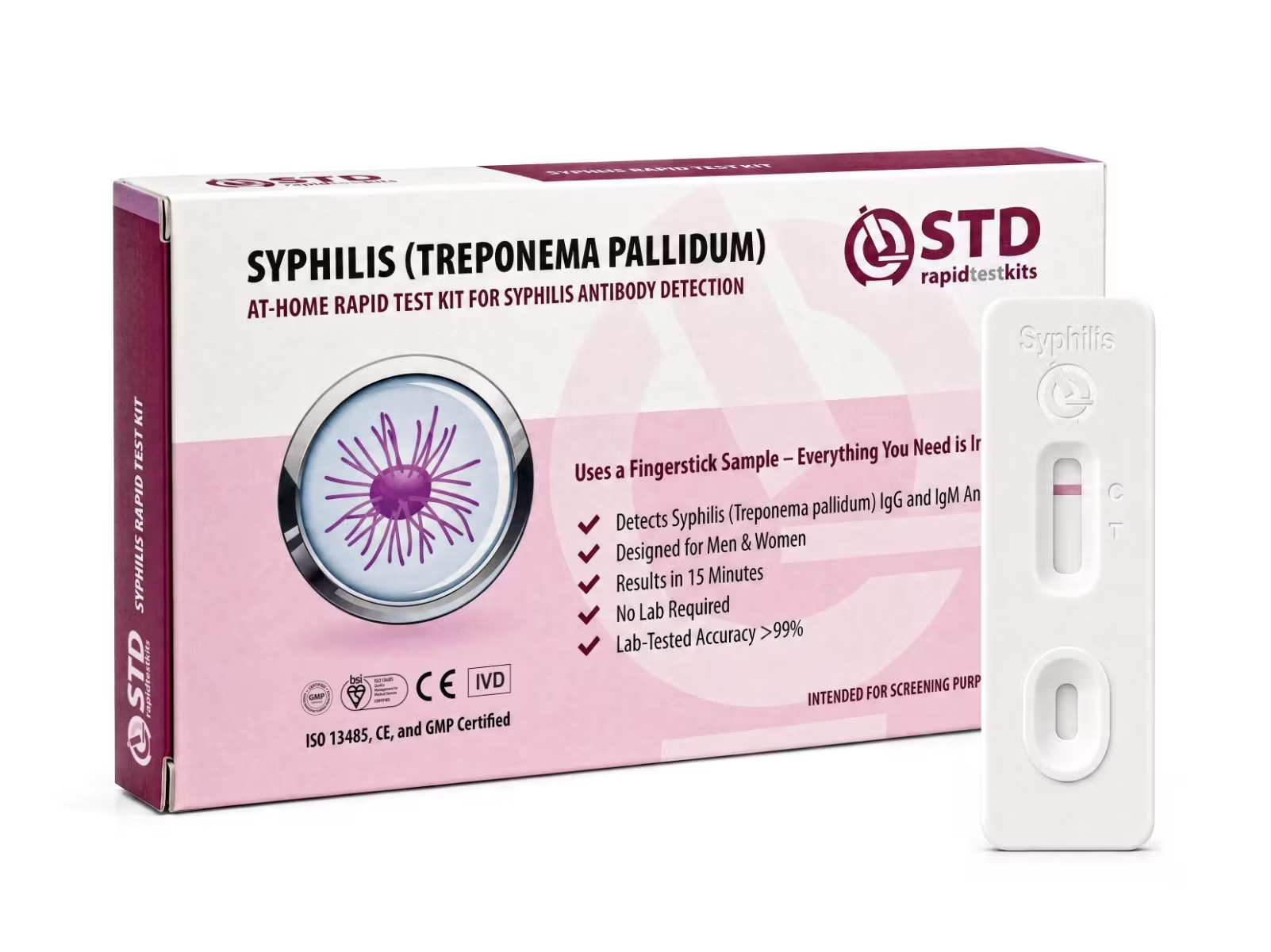
| At-home rapid test | Fingerstick blood, read at home | Treponemal antibodies only | 10 to 15 minutes | Fast result, privacy, screening after the antibody window |
| Oral or saliva swab kit | Cheek or saliva swab | Not validated for syphilis | Variable or unclear | Avoid. Saliva is not a validated sample for syphilis. |
Why Timing Makes or Breaks a Syphilis Test
Syphilis tests do not detect the bacterium directly. They detect antibodies the immune system produces in response to infection. Those antibodies need time to build to detectable levels. Test before the body has responded and the result will be negative regardless of whether infection is present.
Most reactive treponemal antibody tests become reliable about three to six weeks after exposure, with the kit's own instructions for use stating the validated window for that specific product. Most infections become symptomatic three or more weeks after exposure, though the timing varies by individual and a meaningful share of infections never produce noticeable symptoms at all. If exposure was within the last two weeks, a negative home test does not mean you are in the clear.
Two practical takeaways. First, mark your calendar. If you are testing because of a specific exposure, write down the date and aim to test at three weeks at the earliest, with a follow-up test at six weeks if the first is negative. Second, do not rely on one negative test to clear a high-risk exposure. Many clinicians recommend a confirmatory test through a lab regardless of the home result, especially if symptoms developed.
When can you reliably test for syphilis at home?
Most home antibody tests become reliable about three to six weeks after exposure. Testing before day 21 risks a false negative because antibodies have not yet reached detectable levels. If a high-risk exposure was recent, retest at the six-week mark and consider a clinic-based confirmatory test for staging.
How Syphilis Tests Work, and Where They Fail
Two test categories sit behind almost every syphilis screening protocol.
Treponemal tests detect antibodies specifically targeting Treponema pallidum, the bacterium that causes syphilis. Most rapid home tests are treponemal. They are accurate, but they cannot distinguish active from past infection. Once you have made these antibodies, they typically persist for life, even after successful treatment.
Non-treponemal tests (RPR and VDRL) detect a more general antibody response and decline after successful treatment. Lab-based screening pairs the two for confirmation and staging. Most at-home rapid kits use only the treponemal arm, which is why a positive home result still needs follow-up at a clinic for staging and treatment decisions.
The two main failure modes for an at-home test: testing too early (a false negative because antibodies have not yet developed), and a previously treated infection registering as positive on the treponemal arm (a true antibody response, though no longer active disease). Both are addressable with timing and clinical follow-up. A reputable kit clearly states whether its test is treponemal or non-treponemal; if a product page is silent on that, treat it as a warning sign.
What Syphilis Looks Like, Visually
Most people who test positive for syphilis say they never noticed the primary chancre, or they mistook it for something else. The visuals below show common patterns from primary and secondary syphilis. They are reference images, not a substitute for a clinical exam, and conditions other than syphilis can produce similar findings. If you see something that looks like one of these patterns, the right next step is testing, not self-diagnosis.
Red Flags Before You Buy
The home-testing market is uneven. The list below collects what regulators, clinicians, and consumer-protection reviewers repeatedly flag.
| Red flag | Why it is a problem |
|---|---|
| No clear mention of treponemal antibodies on the product page | May be a generic STI panel, or testing the wrong analyte. Ambiguity is itself a quality signal. |
| Uses a saliva or oral swab to detect syphilis | Saliva is not a validated sample for syphilis. Blood is required for reliable detection. |
| Promises instant results in the first days after exposure | Marketing inconsistent with biology. Antibodies need three to six weeks to develop. |
| No FDA, CLIA, or CE-IVD language anywhere on the listing | Likely unregulated. May be counterfeit, expired, or imported without performance testing. |
| Sold only via third-party marketplaces with no medical website behind it | No accountability for storage, expiry, or post-purchase support if a result is unclear. |
When You Should Test, Even Without Symptoms
Around half of people who test positive for syphilis report no obvious symptoms before testing. The chancre is painless and easy to dismiss, the secondary rash can be subtle, and the latent stage by definition has no outward signs. Routine testing covers the gap. Reasonable triggers for a syphilis test, drawing on the CDC STI Treatment Guidelines and the NHS are listed below.
Treating syphilis testing as routine, the same way you would approach a dental check-up, removes some of the social weight that keeps people from doing it at all.
- Unprotected oral, vaginal, or anal sex with a new partner in the last three to twelve weeks.
- A current or past partner who tested positive for syphilis or another STI.
- A new sore, a non-itchy rash on palms or soles, or unexplained flu-like symptoms after sex.
- You are pregnant or planning pregnancy (early detection prevents congenital syphilis).
- Multiple partners or recent partner change.
- Men who have sex with men, for whom CDC recommends at least annual screening, more often with multiple partners.
Pregnancy and Syphilis, Why Early Testing Matters
Congenital syphilis cases have risen sharply in the United States over the past several years. CDC surveillance reports show congenital syphilis has increased for the twelfth consecutive year, with roughly 4,000 cases recorded in the most recent provisional data, driven primarily by gaps in prenatal screening combined with rising adult syphilis rates (CDC STI Surveillance Annual Reports).
Universal screening at the first prenatal visit is the standard of care. The CDC recommends additional screening at 28 weeks and at delivery for people in higher-risk groups. Treatment with penicillin during pregnancy prevents nearly all cases of congenital syphilis when started early enough, which is why the testing window matters as much as the test itself.
If you are pregnant or planning pregnancy and have not been screened, an at-home test is a reasonable starting point, though the result needs to be confirmed and acted on through prenatal care. A positive result is a treatable diagnosis with a clear pathway, and starting treatment promptly protects the pregnancy.
Privacy: Why At-Home Testing Helps
For a lot of people, the practical barrier to testing is the social discomfort of asking: a clinic where the front-desk staff is also someone you know socially, an insurance portal that logs the claim, or a partner who eventually asks why a clinic visit appeared on the shared calendar.
Home test kits ship in plain, unbranded packaging. Results stay with you, on paper or on the cassette, with no automatic upload to a shared health portal. You decide whether and when to share the result with a partner or provider.
Privacy does not replace professional care entirely. A positive home test still needs clinical follow-up for staging, treatment, and partner notification. Controlling the front of the process, the part that decides whether you test at all, has measurable public-health value. Self-testing programs reach people who would otherwise not test, which is the entire point of the WHO including syphilis self-testing in its Self-Testing Implementation Toolkit.
Home test results stay with you. There is no automatic upload to a shared health portal, no insurance claim record a partner could spot, and no clinic visit on a shared calendar. You choose whether and when to disclose.
Can You Trust the Result?
Used correctly, yes, with caveats. Published performance varies by manufacturer, so check the specific kit's validation summary or product instructions for sensitivity and specificity figures before relying on a single result. As a class, well-validated rapid treponemal antibody tests perform best when used after the three-week post-exposure mark; mail-in lab kits that pair treponemal and non-treponemal arms typically perform better still, because they distinguish active from past infection.
Rapid lateral-flow chemistry differs meaningfully from the laboratory NAAT and treponemal-enzyme-immunoassay panels used in clinics. Lab tests have higher analytical sensitivity, especially in early infection, and they distinguish active from past disease via the non-treponemal arm. The two formats are complementary, and a positive home test should always be confirmed at a lab.
The most common reason a home test misleads is timing rather than chemistry. Test within the antibody window, follow the instructions exactly, and a negative result at the right time is reassuring. A positive result, regardless of timing, is the signal to call a clinic and begin the confirmatory staging that leads to treatment.
1. Test in the right window. Most home antibody tests are reliable from about three weeks post-exposure; retest at six weeks if the first result is negative after a high-risk exposure. 2. A positive home result is a starting point. Confirm at a clinic for staging and treatment.

FAQs
- Can you really test for syphilis at home?
- Yes. The reliable home options are fingerstick blood tests that detect treponemal antibodies, available as either rapid lateral-flow cassettes (result at home in about 15 minutes) or mail-in lab kits (lab result in two to five days). Saliva or oral-swab kits are not validated for syphilis and should be avoided.
- How soon after a possible exposure can I test?
- The earliest you can trust a negative result is about three weeks (day 21) after the exposure, with a follow-up test at six weeks for higher-risk exposures. Testing within the first 7 to 14 days routinely produces false negatives because antibodies have not yet developed. If anxiety is driving an early test, that is human; just plan the confirmatory test.
- What if I have no symptoms? Should I still test?
- The primary chancre is painless and heals on its own, so most people who carry syphilis never notice it before a test reveals the infection. Routine testing is appropriate for anyone with new partners, condomless sex with someone whose status is unknown, or a partner who tested positive, regardless of how you feel.
- Can syphilis spread through oral sex?
- Yes. Syphilis spreads through direct contact with a chancre, which can sit in the mouth, on the lips, on the genitals, or on the anus. Oral sex with someone who has an undetected lesion is enough for transmission. Skin-to-skin contact in the genital area without a condom is also a route.
- I tested negative. Am I in the clear?
- If you tested at least three weeks after the exposure and followed the instructions exactly, a negative result is reassuring. If you tested earlier, retest at six weeks. If symptoms developed in the meantime, do not rely on the home result alone; see a clinician for a lab-based confirmation.
- How do I tell whether a kit is legitimate?
- Look for clear language about treponemal antibodies, FDA-cleared or CE-IVD status, manufacturer name, and a validation summary on the product page. Avoid kits that promise instant results during the first week after exposure, kits that use saliva swabs for syphilis, and listings on third-party marketplaces with no medical website behind them.
- What does a faint line on a rapid test mean?
- On most lateral-flow tests, any visible line on the test region within the read window counts as positive, regardless of intensity. Read the kit's instructions because the threshold can vary by manufacturer. When in doubt, treat a faint line as a presumptive positive and confirm at a clinic.
- If I had syphilis before, can I test positive again on a treponemal test?
- Yes. Treponemal antibodies typically persist for life after infection, even after successful treatment, so a treponemal home test can read positive years later. Distinguishing past from active infection requires the non-treponemal (RPR or VDRL) test that labs run alongside, which is why a positive home test still needs clinical follow-up.
- U.S. Centers for Disease Control and Prevention. About Syphilis: stages, symptoms, transmission, and chancre healing timeline.
- U.S. Centers for Disease Control and Prevention. Sexually Transmitted Infections Treatment Guidelines, syphilis section, including treponemal and non-treponemal testing protocols and screening intervals.
- U.S. Centers for Disease Control and Prevention. STI Surveillance Annual Reports, including congenital syphilis trends and the consecutive-year increase since the early 2010s.
- World Health Organization. Self-Testing Implementation Toolkit for HIV, HCV and Syphilis, including the 2024 syphilis self-test recommendations.
- UK National Health Service. Syphilis overview, including symptoms, testing, and treatment in the UK clinical context.
